

The angrakha dress is the most misunderstood piece of South Asian fashion — and I see women getting it wrong every single day. Three years ago, I watched a client struggle with her grandmother’s vintage angrakha, convinced it made her look shapeless. Twenty minutes later, she walked out looking like royalty. The difference? Understanding that this isn’t just an ethnic dress — it’s a masterclass in elegant proportions that most of us are completely ignoring.
I’ve been styling angrakhas for over a decade, and the same mistakes keep surfacing. Women either treat them like costumes reserved for weddings, or they wear them so loosely that all structure disappears. The truth is, this Rajasthani-born design was created for function — to beat intense heat while maintaining grace — but it works precisely because of its strategic wrap construction. When you understand how that front tie creates your waistline, everything changes.
The modern angrakha has evolved far beyond its practical desert origins, but the core principle remains the same: it’s about controlled volume and intentional draping. I’ve seen it work on every body type, in every season, from boardroom meetings to Sunday brunches. The key is knowing which rules to follow and which outdated advice to ignore completely.
How to Wear Angrakhas?
Choose full-length styles for maximum impact
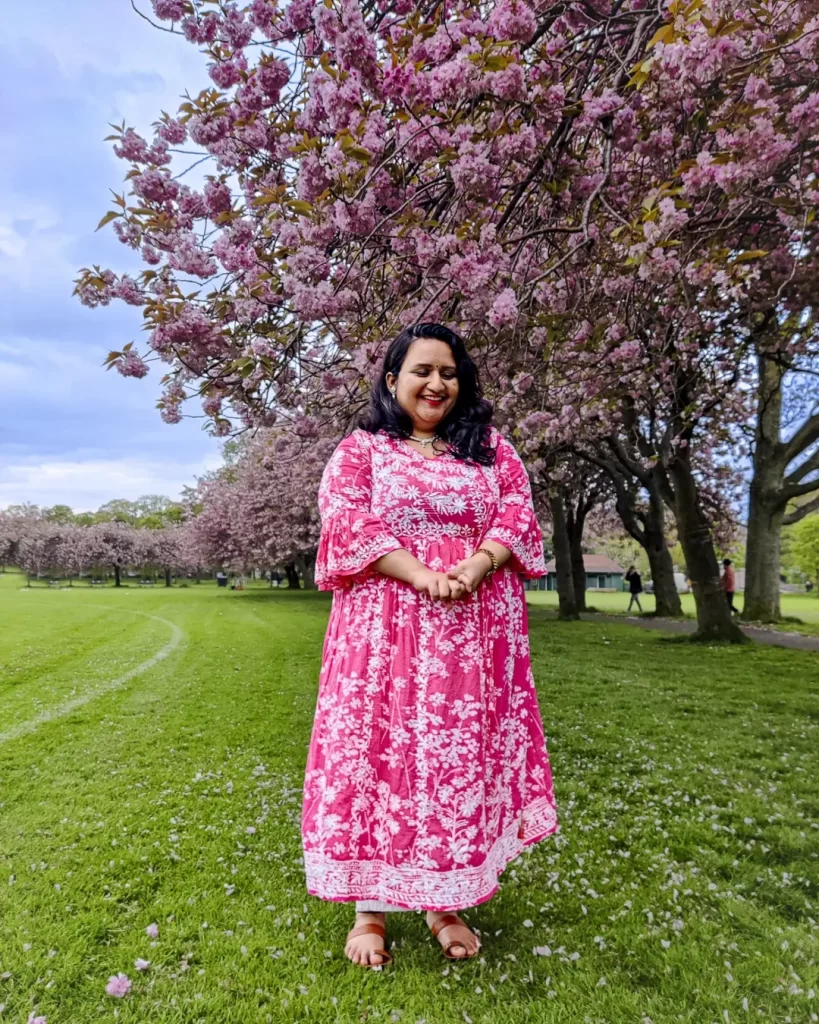
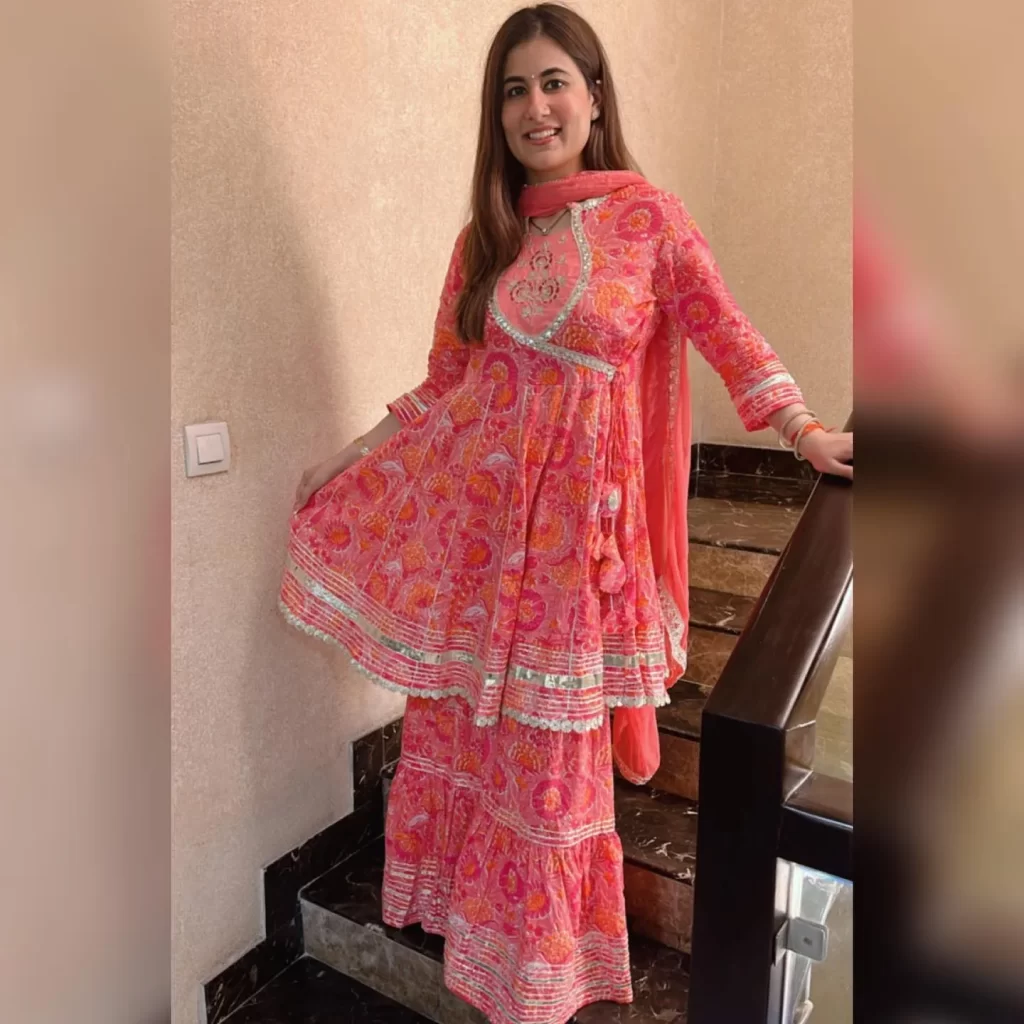
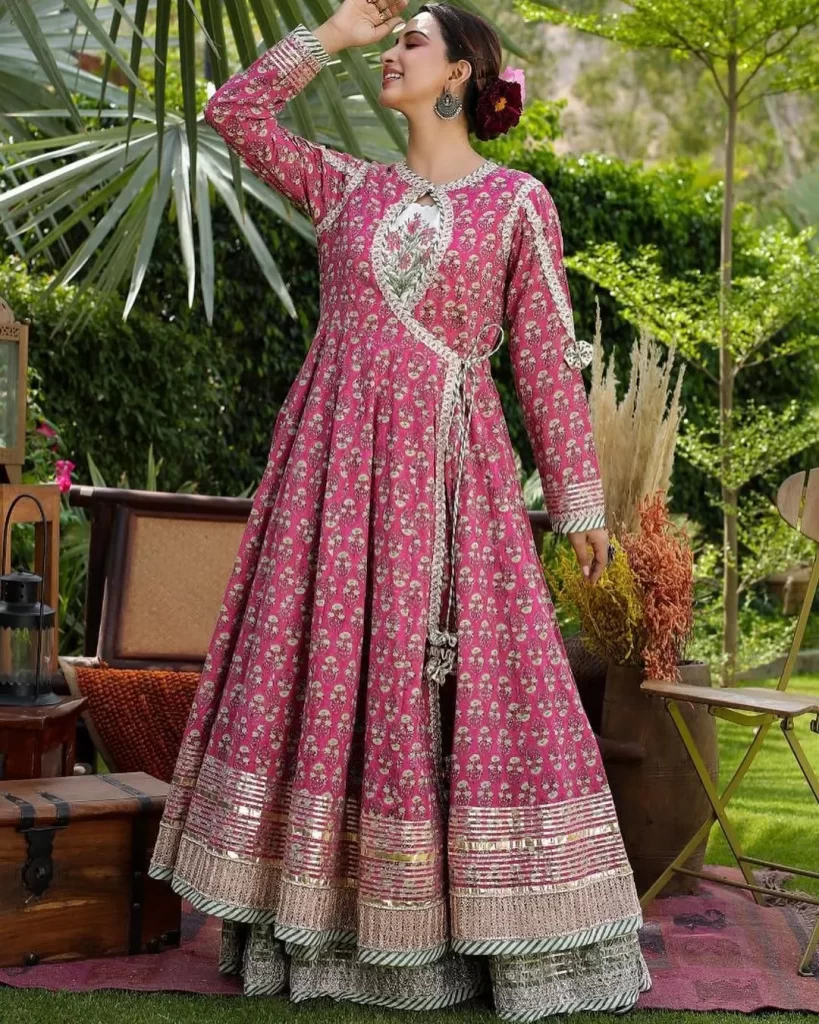
This vibrant pink floral angrakha demonstrates why longer lengths work so powerfully — they create an unbroken line from shoulder to hem that elongates your entire silhouette. I always tell clients to resist the urge to go shorter with their first angrakha because the full-length version teaches you how the proportions should feel. The key here is ensuring the hem hits at the right point: just above your ankles, never dragging on the ground.
Layer over fitted bottoms for structure
20 Best Baby Blue Dresses & Tips on How to Style Them

26 Best Electric Blue Outfits & Tips On How To Style Them
32 Kitenge Dress Designs & Ankara Styles
How to Dress Goth? 12 Outfit Ideas & Styling Tips
22 Modern Chikankari Kurti Designs & Styling Tips
What To Wear At The Races – 20 Dress Code Guide & Tips
How To Wear a Strapless Dress? 24 Styling Ideas & Tips
How To Dress In Your Twenties? 20 Outfit Ideas & Styling Tips
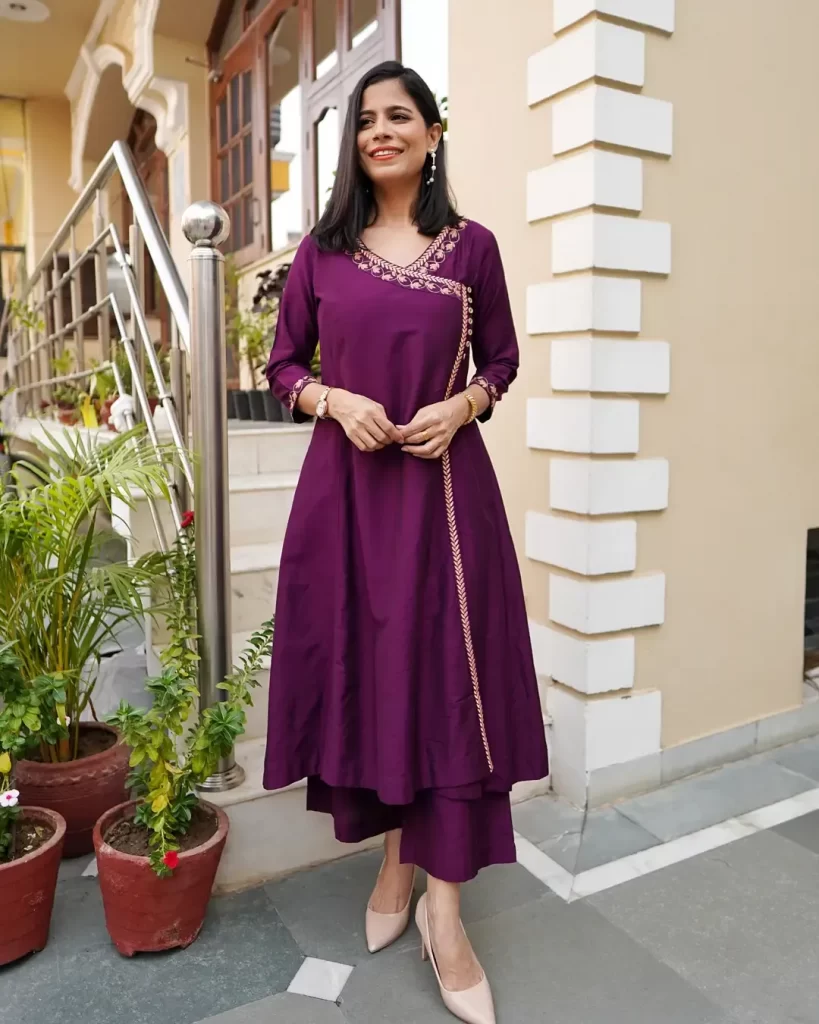
This purple angrakha over matching fitted pants shows exactly why the bottom half matters so much. The structured pants prevent the outfit from looking like a caftan, while the decorative neckline adds visual interest at the right level. I’ve made the mistake of pairing loose angrakhas with flowing pants — it completely kills the silhouette. Always choose one fitted element to anchor the look.
Try casual wrap styles with jeans
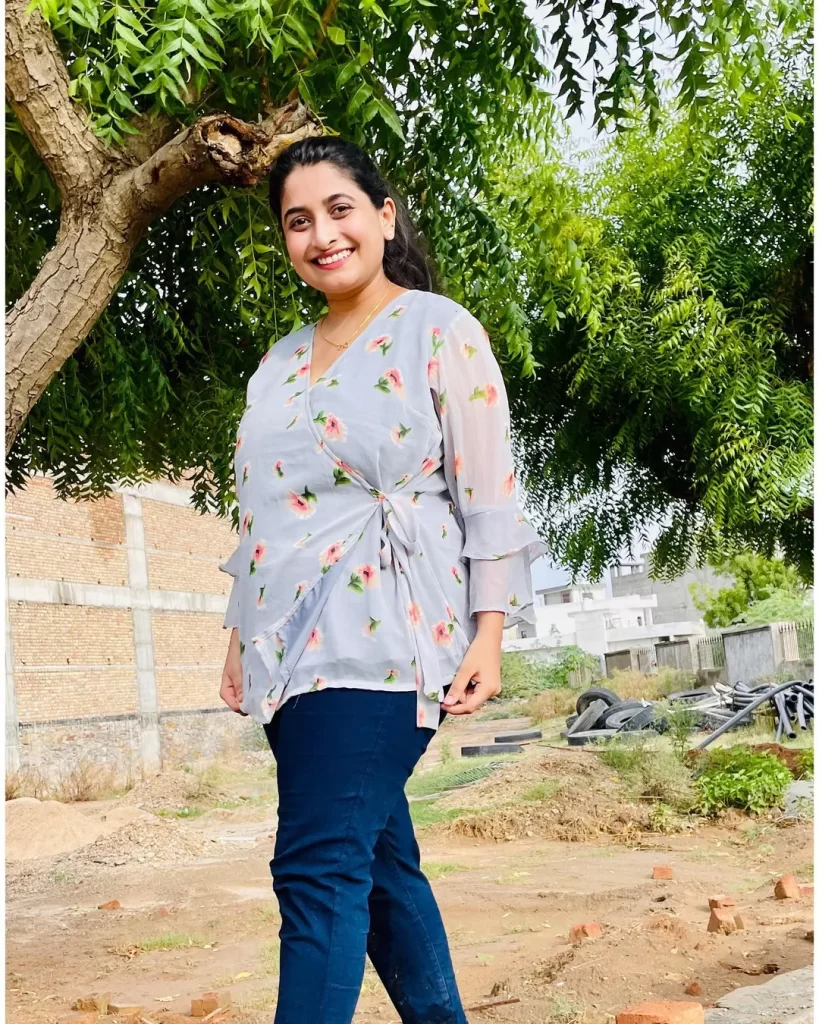
Here’s where modern angrakha styling gets interesting — this floral wrap top over dark jeans proves the concept works beyond traditional pairings. The front tie detail creates definition exactly where you need it, while the jeans ground the feminine print. This combination works because the proportions are balanced: fitted bottom, flowing top, waist clearly marked.
Embrace bold prints in coordinated sets
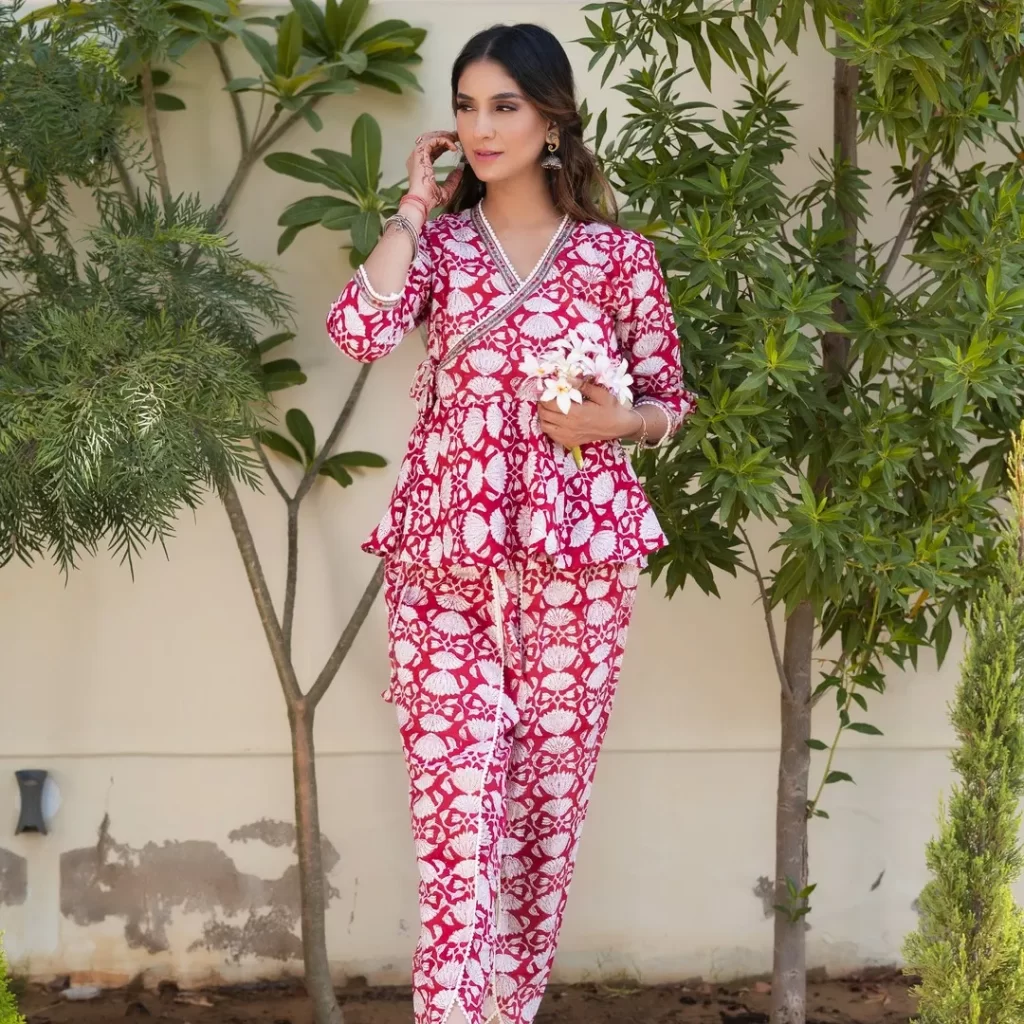
This red and white patterned set demonstrates why matching separates can be more powerful than single pieces. The geometric print creates visual interest without overwhelming, while the coordinated approach looks intentional rather than costume-like. I recommend starting with smaller prints like this rather than jumping into large-scale florals — they’re much more forgiving.
Add traditional elements for special occasions
This coral and gold ensemble shows how traditional details elevate the entire look. The embellished dupatta and ornate border work because they’re balanced against the simple silhouette underneath. The mistake I see constantly is over-accessorizing — when your angrakha has this level of detail, let it be the star. Simple gold jewelry and matching sandals are all you need.
Experiment with contemporary cuts
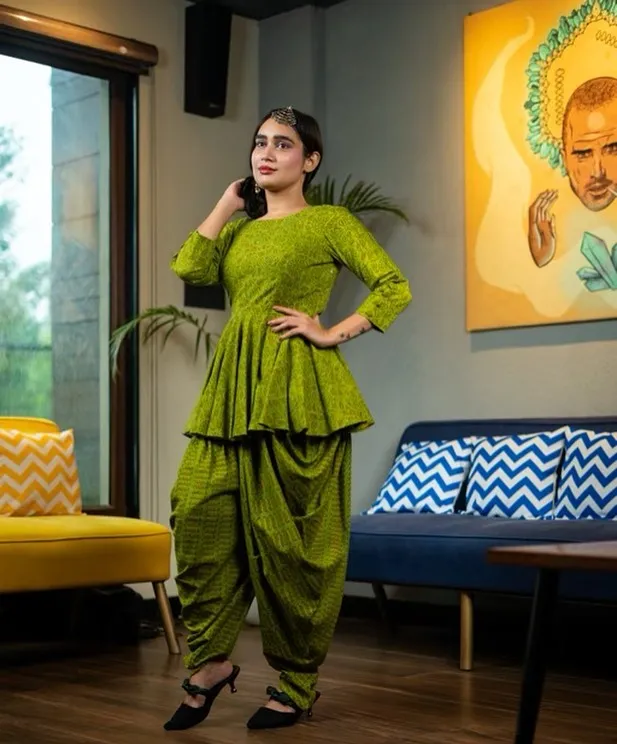
This lime green modern interpretation breaks every traditional rule — and works beautifully. The shorter length and draped pants create a fresh silhouette that feels current rather than costume-like. What makes this successful is the confidence in the styling: bold color, clean lines, minimal accessories. Sometimes the best angrakha look is the one that doesn’t look like an angrakha at all.
The angrakha was originally designed by Mughal courtiers in the 16th century as a practical solution to India’s extreme climate. The wrap-style construction allowed air circulation while maintaining modesty, making it the world’s first scientifically designed cooling garment.
Choose prints that complement your natural coloring
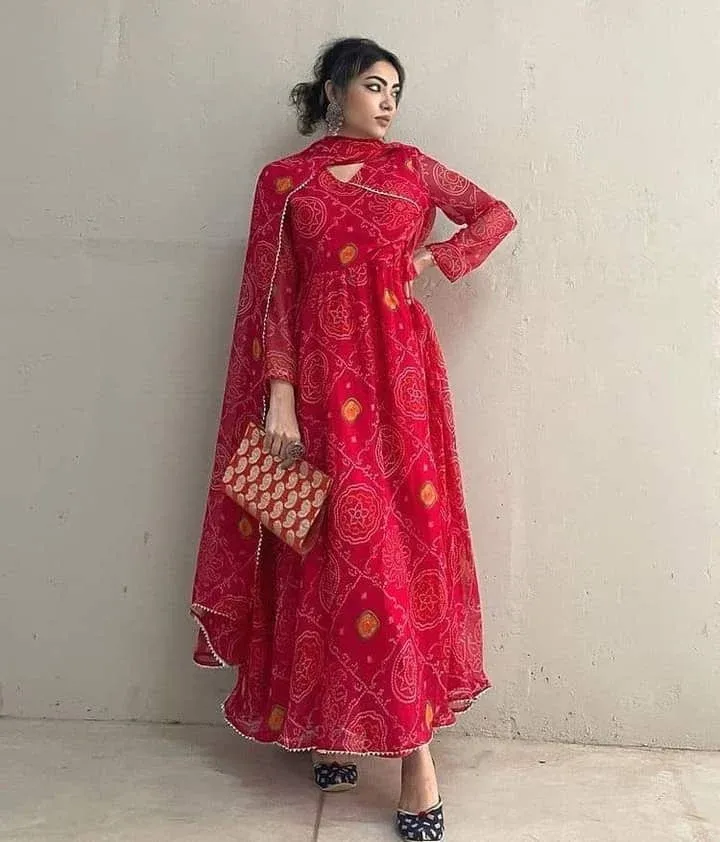
This red bandhani dress illustrates why print selection matters more than style details. The small, repetitive pattern creates texture without overwhelming, while the red base works beautifully with warm skin tones. I always advise clients to hold fabric against their face before buying — if the color drains you, no amount of perfect styling will save the look.
Balance bold prints with neutral accessories
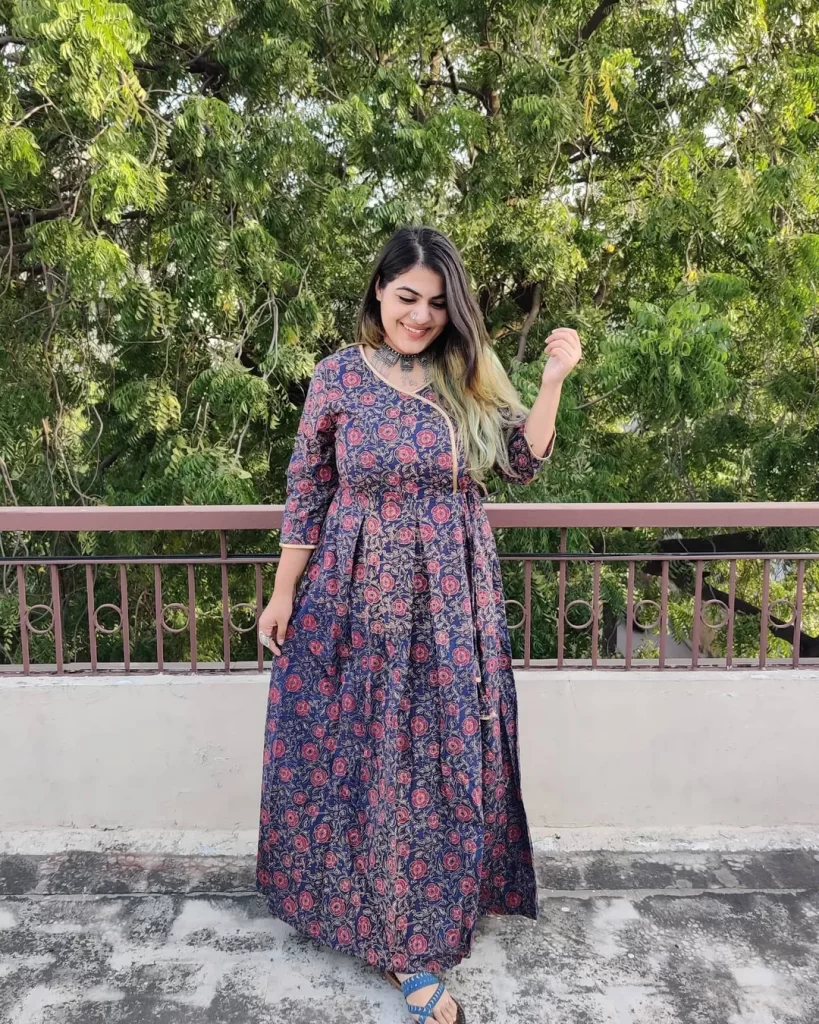
This navy floral maxi proves that busy prints need calm companions. The small-scale flowers create visual interest without chaos, while the length adds elegance. The key here is restraint — when your dress does all the talking, your accessories should whisper. Simple sandals and minimal jewelry let the print shine without competition.
Focus on fit at the shoulders and bust
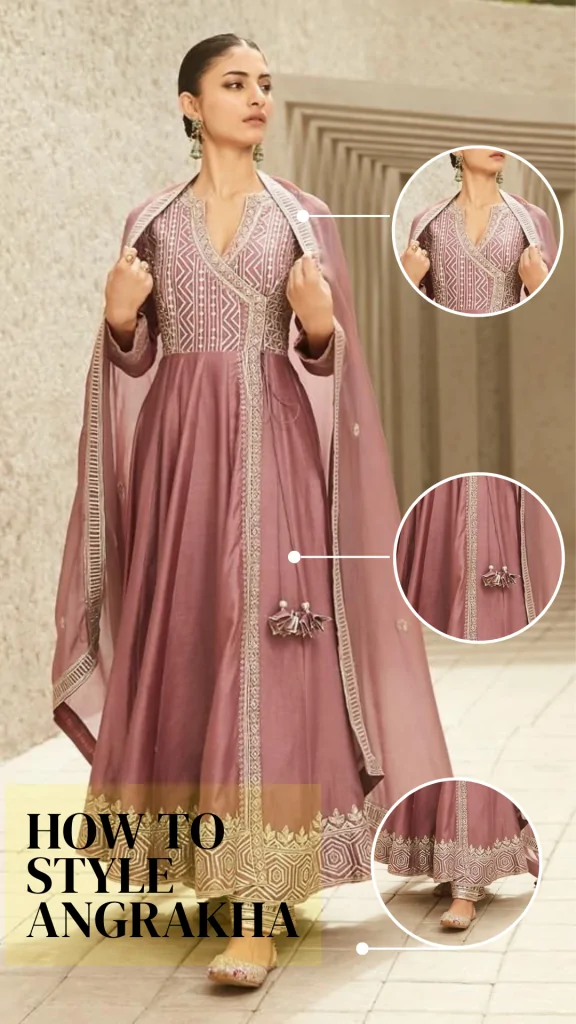
This dusty rose outfit demonstrates why the top portion is crucial — notice how the fitted bodice creates structure before the skirt flows freely. Many women size up in angrakhas thinking loose equals comfortable, but the opposite is true. You need precise fit through the torso to make the flowing elements look intentional rather than oversized.
Keep traditional elements authentic
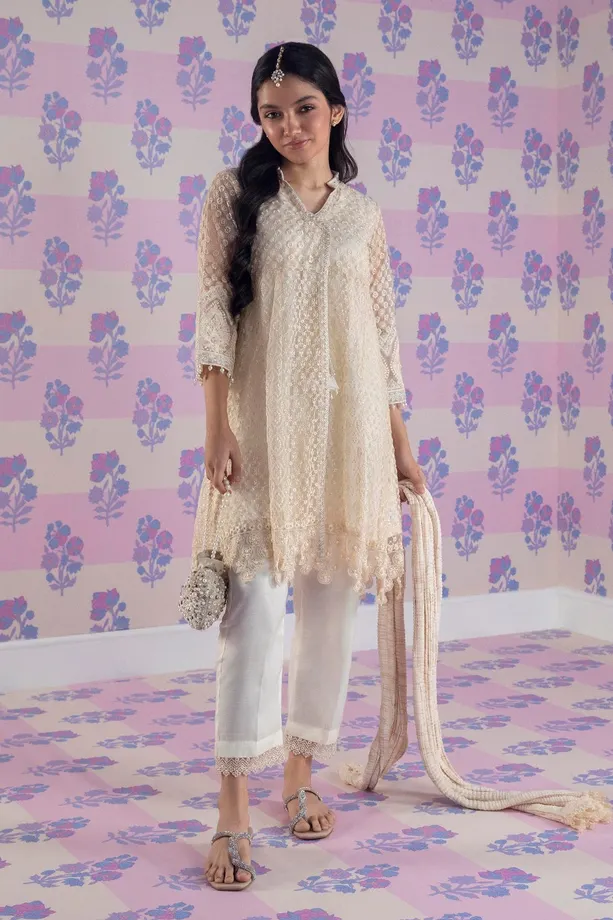
This cream outfit shows how authentic details make all the difference. The delicate embroidery and proper proportions create a look that feels respectful rather than appropriative. When wearing traditional styles, I always research the cultural significance and choose pieces from makers who understand the craft. Quality over costume every time.
Layer thoughtfully for cooler weather
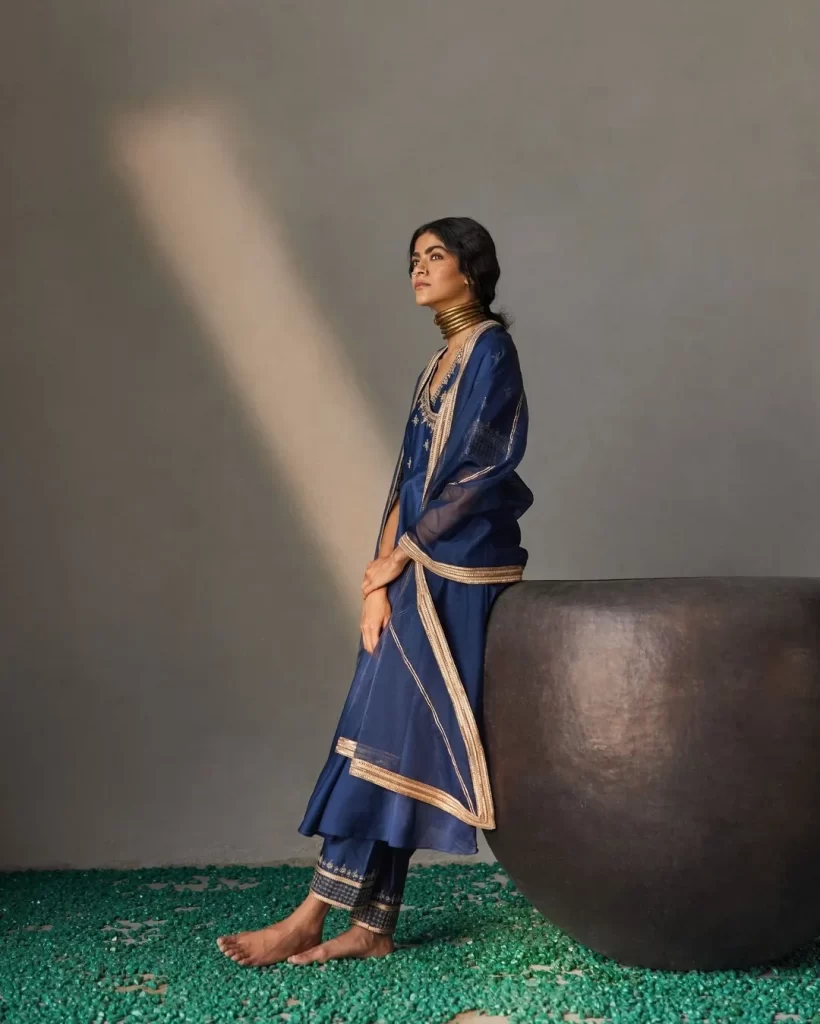
This navy ensemble with the striking gold collar demonstrates how to winterize traditional pieces. The high neckline and longer sleeves provide coverage without sacrificing the silhouette, while the rich color palette feels appropriate for cooler months. Layer a fitted thermal underneath rather than bulky sweaters that destroy the draping.
Choose colors that photograph beautifully
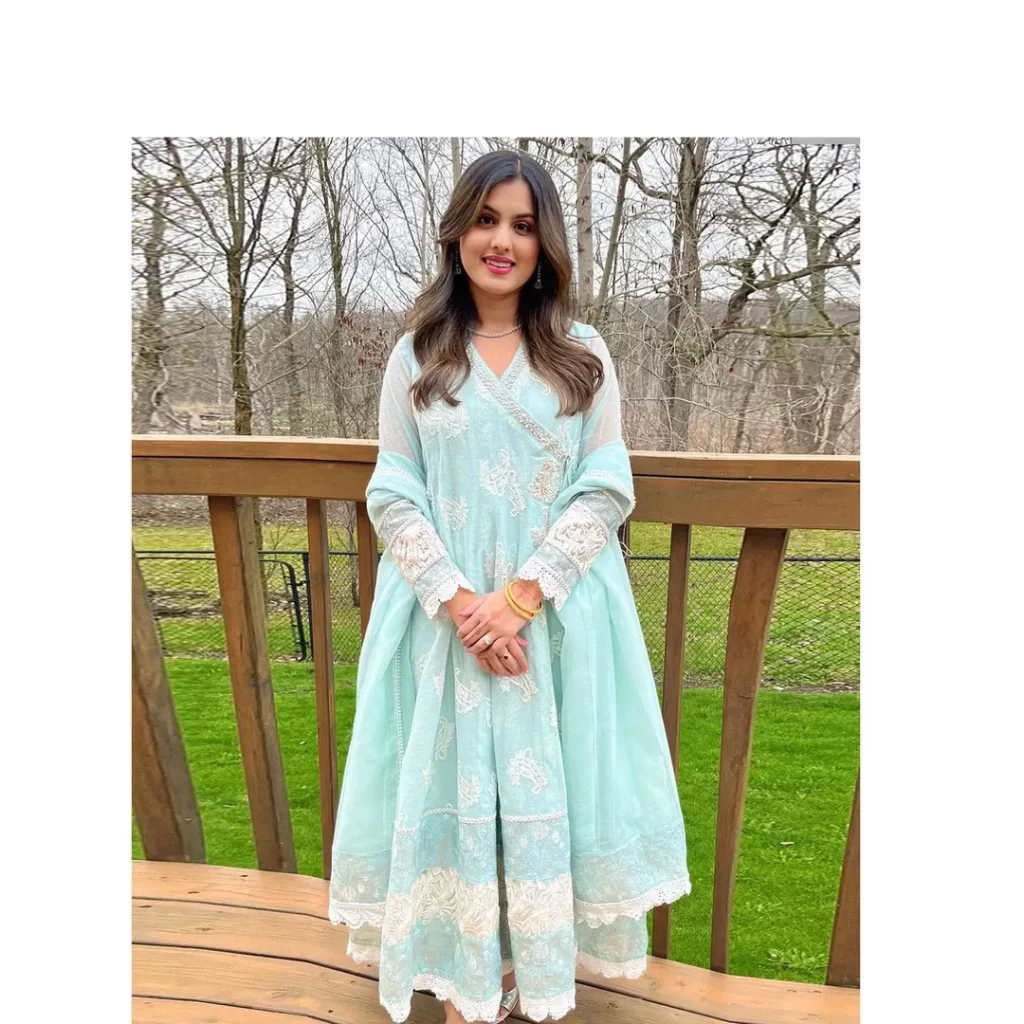
This powder blue set proves that soft colors can have maximum impact when the styling is right. The tone-on-tone approach creates sophistication, while the flowing silhouette photographs beautifully from every angle. Light colors like this require more attention to fit — any pulling or bunching becomes obvious immediately.
Ground flowing silhouettes with structured accessories
This burgundy angrakha succeeds because of the contrast between the flowing fabric and the structured styling. The controlled volume and rich color create drama without overwhelming the wearer. I always recommend starting with deeper shades like this — they’re more forgiving than pastels and work across more skin tones.
Dos & Don’ts
Modern Angrakha Dress Styling Ideas
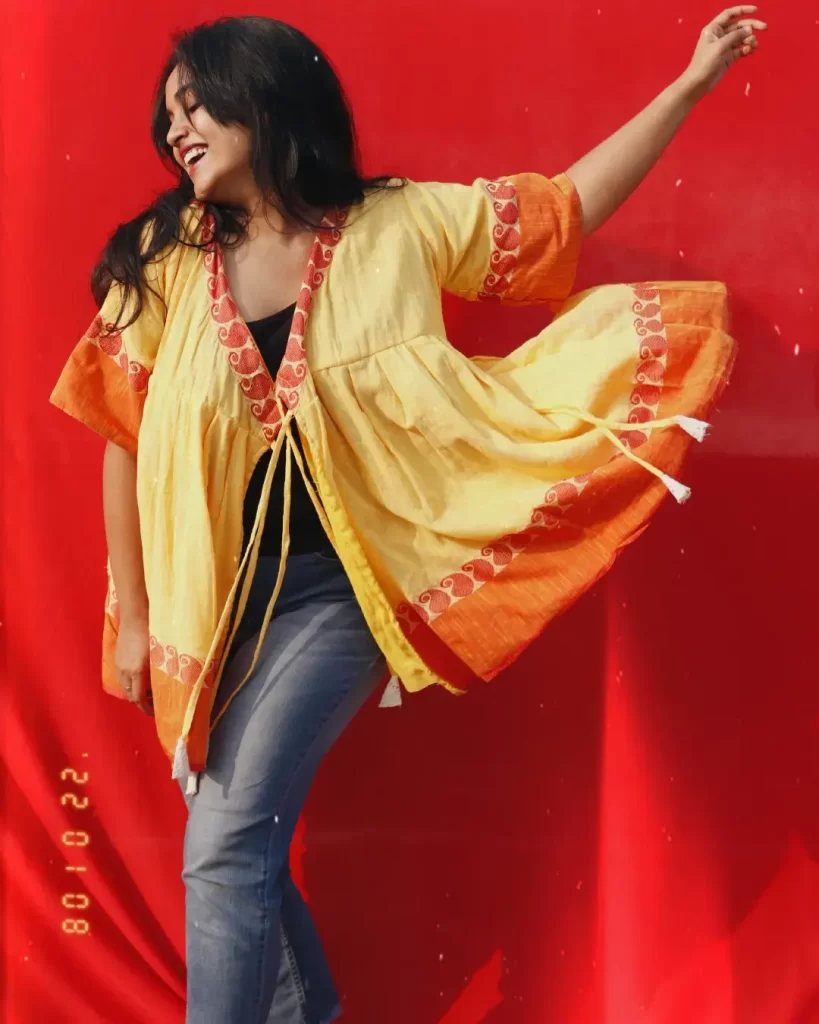
Bright Yellow Angrakha with Embroidered Trim
This sunshine yellow angrakha features traditional orange and red embroidered borders that frame the flowing silhouette beautifully. The knee-length cut with dramatic bell sleeves creates movement while staying practical for everyday wear. Perfect for women who want to embrace color without overwhelming their frame — the structured waist tie defines your silhouette while the loose fit skims rather than clings.
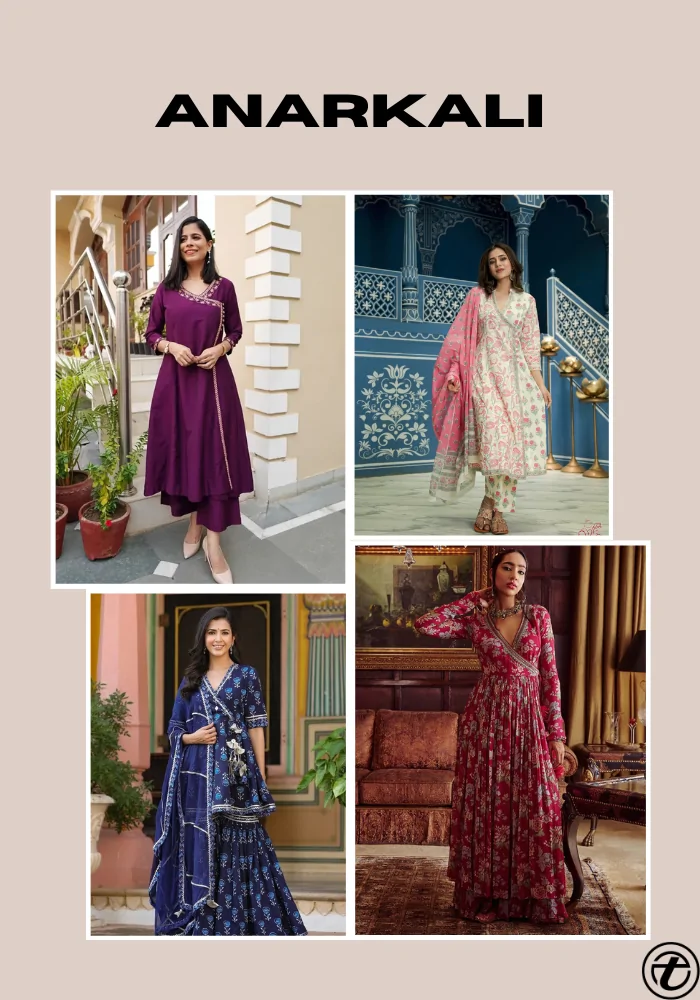
Traditional Angrakha Collection in Rich Jewel Tones
These four angrakha styles showcase the versatility of this traditional silhouette across different occasions and color palettes. From the deep plum midi dress to the intricate floral prints in coral and navy, each piece demonstrates how the wrap-style bodice flatters every body type. The varying lengths and sleeve styles prove that angrakha dresses work equally well for casual brunches and formal celebrations when you choose the right fabric weight and embellishment level.
Key takeaways
- Choose wrap-tie closures that sit at your natural waist to create the most flattering silhouette
- Balance bold patterns with solid color accessories to let the dress be the focal point
- Opt for knee-length or midi cuts for the most versatile and flattering proportions
- Select bell or three-quarter sleeves to add elegance without restricting movement
- Match embellishment levels to the occasion — save heavy embroidery for special events
- Consider jewel tones over pastels for more sophisticated and universally flattering looks
20 Best Baby Blue Dresses & Tips on How to Style Them
26 Best Electric Blue Outfits & Tips On How To Style Them
32 Kitenge Dress Designs & Ankara Styles
How to Dress Goth? 12 Outfit Ideas & Styling Tips
22 Modern Chikankari Kurti Designs & Styling Tips
What To Wear At The Races – 20 Dress Code Guide & Tips
How To Wear a Strapless Dress? 24 Styling Ideas & Tips
How To Dress In Your Twenties? 20 Outfit Ideas & Styling Tips