I’ve traveled to India two times across different seasons, and the same outfit can either save your day or ruin it depending on how you handle the fit and fabric. Loose-fitting natural fabrics are the difference between comfortable exploration and sweaty misery — your shirt should skim your body, never cling to it. The moment you step off the plane, you’ll understand why every local wears cotton that breathes and moves with them.
Most guys pack completely wrong for India, throwing in their regular vacation clothes without considering the climate extremes. I’ve watched tourists struggle in synthetic polo shirts while locals stay cool in loose kurtas, and the difference is night and day. The key isn’t just what you wear — it’s understanding that Indian weather demands respect, and your clothing choices can make or break your entire experience.
What is the Best Time to Travel?
India’s weather runs in three distinct seasons, and each demands a completely different wardrobe strategy. October to March offers the most comfortable temperatures across most regions — mornings start cool, afternoons warm up pleasantly, and evenings require a light layer. This is when you can actually wear jeans without suffering.
Summer months from April to June bring extreme heat, especially in northern plains where temperatures hit 45°C regularly. Cotton becomes mandatory during this period — anything synthetic will leave you drenched in sweat within minutes. Monsoon season from July to September means high humidity and sudden downpours, requiring quick-dry fabrics and waterproof layers you can shed quickly.
Styling Tips
Layer for temperature swings — Indian days can start at 15°C and hit 30°C by noon. I always pack a light cotton shirt I can tie around my waist when it heats up. Air-conditioned spaces are aggressively cold, so having something to throw on matters more than you think.
Choose natural over synthetic every time — cotton, linen, and hemp breathe while polyester traps heat and moisture against your skin. I learned this the hard way wearing a synthetic polo in Delhi’s heat. The fabric choice affects your comfort more than the style ever will.
Prioritize coverage for temples and religious sites — shoulders and knees must be covered for most sacred spaces. A lightweight long-sleeve shirt you can roll up works better than trying to find appropriate clothing on the spot.
Invest in proper footwear — you’ll walk on everything from marble temple floors to dusty village roads in the same day. Breathable sneakers or leather sandals that can handle both scenarios beat flip-flops or dress shoes every time.
Pack colors that hide dust — India is dusty, and white shirts show every speck within hours. Mid-tones like khaki, navy, and olive green look intentional even when they need washing.
Dos & Don’ts
Outfit Recommendations Season-wise
Winter (December-February)

What To Wear In Goa? 20 Best Outfits & Packing Tips for Men

What to Wear in South Africa? 11 Best Outfits & Tips for Men

19 Best Camping Outfit Ideas for Men with Packing Tips

Men’s Outfits To Wear With Oxford Shoes – 20 Styling Tips

30 Casual Outfit Ideas For Black Men with Styling Tips

How to Wear Trench Coats? 36 Outfit Ideas for Men

How to Wear Blue Jeans for Men ? 45 Outfit Ideas

How to Wear Mint Pants for Men ? 30 Outfit Ideas
Winter in India varies dramatically by region — Delhi mornings can hit 5°C while afternoons warm to 20°C. Layering becomes essential rather than optional. Start with a cotton t-shirt, add a light sweater or cotton shirt, and carry a jacket you can remove by midday. Jeans actually work during this season, paired with breathable cotton tops.
Northern hill stations like Shimla or Manali require proper winter gear — wool sweaters, insulated jackets, and warm pants. But in southern cities like Bangalore or Chennai, a light cotton shirt and chinos handle the mild temperatures perfectly. The key is checking your specific destination’s winter lows. winter travel outfit
Summer (March-June)
Summer demands a complete wardrobe shift toward maximum breathability. Loose cotton shirts become your uniform — fitted clothing turns into a sweat trap within minutes. Light colors reflect heat better than dark ones, despite showing dust more easily. Linen shirts work brilliantly if you don’t mind the wrinkled look.
Bottoms should be lightweight cotton or linen — chinos, cotton pants, or loose-fitting shorts where culturally appropriate. Avoid jeans completely unless you enjoy being miserable. Footwear needs to breathe too — canvas sneakers or leather sandals beat synthetic materials every time. striped shirt outfits
Traditional Indian clothing like kurtas and lungis evolved specifically for the subcontinent’s climate. The loose fit creates air pockets that cool the body through natural convection — a principle modern athletic wear companies are just starting to adopt.
Monsoon (June-September)
Monsoon season brings high humidity plus sudden, heavy downpours that can soak you completely in seconds. Quick-dry synthetic fabrics actually work better than cotton during this period — they dry faster when you get caught in rain. Pack shirts that dry within hours, not days.
Waterproof footwear becomes critical since streets flood regularly. Avoid leather shoes that take forever to dry — go for synthetic sneakers or waterproof sandals instead. Always carry a compact umbrella and a light rain jacket you can pack small. types of jackets
Cultural/Religious Considerations
Most Indian temples, mosques, and gurdwaras require covered shoulders and legs — no exceptions. I keep a lightweight long-sleeve cotton shirt specifically for religious sites, even in summer heat. Some temples require removing shoes, so slip-on footwear works better than complicated laces.
Conservative dress matters more in rural areas and smaller cities than in metro areas like Mumbai or Delhi. Shorts above the knee can draw unwanted attention in traditional settings. When in doubt, err on the side of coverage — you can always remove layers.
Sikh temples require head covering for everyone — they usually provide cloths at the entrance. Jain temples often have strict dress codes including no leather items. Research specific requirements for major sites you plan to visit.
Travel Outfit Ideas for India
Vacation Beach Style
Perfect for Goa or Kerala beaches where the vibe stays relaxed and casual. The patterned shirt works because it hides sand and salt stains while the loose fit handles coastal humidity. Black swim shorts transition easily from beach to beachside restaurant.

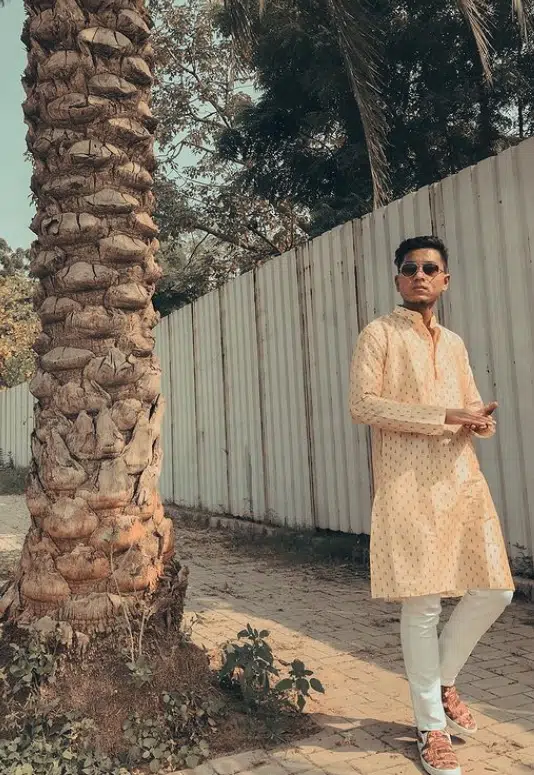
Traditional Kurta Look
This light-colored kurta with fitted pants hits the sweet spot between respecting local culture and staying comfortable. The cotton fabric breathes in heat while the traditional cut shows cultural awareness. Works perfectly for cultural sites, local festivals, or family visits.
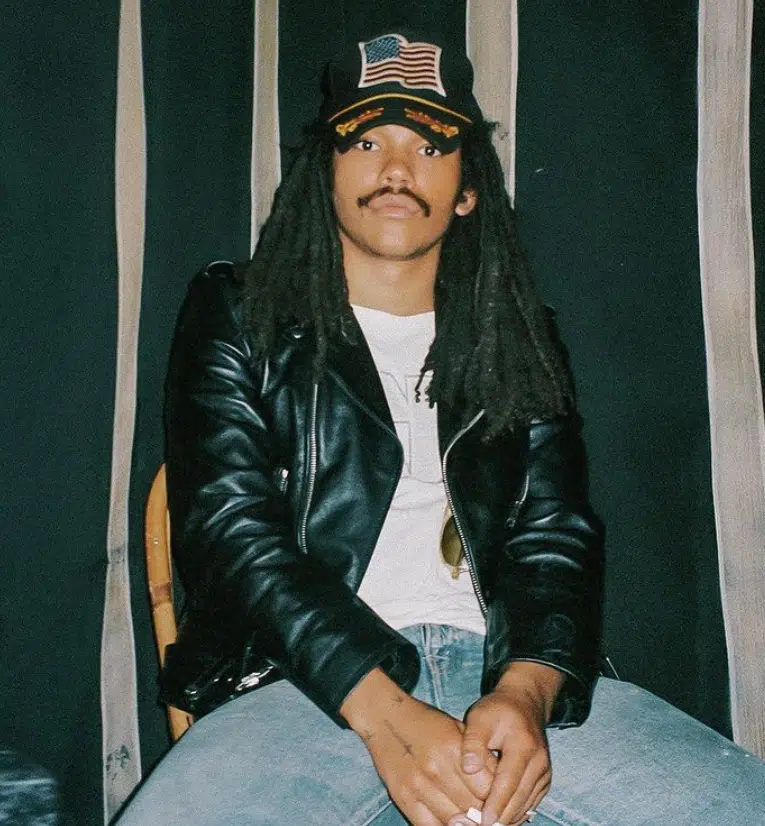
Urban Street Style
The leather jacket over white tee creates an edgy look that works in cooler cities like Delhi or Bangalore during winter months. The relaxed jeans and cap add casual comfort while maintaining style. Perfect for exploring urban areas and nightlife districts.
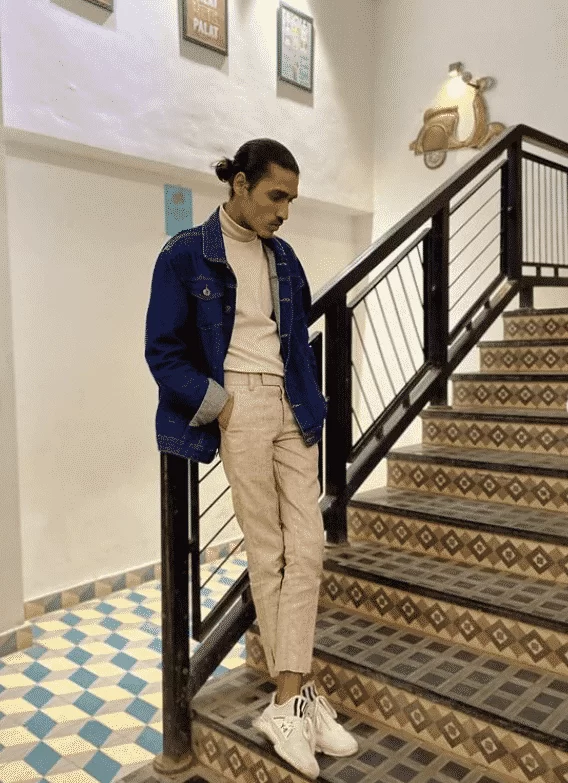
Smart Casual Comfort
Dark denim jacket over a neutral tee strikes the right balance for semi-formal occasions or nicer restaurants. The clean lines work in air-conditioned spaces while the cotton materials handle temperature changes. Easy to dress up or down depending on your plans.
Casual Layered Look
The patterned sweater over collared shirt demonstrates smart layering for India’s variable temperatures. Light colors hide dust while the loose fit allows air circulation. This combination transitions well from morning sightseeing to evening dining.

Resort Elegant Style
Linen or cotton blazer over a printed shirt creates resort-appropriate sophistication without the formality. The relaxed tailoring handles heat while maintaining polish for upscale hotels or business casual meetings. Neutral colors work anywhere.

Weekend Relaxed Outfit
Light shirt with rolled sleeves over shorts creates the ideal weekend exploring look for warmer regions. The casual loafers handle walking while looking more refined than sneakers. Perfect for markets, cafes, or casual sightseeing in coastal areas.

Essential India Basics
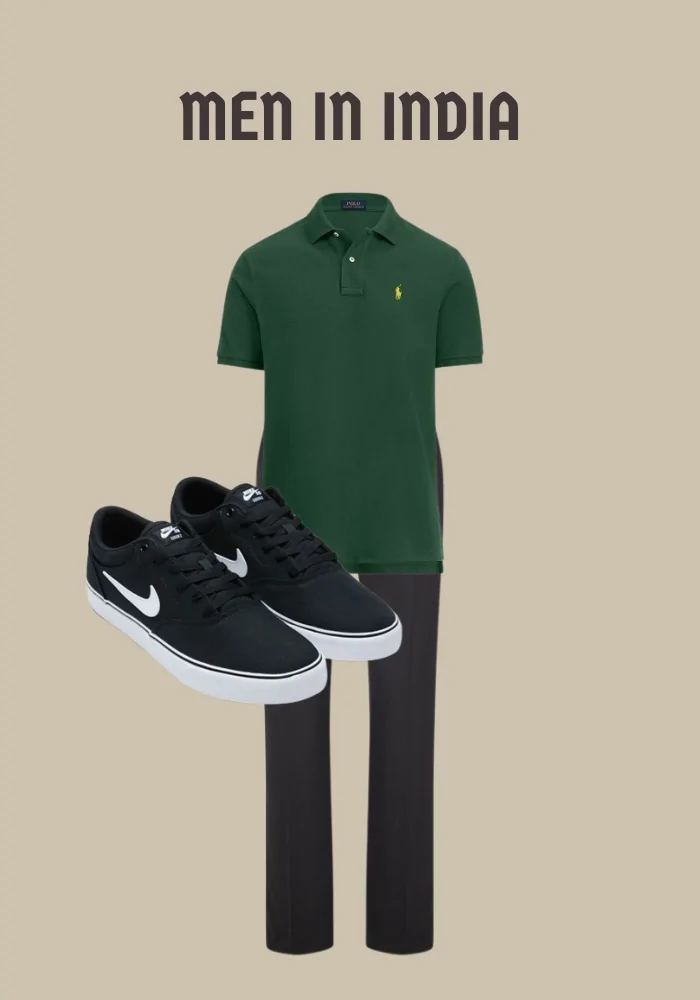
This green polo and dark chinos combination represents the core pieces every India traveler needs. Cotton polo shirts breathe while looking put-together, and dark pants hide the inevitable dust. Simple sneakers complete the practical foundation outfit.
Packing Smart
Pack for laundry every 3-4 days rather than trying to bring enough clothes for your entire trip. Laundry services are excellent and cheap throughout India — most hotels offer same-day service for reasonable prices. This lets you pack lighter and always have fresh clothes in the heat.
Bring fewer items in better fabrics rather than loading up on synthetic options. Two quality cotton shirts beat five polyester ones when you’re dealing with 35°C temperatures and high humidity. Focus on pieces that mix and match rather than complete outfits that only work together.
What to Wear on the Plane
Long flights to India require comfort over style, but you’ll face immigration and first impressions upon arrival. Loose cotton pants and a breathable button-shirt handle the journey while looking appropriate for customs and taxi rides. Avoid jeans on 12+ hour flights — your legs will thank you.
Layer for airplane temperature swings — cabins run cold while airports stay warm. A light sweater or jacket you can remove easily works better than trying to adjust with blankets. Slip-on shoes speed up security and prevent foot swelling during long flights.
Key takeaways
- Loose-fitting cotton clothing is essential for India’s heat and humidity — synthetic fabrics become unbearable
- Pack for temperature swings — mornings can be 20°C cooler than afternoons in the same city
- Religious sites require covered shoulders and knees — plan your temple visit outfits accordingly
- Natural fabrics outperform synthetics in Indian conditions — cotton, linen, and hemp breathe while polyester traps heat
- Choose mid-tone colors over white or black — they hide dust and pollution while staying cooler than dark colors
- Invest in versatile layering pieces rather than complete outfits — they adapt to India’s variable conditions
**QUICK TIPS:**
1. Roll shirt sleeves instead of folding them — creates better air circulation and looks more relaxed in India’s casual atmosphere.
2. Choose canvas over leather belts — they dry faster when wet and don’t crack in extreme heat like leather does.
3. Pack lightweight scarves — essential for temple head covering and useful for air-conditioned spaces or dusty travel days.
4. Wear breathable underwear — cotton or bamboo blend prevents chafing during long walking days in heat and humidity.
5. Bring antimicrobial socks — your feet will sweat more than usual, and these prevent odor during extended sightseeing days.
6. Choose shirts with chest pockets — perfect for carrying small items when you want to keep your hands free for photography and navigation.
What To Wear In Goa? 20 Best Outfits & Packing Tips for Men
What to Wear in South Africa? 11 Best Outfits & Tips for Men
19 Best Camping Outfit Ideas for Men with Packing Tips
Men’s Outfits To Wear With Oxford Shoes – 20 Styling Tips
30 Casual Outfit Ideas For Black Men with Styling Tips
How to Wear Trench Coats? 36 Outfit Ideas for Men
How to Wear Blue Jeans for Men ? 45 Outfit Ideas
How to Wear Mint Pants for Men ? 30 Outfit Ideas