The blazer dress is either your secret weapon or your biggest wardrobe mistake — and the difference comes down to three simple rules most women ignore. I’ve watched clients transform from looking like they’re playing dress-up in their mother’s clothes to commanding every room they enter, all because they learned how to work with the blazer dress instead of against it.
Here’s what I learned the hard way: blazer dresses aren’t forgiving. They expose every proportion mistake and magnify styling missteps in ways that other dresses don’t. But when you get them right, they deliver something no other piece can — instant authority with zero effort. The trick is understanding that structure needs softness and power needs balance.
Styling Tips
Choose statement heels over safe flats
This red blazer dress demonstrates why your shoe choice makes or breaks the entire look. Those white strappy heels aren’t just pretty — they’re doing the heavy lifting. A blazer dress can read as severe or corporate without the right heel height and detail. The ankle strap adds visual interest that plain pumps can’t deliver, while the height prevents the dress from overwhelming your proportions.

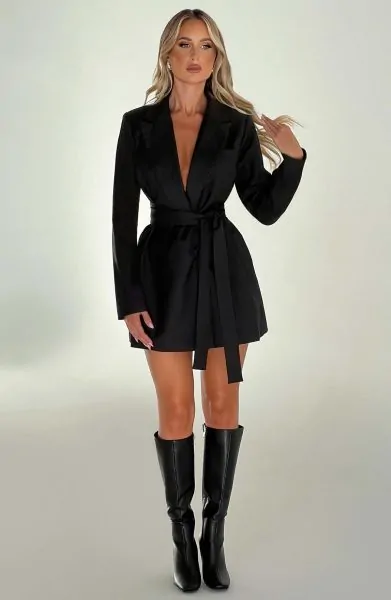
Belt at your natural waist, not where the dress suggests
That black blazer dress works because the belt hits exactly where it should — at the narrowest part of her torso, not where the dress seams dictate. I see women tie belts wherever the dress tells them to, which often sits too low and creates a boxy silhouette. Find your actual waistline and ignore where the designer placed the belt loops. Your body’s proportions matter more than the dress’s construction.
Layer sleeveless blazer styles over fitted basics
This sleeveless blazer vest over distressed jeans shows how to make the style work for casual days. The key is the fitted black underneath — it provides the sleek foundation that prevents the vest from looking like you raided a corporate closet. Without that fitted base layer, sleeveless blazers can gap at the sides and create unflattering bulk around your midsection.

Contrast colors create more impact than matching
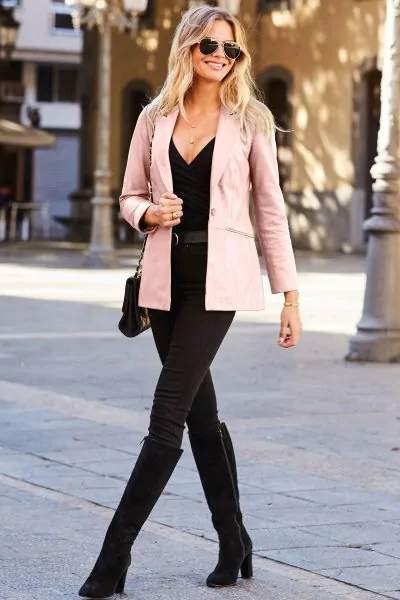
The pink blazer against all-black everything proves that opposite colors work better than safe coordination. When you match your blazer to your bottoms, you lose definition and create one long vertical line that can shorten your frame. This contrast approach adds visual interest and prevents the blazer from disappearing into your outfit.
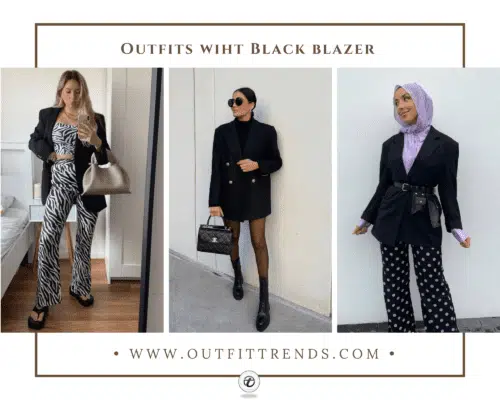
24 Cute Black Blazer Outfit Ideas for Women
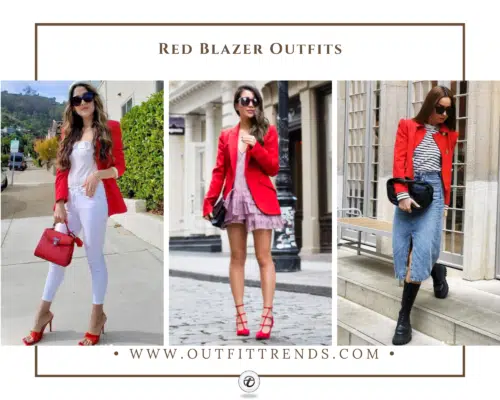
How To Wear A Red Blazer – 20 Outfit Ideas
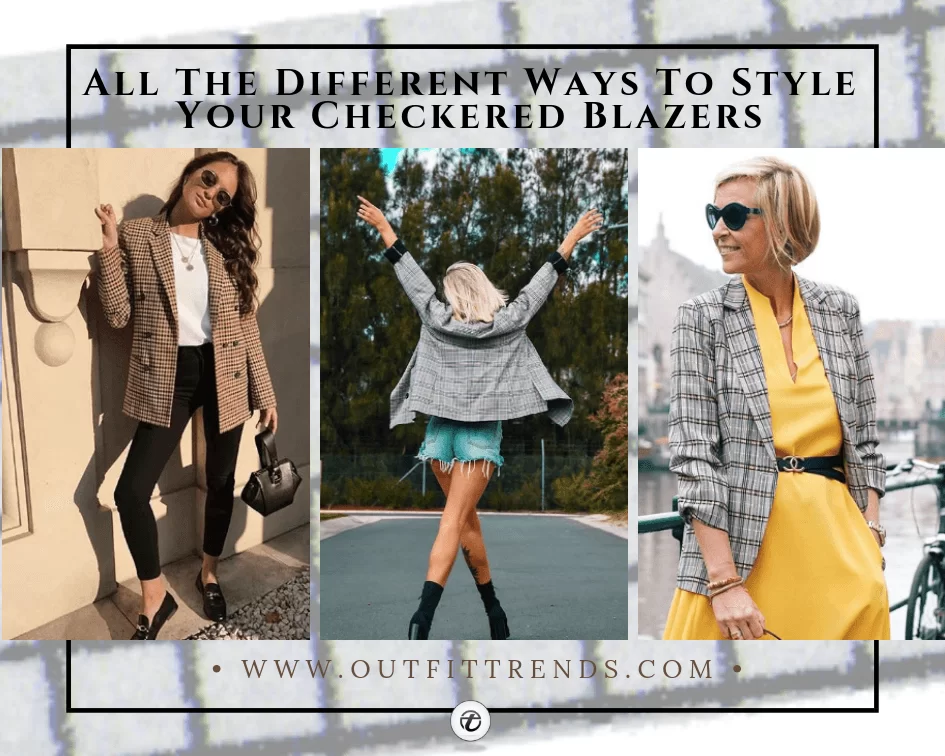
How To Wear Checkered Blazers? 20 Outfit Ideas

20 White Leather Jacket Outfits Ideas For Girls

12 Black Denim Jacket Outfit Ideas with Styling Tips

How to Wear Aviator Jackets: 22 Outfit Ideas & Styling Tips

23 New Year Eve Wedding Guest Dress Ideas for Women
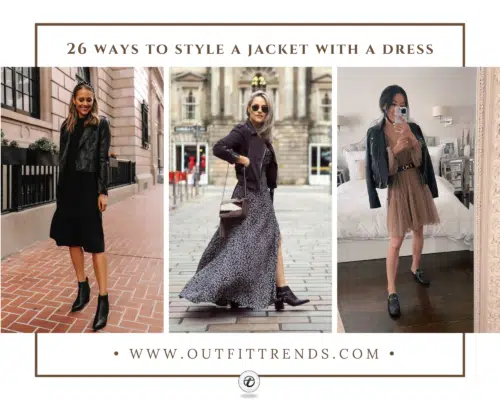
How to Pair Jackets with Dresses – 26 Outfit Ideas & Tips
The blazer dress originated in the 1960s when Yves Saint Laurent introduced “Le Smoking” — the first tuxedo for women. What started as a rebellion against feminine dress codes became the foundation for every blazer dress we wear today.
Rich textures elevate the entire look
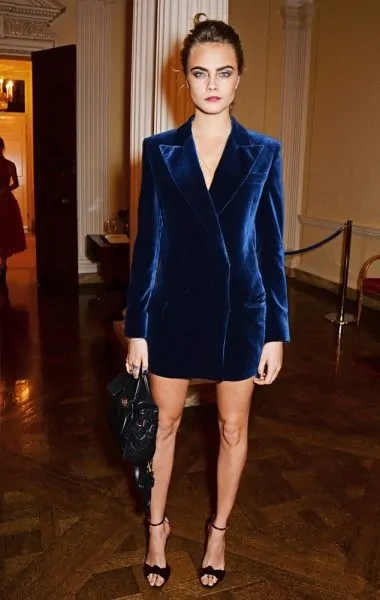
This navy velvet blazer dress demonstrates how fabric choice transforms a basic silhouette into something special. Velvet catches light differently than standard suiting fabric, which adds depth and luxury without requiring expensive accessories. When you’re investing in a blazer dress, texture gives you more versatility than color ever will.
Add unexpected details to break up severity
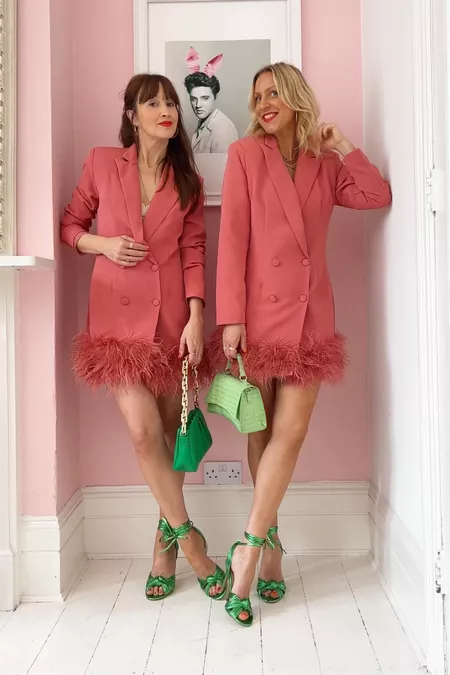
Those pink dresses with feather-trimmed hems show how one playful element prevents a blazer dress from reading as pure business wear. The feathers soften the sharp lines and double-breasted formality without compromising the dress’s structure. This principle works with any detail — textured buttons, contrasting piping, or interesting sleeve treatments.
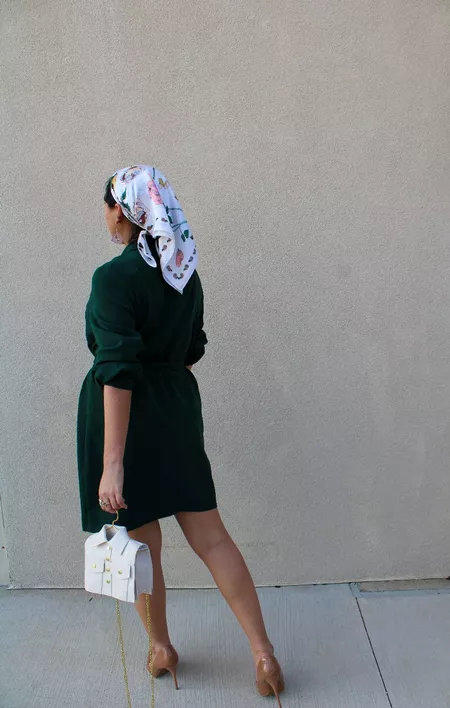
Use accessories to define your waistline
The green dress with the white bag positioned at hip level creates a visual waist even without a belt. The bag’s placement and color break up the dress’s long vertical line and add proportion where the eye needs it most. This technique works when belts feel too obvious or when the dress fabric doesn’t work well with traditional belting.
Dos & Don’ts
Blazer Dress Styling Ideas
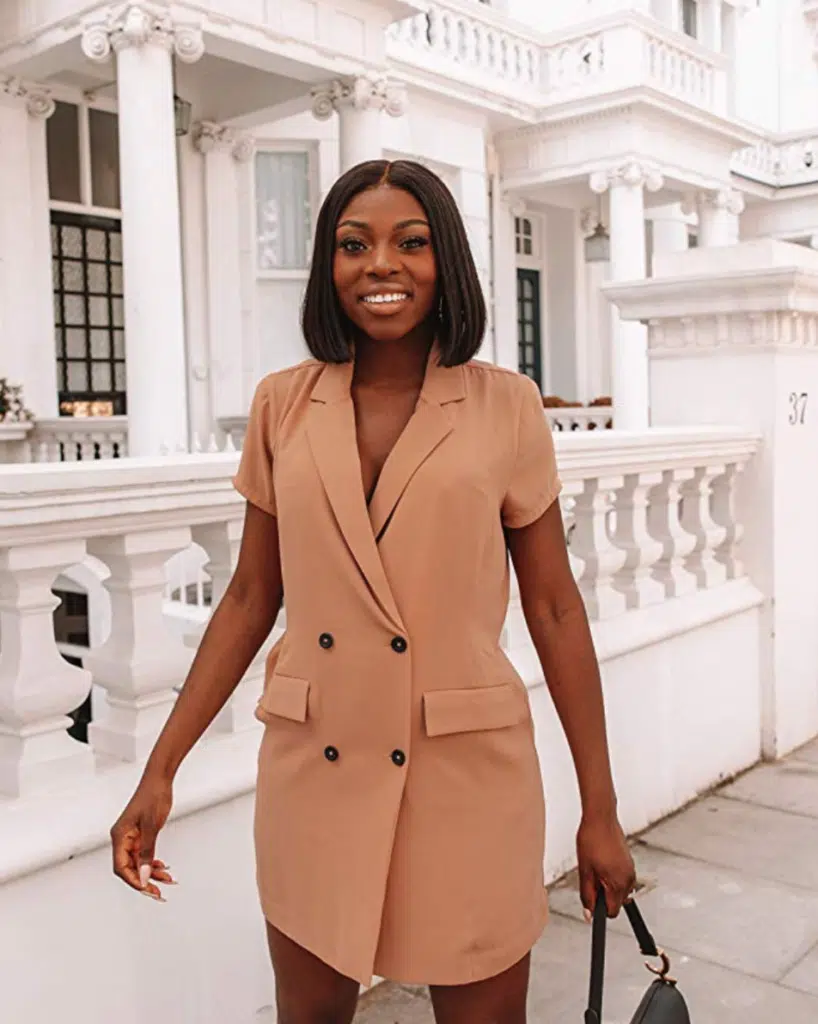
Camel Double-Breasted Mini
A camel blazer dress with short sleeves and double-breasted buttons creates instant polish without trying too hard. The neutral tone works with any skin tone, while the structured shoulders add definition to your silhouette. This works beautifully for brunch dates or business casual events where you want to look put-together but approachable.
White Long-Sleeved Statement Piece
A crisp white blazer dress with full sleeves makes a bold statement that’s surprisingly versatile. The monochromatic approach creates a clean, modern look that photographs beautifully. Pair it with metallic sandals to add warmth and prevent the all-white from looking too stark.

White Poolside Power Look
The same white blazer dress styled for a completely different occasion proves its versatility. Adding colorful accessories like bright green heels and a burgundy bag transforms the look from corporate to vacation-ready. The contrast between the structured dress and relaxed poolside setting creates visual interest.

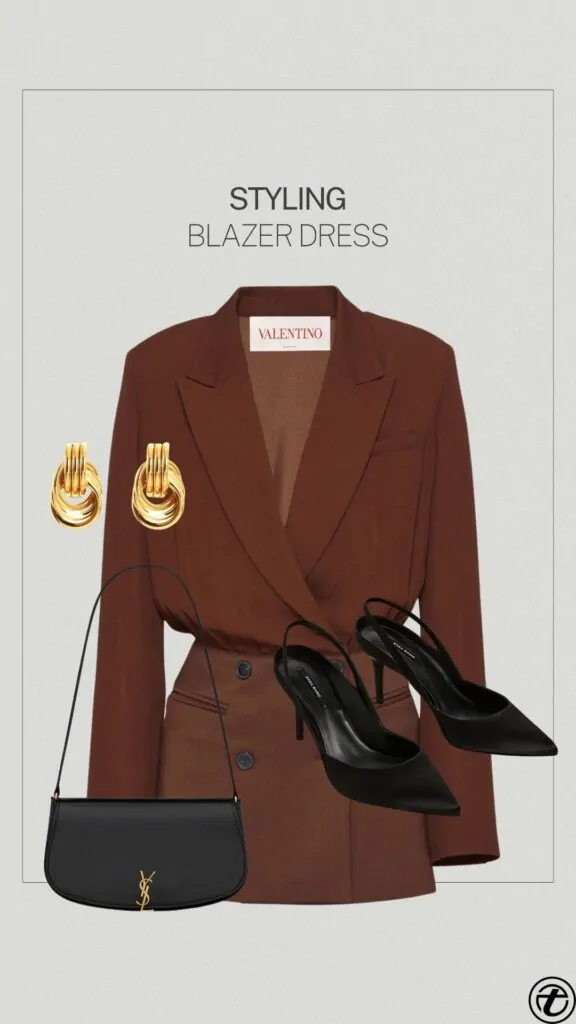
Brown Blazer Dress with Classic Accessories
A rich brown blazer dress styled with black pumps and a structured bag shows how neutral-on-neutral dressing works effortlessly. The chocolate tone is more unexpected than black or navy, making it feel fresh while remaining professional. Gold earrings add just enough warmth without overwhelming the look.
Quick tip
Choose neutral blazer dresses over bright colors — they work with more accessories and occasions.
Key takeaways
- Choose neutral blazer dresses in camel, white, or brown — they work with more accessories than bold colors
- Use colorful shoes and bags to completely change the mood of the same dress
- Style short-sleeve versions for warmer weather and long sleeves for air conditioning or cooler days
- Keep accessories structured and minimal to let the blazer dress be the statement piece
- Mix different neutrals together like brown and black for a more interesting look than matching everything
- Remember that double-breasted styles add more structure and formality than single-breasted options
24 Cute Black Blazer Outfit Ideas for Women
How To Wear A Red Blazer – 20 Outfit Ideas
How To Wear Checkered Blazers? 20 Outfit Ideas
20 White Leather Jacket Outfits Ideas For Girls
12 Black Denim Jacket Outfit Ideas with Styling Tips
How to Wear Aviator Jackets: 22 Outfit Ideas & Styling Tips
23 New Year Eve Wedding Guest Dress Ideas for Women
How to Pair Jackets with Dresses – 26 Outfit Ideas & Tips