The first time I wore a fringe dress, I looked like I’d been attacked by a craft store. The movement was all wrong, the proportions were off, and I spent the entire evening picking at loose threads. That disaster taught me everything about why fringe dresses fail — and more importantly, how to make them work.
Most women approach fringe the wrong way. They treat it like any other dress detail, when really it’s the star of the show that needs everything else to step back. The secret isn’t in the dress itself — it’s in understanding that fringe creates visual noise, so your styling needs to create calm everywhere else.
I’ve been styling fringe dresses for over a decade, and I’ve learned that the difference between looking like a flapper costume and looking polished comes down to three key decisions: your undergarments, your accessories, and your movement. Get these wrong and even the most expensive fringe dress will look cheap.
Styling Tips
Choose the right undergarments first — this determines everything else. Fringe shows every line, bump, and bulge underneath. I always wear seamless underwear and a smooth-cup bra with fringe dresses. The fabric needs to skim your body without clinging, because tight undergarments create ridges that the fringe will highlight rather than hide.
Keep accessories minimal and structural — fringe provides all the texture you need. I stick to sleek metals and avoid anything with movement or detail that competes with the dress. A simple chain necklace or stud earrings work perfectly, while statement pieces or layered jewelry create visual chaos. The fringe should be the only thing moving on your body.
Match your shoes to the fringe length — this creates a cohesive silhouette. With knee-length fringe, I choose heels that hit at the ankle to create one continuous line. For shorter fringe dresses, pointed-toe flats or low block heels work better than anything too chunky or detailed. For more ideas, see shoe color.
How To Style A Wrap Dress – 26 Outfit Ideas
How to Dress Goth? 12 Outfit Ideas & Styling Tips

Tomboy Outfit Ideas 15 Tips How to Dress Like a Tomboy
20 Mustard Yellow Dress Outfit Ideas Trending This Year
20 Best Bubble Hem Dress Ideas and Styles
How to Wear the White Boho Dress? 21 Outfit Ideas
How to Wear Leggings Under A Dress ? 32 Outfit Ideas
How To Dress In Your Twenties? 20 Outfit Ideas & Styling Tips
Consider the fringe weight when choosing your jacket — heavy fringe needs structured outerwear. I learned this the hard way when I threw a soft cardigan over a beaded fringe dress and looked shapeless. A tailored blazer or leather jacket provides the framework that fringe needs, while anything drapey gets lost.
The fringe dress trend originated in the 1920s as a way to create movement and sound while dancing. The original Charleston dresses had weighted beads at the end of each fringe strand to enhance the swaying motion and create a rhythmic sound on the dance floor.
Plan for the practical reality of fringe — it catches on everything. I always do a movement test before leaving the house. Sit down, walk up stairs, get in and out of a car. Fringe that looks perfect standing still can become a nightmare when you’re actually living in it. Choose dresses where the fringe falls away from your body when you move.
Work with your body type, not against it — fringe adds visual weight wherever it falls. If you want to emphasize your waist, choose a dress with fringe that starts below the hip. If you want to create movement at your hemline, make sure the fringe isn’t competing with other details higher up on the dress.
Dos & Don’ts
Fringe Dress Styling Ideas That Actually Work
Golden Sequin Fringe with Metallic Accessories
This gold sequin fringe dress creates maximum impact when you commit fully to the metallic theme. The matching gold bag and strappy sandals amplify the glamour instead of competing with it. This works best for evening events where you want to be the center of attention — the fringe catches light beautifully as you move.

Ombre Fringe in Sunset Tones
The tiered fringe in graduating coral-to-red creates a stunning ombre effect that’s both bold and wearable. The key here is keeping accessories minimal — let the dress do all the talking. This style flatters most body types because the fringe creates movement that draws the eye vertically rather than horizontally.

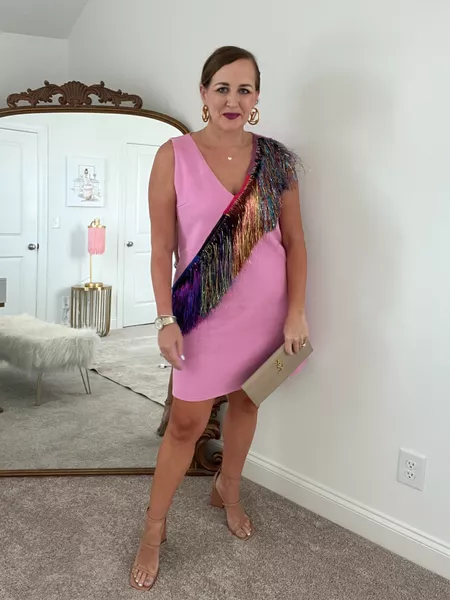
Pink Base with Rainbow Fringe Detail
A simple pink dress gets personality from a diagonal rainbow fringe panel — proof that fringe doesn’t have to cover the entire garment to make an impact. The nude shoes keep the focus on the colorful detail without overwhelming the look. This approach works well if you’re new to fringe and want to test the waters.
Floral Print with Red Fringe Hem
Mixing patterns and textures shouldn’t work, but this floral dress with red fringe does because both elements share the same color palette. The black strappy heels ground the busy print and texture combination. This proves you can wear fringe even when the base fabric has its own strong pattern.
Quick tip
Choose bodycon silhouettes to prevent fringe from adding unwanted volume.

Pink Tie-Dye with Matching Fringe
The coordinated hat and dress combo shows how to do maximalist fringe styling — when everything matches this perfectly, it becomes intentionally theatrical rather than accidentally overwhelming. The white lace-up sandals provide a clean break between the busy pattern and the ground. This look requires confidence but pays off at summer events.

Mustard Two-Piece with Tiered Fringe
Separating fringe into a crop top and skirt makes the texture more wearable for daytime. The mustard yellow feels fresh and modern compared to typical black or gold fringe pieces. This silhouette works particularly well on curvier figures because it defines the waist while the fringe skirt skims the hips.

Cream Fringe with Bohemian Accessories
The neutral cream fringe feels relaxed when paired with layered turquoise jewelry and casual styling. This proves fringe doesn’t always have to be about glamour — it can be part of a bohemian daytime look. The key is choosing softer, more fluid fringe over structured sequined versions.
Quick tip
Match your shoes to your dress color for a seamless leg line with midi lengths.

Black Strapless with Statement Fringe
A simple black base lets dramatic black fringe take center stage without competing elements. The strapless silhouette keeps the neckline clean so the movement happens from the waist down. This is the safest way to wear statement fringe — stick to one color and let the texture create all the interest.

White Kaftan with Purple Fringe Panels
Adding fringe panels to a flowing kaftan creates movement without sacrificing comfort. The white base keeps it from feeling too heavy while the purple fringe adds just enough detail to make it special. This style works beautifully for resort wear or summer events where you want to look put-together but stay cool.

Classic White Tiered Fringe
Multiple tiers of white fringe create a wedding-appropriate look that’s still party-ready. The all-white palette feels fresh and modern rather than trying too hard. This silhouette is particularly flattering because each fringe tier hits at a different point, creating a slimming vertical line that works on most body types.
Quick tip
Keep accessories minimal and sleek when wearing heavily fringed pieces.

Red Sequined One-Shoulder Fringe Dress
This dramatic red one-shoulder dress proves that fringe works best when it’s the star of the show. The asymmetrical neckline and cascading sequined fringe create movement that catches light beautifully, while the fitted silhouette keeps the look from overwhelming petite frames. I always tell clients to keep accessories minimal with heavily embellished fringe — let the dress do all the talking.

Camel Knit Fringe Sweater Dress with Boots
This turtleneck sweater dress with subtle shoulder fringe shows how to wear the trend during the day without looking costume-y. The neutral camel tone and fitted silhouette create a sophisticated base, while knee-high boots in the same color family elongate the legs and balance the midi length. The fringe detailing adds just enough texture without competing with the clean lines of the dress.

Key takeaways
- Heavy fringe needs simple styling — avoid competing textures or busy accessories
- Choose fitted silhouettes over loose ones to prevent fringe from adding bulk
- Match your shoe color to your dress for leg-lengthening effect with midi and maxi fringe pieces
- Asymmetrical necklines work particularly well with one-shoulder fringe placement
- Neutral fringe translates better to daytime wear than bright metallic versions
- Keep hair off your shoulders when wearing fringe to showcase the detail properly
How To Style A Wrap Dress – 26 Outfit Ideas
How to Dress Goth? 12 Outfit Ideas & Styling Tips
Tomboy Outfit Ideas 15 Tips How to Dress Like a Tomboy
20 Mustard Yellow Dress Outfit Ideas Trending This Year
20 Best Bubble Hem Dress Ideas and Styles
How to Wear the White Boho Dress? 21 Outfit Ideas
How to Wear Leggings Under A Dress ? 32 Outfit Ideas
How To Dress In Your Twenties? 20 Outfit Ideas & Styling Tips