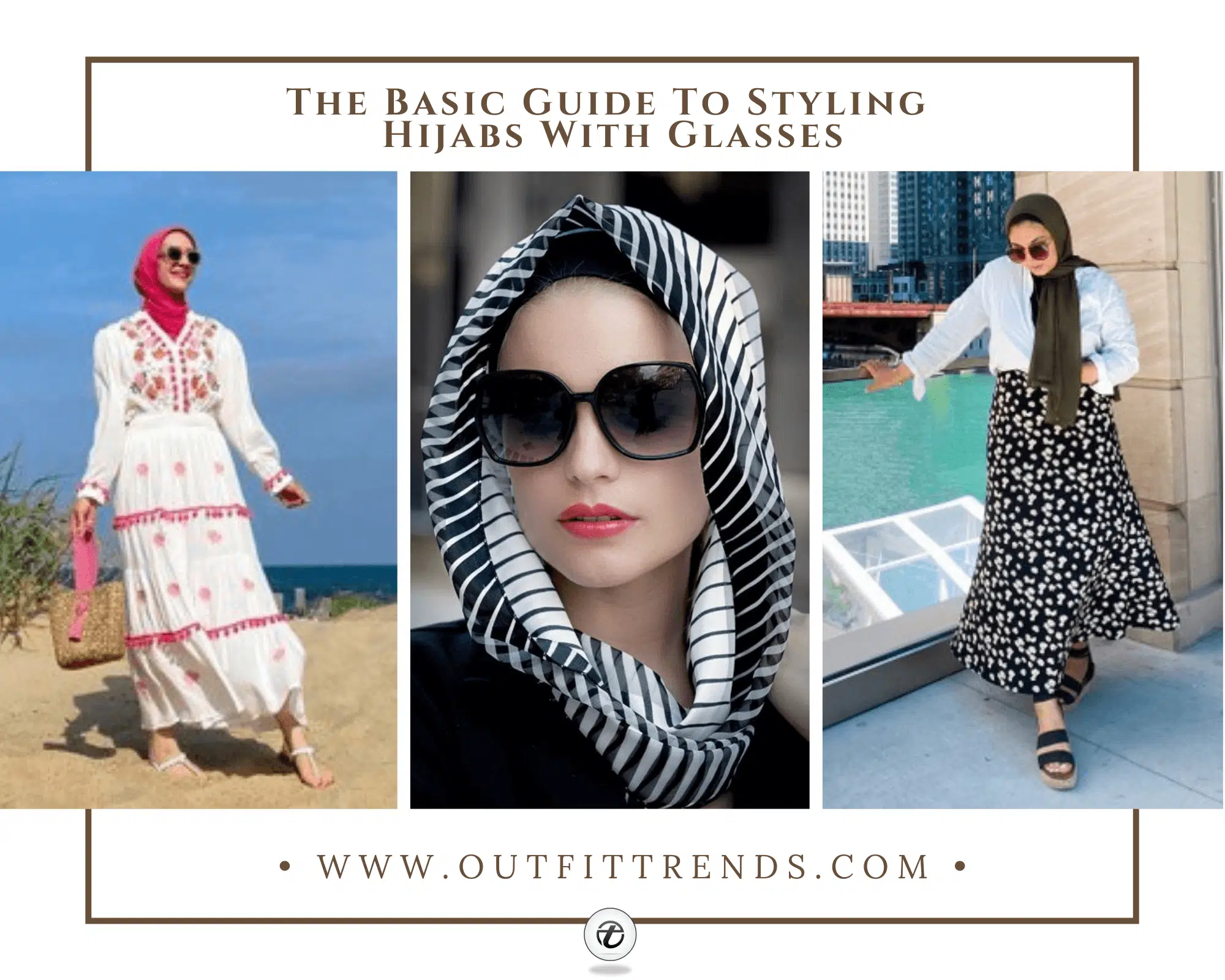
I spent my first year wearing maang tikka thinking I had to choose between my jewelry and my hijab. What a waste that was. The truth is, a well-placed maang tikka can actually enhance your hijab styling — but only if you understand the balance between coverage and celebration.
After years of experimenting with different hijab draping techniques and forehead jewelry combinations, I’ve learned that the secret isn’t hiding your maang tikka under your hijab. It’s about strategic placement that honors both your modesty and your cultural expression. The key lies in understanding which hijab styles create the perfect frame for your forehead jewelry, and which maang tikka designs work harmoniously with different fabric weights and draping methods.
Styling Tips
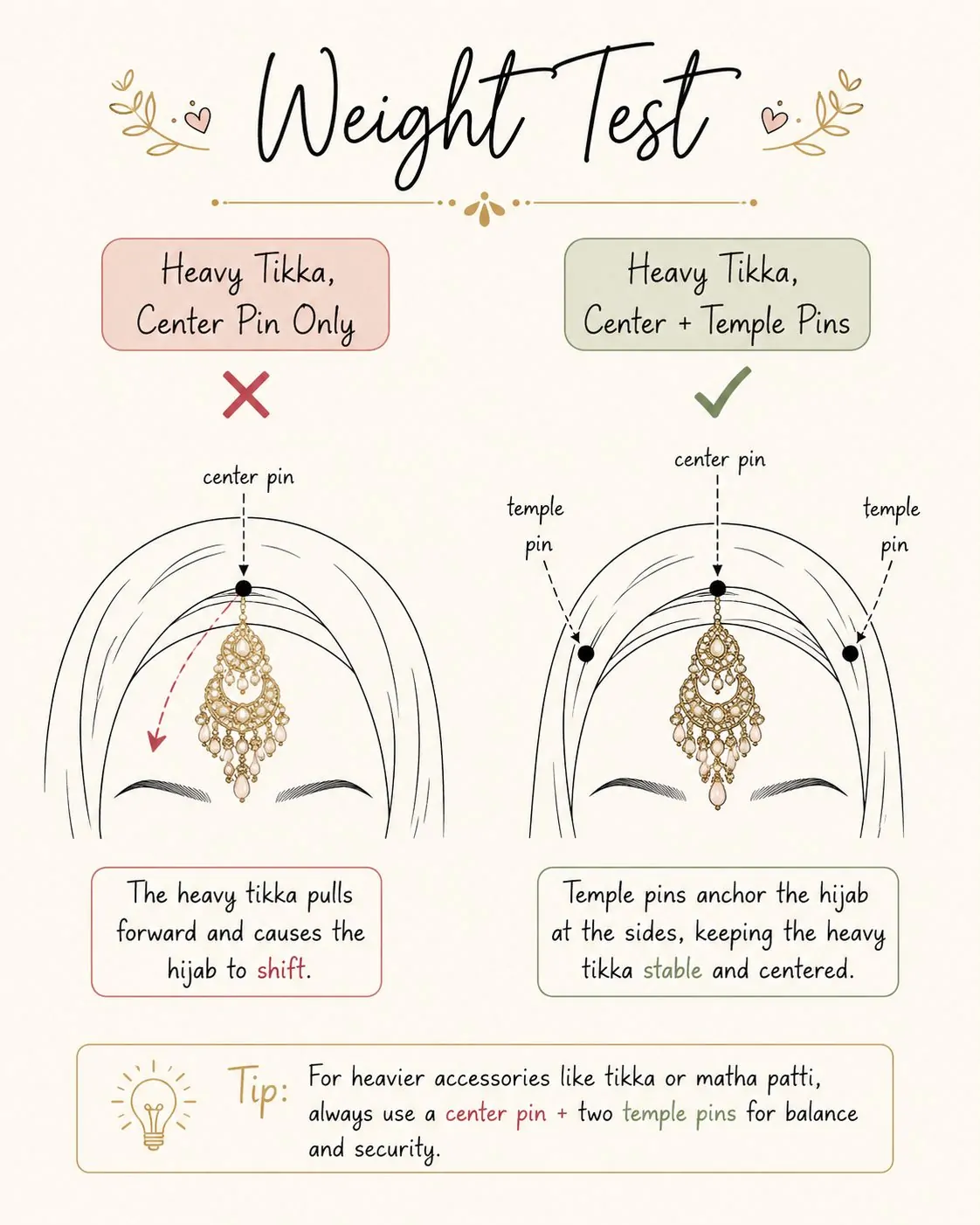
Test the tikka’s weight before choosing your pinning method. A heavier maang tikka needs more than a center anchor pin — you’ll want small pins at your temples too, or the whole piece drifts forward within an hour. I found this out the hard way at my cousin’s mehndi when my tikka slid down my forehead halfway through the night.
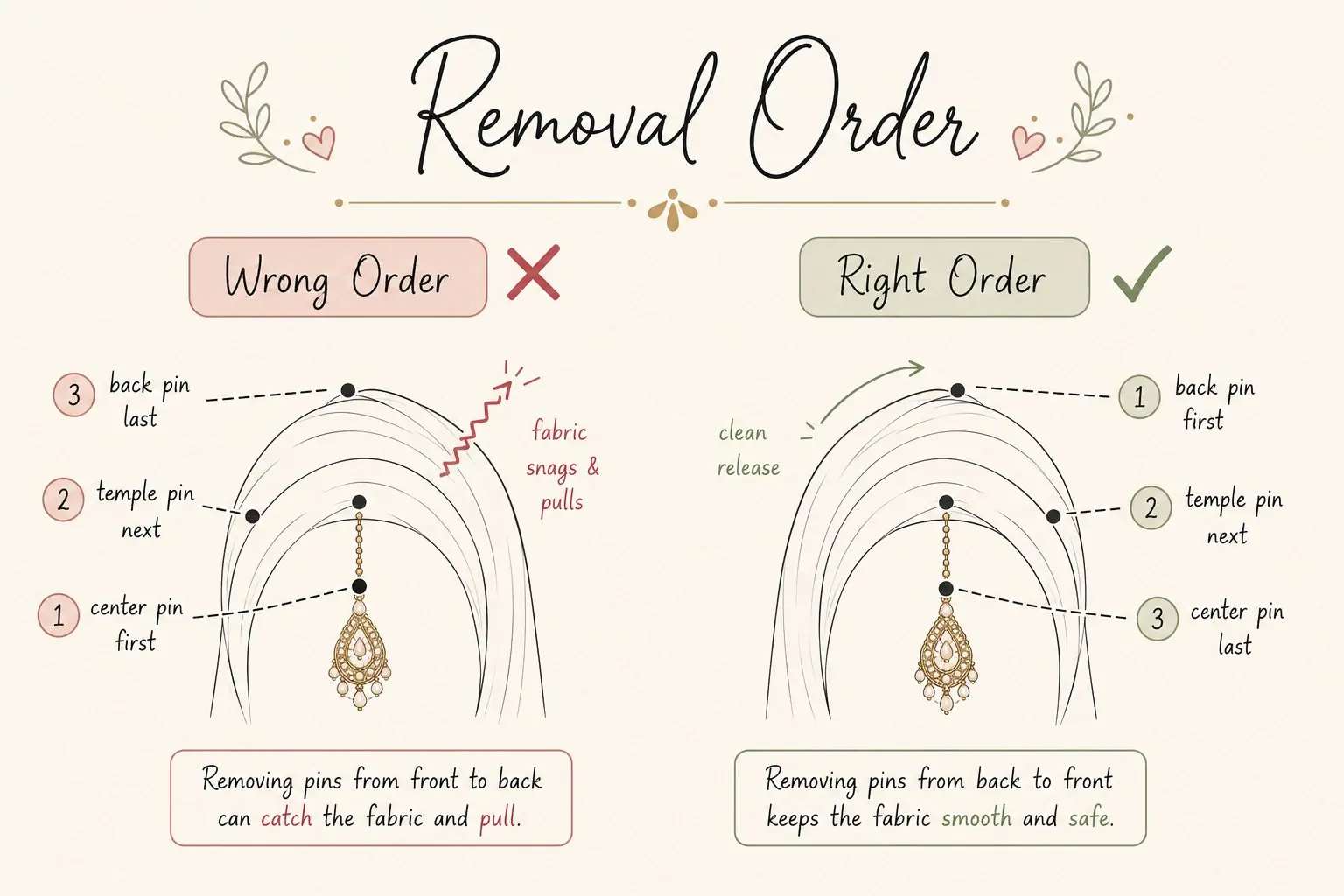
Practice the removal sequence before the event, not during it. Pins need to come out in reverse order from how you put them in, or the chain catches on your hijab fabric and pulls a thread. I always do a trial run at home so I’m not fumbling with tangled pins in a venue bathroom.
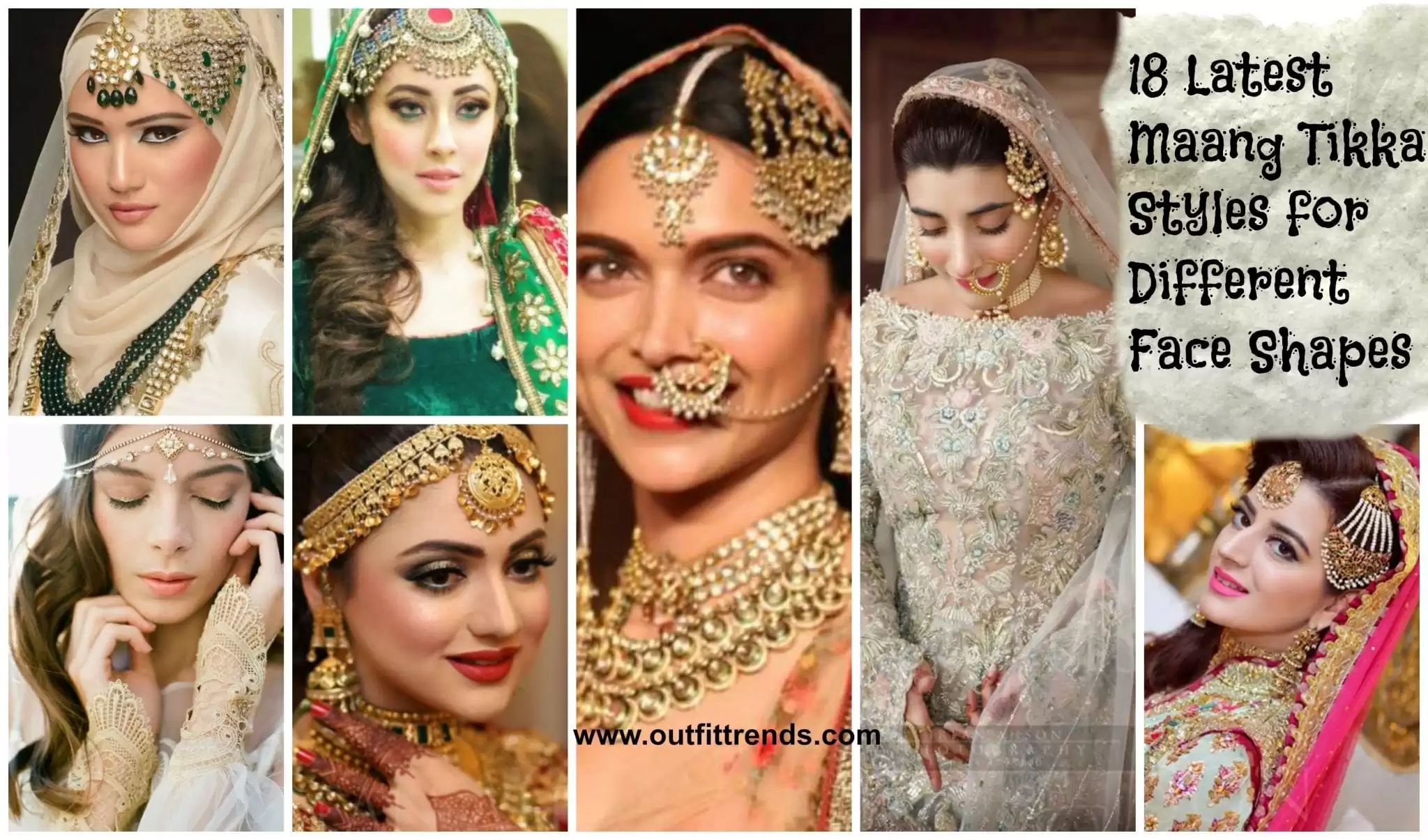
18 Beautiful Maang Tikka Styles For All Face Types
25 Best Earrings to Wear With Long Hair
25 Best Ideas on How to Wear Colorful Socks for Women
Cartilage Piercings Guide – Every Thing You Need to Know About it
Getting A Dermal Piercing – What You Should Know

30 Most Creative and Unique Shoes In the World
20 Most Beautiful Gajra Hairstyles For All Hair Lengths
Tragus Piercing Guide – Everything You need to Know
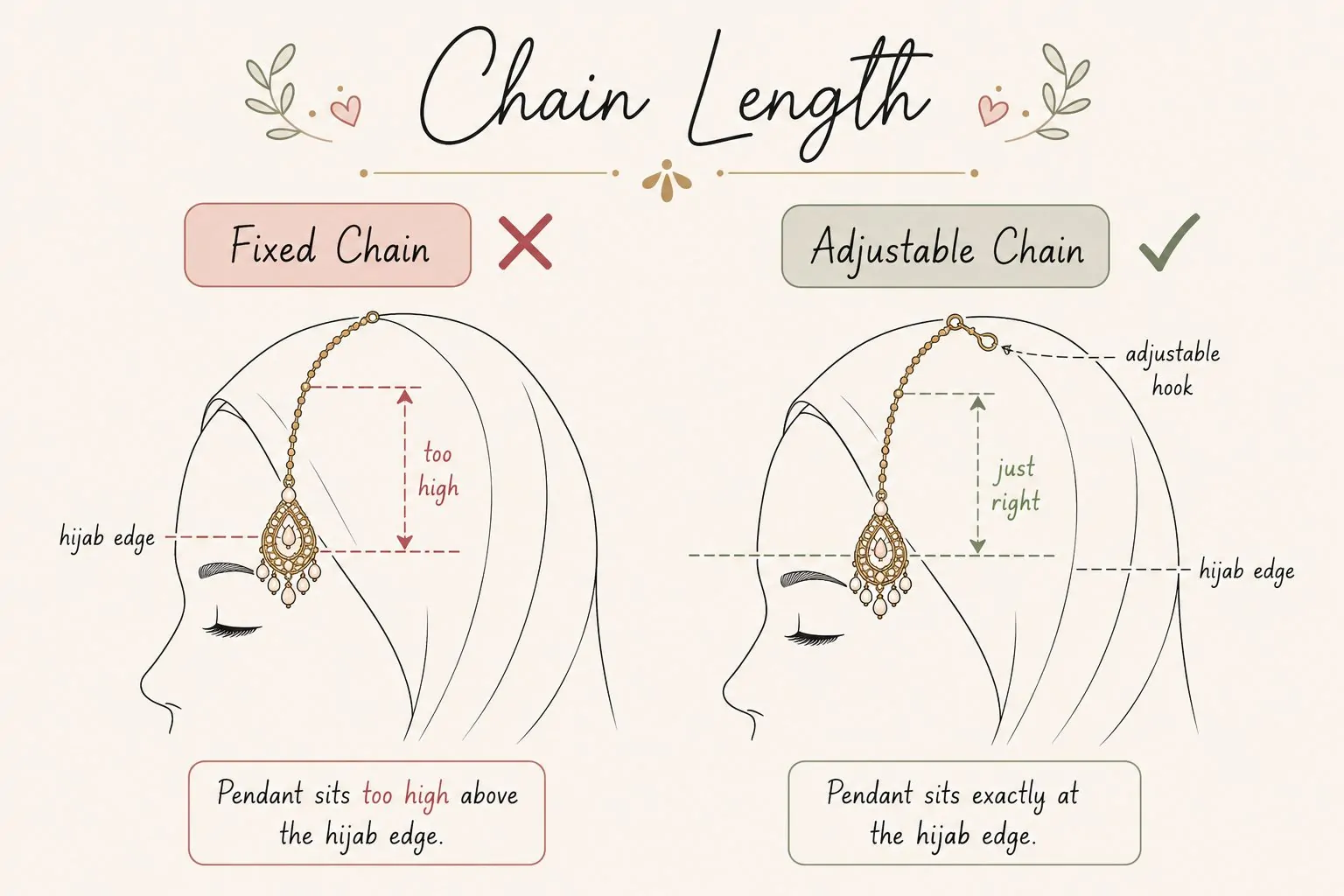
Choose a maang tikka with an adjustable chain length. Fixed-length chains are made for uncovered hairlines and often sit too high or too low once your hijab changes where your forehead line actually falls. An adjustable hook lets you fine-tune the drop to sit exactly where your hijab edge meets your skin.
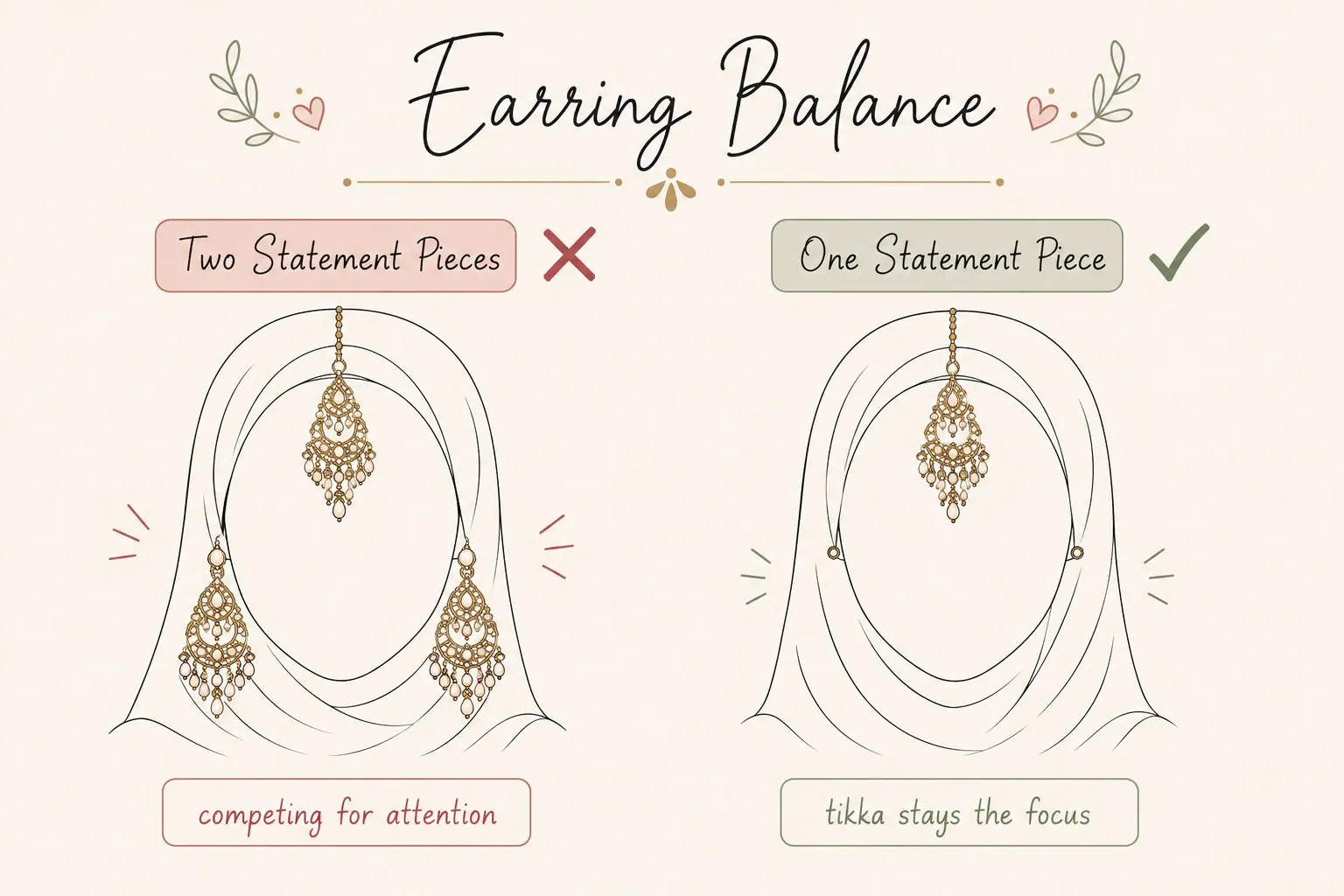
Keep your earrings minimal when the tikka is your statement piece. Two ornate jewelry pieces competing for attention near your face reads as cluttered, not celebratory. I switched to small gold studs for events where my tikka has stonework, and the whole look feels more intentional.
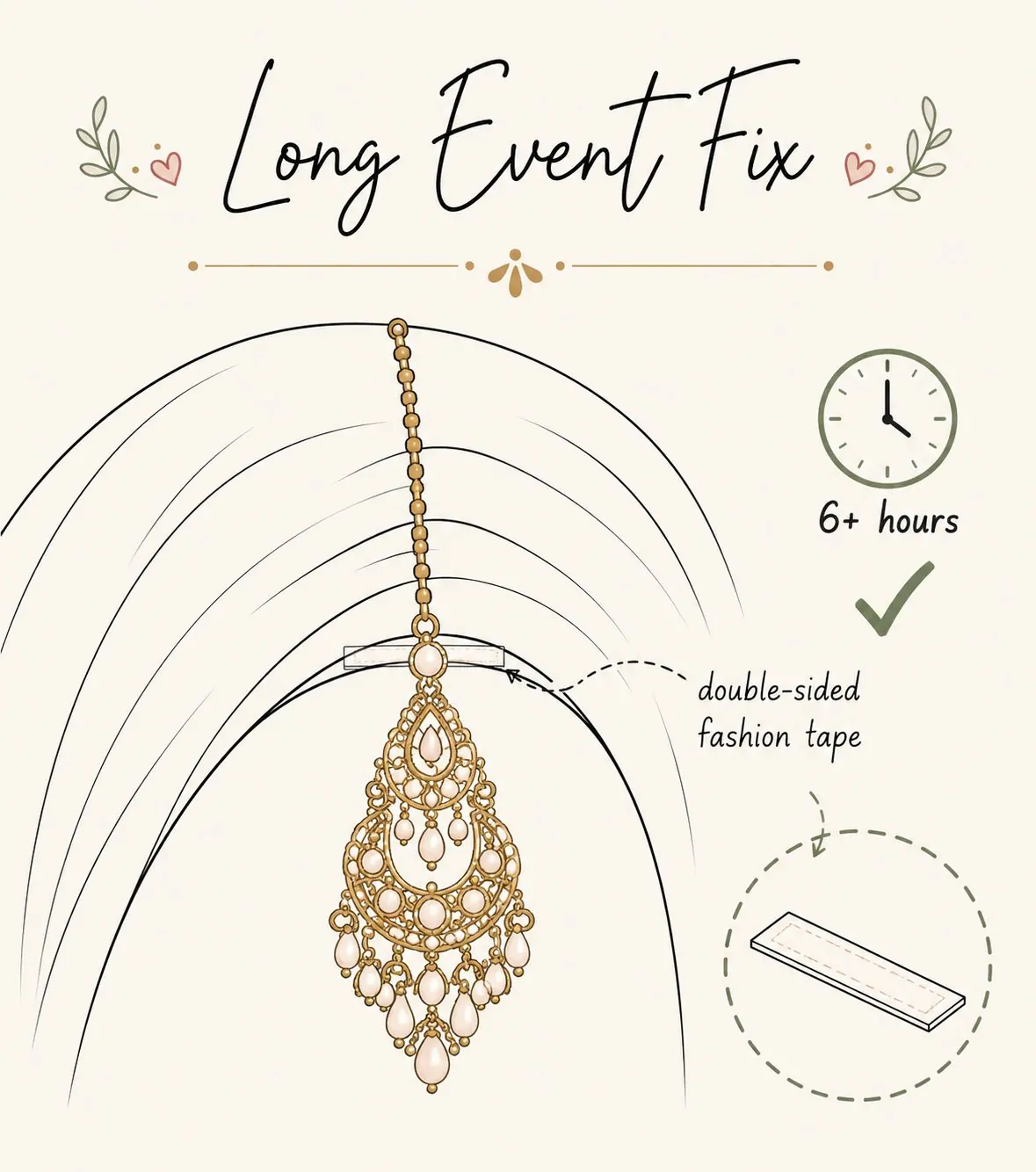
Add fashion tape at the center point for events longer than a few hours. Pins alone loosen with humidity, dancing, and hugging relatives all night. A small strip of double-sided tape under the central pendant has saved me from constant readjusting at long wedding functions. This beginner’s guide to fashion tape is a great primer if you’ve never used it before — it covers skin-safe application and removal so you avoid pulling at delicate fabric or jewelry chains.
Dos & Don’ts
Fabric Selection Guide
The fabric of your hijab dramatically affects how well it works with maang tikka styling. Jersey knit remains my go-to for daily wear because it grips naturally without pins, creating a stable foundation that doesn’t shift throughout the day. The slight stretch accommodates the bulk of forehead jewelry without creating awkward gaps or tight spots.
Chiffon creates the most romantic effect with delicate maang tikkas, but requires more skill to style properly. The lightweight fabric needs strategic pinning to stay in place, and the transparency means your underscarf choice becomes crucial. I always choose a chiffon underscarf with regular chiffon hijabs to maintain the ethereal quality while ensuring opacity.
Cotton remains the most practical choice for everyday hijab styling with jewelry because it holds its shape, doesn’t slip, and comes in every color imaginable. The natural fiber breathes well during long wear, which matters when you’re adding the extra layer of jewelry against your skin. However, avoid stiff cotton that creates harsh lines — soft cotton lawn or voile drapes much better around jewelry.
Silk looks luxurious but presents practical challenges. While it photographs beautifully and feels wonderful against skin, silk’s slippery nature makes it unsuitable for secure jewelry styling unless you’re willing to use multiple pins and frequent adjustments. Save silk hijabs for special occasions where you’ll have help with styling and won’t need the coverage to last all day.
How to Wear a Hijab with Matha Patti
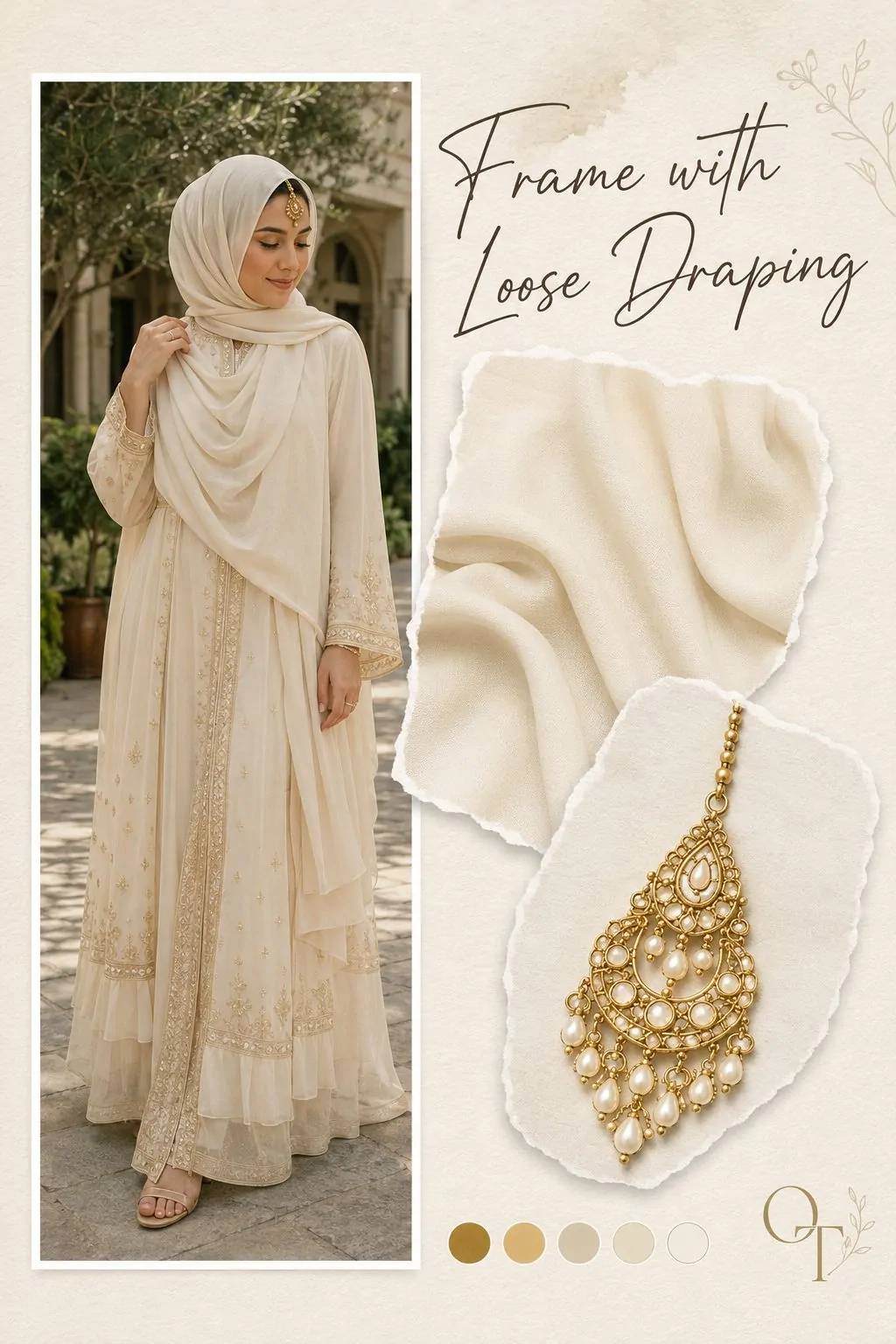
Frame with Loose Draping
This cream hijab creates the perfect backdrop for ornate jewelry because the loose draping around the face doesn’t compete with the maang tikka’s intricate details. The key is leaving enough space between your hijab edge and your forehead — about two inches — so the jewelry sits naturally without looking cramped. Jersey and chiffon fabrics work best here because they drape softly without creating harsh lines that clash with delicate metalwork.
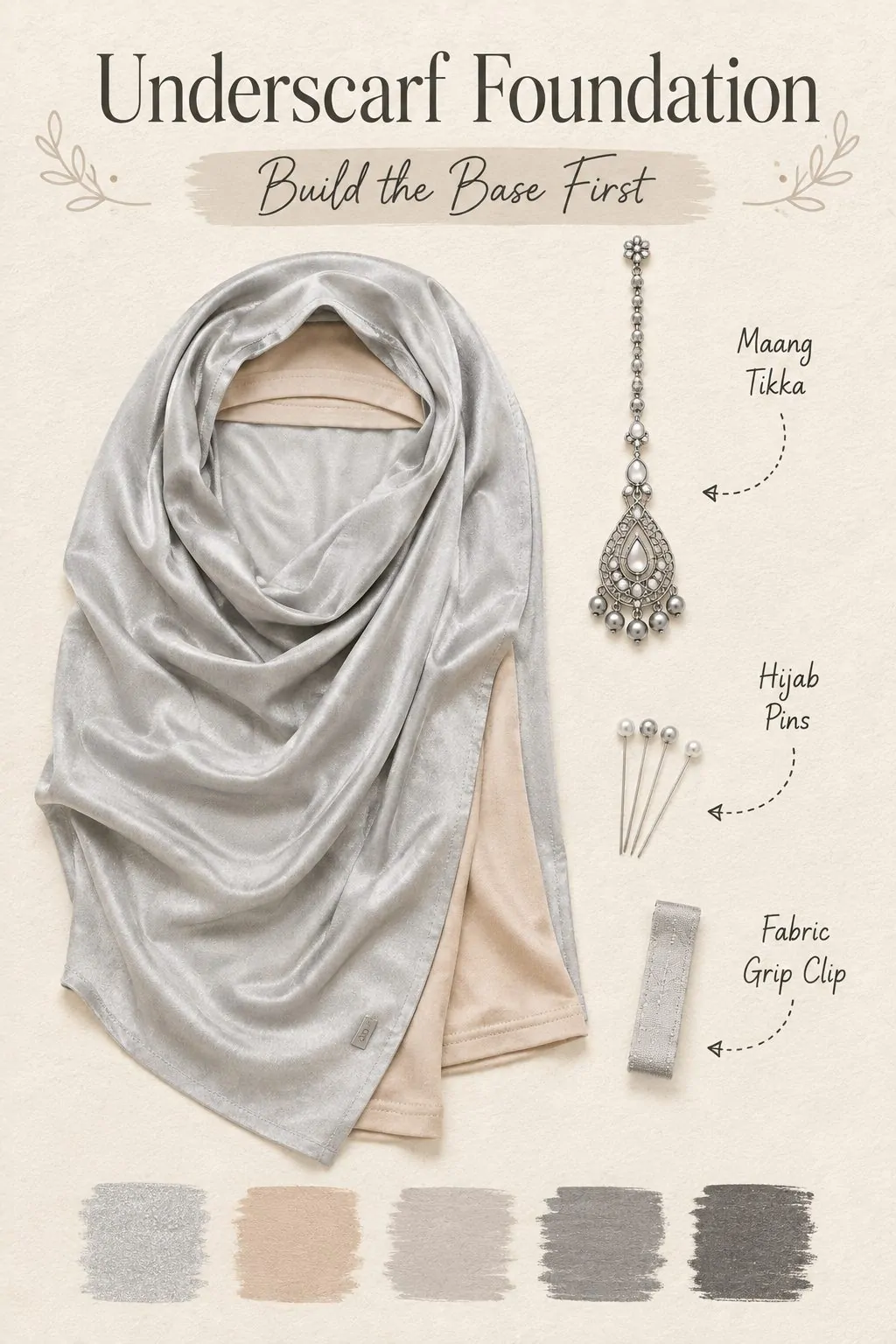
Master the Underscarf Foundation
Notice how this silver hijab sits perfectly over what’s clearly a well-fitted underscarf. This foundation piece is crucial when wearing forehead jewelry because it prevents your main hijab from sliding and disrupting your maang tikka placement. I always choose a nude or matching underscarf that grips without being visible, creating a stable base that keeps everything in position through prayers and daily movement.
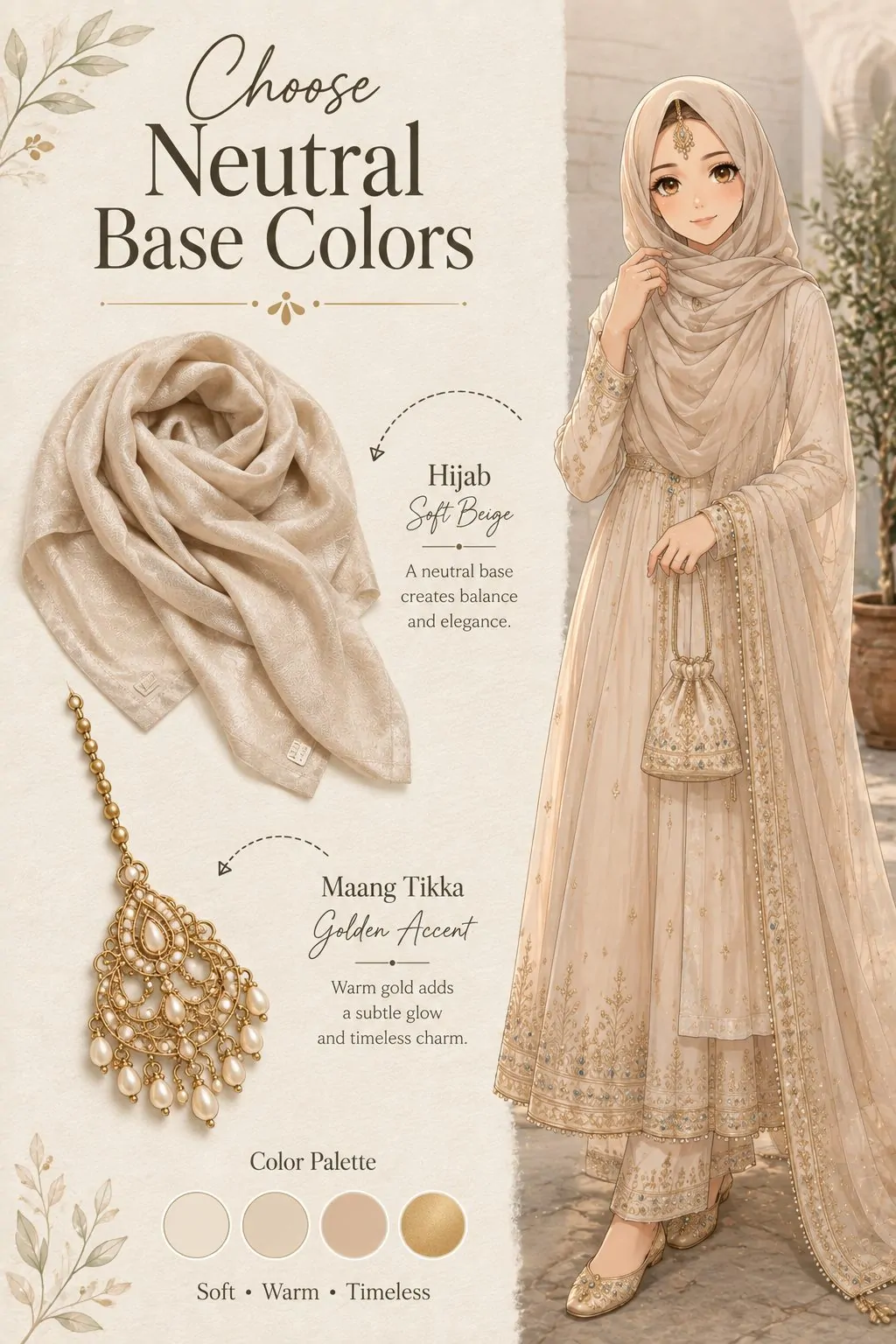
Choose Neutral Base Colors
This beige hijab demonstrates why neutral tones work so effectively with statement jewelry. The soft color doesn’t compete with the golden maang tikka, instead creating a canvas that makes the jewelry the focal point. When your forehead piece has intricate details or multiple stones, stick to hijab colors that won’t overwhelm — cream, beige, soft gray, or muted pastels always work.
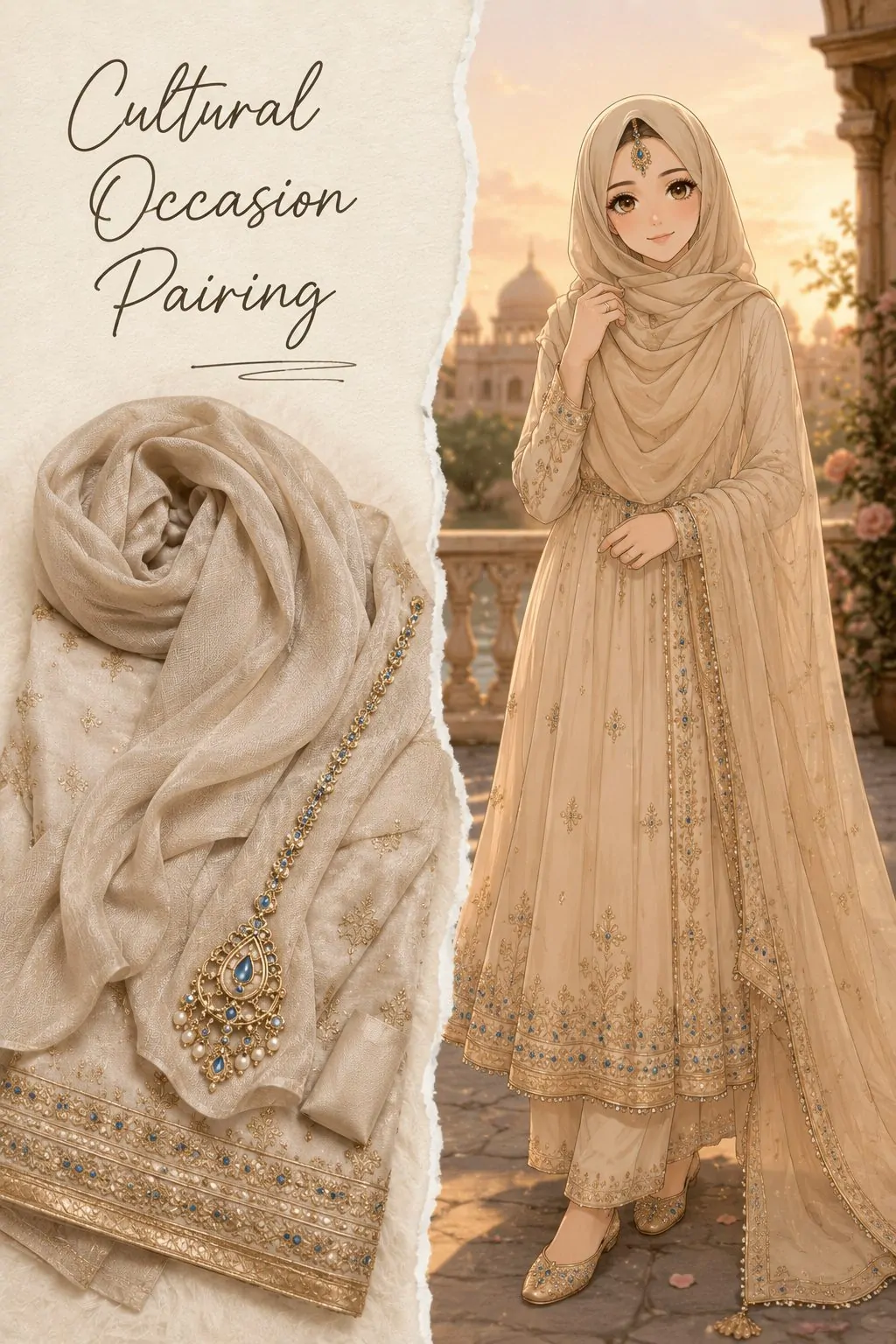
Consider Cultural Occasion Pairing
This golden ensemble shows how to match your hijab style to your jewelry’s cultural significance. The rich yellow tone complements the traditional blue accent stones while the hijab’s draping echoes the ceremonial nature of the maang tikka. For weddings or cultural celebrations, coordinate your hijab color with your jewelry’s metal tone and gemstone colors rather than trying to match your outfit exactly.
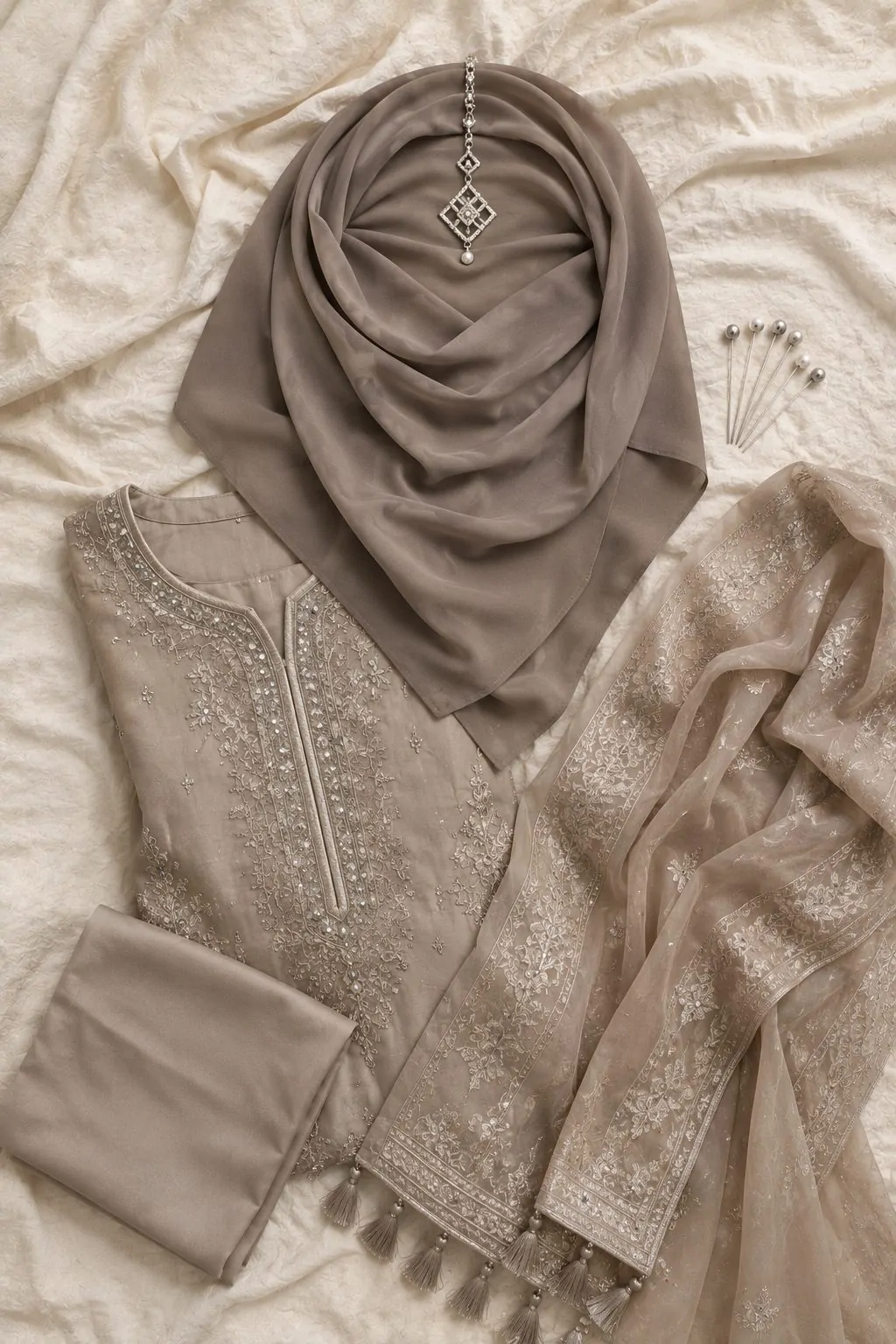
Work with Structured Hijab Styles
This more structured hijab approach works beautifully with simpler maang tikka designs. The clean lines of the hijab draping don’t compete with the jewelry, and the slightly tighter fit around the head ensures the forehead piece stays centered. When your maang tikka has clean, geometric lines, opt for crisp hijab folds rather than soft, romantic draping.
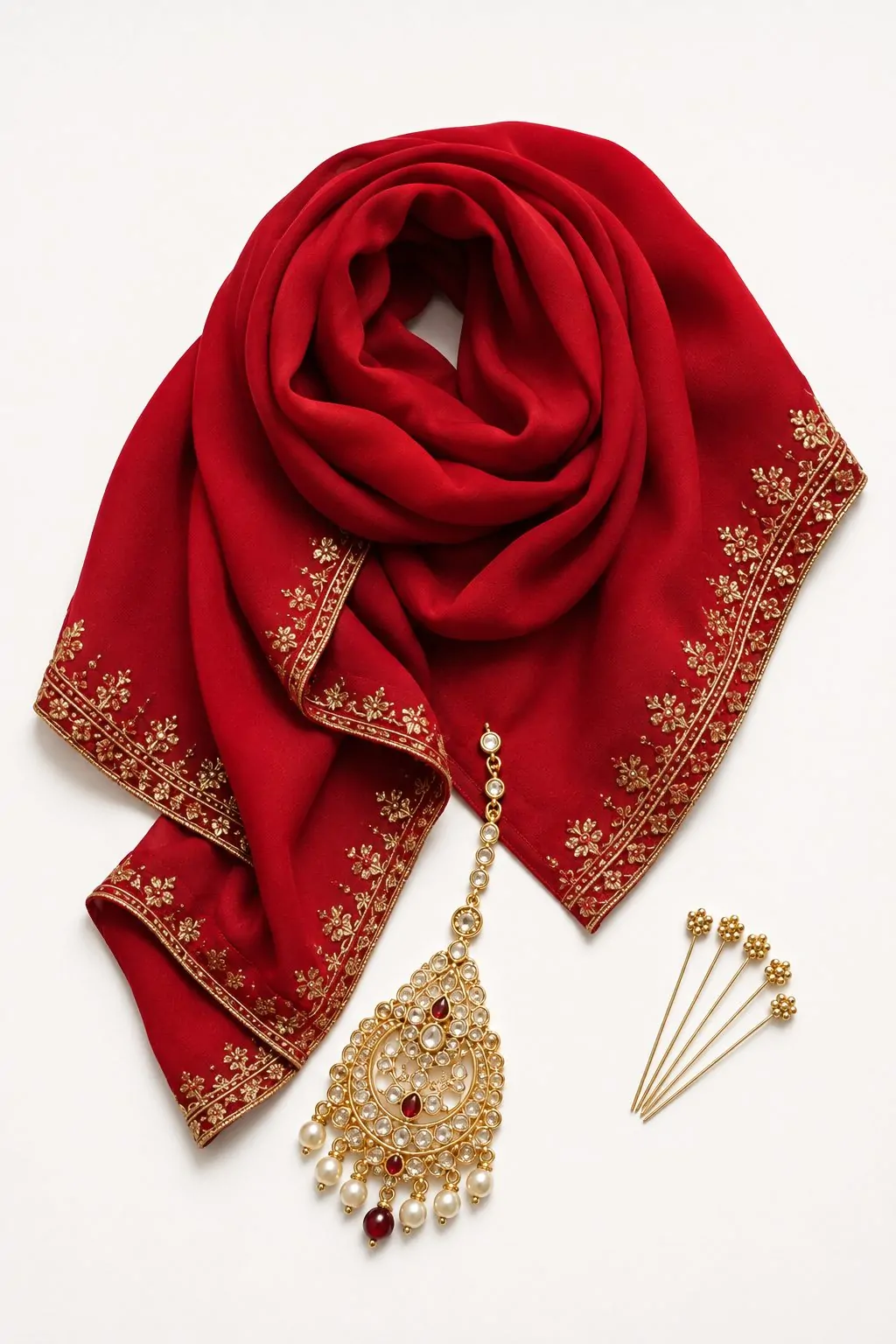
Balance Heavy and Light Elements
The rich red and gold combination here shows perfect weight balance — the substantial gold embroidery on the hijab can handle the ornate maang tikka without either element overpowering the other. This is crucial: if your hijab has heavy embellishment, choose a maang tikka with similar visual weight, or the combination will look unbalanced.
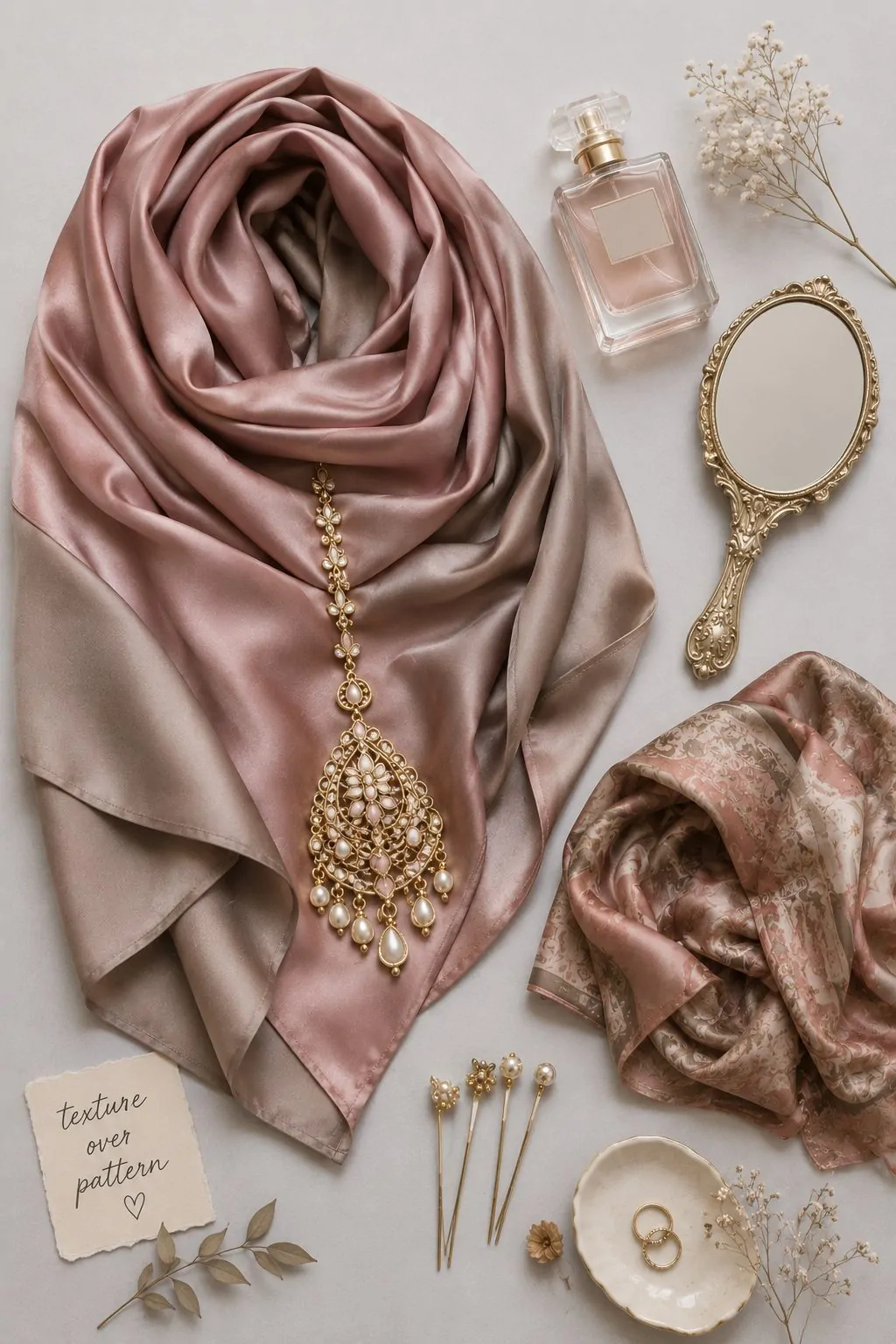
Layer Different Textures Thoughtfully
This multi-toned approach works because the smooth satin hijab provides a sleek backdrop for the textured metalwork of the jewelry. The contrast between the hijab’s fluid lines and the maang tikka’s structured design creates visual interest without chaos. Avoid pairing heavily textured hijabs with ornate jewelry — one element should be smooth to ground the look.
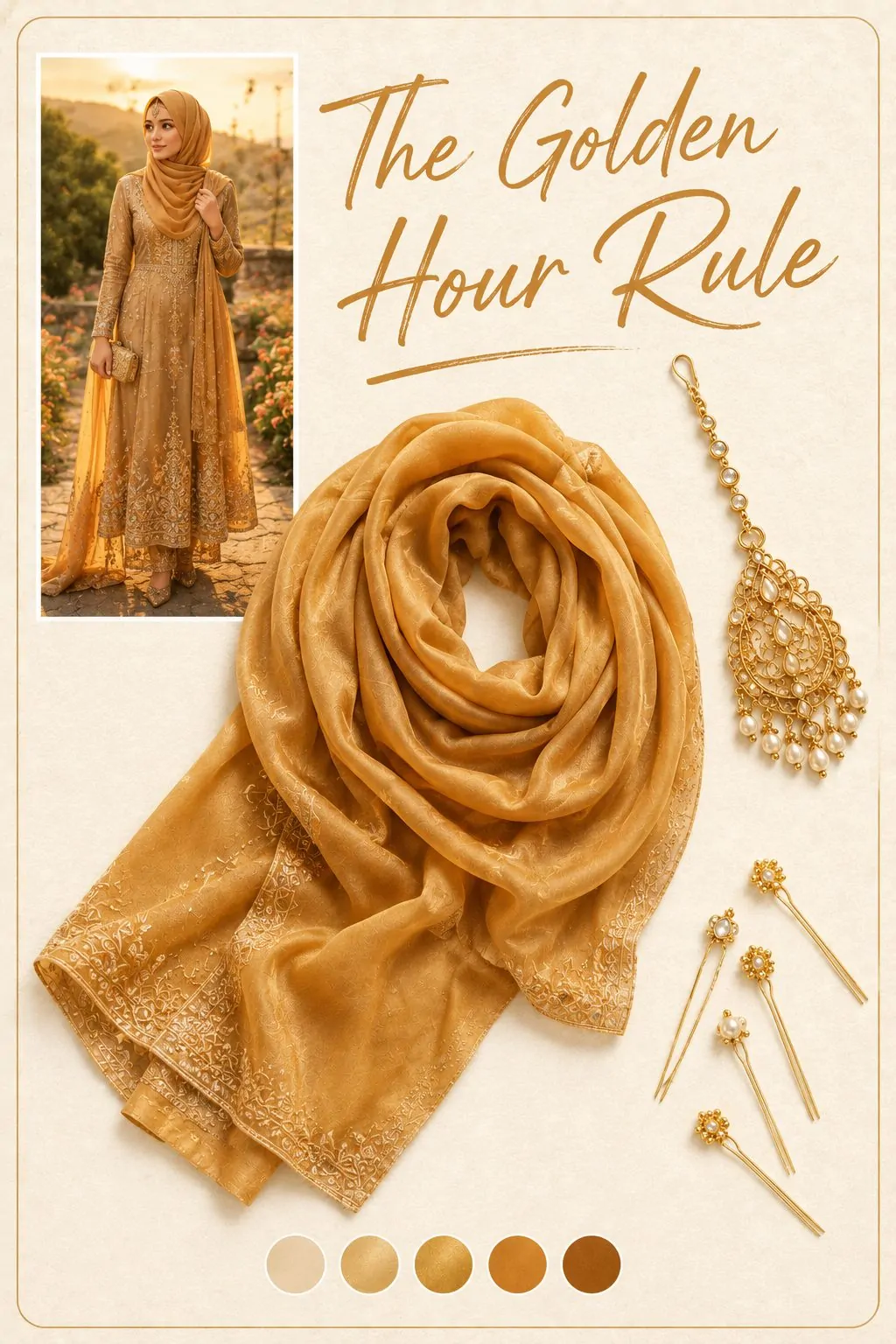
Use the Golden Hour Rule
Gold jewelry with warm-toned hijabs creates this cohesive, luxurious effect. The warm golden hijab enhances the maang tikka’s glow rather than competing with it, which is why traditional wedding styling often follows this color family. Cool-toned silver jewelry works best with cooler hijab colors — gray, blue, or true white.
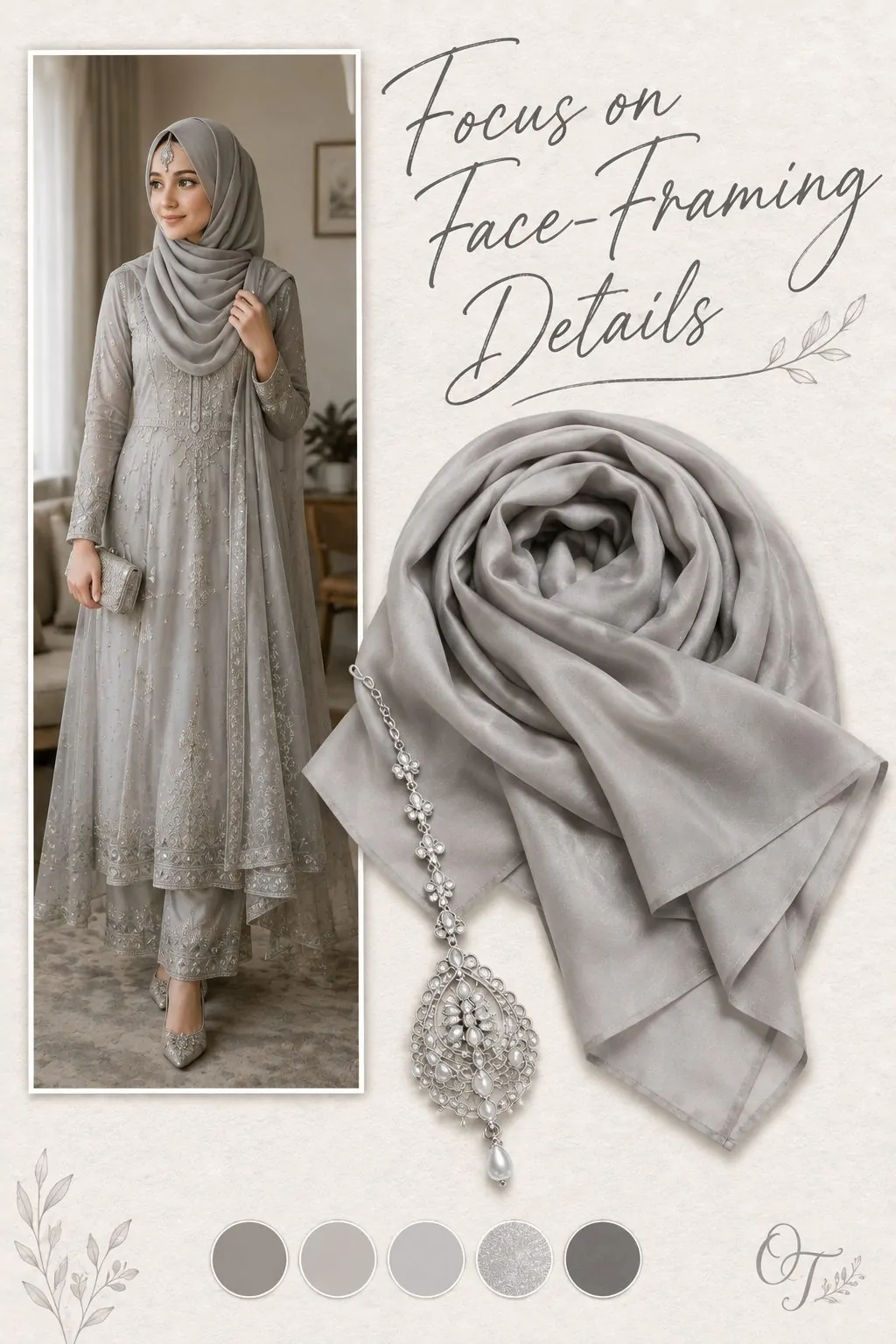
Focus on Face-Framing Details
The soft gray hijab here creates the perfect neutral frame that makes both the eyes and the forehead jewelry pop. This is the power of choosing hijab colors that enhance rather than dominate — your maang tikka becomes a natural extension of your beauty rather than an added decoration. Medium-toned hijabs like this gray are incredibly versatile for jewelry pairing.
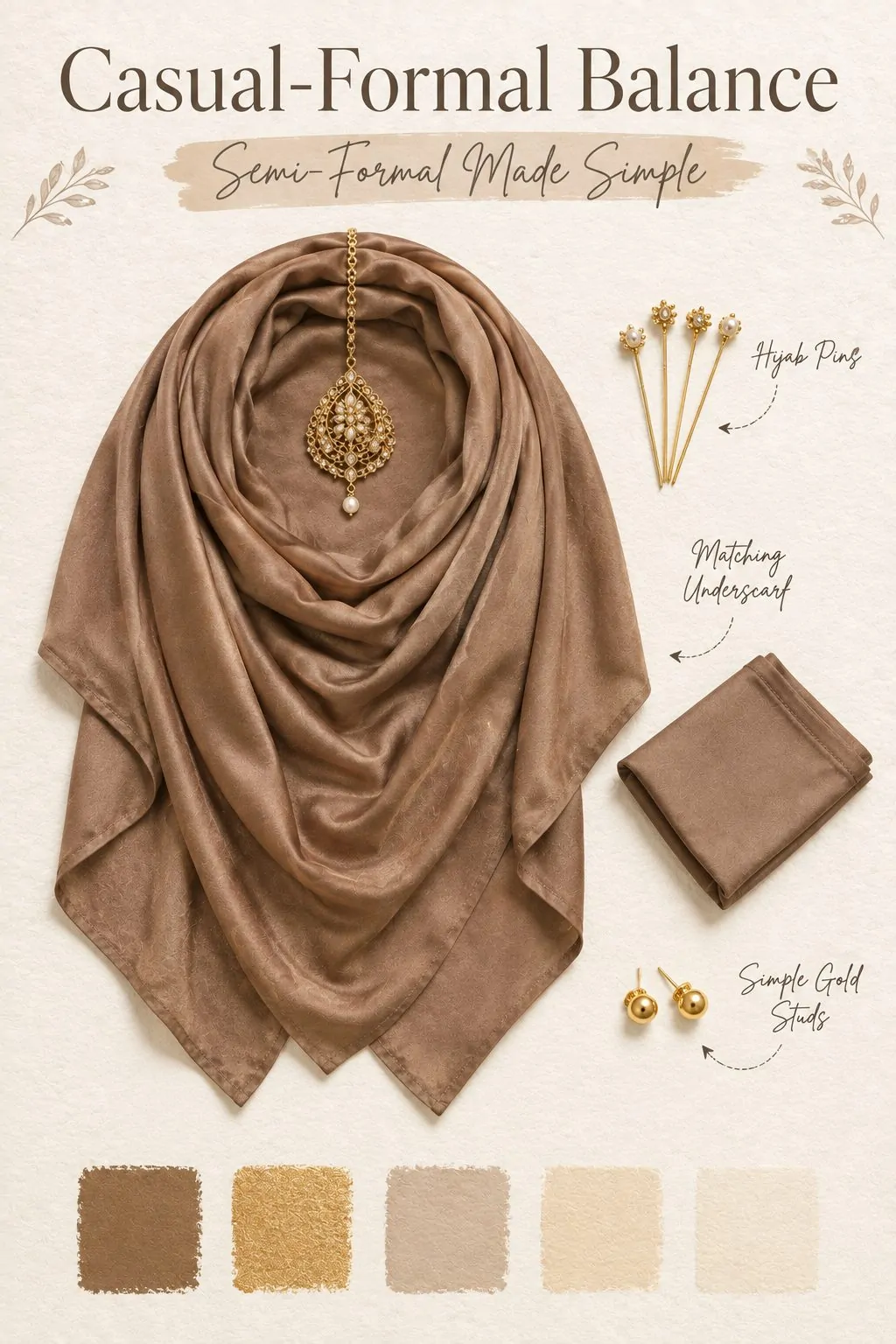
Perfect the Casual-Formal Balance
This bronze hijab demonstrates how to wear maang tikka for semi-formal occasions. The color is rich enough to honor the jewelry’s significance but not so formal that it looks overdressed for everyday cultural events. This balance is particularly important for community gatherings where you want to show respect through your presentation without appearing overdone.
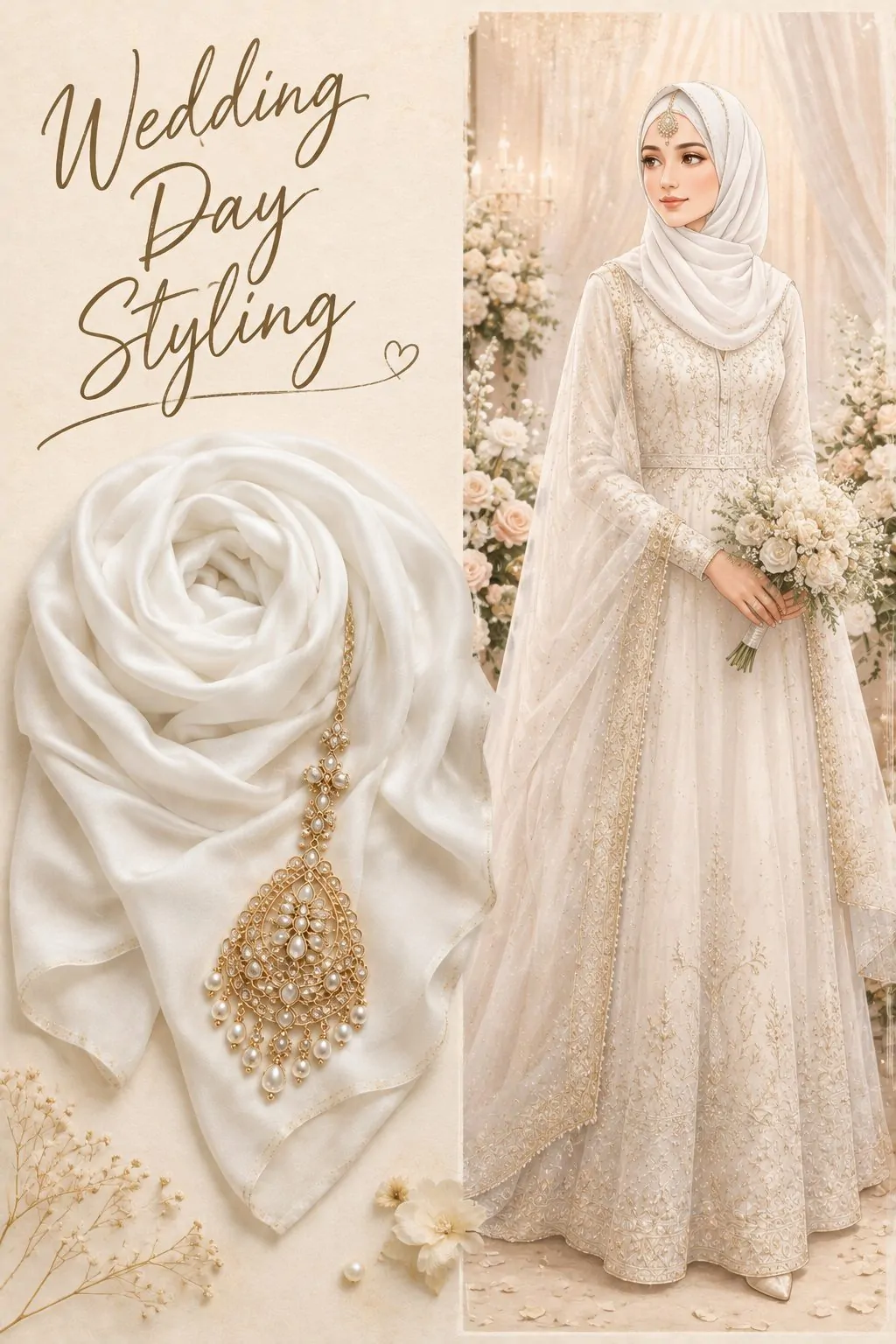
Consider Your Wedding Day Styling
Pure white hijabs with elaborate jewelry create this timeless bridal effect. The contrast is striking, and the simplicity of the white lets your maang tikka tell the story. For wedding styling, remember that your hijab becomes part of your jewelry presentation — choose fabrics and cuts that complement your forehead piece rather than competing with it for attention.
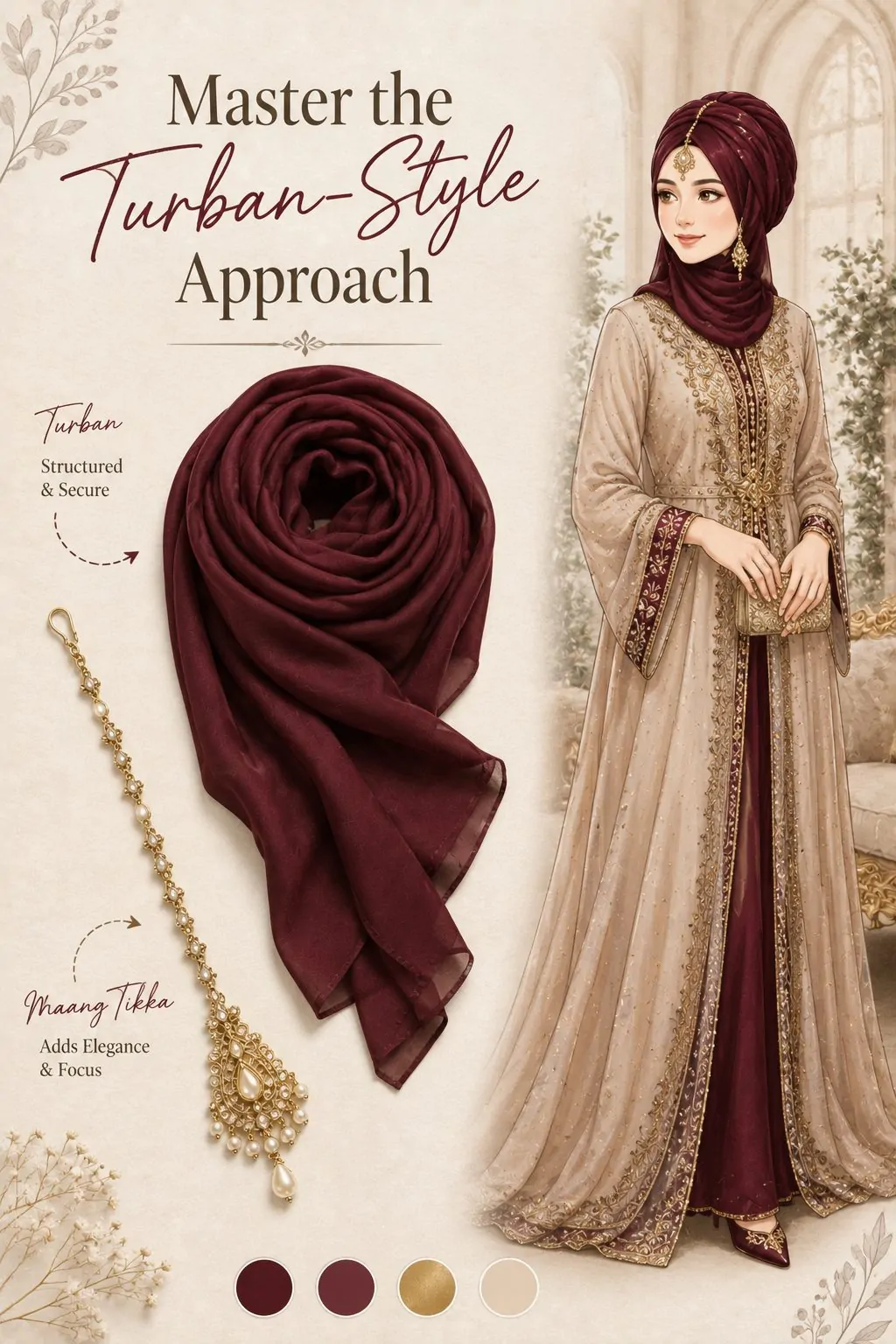
Master the Turban-Style Approach
This wrapped turban style creates height that balances beautifully with hanging maang tikka elements. The structured shape gives the jewelry proper proportion, preventing it from looking lost against your head covering. When your maang tikka has vertical elements or chains, consider hijab styles that add some height or volume to maintain visual balance.
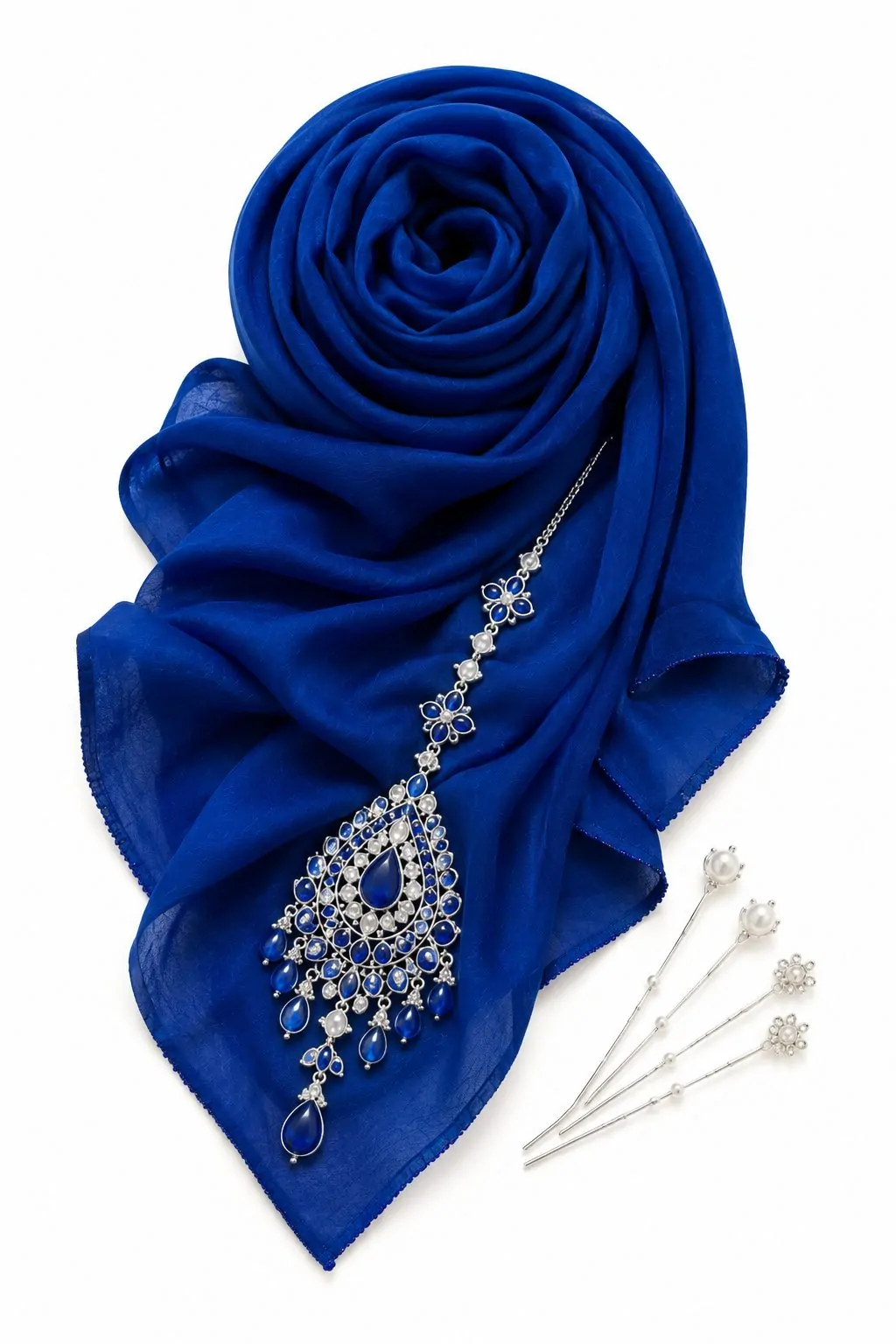
Play with Bold Color Combinations
This vibrant blue hijab works with the complementary jewelry because the colors share the same intensity level. The trick with bold hijab colors is ensuring your maang tikka has enough visual weight to hold its own. Delicate, minimalist jewelry gets lost against strong colors, so opt for pieces with presence and clear metallic definition.
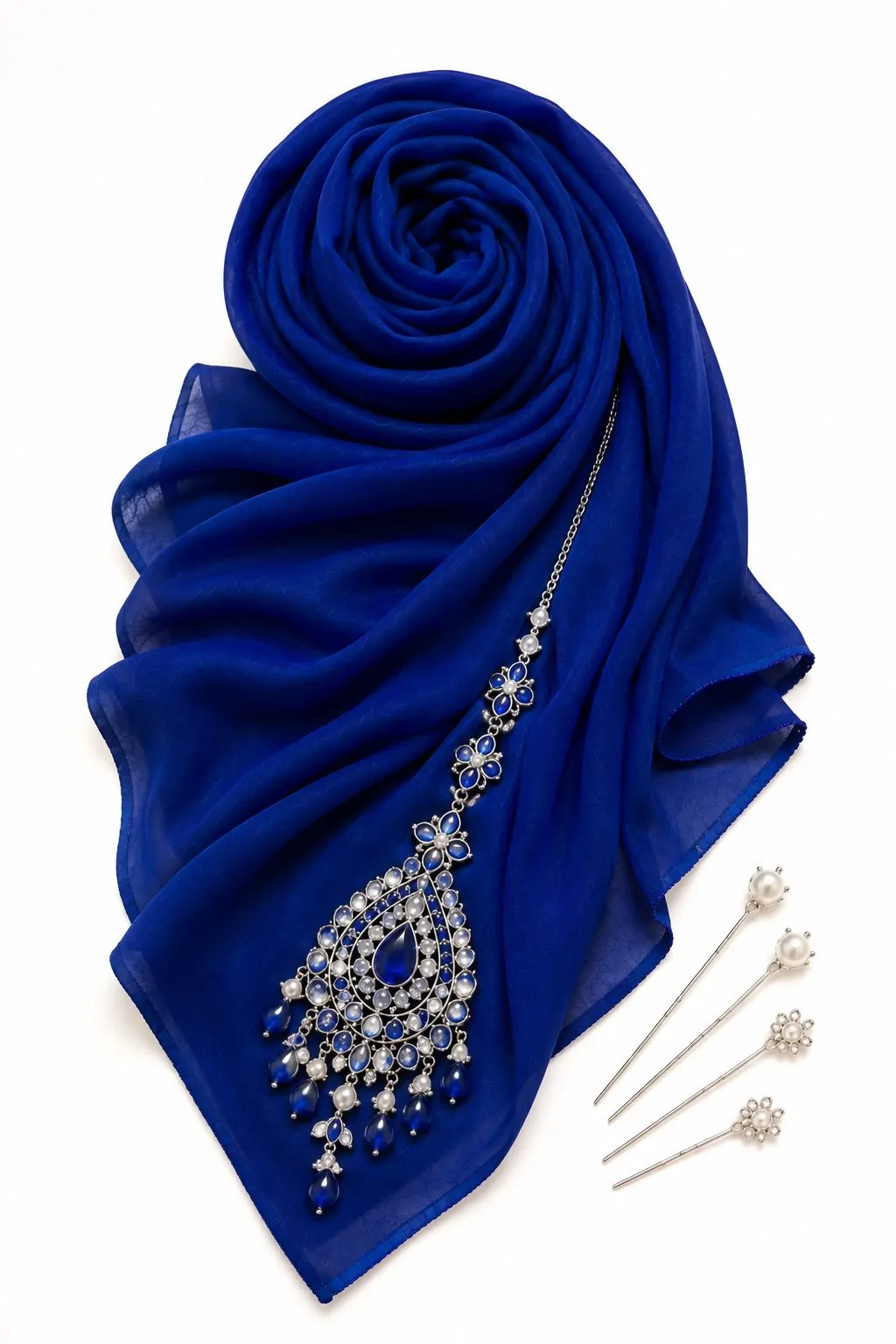
Embrace Monochromatic Sophistication
All-blue styling creates this sophisticated, intentional effect where the hijab and jewelry feel like parts of the same design story. Monochromatic approaches work particularly well for formal hijab styling because they create cohesion while still allowing your maang tikka to serve as the focal point through its metallic contrast.
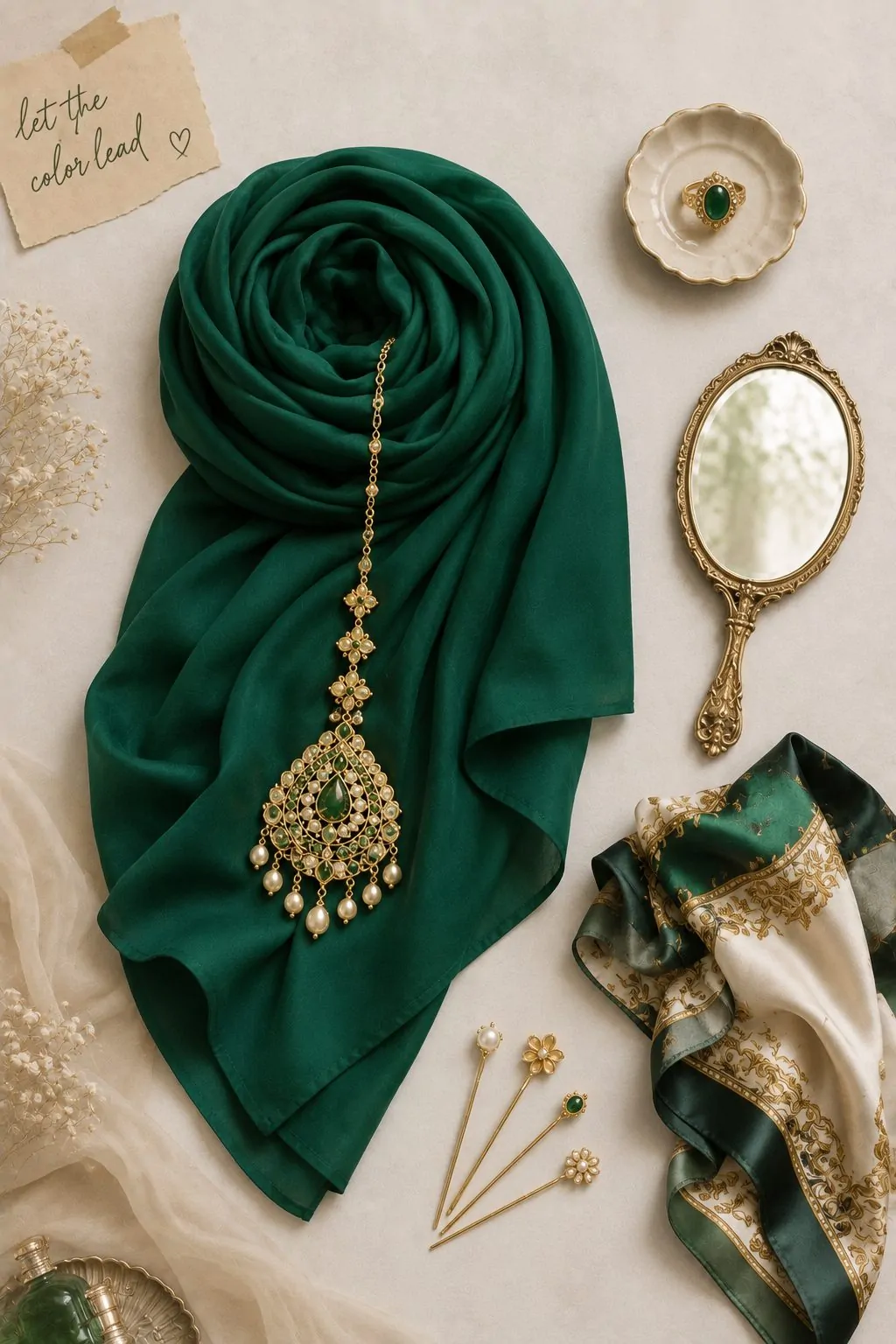
Work with Vibrant Statement Colors
This emerald green hijab shows how to use color as a backdrop rather than competition. The rich, solid color doesn’t have patterns or textures to compete with the intricate metalwork, letting the maang tikka shine while the hijab provides dramatic support. Statement colors work best when they’re solid and smooth-textured.
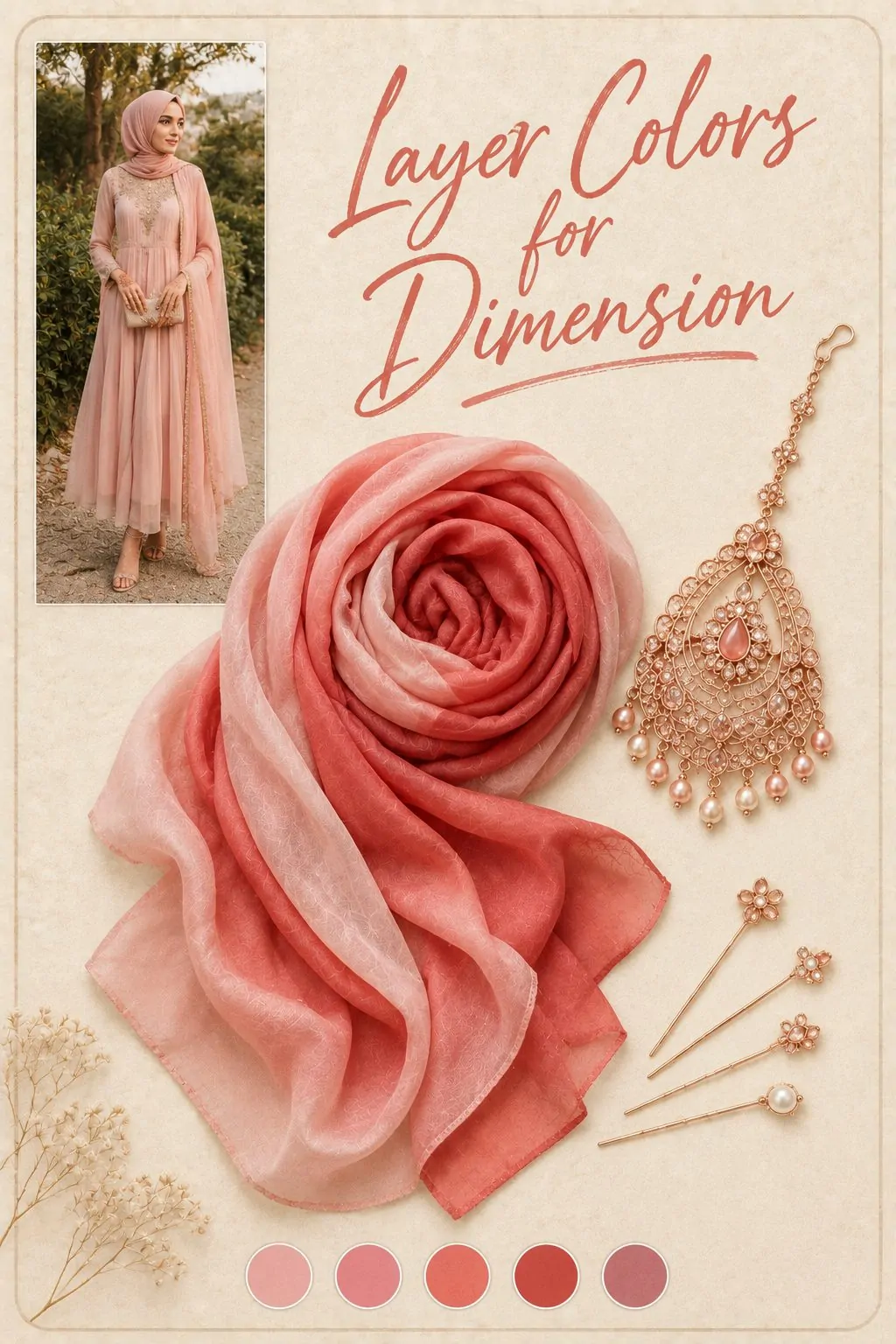
Layer Colors for Dimension
The pink and coral combination here creates gentle color variation that adds interest without overwhelming the jewelry. This layered color approach works well for day events where you want sophistication without the drama of high contrast. The key is keeping colors within the same family so they blend rather than clash.
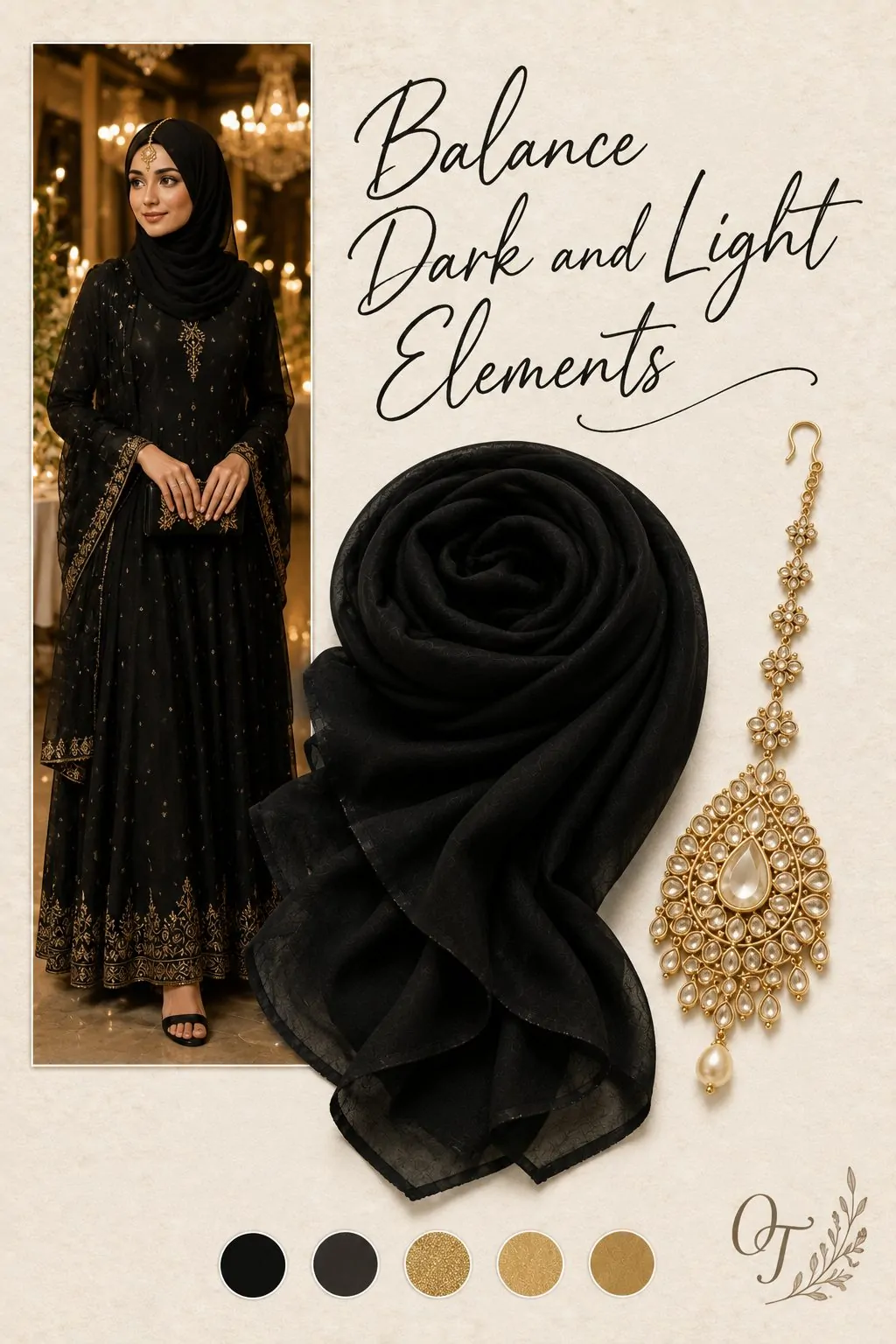
Balance Dark and Light Elements
This black hijab creates maximum contrast that makes both the skin and the jewelry luminous. Black is incredibly effective with gold or silver jewelry because it provides the strongest possible backdrop, making every detail of your maang tikka visible. However, this high contrast works best for evening or formal occasions rather than casual daily wear.
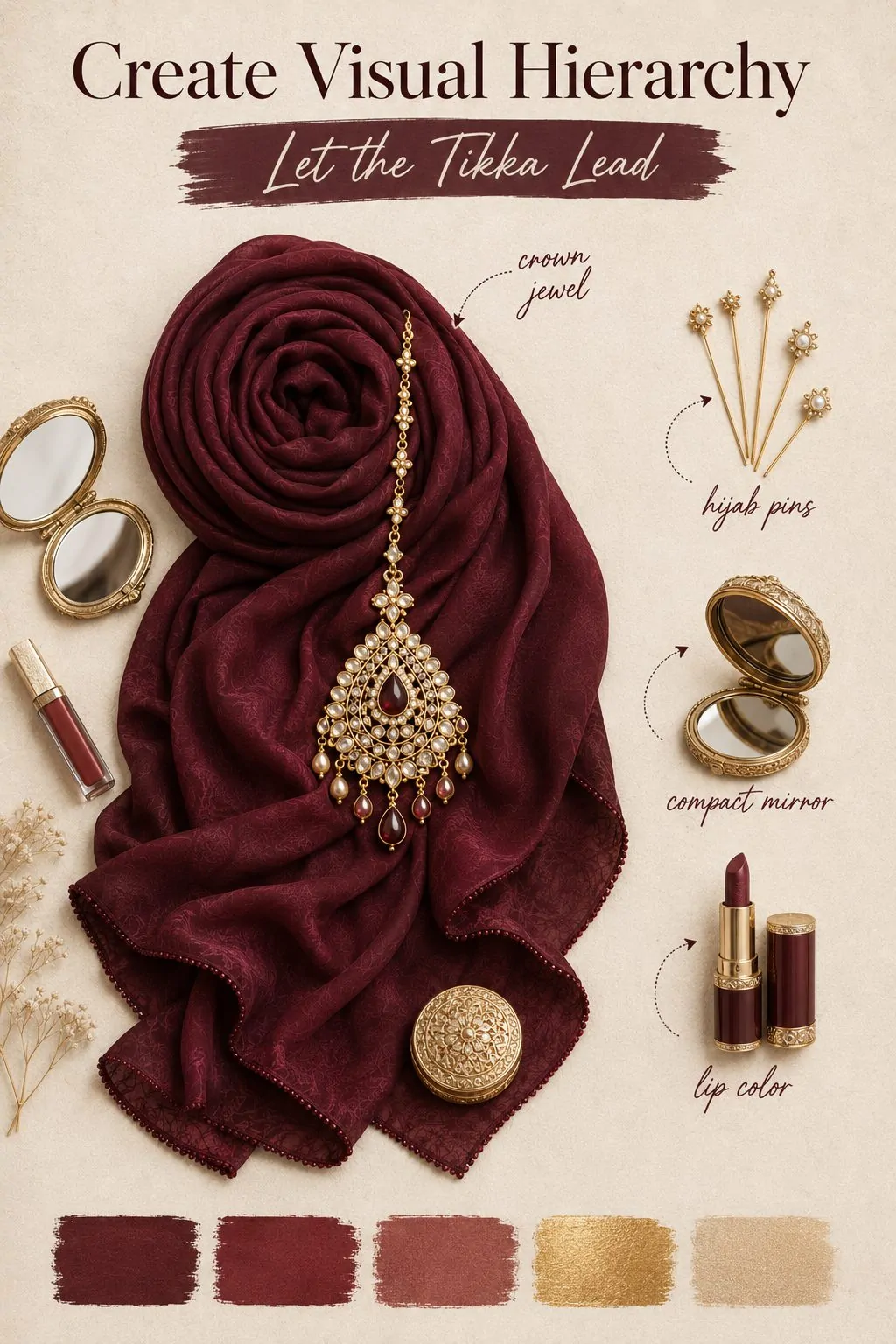
Create Visual Hierarchy
This styling demonstrates perfect visual hierarchy where each element — the hijab, the jewelry, and the makeup — supports the others without competing. The maang tikka serves as the crown jewel, the hijab provides the foundation, and everything works together to frame the face beautifully. This is the ultimate goal of combining hijab with forehead jewelry.
Frequently Asked Questions
Can you wear a maang tikka with a hijab?
Yes, you absolutely can wear a maang tikka with hijab. The key is choosing styles that work with your hijab shape and securing method. I’ve seen sisters wear delicate chain-style tikkas that peek out beautifully from under-pinned hijabs, and bold statement pieces that complement structured hijab styles.
Which hijab styles work best with maang tikka?
Loosely draped hijabs and styles that don’t cover the forehead completely work best. Turkish-style wrapping or side-pinned looks give you the most flexibility. Avoid very tight hijab styles that press against your forehead — they’ll either hide the tikka completely or make it uncomfortable to wear.
How do you keep a maang tikka secure under hijab?
I use bobby pins to secure the tikka’s chain or band to my underscarf before putting on my main hijab. For heavier pieces, a thin headband underneath helps distribute the weight. Make sure your underscarf has enough grip — cotton or jersey works better than silk for keeping everything in place.
What occasions are appropriate for wearing maang tikka with hijab?
Weddings, Eid celebrations, and cultural events are perfect occasions. I also wear simpler tikkas for special family gatherings or religious celebrations. The key is matching the ornate level of your tikka to the formality of the event — save the heavily jeweled pieces for the biggest celebrations.
18 Beautiful Maang Tikka Styles For All Face Types
25 Best Earrings to Wear With Long Hair
25 Best Ideas on How to Wear Colorful Socks for Women
Cartilage Piercings Guide – Every Thing You Need to Know About it
Getting A Dermal Piercing – What You Should Know
30 Most Creative and Unique Shoes In the World
20 Most Beautiful Gajra Hairstyles For All Hair Lengths
Tragus Piercing Guide – Everything You need to Know