

The first time I went skiing, I packed like I was heading to a fashion show in the Alps. Designer après-ski boots that gave me blisters within an hour, a white wool coat that showed every speck of mountain dirt, and layers so complicated I needed help getting dressed each morning. I looked good in the lodge photos, but I was miserable on the slopes.
Real ski resort style isn’t about looking like you stepped off a magazine cover — it’s about staying warm, dry, and comfortable while still feeling put-together. After years of mountain trips and countless styling mistakes, I’ve learned that the best ski outfits work both on and off the mountain. The key is building a foundation of technical pieces that actually perform, then adding style elements that can handle the reality of snow, wind, and temperature swings.
Whether you’re spending most of your time on the slopes or prefer the lodge scene, your outfit choices can make or break your mountain experience. Here’s what actually works when the temperature drops and the altitude rises.
Styling Tips
Layer with purpose, not bulk. I see too many people wearing five random layers and wondering why they overheat halfway down the mountain. Start with a moisture-wicking base layer — merino wool or synthetic materials work best. Add an insulating middle layer like fleece or down, then finish with a waterproof shell. Each layer should have a specific job, and you should be able to remove or add pieces as conditions change.
Choose pants that fit over your boots. This seems obvious, but I’ve watched people struggle with ski pants that bunch up around their ankles or don’t cover their boot tops properly. Your pants should have enough room to tuck into your boots without creating pressure points, and the hem should fully cover the boot opening to prevent snow from getting inside. Avoid anything too tapered at the ankle.
Invest in proper underlayers for your extremities. Cold hands and feet will ruin your day faster than any fashion choice. Quality ski socks should be moisture-wicking and cushioned in key areas — cotton socks will leave you with frozen, blistered feet. For gloves, I always bring two pairs: waterproof outer gloves for skiing and lighter liner gloves for handling equipment and taking photos.
What To Wear Snowboarding – 18 Outfit Ideas & Styling Tips

How To Wear Fuzzy Sweater Outfits ? 20 Styling Tips

New Year’s Eve Outfits : Party Wear, Casual Styles & Tips

How to Wear Aviator Jackets: 22 Outfit Ideas & Styling Tips
How To Wear Plaid Coats? 18 Outfit Ideas with Styling Tips
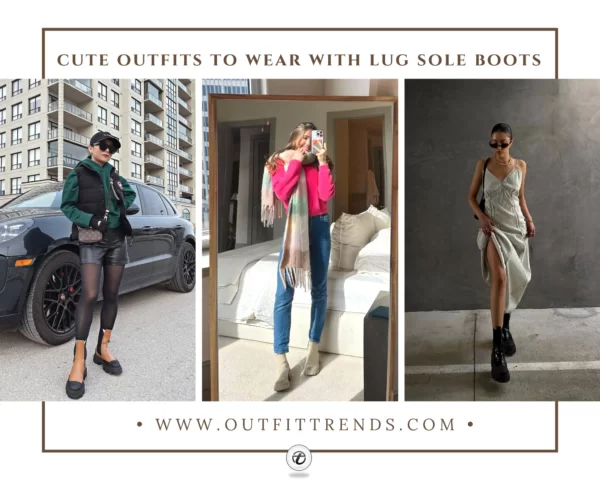
39 Lug Sole Boots Outfit Ideas & Styling Tips

Ballet Wrap Sweater Outfit Ideas & 22 Tips For Styling
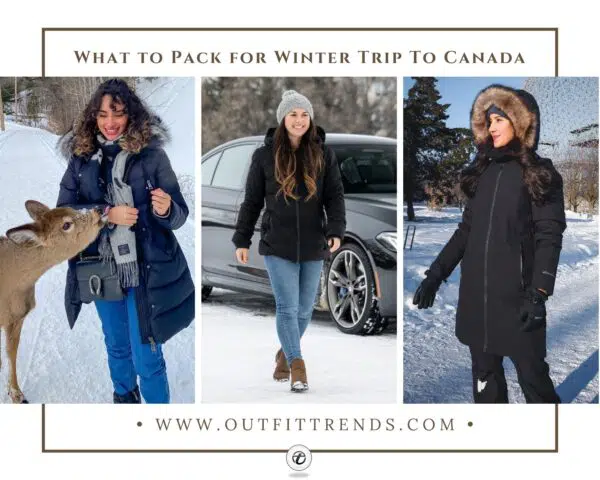
What to Wear in Canada in Winter? 21 Outfits and Packing List
Plan your après-ski look before you pack. Mountain towns have their own style culture, and you’ll want something that works for dinner or drinks without looking like you’re trying too hard. Pack pieces that can transition from day to evening — a quality sweater, dark jeans that aren’t too casual, and boots that work both in snow and indoors. Avoid anything too delicate or high-maintenance.
The first ski fashion was purely functional — early skiers in the 1860s wore heavy wool military uniforms because they were the only clothing tough enough to handle mountain conditions. The concept of “ski fashion” didn’t emerge until the 1930s when European resorts became fashionable destinations.
Color coordinate with mountain conditions in mind. White and light colors show every bit of mountain dirt, hot chocolate spill, and sunscreen streak. Dark colors absorb heat on sunny days, which can make you uncomfortably warm. I’ve found that mid-tone colors — navy, forest green, burgundy, or charcoal — hide stains while still looking intentional. These colors also photograph well against snow without washing you out.
Prepare for dramatic temperature changes. Mountain weather can shift from sunny and warm to cold and windy within hours. Your outfit needs to handle a 30-degree temperature swing without requiring a complete wardrobe change. Zip-off layers, adjustable ventilation in jackets, and pieces you can tie around your waist become essential. I always pack one extra layer in my day pack, even on perfect weather days.
Dos & Don’ts
Ski Resort Outfit Ideas
Sherpa Fleece and Black Ski Pants
A cropped olive sherpa fleece paired with fitted black ski pants creates the perfect balance between warmth and movement on the slopes. The neutral color combination works because it won’t show dirt from a day of skiing, while the fitted bottom half prevents baggy fabric from catching on ski equipment. This works best for intermediate skiers who want to look put-together without sacrificing functionality.
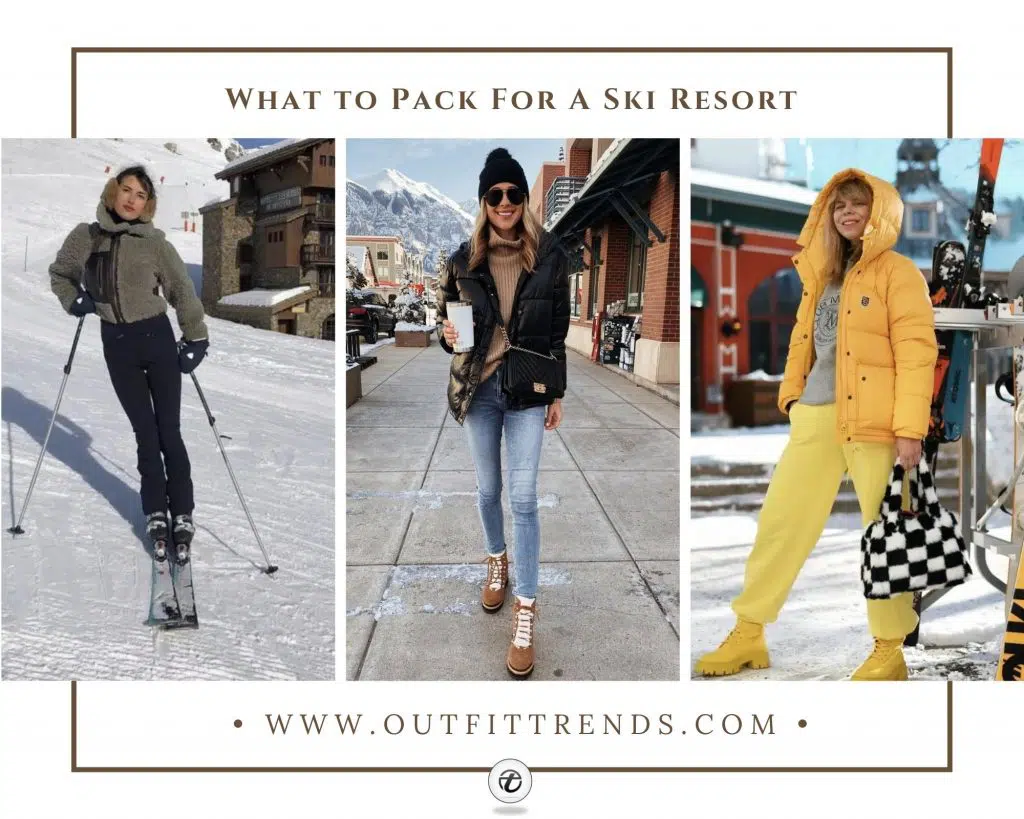
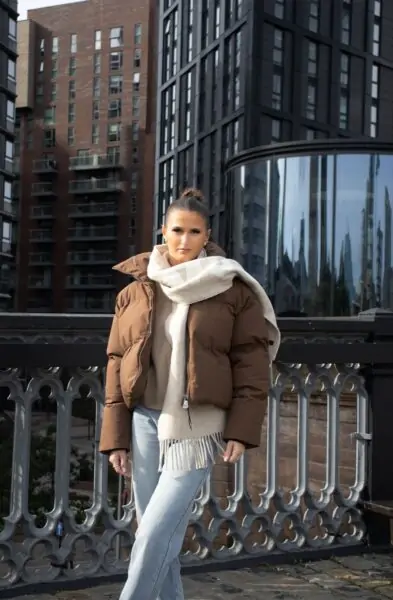
Brown Puffer Jacket with Light Wash Jeans
A cropped brown puffer coat over light jeans and hiking boots transitions seamlessly from ski lodge to village exploration. The key here is the proportions — the shorter jacket length balances the relaxed denim without creating bulk around the hips. Perfect for après-ski activities when you want to stay warm but ditch the technical gear.
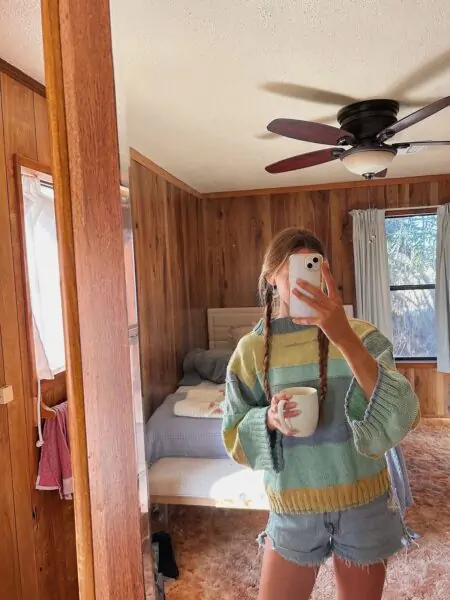
Striped Cabin Sweater with Denim Shorts
This oversized striped sweater captures that cozy cabin aesthetic that works perfectly for fireside relaxation after a day on the mountain. The loose knit provides comfort for lounging, while the earthy color palette feels naturally suited to mountain settings. Save this look for indoor resort activities or warm afternoons on the deck.
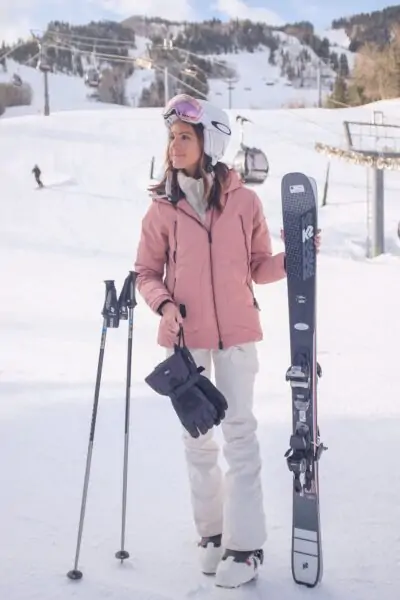
Pink Ski Jacket with White Snow Pants
A dusty pink ski jacket paired with white technical pants proves that functional doesn’t mean boring. The color combination photographs beautifully against snow while the proper ski gear ensures you’ll stay dry and warm. This outfit works for skiers who want to stand out on the mountain while maintaining full weather protection.
Quick tip
Choose oversized statement scarves over small ones to balance bulky ski gear.
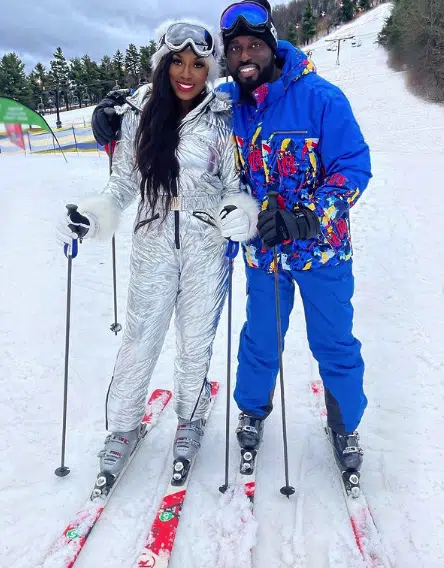
Metallic Silver One-Piece Ski Suit
A statement silver ski suit makes a bold impression on the slopes while providing maximum coverage and warmth. One-piece suits eliminate the gap between jacket and pants that can let in snow during falls. This dramatic metallic choice works best for confident skiers who aren’t afraid to be noticed — just ensure your skiing skills match the attention-grabbing outfit.
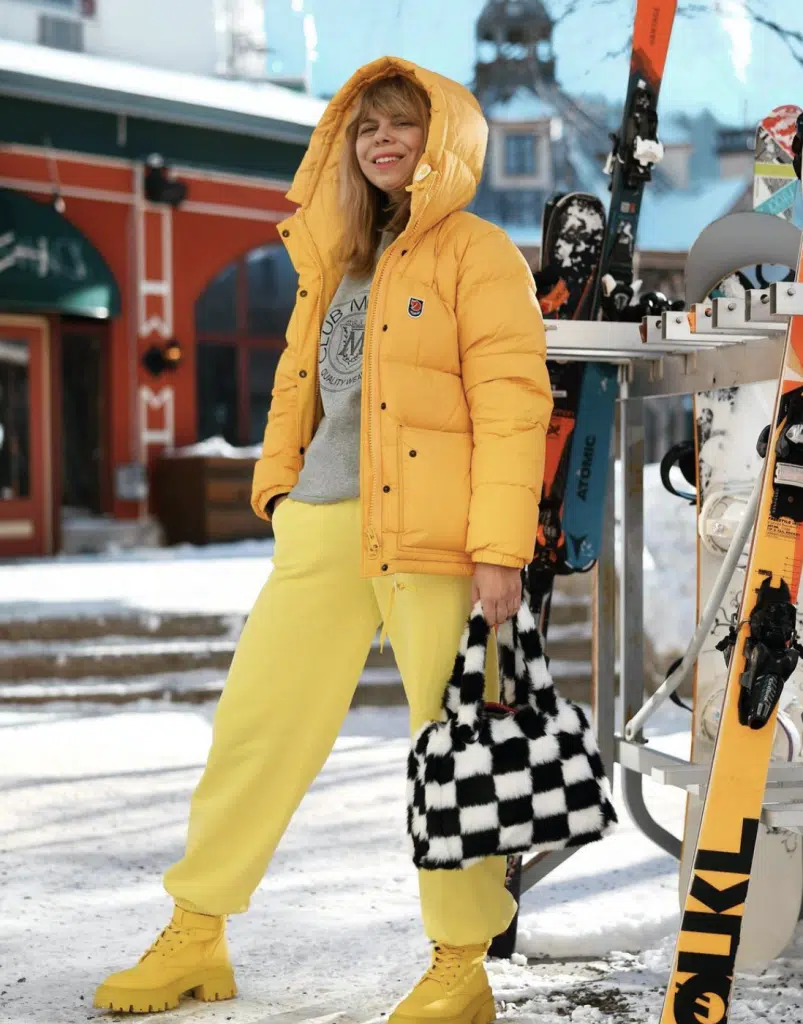
Bright Yellow Puffer Coat and Matching Pants
A coordinated head-to-toe yellow outfit creates maximum visibility on the mountain while delivering serious warmth. The monochromatic approach works because it’s broken up with neutral accessories like the grey sweatshirt underneath. This bold color choice is practical for safety reasons and works particularly well for snowboarders who want to make a statement.
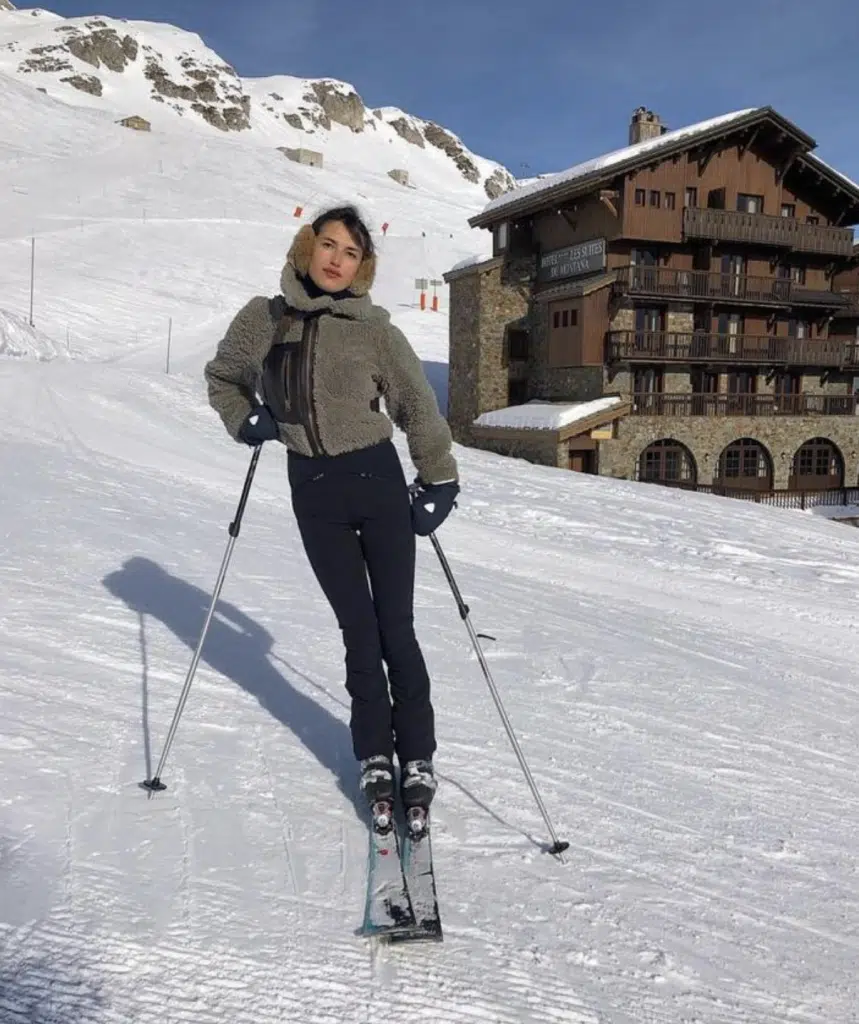
Sherpa Jacket with Black Technical Pants
An olive teddy coat over black ski pants offers texture contrast that’s both practical and visually interesting. The sherpa fabric provides excellent insulation while the fitted technical pants maintain mobility for skiing. This combination works for skiers who want warmth without the bulk of traditional ski jackets — though it’s better suited for milder days.
Quick tip
Pair fitted base layers with chunky boots to prevent proportion problems.
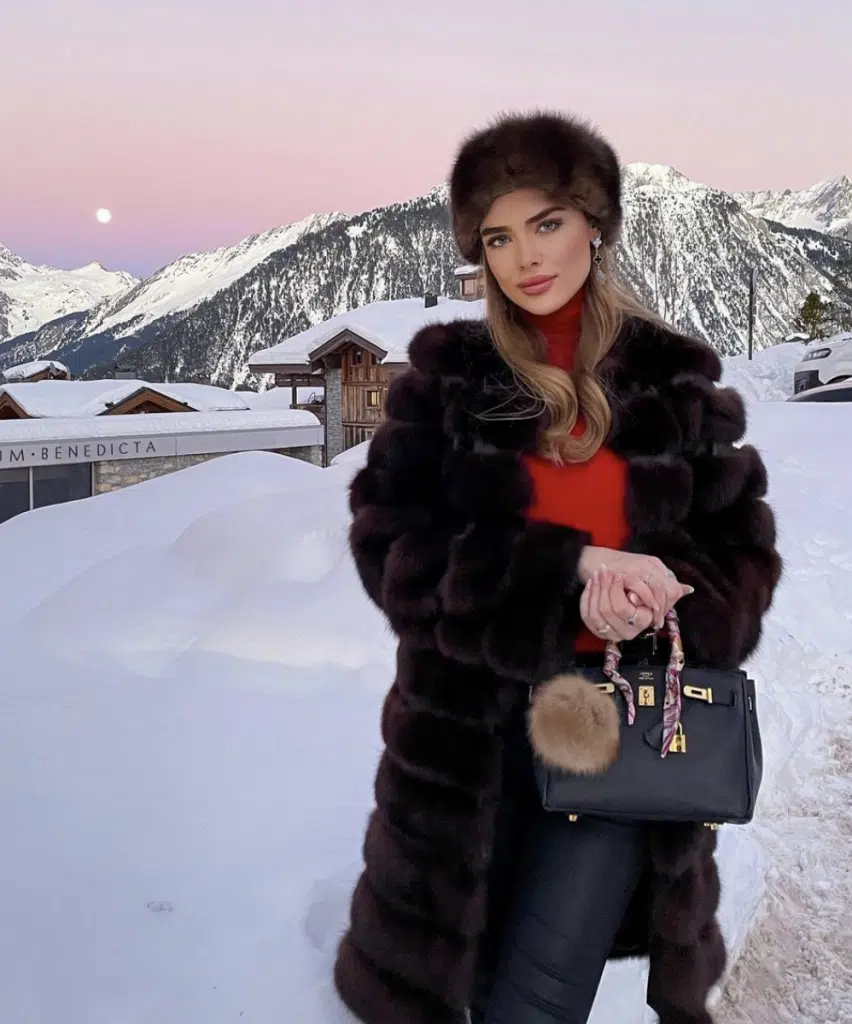
Luxury Fur Coat with Designer Accessories
A full-length dark fur coat with matching hat creates maximum glamour for high-end resort evenings. This level of luxury works for exclusive mountain destinations where fashion matters as much as function. The structured handbag and coordinated accessories complete a look that’s built for being seen at upscale lodges rather than actual skiing.
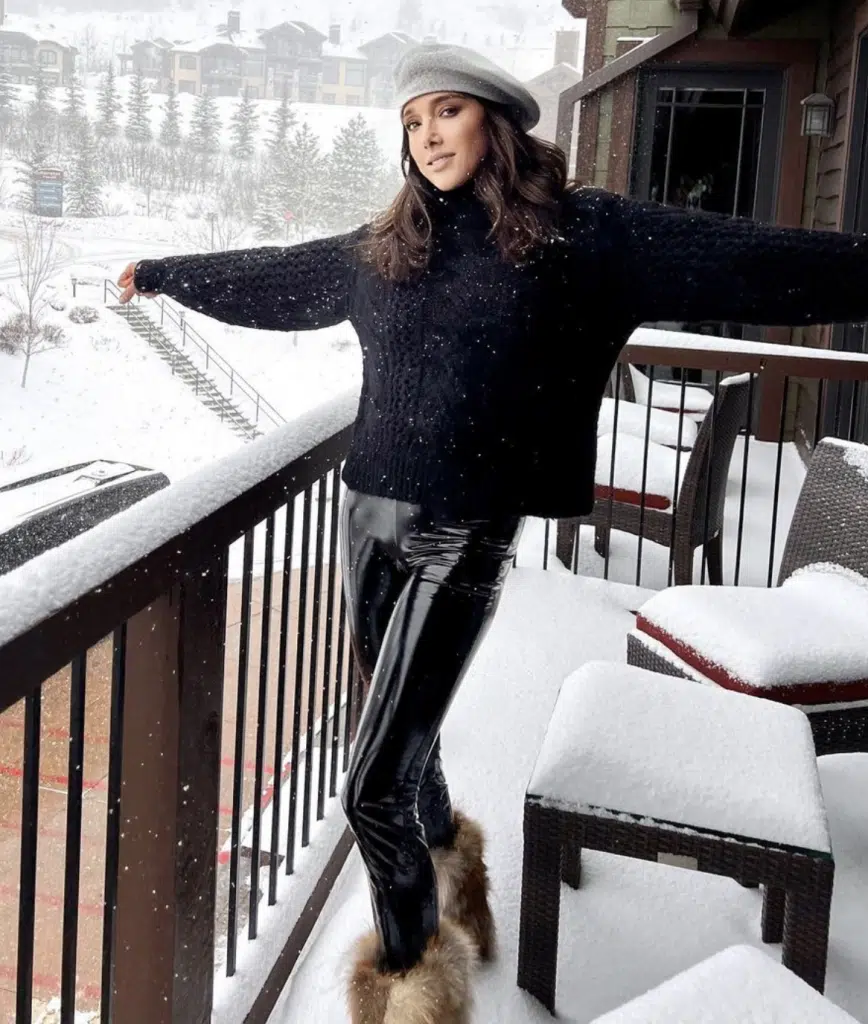
Leather Pants with Oversized Black Sweater
Black leather pants paired with a chunky knit sweater and beret creates an unexpectedly chic après-ski look. The leather provides wind resistance for outdoor activities while the oversized sweater adds necessary warmth. This combination works best for resort town dinners or mountain village strolling when you want to look polished off the slopes.
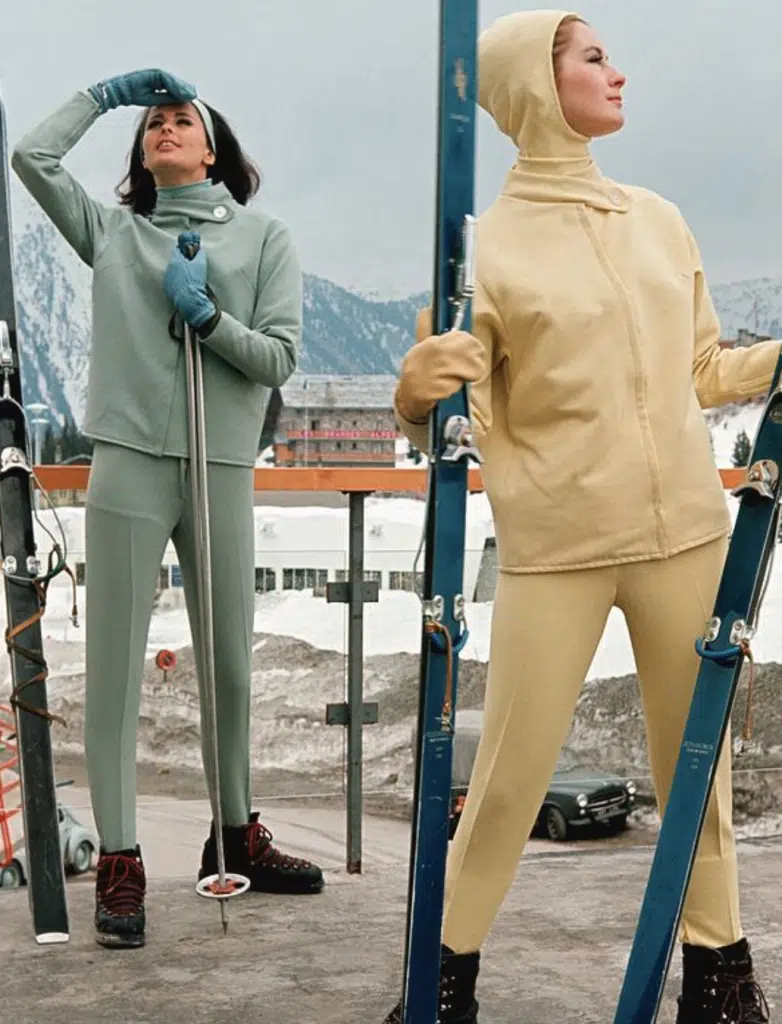
Vintage-Inspired Monochrome Ski Suits
These retro one-piece ski suits in sage green and cream capture classic 70s ski style with modern technical updates. The coordinated color palette and matching accessories create a cohesive look that photographs beautifully against mountain backdrops. Perfect for skiers who appreciate vintage aesthetics but need contemporary performance from their gear.
Quick tip
Try tonal dressing in light colors instead of stark black-white contrasts in snow.
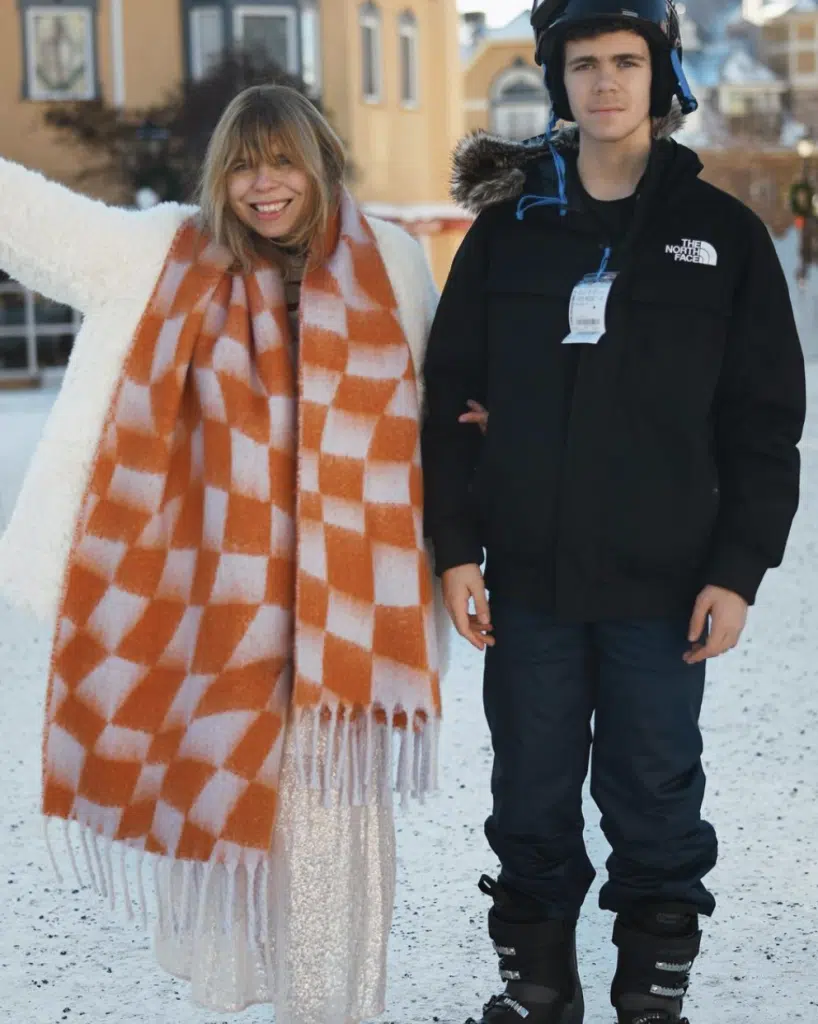
Orange Checkered Blanket Scarf with Ski Gear
A massive orange and white checkered scarf becomes the focal point over simple ski clothes, proving that oversized scarves work better than small ones in mountain settings. The generous proportions balance the bulky ski jacket and create visual interest against the monochrome base. This approach works particularly well for après-ski activities when you want to add personality to functional gear.
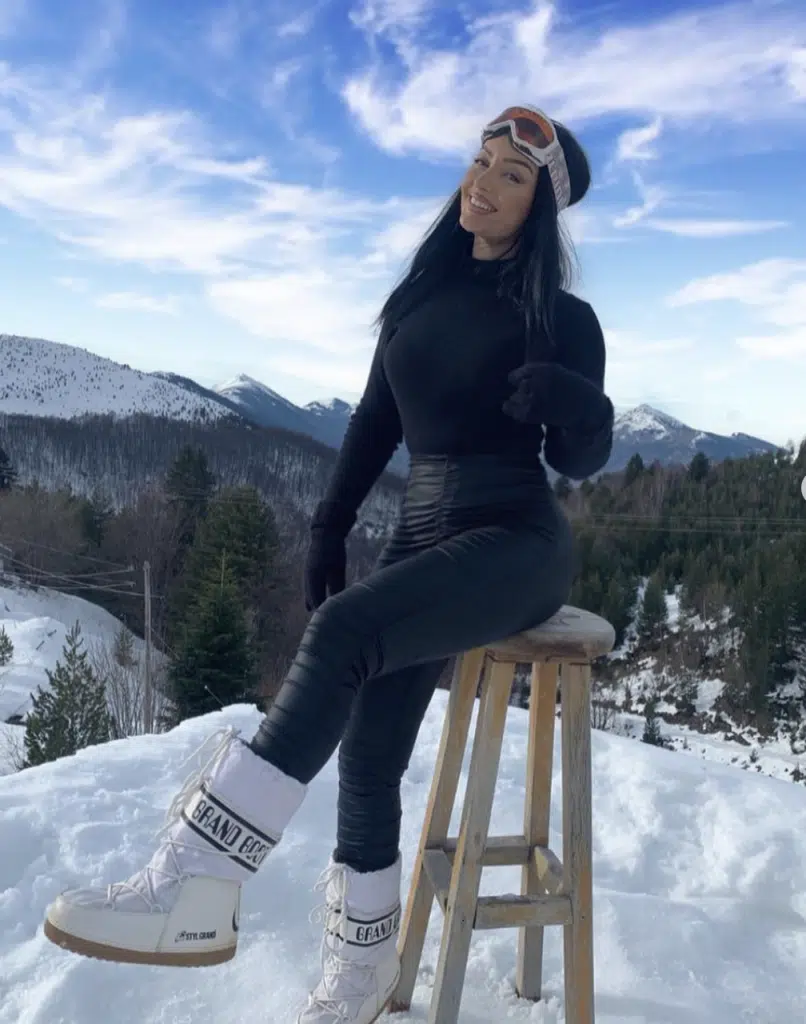
All-Black Base Layer with Moon Boots
Fitted black thermal layers create a sleek silhouette that prevents the bulky boot problem — when oversized snow boots overwhelm your proportions. The high neckline and form-fitting pants provide a streamlined foundation that makes statement moon boots look intentional rather than clunky. This combination works best for non-skiing snow activities where warmth matters more than technical performance.
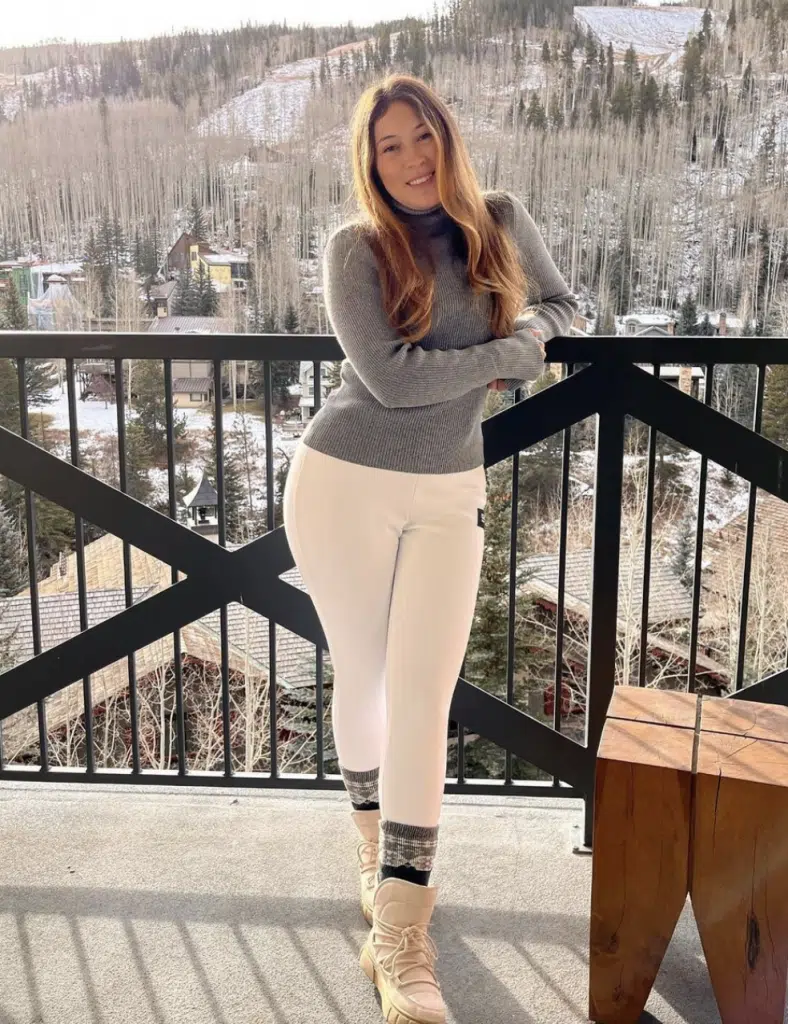
Cream Leggings with Alpine Boots
Light-colored leggings paired with tan lace-up boots create a tonal dressing approach that’s more flattering than stark contrasts in snowy settings. The ribbed sweater adds texture without competing with the coordinated lower half, while patterned socks peek out to prevent the outfit from looking too matchy. This works well for mountain town errands or casual lodge activities.
Quick tip
Add texture through different fabrics in the same color to create interest without chaos.
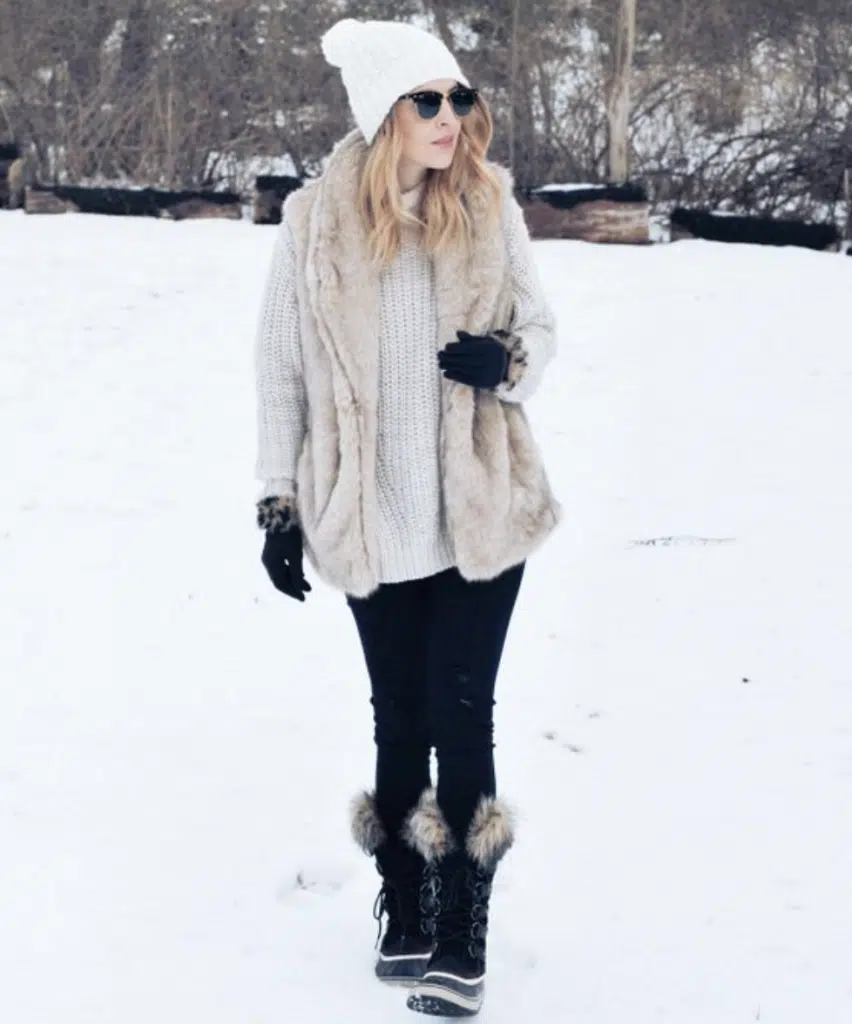
Fur Coat Over Chunky Knit
A light-colored fur coat over an equally light sweater demonstrates how texture creates interest within the same color family — the key to avoiding a washed-out winter look. Black jeans and boots ground the pale upper half, while the white beanie ties everything together without adding more visual weight. This combination works for upscale après-ski venues where warmth and polish both matter.
Ski Pants as Street Style
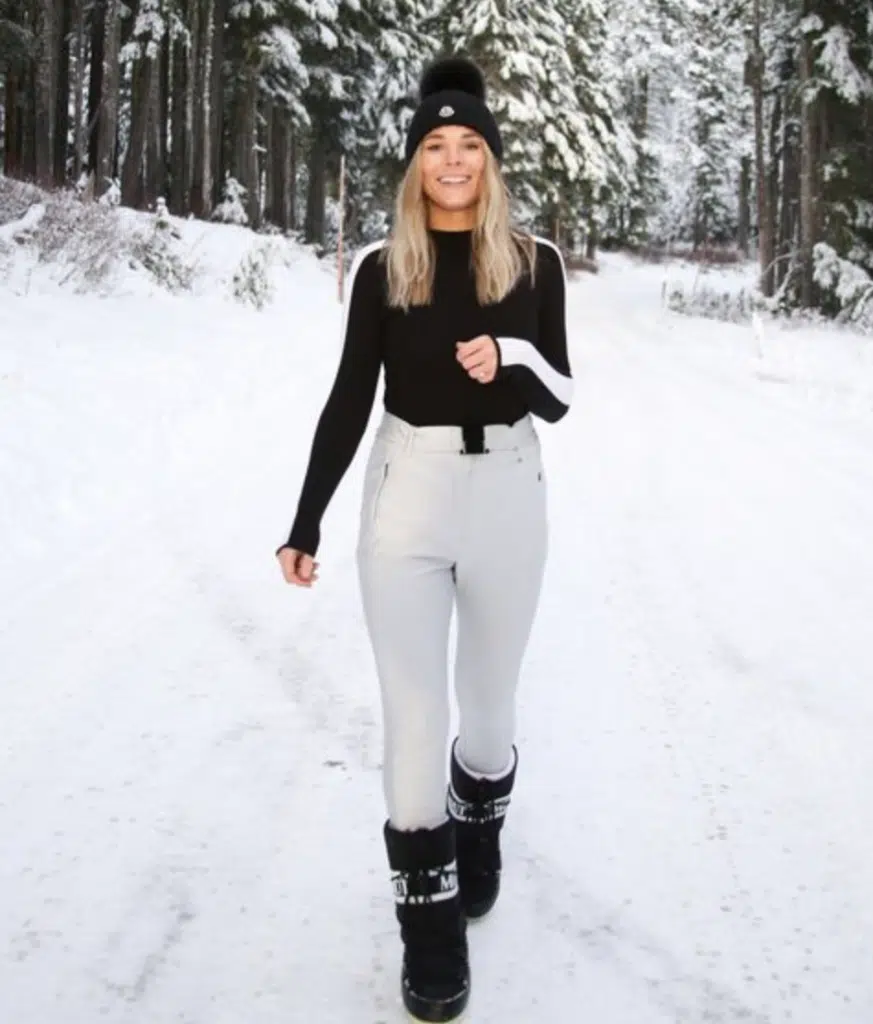
Gray ski pants worn with a black turtleneck prove that technical pieces work in non-technical settings when styled with fitted basics. The high-waisted cut and belt detail make athletic pants look purposeful rather than sloppy, while the streamlined top prevents the look from becoming too sporty. This approach works well for active mountain days when you need gear that transitions from slopes to town.
Key takeaways
- Choose oversized scarves over small ones — they balance bulky winter gear and add visual interest to functional pieces
- Create fitted base layers under loose outerwear to prevent shapeless silhouettes that make you look larger than you are
- Use tonal dressing in light colors to avoid harsh contrasts that compete with snowy backgrounds
- Add texture within the same color family instead of relying on color contrast to create visual interest
- Style technical pieces with fitted basics to make athletic wear look intentional for everyday mountain activities
- Ground light upper halves with dark bottoms to create balance and prevent washed-out winter looks
What To Wear Snowboarding – 18 Outfit Ideas & Styling Tips
How To Wear Fuzzy Sweater Outfits ? 20 Styling Tips
New Year’s Eve Outfits : Party Wear, Casual Styles & Tips
How to Wear Aviator Jackets: 22 Outfit Ideas & Styling Tips
How To Wear Plaid Coats? 18 Outfit Ideas with Styling Tips
39 Lug Sole Boots Outfit Ideas & Styling Tips
Ballet Wrap Sweater Outfit Ideas & 22 Tips For Styling
What to Wear in Canada in Winter? 21 Outfits and Packing List