Most women think layering is about throwing on more clothes until they’re warm enough. I’ve spent twelve years fixing this exact mistake — watching clients pile on sweaters and scarves without understanding that layering is actually about creating shape, not just coverage. The difference between looking bulky and looking intentional comes down to understanding which pieces go where and why.
I learned this the hard way during my first New York winter as an assistant fashion editor. I’d layer a turtleneck under a sweater under a coat and wonder why I looked like a walking sleeping bag while the senior editors somehow stayed warm and looked pulled together. The secret isn’t more layers — it’s strategic layering that builds your silhouette instead of hiding it.
Real layering creates visual interest and solves practical problems. It lets you adjust your temperature throughout the day, transitions summer pieces into colder months, and gives you more outfit combinations from fewer clothes. But most importantly, it teaches you to think about proportions — something that transforms how you get dressed year-round.
Tips on How to Layer Your Outfits
Layer chunky knits over fitted bases
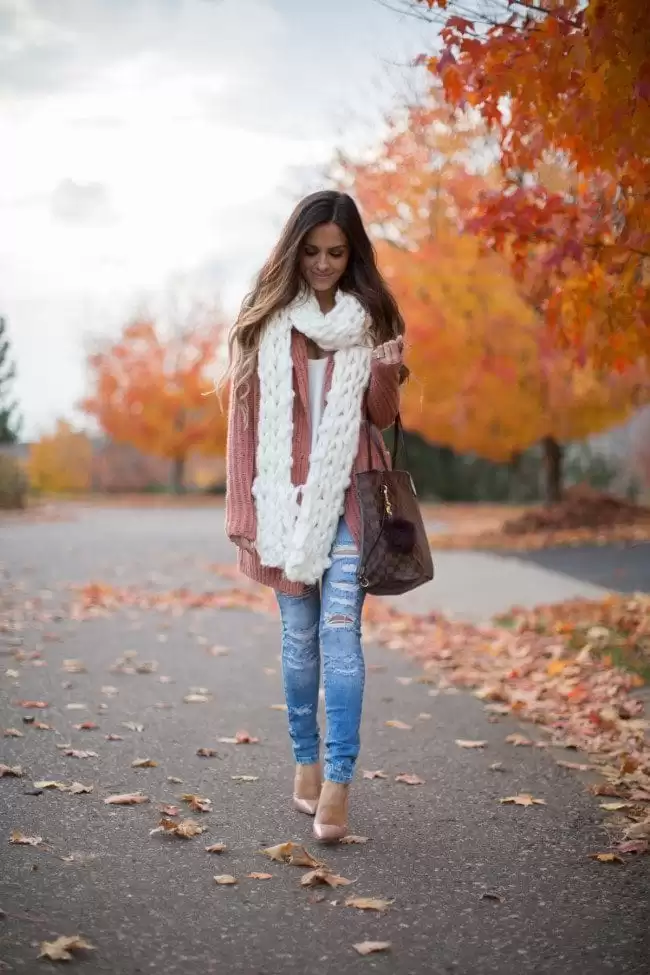
This oversized cable knit scarf works because it’s paired with a fitted sweater and skinny jeans. The key is keeping one element close to your body so the bulky layer doesn’t overwhelm your frame. I always tell clients to think about balance — if your top layer is voluminous, your base layer should hug your body. This creates shape instead of adding bulk.
Use structured coats as your outer anchor
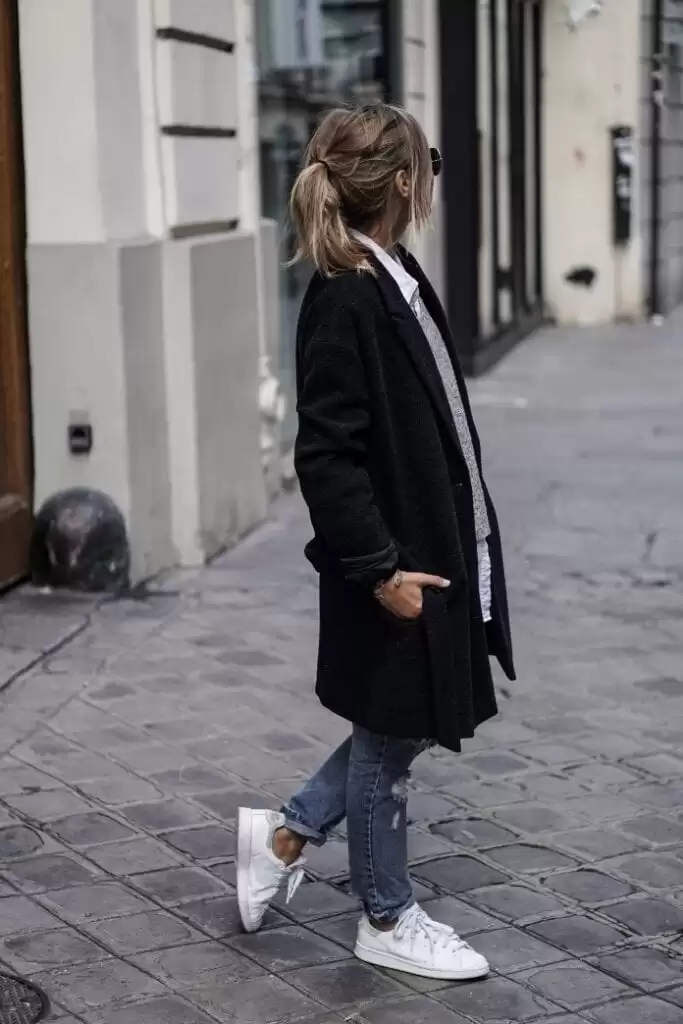
This wool coat creates a clean line that contains all the layers underneath. The crisp white shirt shows at the collar and cuffs, giving you that polished layered look without the mess. I’ve worn this exact formula to client meetings countless times — the coat does the heavy lifting while the shirt adds brightness at your face.
Layer different textures for visual depth
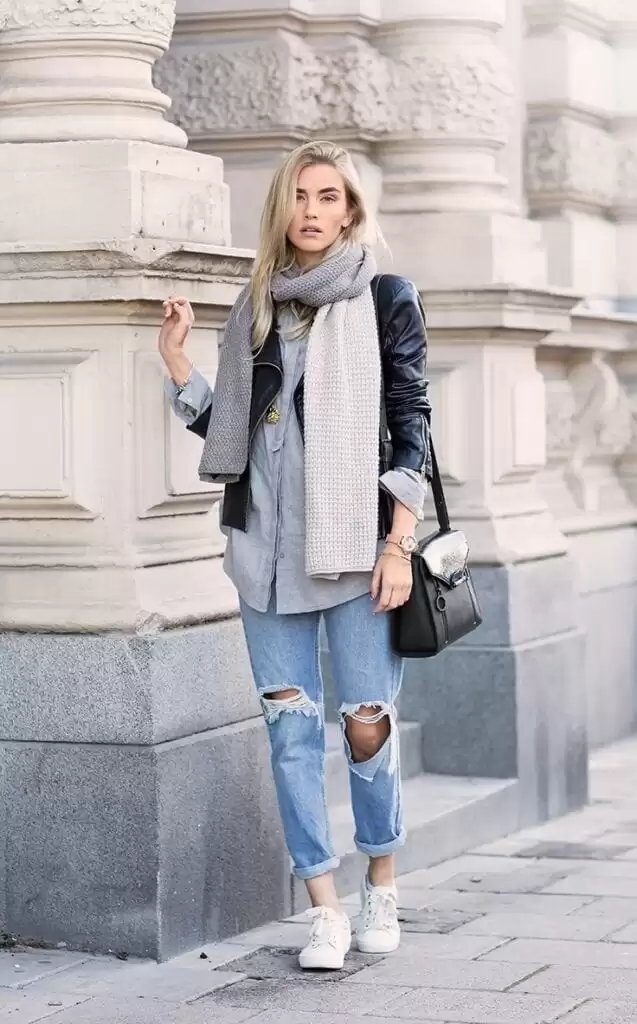
The combination of a leather jacket, denim shirt, and knit scarf creates interest through contrast. Each texture catches light differently, which prevents that flat, one-dimensional look you get from wearing all the same fabric. This is why a cotton tee under a wool sweater always looks better than a wool tee under the same sweater.
What To Wear To Theatre? 35 Best Outfit Ideas for Women
50+ Velvet Outfit Ideas with Styling Tips
How To Wear A Corset Belt? 35 Outfit Ideas
How To Style Fit And Flare Dresses 20 Outfit Ideas To Try
22 Chic Leg Warmer Outfit Ideas & Styling Tips
40 Best Floral Shorts Outfit Ideas with Styling Tips
How to Style Knee Length Dresses: 18 Outfit Ideas

What to Wear for Meeting the Parents ? 16 Outfit Ideas
Tie scarves to define your waist
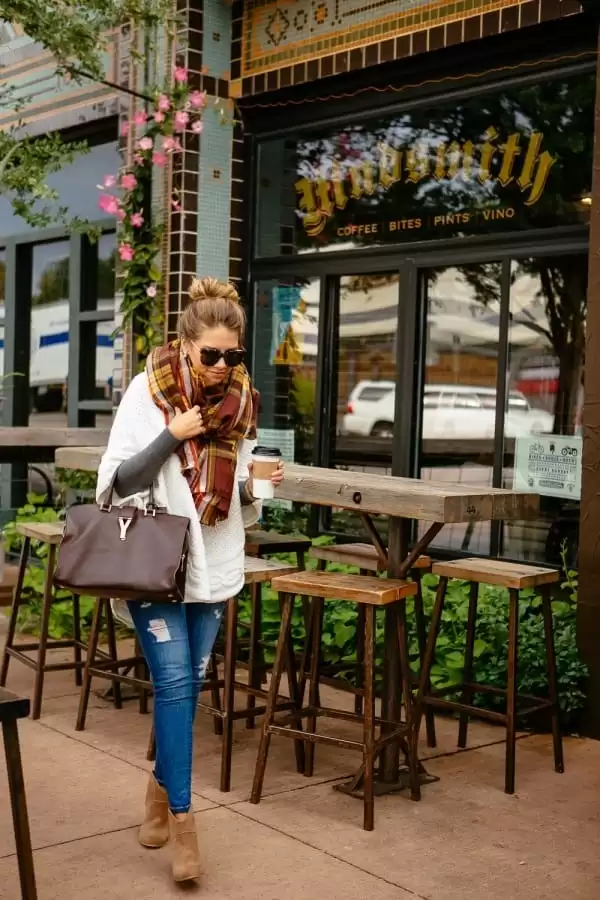
Instead of letting this plaid scarf hang loose, it’s styled to create a waistline over the white sweater. This is crucial when layering — your waist can disappear under multiple layers, making you look boxy. I’ve saved countless outfits by simply adjusting how a scarf falls or adding a belt over a cardigan.
The military invented modern layering systems during WWII, developing the “base, insulating, and shell” principle that fashion still uses today. Each layer serves a specific function rather than just adding warmth.
Choose knits that drape, not cling
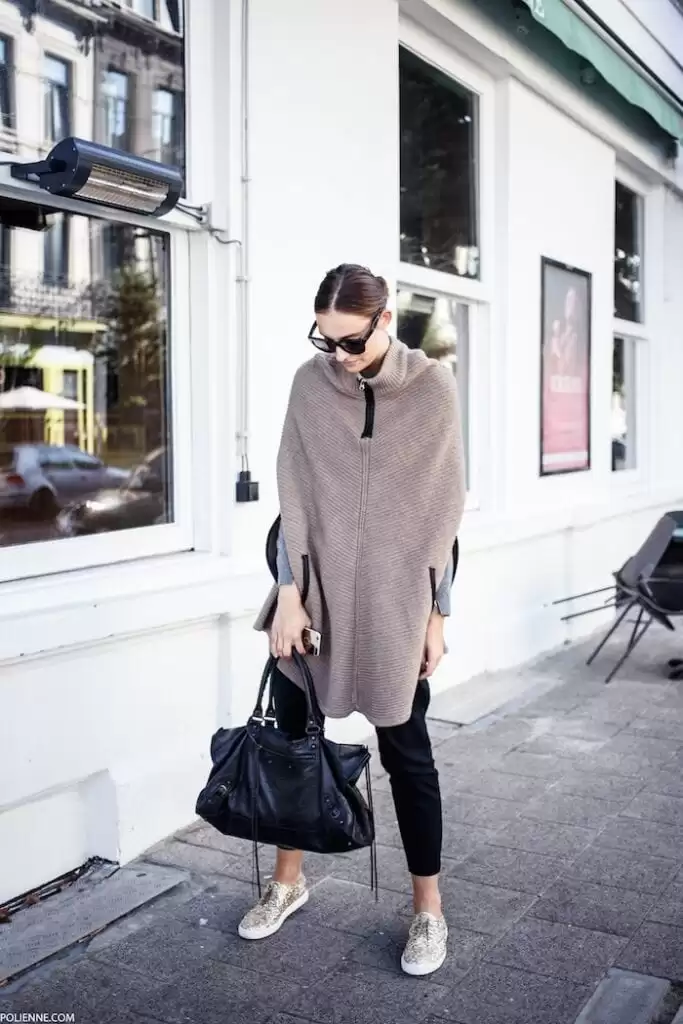
This ribbed poncho-style sweater skims the body instead of gripping it. When you’re layering multiple pieces, you need room to move and breathe. Clingy layers bunch up and create unflattering lines. I learned this after spending a day in a fitted cardigan over a fitted tee — every time I moved, something would ride up or pull tight.
Master the blanket scarf technique
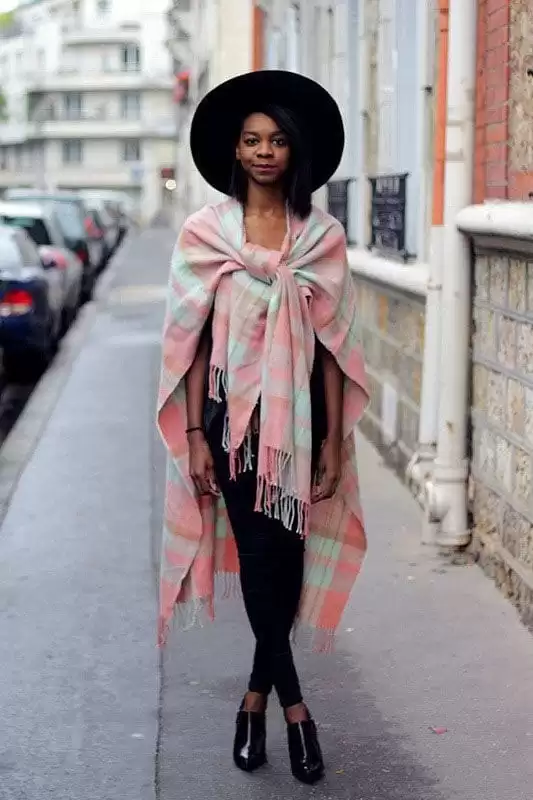
This oversized plaid scarf becomes the statement piece that pulls the whole outfit together. The trick is wrapping it asymmetrically so it doesn’t look like you’re wearing a tablecloth. I spent years getting this wrong before realizing the scarf should enhance your silhouette, not hide it completely.
Layer for impact, not just warmth
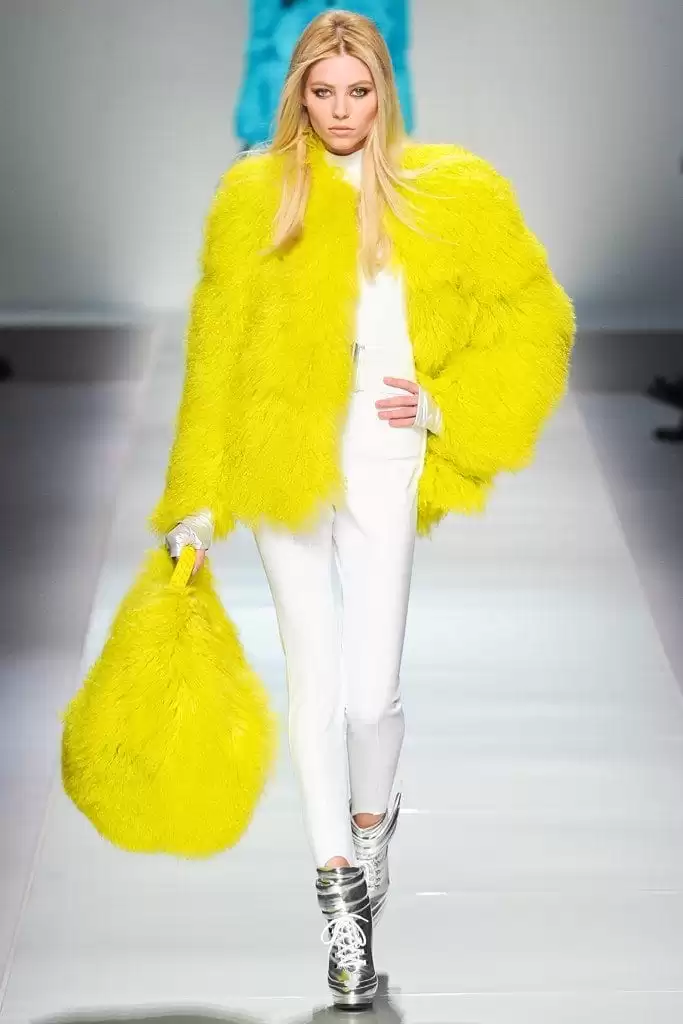
This runway look proves layering can be dramatic and fashion-forward. The oversized yellow coat creates a bold silhouette while the fitted white base keeps it from looking sloppy. Sometimes the most effective layers are the ones that make a statement — layering doesn’t have to be subtle to work.
Dos & Don’ts
How to Layer Without Adding Bulk
The biggest fear I hear from clients is looking bigger in winter clothes. The solution isn’t wearing less — it’s wearing smarter layers that work with your body instead of against it. I always start with the thinnest possible base layer that still provides warmth. Merino wool tees are worth the investment because they’re incredibly thin but surprisingly warm.
Your middle layer should have some structure. A fitted blazer or tailored cardigan creates shape even when you add a coat over it. I avoid loose, drapey middle layers because they create bulk without adding any definition to your silhouette. The outer layer is where you can go bigger — an oversized coat or dramatic scarf — because it’s the final shape people see.
Color strategy matters too. I keep my base layers in neutrals and add interest through my outer layers. This way, if I need to remove something indoors, I’m still put-together. Dark bases also create a slimming foundation that makes your outer layers look more intentional rather than just thrown on.
Mastering the Art of Layering
Striped Blanket Scarf Over Black Base
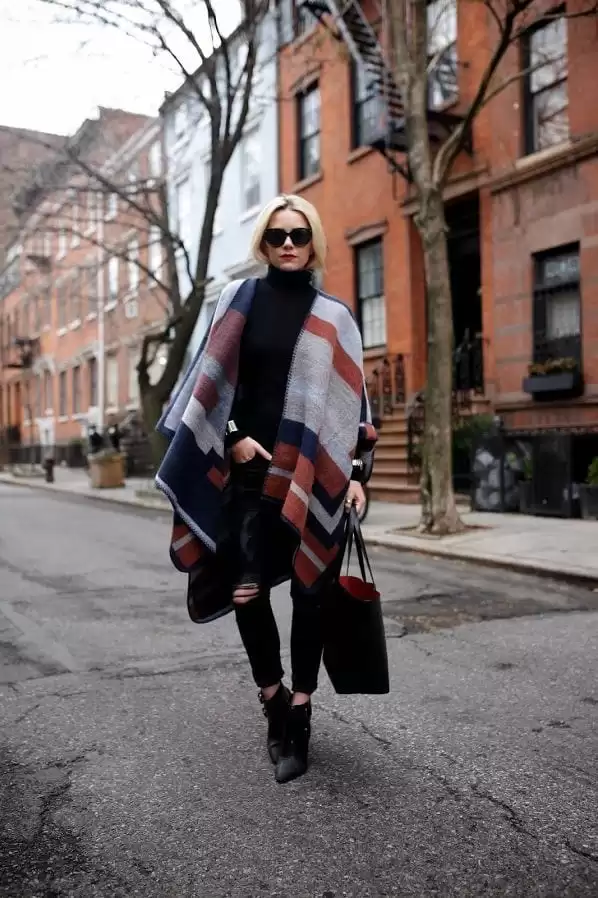
A black turtleneck and ripped jeans create the perfect neutral canvas for this oversized striped blanket scarf in burgundy, grey, and navy. The large-scale pattern becomes the focal point while the monochrome base keeps everything grounded. This works brilliantly for anyone who wants to add visual interest without looking overdone.
Plaid Blanket Scarf with Fringe Details
This brown plaid blanket scarf transforms a simple camel sweater and dark jeans into something special. The fringe detailing adds movement and texture, while the earth tones create a cohesive autumn palette. Perfect for women who love boho-inspired looks but want to keep things wearable for everyday.
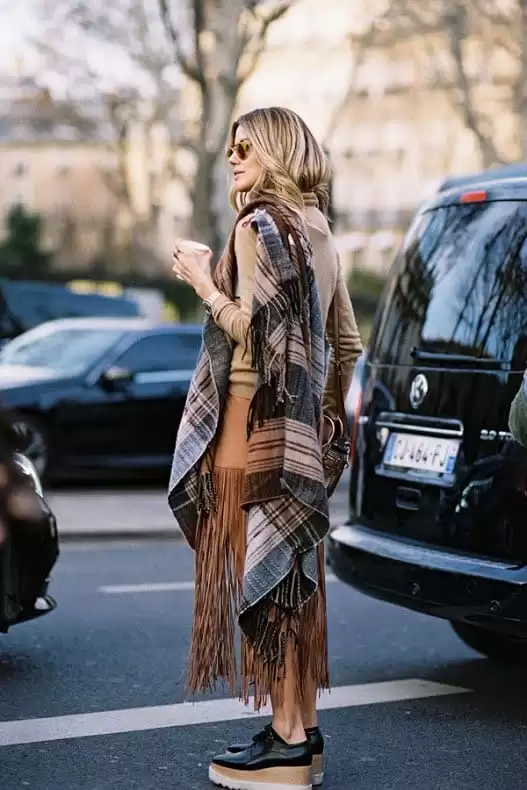
Faux Fur Collar Statement Piece
A chunky faux fur collar elevates this oversized camel sweater and creates instant luxury. The textural contrast between the smooth knit and plush fur makes this combination feel intentional and polished. This layering technique works especially well for petite women as it adds volume in exactly the right place.
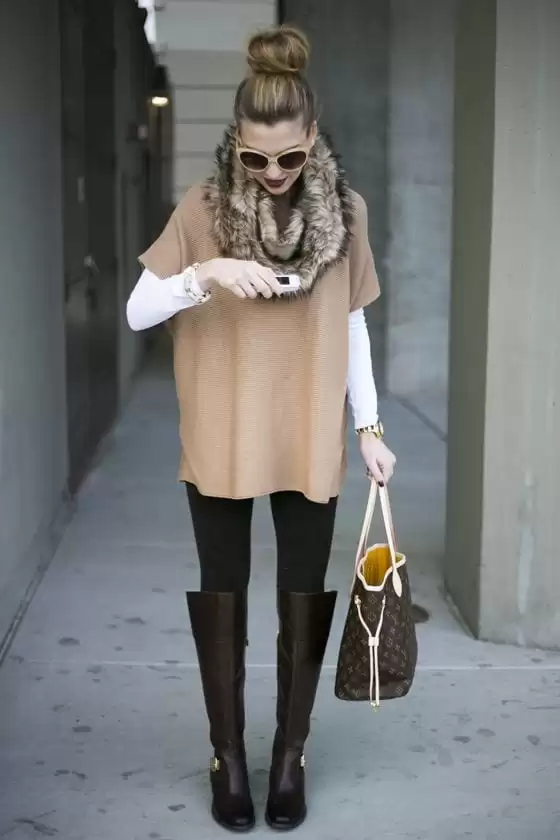
Belted Cardigan Over Printed Dress
A mustard cardigan worn over a geometric print dress and cinched with a belt creates perfect proportions. The belt at the natural waist prevents the cardigan from overwhelming the dress underneath, while the warm yellow picks up tones from the print. This approach works for anyone wanting to extend their summer dresses into cooler weather.
Quick tip
Drape oversized scarves over one shoulder for asymmetrical interest.
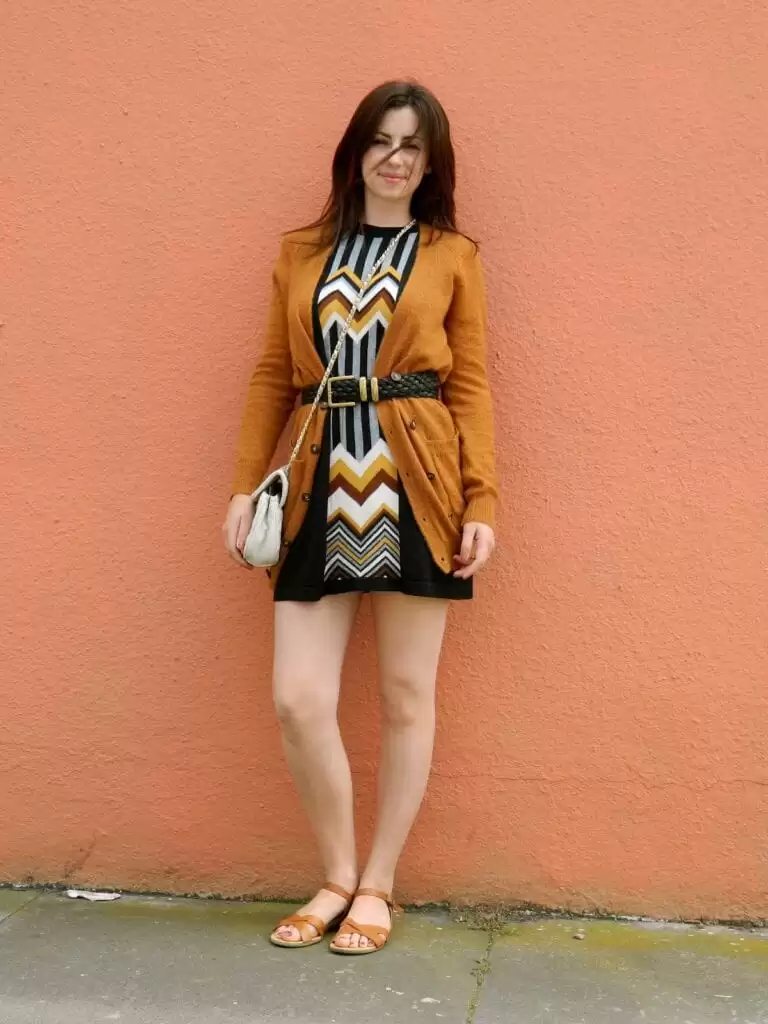
Long Coat with Cable Knit Layers
This rust-colored wool coat layered over a cable knit sweater and white collared shirt creates beautiful depth. The different textures — smooth wool, chunky knit, and crisp cotton — add visual interest without competing for attention. The neutral palette in varying weights makes this perfect for transitional weather dressing.
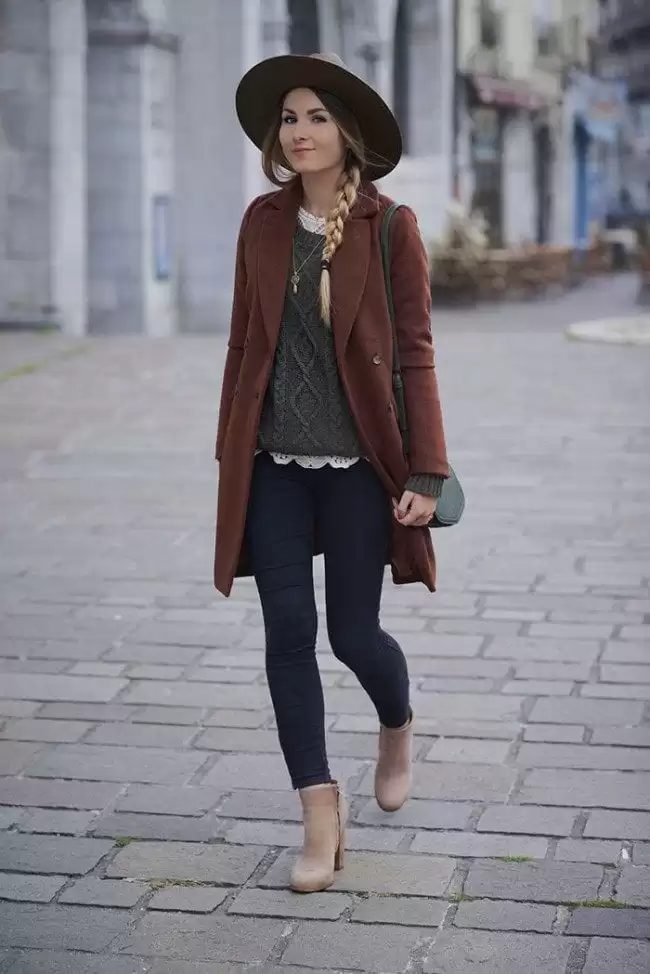
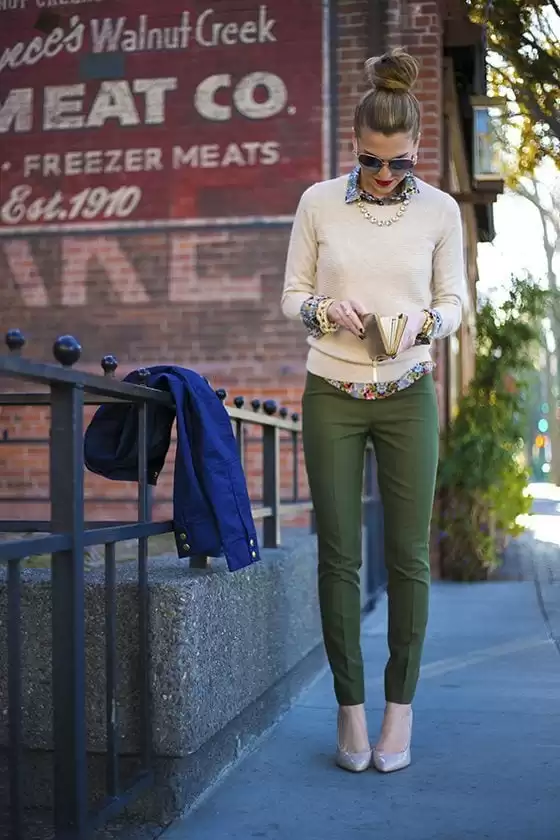
Cream Sweater with Floral Shirt Peek
A cream pullover worn over a floral blouse lets just enough pattern show at the hem and cuffs. This subtle layering technique adds interest without overwhelming the look, while the olive green pants ground the softer tones above. Ideal for office environments where you want personality without being too bold.
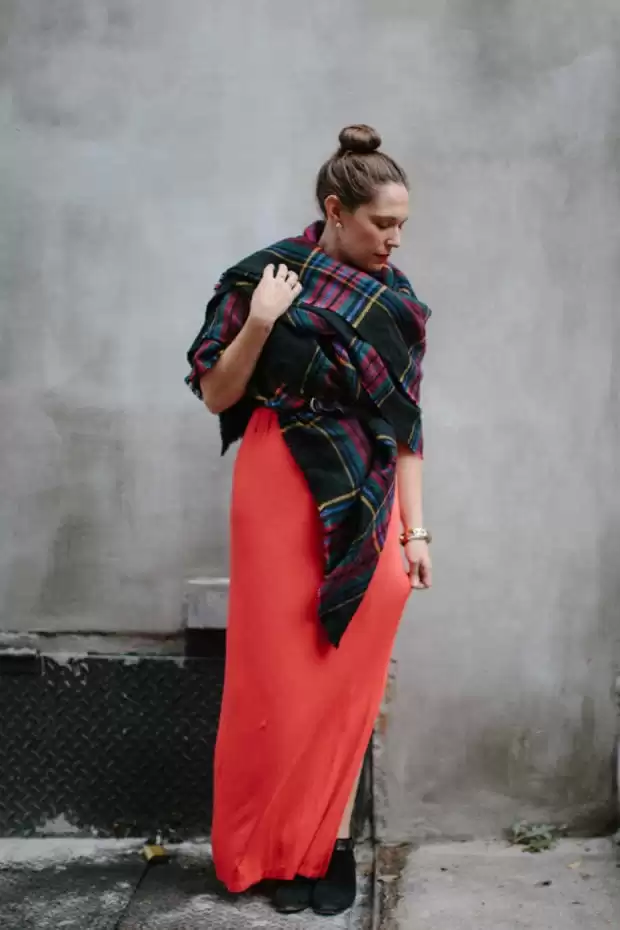
Dramatic Plaid Wrap with Long Dress
An oversized plaid scarf draped over a coral maxi dress creates striking color contrast. The asymmetrical draping adds movement and visual interest, while the bold color combination prevents the look from feeling boring. This technique works brilliantly for anyone wanting to make a statement with minimal effort.
Quick tip
Keep base layers neutral in texture mixing to avoid visual chaos.
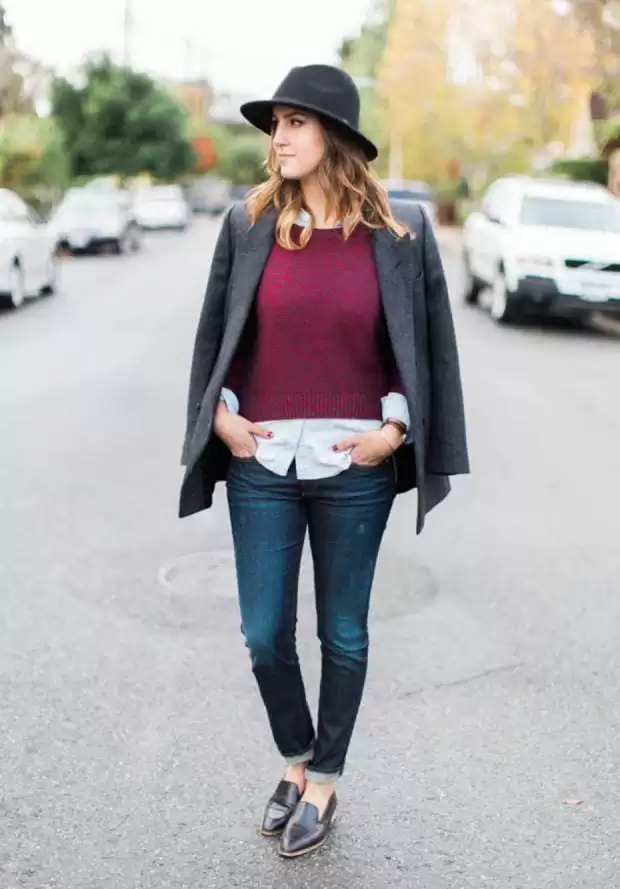
Burgundy Sweater with Blazer Draping
A grey blazer worn loosely over the shoulders adds structure to this burgundy sweater and denim combination. The relaxed draping technique feels effortless while adding a layer of sophistication to casual pieces. This approach works perfectly for transitional moments when you’re not sure if you’ll need the blazer later.
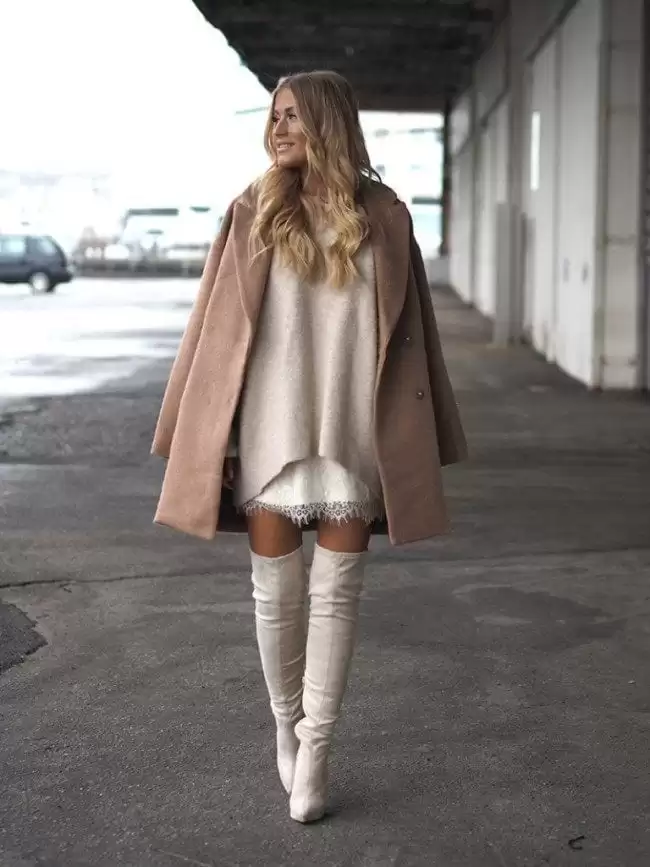
Camel Coat Over Neutral Knits
A camel wool coat layered over a cream sweater creates a monochromatic masterpiece in neutral tones. The different weights of fabric — heavy wool over soft knit — provide structure without bulk, while the over-the-knee boots add proportion to the longer coat length. This combination works beautifully for tall women who can carry longer proportions.
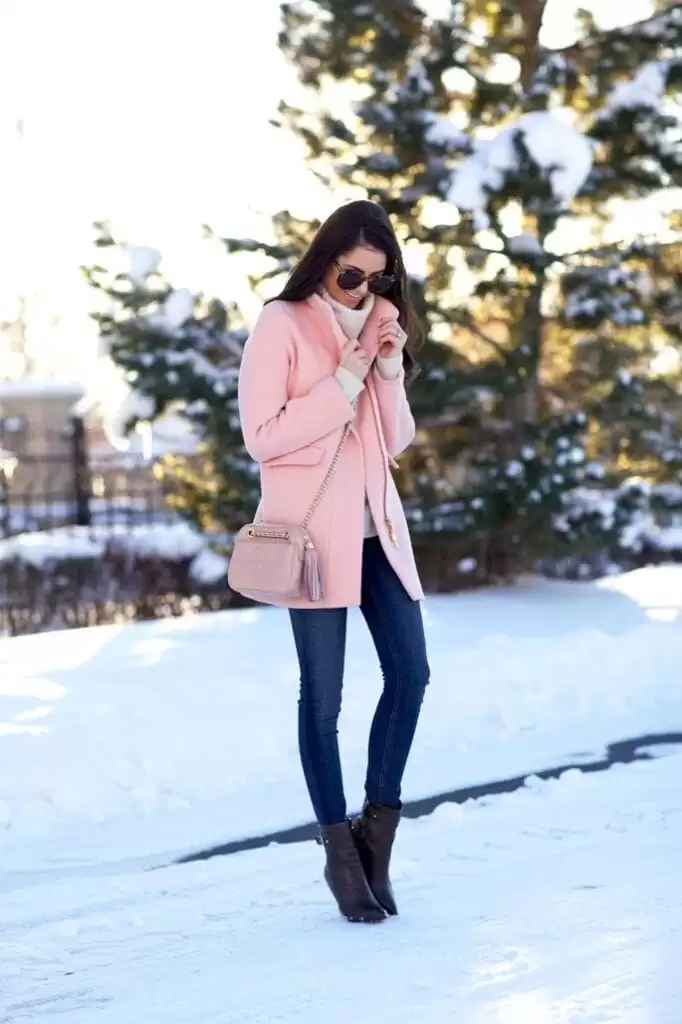
Pink Coat as Pop of Color
A soft pink coat over dark denim creates an unexpected but beautiful color combination. The single bright piece against the neutral backdrop makes the pink feel intentional rather than overwhelming. This technique is perfect for anyone hesitant about wearing bright colors — let one statement piece do all the work.
Quick tip
Choose fitted bottoms with voluminous tops for balanced proportions.
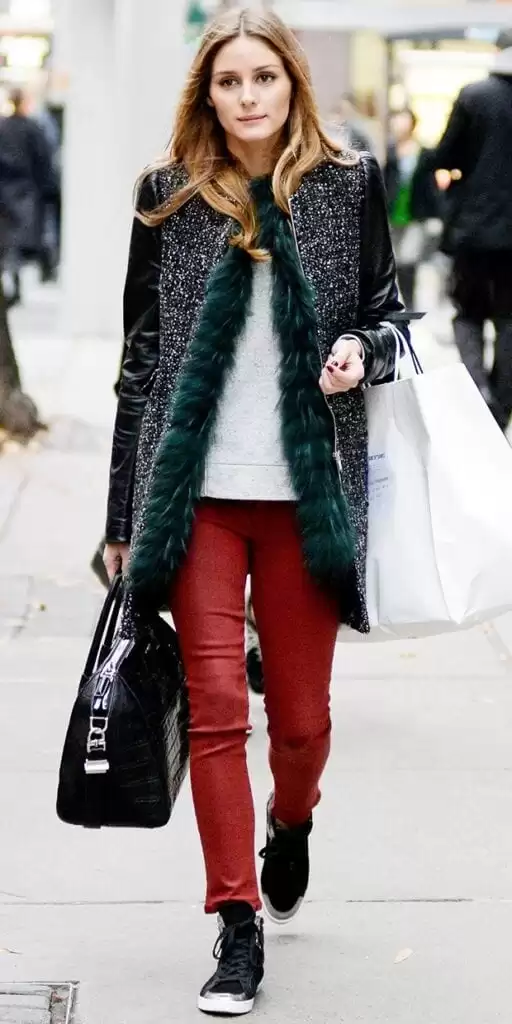
Textured Coat with Statement Scarf
This tweed coat with leather sleeves gets extra impact from that emerald fur scarf draped casually over one shoulder. The red jeans add unexpected colour that works because they share the same intensity as the green fur. This combination suits women who want to master asymmetrical draping — the scarf placement creates visual interest without looking overdone.
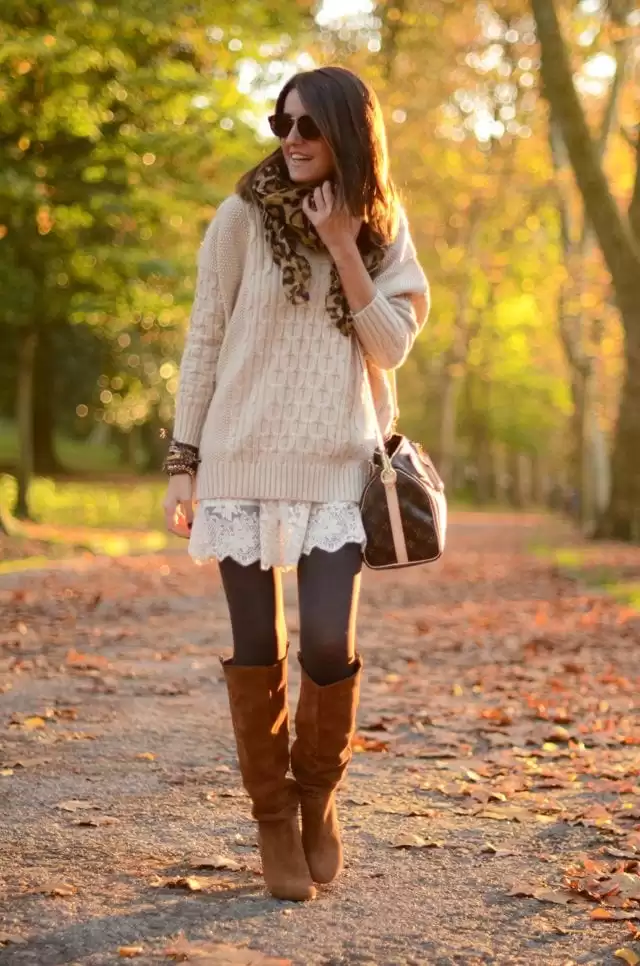
Sweater and Lace Layering
A chunky knit worn over a lace hem creates texture contrast that actually flatters. The leopard scarf adds pattern without competing because it stays in the same neutral family as the sweater. This works for petite frames because the lace peek-through extends the leg line while the oversized sweater balances proportions.
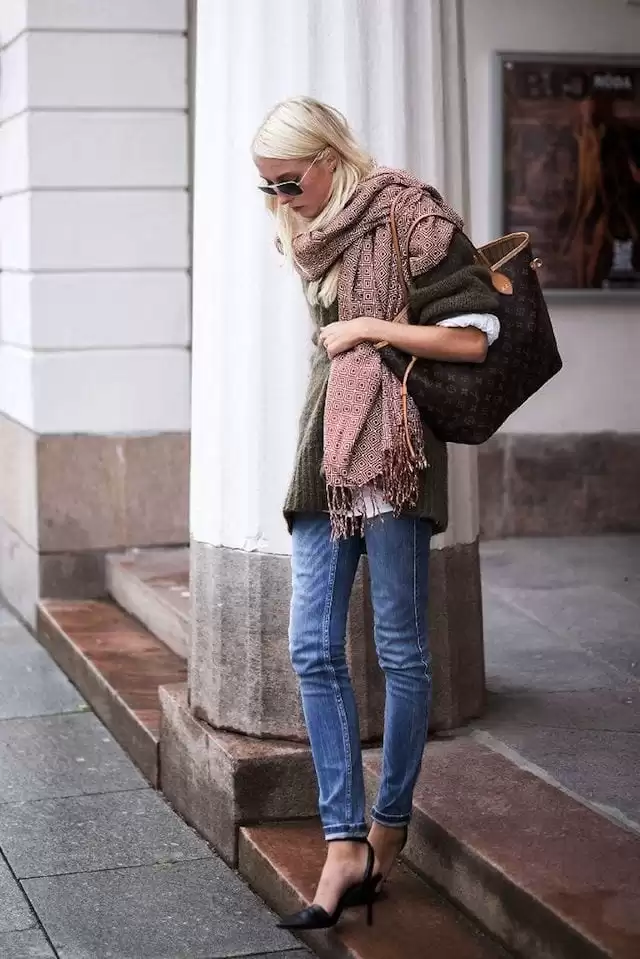
Blanket Scarf Over Layers
That oversized patterned scarf transforms a simple cardigan-and-jeans base into something that looks intentional. The key is keeping everything underneath neutral so the scarf can be the statement piece. This suits busy mornings when you need to look put-together quickly — one bold accessory does all the styling work.
Quick tip
Use monochromatic layering in different textures for sophisticated depth.
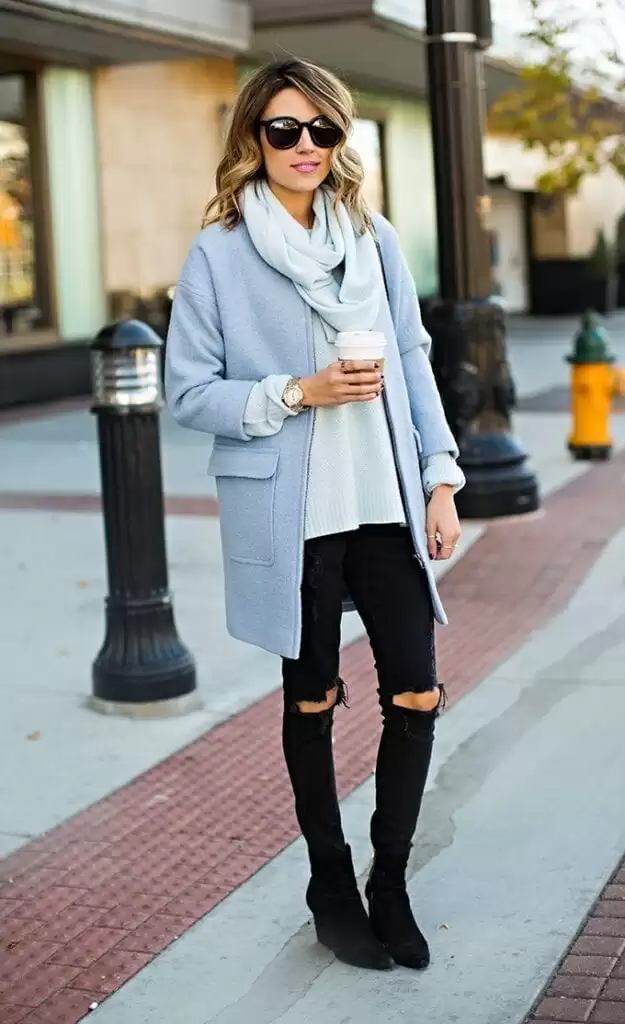
Tonal Layering in Blues
Three shades of blue work together because they’re all in the same colour family but different textures. The light blue coat, medium blue sweater, and dark denim create depth without clashing. This monochromatic approach suits women who want to look polished but find pattern mixing intimidating — texture variation adds interest within one colour story.
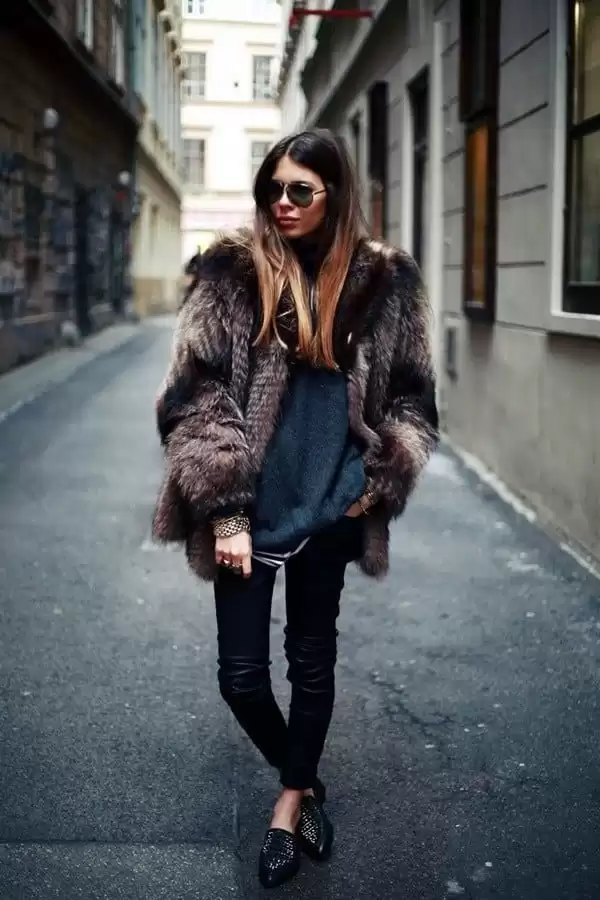
Oversized Fur with Fitted Base
The voluminous fur jacket needs those slim black jeans underneath to avoid looking overwhelming. The denim shirt adds a casual element that prevents the fur from feeling too precious. This combination works because of proportion balancing — when your top layer is oversized, everything underneath should be streamlined.
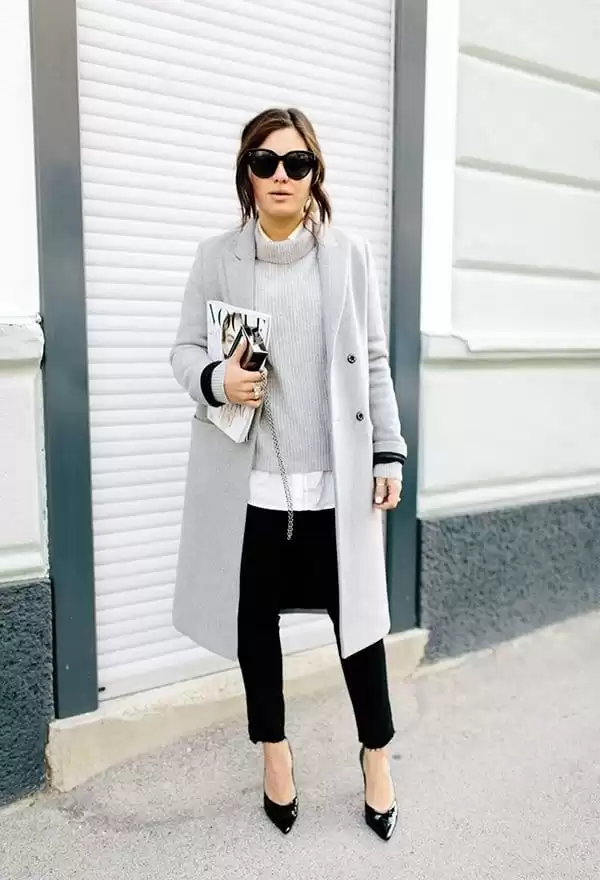
Long Coat Layering
This grey coat creates a clean silhouette over the ribbed sweater and white shirt layer. The cropped black trousers show ankle, which prevents the long coat from cutting you in half. This suits taller women or anyone who wants to create vertical lines — the unbroken coat length elongates your frame when proportioned correctly.
Quick tip
Add one pop of colour through accessories when wearing neutral layers.
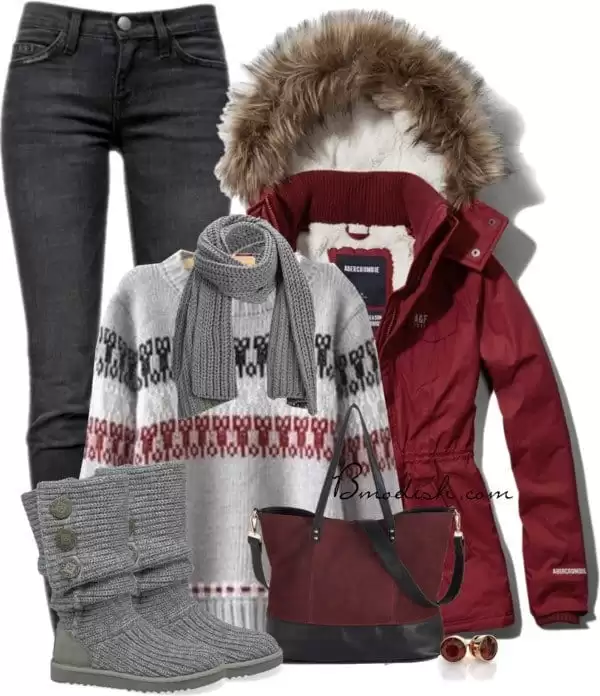
Winter Parka Styling
A technical parka gets dressed up with a patterned knit sweater that has visual interest. The grey jeans and knit boots keep the practical vibe while the red bag adds a pop of colour. This works for women who need serious winter protection but don’t want to sacrifice style — functional layering with one elevated piece makes all the difference.
Blanket Scarf as Outerwear
That plaid blanket scarf worn over a bomber jacket creates the illusion of a cape without the bulk. The fitted jeans keep the proportions balanced while the ankle boots add structure. This suits petite women because the scarf-as-jacket technique adds drama without overwhelming a smaller frame.
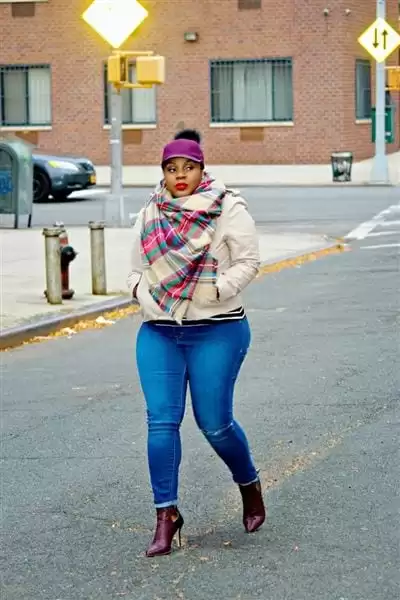
Textural Scarf Wrapping
Multiple wraps of this chunky knit scarf create a cowl effect that adds warmth and visual weight to the upper body. The patterned cardigan provides interest while the dark leggings keep the bottom half simple. This works for apple shapes because generous scarf wrapping draws attention upward and creates a flattering neckline.
Quick tip
Wrap chunky scarves multiple times to create cowl necklines that flatter apple shapes.
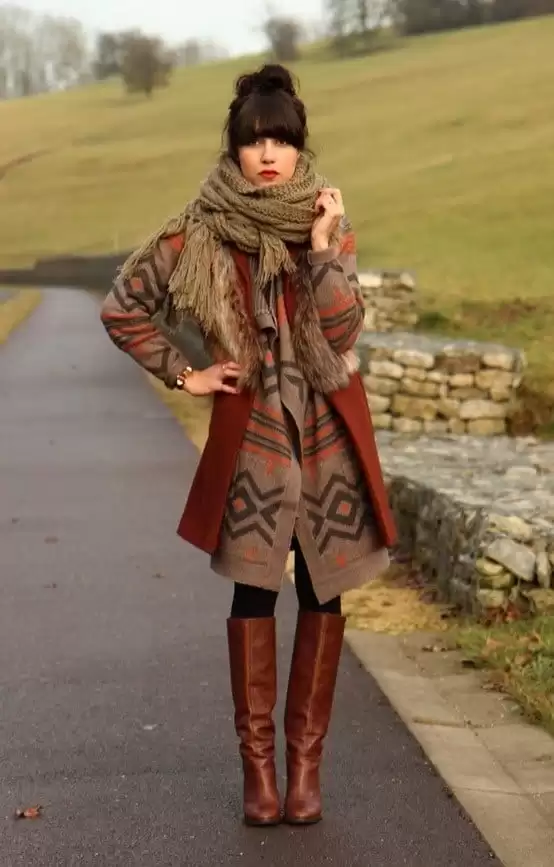
Cape Coat with Fur Trim
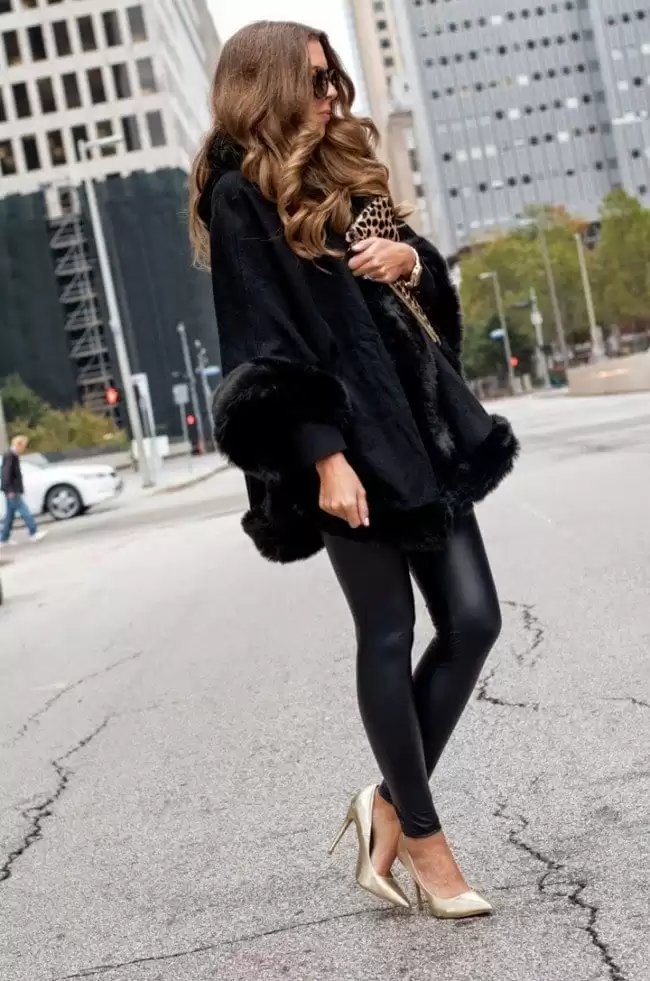
This structured cape with fur-trimmed sleeves looks dramatic over fitted black leggings and metallic heels. The cape shape requires slim bottoms to maintain the silhouette’s impact. This suits special occasions when you want maximum impact — cape layering creates instant glamour but needs careful proportion management underneath.
Key takeaways
- Balance oversized top layers with fitted bottoms to maintain good proportions
- Use texture contrast instead of pattern mixing for sophisticated layering
- When wearing statement outerwear, keep base layers neutral to let the outer piece shine
- Master asymmetrical draping with scarves for instant visual interest
- Create vertical lines with long coats and cropped bottoms to elongate your frame
- Add one elevated piece to functional winter wear to maintain style while staying warm
What To Wear To Theatre? 35 Best Outfit Ideas for Women
50+ Velvet Outfit Ideas with Styling Tips
How To Wear A Corset Belt? 35 Outfit Ideas
How To Style Fit And Flare Dresses 20 Outfit Ideas To Try
22 Chic Leg Warmer Outfit Ideas & Styling Tips
40 Best Floral Shorts Outfit Ideas with Styling Tips
How to Style Knee Length Dresses: 18 Outfit Ideas
What to Wear for Meeting the Parents ? 16 Outfit Ideas