The shirt jacket changed everything for me five years ago when a client complained his wardrobe felt “too formal for weekends, too casual for work.” He needed something that bridged that gap without looking like he was trying too hard. That’s exactly what a shacket does — it’s the piece that makes you look intentionally dressed without the stiffness of a blazer.
Most men buy shackets thinking they’re just oversized shirts, then wonder why they look sloppy. Fit determines whether you look put-together or like you borrowed your dad’s shirt. The shoulders should sit at your natural shoulder line — not drooping off like a bathrobe. The body needs enough room to layer a t-shirt or thin sweater underneath, but not so much that it balloons when you move. Length matters too: it should hit just below your belt, covering your waistband but not extending past your back pockets.
I’ve dressed everyone from tech executives to weekend warriors, and the shacket works for all of them because it occupies this perfect middle ground between formal and casual. Throw it over a t-shirt for coffee runs, layer it under a wool coat for commuting, or wear it alone with chinos for dinner. The key is understanding that it’s not trying to be a shirt or a jacket — it’s something entirely different.
Celebrity Style
Master the Smart Casual Balance
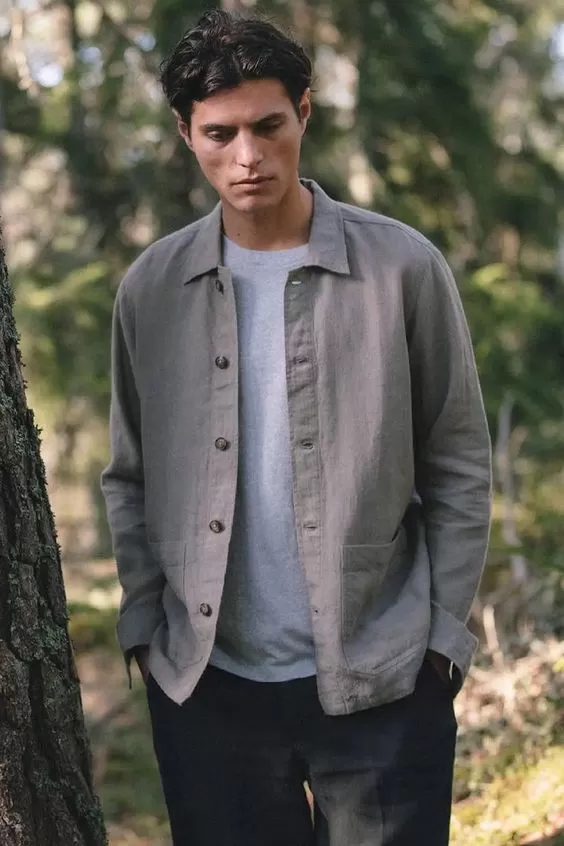
This grey shacket over a basic tee demonstrates perfect weekend sophistication. The structured shoulders and button-front closure make it more polished than a hoodie, while the relaxed fit keeps it approachable. Dark jeans ground the look and prevent it from feeling too dressy.
Embrace Bold Colour Choices
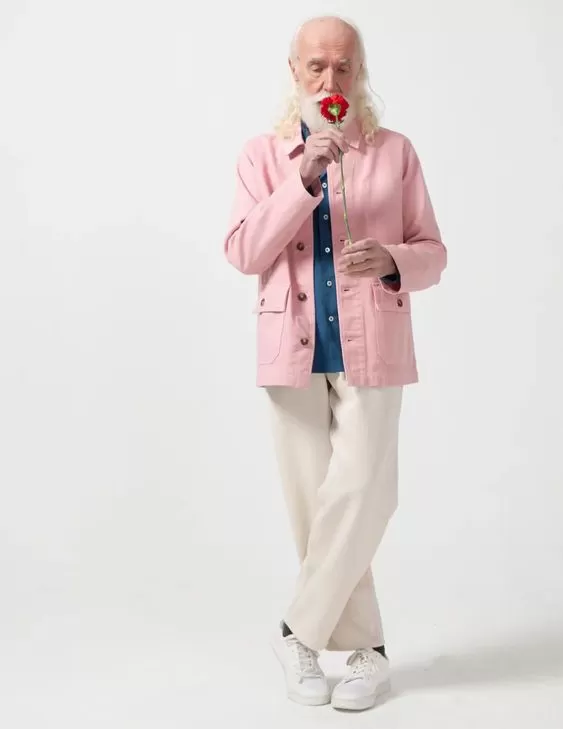
Pink works on men when the silhouette is masculine and the styling is confident. This coral shacket over navy creates a striking contrast that feels fresh without being flashy. The loose, boxy cut and utilitarian pockets maintain a rugged edge that balances the soft colour.
Layer Over Button-Down Shirts
A rust-coloured shacket transforms a simple striped shirt into something more substantial. The key is ensuring both pieces have similar weights — lightweight cotton shacket over lightweight cotton shirt. This prevents bunching and maintains clean lines through the torso.
How to Wear Trench Coats? 36 Outfit Ideas for Men
How to Wear Blue Jeans for Men ? 45 Outfit Ideas
How to Wear Mint Pants for Men ? 30 Outfit Ideas
What to Wear for Holi ? 17 Outfit Ideas for Men
What to Wear on Diwali? 17 Outfit Ideas for Men
How to Wear Pastels for Men? 23 Outfit Ideas
What to Wear with Green Shoes? 30 Outfit Ideas for Men
How To Wear Grey Jeans for Men ? 20 Outfit Ideas
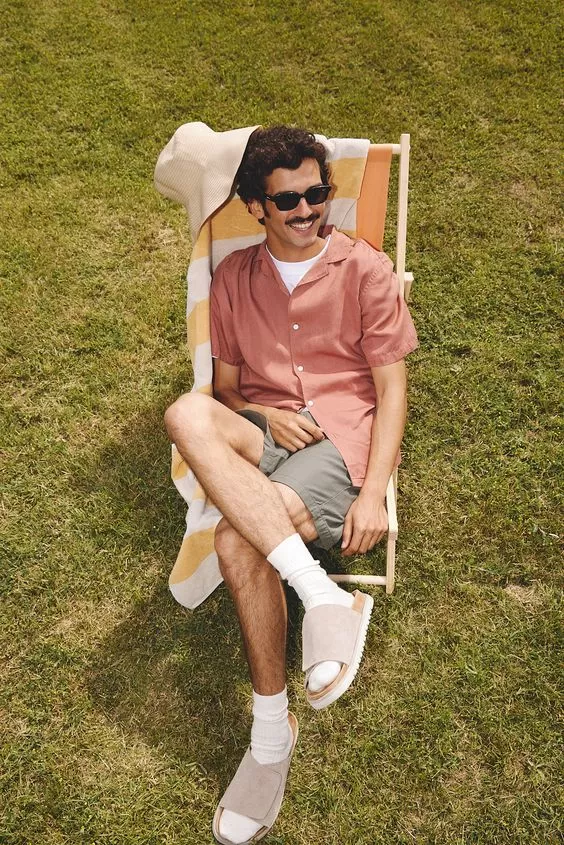
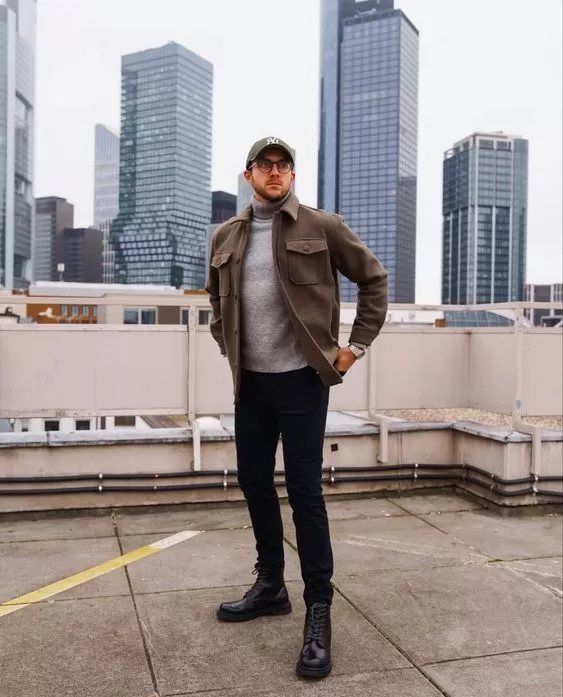
Pair with Turtlenecks for Urban Edge
The combination of a structured shacket and fitted turtleneck creates sophisticated city style. The brown military-inspired silhouette adds weight to the slim black base layers, while the contrasting textures — smooth wool against textured cotton — add visual interest.
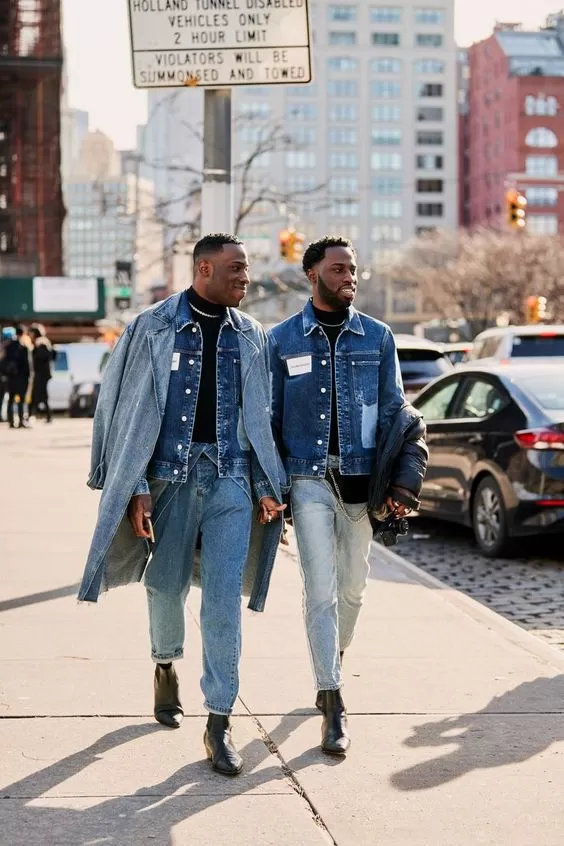
Double Up on Denim Thoughtfully
Denim-on-denim succeeds when you vary the washes and weights. The lighter, looser shacket contrasts beautifully with darker, fitted jeans. Different blues prevent the monotone look that makes double denim feel like a uniform.
The term “shacket” was first coined by fashion retailers in the early 2000s, but the style itself traces back to 1940s military surplus shirts that soldiers wore as lightweight jackets during off-duty hours.
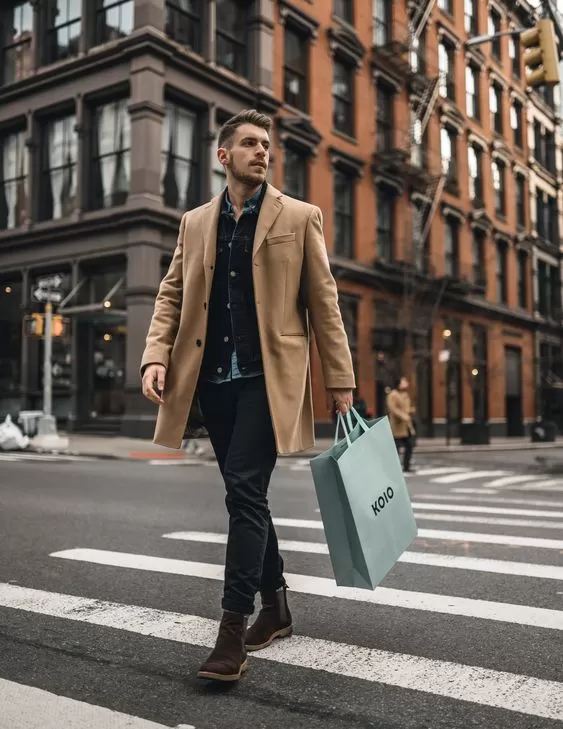
Create Formal Contrast
A camel shacket softens the hard lines of a structured coat and formal trousers. This layering technique adds warmth without bulk, while the neutral palette feels intentional rather than accidental. Perfect for transitional weather when a coat alone is too much.
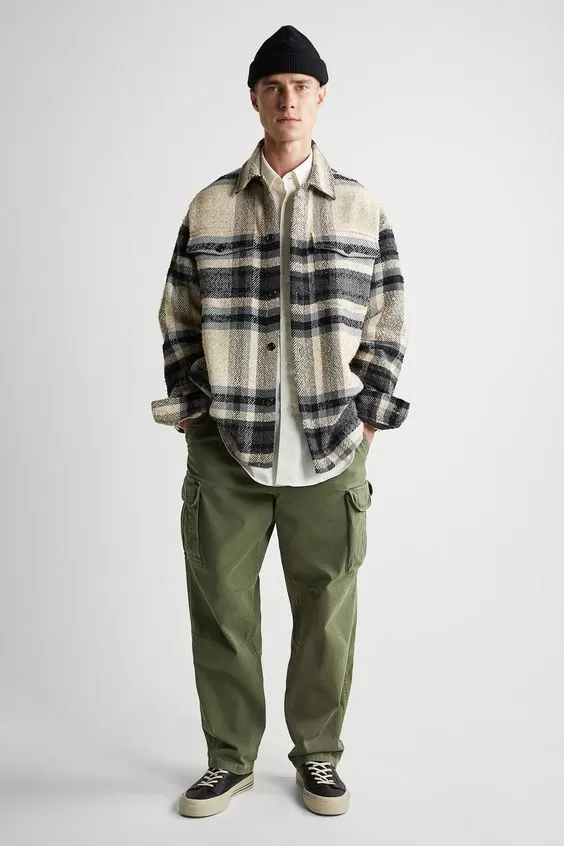
Go Full Workwear with Plaids
Heavy plaid shackets anchor casual outfits and add texture to simple base layers. The oversized fit and utilitarian details like chest pockets reference classic workwear, making it perfect for weekend errands or outdoor activities.
Build Coordinated Colour Stories
Earth tones create cohesive, masculine colour palettes that feel effortless. This navy shirt, green chinos, and brown accessories combination shows how shackets can anchor complex colour stories without overwhelming the overall look.
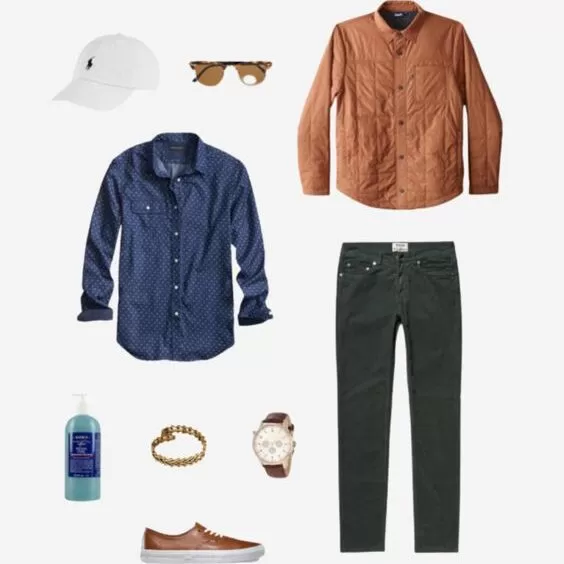
Style with Relaxed Trousers
Wide-leg cargo pants balance the boxier silhouette of oversized shackets. The proportional relationship prevents either piece from looking ill-fitting, while the monochromatic grey palette keeps the focus on silhouette rather than colour.
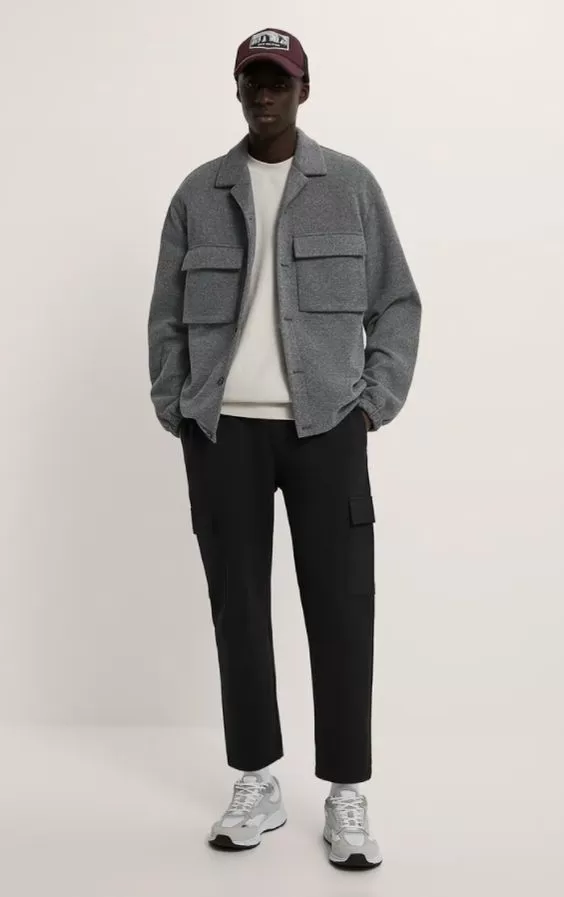
Layer Under Structured Pieces
Using a black shirt as a base layer under patterned shackets creates depth without chaos. The dark foundation anchors brighter elements, while the lightweight cotton won’t add bulk under heavier outer layers.
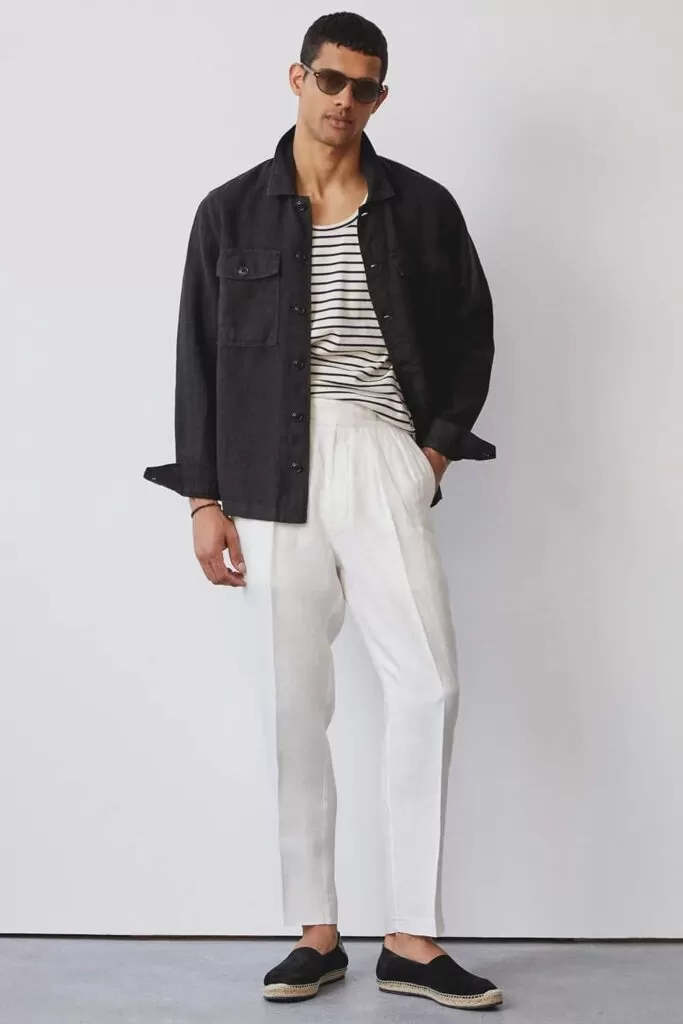
Mix Textures with Denim
Corduroy shackets over denim creates interesting textural contrast while maintaining casual appeal. The structured collar and button closure make it more refined than a hoodie, perfect for casual Fridays or weekend dinners.
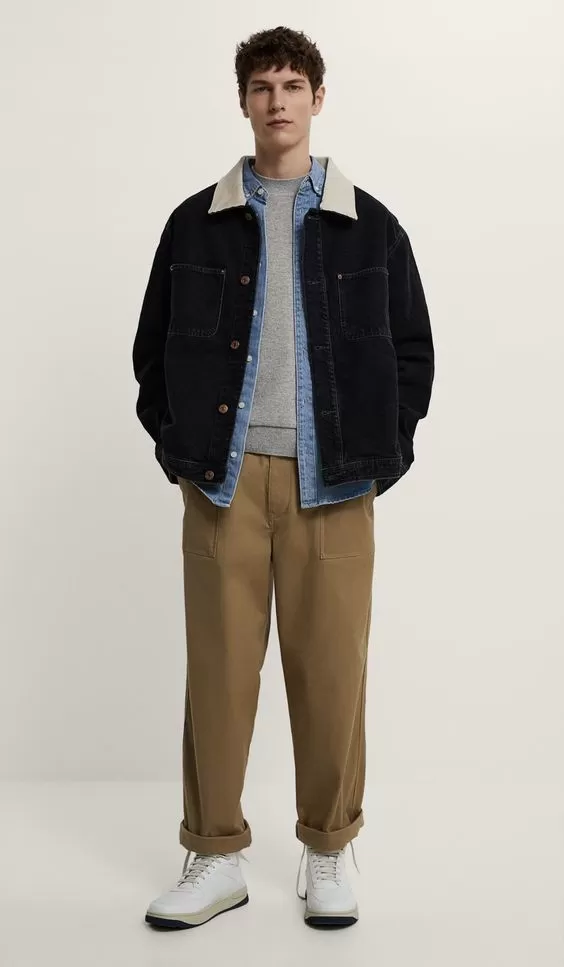
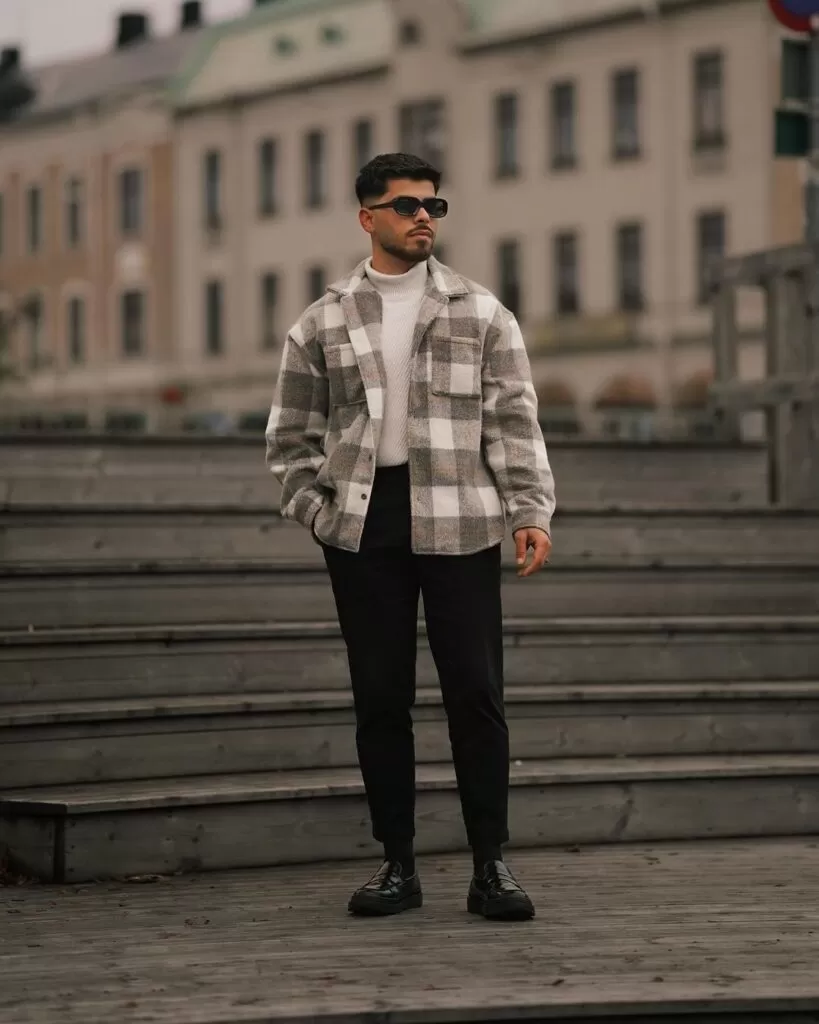
Ground Bold Patterns
Large-scale plaids need solid foundations to avoid visual chaos. This brown and white check works because the underlying pieces — cream turtleneck and black trousers — provide neutral balance points that let the pattern take centre stage.
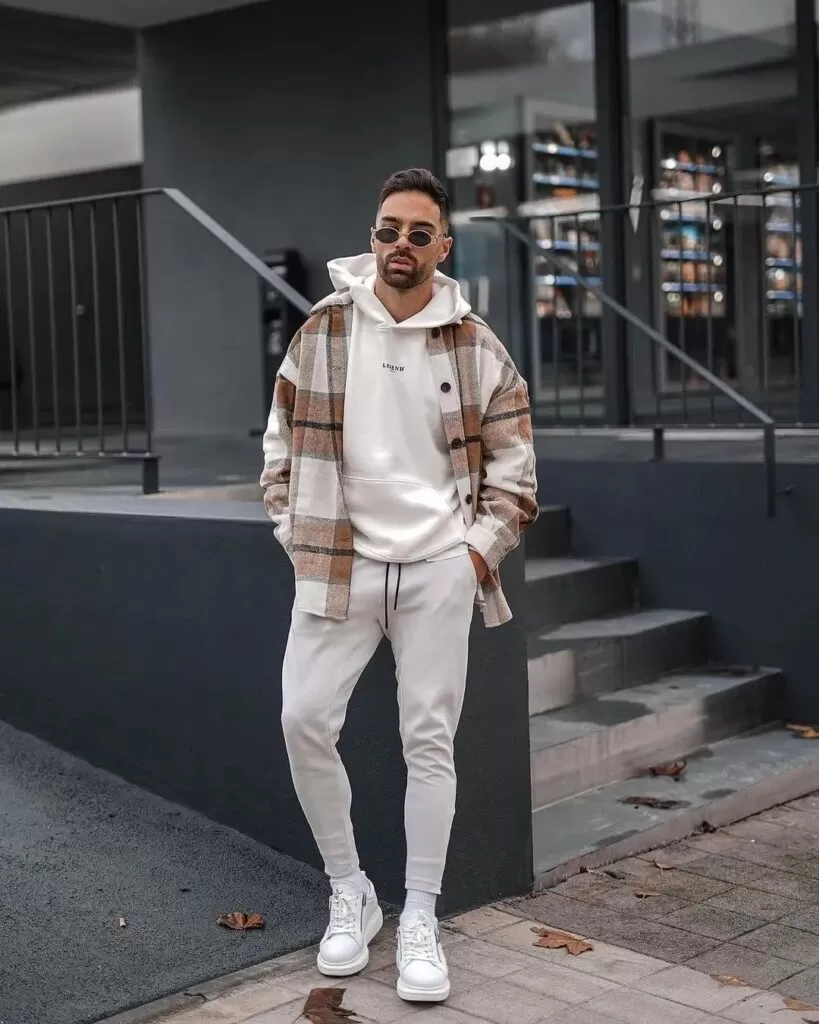
Layer Over Athletic Basics
Shackets instantly elevate athleisure by adding structure to relaxed silhouettes. The plaid pattern and cotton construction make this hoodie-and-joggers combination feel more intentional and street-ready.
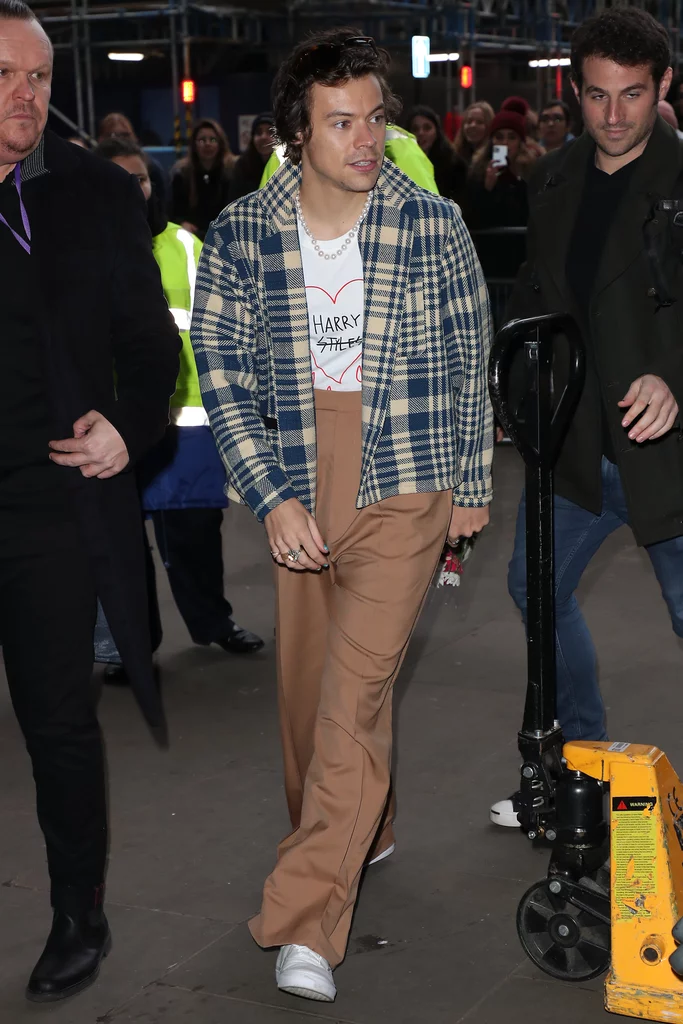
Create Celebrity-Level Drama
Bold patterns paired with equally bold colours require confidence to execute. This plaid shacket over graphic tees shows how to embrace maximalist styling while maintaining masculine edge through fit and proportion.
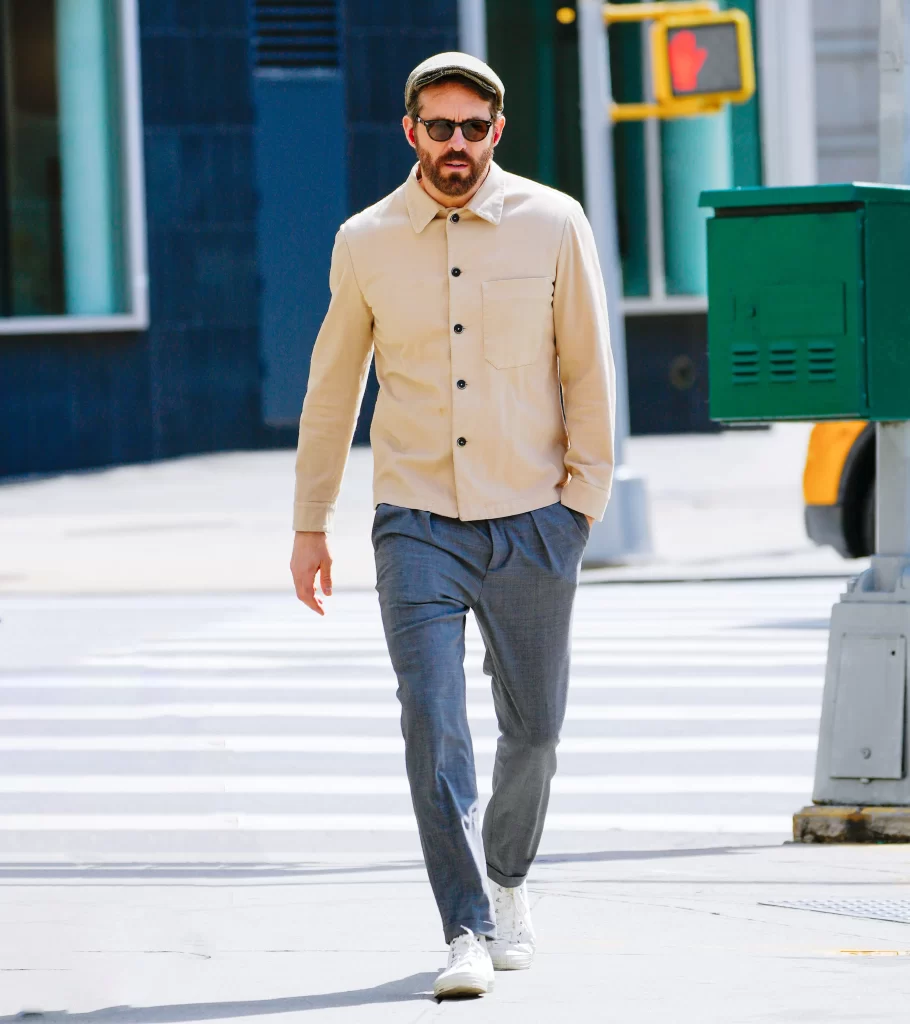
Perfect the Minimalist Approach
Clean lines and neutral colours create sophisticated casual style. This cream shacket over grey trousers demonstrates how restrained colour palettes can feel more expensive and intentional than busy patterns or bright colours.
Dos & Don’ts
How to Choose the Right Fabric
Fabric determines everything about how your shacket looks and feels. I always recommend starting with medium-weight cotton or cotton blends because they’re substantial enough to hold their shape but soft enough to feel comfortable against your skin. Avoid anything too stiff — you want fabric that moves with you, not against you.
Flannel shackets work best in cooler weather and create that laid-back, weekend vibe that pairs perfectly with jeans and boots. The brushed texture adds visual interest without being distracting. Corduroy offers more structure while maintaining casual appeal, making it perfect for smart casual situations where you need something more polished than a hoodie but less formal than a blazer.
Linen and linen blends are ideal for warmer months, but they wrinkle easily and require more maintenance. If you choose linen, embrace the rumpled look — fighting the wrinkles defeats the relaxed purpose. Avoid synthetic fabrics like polyester — they don’t breathe well and often look cheap, undermining the effortlessly stylish impression you’re trying to create.
How to Wear Trench Coats? 36 Outfit Ideas for Men
How to Wear Blue Jeans for Men ? 45 Outfit Ideas
How to Wear Mint Pants for Men ? 30 Outfit Ideas
What to Wear for Holi ? 17 Outfit Ideas for Men
What to Wear on Diwali? 17 Outfit Ideas for Men
How to Wear Pastels for Men? 23 Outfit Ideas
What to Wear with Green Shoes? 30 Outfit Ideas for Men
How To Wear Grey Jeans for Men ? 20 Outfit Ideas