Most men own a scarf but never wear it — and when they do, it ends up looking like an afterthought draped around their neck. The difference between a scarf that elevates your look and one that screams “my mother bought this for me” comes down to understanding one fundamental rule: proportion matters more than pattern.
I’ve watched countless clients struggle with this seemingly simple accessory. They’ll spend hundreds on a quality wool scarf, then wear it with everything from gym clothes to suits, wondering why it never looks quite right. The issue isn’t the scarf itself — it’s understanding that different occasions, necklines, and coat styles require completely different scarf approaches.
After a decade of helping men navigate winter accessories, I’ve learned that the scarf is actually the easiest way to instantly upgrade your cold-weather game. But only if you follow some specific rules about length, material, and styling that most guys have never been taught.
Styling Tips
Match your scarf weight to your coat weight. A chunky cable-knit scarf belongs with heavy wool coats and parkas, never with lightweight blazers or thin jackets. The visual balance needs to work — thick with thick, thin with thin. I see men constantly pairing bulky scarves with sleek overcoats, and it creates an awkward mismatch that throws off the entire silhouette.
Length determines your styling options. Short scarves (under 60 inches) work best tucked inside coats or worn with the simple loop method. Long scarves (70+ inches) give you the flexibility for more complex wrapping styles, but they also create more opportunities to look sloppy if not handled properly. Most men buy scarves that are too short and then wonder why every styling method looks cramped.
Your neckline dictates scarf placement. Crew necks and turtlenecks require scarves worn outside the sweater to avoid bulk around your neck. V-necks and open collared shirts can handle a scarf tucked partially inside. Button-up shirts with ties should never have a scarf competing for the same neck real estate — choose one or the other.
Men’s Outfits To Wear With Oxford Shoes – 20 Styling Tips
30 Casual Outfit Ideas For Black Men with Styling Tips
What To Wear In India? 15 Best Outfits & Packing Tips for Men
2026 Outfit Trends for Men 20 Styling Tips from Experts
How to Wear Grey Pants with Brown Shoes? 7 Tips for Men
What Color Pants To Wear With A Navy Blazer? 15 Tips for Men
56 Best Khaki Pant Outfits For Men with Styling Tips
31 Best Summer Outfit Ideas for Men with Styling Tips
Color coordination follows the same rules as tie selection. Your scarf should complement, not match, your coat color. Navy coat with a burgundy or gray scarf works. Navy coat with a navy scarf looks like you’re wearing a uniform. The scarf should be your accent piece, not an extension of your outerwear.
Texture adds visual interest when colors are neutral. If you’re wearing all black, navy, or gray, a scarf with cable knit, herringbone, or subtle pattern prevents the outfit from looking flat. But if your coat already has texture or pattern, keep the scarf smooth and simple to avoid visual competition.
The modern men’s scarf evolved from military neck wraps worn by Croatian soldiers in the 17th century. French cavalry officers adopted the style, calling it a “cravate” — which eventually became the necktie we know today.
Formal scarves require different materials than casual ones. Cashmere and fine wool scarves work with dress coats and peacoats for business settings. Cotton, wool blends, and knits belong with casual jackets and weekend wear. Wearing a chunky knit scarf with a tailored wool coat makes you look like you grabbed the wrong accessories on your way out.
Dos & Don’ts
Choosing the Right Material
Wool remains the most versatile scarf material because it provides warmth without excessive bulk. Merino wool scarves work across the broadest range of occasions — from weekend errands to office commutes. They’re warm enough for actual cold weather but refined enough to wear with dress coats.
Cashmere scarves offer luxury and softness but require more careful handling. They work best for business settings and formal occasions where you won’t be doing physical activity. The trade-off is warmth — cashmere alone won’t cut it in genuinely cold temperatures, but it excels in the 30-50°F range where you need style more than survival.
Cotton and linen scarves serve specific purposes beyond winter warmth. Lightweight cotton scarves work for spring and fall layering, while linen versions handle summer air conditioning or travel situations. But don’t expect either to provide meaningful cold weather protection — they’re style accessories, not functional winter gear.
Avoid synthetic materials unless you’re specifically buying for outdoor sports. Acrylic and polyester scarves often pill quickly, don’t breathe well, and lack the drape of natural fibers. They might cost less initially, but they’ll make your entire outfit look cheaper.
Classic Scarf Styling Essentials
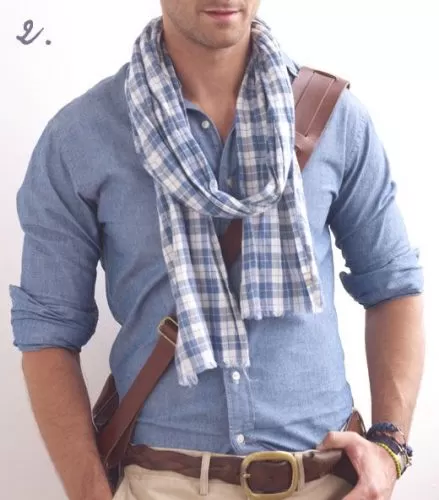
Casual Check Scarf with Rolled Sleeves
A light blue check scarf draped loosely over a chambray shirt creates an effortlessly relaxed look. The scarf-over-unbuttoned-shirt combination works because it adds texture without formality, while the rolled sleeves keep it casual. Perfect for weekend brunches or casual Friday when you want to look put-together without trying too hard.
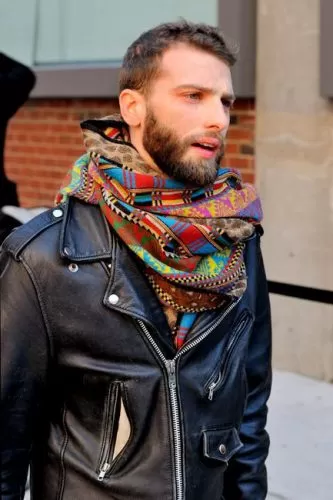
Patterned Scarf with Leather Jacket
A bold geometric scarf becomes the focal point against an all-black leather jacket and base layer. The high-contrast pattern rule works here — the busy scarf pops against solid black, creating visual interest without clashing. This combination suits confident dressers who want to add personality to their winter leather looks.
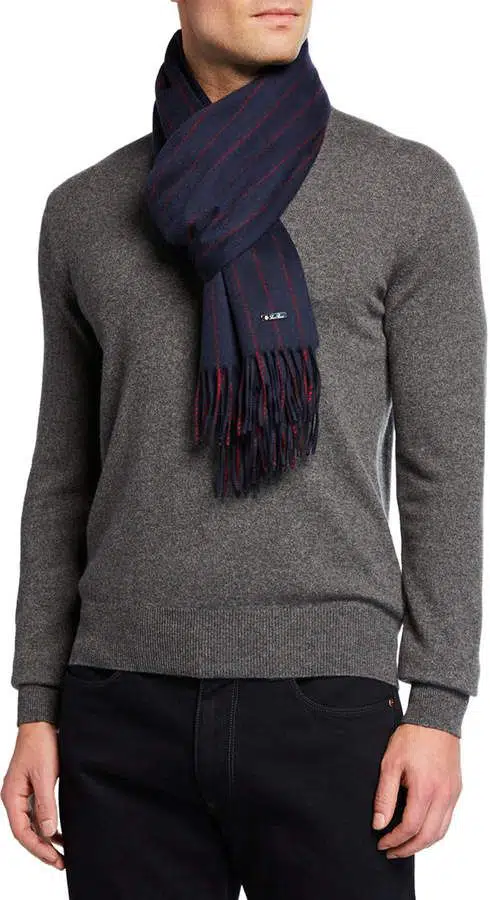
Striped Wool Scarf with Knitwear
A navy and burgundy striped scarf complements a grey sweater through tonal harmony — the cool greys work with the scarf’s navy base. The fringe detail adds texture while the diagonal stripe creates visual movement. This works best for business casual environments where you need warmth without sacrificing professionalism.
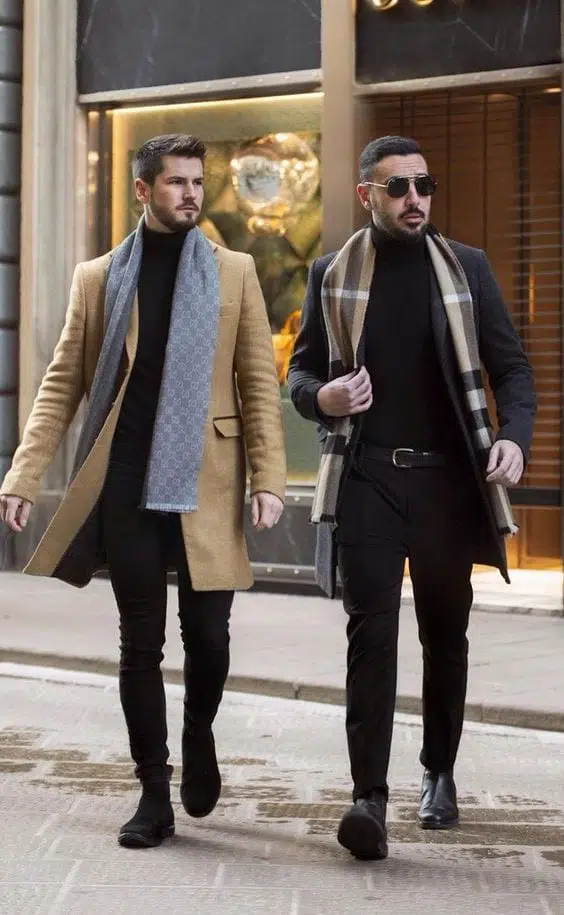
Coordinated Scarves with Tailored Coats
Two different scarf approaches with overcoats: the solid grey scarf matches the camel coat’s formality, while the check pattern complements the dark coat’s structure. The key is matching scarf weight to coat weight — substantial scarves with heavy coats, lighter ones with lighter outerwear. Both work for business or formal occasions.
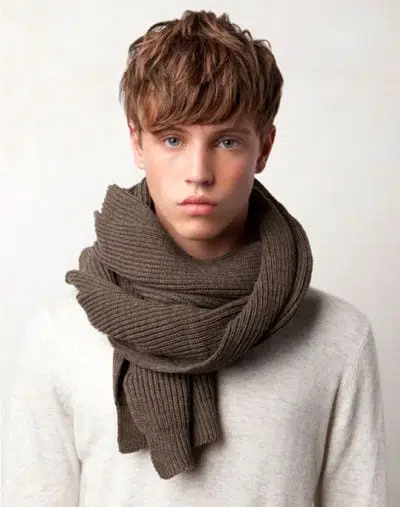
Chunky Knit Scarf Draped Casually
A thick ribbed scarf worn loose and unstructured over a simple sweater creates instant texture contrast. The chunky-over-smooth rule adds visual depth while keeping the overall look relaxed. This styling works best for casual settings where comfort is priority but you still want to look intentional about your choices.
Bright Accent Scarf with Denim
A vibrant yellow scarf transforms a basic denim jacket and black jeans into something memorable. The one-bright-piece principle means the scarf carries all the color while everything else stays neutral. This works for creative professionals or weekend wear when you want to stand out without looking overdressed.
Quick tip
Choose a scarf that’s thicker than your shirt fabric to create proper layering hierarchy.

The Classic Drape
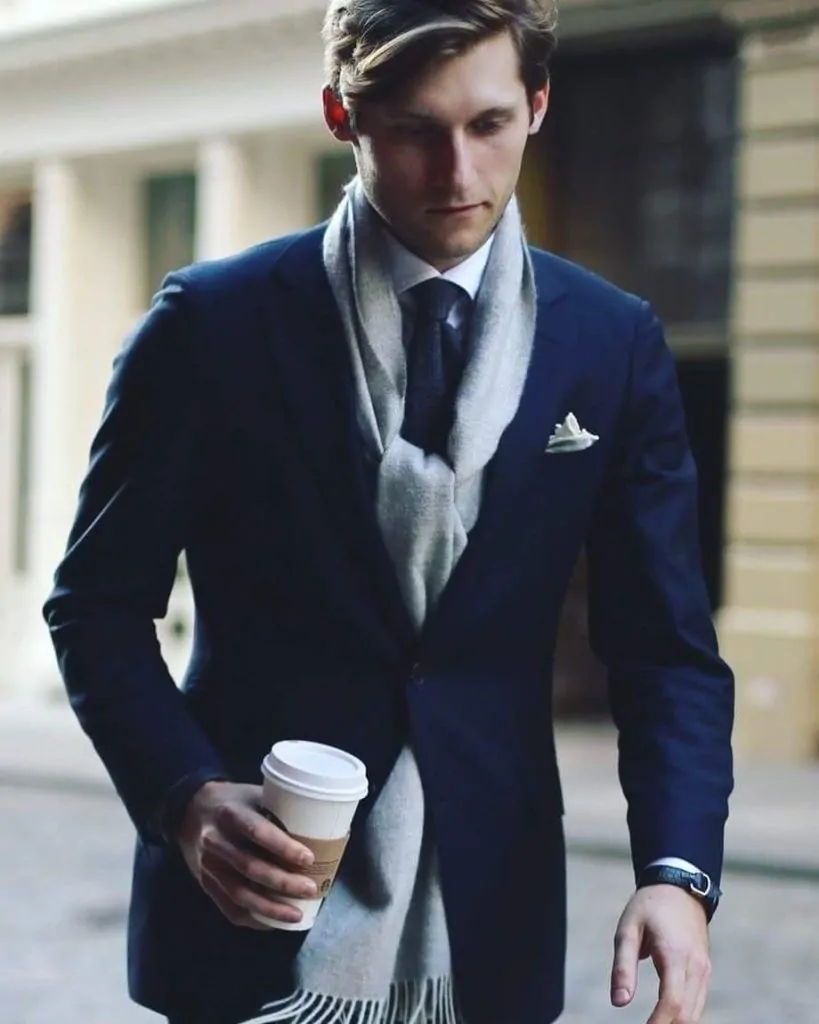
A grey scarf worn in the traditional over-the-shoulders style with a navy suit demonstrates the most versatile scarf method. The simple drape technique works because it doesn’t compete with the suit’s clean lines while providing warmth and sophistication. Essential for business formal situations where you need to look polished.
Patterned Scarf Loop with Casual Jacket
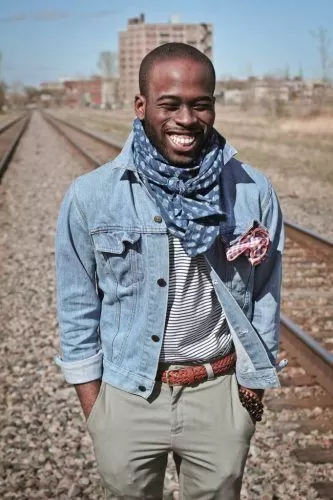
A check scarf worn in a loose loop adds pattern interest to a denim jacket without overwhelming the casual aesthetic. The loop-for-security method keeps the scarf in place while maintaining a relaxed feel. This combination works for transitional weather when you need light layering with personality.

Geometric Print with Light Denim
A patterned scarf in blues and browns complements a light wash denim shirt through color echo — the scarf’s blue tones match the shirt while the brown adds warmth. The loose draping keeps it casual enough for weekend wear while the pattern adds visual interest.
Classic Plaid Scarf with Neutrals
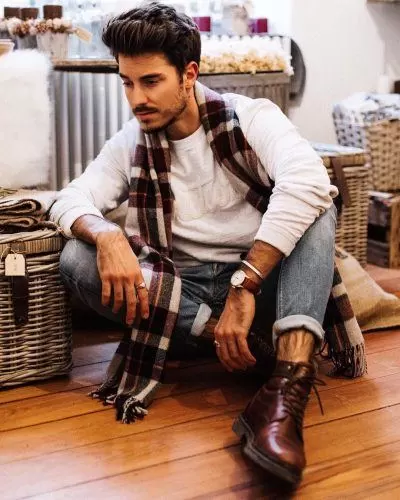
A brown and cream plaid scarf works perfectly over a simple white sweater and grey jeans because the pattern adds interest without competing with the base layers. The key is keeping the scarf loose and casual — one end longer than the other creates natural movement. This works for any man who wants to add texture to basic pieces without looking overdressed.
Long Scarf Worn Open
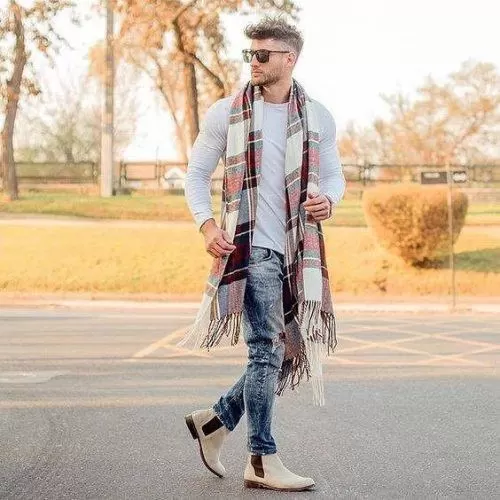
When your scarf is this long, don’t try to wrap it — let both ends hang at equal length for a relaxed drape. The plaid pattern in burgundy and grey coordinates naturally with the light sweater and dark jeans, creating layers without bulk. Perfect for men who prefer minimal styling but want the warmth and visual interest a scarf provides.
Quick tip
Use neutral colours like gray or navy to bridge dark suits and light shirts.
Camel Scarf with Black Outerwear
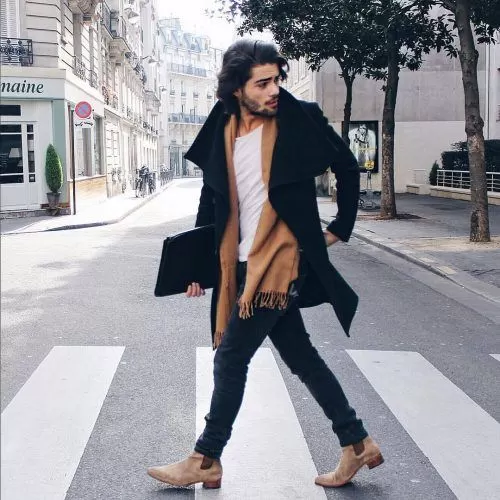
A camel-colored scarf brightens any black coat because the warm tone prevents the all-black look from feeling too stark. Notice how the scarf is wrapped once around the neck with both ends tucked under the coat — this keeps the focus on the color contrast rather than styling complexity. Essential for men who wear a lot of black but want to avoid looking monotone.
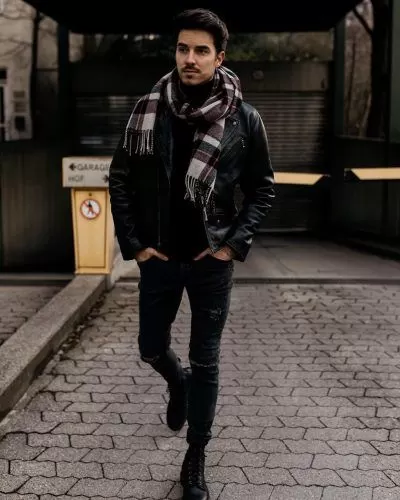
Plaid Scarf with Leather Jacket
The traditional plaid pattern softens a black leather jacket by adding preppy texture to the edgy outerwear. Key technique: wrap the scarf loosely around the neck and let one end fall naturally while tucking the other slightly — this prevents the scarf from overwhelming the jacket’s clean lines. Works for any man mixing classic and contemporary pieces.
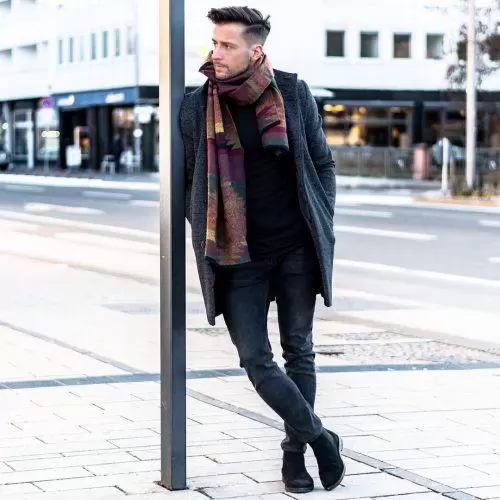
Burgundy Scarf with Grey Coat
This demonstrates why burgundy and grey are a perfect pairing — the deep red adds warmth to the neutral coat without clashing. The scarf is wrapped once and draped asymmetrically, which looks intentional but not overly styled. Ideal for men who want to add color to winter outerwear without stepping too far outside traditional menswear territory.
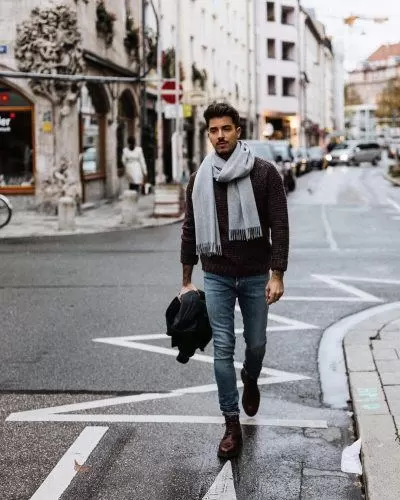
Light Grey Scarf Casually Draped
A light grey scarf worn loose and unstructured adds texture to this burgundy sweater and denim combination without creating color competition. The relaxed draping — simply placed around the neck with both ends hanging free — suits the casual nature of the outfit. Perfect for men who want scarf functionality without formal styling.
Orange Plaid Statement Scarf
When your scarf has this much pattern and color, keep everything else simple — the plain grey sweatshirt and dark jeans provide the perfect neutral backdrop. The orange plaid becomes the outfit’s focal point while the casual wrapping style keeps it from looking too dressy. Best for men comfortable making their scarf the statement piece.
Quick tip
Let chunky knit scarves be your weekend casual option over checks and plaids.

Chunky Blue Scarf with Casual Layers
This thick knit scarf in dusty blue adds both warmth and texture over the beige jacket and casual layers underneath. Notice how the bulky knit naturally creates volume around the neck without additional wrapping — sometimes the scarf’s construction does the styling work for you. Ideal for men who prefer functional accessories that look good without effort.
Patterned Scarf with Formal Suiting
A geometric print scarf elevates a business suit by adding visual interest within professional boundaries — the black and white pattern coordinates with the grey suit while staying sophisticated. The loose loop around the neck keeps it business-appropriate rather than overly casual. Perfect for men who want to add personality to work attire without breaking dress codes.

Houndstooth Scarf with Navy Blazer
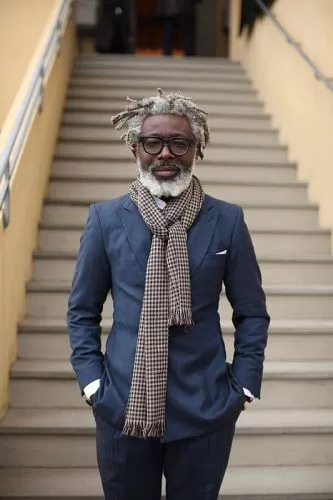
The classic houndstooth pattern bridges formal and casual perfectly with this navy blazer combination. Wrapped once around the neck with ends hanging at different lengths, it creates visual interest without overwhelming the clean lines of the blazer. Essential for men who need pieces that work from business casual through weekend wear.
Striped Sweater with Loose Drape
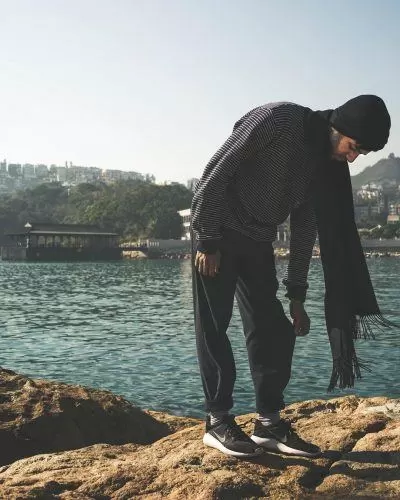
This casual approach works because the scarf isn’t fighting the relaxed striped sweater — it’s enhancing it. The loose drape over one shoulder creates asymmetry without looking sloppy, and the length hits just right against dark trousers. Perfect for weekend errands when you want to look put-together but not overdressed.
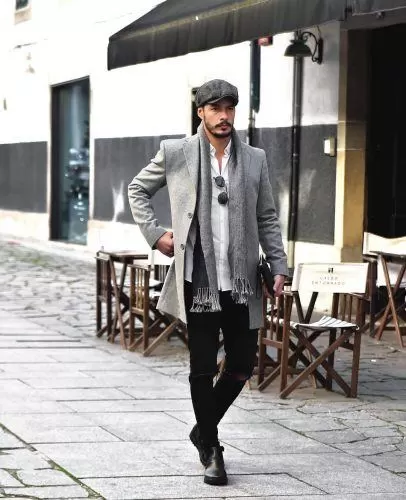
Camel Coat with Patterned Scarf
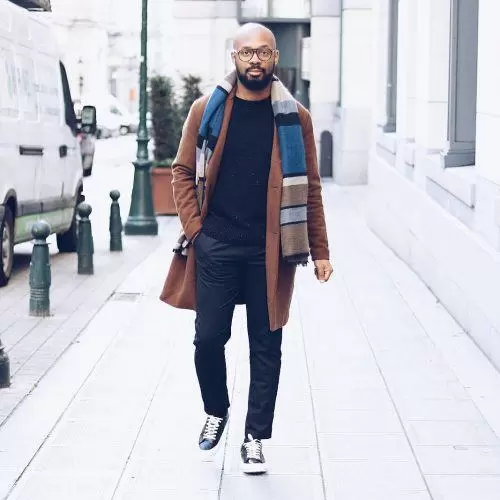
The striped scarf adds visual interest to what could be a plain camel coat outfit, but notice how the scarf stays inside the coat rather than flowing over it. This prevents the look from becoming too busy while still adding personality. The key is choosing a scarf pattern that complements rather than competes with the coat’s solid color.
Quick tip
Fine wool scarves work best for business casual environments where you need polish.
Runway Oversized Styling
This fashion week approach shows maximum scarf volume, but it’s impractical for most men’s daily lives. The oversized proportions work on the runway because everything else is equally exaggerated — the loose trousers, the flowing shirt, even the bag. Unless you’re genuinely in the fashion industry, this level of scarf drama will look costume-like in real settings.

Chunky Knit Under Parka Hood
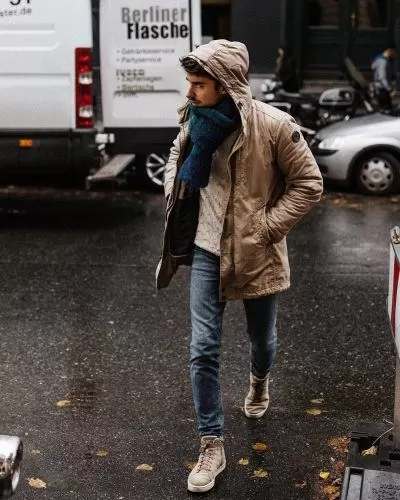
Here’s how to layer a thick knit scarf with a hooded coat without looking bulky — keep the scarf inside the coat and let just the ends show. The chunky texture adds warmth where you need it most (around the neck) while the parka handles wind and rain. This combination works for genuine cold weather, not just style.

Blanket Scarf Over Leather
The oversized plaid scarf transforms a basic leather jacket and jeans into something more interesting, but notice the specific styling — one end is longer than the other and it’s wrapped rather than just draped. This prevents the large scarf from overwhelming the fitted jacket underneath while adding both warmth and visual weight to the outfit.
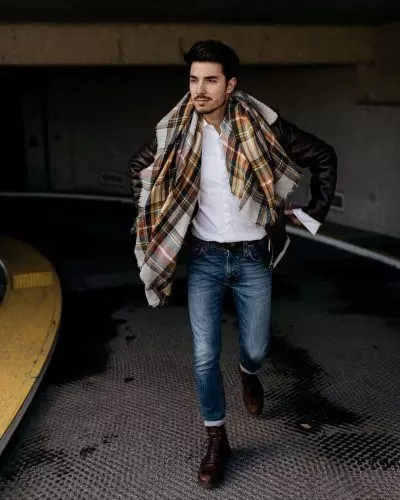
Bright Red Statement Piece
A bold red scarf can anchor an entire outfit, but only if everything else stays neutral. This works because the black jacket, dark jeans, and white trainers provide a clean backdrop for the scarf to be the star. The simple loop wrap keeps the styling unfussy so the color does all the talking.
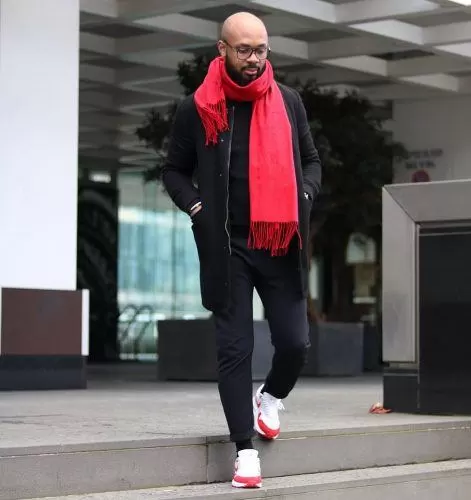
Smart Casual with Pocket Square Coordination
When you’re wearing a blazer, your scarf and pocket square should acknowledge each other without matching exactly — here the navy pocket square echoes the scarf’s base color while the plaid shirt adds pattern complexity. The scarf is styled shorter and neater than casual versions because it’s competing with more formal elements.
Quick tip
Avoid competing patterns by pairing solid scarves with patterned shirts.

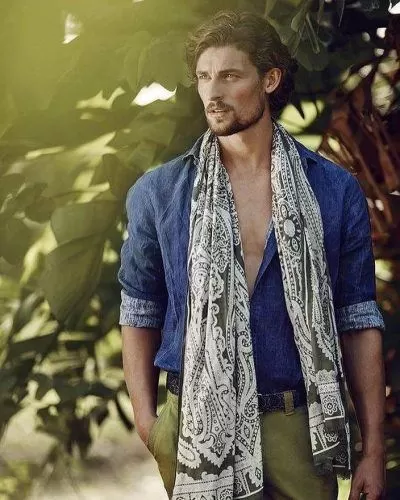
Paisley Print with Unbuttoned Shirt
This styling only works in very specific contexts — resort wear, vacation photos, or creative industries where this level of pattern mixing is expected. The paisley scarf adds texture to the denim shirt, but notice how the shirt is worn completely open to prevent pattern overload. Most men should avoid this much visual complexity in daily wear.
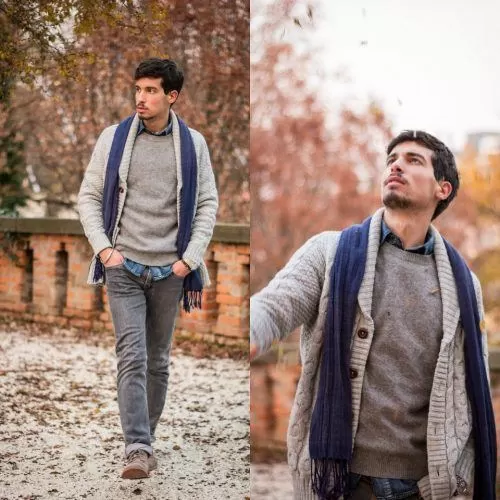
Ribbed Knit with Casual Layers
The navy ribbed scarf bridges the gap between the grey sweater and darker jeans, creating color flow throughout the outfit. This simple loop styling works because the scarf width matches the sweater’s relaxed proportions — a thin scarf would look lost, a chunky one would add unnecessary bulk.
Formal Scarf with Suit
When wearing a scarf with business attire, it needs to enhance rather than distract from your professional appearance. This grey scarf works because it’s tucked neatly inside the coat and matches the formal styling of the suit underneath. The length and drape are controlled — no flowing ends or casual wrapping techniques that would undermine the business context.
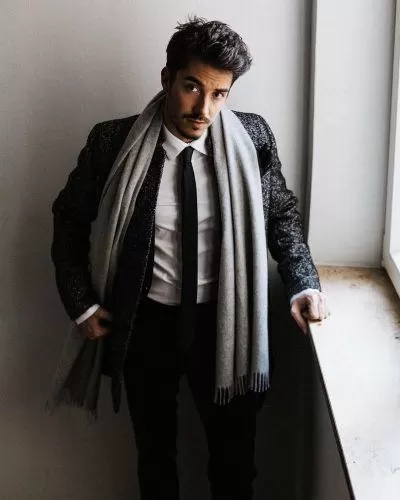
Grey Blazer with Striped Scarf
A mid-grey blazer paired with a striped scarf creates instant smart casual appeal — the scarf adds pattern without overwhelming the neutral base. The key is keeping the scarf loosely draped rather than tightly wound, which maintains the relaxed vibe while still looking put-together. Perfect for guys who want to dress up jeans without looking overdressed.
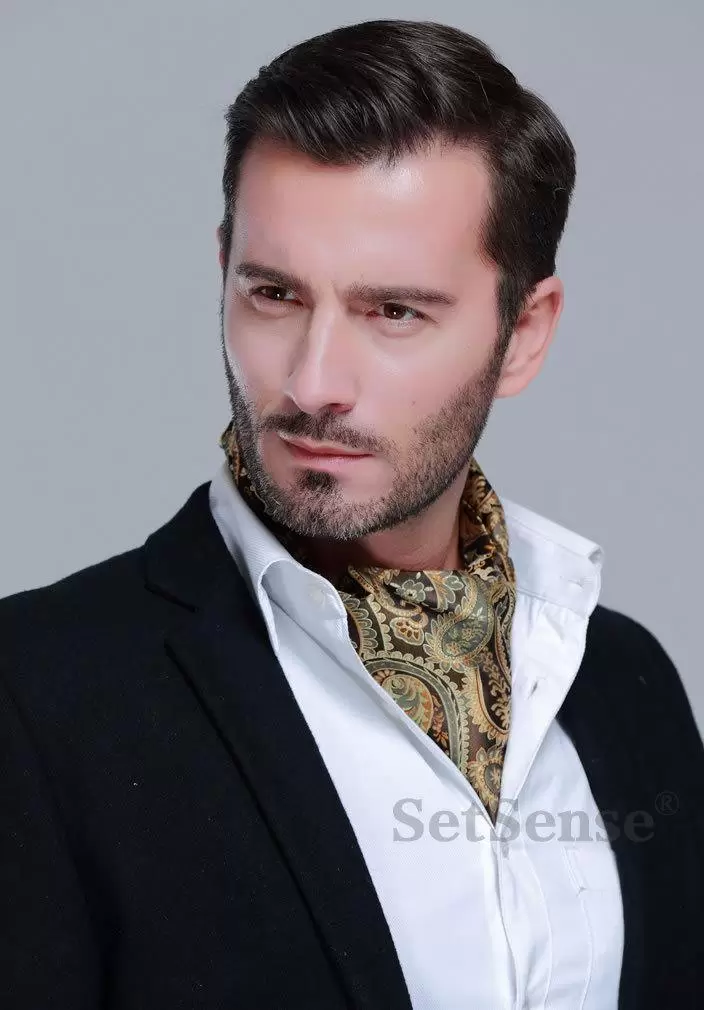
Paisley Scarf with Dark Blazer
This paisley silk scarf transforms a basic navy blazer into something more interesting — the golden brown tones add warmth against the dark base. The scarf works because it’s tucked inside the shirt rather than worn over the blazer, creating a more refined ascot-style look. Best for evening events where you want to stand out without wearing a tie.
Quick tip
Position the scarf to fill the neckline gap your jacket creates for a complete look.
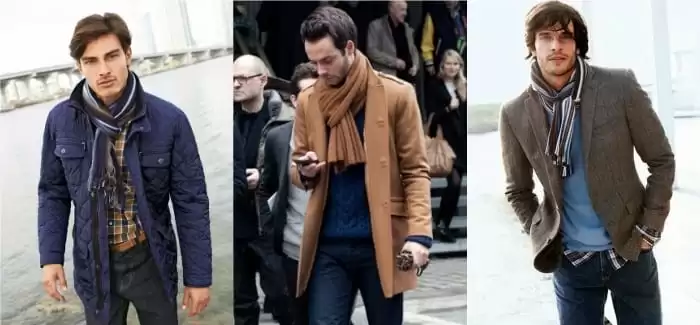
Casual Scarves with Layered Outerwear
Three different approaches to casual scarf styling — plaid with a denim jacket, solid with a camel coat, and striped with a grey blazer. The common thread is keeping the scarf loosely wrapped rather than formally tied, which maintains the relaxed feel of each outfit. These looks work because the scarf complements rather than competes with the jacket’s formality level.
Plaid Scarf with Grey Blazer
A classic tartan scarf adds visual interest to an otherwise monochrome grey outfit — the black and white pattern creates contrast without clashing. The scarf is worn draped over one shoulder, which feels more natural than a formal wrap and works well with the relaxed blazer styling. Ideal for creative professionals who want to look polished but not corporate.
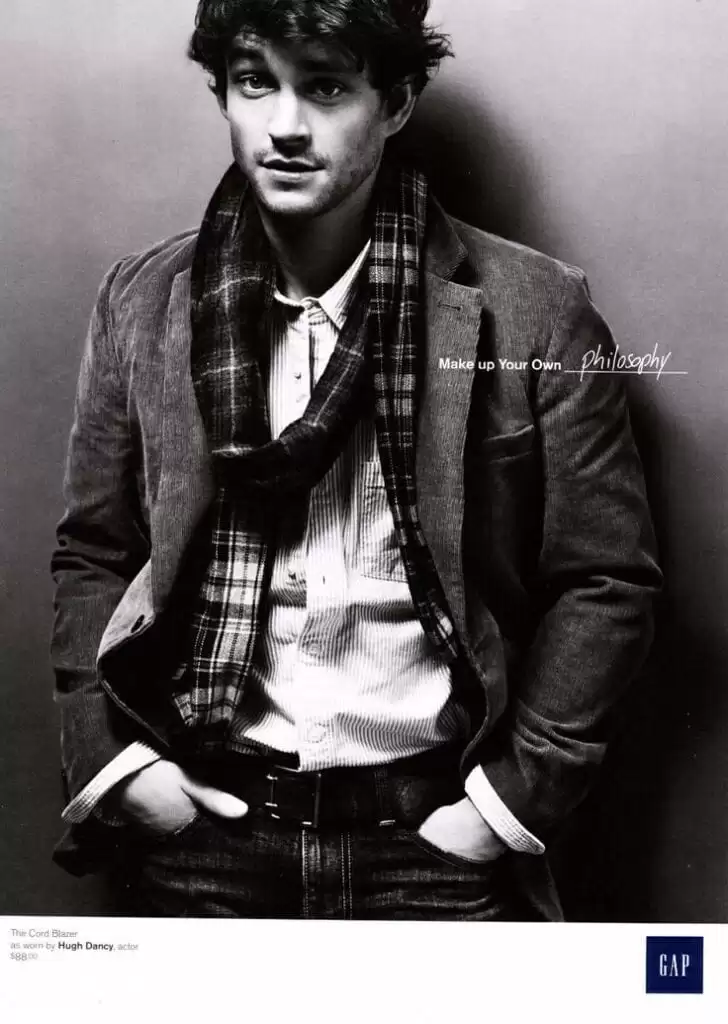
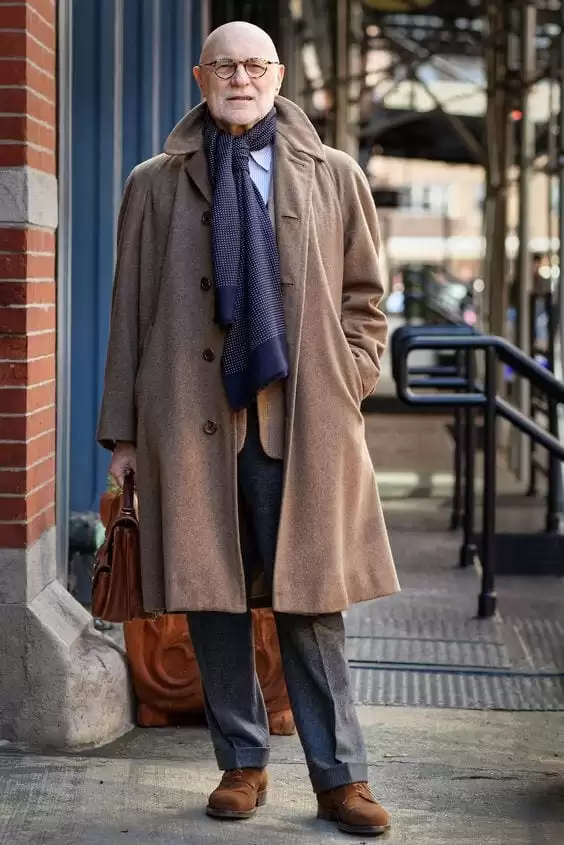
Dark Scarf with Brown Coat
A charcoal grey scarf against a brown wool coat creates rich tonal contrast — the dark scarf frames the face while the earth-toned coat keeps things grounded. The simple drape style lets the quality of both pieces speak for themselves without fussy styling. This combination works particularly well for older men who want understated sophistication.

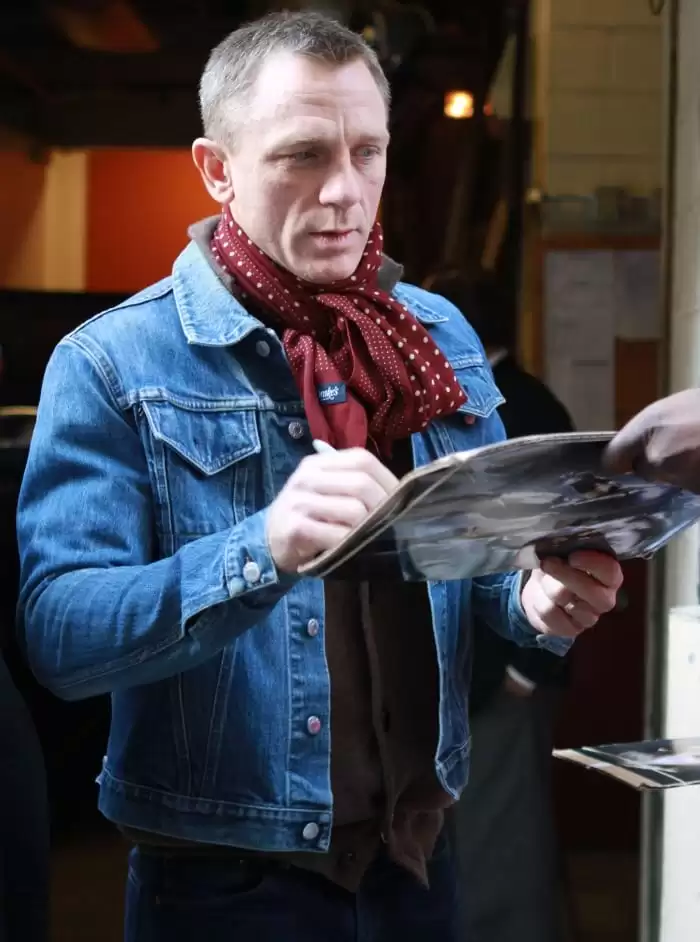
Red Polka Dot Scarf with Denim
A burgundy polka dot scarf adds unexpected pattern to a casual denim jacket — the red picks up warmer tones while the dots keep it playful rather than stuffy. The scarf is tied in a loose European loop, which secures it without looking too formal for the denim base. Great for guys who want to add personality to basic weekend outfits.
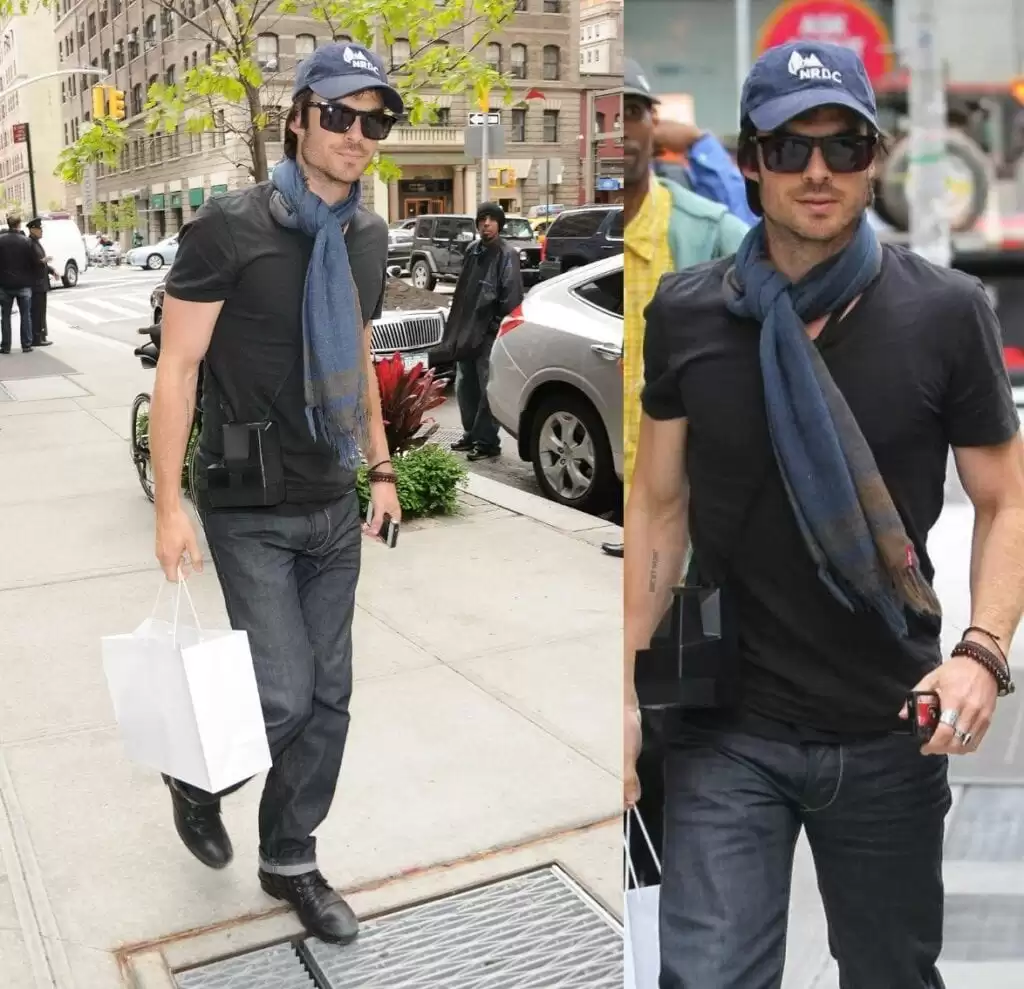
Blue Chambray Scarf with Dark Polo
A lightweight chambray scarf worn with a dark polo creates an interesting texture mix — the casual cotton scarf works because it matches the shirt’s relaxed formality level. The single wrap style keeps it simple and prevents the look from feeling overdone with a casual shirt. Perfect for spring days when you need light layering without bulk.
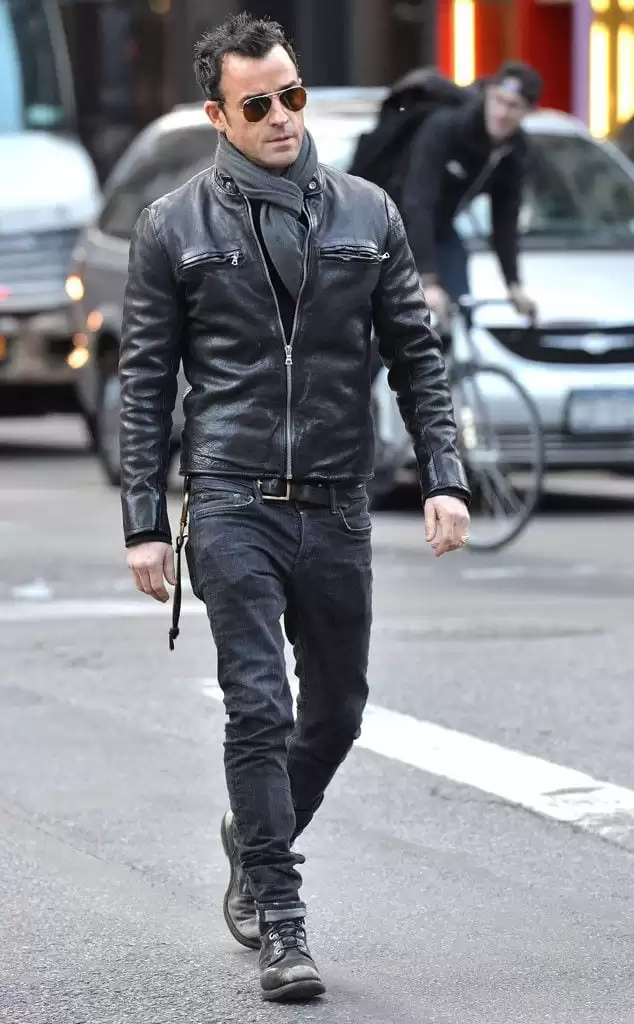
Grey Scarf with Leather Jacket
A solid grey scarf softens the hard edge of a black leather jacket — the neutral tone complements rather than competes with the jacket’s strong silhouette. The scarf is worn inside the jacket collar, which keeps the tough aesthetic intact while adding subtle refinement. Ideal for guys who want to make a leather jacket more versatile for different occasions.
Orange Plaid Scarf with Cardigan
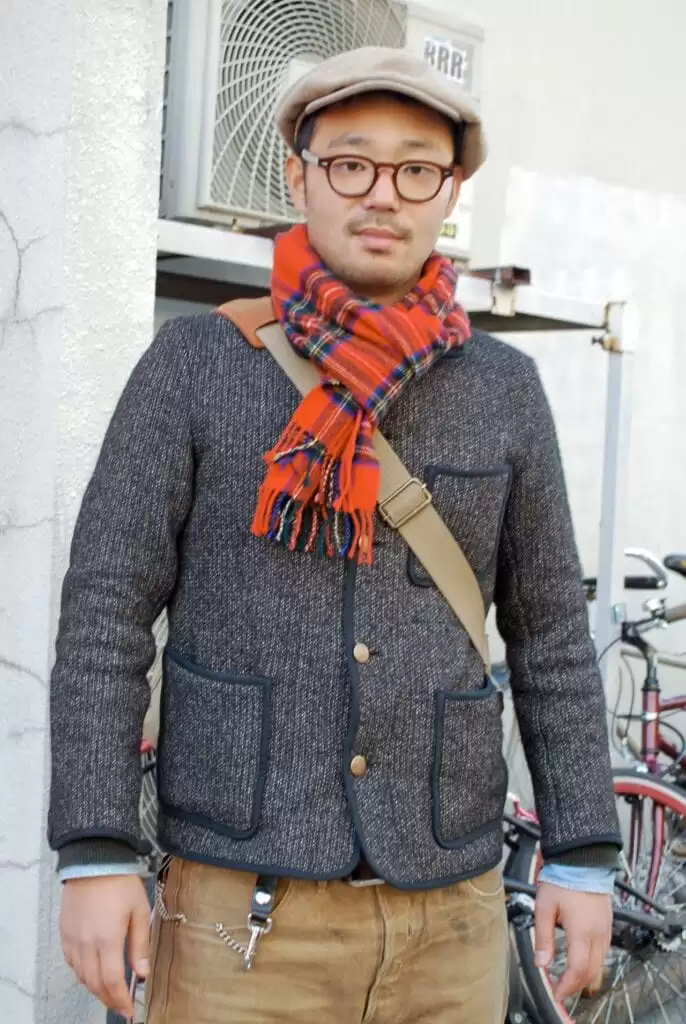
A bright orange tartan scarf creates bold color contrast against a charcoal cardigan — the warm pattern energizes what could otherwise be a dull grey outfit. The traditional wrap style suits the preppy cardigan base while the vibrant colors prevent it from looking stuffy. Best for confident dressers who aren’t afraid of standing out in a crowd.
Navy Patterned Scarf with Camel Coat
A navy geometric-patterned scarf provides classic color balance against a camel wool coat — these two tones are menswear gold for good reason. The scarf is loosely knotted rather than formally tied, which keeps the distinguished coat from looking too uptight. Perfect for professional men who want timeless style without looking like they’re trying too hard.
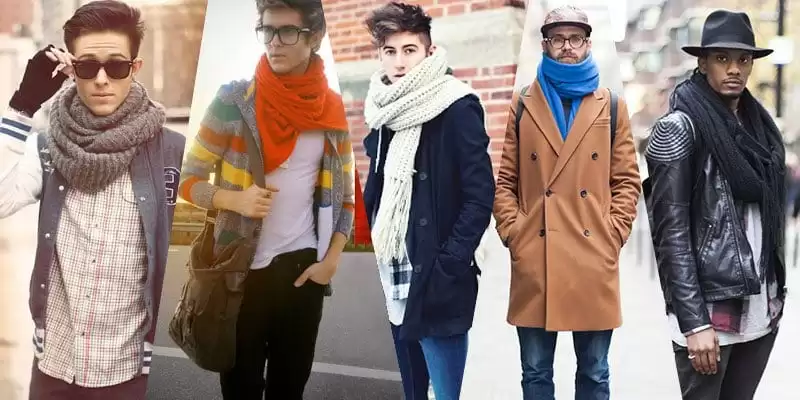
Casual Scarf Layering with Mixed Textures
The chunky knit scarf works perfectly over a checked shirt because it adds weight without competing patterns. This combination works best for weekend casual wear where you need warmth but want to avoid looking too formal. The key is choosing a scarf that’s thicker than your shirt fabric to create proper visual hierarchy.
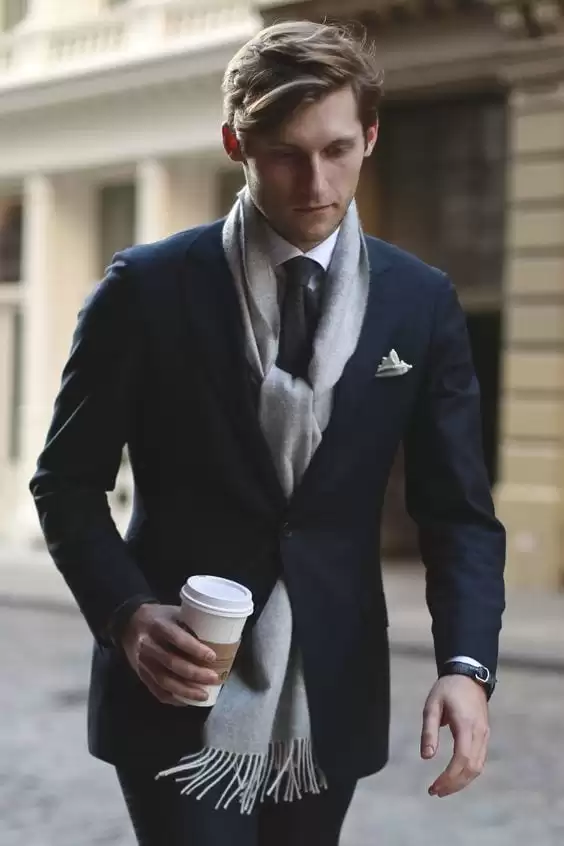
Business Casual Scarf with Suit Separates
A fine wool scarf draped loosely over a navy blazer creates the perfect balance between professional and approachable. The light gray colour bridges the gap between the dark suit and white shirt, while the simple drape keeps it business-appropriate. This works for any office environment where you need to look polished but not overly formal.
Key takeaways
- Match scarf thickness to outfit formality — chunky knits for casual, fine wool for business
- Use neutral scarf colours to bridge the gap between dark and light pieces in your outfit
- Let the scarf be the heaviest texture in your layering system for proper visual weight
- Choose scarf patterns that don’t compete with shirt patterns — solid scarves work with checks and stripes
- Drape style should match your setting — loose and casual for weekends, neat and structured for work
- Position the scarf to frame your face and fill the neckline gap created by your jacket
Men’s Outfits To Wear With Oxford Shoes – 20 Styling Tips
30 Casual Outfit Ideas For Black Men with Styling Tips
What To Wear In India? 15 Best Outfits & Packing Tips for Men
2026 Outfit Trends for Men 20 Styling Tips from Experts
How to Wear Grey Pants with Brown Shoes? 7 Tips for Men
What Color Pants To Wear With A Navy Blazer? 15 Tips for Men
56 Best Khaki Pant Outfits For Men with Styling Tips
31 Best Summer Outfit Ideas for Men with Styling Tips