Turkish hijab styles keep evolving, but I keep coming back to one truth I learned after years of trying every technique: the wrap that looks effortless took the most practice to master. Unlike the structured styles I grew up with, Turkish draping relies on soft gathers and natural falls that can look sloppy if you don’t understand the foundation work.
I started incorporating Turkish-inspired wraps into my daily routine three years ago when a Turkish sister at the mosque showed me her five-minute morning technique. What struck me wasn’t just how polished it looked, but how it stayed put through long days without constant adjusting. The secret lies in understanding fabric behavior and creating the right anchor points — something most tutorials skip entirely.
How to Wear the Turkish Hijab?
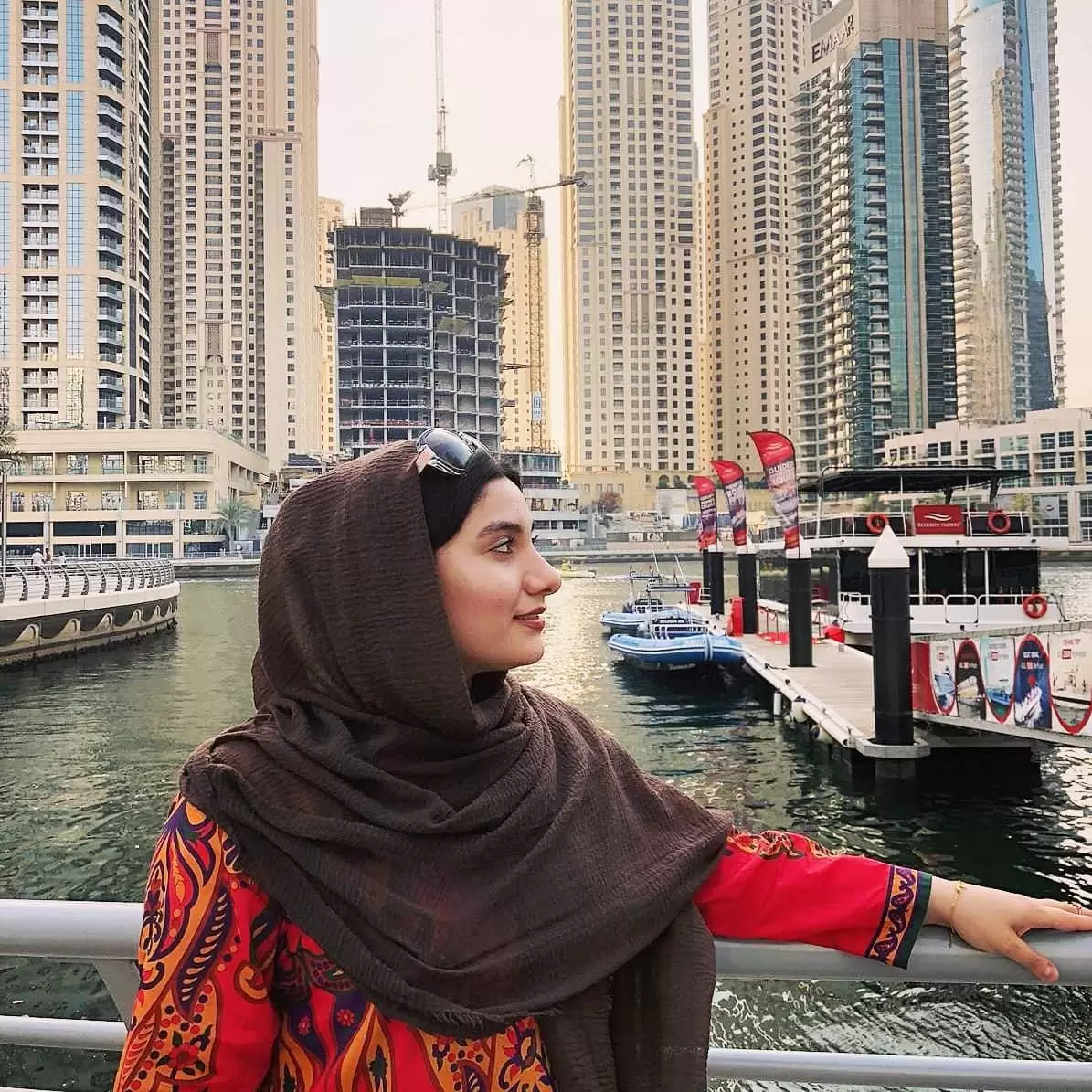
Master the Formal Turkish Wrap
This structured approach works beautifully for special occasions because the fabric falls in controlled layers around your shoulders. The key is using a fabric with enough weight — like georgette or a silk blend — that holds its shape without looking stiff. Notice how the coverage extends naturally without bulk at the neckline, which is why this style works so well under fitted jackets or modern abaya designs.
Perfect the Casual Side-Tuck
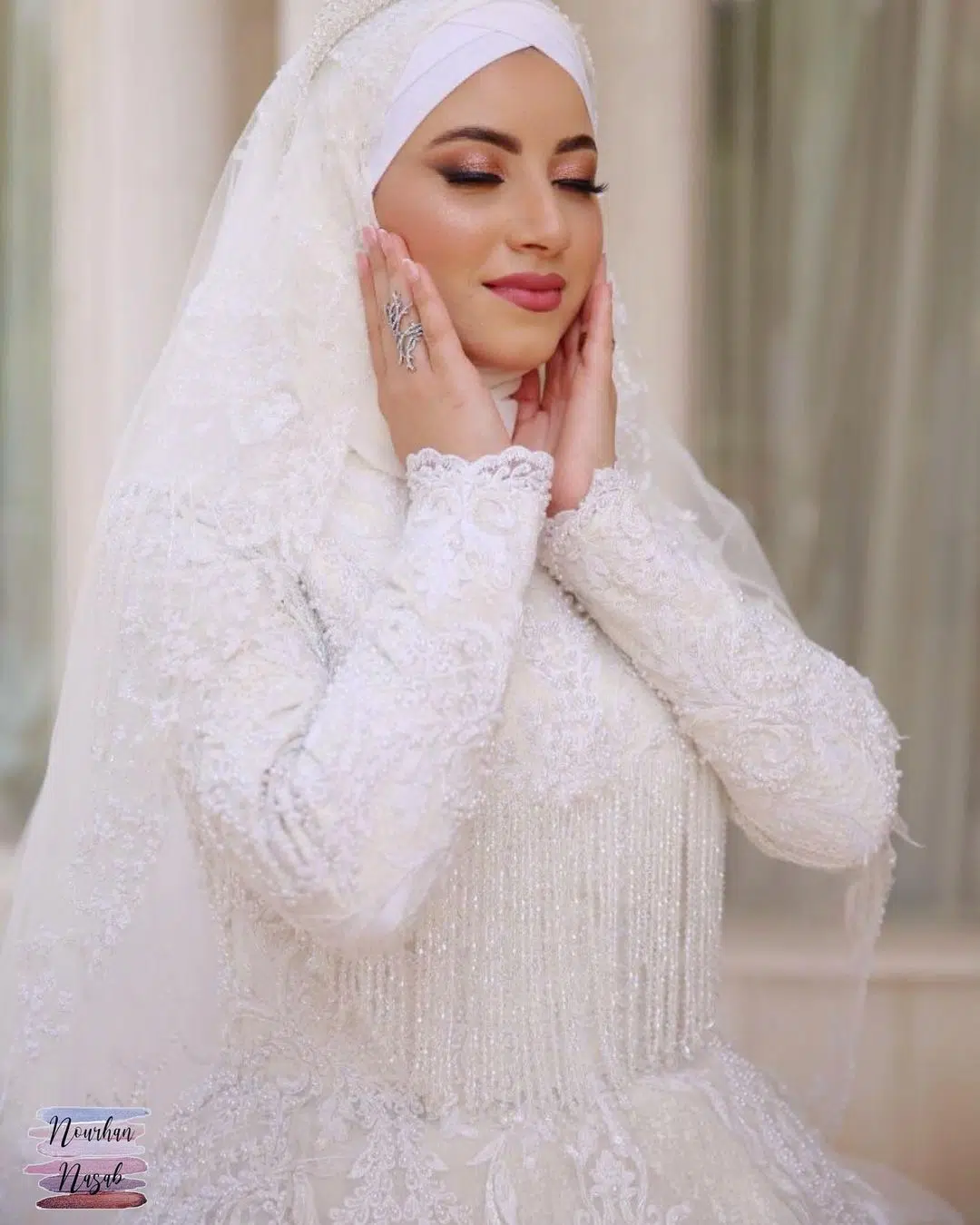
The relaxed European influence shows here — one end tucked loosely while the other drapes freely. This works because you’re creating intentional asymmetry instead of trying to make everything perfectly even. I use this technique when I want coverage that moves with me, especially on windy days when traditional pins would leave me constantly readjusting.
Use the High-Crown Method
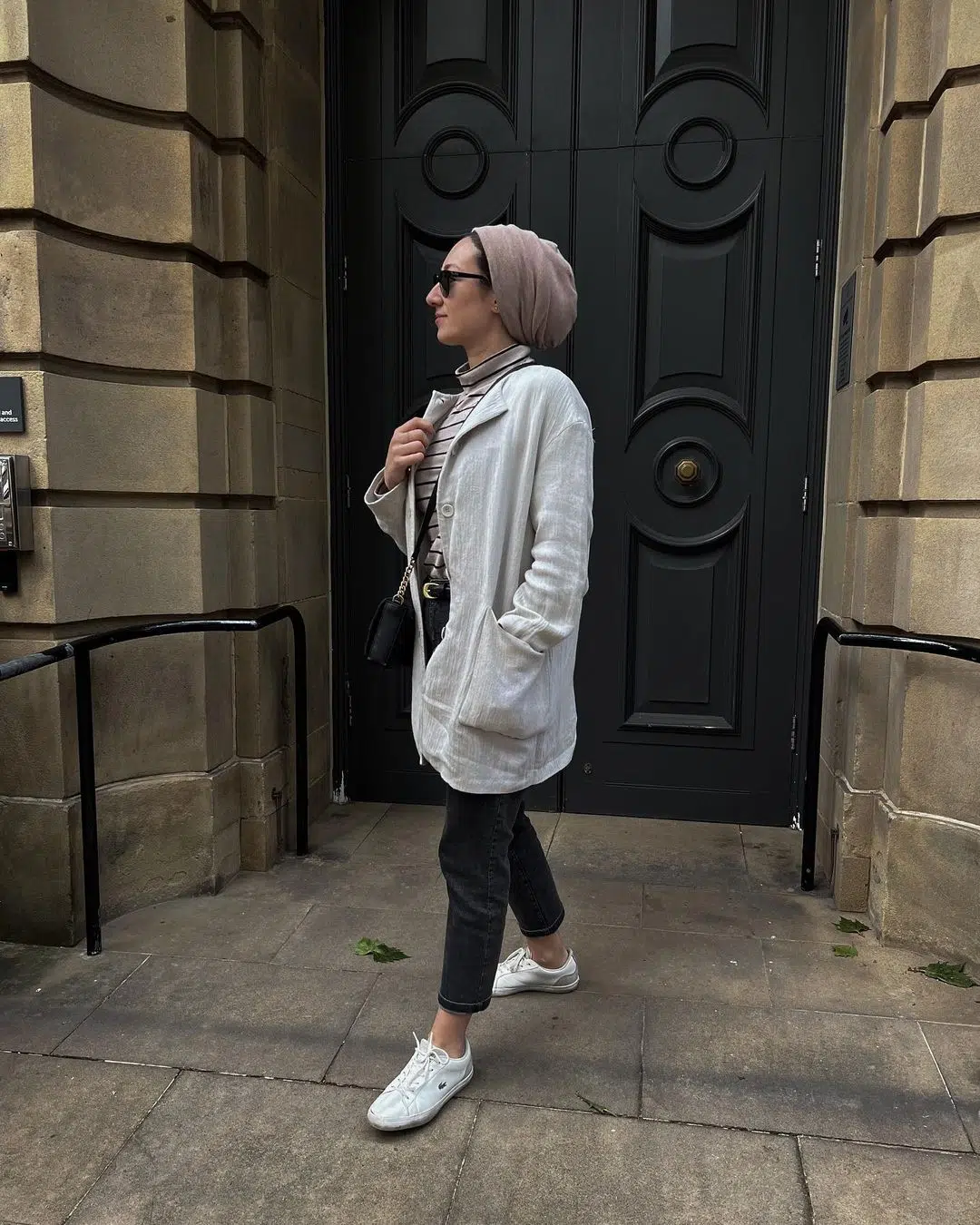
Creating height at the crown prevents that flat-to-the-head look that ages you. The fabric gathers naturally above your hairline, then flows down in soft folds. This technique is particularly effective if you’re petite — the vertical lines elongate your silhouette in a way that simpler Paris-style wraps don’t achieve.
Try the Color-Block Technique
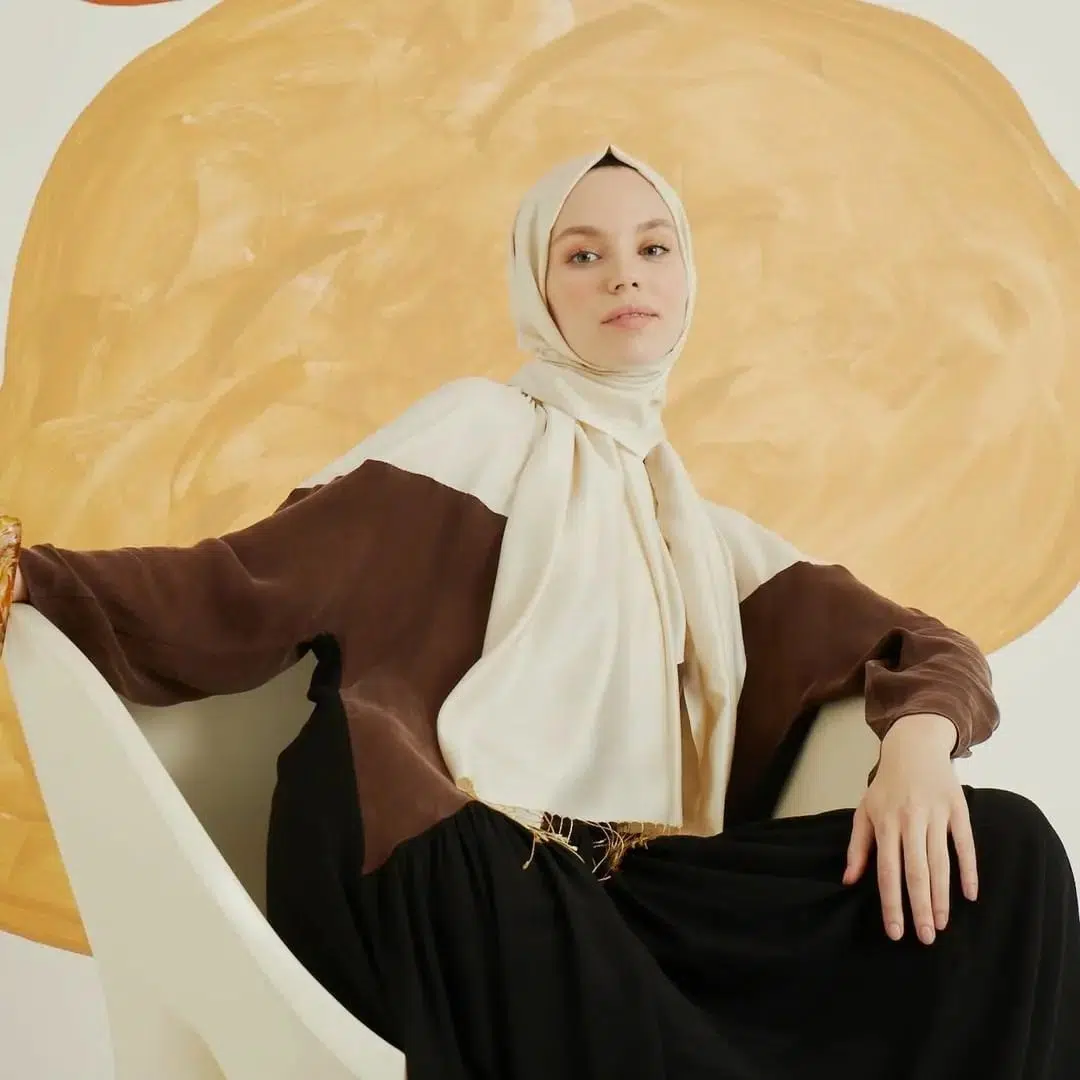
Mixing prints and solids in your wrap adds visual interest without overwhelming your outfit. The trick is keeping one element neutral — here, the base scarf stays simple while the patterned accent piece provides the focal point. This approach works especially well when you’re wearing understated colors elsewhere and need your hijab to carry the outfit’s personality.
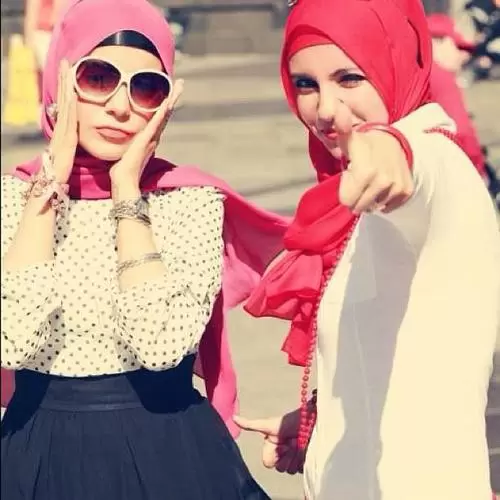
20 Chic Summer Hijab Styles and Outfit Ideas
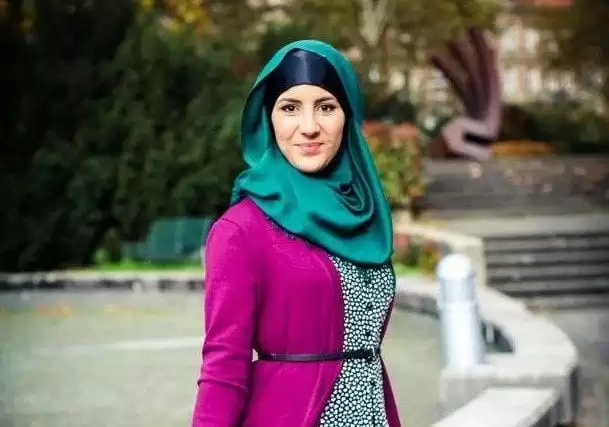
20 Ideas on How to Style Jilbab with Hijab
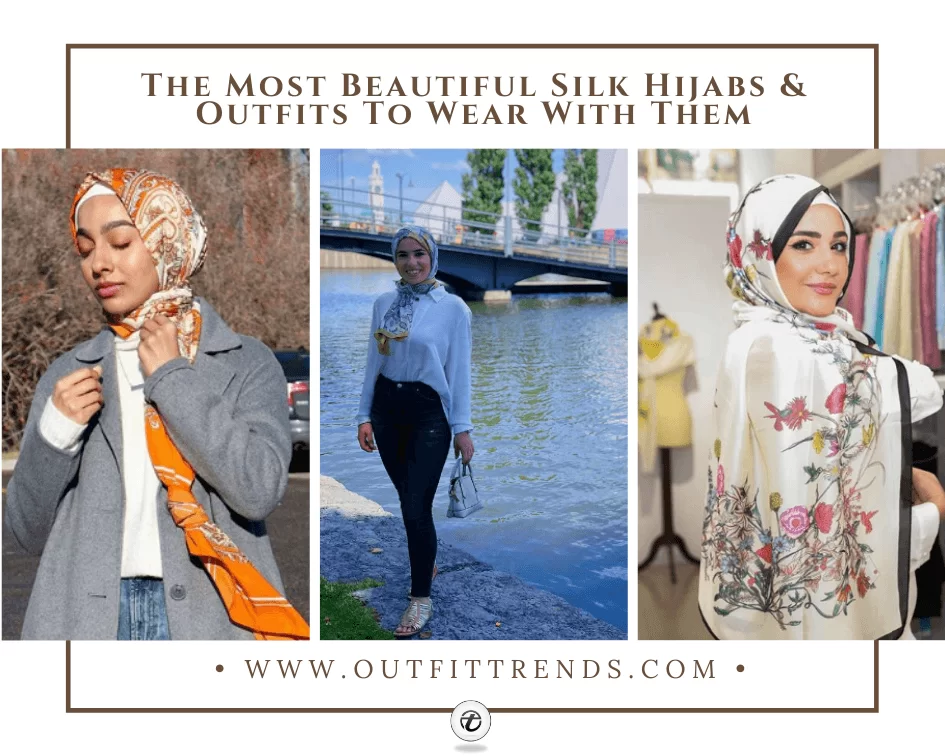
Silk Hijab Styles-25 Ideas How To Wear A Silk Hijab
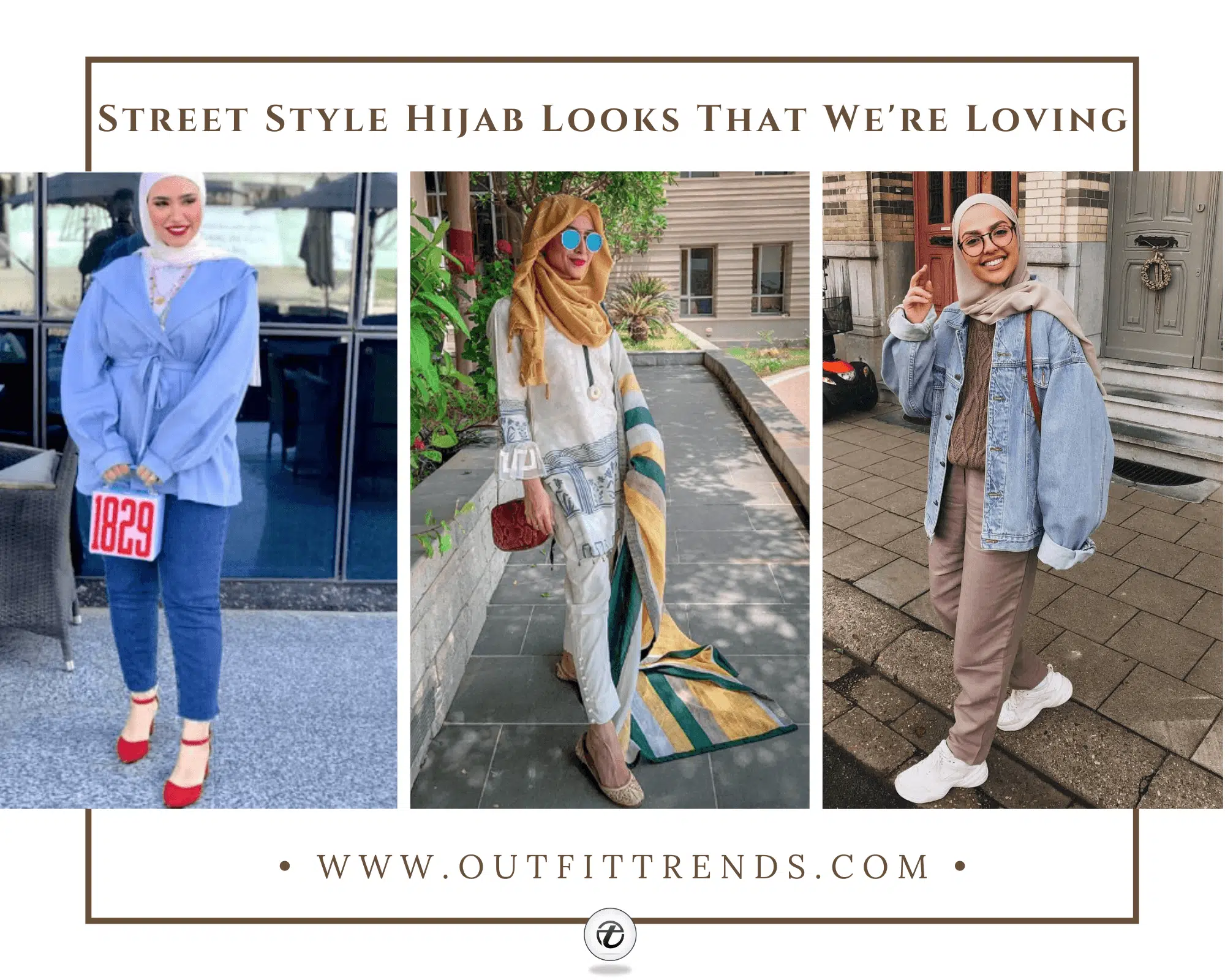
20 Popular Hijab Street Style Fashion Ideas For This Season
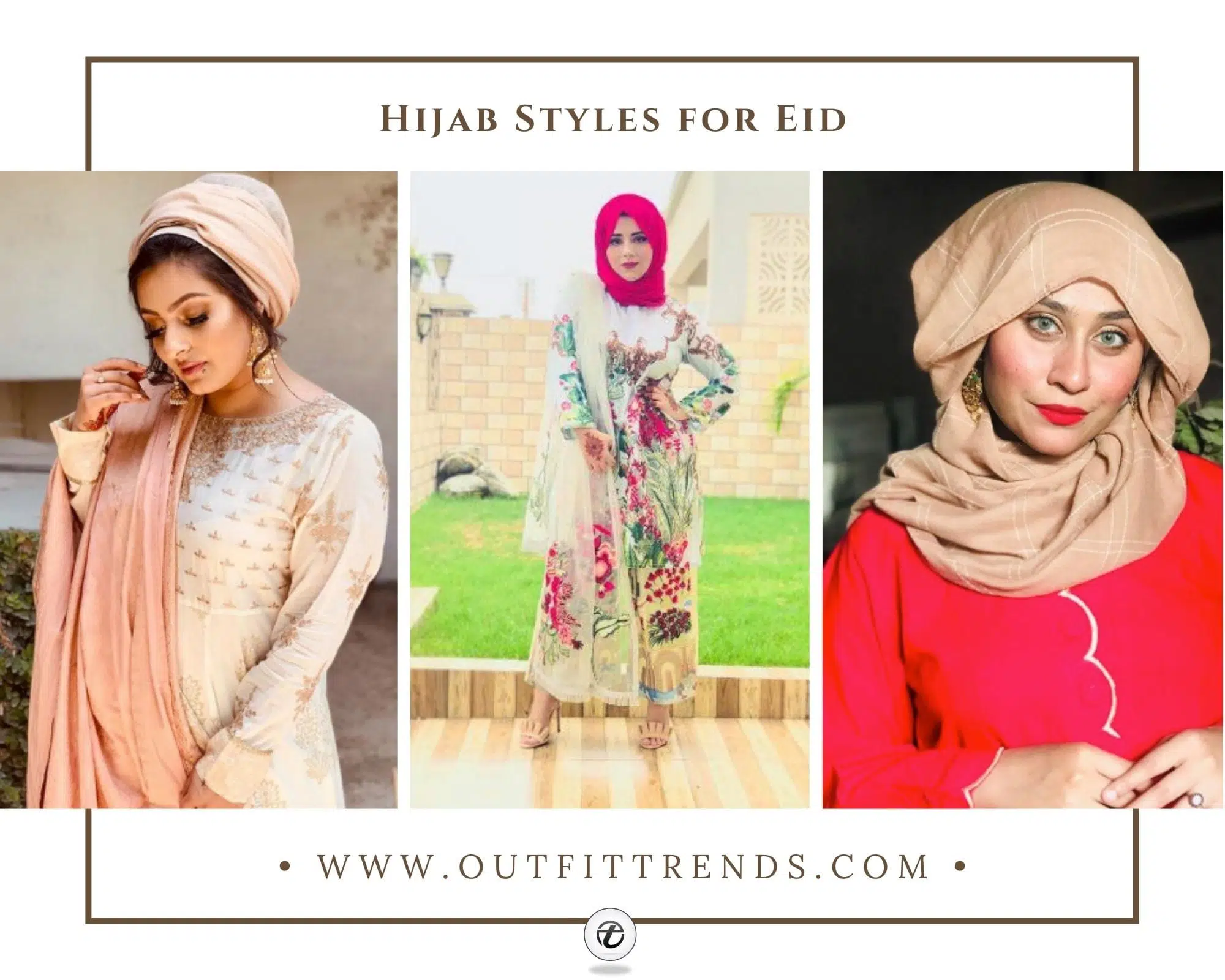
30 Latest Hijab Styles for Eid Worth Trying
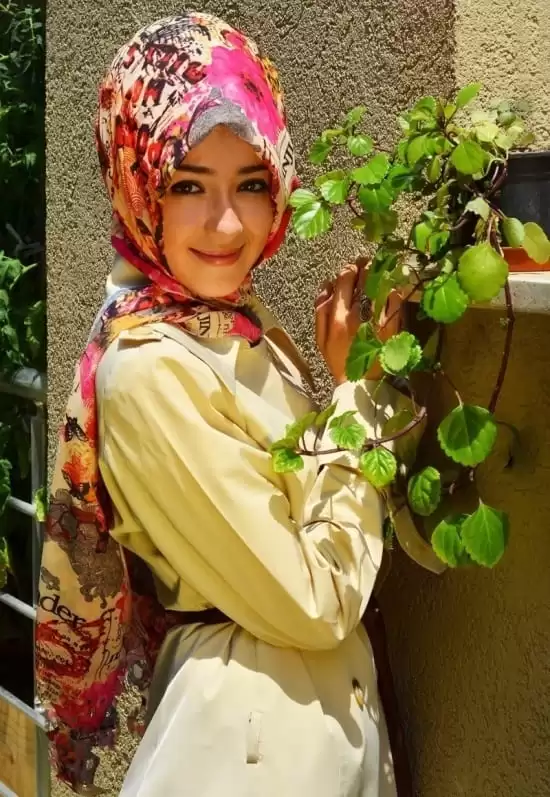
20 Spring Hijab Style Ideas For a Beautiful Look
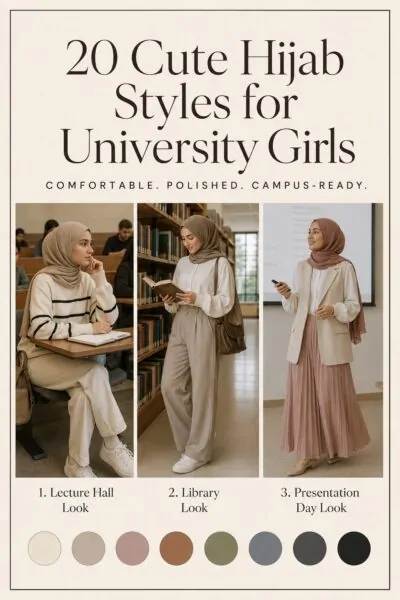
20 Cute Hijab Styles for University Girls
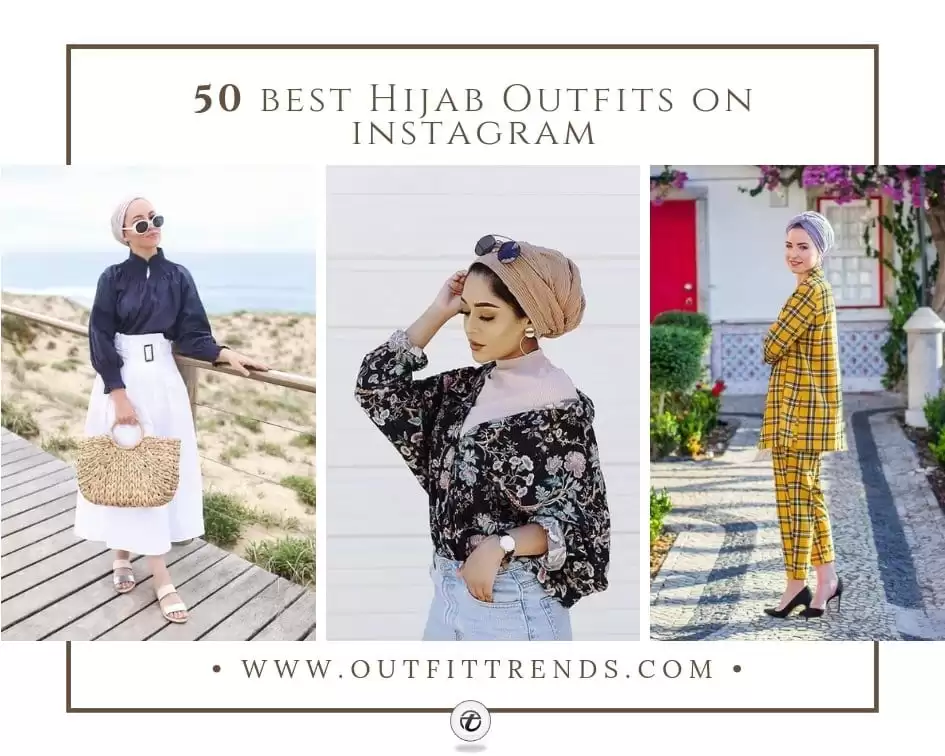
50 Best Hijab Styles on Instagram Trending These Days
Dos & Don’ts
Fabric Guide for Turkish Styles
The fabric you choose determines whether your Turkish hijab style succeeds or fails. Jersey works for everyday wear because it holds its shape through movement, but it won’t give you the dramatic draping that makes formal Turkish styles special. Georgette creates beautiful flow but requires an underscarf to prevent transparency issues — this comparison of jersey and georgette hijab fabrics breaks down the differences in more detail.
For winter styling, pashmina scarves offer the weight needed for Turkish wrapping techniques while providing warmth. Viscose blends hit the sweet spot for daily wear — substantial enough for structure, soft enough for comfort. Avoid pure silk unless you’re experienced with slippery fabrics, as Turkish styles rely on friction to stay in place.
The 90cm x 90cm size works best for most Turkish techniques, giving you enough fabric to create the layered effect without excess bulk. Rectangular scarves can work, but you’ll need to fold them strategically to achieve the same draping effect that comes naturally with square cuts.
Turkish Hijab Outfit Ideas
Taupe Two-Tone Hijab with White Shirt and Statement Jewelry
This layered hijab style pairs a darker taupe cap with a flowing cream scarf, creating beautiful dimension around the face. The crisp white shirt provides a clean backdrop for the delicate silver necklace and chain bracelet. This combination works perfectly for professional settings where you want to look polished without being too formal.
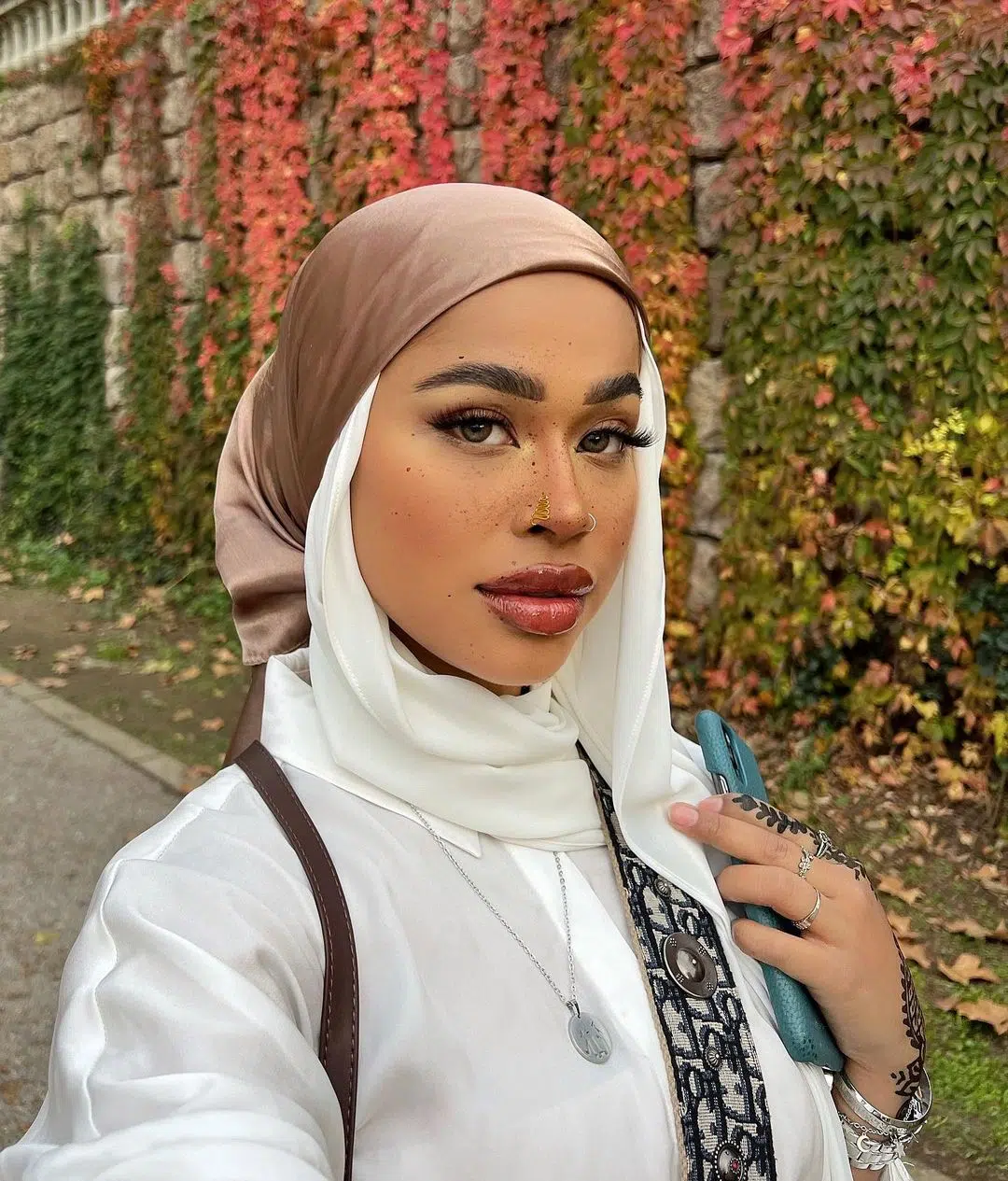
Tip: The two-tone hijab technique adds visual interest without needing bold patterns — perfect when your outfit is simple but you want depth.
Cream Turban Style with Pearl Details
The twisted turban silhouette creates an elegant shape that frames the face beautifully, while the scattered pearl embellishments add subtle glamour. This style works exceptionally well for special occasions or evening events where you want something more refined than everyday hijab styles.
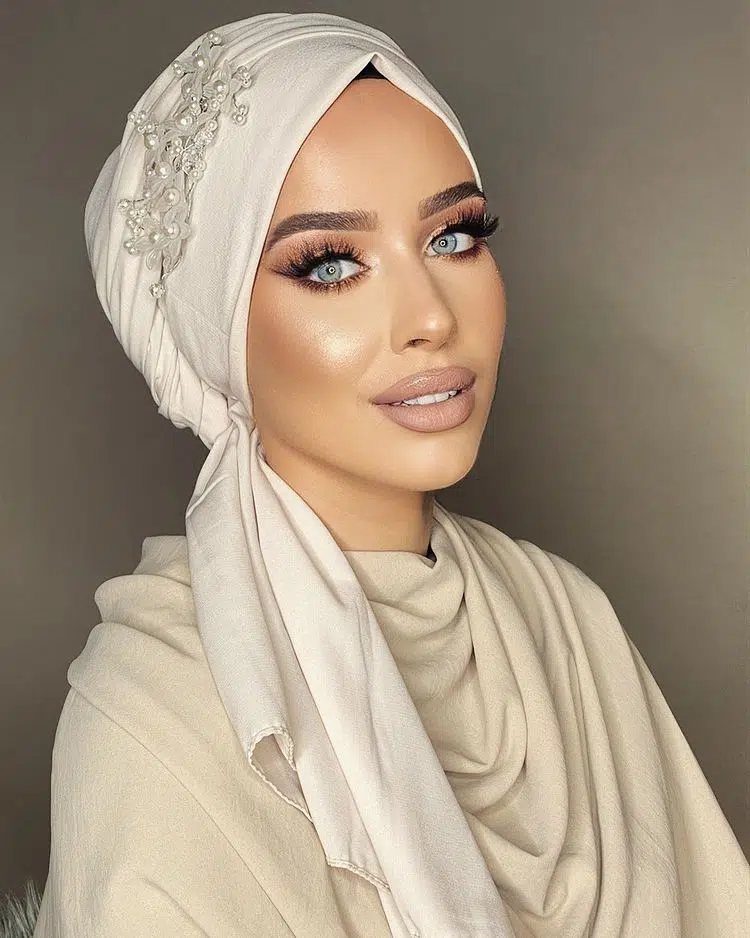
Tip: Turban styles like this eliminate the need for pins entirely — the twisted fabric holds everything securely in place.
Bright Yellow Co-ord with Cream Head Wrap
This sunshine yellow matching set gets balanced perfectly by the neutral cream hijab, preventing the bold color from overwhelming. The relaxed fit of both the tunic and wide-leg pants creates a comfortable yet put-together look that’s ideal for casual outings or weekend errands.
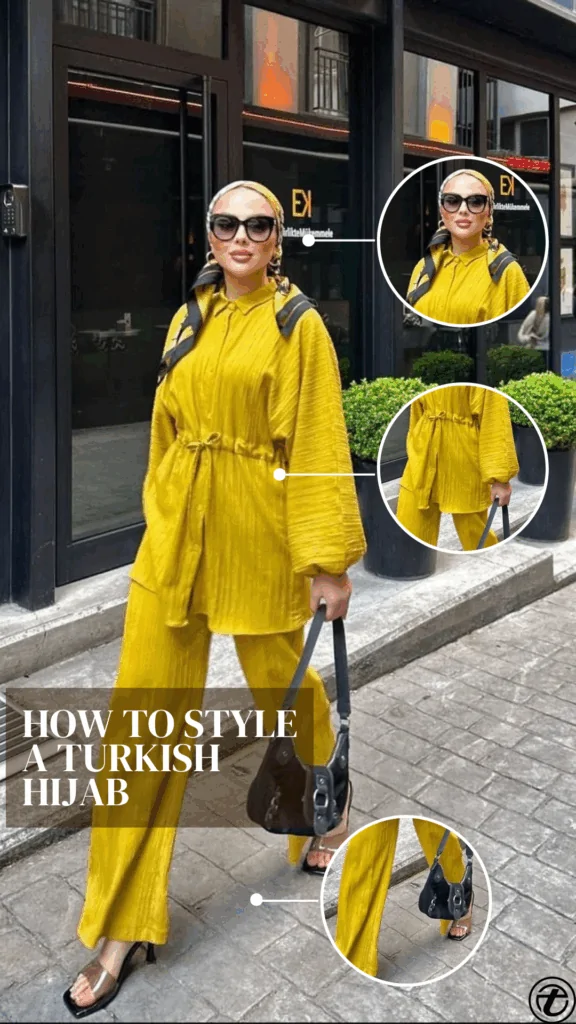
Tip: When wearing bright, saturated colors like this yellow, choosing a neutral hijab lets the outfit be the statement while keeping everything harmonious.
Emerald Green Silk Square with Baroque Print
The rich emerald base with ornate baroque detailing creates a luxurious feel that pairs beautifully with the coordinating teal top. This silk square style works best for formal occasions or when you want to add some drama to a simple outfit.
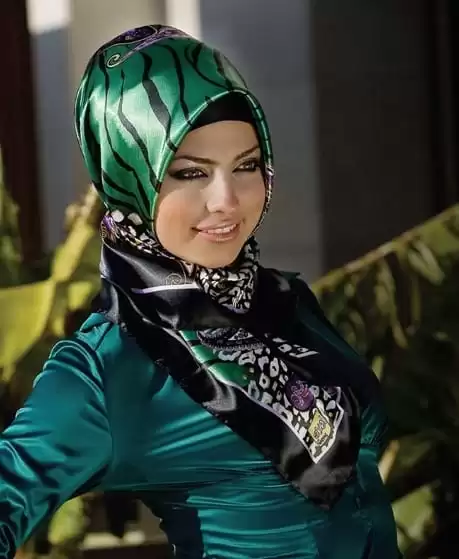
Tip: Silk squares like this need to be secured with hidden pins at key points — the slippery fabric won’t stay put with loose draping alone.
Geometric Print Square with Camel Trench
The bold geometric pattern in teal and peach tones creates a modern focal point against the classic camel trench coat. This combination strikes the perfect balance between contemporary pattern mixing and timeless outerwear, making it ideal for transitional weather styling.
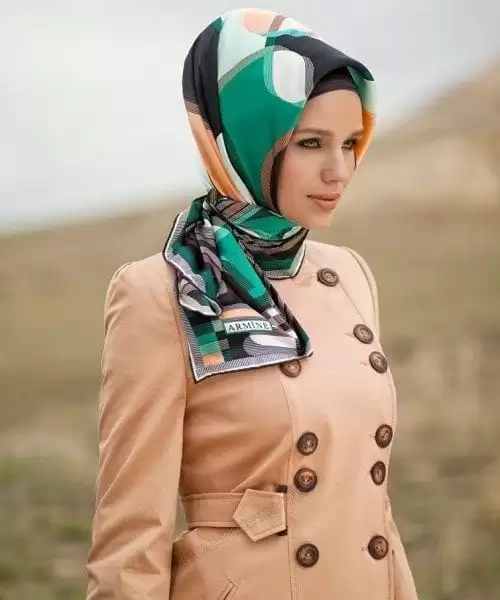
Tip: When wearing patterned hijabs with structured coats like trenches, ensure the scarf extends slightly beyond the coat lapels for proper layering.
Coral Red Chiffon with Navy Base Layer
The flowing coral chiffon creates beautiful movement and catches light beautifully, while the navy base adds depth and prevents any transparency issues. This color combination is particularly flattering on warm skin tones and works well for both day and evening wear.
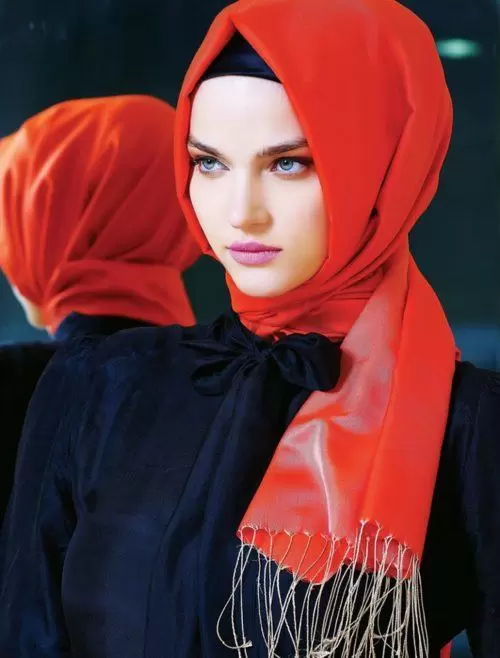
Tip: Chiffon hijabs need a cotton or jersey underscarf to prevent slipping — the smooth texture won’t grip hair or fabric without that base layer.
Soft Polka Dot Print with Beige Tones
The delicate scattered dot print in neutral tones creates visual interest without being overwhelming, paired beautifully with the beige coord set. This look demonstrates how subtle patterns can add personality to monochromatic outfits without competing for attention.
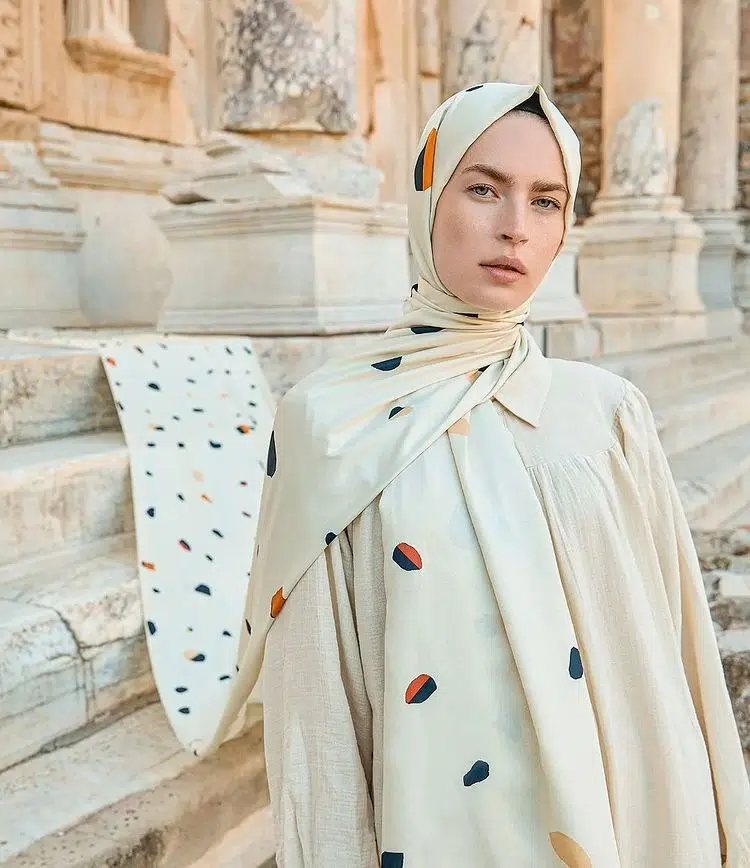
Tip: Small-scale prints like these dots are perfect for petite frames — they add texture without overwhelming your proportions.
Soft Pink Chiffon with Floral Appliqué
The dreamy pink chiffon features delicate floral embellishments that catch the light beautifully, creating an ultra-feminine look perfect for special occasions. The pale pink tone works especially well with fair to medium skin tones and pairs beautifully with both neutrals and deeper colors.
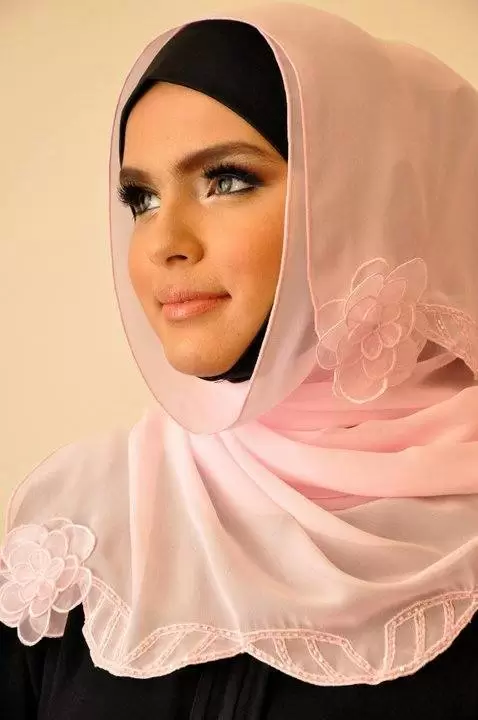
Tip: Embellished hijabs like this should be stored flat or hung to prevent the appliqué details from getting crushed or damaged.
Deep Plum Silk with Clean Lines
The rich plum silk hijab creates a sophisticated backdrop that complements the structured white coat beautifully. This deep jewel tone is particularly flattering during autumn and winter months, and the silk texture adds an element of luxury to professional or formal outfits.
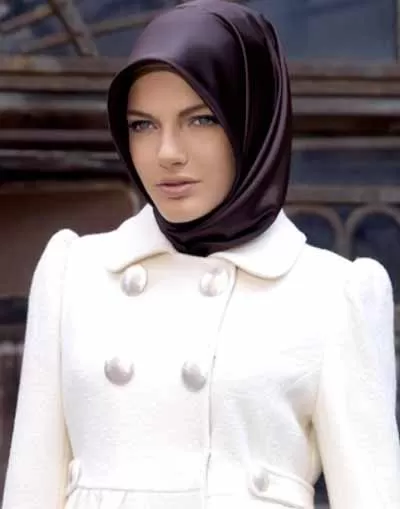
Tip: Dark silk hijabs like this plum shade require careful styling around the face — ensure there’s enough contrast with your skin tone by adding lighter makeup or accessories.
Tropical Floral Print with Beige Coordinates
The vibrant hibiscus print brings a summery, vacation-ready feel that’s perfectly balanced by the neutral beige outfit underneath. This combination shows how bold floral prints can work year-round when grounded with sophisticated neutral pieces.
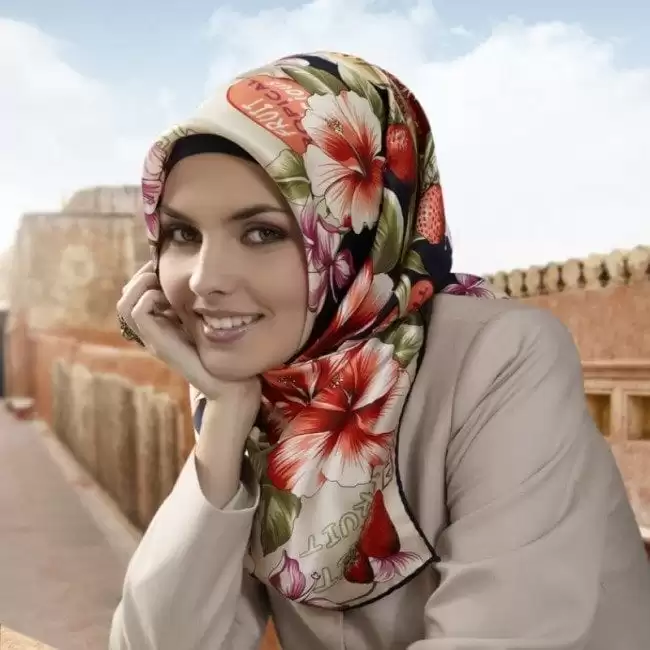
Tip: Large floral prints like this work best when you keep the rest of your outfit simple — let the hijab be the only patterned element.
Blush Pink Layered Chiffon
Multiple layers of soft pink chiffon create beautiful depth and movement, while the nude undertones complement a wide range of skin colors. This romantic styling works particularly well for weddings, dinner dates, or any occasion where you want a soft, feminine presentation.
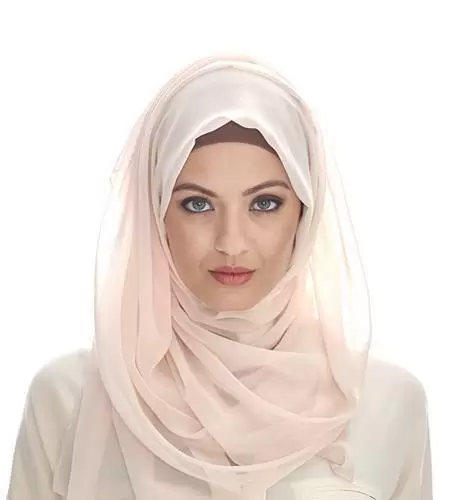
Tip: Layered chiffon styles like this require strategic pinning at the crown and behind the ears to maintain the flowing shape throughout the day.
Navy Polka Dot with Structured Draping
The classic navy base with white polka dots gets elevated through careful draping that creates volume and interest around the shoulders. This timeless pattern combination works well in professional settings while still feeling fresh and modern.
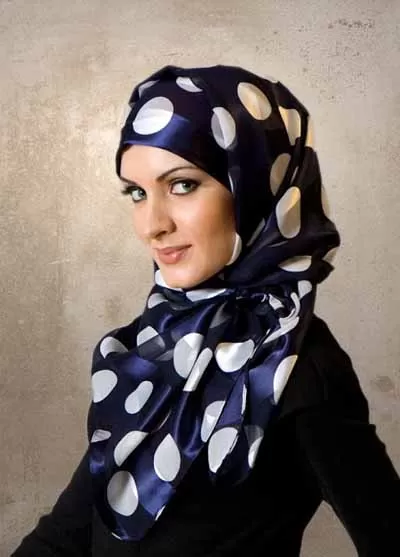
Tip: When creating voluminous draping like this, start with a fitted underscarf to ensure the base stays smooth and secure under all that fabric.
Geometric Cherry Print with Business Styling
The playful cherry and geometric pattern adds personality to the structured burgundy blazer, creating an interesting balance between professional and whimsical. This combination works well for creative workplaces where you can express more personality in your styling.
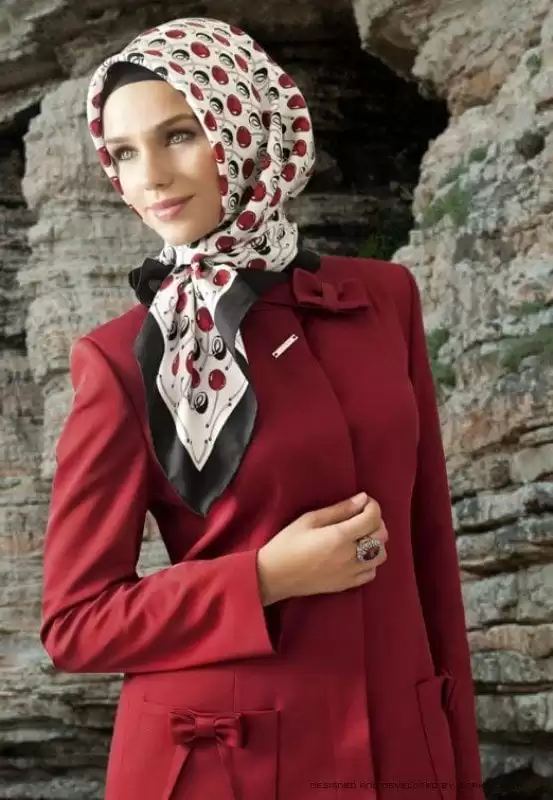
Tip: When wearing quirky prints like this cherry pattern, keep your makeup and accessories minimal to let the hijab be the conversation starter.
Vintage Floral with Retro Sunglasses
The small-scale floral print in muted tones creates a vintage-inspired look that pairs perfectly with oversized sunglasses and bold red lips. This styling channels classic 1960s aesthetics while maintaining modern modesty standards.
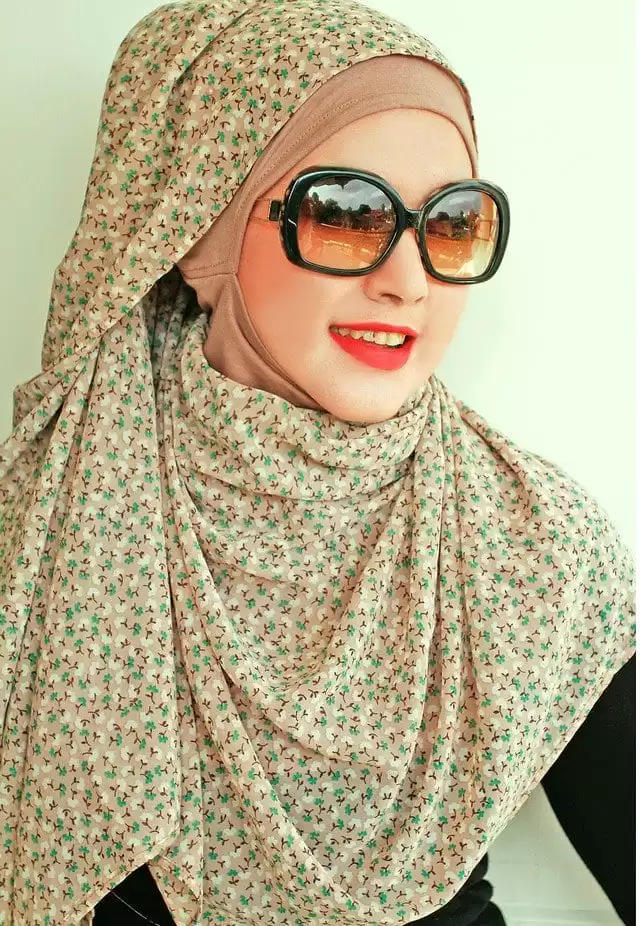
Tip: Vintage-style prints work best when you commit to the era — add period-appropriate makeup and accessories to complete the look authentically.
Teal and Gold Abstract Print
The sophisticated abstract pattern in rich teal and gold tones creates a luxurious feel that elevates the simple camel coat. This color combination is particularly striking and works well for both business and social occasions where you want to make an impression.
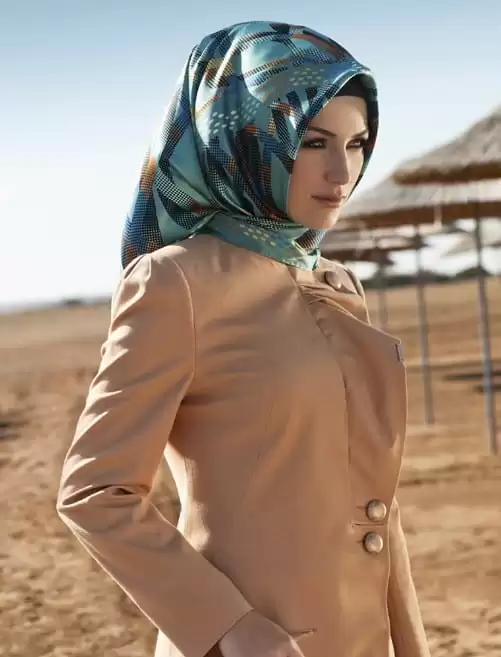
Tip: Metallic accents in hijab prints like these gold details catch light beautifully but can clash with your jewelry — stick to one metal tone throughout your accessories.
Charcoal Grey with Draped Layers
The sophisticated grey creates clean lines and modern minimalism, while the draped layering adds architectural interest to the silhouette. This monochromatic approach works perfectly for contemporary professional settings or modern casual styling.
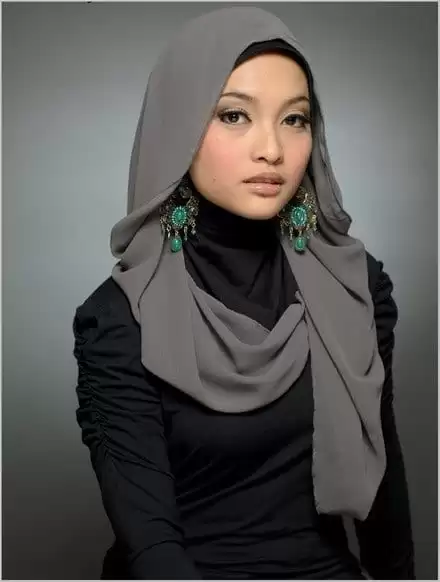
Tip: Monochromatic grey looks like this need texture or interesting draping to avoid appearing flat — the layering here creates necessary visual depth.
Garden Floral Print with French Styling
The delicate floral pattern in soft pastels creates a romantic, garden-party feel that works beautifully for spring and summer occasions. The way it’s styled with the black shirt creates a classic Parisian contrast that feels both timeless and contemporary.
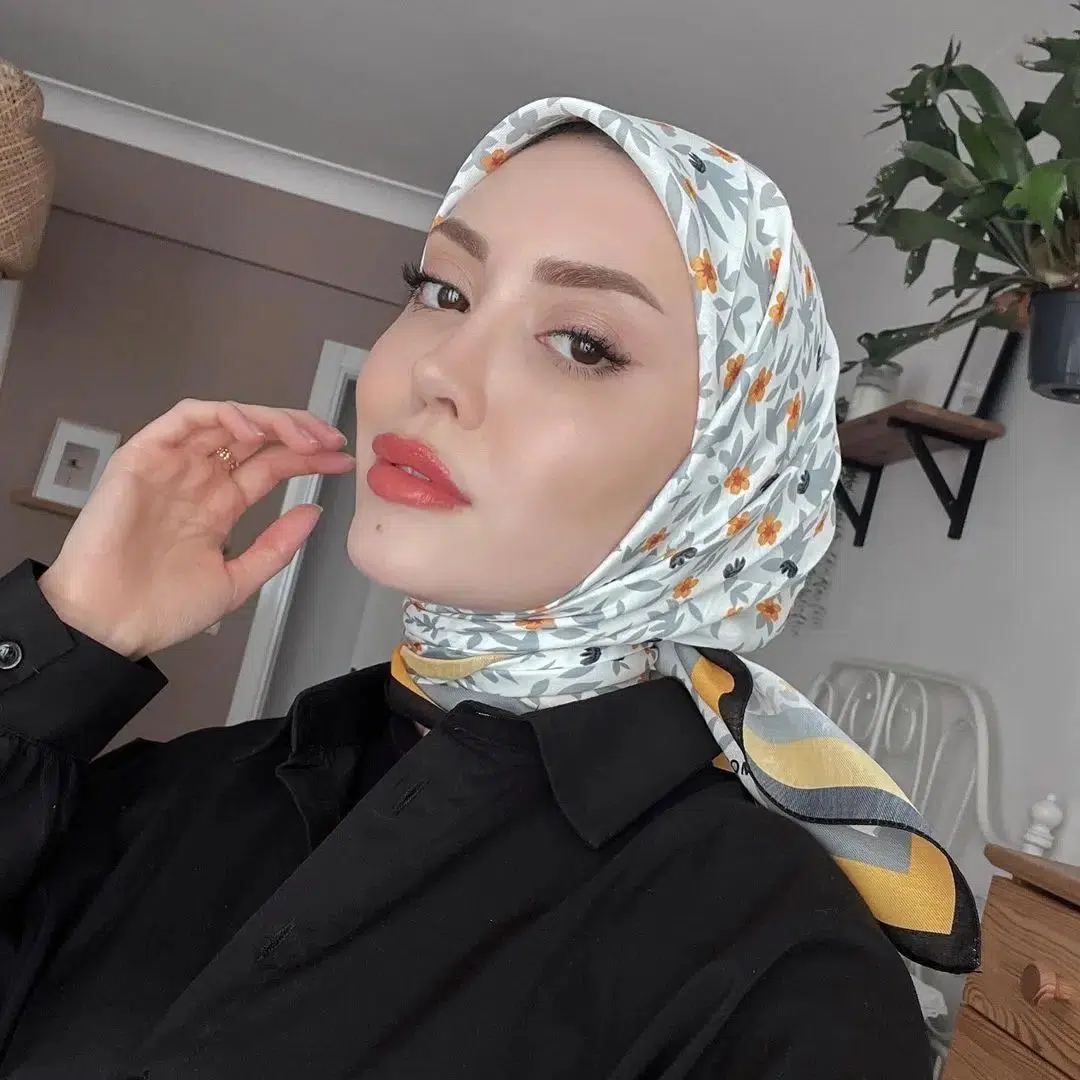
Tip: Small floral prints like this are incredibly versatile — they work with both casual denim and formal pieces, making them excellent investment pieces for your hijab collection.
Mixed Pattern Collage Style
This creative styling showcases multiple Turkish hijab patterns and ways to wear them, from simple head wraps to more complex draped styles. The variety demonstrates how different patterns, textures, and styling methods can completely change your look while maintaining the same level of coverage.
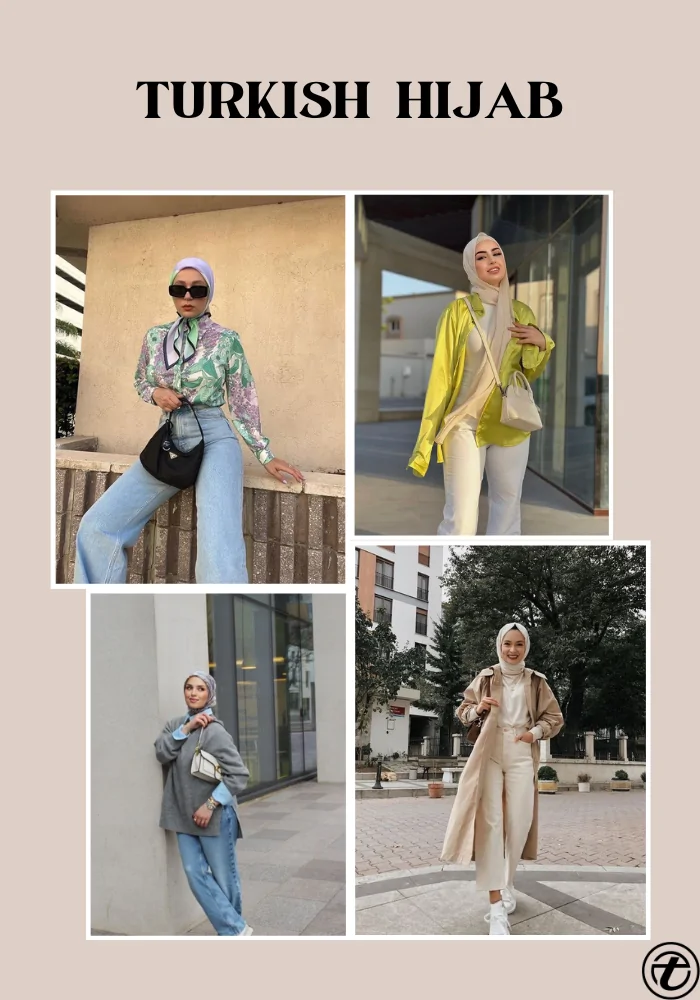
Tip: When building your hijab collection, invest in different textures and patterns so you can create multiple looks with the same basic wardrobe pieces.
Frequently Asked Questions
What makes Turkish hijab styles different from other hijab styles?
Turkish hijab styles typically feature more voluminous draping, intricate patterns, and luxurious fabrics like silk and chiffon. They often incorporate European fashion influences, resulting in styles that blend traditional modesty with contemporary Turkish and Western aesthetics. The emphasis is on creating beautiful silhouettes through expert draping techniques.
How do you keep Turkish hijabs secure without pins showing?
The key is using a fitted cotton or jersey underscarf as your base, then securing the decorative hijab with small pins hidden in the folds of fabric. Place pins at your temples, behind your ears, and at the nape of your neck. For silk hijabs, magnet pins work better than safety pins since they’re less likely to damage the delicate fabric.
Can Turkish hijab styles work for everyday wear or just special occasions?
Turkish hijab styles range from simple everyday looks to elaborate formal styles. Cotton and jersey Turkish hijabs with subtle patterns work perfectly for daily wear, while silk squares and heavily embellished styles are better reserved for special occasions. The key is choosing the right fabric and complexity level for your lifestyle and the occasion.
What face shapes work best with voluminous Turkish hijab styles?
Voluminous Turkish styles work particularly well on oval and heart-shaped faces, as the extra fabric creates balance. If you have a round face, avoid too much volume at the sides and focus the fullness at the back or crown. Long faces benefit from horizontal draping that adds width, while square faces look great with soft, curved draping that softens angular features.
20 Chic Summer Hijab Styles and Outfit Ideas
20 Ideas on How to Style Jilbab with Hijab
Silk Hijab Styles-25 Ideas How To Wear A Silk Hijab
20 Popular Hijab Street Style Fashion Ideas For This Season
30 Latest Hijab Styles for Eid Worth Trying
20 Spring Hijab Style Ideas For a Beautiful Look
20 Cute Hijab Styles for University Girls
50 Best Hijab Styles on Instagram Trending These Days