

Most women avoid geometric prints because they think the patterns are too loud or difficult to style. I used to believe this too, until I watched a client transform a simple black and white diamond print dress with nothing but the right belt placement. Suddenly, what looked overwhelming became modern and intentional.
The truth about geometric prints is that they’re actually easier to wear than florals or abstract patterns because they follow mathematical rules. The lines, shapes, and repetition create natural focal points that guide your eye — you just need to understand how to work with them instead of against them.
I’ve spent years perfecting geometric print styling, and the secret isn’t avoiding bold patterns. It’s about choosing the right proportions and knowing exactly where to place your visual anchors. Once you master these fundamentals, geometric prints become your most versatile pieces.
How To Wear Geometric Prints?
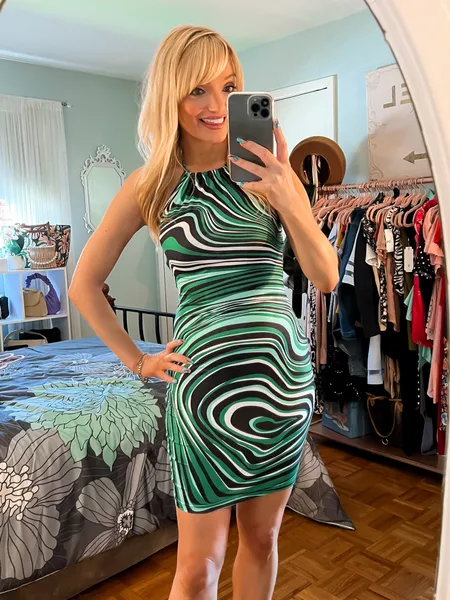
Keep accessories minimal with busy patterns
This swirling green print creates enough visual interest on its own, which is why simple gold jewelry and clean hair work perfectly here. When your dress has complex geometric movement, adding statement accessories creates competing focal points that make the whole look feel chaotic rather than intentional.
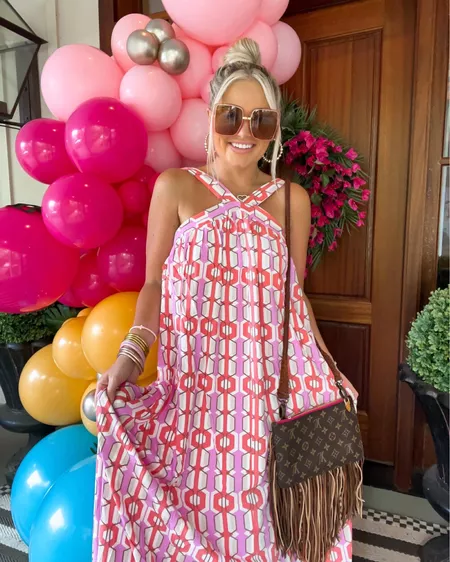
Match your bag to the print’s accent colors
The brown fringe bag picks up the warm tones within this pink geometric print, creating a cohesive color story without being matchy-matchy. This technique works because you’re acknowledging the pattern’s color palette while adding texture contrast through the fringe detail.
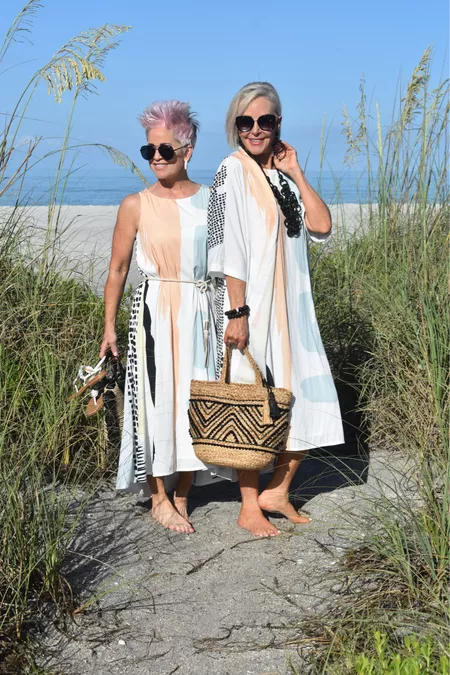
Layer geometric prints with solid whites
These white cover-ups allow the geometric print swimwear underneath to be the star while providing coverage and sun protection. White acts as a visual reset button — it gives your eye a place to rest between the busy patterns and creates clean lines that prevent the look from feeling overwhelming.
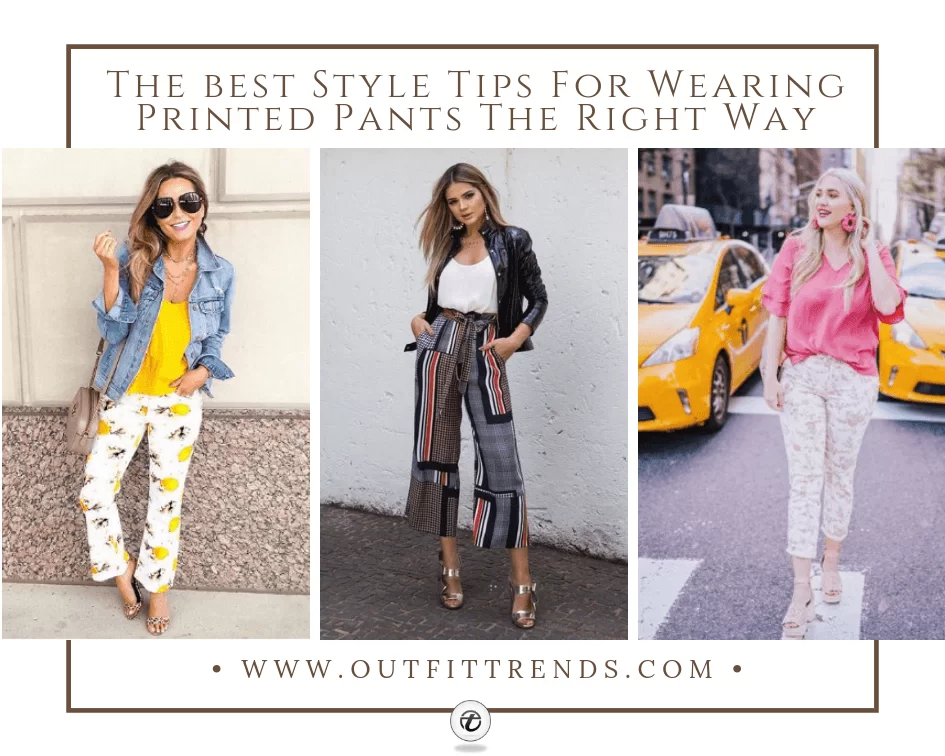
50 Best Printed Pant Outfit Ideas with Styling Tips
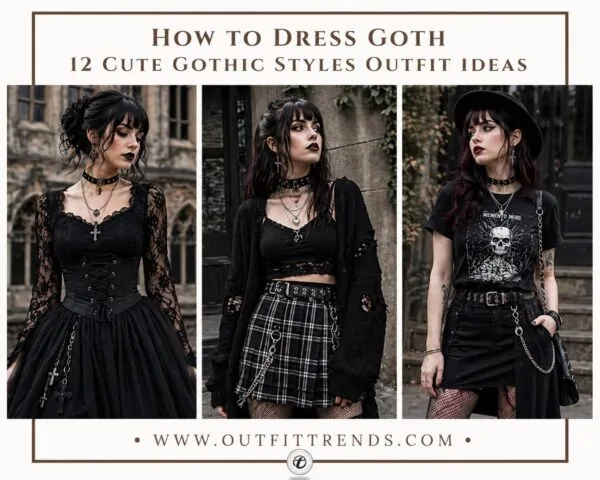
How to Dress Goth? 12 Outfit Ideas & Styling Tips
18 Salty Granola Outfit Ideas with Styling Tips
56 Grunge Outfit Ideas with Styling Tips
How to Wear Lace Pants? 18 Outfit Ideas with Styling Tips
17 Cute Leather Pants Outfit Ideas & Styling Tips
39 Lug Sole Boots Outfit Ideas & Styling Tips
Ballet Wrap Sweater Outfit Ideas & 22 Tips For Styling
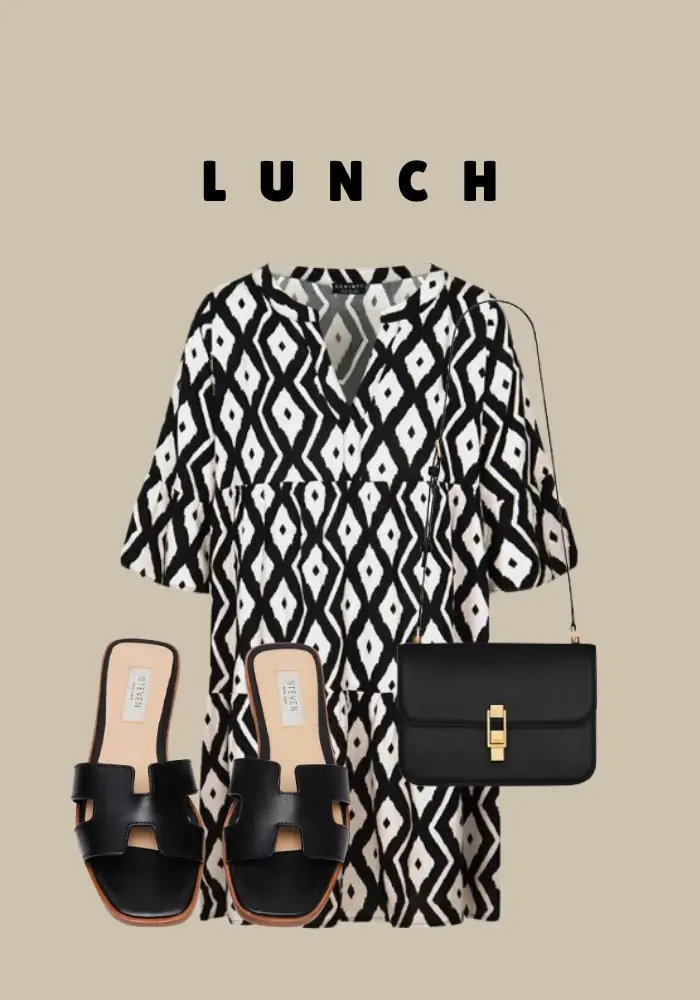
Choose flat shoes for busy patterns
Black slides keep the focus on this diamond print tunic because they create a solid visual foundation. When your top half has intricate geometric details, adding embellished or colorful shoes pulls attention away from the pattern and makes the outfit feel unbalanced.
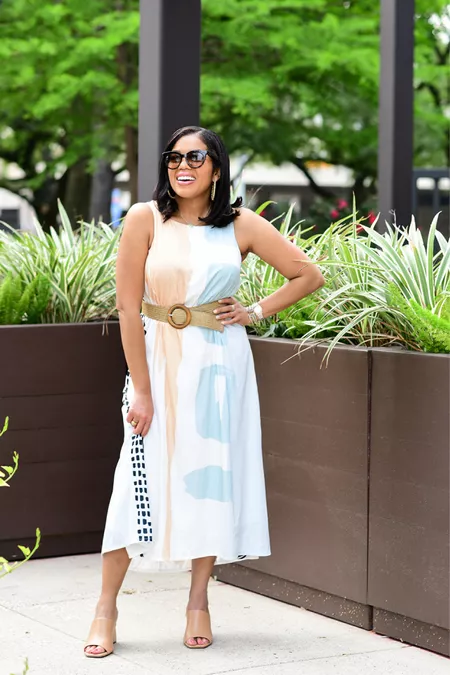
Add a belt to define your waist
The wide tan belt creates a clear break between the blue geometric top and white bottom, preventing the outfit from looking like one long column. This is crucial with geometric prints because the patterns can blur your natural waistline — the belt restores your proportions.
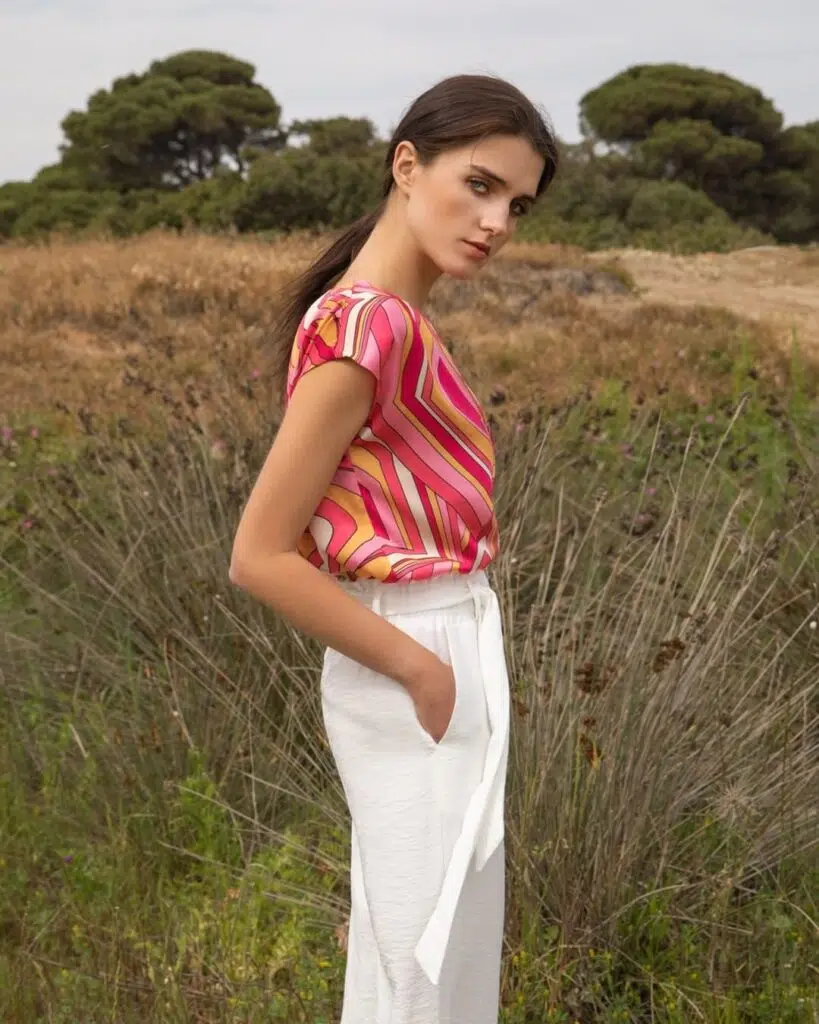
Pair angular prints with soft styling
The flowing hair and relaxed white pants soften the sharp lines of this striped geometric top. This contrast prevents geometric prints from looking too structured or costume-like — you need some organic elements to balance the mathematical precision of the pattern.
Geometric patterns were first used in fashion by Emilio Pucci in the 1960s, who created his signature swirl prints using mathematical formulas. His designs proved that geometric prints could be both artistic and wearable, launching the trend that continues today.
Dos & Don’ts
Geometric Print Outfit Ideas That Actually Work
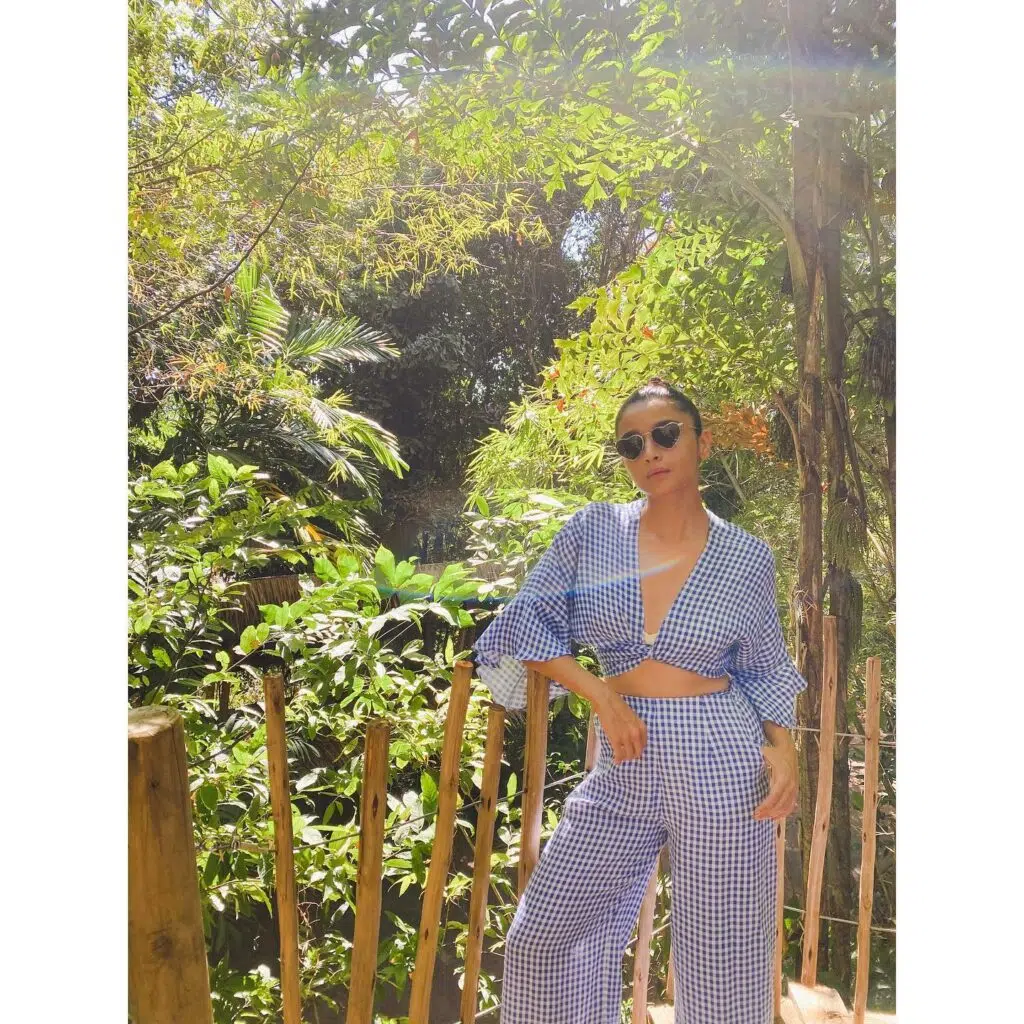
Blue Gingham Co-ord Set
This matching gingham crop top and wide-leg trouser combination proves that coordinated prints work when the proportions are right. The high-waisted trousers balance the cropped top perfectly, while the classic blue and white check feels fresh rather than overly sweet. Ideal for women who want to try prints but prefer a structured, put-together approach.
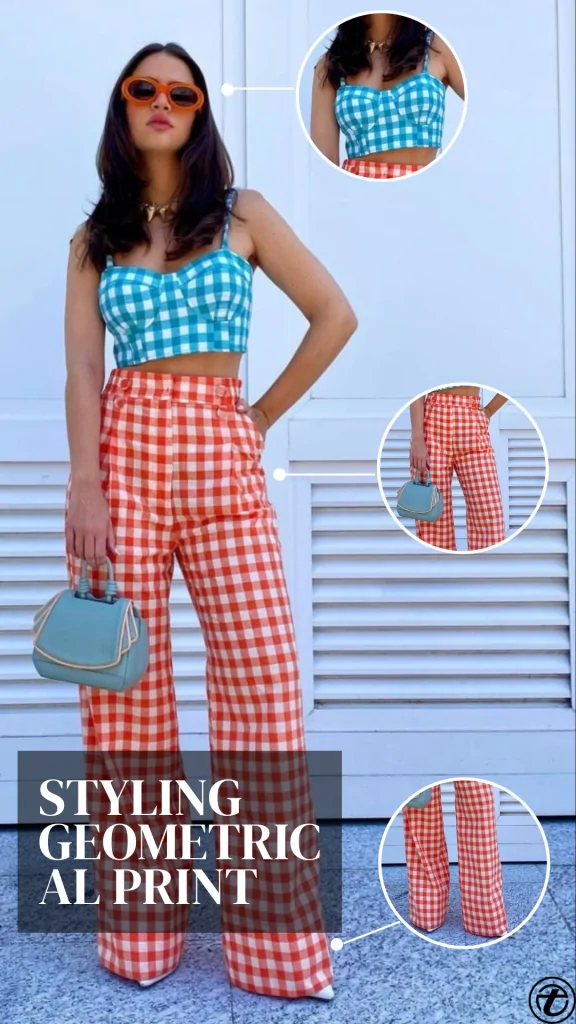
Mixed Gingham Color Block
Here’s how to mix two different colored ginghams without looking like a tablecloth — keep the scale identical and choose complementary tones. The blue bustier top and red high-waisted trousers create a retro-inspired silhouette that’s both playful and polished. This combination works because both prints share the same geometric structure, just in different colorways.
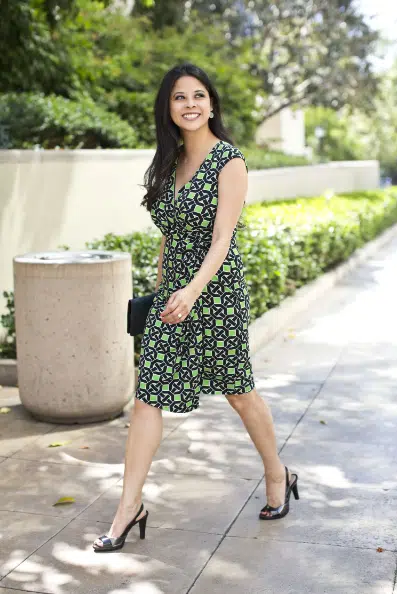
Small-Scale Geometric Wrap Dress
A wrap dress in a tiny geometric print offers all the benefits of pattern without overwhelming your frame. The knee-length hemline and fitted waist create a universally flattering silhouette, while the small-scale print reads almost like a textured solid from a distance. Perfect for women who want to dip their toes into geometric prints without making a bold statement.
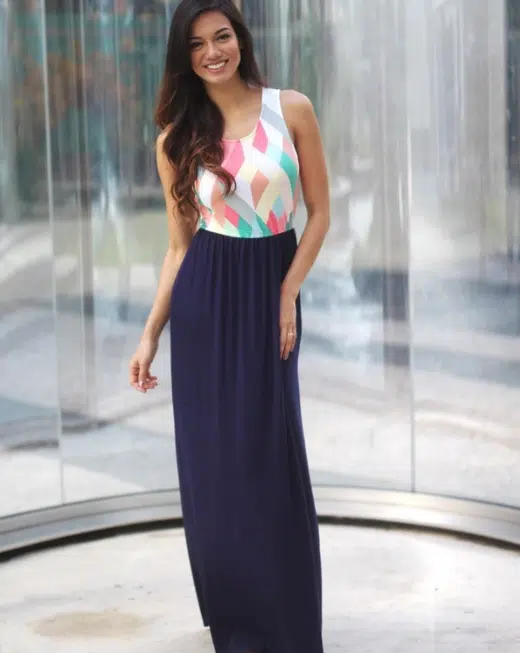
Geometric Print Maxi with Color Blocking
This demonstrates the power of strategic color blocking — the geometric print top is grounded by a solid navy maxi skirt. The result feels intentional rather than busy, and the floor-length proportions add drama without relying solely on the print. This approach works particularly well for taller women or those who prefer longer hemlines.
Quick tip
Tuck geometric print tops into high-waisted bottoms to define your silhouette.
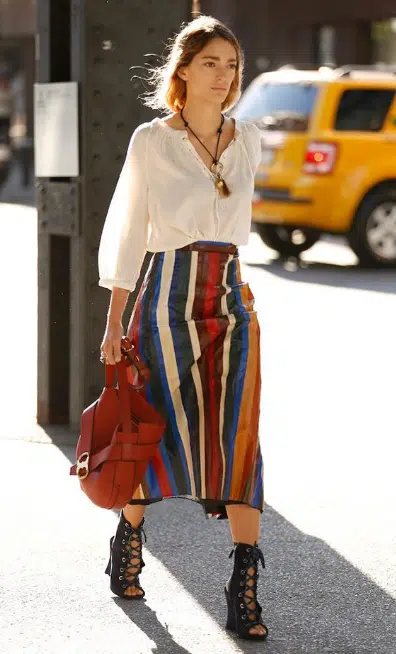
Striped Midi Skirt with Neutral Top
Vertical stripes on a midi skirt create length and movement while the loose white blouse keeps the focus on the print below. The mixed stripe widths add visual interest without being overwhelming, and the mid-calf length hits at the most flattering point for most leg shapes. The neutral top ensures the striped bottom remains the star.
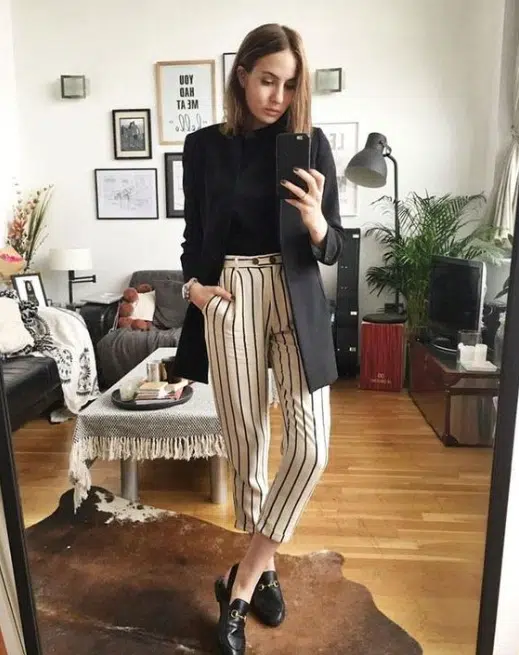
Pinstripe Wide-Leg Trousers
Classic pinstripes get a modern update in wide-leg silhouette, paired with a simple black turtleneck. The high waist and wide leg create an elongating effect, while the subtle stripe keeps things professional yet interesting. This combination works for any body type and translates seamlessly from office to weekend.
Mixed Pattern Statement Trousers
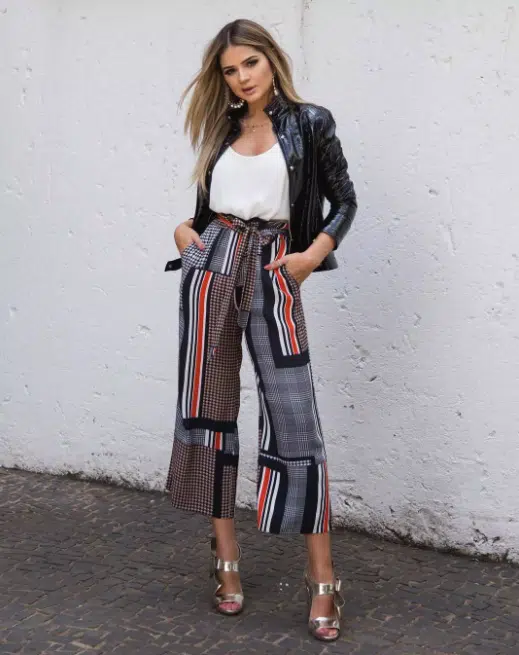
These patchwork-style trousers combine multiple geometric prints in a coordinated color palette — the key to making busy patterns work. The cropped length and paper-bag waist modernize the look, while the simple white top lets the trousers be the focal point. Best suited for confident print-lovers who aren’t afraid to make a statement.
Quick tip
Choose cropped wide-leg pants if you’re petite to avoid being overwhelmed by volume.
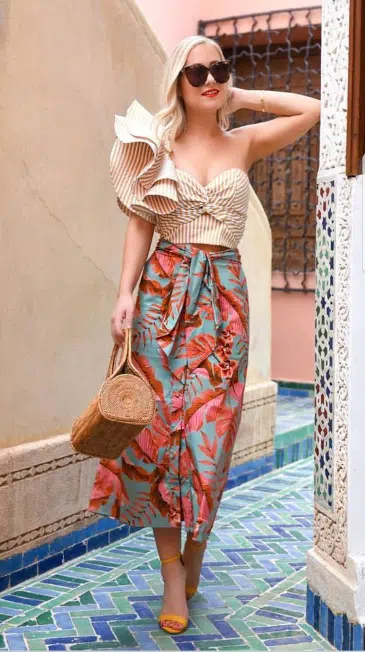
Striped One-Shoulder Top with Printed Skirt
Successfully mixing two different patterns requires a common color thread — here, the coral tones tie everything together. The asymmetrical neckline adds modern appeal while the midi length keeps it appropriate for various occasions. This advanced styling technique works when both prints share at least one color in common.
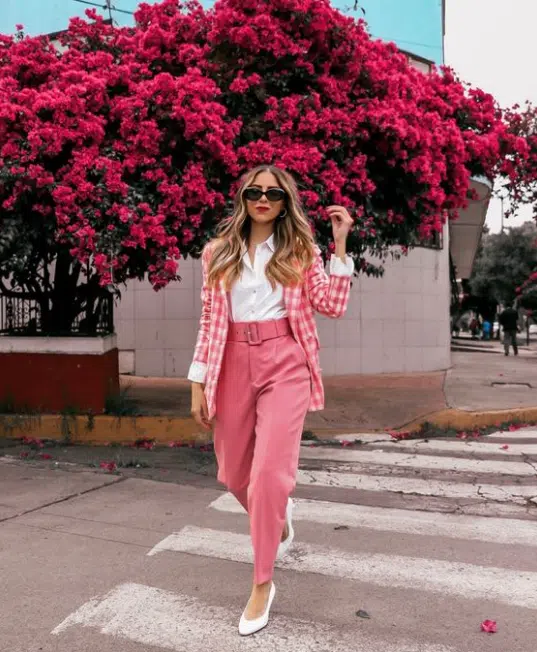
Tonal Pink Gingham Suit
A monochrome approach to gingham feels sophisticated and modern, especially in this soft pink tone. The blazer and trouser combination creates a cohesive look that works for both professional and social settings. The tonal approach makes gingham feel grown-up rather than juvenile — perfect for women who want pattern with polish.
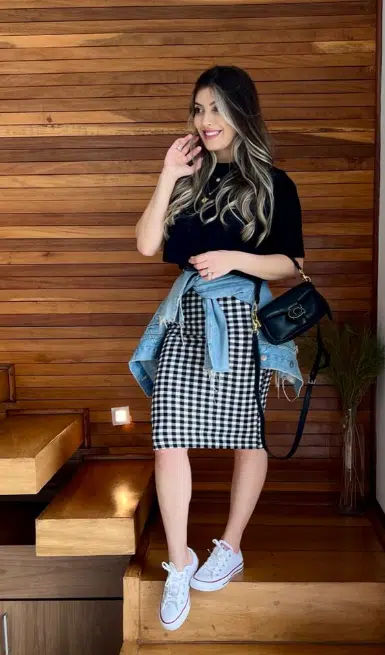
Gingham Pencil Skirt with Denim Jacket
The classic black and white gingham pencil skirt gets a casual twist with an oversized denim jacket. This combination shows how mixing textures and styles can make traditional prints feel current and wearable. The fitted skirt balances the loose jacket proportions, creating a look that works for weekend brunches or casual Fridays.
Quick tip
Add a wide belt over dresses to break up busy geometric patterns.
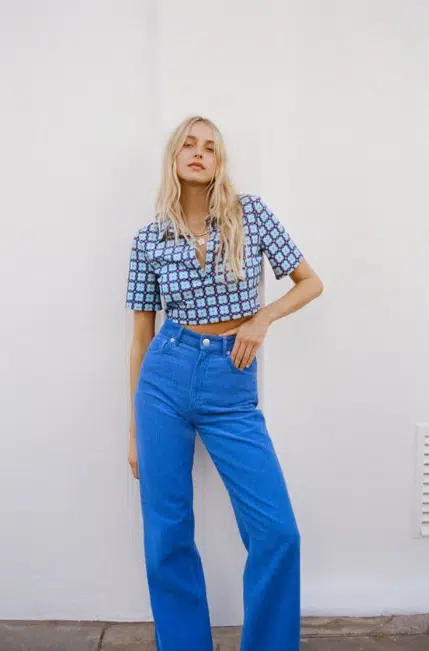
Blue Circle Print Shirt with Wide-Leg Jeans
A geometric circle-print shirt tucked into electric blue wide-leg jeans creates a retro-modern combination that’s surprisingly wearable. The key is keeping the proportions balanced — the fitted shirt prevents the wide jeans from overwhelming your frame. This works especially well on taller women who can carry the volume, but petites should choose a cropped wide-leg style instead.
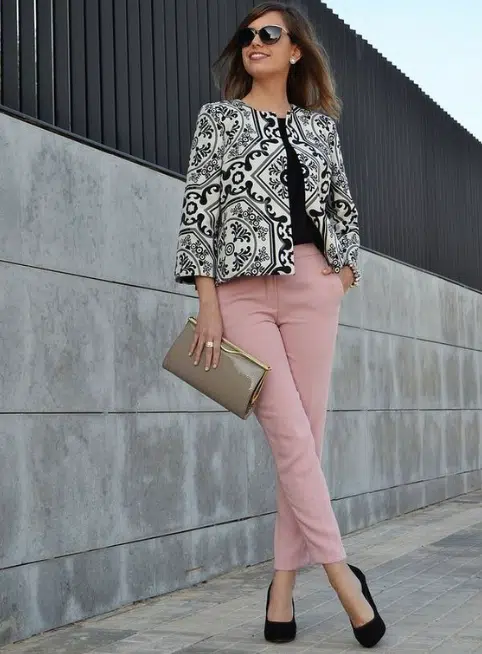
Black and White Paisley Blazer with Blush Pants
This paisley blazer proves that geometric prints extend beyond basic stripes and dots — the swirling pattern creates movement while staying professionally appropriate. Pairing it with soft blush pink pants rather than black creates an unexpected color story that’s more interesting than the obvious choice. The cropped pant length keeps the look modern and prevents the ornate blazer from appearing too formal.
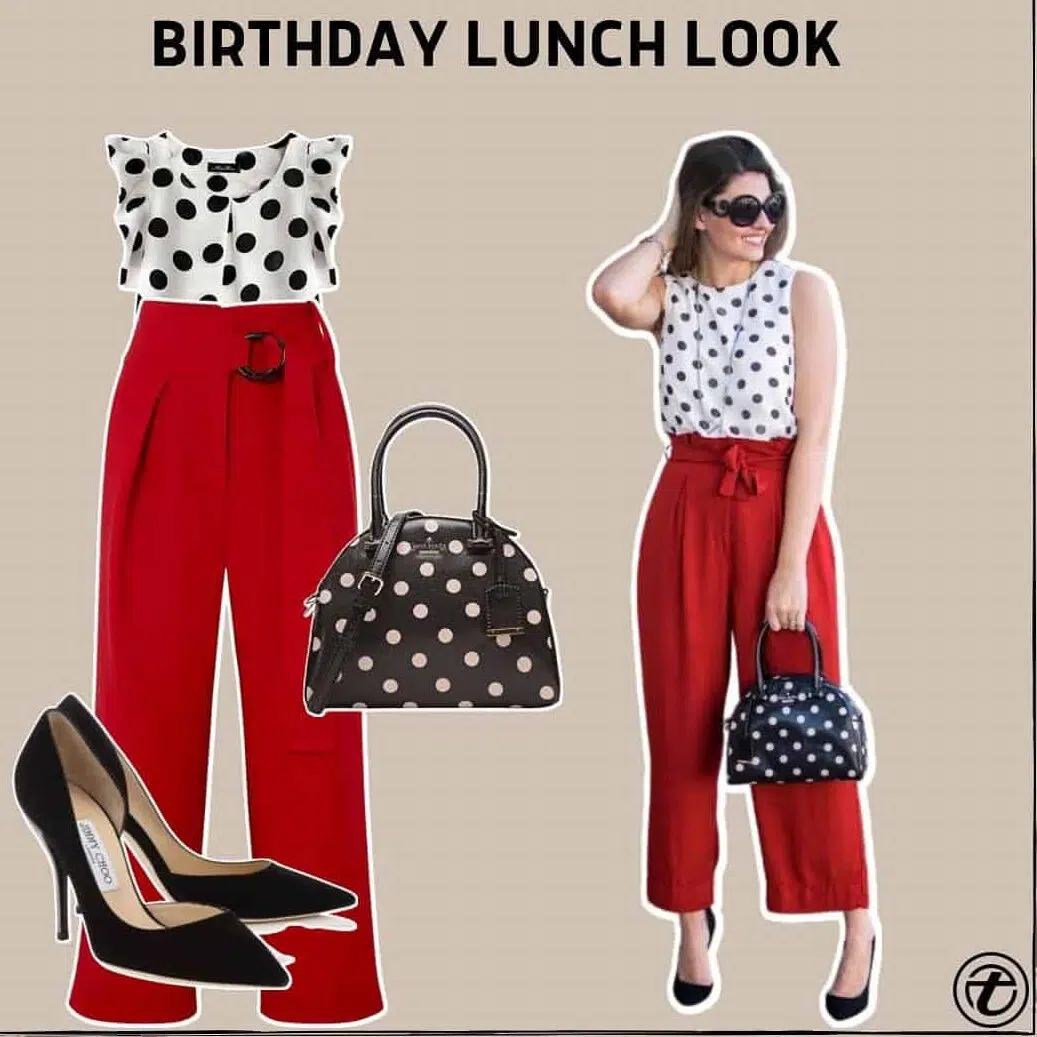
Polka Dot Birthday Lunch Ensemble
Classic polka dots get a contemporary update when you separate the pattern across different pieces rather than wearing one polka dot dress. The white dotted top with red wide-leg pants creates visual interest while the matching polka dot bag ties the look together without being matchy-matchy. This approach lets you wear bold patterns without looking costume-like — perfect for special occasions that call for something playful but polished.
Quick tip
Layer geometric prints over solid basics like white button-downs for balance.
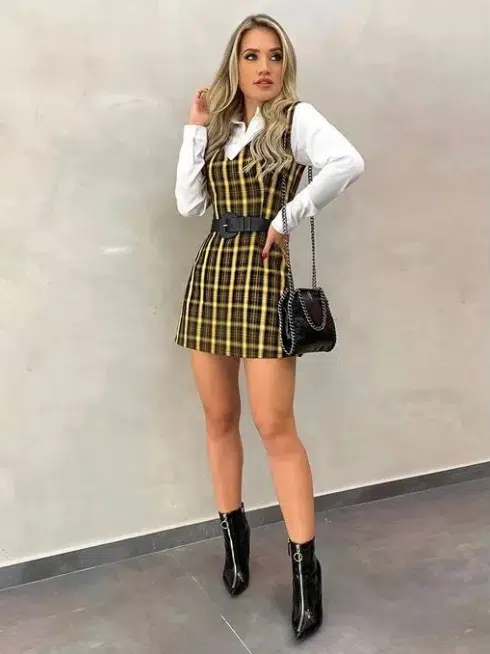
Plaid Pinafore Over White Button-Down
The pinafore dress layered over a crisp white shirt channels school uniform vibes in the best possible way. The yellow and black plaid creates a graphic geometric pattern that’s softened by the feminine silhouette and longer sleeves underneath. Adding ankle boots instead of flats gives this potentially sweet look an edge that prevents it from reading too young.
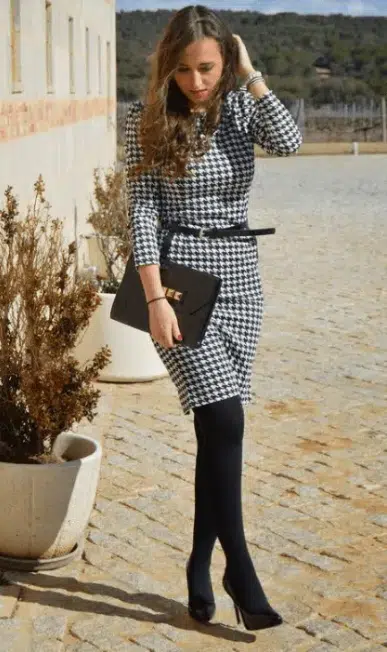
Houndstooth Dress with Statement Belt
Houndstooth is the most sophisticated geometric print, and this fitted dress shows exactly why it’s remained a classic for decades. The wide black belt at the waist breaks up the pattern and creates definition, preventing the busy print from overwhelming your silhouette. Black tights and boots ground the look, making it appropriate for cooler weather while maintaining the print’s timeless appeal.
Key takeaways
- Balance geometric prints with solid-colored bottoms to prevent pattern overload
- Use fitted pieces to anchor loose shapes when wearing bold prints
- Choose unexpected color combinations over obvious matches for more interesting outfits
- Break up busy patterns with strategic belting or layering to create visual breaks
- Separate geometric prints across multiple pieces rather than one statement dress for modern styling
- Ground bold patterns with neutral accessories to keep the focus on the print
50 Best Printed Pant Outfit Ideas with Styling Tips
How to Dress Goth? 12 Outfit Ideas & Styling Tips
18 Salty Granola Outfit Ideas with Styling Tips
56 Grunge Outfit Ideas with Styling Tips
How to Wear Lace Pants? 18 Outfit Ideas with Styling Tips
17 Cute Leather Pants Outfit Ideas & Styling Tips
39 Lug Sole Boots Outfit Ideas & Styling Tips
Ballet Wrap Sweater Outfit Ideas & 22 Tips For Styling