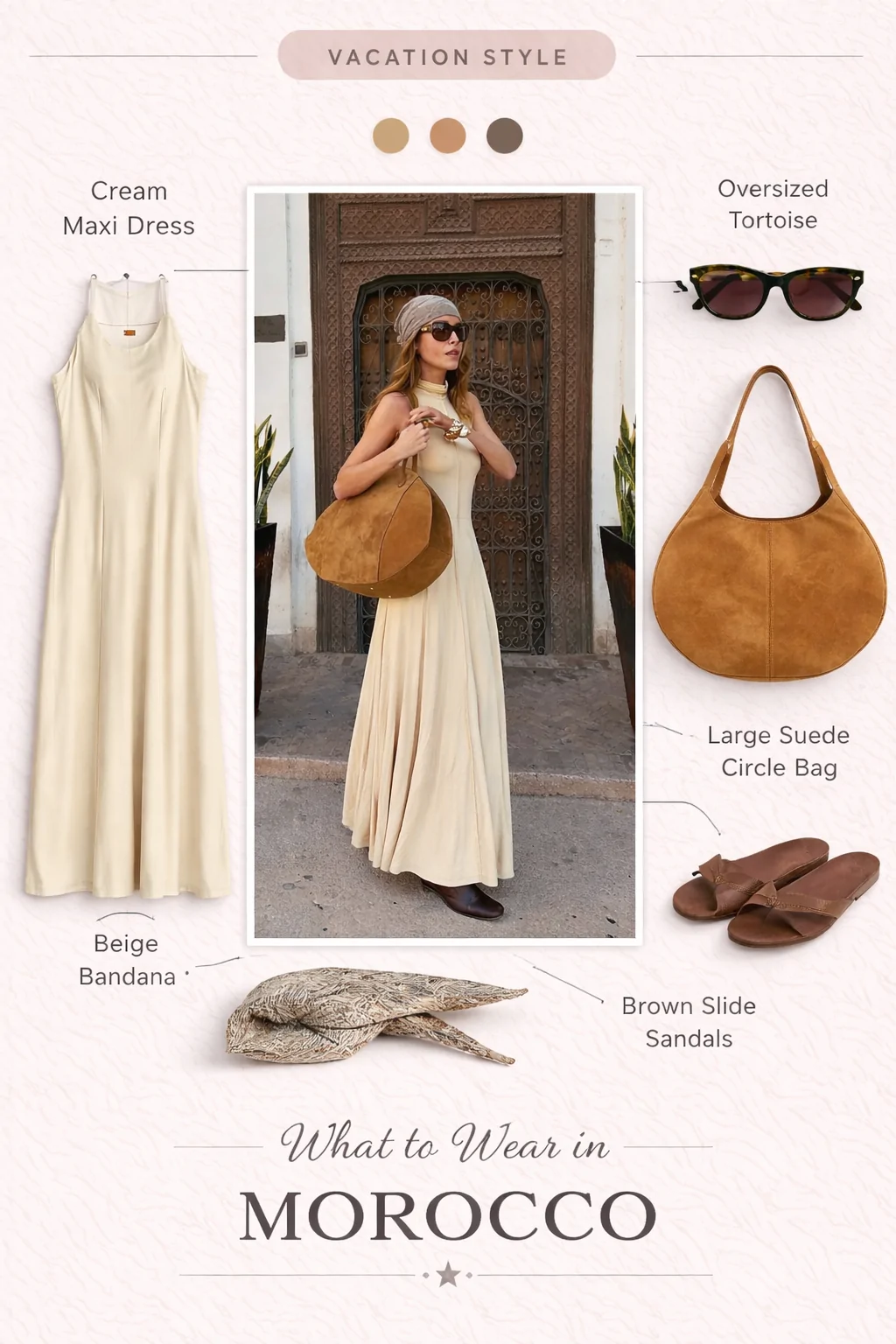
Morocco is one country where you can have the vibe of Middle east, Africa & Europe. Morocco isn’t just a destination — it’s a mood. One moment you’re walking through sunlit courtyards in Marrakesh, the next you’re climbing the cool blue alleys of Chefchaouen, and somewhere between the two you realise your outfit matters more than you expected. Not for fashion, but for comfort, culture, and confidence.
I learned this the practical way. On my first trip I packed like I was going to any sunny country — and spent half my days adjusting straps, peeling fabric off my back, or feeling out of place near a mosque. By my second visit, my suitcase looked completely different: more linen, longer hemlines, fewer “going out” pieces, and shoes I could actually walk on cobblestones in.
This guide is everything I wish I knew before that first flight — what to pack for each season, how to dress respectfully without sacrificing your style, and city-by-city outfit ideas that actually work in the streets, riads, and souks of Morocco.
Which Is the Best Season to Visit Morocco?
Morocco has four real seasons and each one demands a slightly different suitcase. Spring (March to May) and autumn (September to November) are the sweet spot — warm days, cool evenings, and the kind of light that makes every photo look filtered. This is when linen pants, midi dresses, and a light cardigan will get you through everything.
Summer (June to August) is hot — properly hot, especially inland in Marrakesh and Fes where temperatures regularly push past 38°C / 100°F. You’ll want airy cotton, loose silhouettes, and zero black if you can help it. Winter (December to February) is the surprise — chilly, sometimes wet, and genuinely cold in the mountains. Chefchaouen in January needs a puffer jacket, not a cover-up.

How to Wear Saree Tutorial with Step By Step Guide
What To Wear At The Races – 20 Dress Code Guide & Tips
How To Wear Black And Navy Together? 20 Ways To Style Them
New Year’s Eve Outfits : Party Wear, Casual Styles & Tips

46 Tips on How to Wear Plunging Necklines like a Style Queen

What To Wear In London in Winters Complete Packing List&Guide
What to Wear in Scotland: 22 Outfit Ideas with Packing Tips
What to Wear to the Full Moon Party? 18 Outfit Ideas
Packing List Tips by Season
Spring & Fall
Pack layers you can shed and re-add through the day. Mornings can start at 14°C and afternoons hit 26°C. Lightweight long-sleeve tops, a denim or canvas jacket, linen trousers, one maxi dress, and a scarf you can throw over your shoulders or head when needed. Closed-toe sneakers handle medina cobblestones better than sandals during these months.
Summer
Think breathable, loose, and light-coloured. Cotton, linen, and viscose blends — never polyester. A wide-brim hat is non-negotiable, sunglasses with proper UV protection, and a refillable water bottle. Sleeveless tops are fine in resorts and most cities, but always carry a thin scarf or shawl in your bag for mosque visits and conservative neighbourhoods.
Winter
Layer like you’re going to a European city, not a beach. A warm jacket or puffer, jeans or trousers, ankle boots, sweaters, and a beanie if you’re heading north or to the Atlas Mountains. Riads can be surprisingly cold at night because the buildings are designed to stay cool — pack thermal layers for sleeping if you’re a cold person.
Cultural Sensitivity in Morocco
Morocco is a Muslim-majority country, and while it’s far more relaxed than many of its neighbours, dressing with cultural awareness will genuinely change how you’re treated as a visitor. The unwritten rule I follow: cover shoulders and knees in public, especially in older medinas, smaller towns, and anywhere near a mosque. You’ll see local women in everything from full hijab to jeans and t-shirts, but as a visitor, leaning slightly more covered is the kind move.
Inside resorts and beach towns like Essaouira and Agadir, swimwear and lighter clothing are completely fine. In rural areas, mountain villages, and traditional neighbourhoods, longer sleeves and pants are appreciated. Mosques generally don’t allow non-Muslim visitors (Hassan II in Casablanca is a famous exception), but if you do enter one, you’ll need to remove your shoes and cover your head.
The traditional kaftan you see in shop windows isn’t just souvenir clothing — Moroccan women wear them for weddings, religious holidays, and family events. If you’re invited to one, dressing in a kaftan or modest long dress is considered respectful, not appropriative.
Top Cities to Visit in Morocco
Most travellers stick to the famous four — Marrakesh, Fes, Casablanca, and Chefchaouen — but Morocco rewards you for going deeper. Rabat is the calm, elegant capital. Tangier has European edge thanks to its port history. Meknes feels like a smaller, less touristy Fes, and Essaouira is the breezy Atlantic beach town where everyone slows down. Each one has a different climate, mood, and dress code, which is exactly why your packing strategy needs to flex.
Fes
Fes is the most traditional of the imperial cities — the medina is a UNESCO site, the workshops are centuries old, and the atmosphere is conservative compared to Marrakesh. The dress code here is respectful, modest, and earthy. Think long lines, neutral colours, and shoes you can actually walk on slippery medina stones in.
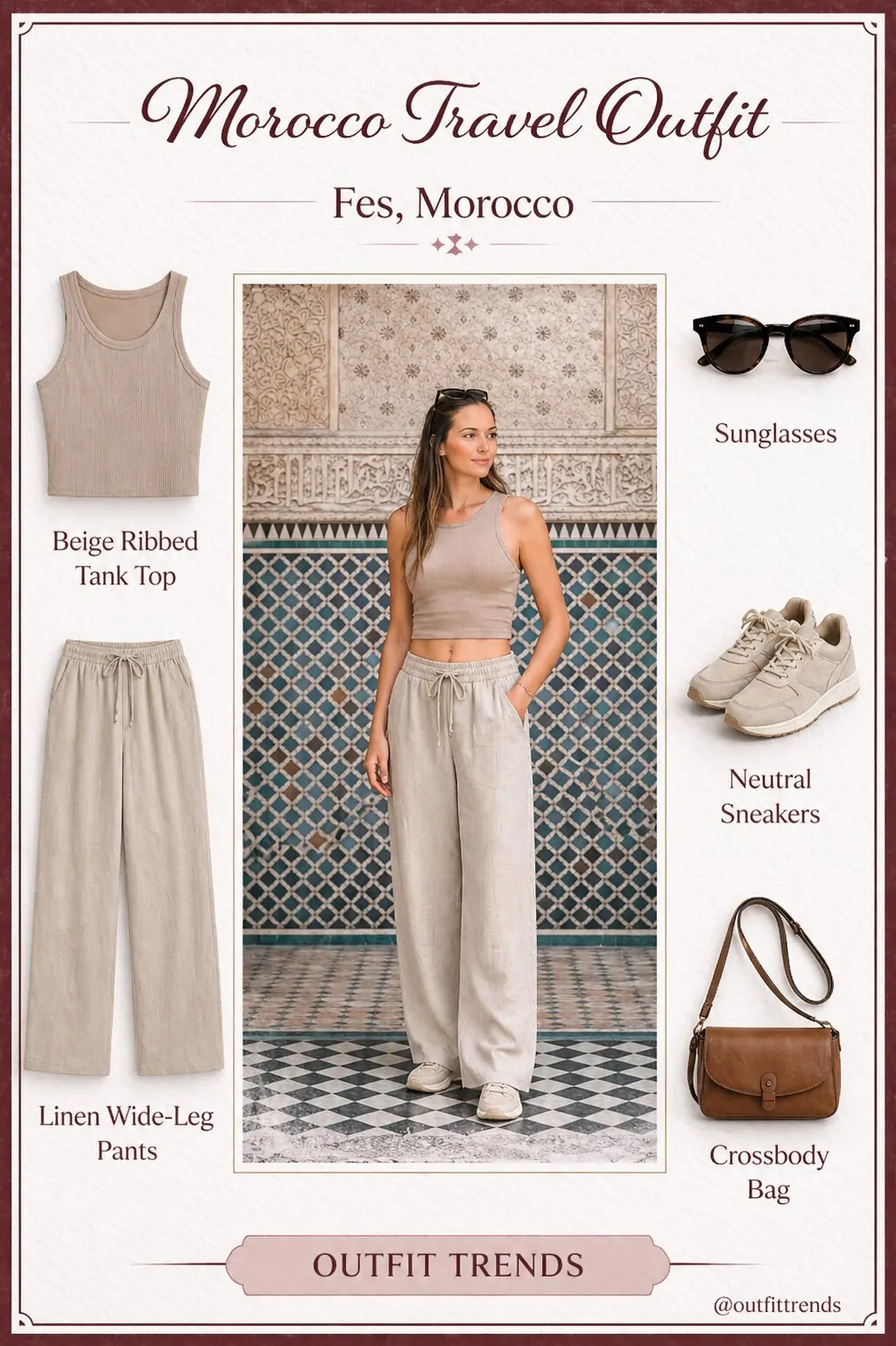
Linen Wide-Leg Pants with a Fitted Tank
For a more understated approach to exploring Fes, this neutral outfit offers timeless elegance and versatility. The soft beige tones create a sophisticated canvas that works beautifully against the ornate tilework and carved details of Moroccan architecture. This minimalist aesthetic is perfect for those who prefer a more contemporary vibe while still honoring the destination’s cultural charm. The relaxed linen wide-leg pants and ribbed tank top provide comfort and breathability, essential for long days of sightseeing. Pair with neutral sneakers for a modern touch and add a crossbody bag for hands-free convenience as you navigate the medina’s winding streets.
Key Pieces:
Crossbody Bag
Beige Ribbed Tank Top
Linen Wide-Leg Pants
Sunglasses
Neutral Sneakers
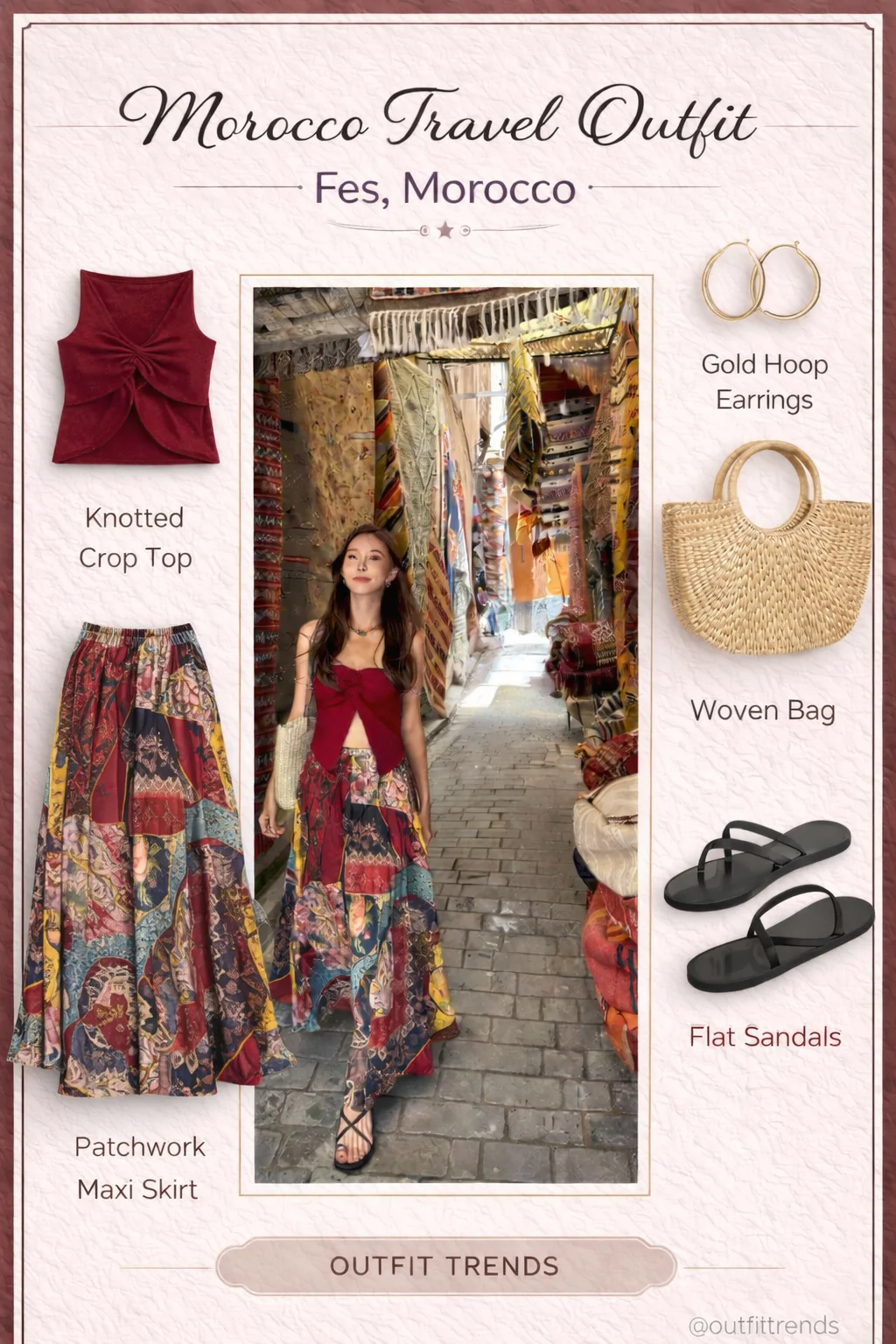
Crop Top with Skirt
This outfit is perfect for exploring Fes. The burgundy crop top and colorful patchwork skirt match the vibrant markets. The colors are warm and earthy, just like the city. You can walk easily in flat sandals. The woven bag is great for carrying souvenirs from the souks.
What to Wear:
- Burgundy Knotted Crop Top
- Patchwork Maxi Skirt
- Gold Hoop Earrings
- Woven Bag
- Flat Sandals
In Fes, choose two neutral pant options and three different tops — that’s six outfits from five pieces, all medina-appropriate.
Marrakesh
Marrakesh is where Morocco’s cosmopolitan side shows. You’ll see everything from European tourists in slip dresses to local women in modern kaftans, often within the same square. The dress code is genuinely flexible here — but the city rewards a more polished outfit than you’d wear in Fes.
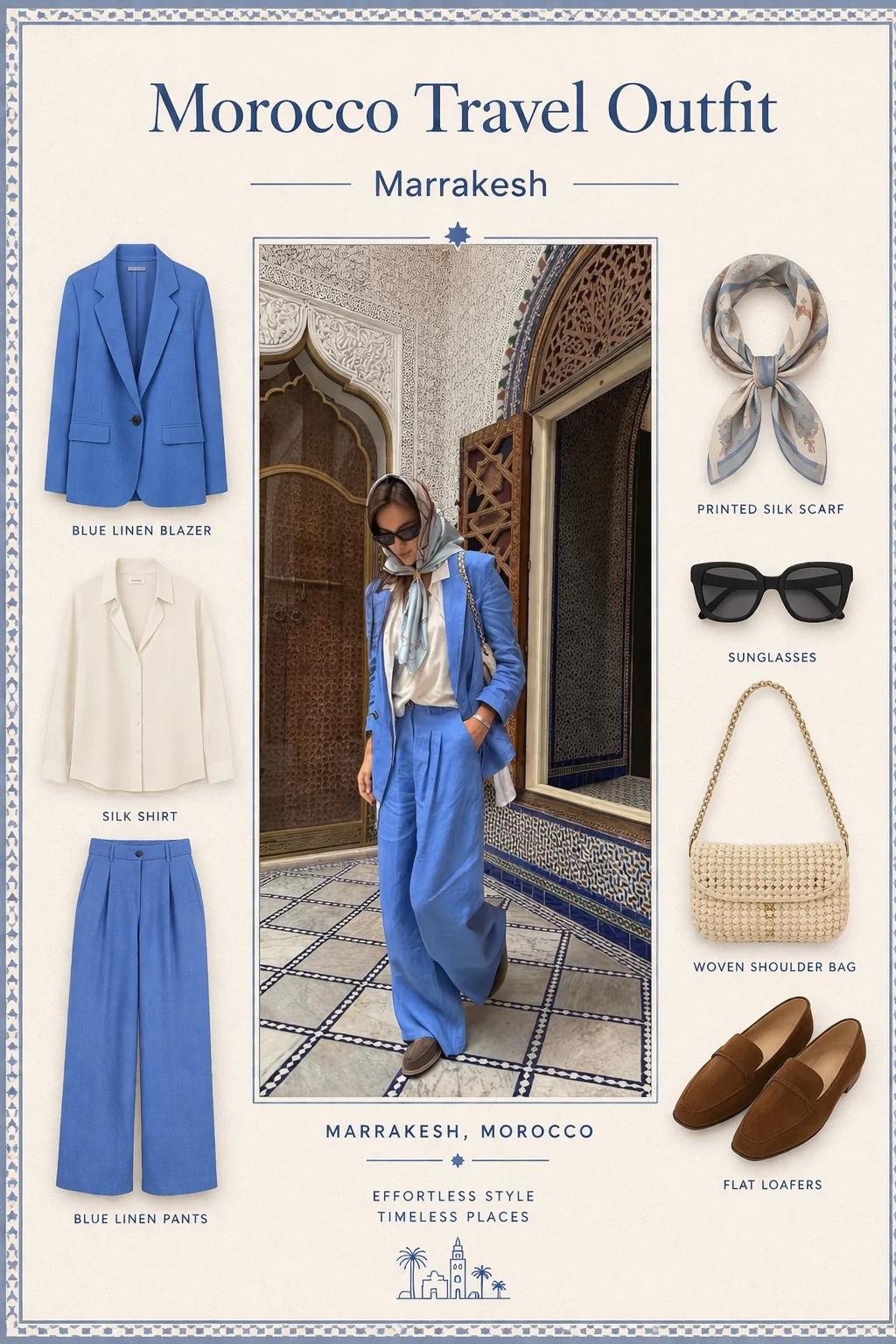
Blue
This striking blue ensemble makes a confident statement while maintaining respect for local customs. The coordinated blue linen blazer, matching pants, and cream silk shirt create a cohesive, refined aesthetic perfect for exploring the iconic Bahia Palace or enjoying tea in a traditional riad. The printed silk scarf adds an elegant touch and provides practical coverage when needed. Complete the look with loafers for comfortable yet chic walking, and a woven shoulder bag that complements the color palette beautifully.
What to Wear:
Flat Loafers
Blue Linen Blazer
Cream Silk Shirt
Blue Linen Pants
Printed Silk Scarf
Woven Shoulder Bag
Sunglasses
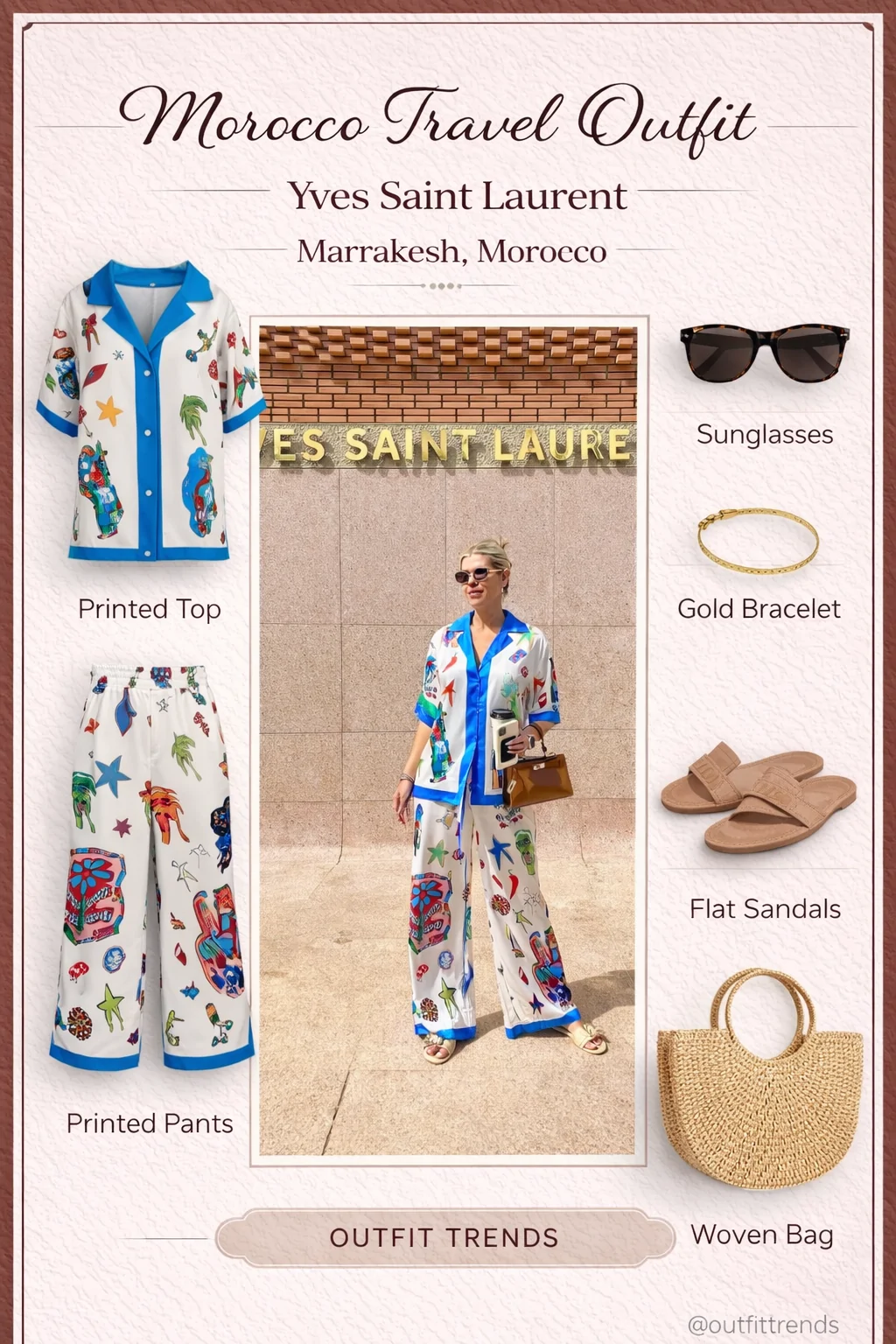
Printed Silk Co-Ord Set for Modern Marrakesh
For modern Marrakesh — the Yves Saint Laurent Museum, Le Jardin Majorelle, the Gueliz district — a bold printed silk co-ord set in white and cobalt blue hits the right note. Loose enough for the heat, structured enough to walk into a designer cafe, and unmistakably built for photos. Pair with simple flat sandals and a small leather mini bag to keep the print as the focal point.
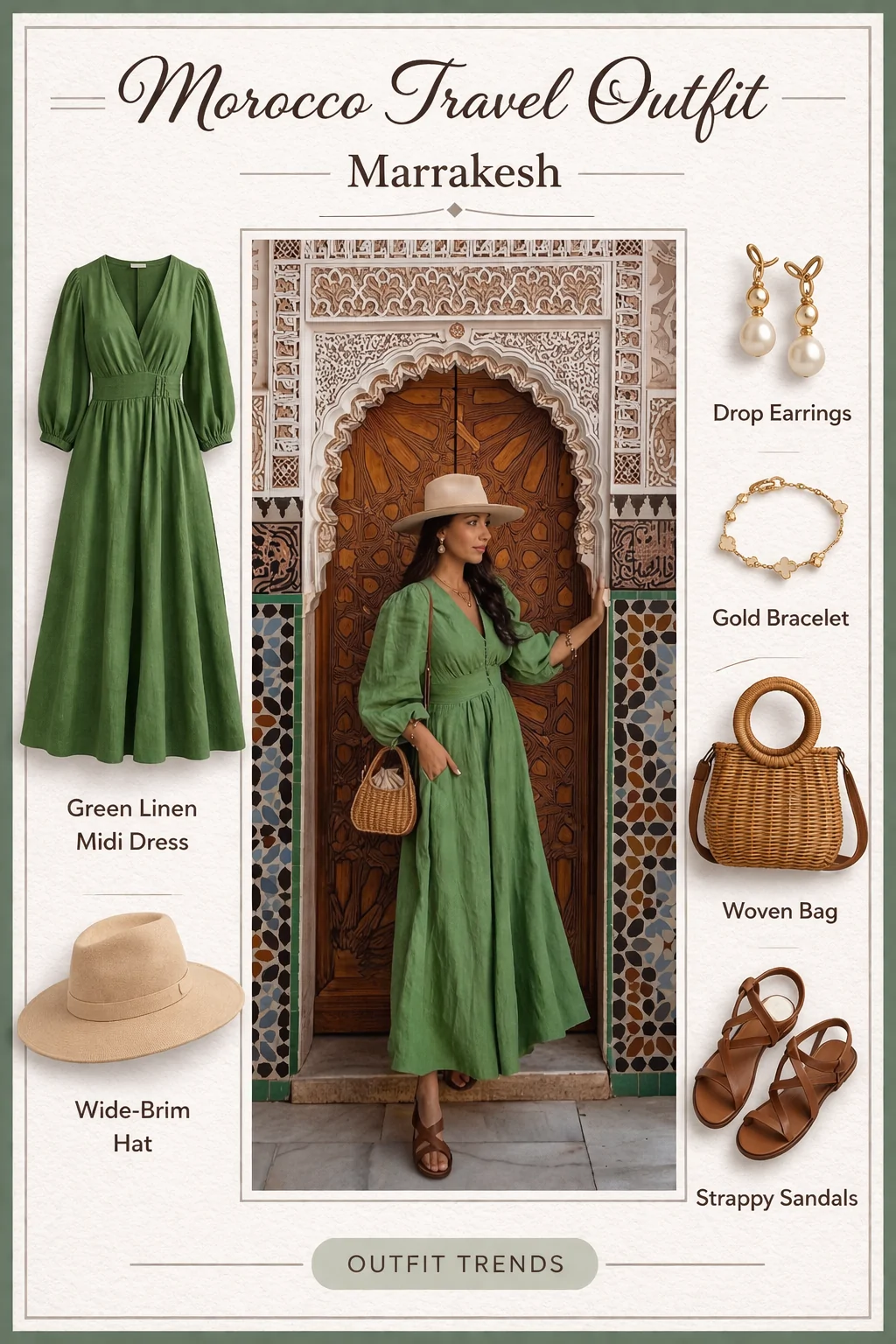
Green Linen Maxi with a Wide-Brim Hat
One of my most-photographed Marrakesh outfits was a sage green linen maxi with three-quarter puff sleeves and a cream wide-brim hat. The colour pops against the city’s terracotta and tile, the hat protects your face from the relentless midday sun, and the sleeves mean you can step inside any palace or mosque without scrambling for cover. Add a small woven basket bag and brown leather flat sandals.
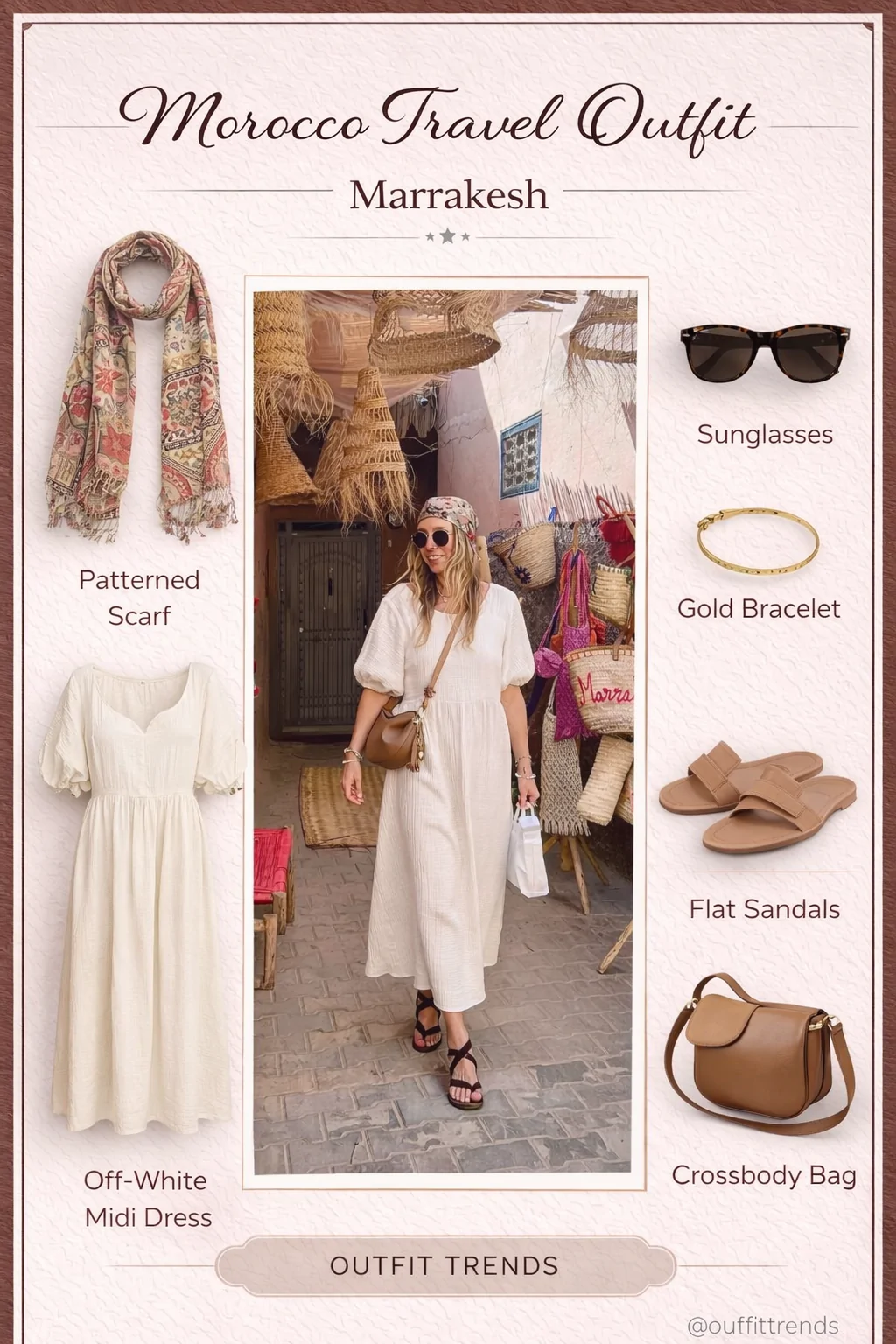
Day Time Sight Seeing – Midi Dress
This outfit is perfect for exploring the souks and medina. The off-white midi dress is light and breezy. It keeps you cool in the hot weather. The dress has a simple, elegant style that works for any time of day.
The patterned scarf adds personality and color to your look. You can wear it around your neck or wrap it over your head for sun protection. The scarf shows respect for local culture. Flat sandals are comfortable for walking through narrow streets and busy markets. They are easy to slip on and off when visiting shops.
The brown crossbody bag is practical and stylish. It keeps your hands free while you explore. The gold bracelet adds a nice touch of jewelry without being too much. Sunglasses protect your eyes from the bright Moroccan sun. They also give you a polished, put-together look.
This outfit works well for daytime sightseeing in Marrakesh. The neutral colors let you blend in with the local style. You will stay comfortable in the heat while looking respectful and fashionable. The earthy tones match the city’s warm, rustic aesthetic perfectly.
What to Wear:
- Off-White Midi Dress
- Patterned Scarf
- Flat Sandals
- Sunglasses
- Gold Bracelet
- Crossbody Bag
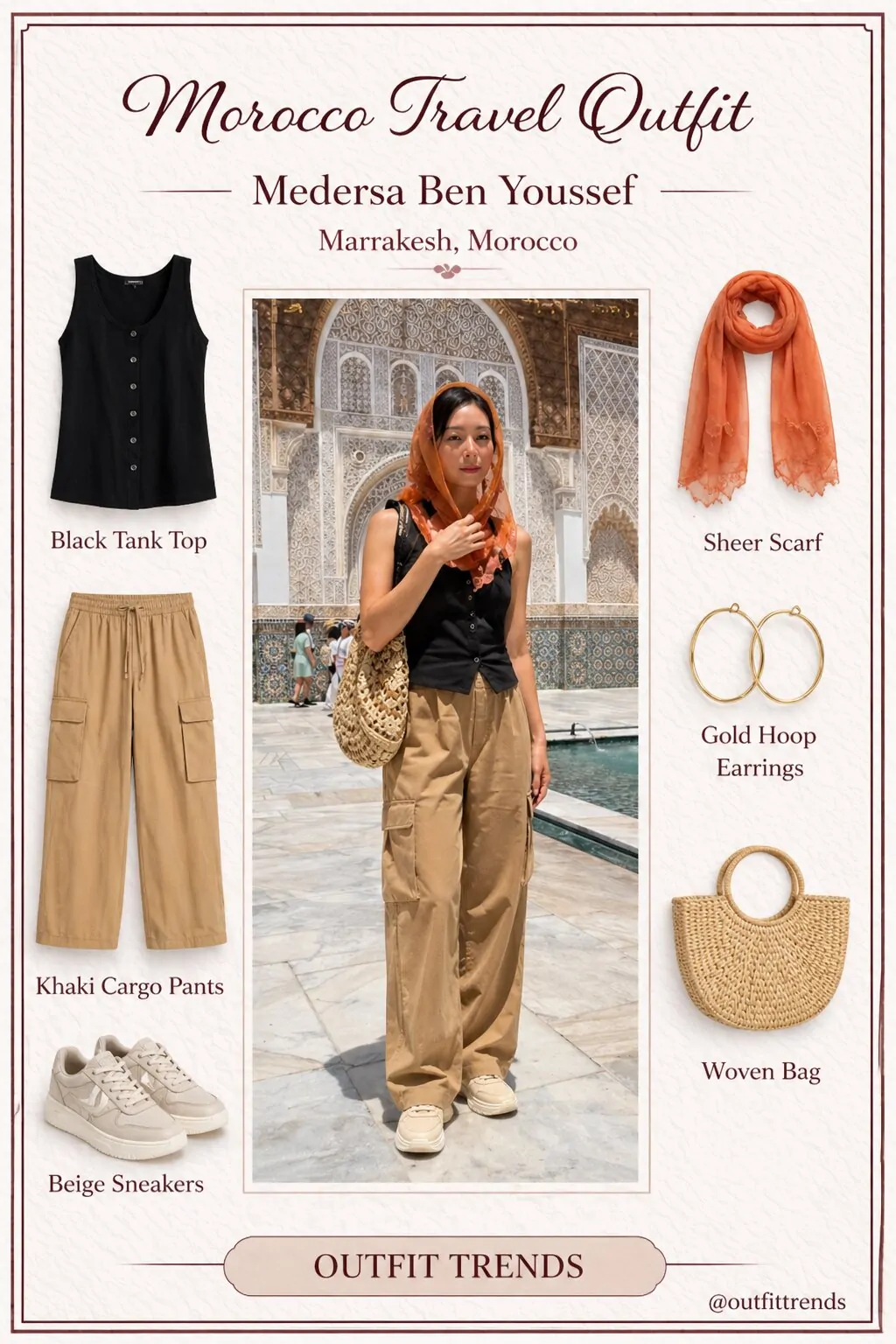
Medersa Ben Youssef, Marrakesh, Morocco
Medersa Ben Youssef is one of Marrakesh’s most beautiful sites. It is an old Islamic school with stunning architecture. You need to dress respectfully here. This outfit balances style with cultural respect.
The black tank top is simple and modest. The khaki cargo pants are comfortable and practical. Together, they create a neutral, respectful look. The beige sneakers are easy for walking on marble floors. The sheer orange scarf adds color and personality. You can wrap it over your head or shoulders when needed.
This is a smart outfit for visiting religious or historic sites. The colors are warm and earthy, matching Marrakesh’s aesthetic. The woven bag is traditional and fits perfectly with the surroundings. Gold hoop earrings add a nice touch without being too much. Everything works together to show respect while looking put-together.
Medersa Ben Youssef is one of the most photographed places in Marrakesh. The white carved walls and blue tilework make beautiful backgrounds. This neutral outfit lets the architecture shine. You will look polished and respectful while exploring this incredible historic site.
What to Wear:
Woven Bag
Black Tank Top
Khaki Cargo Pants
Beige Sneakers
Sheer Orange Scarf
Gold Hoop Earrings
In Marrakesh, plan your outfits around the colours of your destinations — earth tones near the medina, brights near gardens, neutrals at the museums.
Rabat
Rabat is the capital, but it carries itself like a small city — calmer, more residential, more put-together. The dress code here leans casual but considered. Tourists are less common, so a low-key approach blends in better than statement vacation looks.
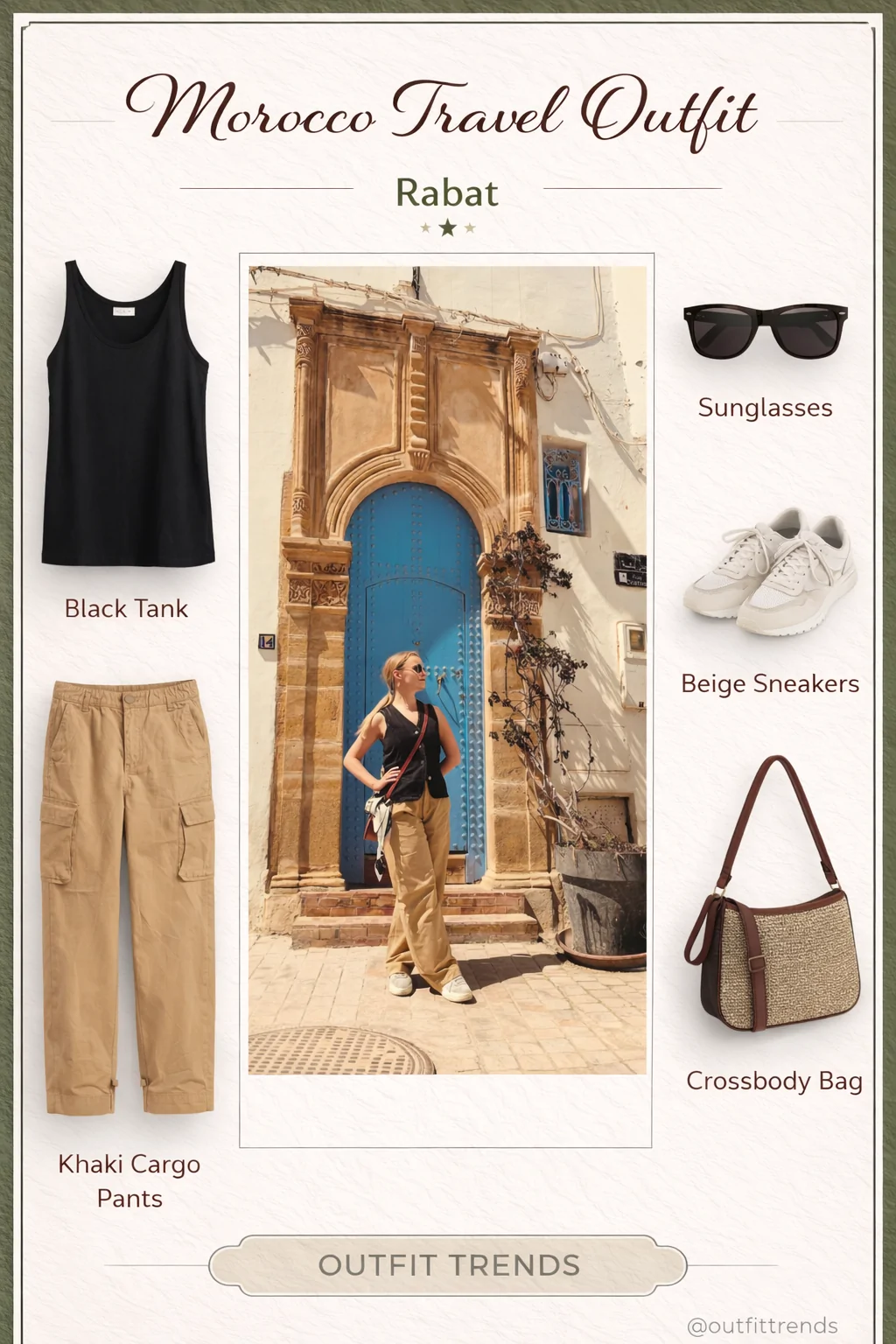
Black Tank with Khaki Cargo Pants
This is the Rabat sightseeing uniform. A black ribbed tank with relaxed khaki cargo trousers and beige sneakers — comfortable, modest enough for the medina, and put-together enough for the Kasbah des Oudayas. Add black sunglasses and a structured crossbody and you have a full day of walking covered without thinking about it.
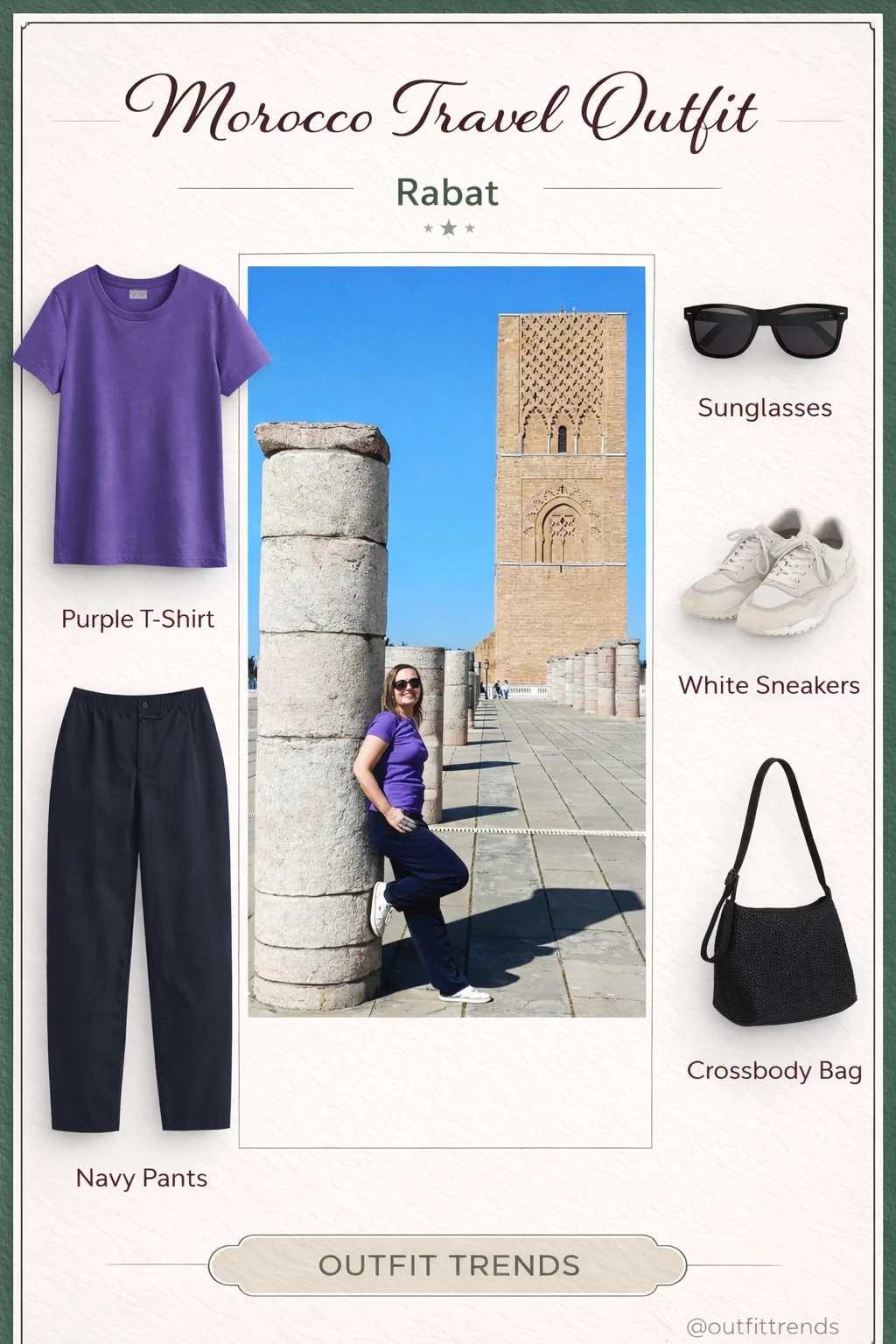
Purple Tee with Navy Trousers for the Hassan Tower
For visits to the Hassan Tower and Mohammed V Mausoleum, a simple purple cotton tee with relaxed navy trousers and white sneakers works perfectly. The colour adds personality without looking touristy, and the longer trouser length is appropriate for the religious site. A small black shoulder bag is all the accessorising this look needs.
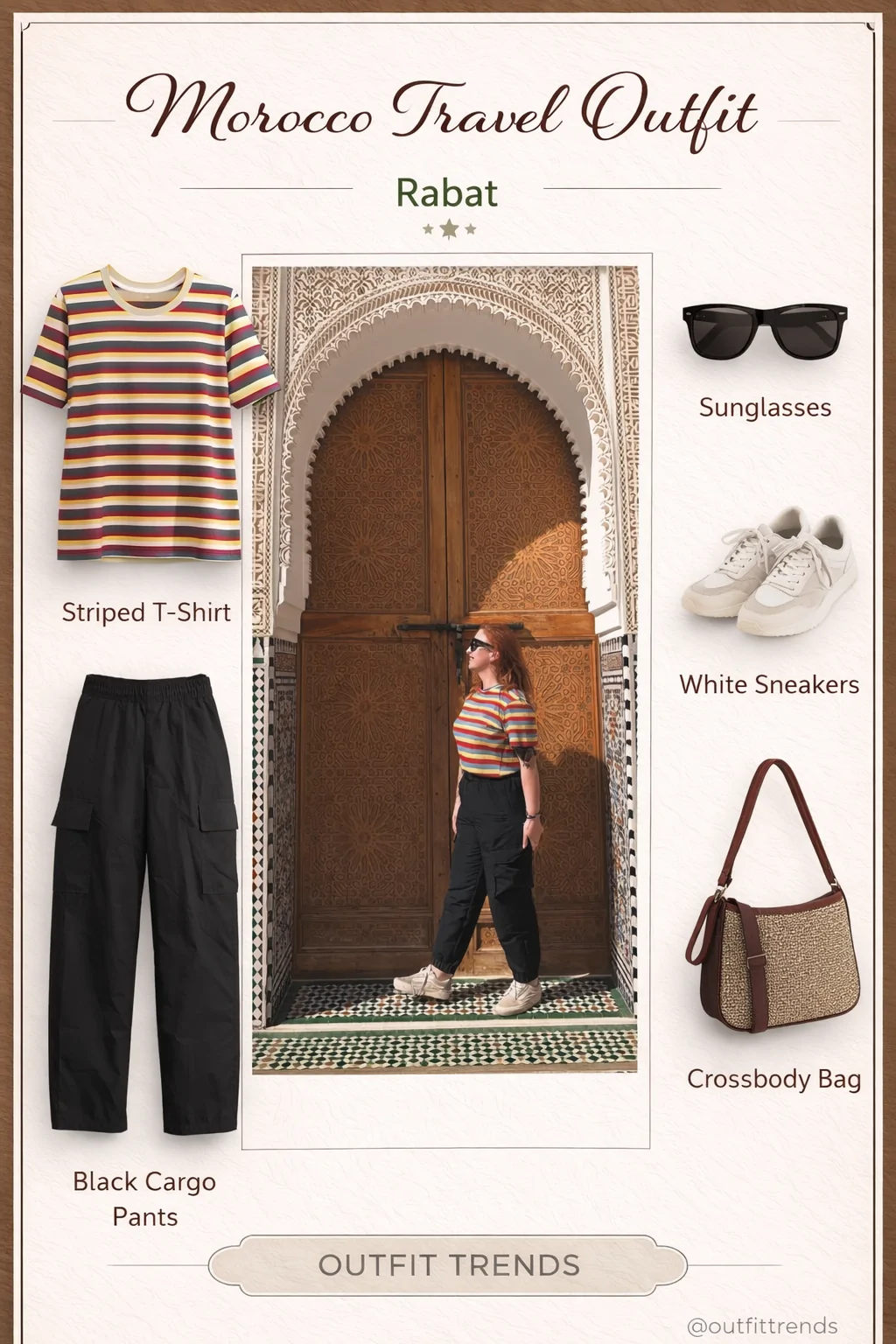
Stripe Tee Shirt with Black Cargo Pants
The striped t-shirt is fun and colorful. It shows personality without being too fancy. Black cargo pants are practical and easy to move in. They have pockets, which is great for carrying things while exploring.
This look works well for walking around the medina or visiting museums. The white sneakers are comfortable for all-day sightseeing. They are clean and simple, matching the casual vibe. Sunglasses protect your eyes from the bright sun. The crossbody bag keeps your hands free while you explore. You can easily move between shops, cafes, and historic sites.
Rabat has a laid-back feel compared to Marrakesh or Fes. People dress more casually here. This outfit fits perfectly with the city’s relaxed atmosphere. It is practical, comfortable, and still looks put-together. You will blend in with the locals while staying cool and mobile throughout the day.
What to Wear:
Crossbody Bag
Striped T-Shirt
Black Cargo Pants
White Sneakers
Sunglasses
Tangier
Tangier feels different from anywhere else in Morocco — it’s a port city with European, African, and Andalusian threads woven together. The dress code is the most relaxed of the major cities, and the air is cooler thanks to the Atlantic and the Strait of Gibraltar.
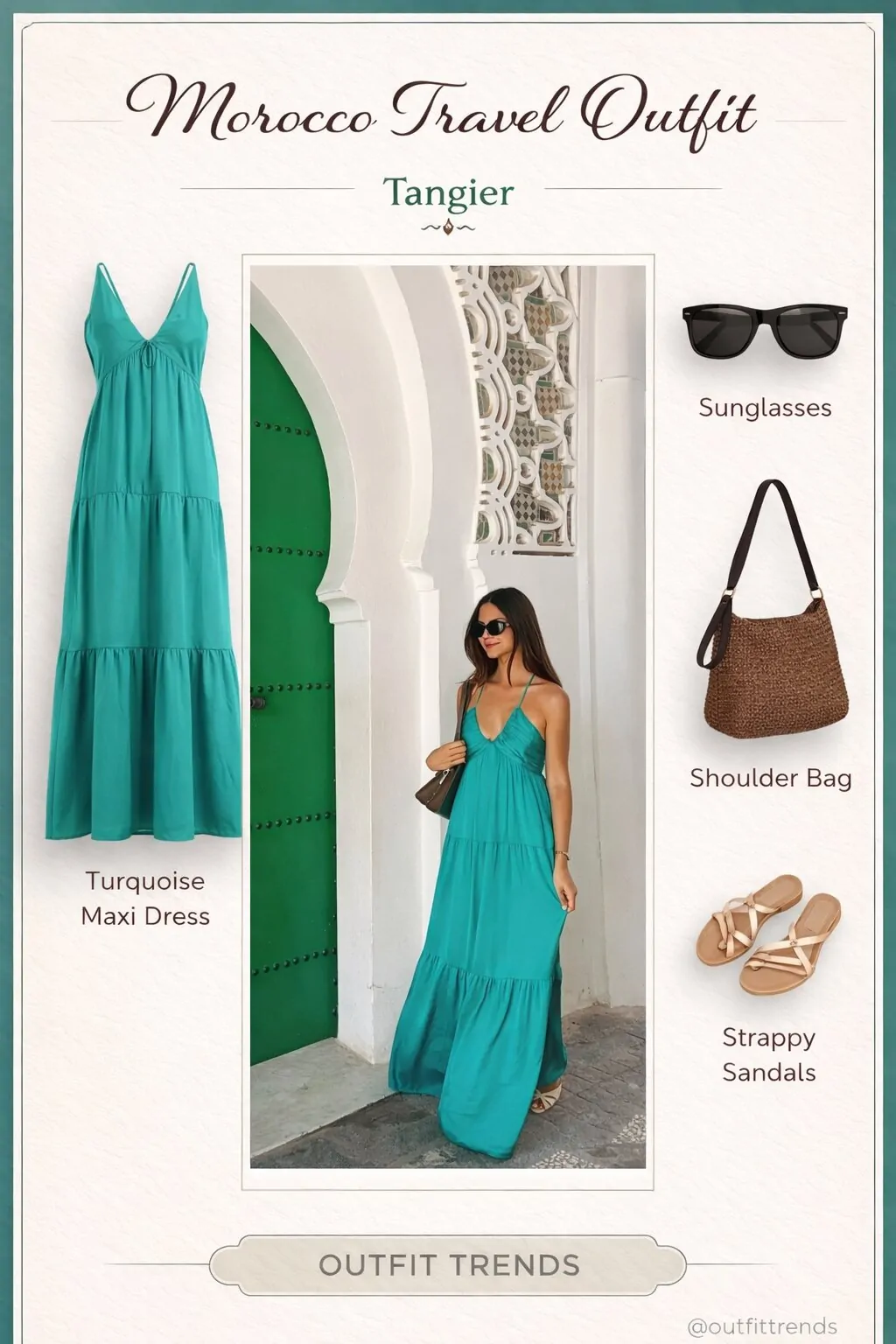
Teal Maxi Dress with Tiered Hem
A teal maxi dress with thin straps and a tiered tiered hem captures the breezy Tangier mood perfectly. Pair with a small brown leather shoulder bag and white slide sandals — done. The colour pops against the famous green and blue doors of the Kasbah, and the maxi length keeps things modest enough for the medina.
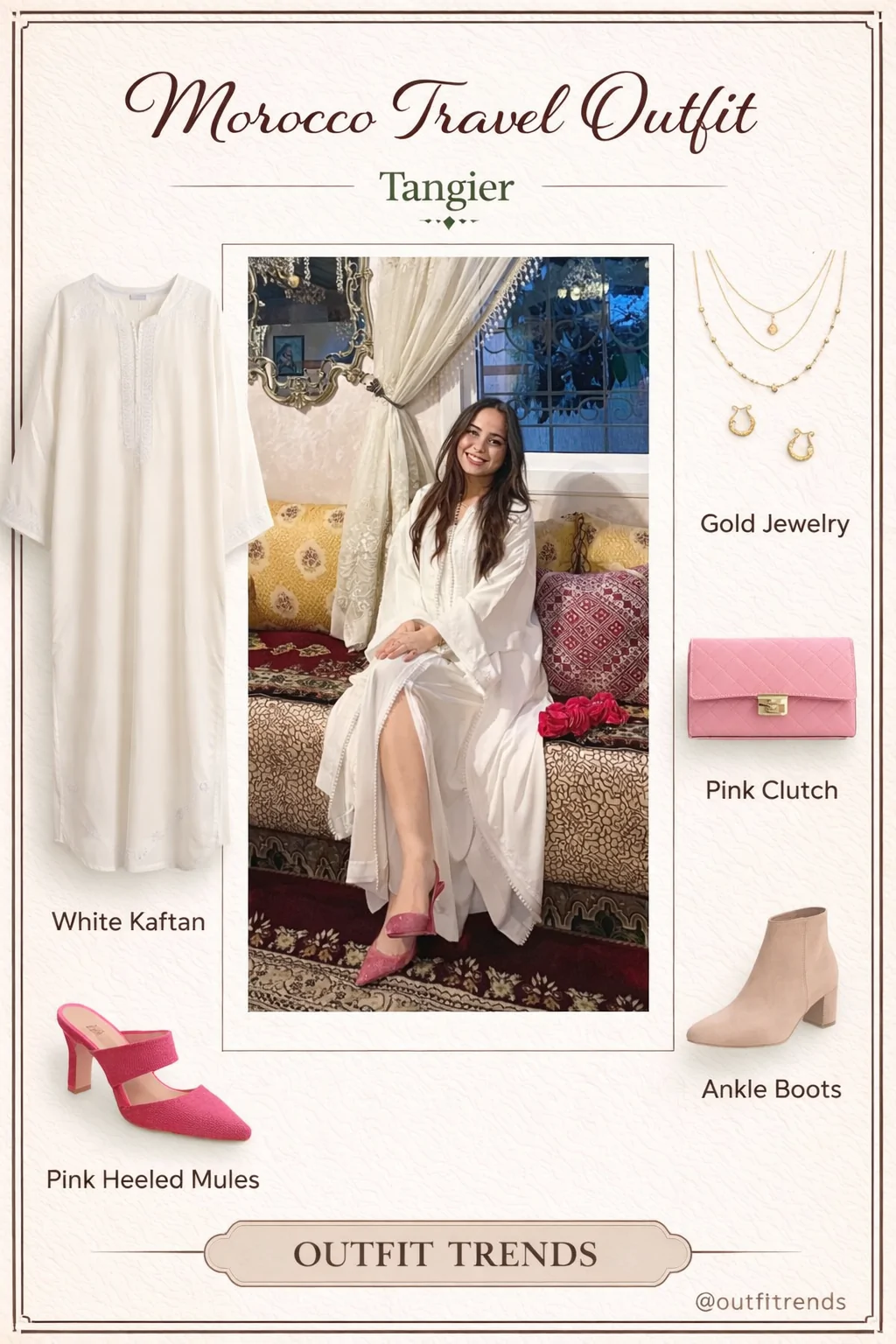
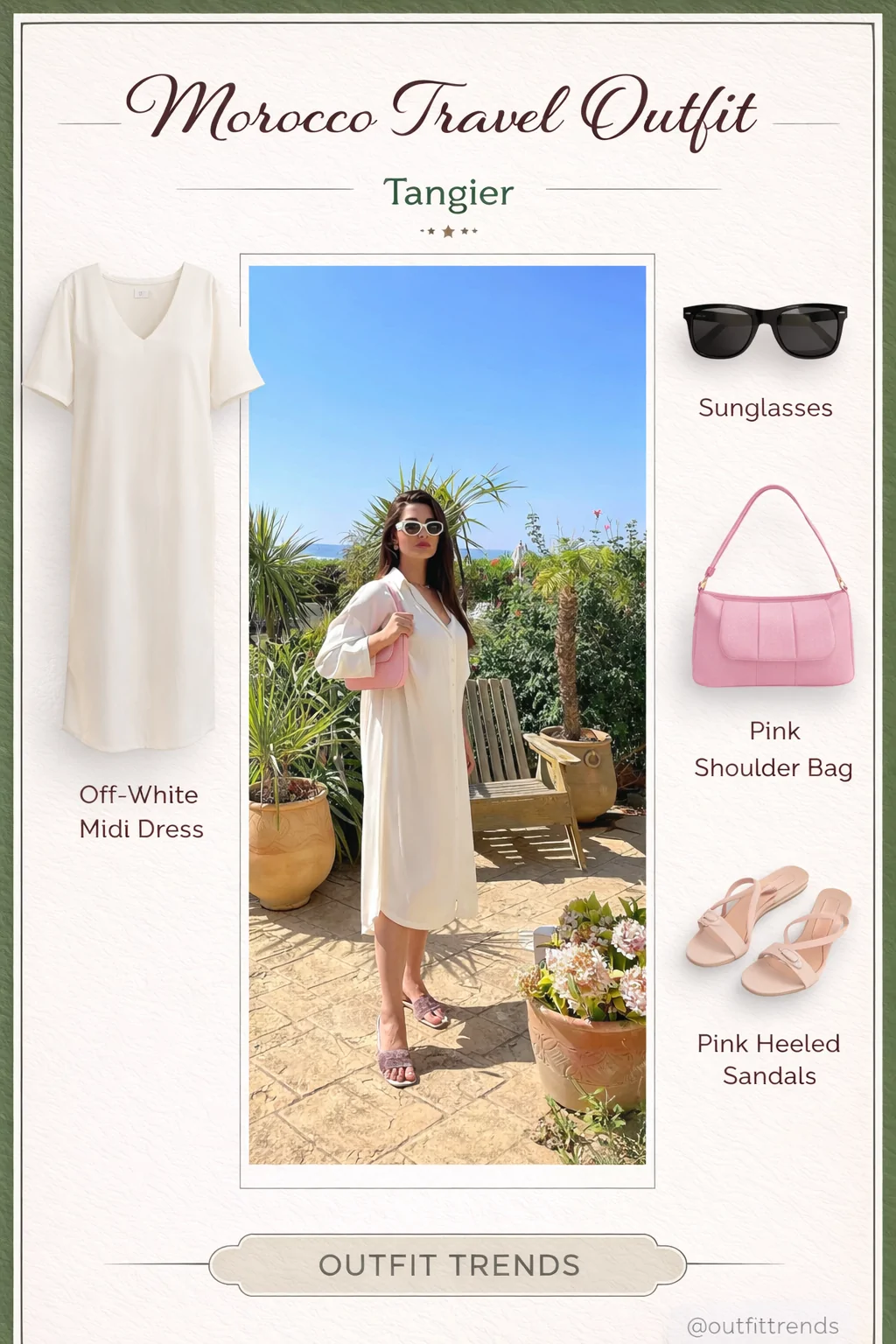
Off-White Kaftan Dress with a Pop of Pink
For garden lunches and terraces overlooking the sea, a simple off-white kaftan dress with a pink clutch and pink heeled sandals is the perfect Tangier daytime look. The neutral base lets the pink accessories carry the personality, and the lightweight fabric handles the coastal breeze beautifully without flying around dramatically.
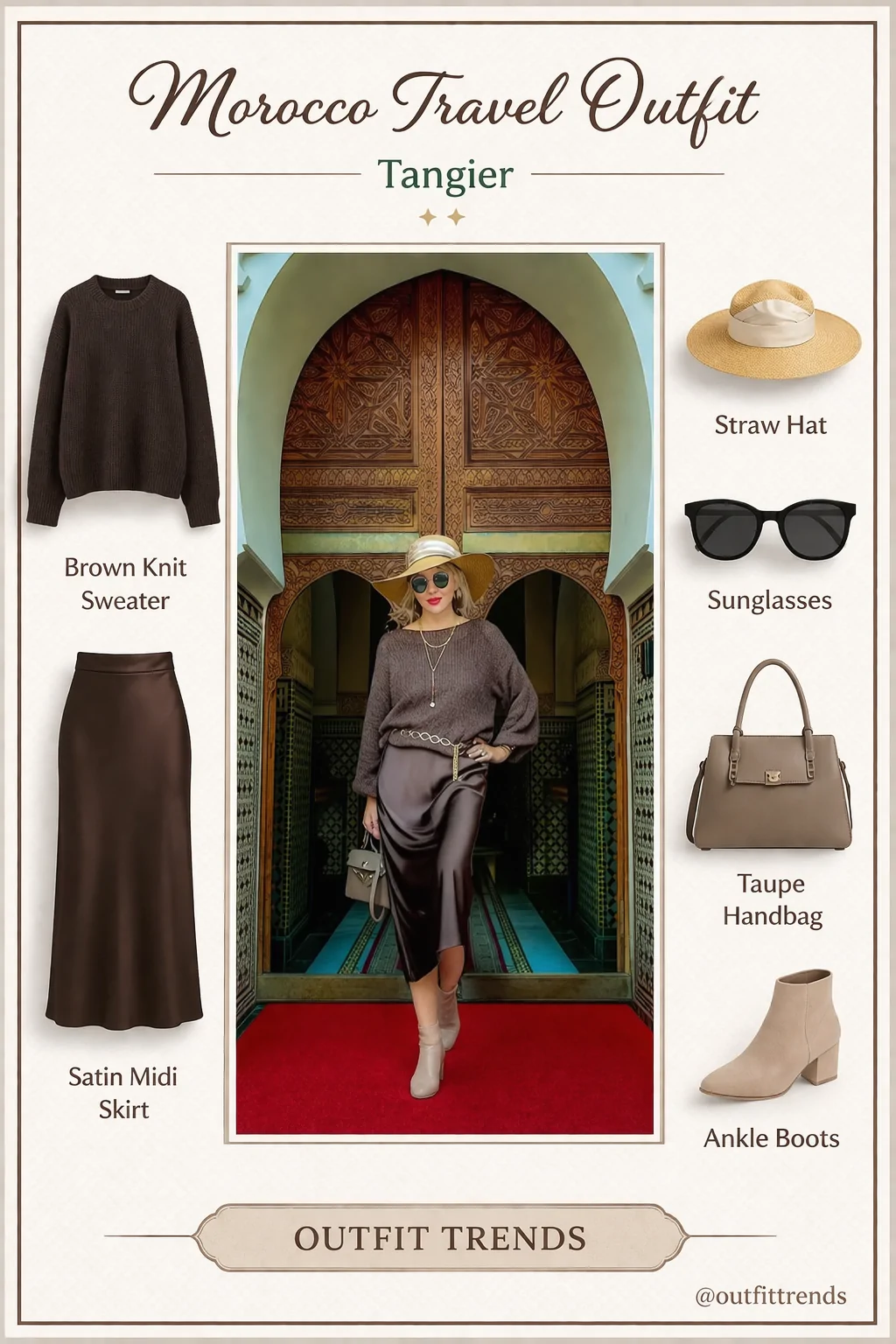
Brown Knit Sweater with Satin Midi Skirt
For evenings, especially in the cooler months, a chocolate brown knit sweater layered over a satin midi skirt with taupe ankle boots brings real elegance to dinner. A taupe handbag and a straw hat add quiet polish — this is one of those outfits that feels expensive without trying. Perfect for restaurants in the medina or a heritage riad dinner.
Middi Dress
This outfit is casual and relaxed. The white dress is light and breathable. It is perfect for warm days. The pink bag adds a nice color. Pink sandals with heels look feminine. This look is great for coffee shops and beaches.
What to Wear:
- Off-White Midi Dress
- Sunglasses
- Pink Shoulder Bag
- Pink Heeled Sandals
Tangier evenings get cooler than you’d expect — pack one warm layer per three days even in summer.
Casablanca
This is where you are going to land first most propably becasue of biggest Airport. From there usually tourist prefer to travel to other city and keep casablance as a last city to explore before taking flight back. Casablanca is Morocco’s modern, business-leaning city, and the dress code reflects that. People dress sharper here than in the medina-heavy cities. Think clean lines, tailored cuts, and a more European-influenced palette.
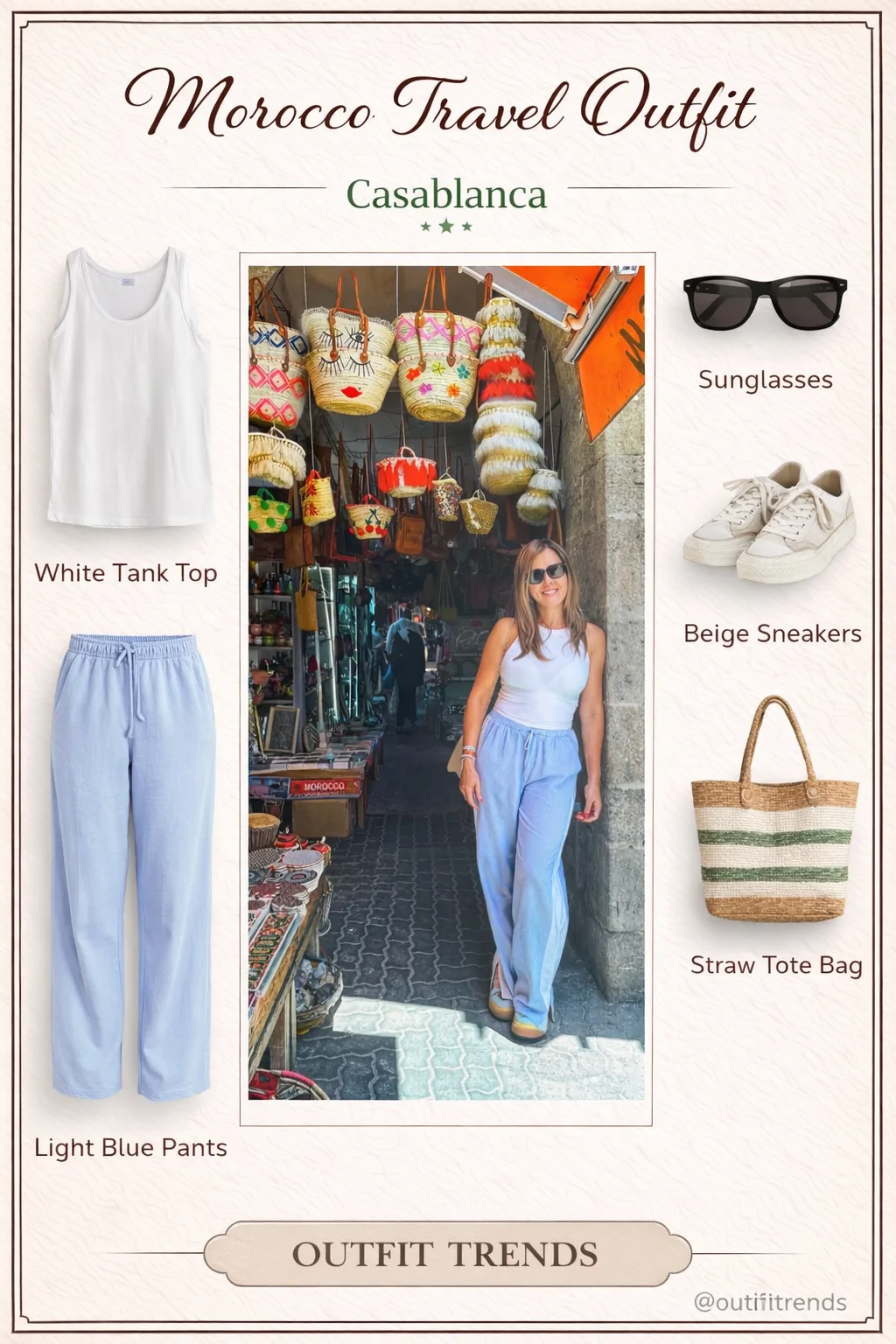
White Tank with Light Blue Linen Trousers
A white ribbed tank with light blue linen wide-leg trousers hits the Casablanca sweet spot — polished enough for a hotel lunch, breezy enough for an afternoon in the souk. Beige sneakers keep it walkable; a striped straw tote nods to the coastal location. This look photographs beautifully in the bright, sun-washed alleys of the souks.
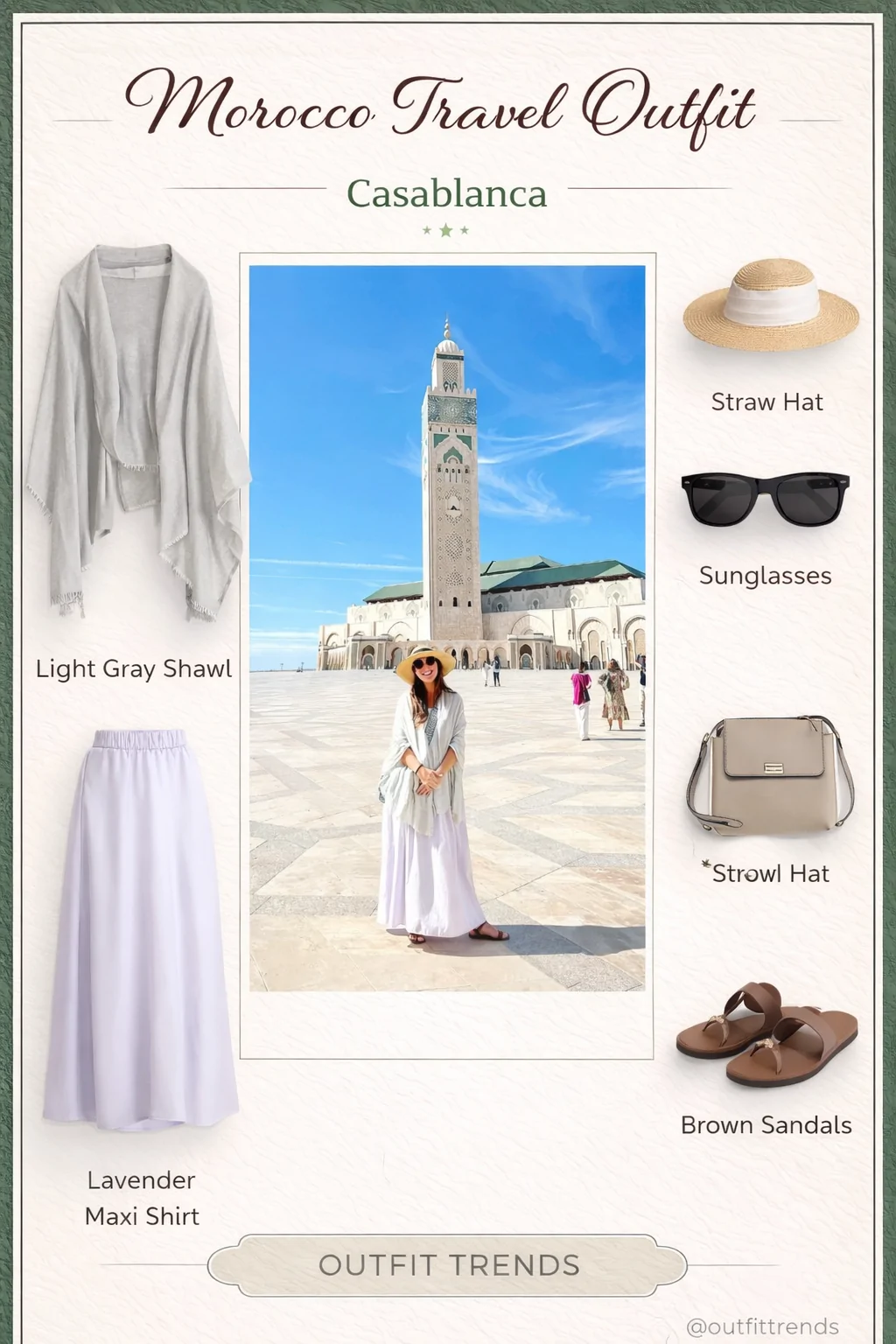
Shawl with Skirt
Casablanca is modern but respectful of tradition. The lavender skirt is long and elegant. The gray shawl covers your shoulders nicely. The straw hat protects you from the sun. Brown sandals are comfortable for walking. This outfit works well at the Hassan II Mosque and around the city.
What to Wear:
- Light Gray Shawl
- Lavender Maxi Skirt
- Straw Hat
- Sunglasses
- Beige Crossbody Bag
- Brown Sandals
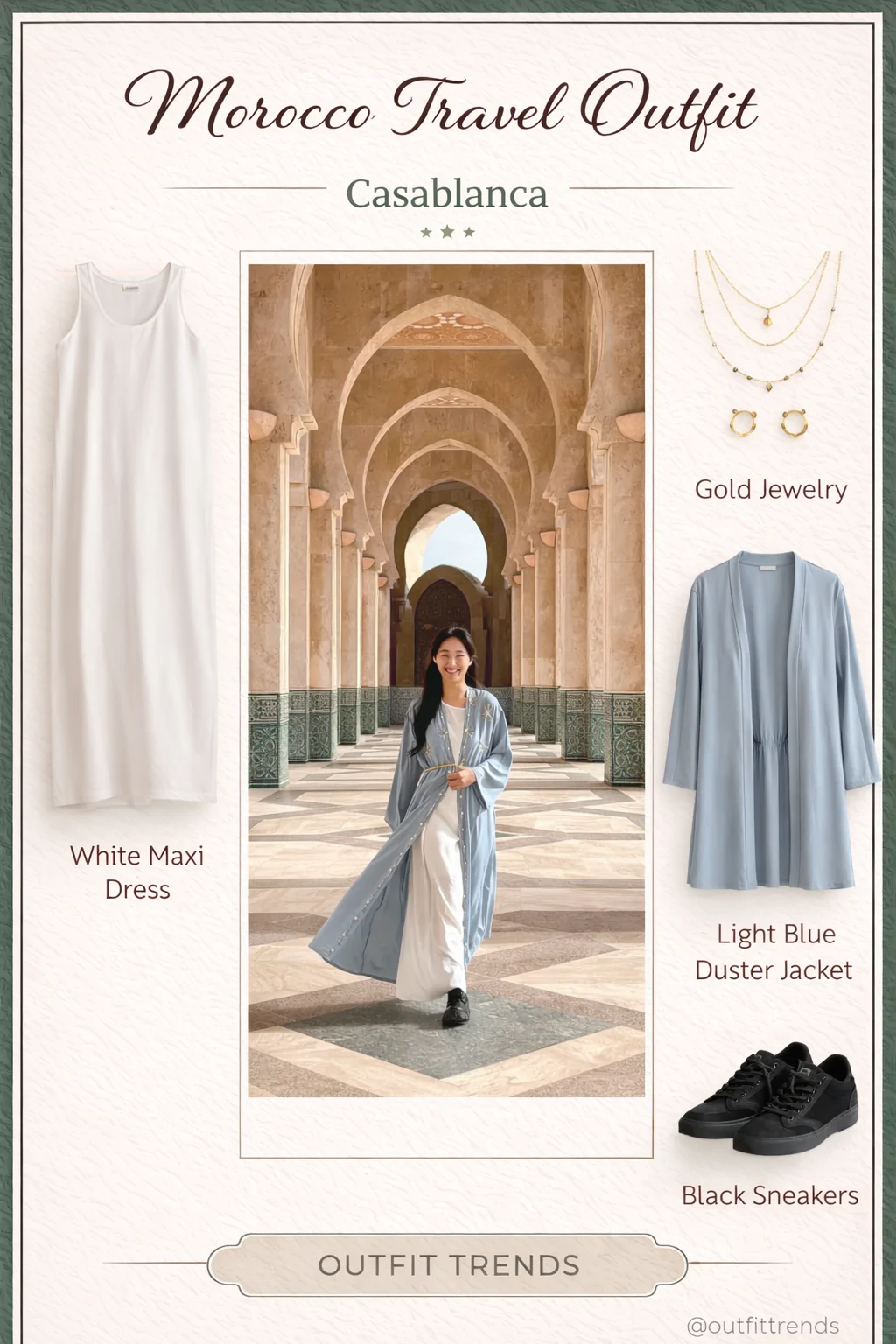
White Maxi Dress with Open Abaya
This outfit is for a special night out. The white dress is classic and clean. The light blue duster jacket / open abaya floats around you beautifully. Gold jewelry adds sparkle and warmth. Black sneakers keep it modern and comfortable. This look is perfect for dinner or evening walks.
What to Wear:
Black Sneakers
White Maxi Dress
Light Blue Duster Jacket
Gold Necklaces and Earrings
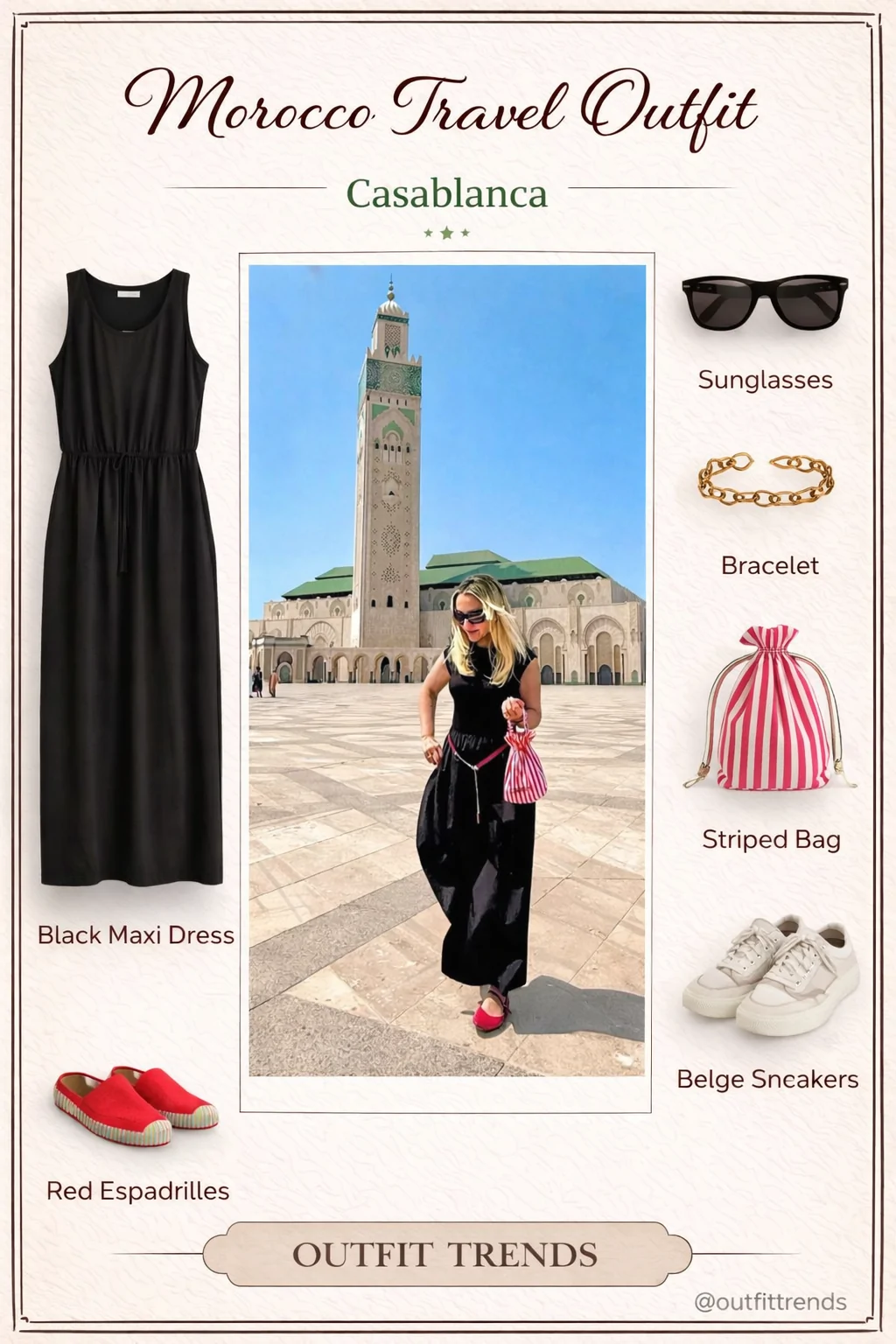
Black Maxi Dress for the Hassan II Mosque
For visiting the Hassan II Mosque — one of the few mosques in Morocco that allows non-Muslim visitors — go for a black drawstring-waist maxi dress. Pack a thin scarf in your bag for the modesty rules inside. Red espadrilles or beige sneakers add a touch of personality without competing with the architecture, and a small striped clutch picks up the coastal mood.
Chefchaouen
Chefchaouen is in the Rif Mountains, which means colder than you’d expect — especially in winter and at night. Chefchaouen is known as the “Blue City.” The entire medina is painted in shades of blue. It is one of Morocco’s most colorful and photogenic places . The famous blue walls also mean every outfit photographs beautifully, so this is where I take my most “intentional” looks.
Black Puffer Jacket with Light Wash Jeans
A black puffer jacket with light wash straight-leg jeans and waterproof black boots is the practical Chefchaouen uniform in the cooler months. The dark jacket pops against the blue walls, the jeans handle the steep stone steps, and the boots keep you safe on damp uneven surfaces. A pop of colour in your bag — like a lavender sling — keeps the look from feeling too utilitarian.
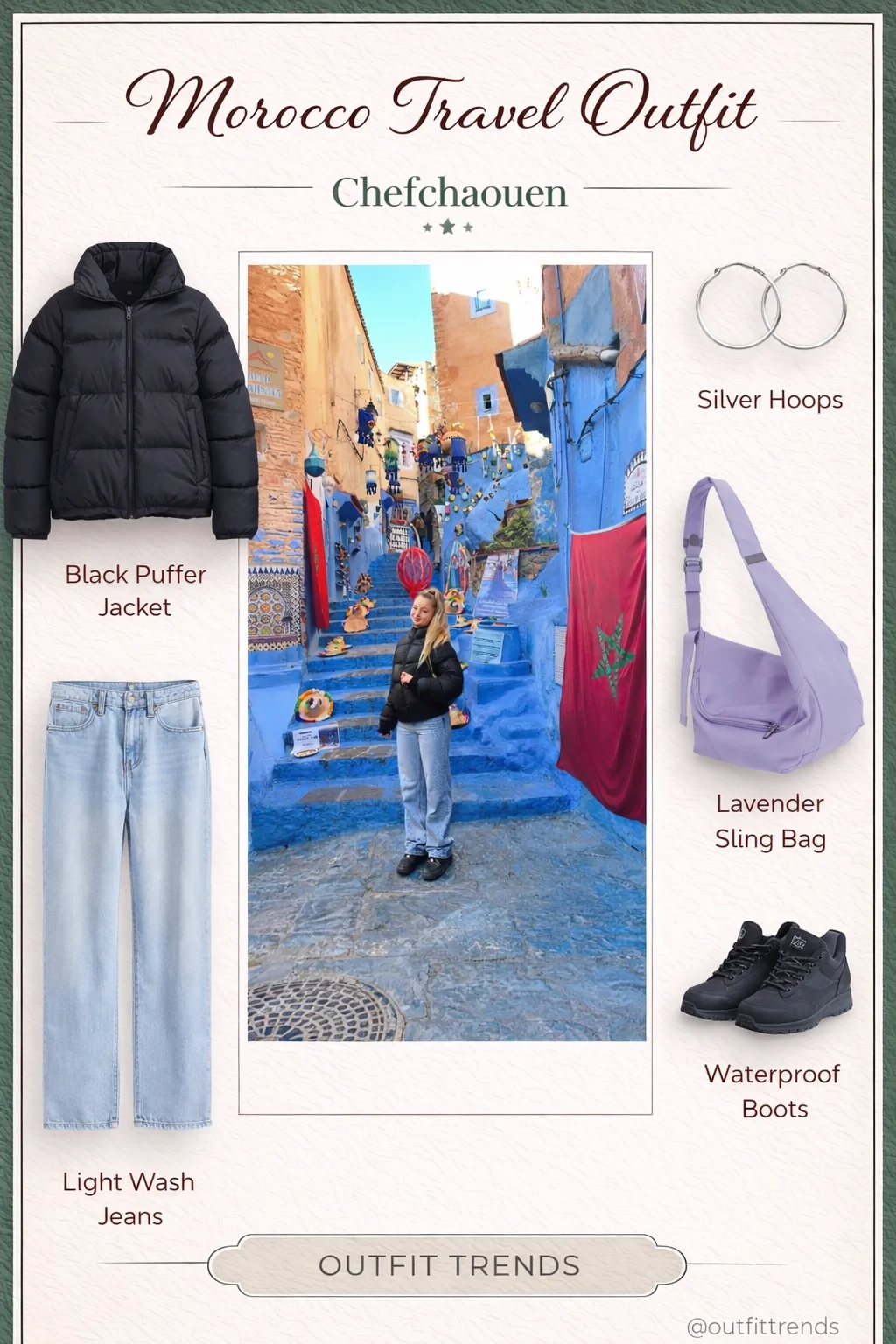
Wear contrasting colours against Chefchaouen’s blue — warm tones, white, mustard, terracotta — and skip blue itself, which gets lost in the walls.
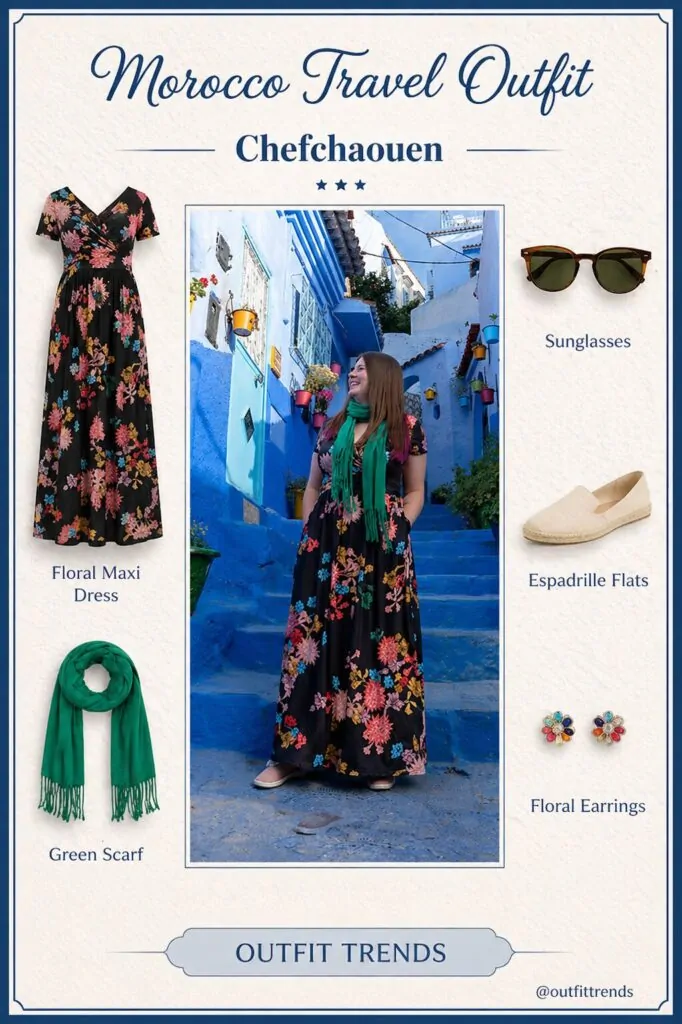
Floral Maxi
This outfit is perfect for exploring the blue-painted streets and taking photos.The floral maxi dress is bold and colorful. It has bright pink, orange, and yellow flowers on a dark background. The dress stands out beautifully against the blue walls. The flowers in the dress match the vibrant energy of the city. The dress is comfortable and flows nicely as you walk through narrow alleyways.
The green scarf adds another pop of color to your look. Green contrasts beautifully with the blue surroundings. You can wrap it around your neck or shoulders for style and sun protection. The espadrille flats are comfortable for walking on cobblestone streets. They are a classic choice that works with the bohemian vibe of Chefchaouen.
The floral earrings echo the colors in your dress. They add a feminine touch without being too much. Sunglasses protect your eyes from the bright Moroccan sun. The colorful jewelry completes the look perfectly.
Chefchaouen is small and easy to explore on foot. This outfit lets you move freely while looking Instagram-ready. The bright colors create amazing photos against the blue backdrop. You will blend in with the artistic, bohemian atmosphere of this unique city.
What to Wear:
- Floral Maxi Dress
- Green Scarf
- Espadrille Flats
- Sunglasses
- Floral Earrings
Essaouira
Essaouira is the breezy Atlantic surf town where everyone slows down. The dress code is the most relaxed in Morocco — bohemian, beachy, and unpretentious. This is where the linen-and-flat-shoes pieces in your suitcase finally come into their own.
Embroidered White Top with Cream Linen Pants
An embroidered white peasant blouse with bell sleeves, cream linen wide-leg pants, and black ballet flats is the Essaouira uniform. The detailing on the top echoes traditional Moroccan craftsmanship; the linen handles the wind and salt air; the flats let you walk the ramparts without thinking. Add a small black shoulder bag and oversized sunglasses, and you’re set from morning coffee to sunset on the harbour.
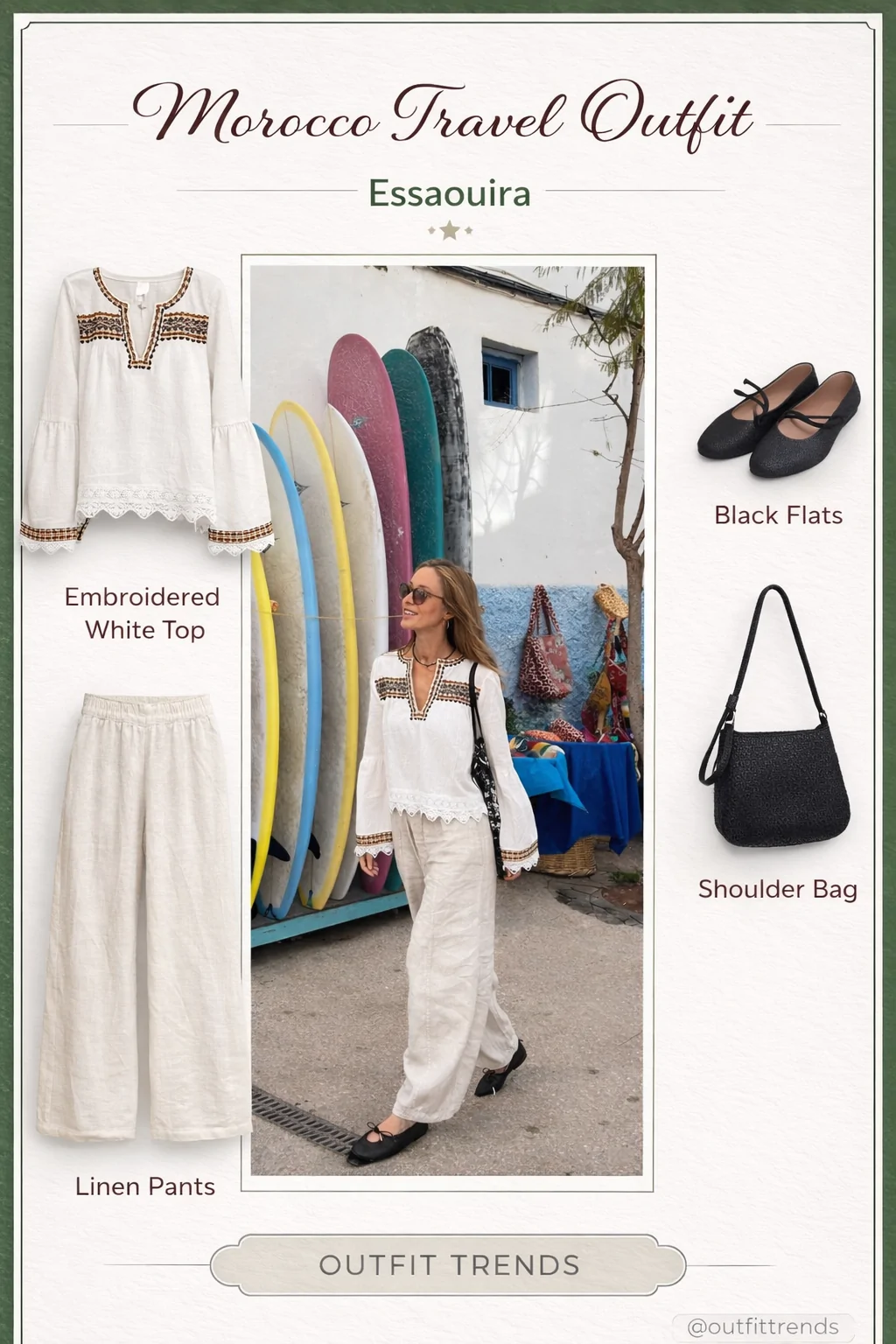
Essaouira is one of the few Moroccan cities where it’s almost always windy — the locals call it the “Windy City of Africa”. Pack hair ties, and avoid wide-brim hats unless they have a chin strap.
Key takeaways
- Choose natural fabrics like linen, cotton, and viscose over synthetics — they handle Moroccan heat far better and look more in keeping with the local aesthetic.
- Always carry a lightweight scarf or shawl — it doubles as sun protection, modesty cover for mosques, and an extra layer for cool riad evenings.
- Pack closed-toe sneakers for medinas — uneven cobblestones, occasional dampness, and crowded alleys all make sandals a poor choice for sightseeing.
- Dress more covered in Fes and Meknes, more relaxed in Marrakesh and Tangier, and most casual in Essaouira and beach towns — adjusting per city is the move.
- Plan your suitcase around earth tones with one or two pops of colour — they photograph beautifully against tile, stone, and the blue walls of Chefchaouen.
- Save statement and special occasion pieces like kaftans for evenings, weddings, or formal dinners — and skip them for daytime sightseeing where practicality wins.
How to Wear Saree Tutorial with Step By Step Guide
What To Wear At The Races – 20 Dress Code Guide & Tips
How To Wear Black And Navy Together? 20 Ways To Style Them
New Year’s Eve Outfits : Party Wear, Casual Styles & Tips
46 Tips on How to Wear Plunging Necklines like a Style Queen
What To Wear In London in Winters Complete Packing List&Guide
What to Wear in Scotland: 22 Outfit Ideas with Packing Tips
What to Wear to the Full Moon Party? 18 Outfit Ideas