The biggest mistake I see women make during Janmashtami is treating it like any other festival and reaching for the same heavy silk sarees they wear everywhere. Three years ago, I watched a friend struggle through an eight-hour celebration in a stiff Kanjivaram that looked beautiful but left her exhausted and cranky by evening. That’s when I realized festival dressing isn’t about wearing the most expensive piece you own — it’s about finding that perfect balance between devotion and comfort.
Janmashtami calls for something different. You’re going to be moving, dancing, maybe sitting on the floor for hours during bhajans, and definitely participating in dahi handi celebrations. The outfit needs to honor the occasion while letting you actually enjoy it. I’ve spent years figuring out combinations that work for this specific festival, and the secret isn’t in following traditional rules blindly — it’s in understanding which traditions serve you and which ones don’t.
Styling Tips
Choose breathable fabrics over heavy ones — cotton, linen blends, and lightweight silks will keep you comfortable during long celebrations. I learned this the hard way after spending one memorable Janmashtami constantly adjusting a gorgeous but suffocating brocade lehenga. The fabric you choose should move with you, not against you.
Pick colors that photograph well in temple lighting because you’re going to take photos, and temple lights are notoriously unflattering. Rich jewel tones like emerald green, royal blue, and deep maroon work better than pastels or whites, which tend to wash out completely under harsh fluorescent bulbs.
Plan your draping for movement — if you’re wearing a saree, choose a drape style that won’t come undone when you’re dancing or reaching up during aarti. The Gujarati style drape or a simple Nivi with extra pins works better than elaborate regional drapes that require constant maintenance.
Layer strategically for temperature changes because most celebrations start in the evening heat and continue into cooler night hours. A lightweight dupatta or shawl that complements your outfit gives you options without looking like an afterthought.

15 Fab Stagecoach Outfit Ideas You Should Try

What to Wear to the Kentucky Derby? 50 Outfit Ideas

What to Wear on Raksha Bandhan? 18 Stunning Women’s Outfits

20 Rehearsal Dinner Outfits For Brides to Wear & Enjoy
30 Ideas What to Wear to a Tea Party for Chic Look

15 Ideas on What to Wear to Henley Regatta & Tips You Need

42 Bachelorette Party Outfits For The Bride To Be to Wear

23 Beautiful Karwa Chauth Outfit Ideas For Women To Try
Lord Krishna’s traditional blue color comes from his association with the infinite sky and ocean, which is why navy and royal blue are considered the most auspicious colors to wear during Janmashtami celebrations.
Consider the venue’s flooring when choosing your footwear and hemlines. Temple marble gets slippery, and longer hemlines become hazardous when you’re navigating crowds and uneven surfaces. I always check the venue beforehand — it saves you from spending the entire celebration worrying about tripping.
Build in comfort breaks for your jewelry — heavy necklaces and tight chokers become unbearable after several hours. Choose pieces you can easily adjust or remove without disrupting your entire look. The goal is to honor the tradition while staying comfortable enough to participate fully.
Dos & Don’ts
Traditional Krishna Janmashtami Outfit Ideas
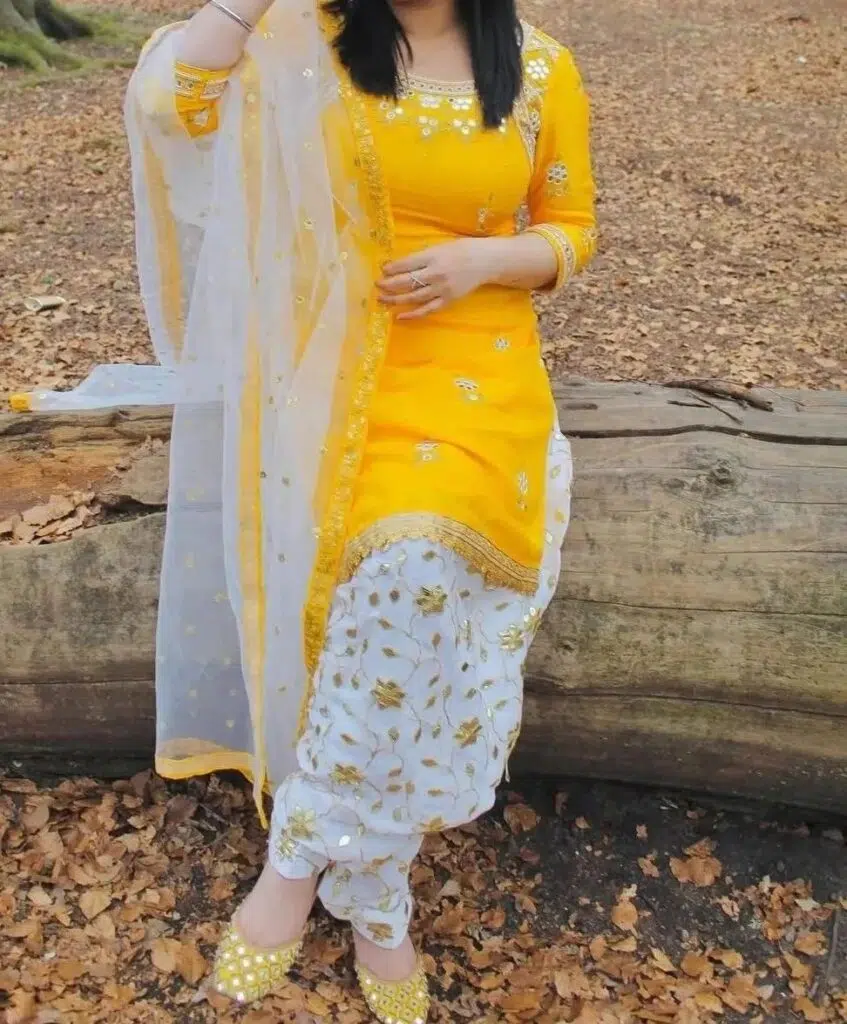
Sunny Yellow Salwar Kameez with Mirror Work
This bright yellow suit captures Krishna’s joyful energy with its cheerful hue and sparkling mirror embellishments. The fitted kurta with palazzo pants creates a flattering silhouette while the sheer dupatta adds ethereal movement. I love how the golden shoes echo the outfit’s warm tones — this works beautifully for women who want to make a vibrant statement at temple celebrations.
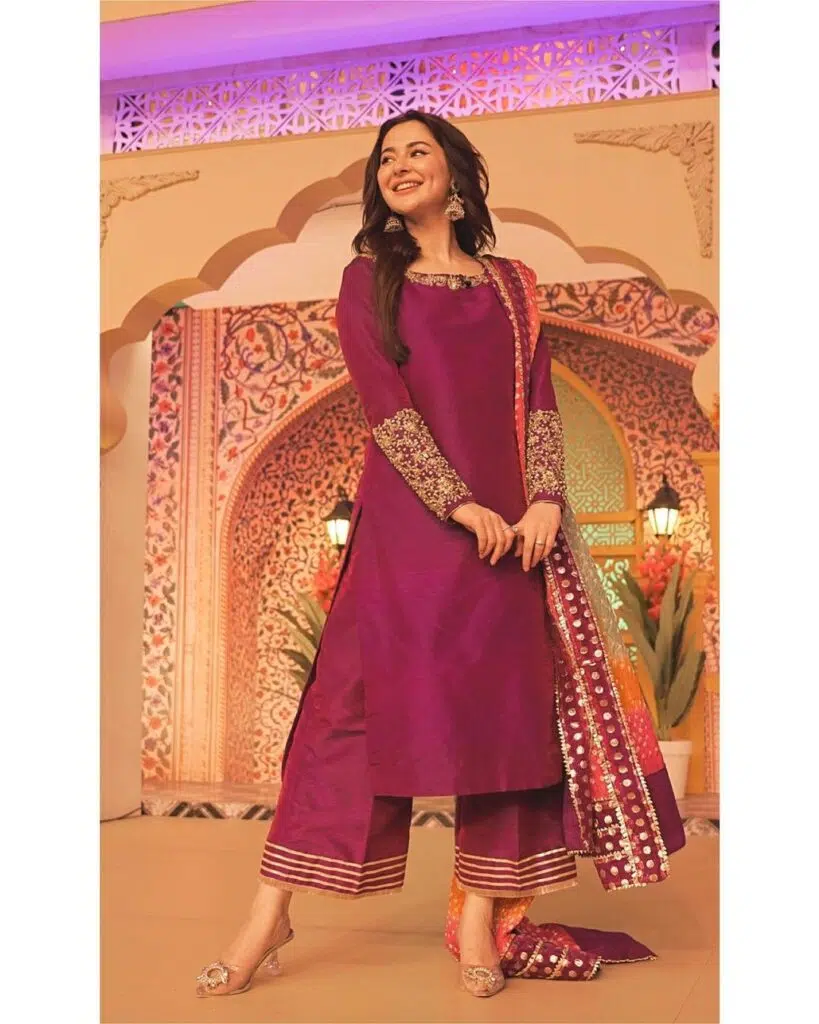
Deep Burgundy Palazzo Set with Gold Details
Rich burgundy feels regal and festive, especially with those intricate gold sleeve cuffs that catch the light beautifully. The wide-leg palazzo pants are incredibly comfortable for long prayer sessions, while the matching dupatta completes the traditional look. This colour combination photographs wonderfully and suits women who prefer deeper, more sophisticated tones for religious occasions.
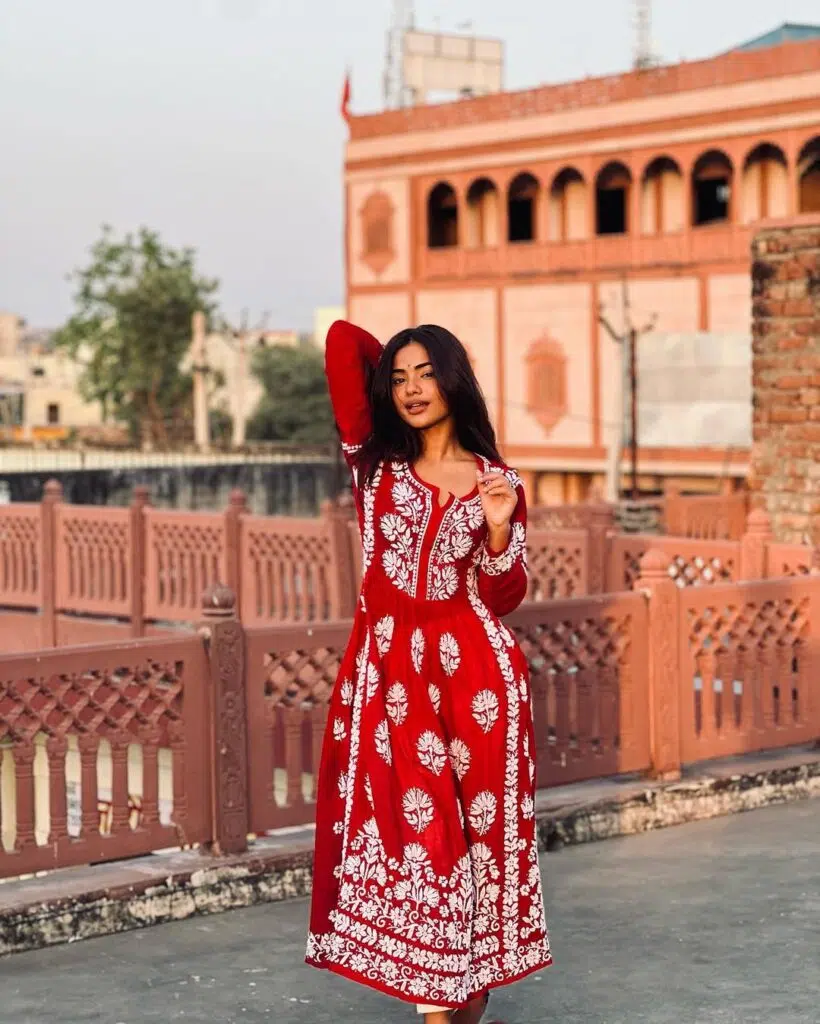
Red Block Print Midi Dress
A clever modern take on traditional motifs — this red dress with white block printing feels fresh while staying culturally appropriate. The three-quarter sleeves and midi length offer comfortable coverage, and the fitted bodice with flowing skirt flatters most body types. Perfect for younger women who want to blend contemporary style with festival dressing.
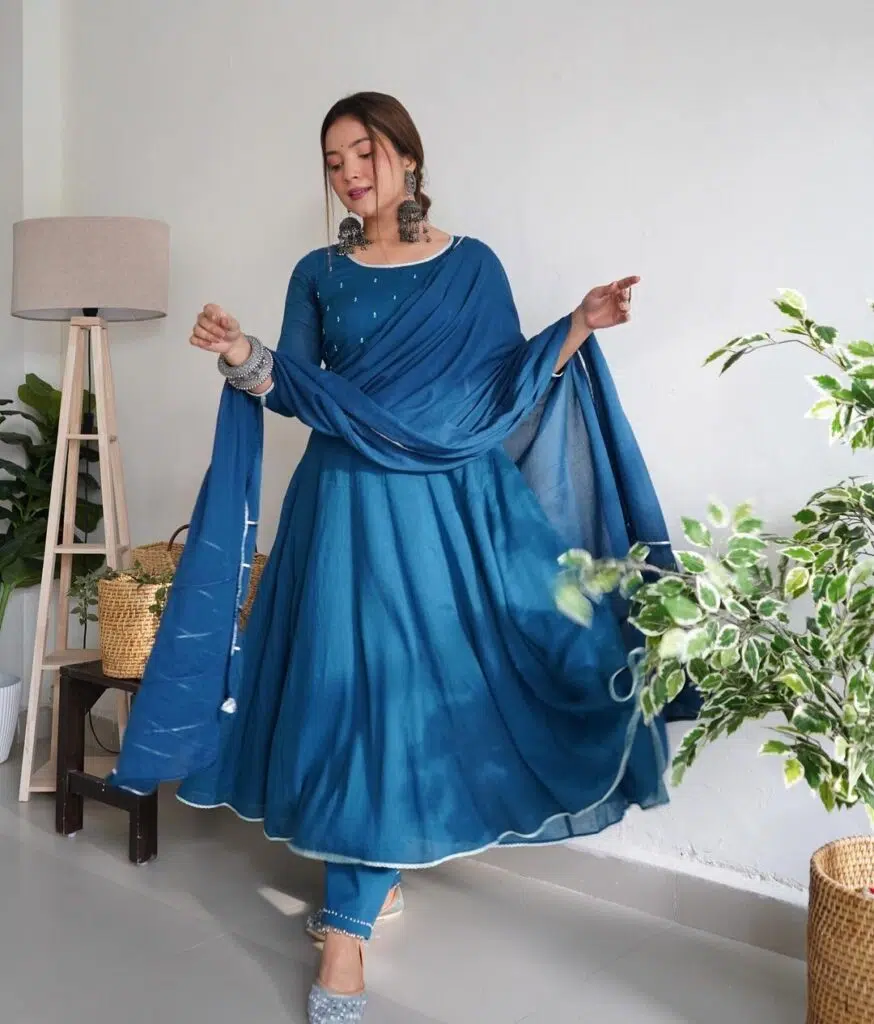
Royal Blue Anarkali with Silver Accents
This flowing blue anarkali embodies grace with its full circular silhouette and delicate silver embroidery. The colour represents the divine sky and Krishna’s transcendent nature, while the ankle-length cut allows for comfortable movement during celebrations. The matching dupatta and churidar complete this timelessly beautiful look that works for all ages.
Quick tip
Match your saree to Krishna’s symbolic colors — blues, teals, and purples work beautifully.
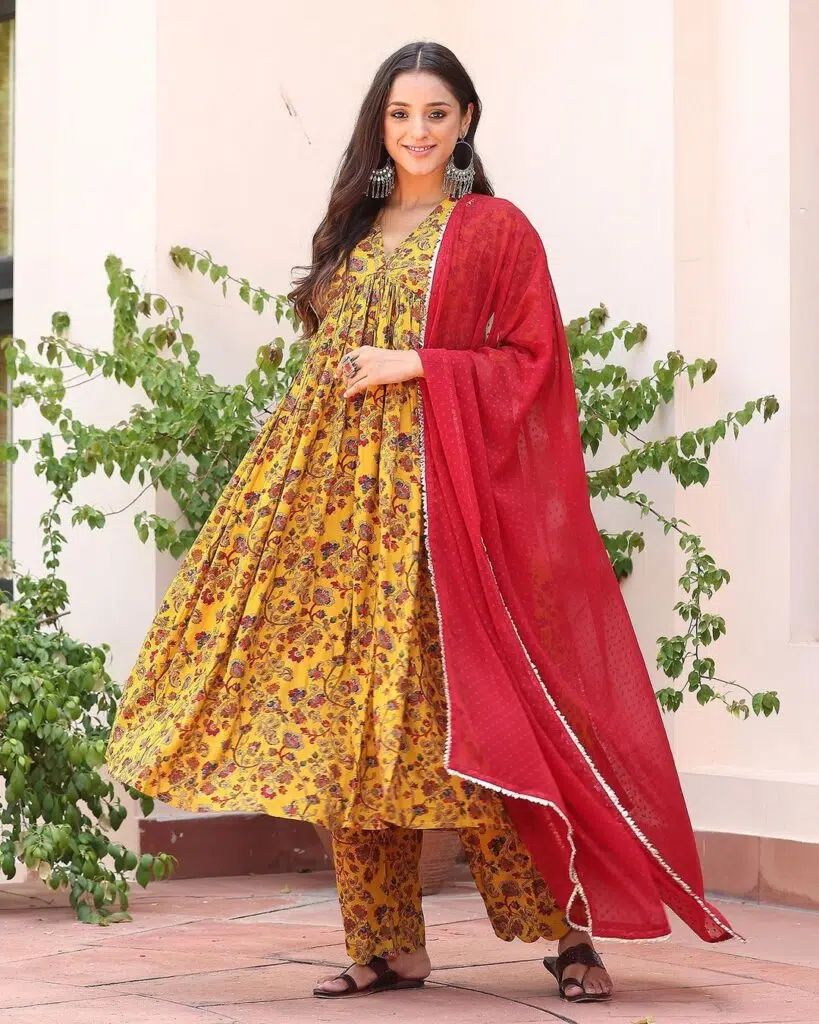
Golden Yellow Printed Suit with Red Dupatta
The contrasting red dupatta against yellow creates a striking colour combination that’s both traditional and eye-catching. This printed salwar kameez offers comfort and style, with the loose-fitting silhouette perfect for active participation in festivities. The black sandals ground the bright colours beautifully — ideal for women who love bold, celebratory looks.
Mustard Yellow Tiered Anarkali
Soft mustard yellow feels warm and inviting, while the tiered skirt design adds romantic movement to every step. The three-quarter sleeves provide modest coverage, and the fitted bodice transitions beautifully into the flowing lower half. This style particularly flatters petite women as the tiers create the illusion of height and the colour brightens any complexion.
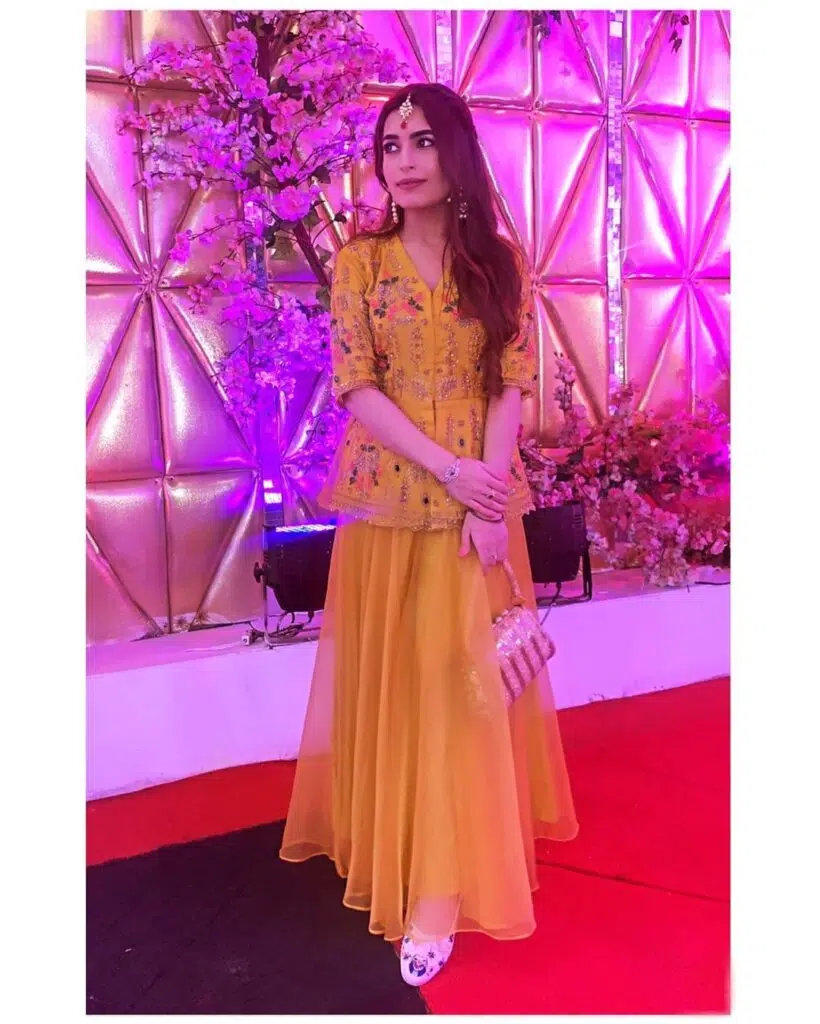
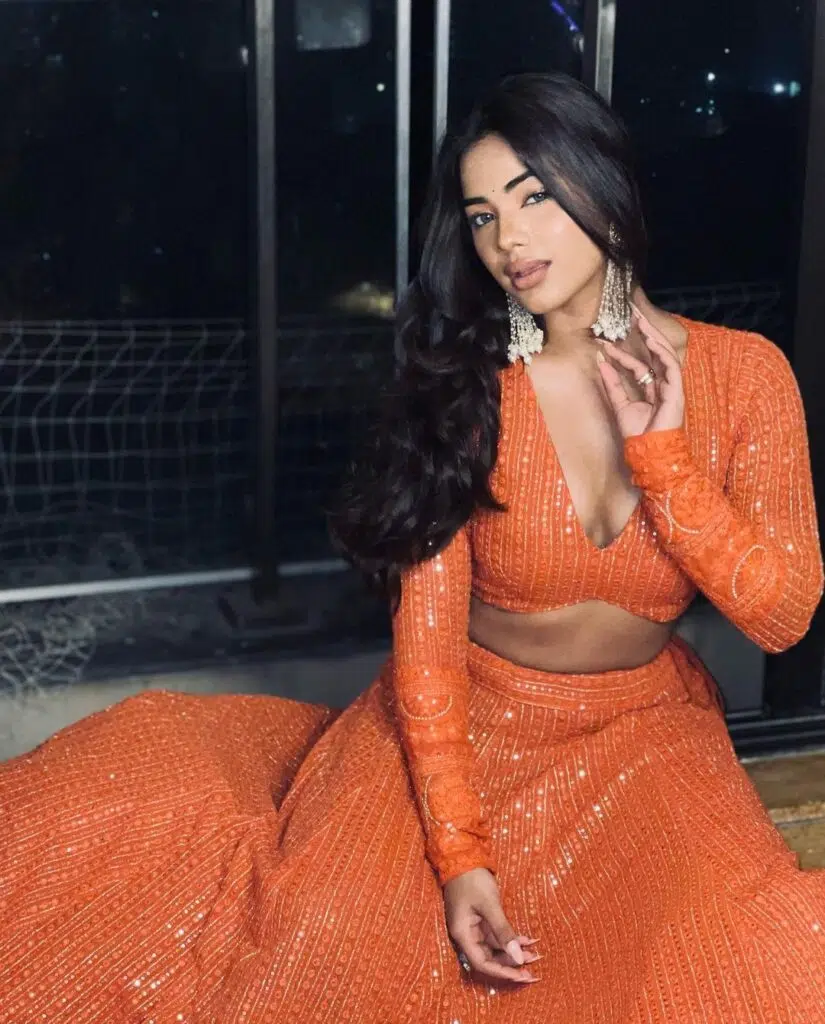
Orange Sequined Lehenga Set
Vibrant orange symbolizes energy and devotion, while the all-over sequin work creates stunning light reflection during evening celebrations. This crop top and lehenga combination is perfect for younger women who want glamour with tradition. The deep neckline and fitted silhouette make this ideal for special pujas where you want to look particularly festive.
Quick tip
Choose silk over synthetic fabrics for religious occasions — it photographs better and feels more appropriate.
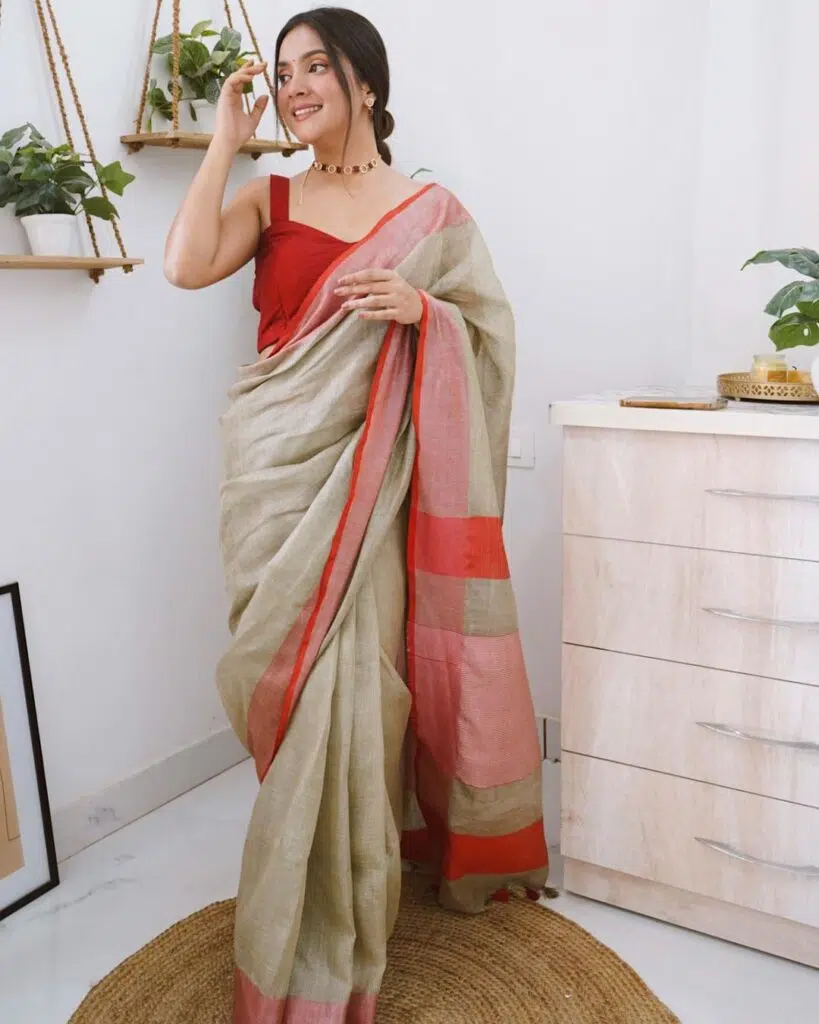
Beige Saree with Coral Stripes
This understated beige saree with coral accents proves that elegance doesn’t require bright colours. The striped border adds visual interest without overwhelming, while the simple blouse keeps the focus on the beautiful draping. Perfect for women who prefer subtle sophistication or those attending more formal temple ceremonies where restraint is appreciated.
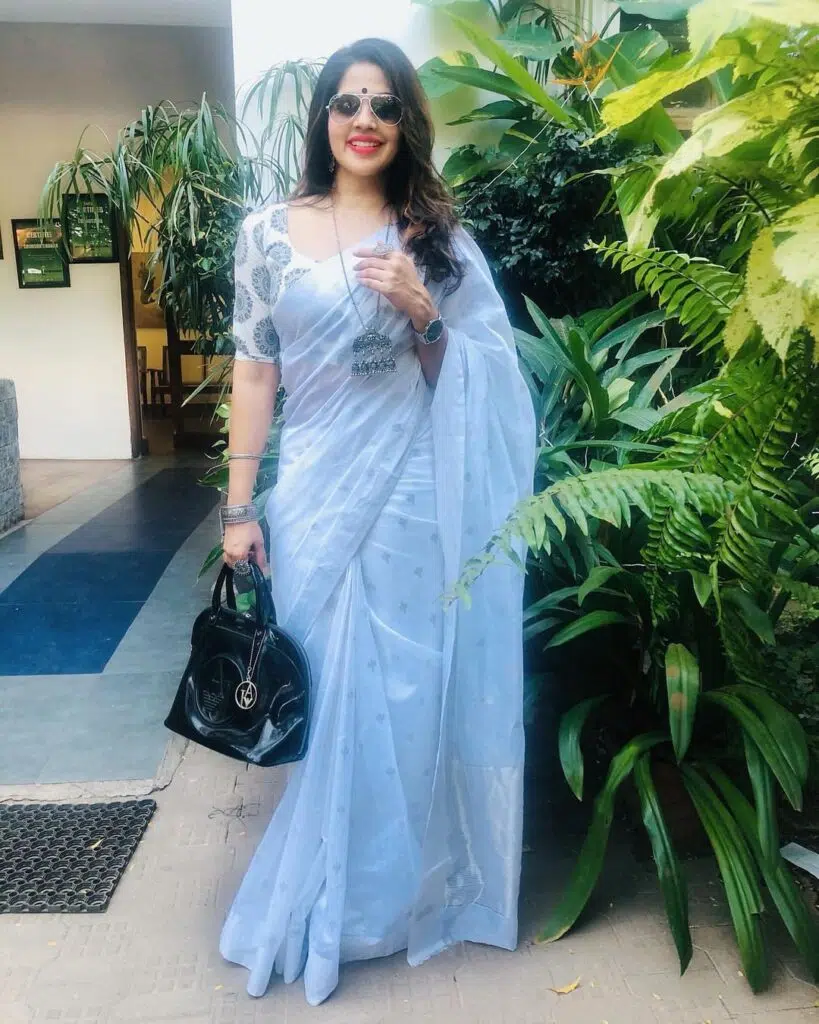
Powder Blue Embroidered Saree
Soft blue represents serenity and devotion, while the delicate embroidered border adds just enough detail to feel special. This lightweight saree drapes beautifully and photographs wonderfully in natural light. The casual styling with loose hair and minimal jewelry makes this approachable for saree beginners or women who want comfort without sacrificing tradition.
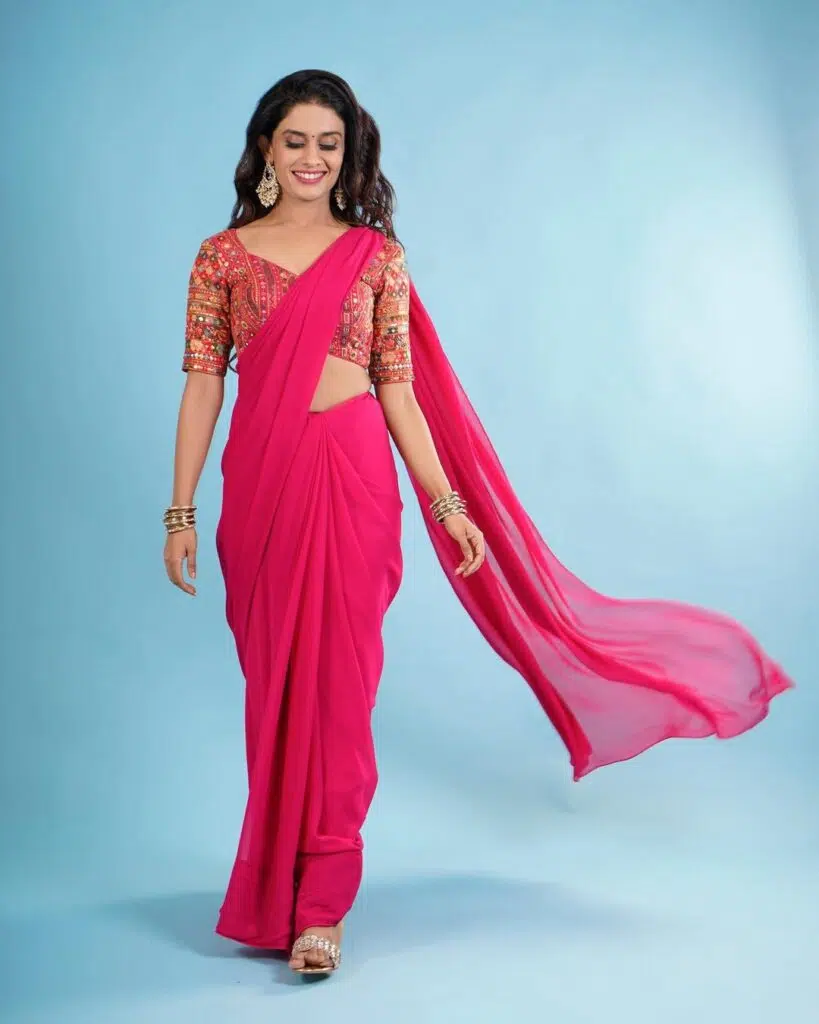
Hot Pink Saree with Embroidered Blouse
Bold pink makes a confident statement, especially paired with that heavily embroidered multicoloured blouse that becomes the outfit’s focal point. The contrast between the simple saree drape and ornate blouse creates perfect balance. This combination works beautifully for women who want to stand out at celebrations while maintaining traditional elegance.
Quick tip
Keep makeup natural with defined eyes — heavy contouring looks out of place at temple celebrations.
Traditional Teal Silk Saree with Gold Border
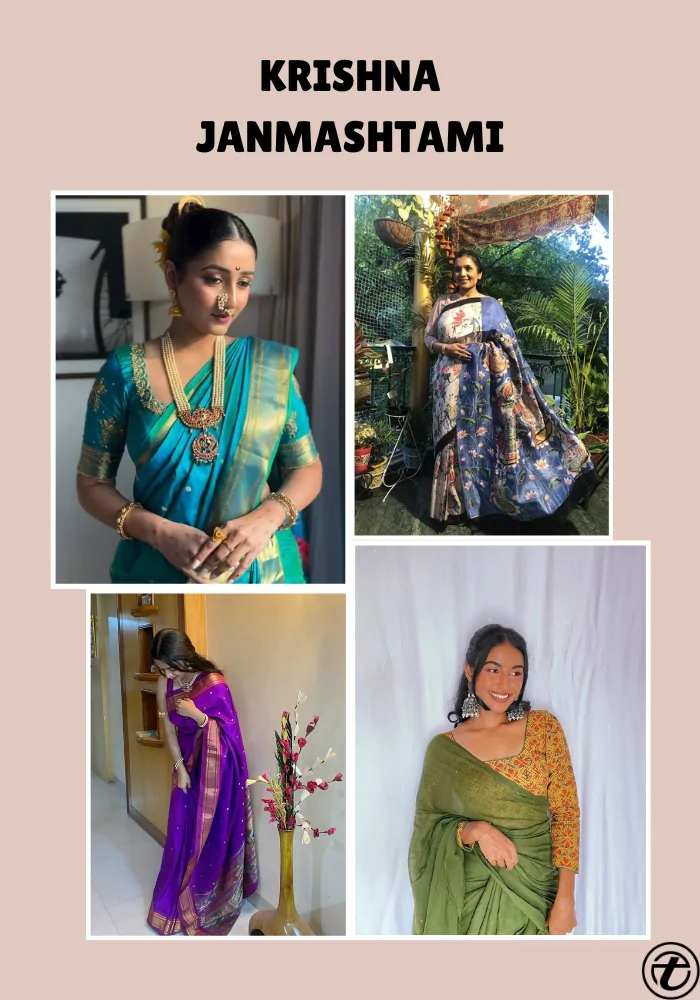
This classic teal silk saree with gold zari border captures the essence of Krishna Janmashtami perfectly. The rich jewel tone mirrors Krishna’s peacock feather symbolism, while the traditional draping style shows proper respect for the religious occasion. The antique gold jewelry and temple-style earrings complete the devotional look without being overly ornate.
Key takeaways
- Choose jewel tones like teal, royal blue, or deep purple to honor Krishna’s traditional colors
- Silk sarees with gold borders or zari work strike the perfect balance between festive and respectful
- Keep jewelry traditional and modest — temple jewelry works better than contemporary pieces
- Floral prints should feature small, delicate motifs rather than bold, oversized patterns
- Your draping style matters — neat, traditional pleats show respect for the religious setting
- Hair accessories like fresh flowers or simple pins enhance the devotional mood without distraction
15 Fab Stagecoach Outfit Ideas You Should Try
What to Wear to the Kentucky Derby? 50 Outfit Ideas
What to Wear on Raksha Bandhan? 18 Stunning Women’s Outfits
20 Rehearsal Dinner Outfits For Brides to Wear & Enjoy
30 Ideas What to Wear to a Tea Party for Chic Look
15 Ideas on What to Wear to Henley Regatta & Tips You Need
42 Bachelorette Party Outfits For The Bride To Be to Wear
23 Beautiful Karwa Chauth Outfit Ideas For Women To Try