
Every winter, I watch travelers arrive in Tokyo wearing puffy ski jackets and thick boots, only to realize they’re sweating on heated trains and shivering outdoors because they’ve packed all wrong for Japan. The country’s winter isn’t just about cold—it’s about constant temperature changes between heated indoor spaces and genuinely freezing outdoor air that can drop below zero.
After spending three winters in Japan and helping clients pack for Tokyo, Kyoto, and Osaka trips, I’ve learned that Japanese winter dressing is about layering strategy, not bulk. The mistake most people make is treating it like a European winter when it’s actually about adapting to a culture where you’re constantly removing and adding layers.
The key insight that changed everything for me: Japanese buildings are heated to tropical levels, but the streets are genuinely cold. Your outfit needs to work in both environments without looking like you’re prepared for an Arctic expedition.
Winter Essential Packing List
Lightweight down jacket or packable puffer – Skip the bulky ski coat. Japanese trains and buildings are heated to around 25°C (77°F), so you need something you can easily remove and carry. I learned this the hard way when I spent my first Tokyo day carrying a massive coat everywhere.
Merino wool base layers – These regulate temperature without bulk under your clothes. Cotton will leave you clammy on heated trains, then cold when you step outside. Pack at least two—you’ll wear them every day.
Waterproof ankle boots with good grip – Japanese winters bring rain, snow, and icy pavements. The rubber soles on most fashion boots won’t cut it when you’re walking on wet temple steps. Choose something with actual tread. For more ideas, see over the knee boots.

What to Wear in Canada in Winter? 21 Outfits and Packing List

What to Wear in Bali in Winters? 10 Outfits & Packing List

What to Wear in France in Winters? 22 Outfits & Packing List
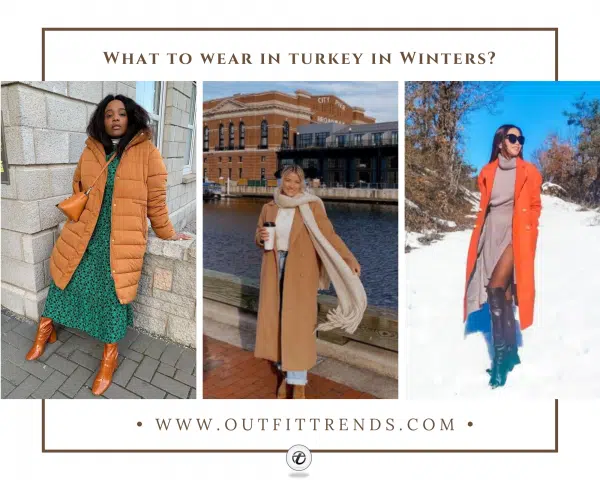
What To Wear In Turkey In Winters? 11 Outfits & Packing List
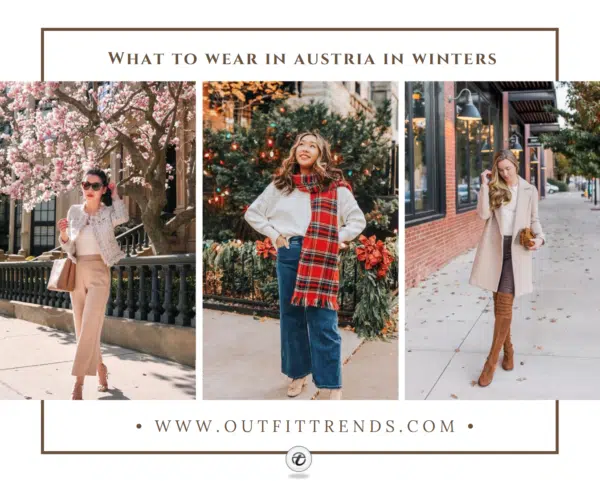
What to wear in Austria in Winter? 20 Outfits & Packing List
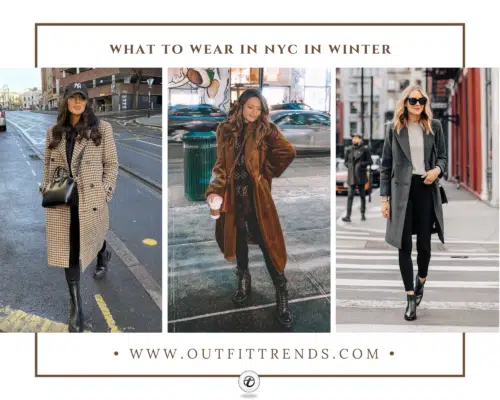
What to Wear in New York in Winters? 23 Ideas & Packing List

What To Wear In London in Winters Complete Packing List&Guide

What to Wear in Germany in Winters? 23 Outfits Ideas
Cashmere or wool scarf – This is your temperature control tool. Easy to wrap tight outdoors, easy to remove indoors. A good scarf does more work than any coat in Japan’s stop-start heated environment.
Touchscreen gloves – You’ll be using your phone constantly for maps and translation apps. Regular gloves mean constant on-off frustration in sub-zero temperatures.
Moisture-wicking socks – Your feet will sweat in heated spaces, then freeze outside. Regular cotton socks create a miserable cycle of damp and cold that ruins entire days of sightseeing.
Japanese women carry portable hand warmers called “kairo” that provide up to 12 hours of heat and cost less than $1 each. They’re available at every convenience store and are considered essential winter accessories, not tourist gimmicks.
Dos & Don’ts
What to Wear on the Flight
Compression leggings with loose pants over them – The long flight plus walking on arrival means your legs need both circulation support and warmth. I wear black leggings under straight-leg trousers for comfort that doesn’t look like activewear. For more ideas, see skirted leggings.
Button-front cardigan over a base layer – Airplane temperature swings wildly, and you want easy adjustment without wrestling with overhead bins. A merino wool cardigan gives you professional-looking flexibility.
Slip-on sneakers or loafers – Your feet will swell on the long flight, and you’ll want easy removal for security and comfort. Choose something that looks decent with your arrival outfit since you’ll wear them for your first day of sightseeing.
The biggest mistake I see is people wearing their heaviest coat on the plane to save luggage space, then arriving sweaty and uncomfortable. Pack the heavy coat and wear layers you can actually sleep in.
Winter Street Style Inspiration from Japan
Neutral Layers with Statement Boots
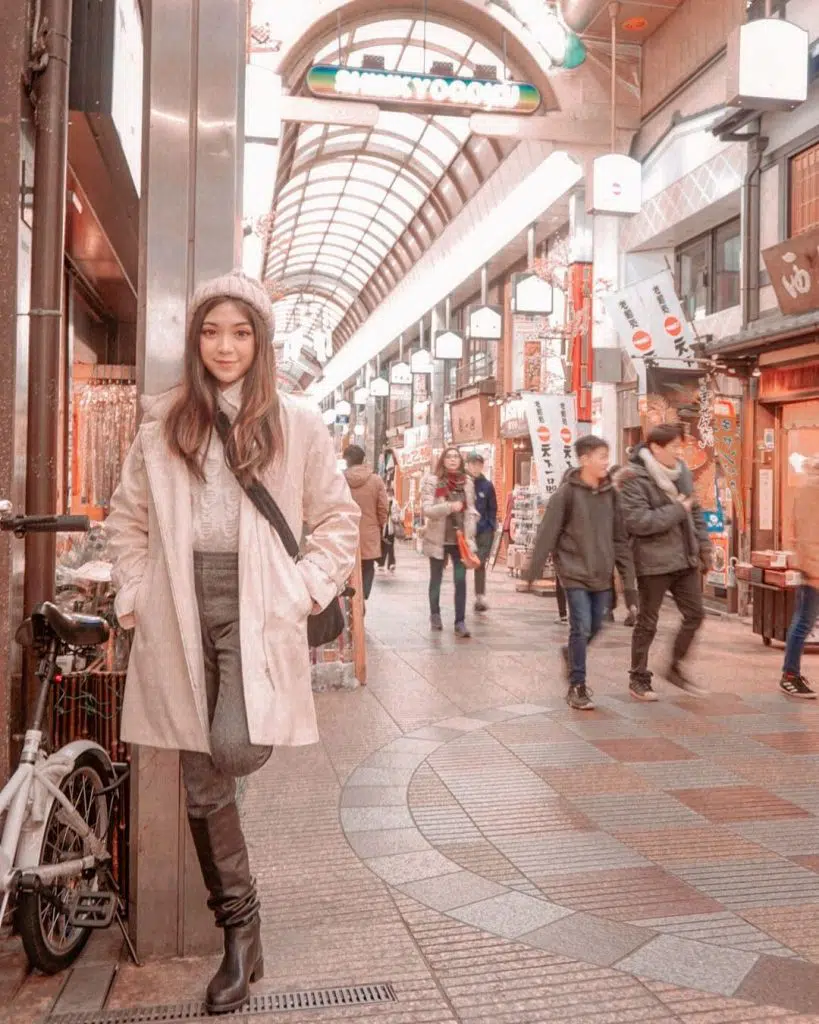
This cream coat layered over a cable-knit sweater with tall leather boots creates the perfect foundation for Japanese winter weather. The monochromatic neutral palette works because it lets you add texture through different fabrics without looking busy. This combination works particularly well if you’re planning to walk a lot — the structured coat provides warmth while the boots handle wet sidewalks.
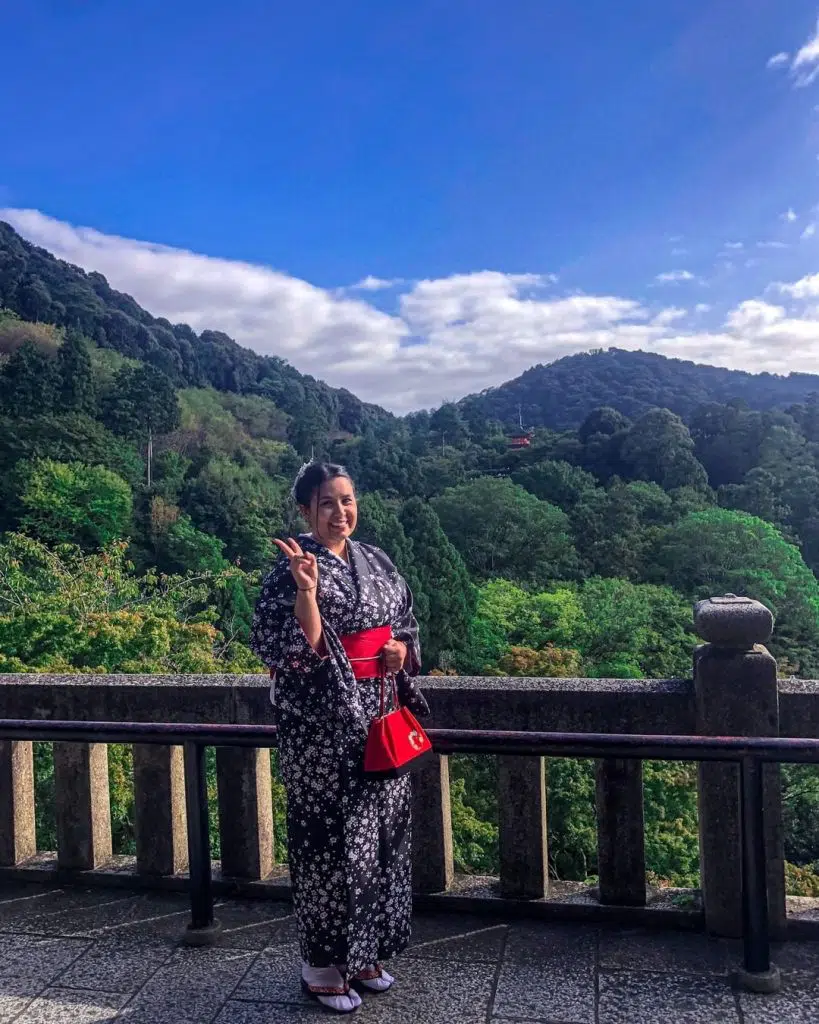
Traditional Kimono for Cultural Experiences
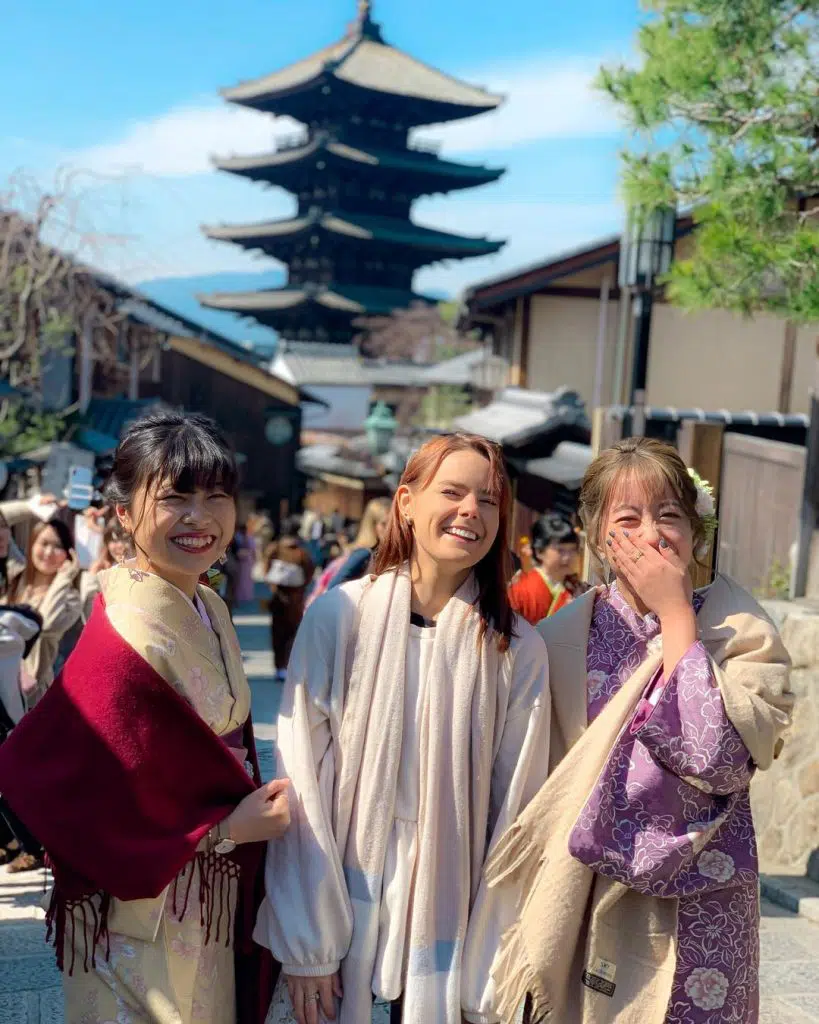
A classic navy kimono with cherry blossom prints paired with traditional sandals is ideal for temple visits and cultural sites. The authentic styling with proper obi placement shows respect for Japanese culture while keeping you appropriately covered in religious spaces. Choose this when visiting places like Kyoto’s temple district where traditional dress is encouraged.
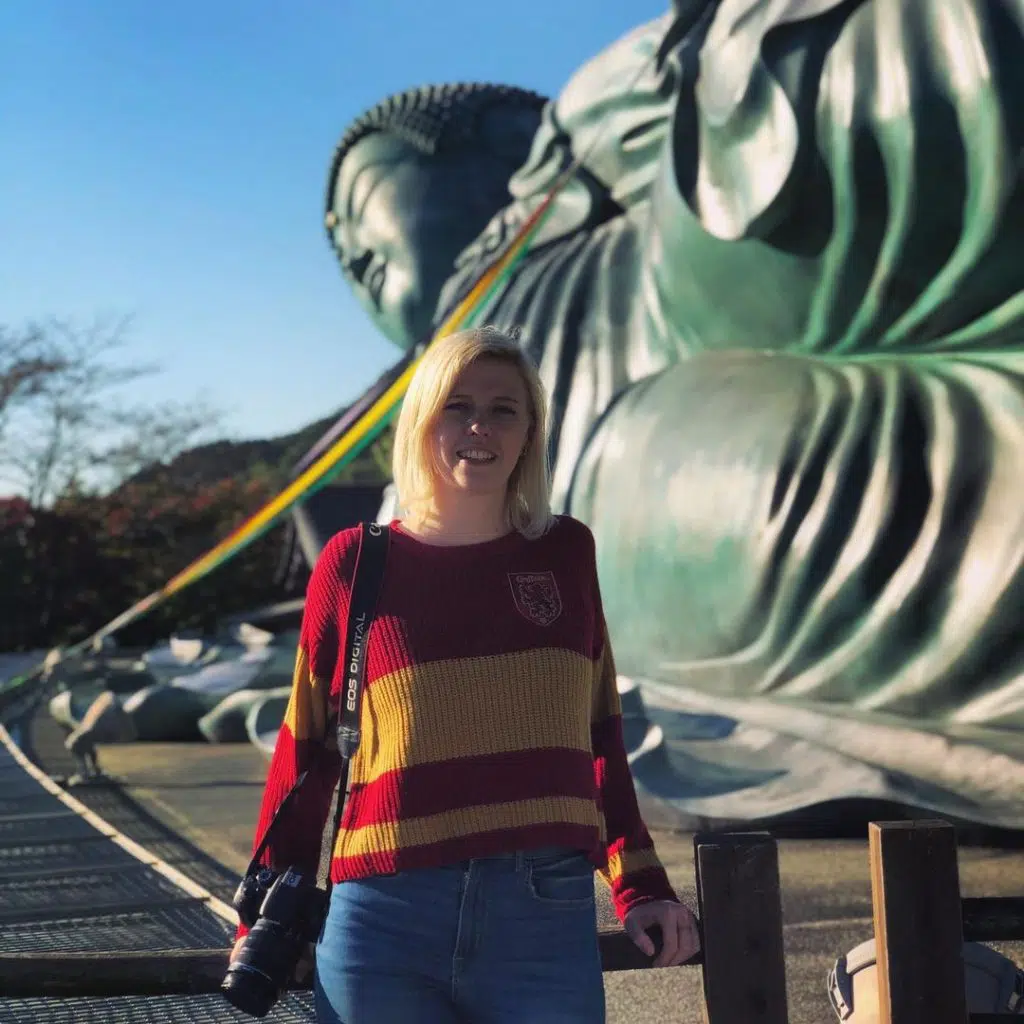
Striped Sweater with High-Waisted Jeans
Bold horizontal stripes in burgundy and yellow create a retro-inspired look that photographs beautifully against Japan’s urban backdrops. The cropped sweater with high-waisted jeans combination flatters most body types by emphasizing the waist. This works best for younger travelers who want to blend in with Japan’s street fashion scene.
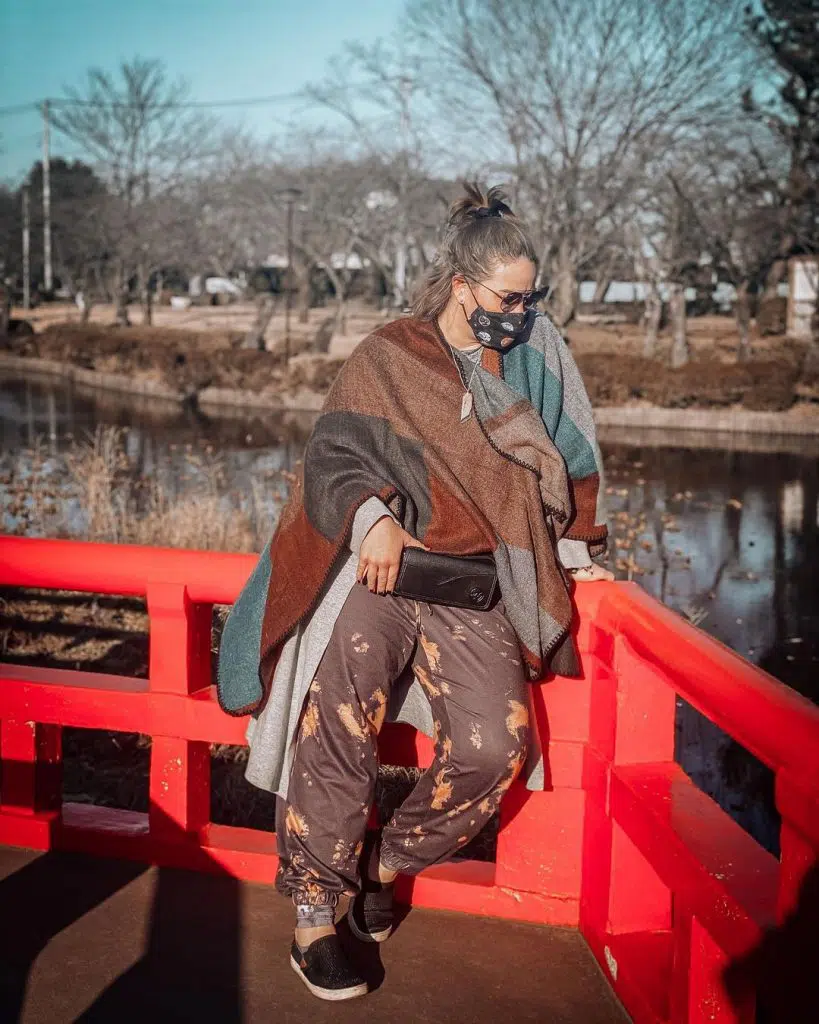
Blanket Scarf as Outerwear
Using an oversized blanket scarf as the main outerwear piece over patterned pants creates an effortlessly cozy look. The earth-toned color coordination between the scarf and pants makes this feel intentional rather than thrown together. Perfect for milder winter days when you need flexibility to add or remove layers.
Quick tip
Pack versatile neutral coats that work over multiple outfit combinations.
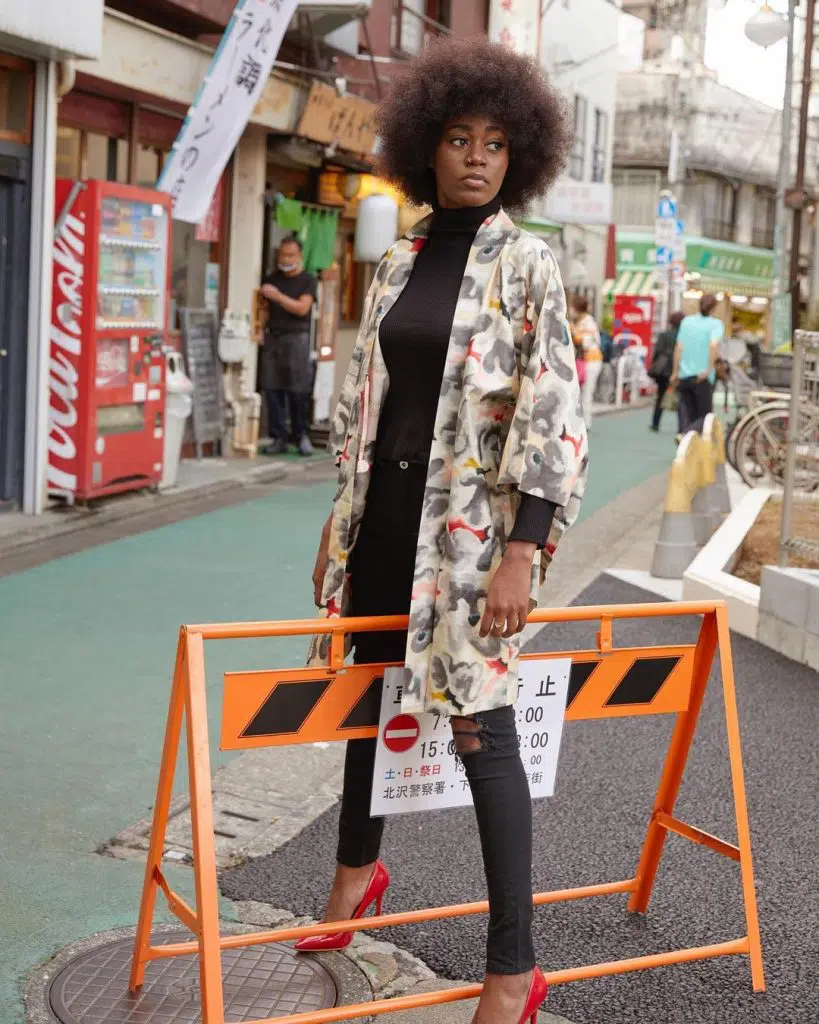
All-Black Base with Statement Coat
A printed kimono-style coat over an all-black outfit demonstrates how to incorporate Japanese-inspired pieces into Western wardrobes. The black foundation lets the coat’s pattern shine while keeping the overall look sophisticated. This approach works for anyone wanting to try bold prints without feeling overdressed.
Floral Kimono with Modern Accessories
Traditional black kimono with delicate floral embroidery paired with contemporary sunglasses bridges old and new Japan perfectly. The authentic fit and styling shows proper kimono wearing technique while modern accessories keep it from feeling costume-like. Choose this for special cultural experiences where traditional dress is appropriate.
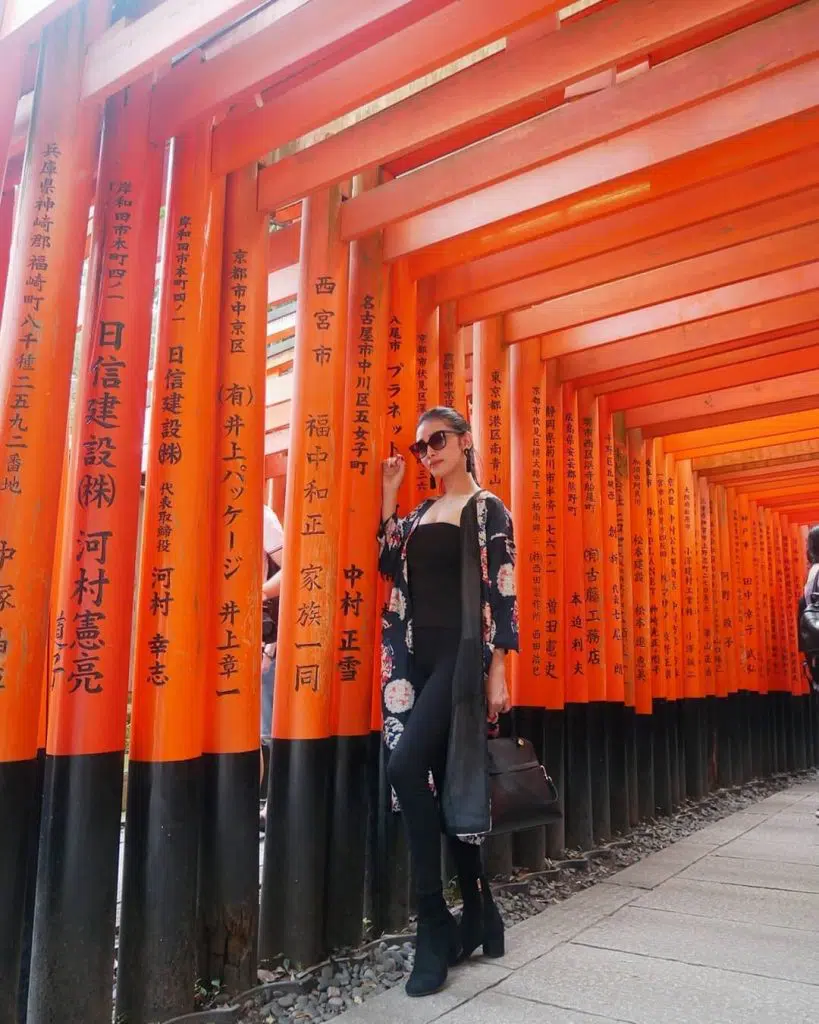
Casual Kimono Mixing
These mixed traditional and casual pieces show how Japanese locals often incorporate kimono elements into everyday wear. The relaxed styling approach makes traditional pieces feel accessible rather than formal. This works for travelers who want to respectfully engage with Japanese fashion without full traditional dress.
Quick tip
Choose knee-high boots for both warmth and protection from wet streets.
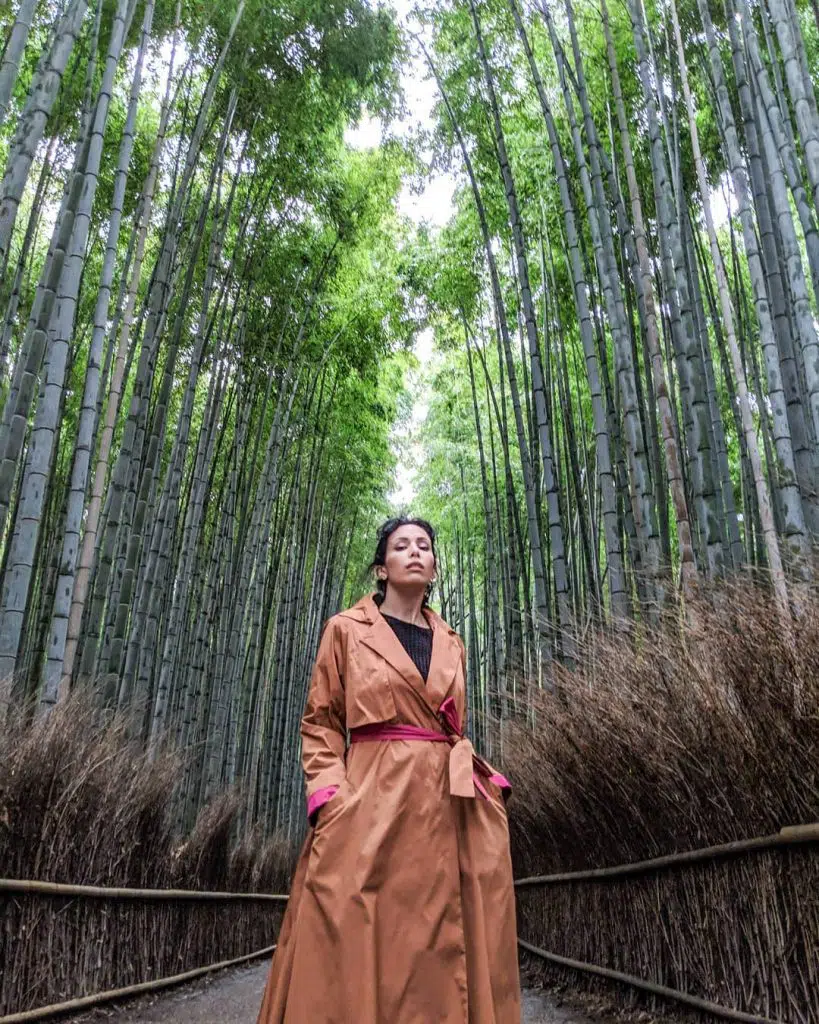
Belted Trench for Dramatic Effect
A camel trench coat with contrasting pink belt creates a striking silhouette against natural backdrops. The defined waist from the belt prevents the long coat from overwhelming smaller frames. This style works best for taller women or those comfortable making a bold fashion statement.
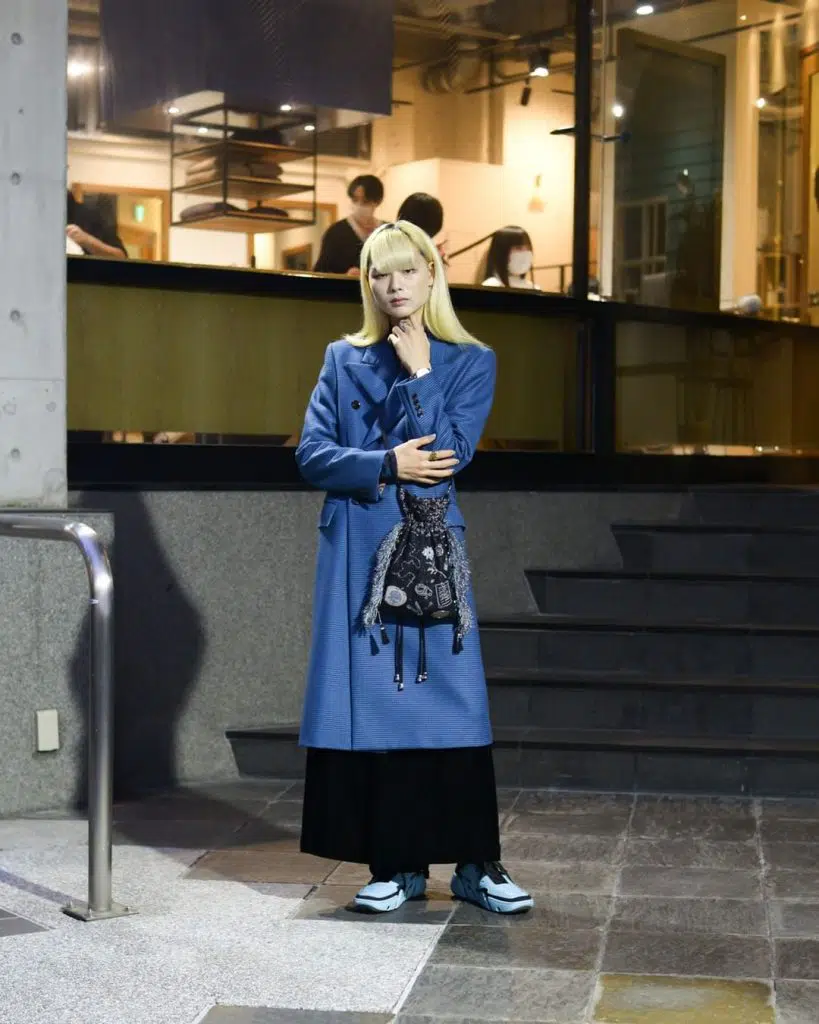
Structured Coat with Athletic Shoes
A bright blue tailored coat paired with casual sneakers demonstrates Japan’s high-low fashion mixing philosophy. The unexpected shoe choice makes the formal coat feel more approachable and practical for sightseeing. This combination works for anyone who prioritizes comfort while still wanting to look put-together.
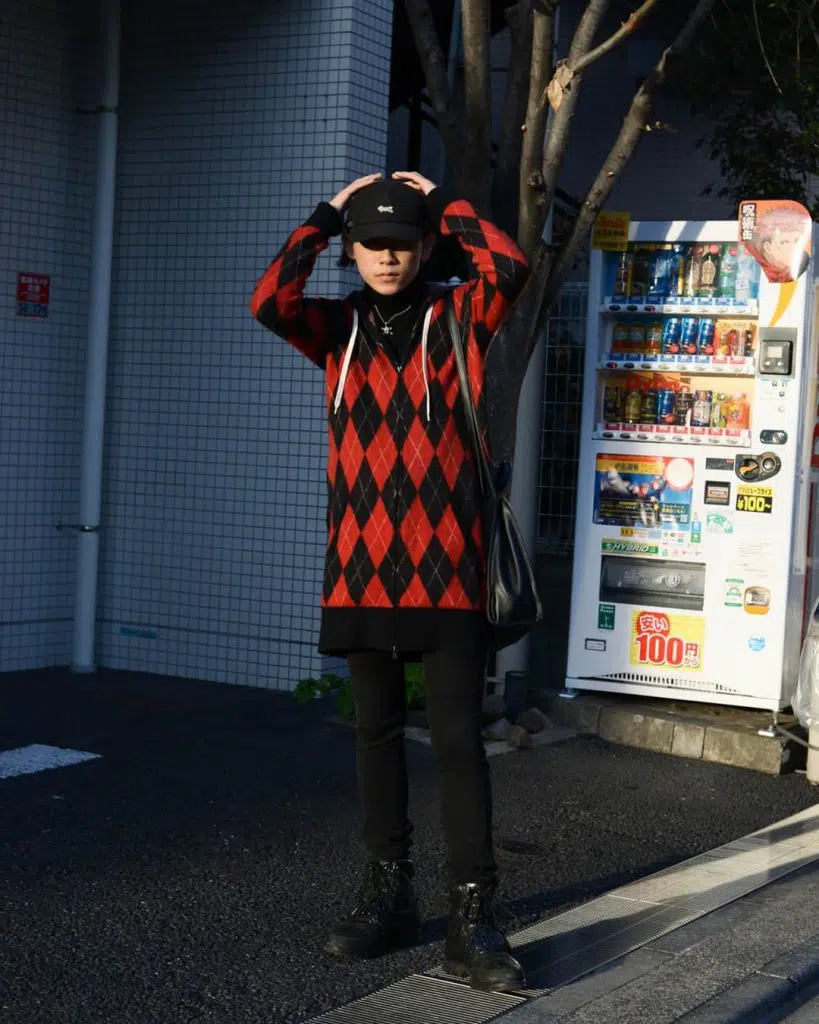
Argyle Sweater for Youth Districts
Bold red and black argyle creates a playful preppy look that fits perfectly in areas like Harajuku or Shibuya. The oversized proportions give this classic pattern a modern edge that aligns with Japanese street style trends. Best for younger travelers or those wanting to experiment with Tokyo’s more alternative fashion scenes.
Quick tip
Bring lightweight scarves that can double as blankets for temple floor seating.
Key takeaways
- Layer neutral pieces as your foundation — cream, beige, and camel work with everything and photograph beautifully
- Mix traditional Japanese elements respectfully — authentic kimono styling shows cultural awareness
- Use high-low combinations like formal coats with sneakers to match Japan’s fashion-forward street style
- Choose structured outerwear that defines your waist to balance bulky winter layers
- Embrace bold patterns and colors that complement Japan’s vibrant urban landscape
- Prioritize comfortable walking shoes since you’ll be exploring cities on foot regardless of the weather
What to Wear in Canada in Winter? 21 Outfits and Packing List
What to Wear in Bali in Winters? 10 Outfits & Packing List
What to Wear in France in Winters? 22 Outfits & Packing List
What To Wear In Turkey In Winters? 11 Outfits & Packing List
What to wear in Austria in Winter? 20 Outfits & Packing List
What to Wear in New York in Winters? 23 Ideas & Packing List
What To Wear In London in Winters Complete Packing List&Guide
What to Wear in Germany in Winters? 23 Outfits Ideas