The train from Moscow to St Petersburg was where I learned my first lesson about Russian fashion — I was the only woman on that carriage wearing leggings in -15°C weather. While I shivered in my “practical” travel outfit, every local woman looked effortlessly warm in wool trousers and knee-high boots. That three-hour journey taught me more about dressing for Russia than any travel guide ever could.
After two trips across this vast country — from the cobblestones of Red Square to the frozen lakes of Siberia — I’ve figured out exactly what works and what leaves you looking like a tourist who didn’t do their homework. Russia isn’t just cold; it’s a country where your outfit choice determines whether you’ll spend your time exploring or searching for somewhere warm to hide.
The biggest mistake I see travellers make is packing like they’re visiting London in winter. Russia demands a completely different approach — one that respects both the climate and local dress codes that are stricter than you might expect.
What is the Best Time to Travel?
The answer depends entirely on what you can handle temperature-wise, because Russia’s seasons are more extreme than most places. I’ve been there in both summer and winter, and they might as well be different countries.
May through September gives you the most comfortable weather for sightseeing. Summer temperatures hover around 20-25°C in Moscow and St Petersburg, though it can reach 30°C. The downside? This is peak tourist season, so expect crowds at major attractions and higher accommodation prices.
Russian women change their entire wardrobes between seasons — no boots before October 1st regardless of temperature, and white trousers disappear completely after Labour Day. Breaking these unwritten rules marks you instantly as a foreigner.
October through April is when Russia becomes the winter wonderland you see in photos, but temperatures can drop to -30°C. I learned this the hard way during a February trip when my regular winter coat proved completely useless. However, if you pack properly, winter Russia is magical — fewer tourists, snow-covered architecture, and that crisp air that makes everything look like a fairytale.
The shoulder seasons — April and October — are tricky. The weather is unpredictable, and you’ll need to pack for both warm and cold conditions. I’ve experienced snow in April and 15°C days in October during the same trip.
Outfit Recommendations Season wise
Spring (March-May)
Spring in Russia is more like extended winter with occasional warm days. March can still see snow, and even in May, evenings are cold enough for a wool coat. The key is layering pieces you can add or remove as the temperature swings wildly throughout the day.
Focus on transitional pieces that work across temperature ranges. A wool blazer becomes essential — I wore mine almost daily during a May trip to Moscow because it worked over both sweaters and lightweight blouses. Pack waterproof boots because melting snow creates puddles everywhere, and Russian streets aren’t designed for drainage.
Summer (June-August)

What To Wear In Florence? 29 Outfit Ideas & Packing Tips

What To Wear in Hong Kong? 25 Outfits and Packing List

How to wear Plaid Pants? 20 Outfit Ideas & Styling Tips
30 Best Men’s Outfit Ideas to Wear with Monk Strap Shoes

What to Wear to the Opera? A Complete Guide with Outfit Ideas

How to Wear Low Rise Jeans? 10 Outfit Ideas

How To Wear Sherpa Jackets – 23 Outfit Ideas

How to Wear Tan Shoes for Girls ? 30 Outfit Ideas
Russian summers are surprisingly warm, but the sun sets late (after 10 PM in St Petersburg during White Nights), so you’ll be out longer than expected. Pack lightweight fabrics, but always bring a cardigan — even July evenings can be cool.
This is when you can finally wear sundresses and sandals, but remember that many Orthodox churches require covered shoulders and long skirts. I always travel with a lightweight scarf that can double as a cover-up. Comfortable walking shoes are non-negotiable because you’ll be on your feet exploring for hours.
Autumn (September-November)
October is when Russian fashion really shines. This is when you’ll see local women in their most elegant outfits — wool coats, tall boots, and rich jewel tones. The weather is crisp but manageable, perfect for layering.
Knee-high boots become essential by October. Every Russian woman owns at least two pairs, and after walking through Moscow’s autumn streets, I understand why. They handle wet leaves, early frost, and look polished enough for any restaurant or cultural venue.
Winter (December-February)
This is when Russia separates the prepared from the underprepared. Temperatures regularly drop below -20°C, and the wind makes it feel even colder. But here’s what I learned: Russians don’t let cold weather stop them from looking put-together.
You need a real winter coat — not just a thick jacket. I’m talking about something designed for Arctic conditions. My first winter trip, I brought what I thought was a heavy coat. It lasted exactly one day before I had to buy a proper Russian winter coat from a local store. Thermal layers, wool socks, and waterproof boots rated for extreme cold aren’t optional.
Styling Tips
Layer like a Russian — they’ve mastered the art of staying warm while looking polished. Start with thermal underwear, add a wool sweater, then a coat. The key is choosing pieces in complementary colors so when you remove layers indoors, you still look intentional.
Invest in proper winter accessories if you’re visiting during cold months. A thin wool hat from your home country won’t cut it when it’s -25°C. Russian winter accessories are designed for survival first, style second, but they manage to achieve both. I bought a fur-lined hat in Moscow that I still wear for any cold-weather travel.
Choose darker colors for practical reasons. Russian cities in winter mean dealing with slush, salt, and general grime. Black, navy, and dark grey hide stains and look more sophisticated than bright colors against the muted winter landscape. Local women rarely wear white or light colors between October and April.
Pack one elegant outfit regardless of season. Russians dress up for dinner, theatre, and even casual evening strolls. The outfit that feels overdressed in your hometown might be perfectly appropriate for a Moscow restaurant. I learned this when I showed up to a recommended restaurant in travel clothes and felt completely out of place.
Waterproof everything — shoes, coat, bag. Russian weather is unpredictable, and getting caught in rain or snow while sightseeing can ruin your entire day. My waterproof ankle boots got me through puddles, slush, and unexpected downpours across five different trips.
Consider the cultural context when choosing outfits for religious sites. Orthodox churches are stricter about dress codes than many Western churches. Long pants or skirts, covered shoulders, and a head covering for women aren’t suggestions — they’re requirements. Some churches provide coverings, but bringing your own scarf shows respect and ensures you won’t be turned away.
Quick tip
Pack a structured blazer that can instantly elevate casual pieces for unexpected dinner invitations.
Dos & Don’ts
Russian Outfit Inspiration: From Winter Layers to Summer Styles
Red Coat with Fur Hat
This bright red wool coat paired with a brown fur hat creates the perfect winter look for Russian weather. The crossbody bag positioning keeps your hands free for gloves while the cropped trousers with ankle boots prevent snow from getting into your shoes. This combination works brilliantly for sightseeing in cities like Moscow or St. Petersburg.

Black Polka Dot Dress with Long Coat
A midi-length polka dot dress layered under a long black coat solves the problem of looking polished in unpredictable weather. The knee-high boots extend your leg line while protecting against cold, and the wrap-style dress creates a feminine silhouette that translates well from day to evening plans.

Green Blazer Travel Outfit
This oversized green blazer worn over a yellow top with grey trousers demonstrates smart travel dressing for Russia. The monochromatic luggage coordination looks intentional while the comfortable trainers handle cobblestone streets and airport walking. The blazer elevates casual pieces without sacrificing comfort during long travel days.
Quick tip
Choose neutral base layers in black, beige, or navy that mix and match easily in your suitcase.

Neutral Linen Shorts Set
A crisp white shirt tucked into high-waisted beige shorts creates an ideal warm-weather look for southern Russian destinations. The platform sandals add height while remaining stable for walking, and the oversized shirt sleeves provide coverage in conservative areas while keeping you cool in summer heat.

Red Satin Dress
This ruched red satin dress with long sleeves strikes the perfect balance for Russian evening occasions. The twisted front detail creates visual interest without being too revealing for cultural sites, while the midi length works for both dinner reservations and theatre performances where dress codes tend to be more formal.

Pink Blazer with White Mini Dress
A bright pink blazer tied at the waist transforms a simple white dress into a statement summer outfit. The cropped blazer styling shows your waistline while providing coverage for shoulders, and the white platform sandals echo the dress color for a cohesive look that works in Russia’s more relaxed summer atmosphere.
Quick tip
Bring closed-toe shoes with good grip for walking on wet cobblestones and marble museum floors.

Denim Jacket with Distressed Jeans
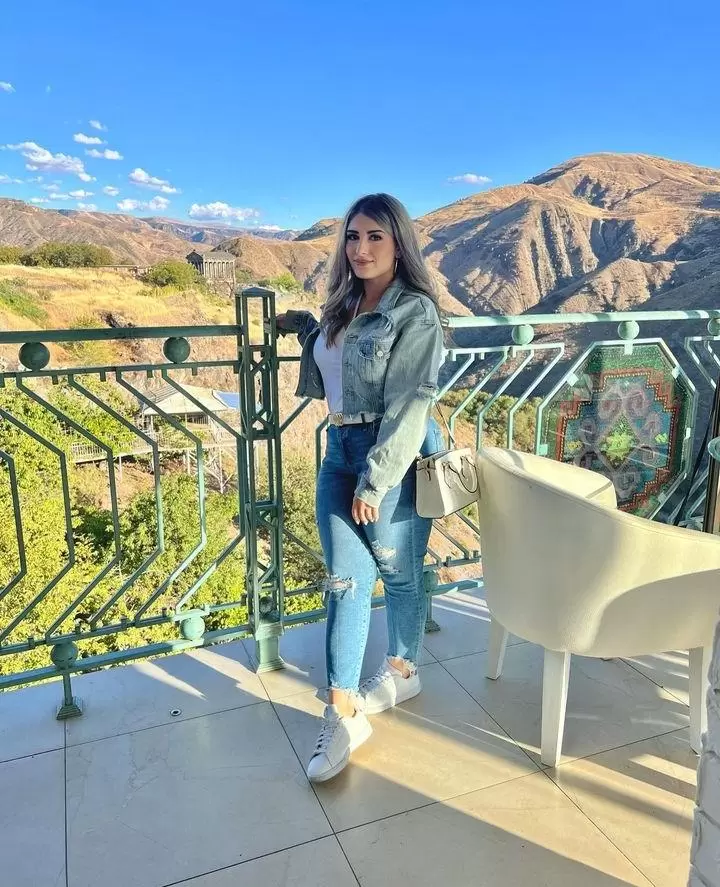
This double denim look pairs a classic denim jacket with ripped jeans for casual sightseeing days. The white sneakers keep the outfit grounded while the neutral crossbody bag adds a practical element without competing with the denim textures. Perfect for exploring markets or casual neighborhood walks.
Green Patterned Midi Dress
A printed midi dress in green tones offers an ideal solution for warm weather touring in Russia. The three-quarter sleeves provide sun protection while remaining cool, and the midi length with nude sandals creates an elegant line that’s appropriate for visiting churches or cultural sites with modest dress requirements.

Colorful Cardigan with Neutral Base
This vibrant geometric cardigan worn over cream separates shows how to add personality to basic pieces. The long cardigan length creates a flattering vertical line while the neutral base outfit lets the colorful pattern be the focal point. The white chunky sneakers modernize what could be a conservative look.
Quick tip
Pack one midi or maxi dress with sleeves for easy Orthodox church visits without outfit changes.

Black Dress with Cream Fur Coat
A fitted black dress paired with an oversized cream fur coat creates dramatic contrast perfect for Russian winter evenings. The mini dress length balanced by the long coat maintains elegance while the bold red lipstick adds a pop of color that complements the monochromatic base. This works beautifully for upscale dining or cultural events.

Tonal Neutrals with Statement Boots
This head-to-toe beige look proves monochrome dressing works when you mix textures and add one standout piece. The knee-high cognac boots break up the neutral palette and create a focal point that draws the eye up and down your silhouette. Perfect for Russia’s café culture and city walking, where you need to look put-together but stay comfortable for hours.

Relaxed Black Coordinates with Pop Bag
A matching cardigan and wide-leg trouser set gives you the comfort of loungewear with the polish of separates. The animal print bag adds personality without overwhelming the simple base, while the flat sandals keep everything grounded and walkable. This works beautifully for Russia’s unpredictable weather since you can layer underneath or remove the cardigan as needed.
Quick tip
Choose crossbody bags with zippers to keep belongings secure while navigating crowded metros and markets.

Wrap Dress with Ankle-Strap Sandals
A midi wrap dress in a small print flatters every body type while staying appropriate for Russia’s more conservative dress codes. The ankle-strap sandals elongate the legs without being too formal, and the three-quarter sleeves provide coverage for visiting religious sites. The teal and rust colors feel fresh against blonde hair and work well with Russia’s often overcast skies.

Pink Blazer with Casual Base
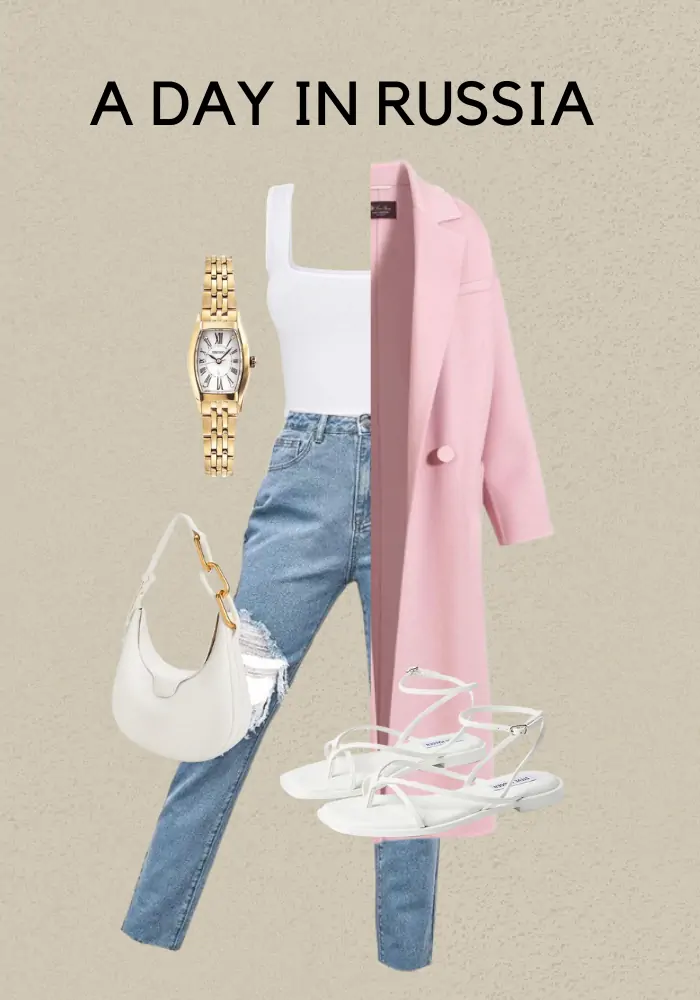
A structured pink blazer transforms basic jeans and a white top into something special enough for dinner but relaxed for daytime exploring. The straight-leg jeans create a clean line that works with the tailored blazer, while white strappy sandals keep the whole look from feeling too serious. This combination works particularly well in Russia’s summer months when you want color but need versatility.
Key takeaways
- Layer strategically with removable pieces like cardigans and blazers to adapt to Russia’s changing temperatures throughout the day
- Choose knee-high boots over ankle boots for better protection against wet streets and to create a more polished silhouette with dresses and skirts
- Pack modest coverage pieces like three-quarter sleeves and midi lengths for visiting Orthodox churches and cultural sites
- Invest in walkable statement shoes that can handle cobblestones and long days of sightseeing while still looking stylish
- Mix textures within monochrome outfits to create visual interest without relying on bold colors or patterns
- Choose bags with secure closures and wear them across your body for safety while navigating busy Russian cities
What To Wear In Florence? 29 Outfit Ideas & Packing Tips
What To Wear in Hong Kong? 25 Outfits and Packing List
How to wear Plaid Pants? 20 Outfit Ideas & Styling Tips
30 Best Men’s Outfit Ideas to Wear with Monk Strap Shoes
What to Wear to the Opera? A Complete Guide with Outfit Ideas
How to Wear Low Rise Jeans? 10 Outfit Ideas
How To Wear Sherpa Jackets – 23 Outfit Ideas
How to Wear Tan Shoes for Girls ? 30 Outfit Ideas