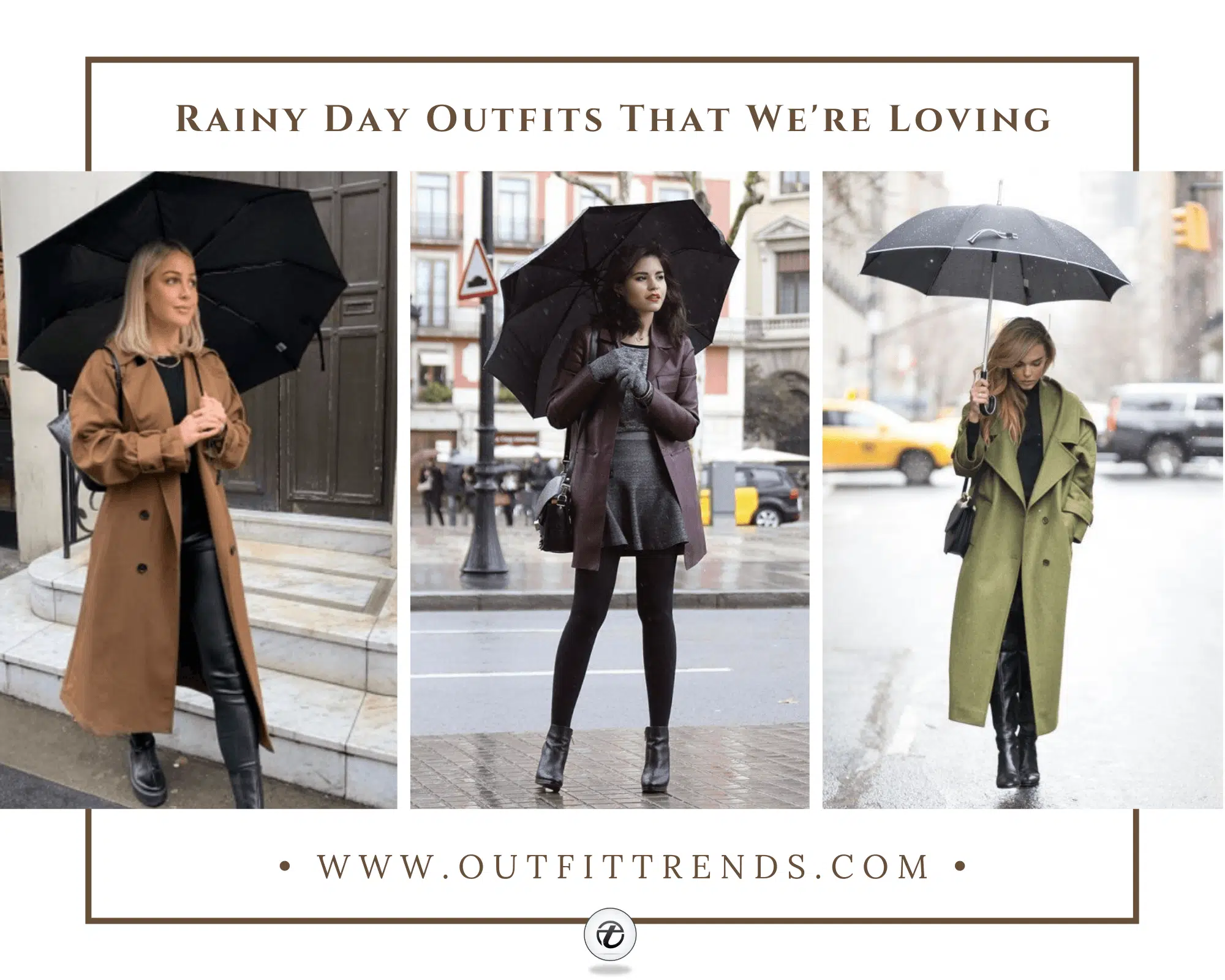


Here’s what I learned the hard way: most women treat raincoats like plastic bags — something to throw over an outfit and endure. I spent years doing exactly this, buying cheap transparent macs that made me look like I was smuggling groceries. The breakthrough came when I realised raincoats aren’t emergency gear — they’re the foundation of your wet-weather wardrobe.
After twelve years of styling women through British weather, I’ve watched countless clients struggle with the same problem. They invest in beautiful clothes, then hide them under shapeless waterproofs that drain every ounce of style from their look. The solution isn’t buying more expensive rain gear — it’s understanding how to choose and style what you already own.
Styling Tips
Choose structure over coverage. A well-fitted trench coat that hits mid-thigh will keep you drier than an oversized mac that flaps around your ankles. Water runs off clean lines more efficiently, and you won’t look like you’re drowning in fabric. I learned this watching Parisians navigate downpours in tailored coats while tourists struggled with billowing ponchos.
Layer strategically underneath. Your raincoat should accommodate one thin layer — a lightweight jumper or blouse, never a chunky knit. When you try to squeeze too much underneath, the coat pulls across your back and shoulders, creating gaps where water seeps in. The rule: if you can’t move your arms freely, you’re wearing too much.
Master the belt placement. Most women cinch their raincoat belt at the natural waist, but this creates bulk where you’re already widest. Instead, position it slightly higher — just under your ribcage. This creates a longer line from hip to hem and prevents the dreaded barrel effect that makes everyone look shapeless.
Coordinate with your umbrella, not your outfit. A classic black umbrella works with any coat colour, but matching your umbrella to your raincoat creates a intentional look that elevates the whole ensemble. I keep a navy umbrella specifically for my navy trench — it’s the difference between looking caught in rain versus prepared for it.
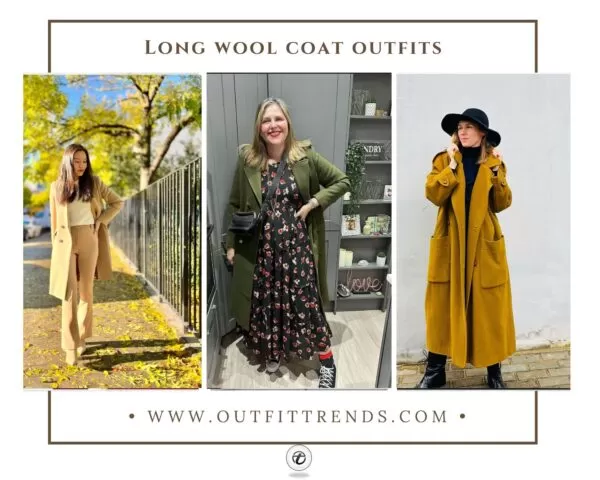
Long Wool Coat Outfit Ideas – 22 Ways To Style Them
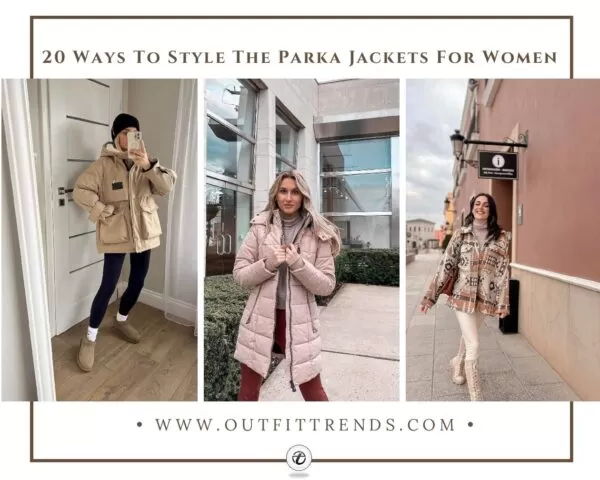
How To Wear Parka Jackets For Women 20 Outfit Ideas
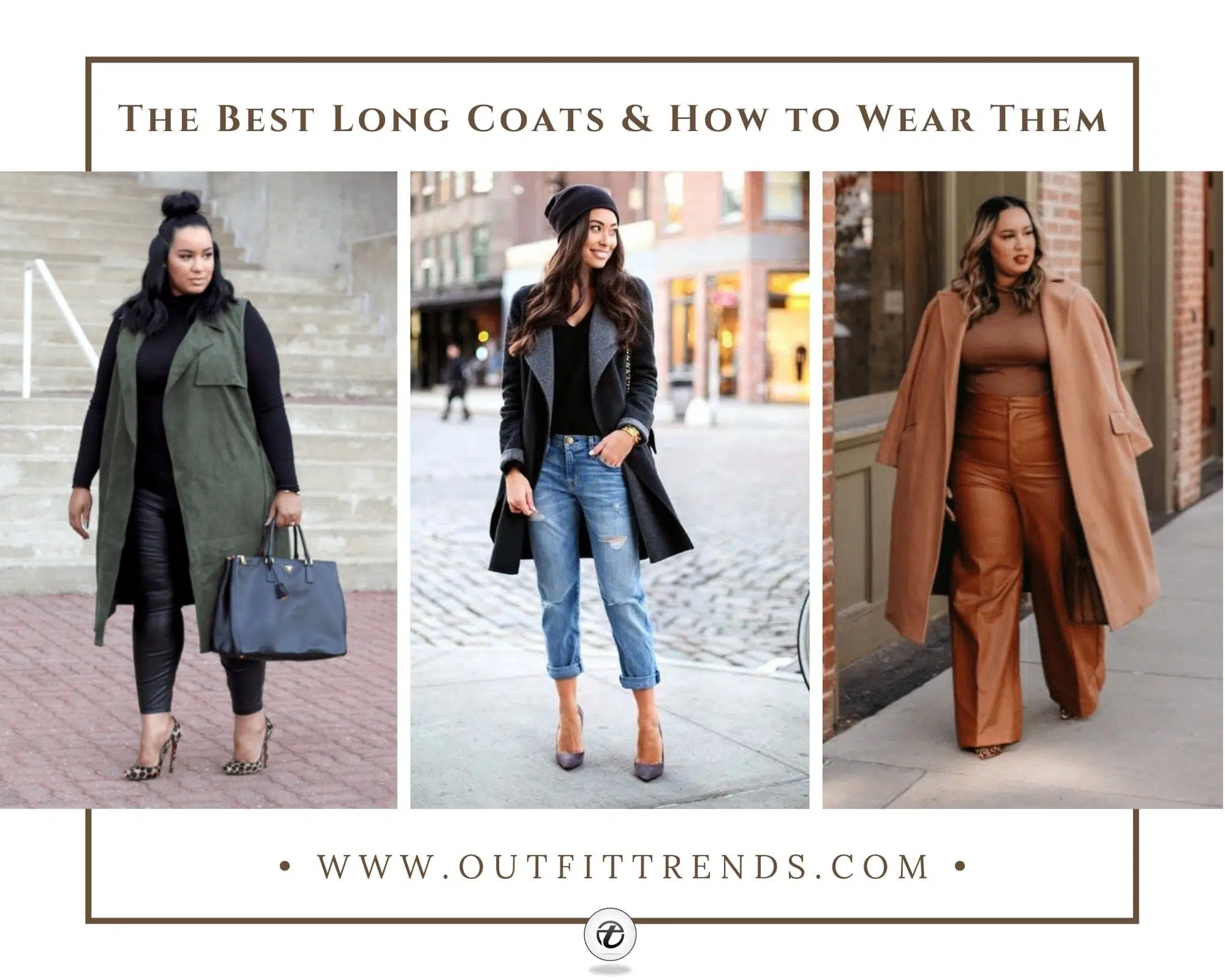
20 Stylish Long Coat Outfit Ideas to Save for This Year

How To Wear Plaid Coats? 18 Outfit Ideas with Styling Tips
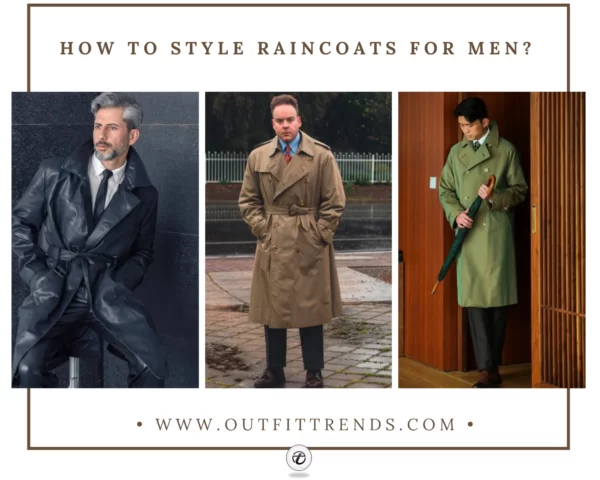
How To Style Rain Coats for Men: 40 Trendy Ways
How To Style A Denim Vest For Women? 20 Outfit Ideas

23 Beautiful Karwa Chauth Outfit Ideas For Women To Try
How to Style Pinstripes? 17 Outfit Ideas for Women
The iconic Burberry trench coat was originally designed for British officers in World War I. The distinctive shoulder straps and D-rings weren’t fashion details — they held military equipment and maps, making the trench both functional and status symbol.
Invest in proper sleeves. Three-quarter sleeves on a raincoat are worse than useless — they create a gap where water runs straight down your arms. Full-length sleeves with adjustable cuffs are non-negotiable. The cuffs should sit snugly against your wrists when fastened, creating a seal that keeps water from running up your sleeves.
Mind the hemline relationship. Your coat should be longer than whatever you’re wearing underneath, but not by much. If your dress hits mid-calf, your raincoat should reach just below the knee. Too much length difference creates an awkward visual break that makes you look shorter and the proportions feel wrong.
Dos & Don’ts
Raincoat Outfit Ideas That Actually Work
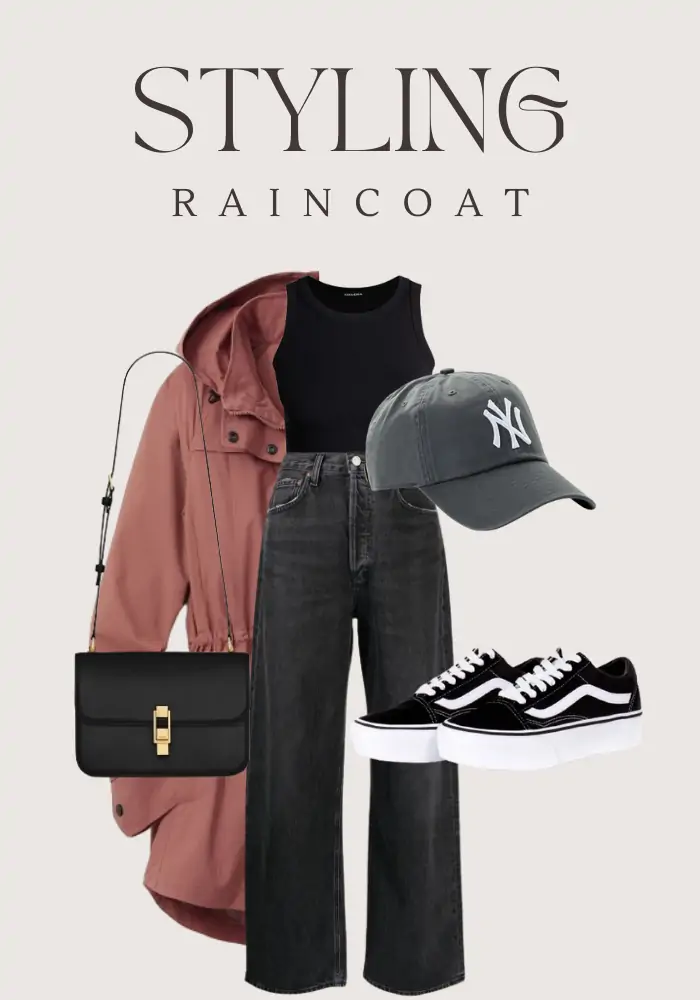
Dusty Pink Raincoat with Black Basics
This dusty pink raincoat transforms a simple black tank and cropped jeans into something that looks intentional rather than thrown-together. The muted pink shade works because it’s not trying too hard — it reads as neutral while adding just enough color interest. This combination works best on women who want to look put-together in bad weather without sacrificing comfort or practicality.
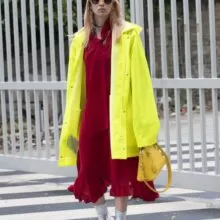
Bright Yellow Statement Raincoat
A bold yellow raincoat becomes the entire outfit when paired with a simple red dress underneath. The key here is letting one piece do all the talking — the coat is dramatic enough that everything else should stay simple. This works particularly well for women who love color but want to keep their base wardrobe neutral, since one statement raincoat can transform multiple basic pieces.
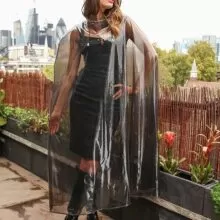
Clear Raincoat for Showing Off Underneath
The transparent raincoat trend only works if what’s underneath is worth showing — and this black outfit delivers. Choose fitted pieces beneath clear coats because loose layers create visual chaos through the plastic. This style suits women who’ve invested in a good base outfit and don’t want weather to hide their effort.
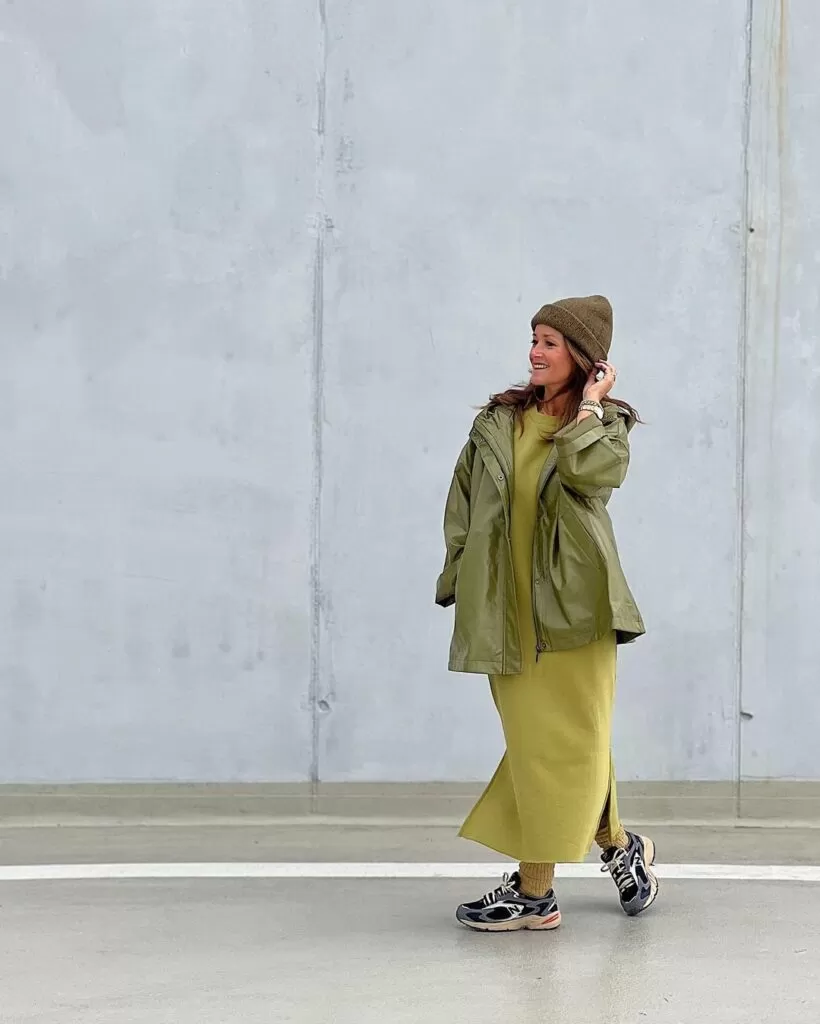
Olive Green Utility Raincoat
An olive green raincoat with a yellow knit dress creates an unexpectedly fresh color combination that feels both practical and considered. The structured utility details on the coat add visual interest without being precious about it. This approach works for women who want their rainwear to feel like a proper jacket that happens to be waterproof, rather than obvious rain gear.
Quick tip
Choose structured raincoats over shapeless ones — they work as actual outerwear, not just emergency gear.
Color-Block Athletic Raincoat
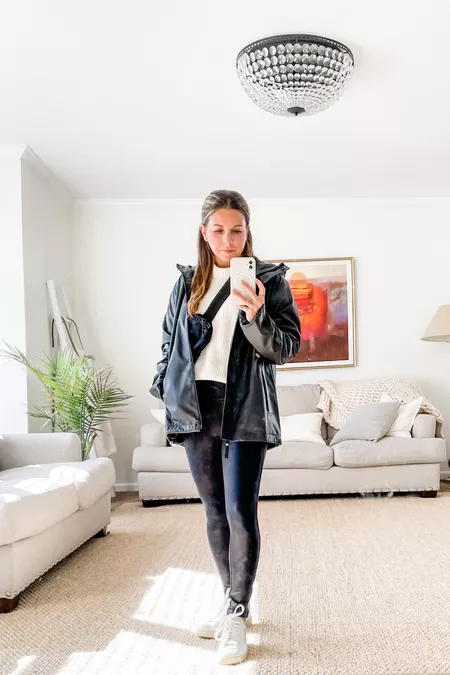
This navy and white windbreaker-style raincoat proves that sporty rain protection doesn’t have to look sloppy when paired with fitted black leggings and clean white sneakers. The color-blocking creates structure and the athletic cut actually flatters more body types than traditional A-line raincoats. Perfect for women who prioritize movement and comfort but still want to look intentional.

Oversized Black Raincoat as Outerwear
A long, oversized black raincoat worn open creates the same silhouette as a duster coat — it just happens to be waterproof. The relaxed proportions work because everything underneath stays fitted, creating balance rather than drowning the wearer. This suits women who want one coat that works for both rain and regular cool weather without looking too technical.
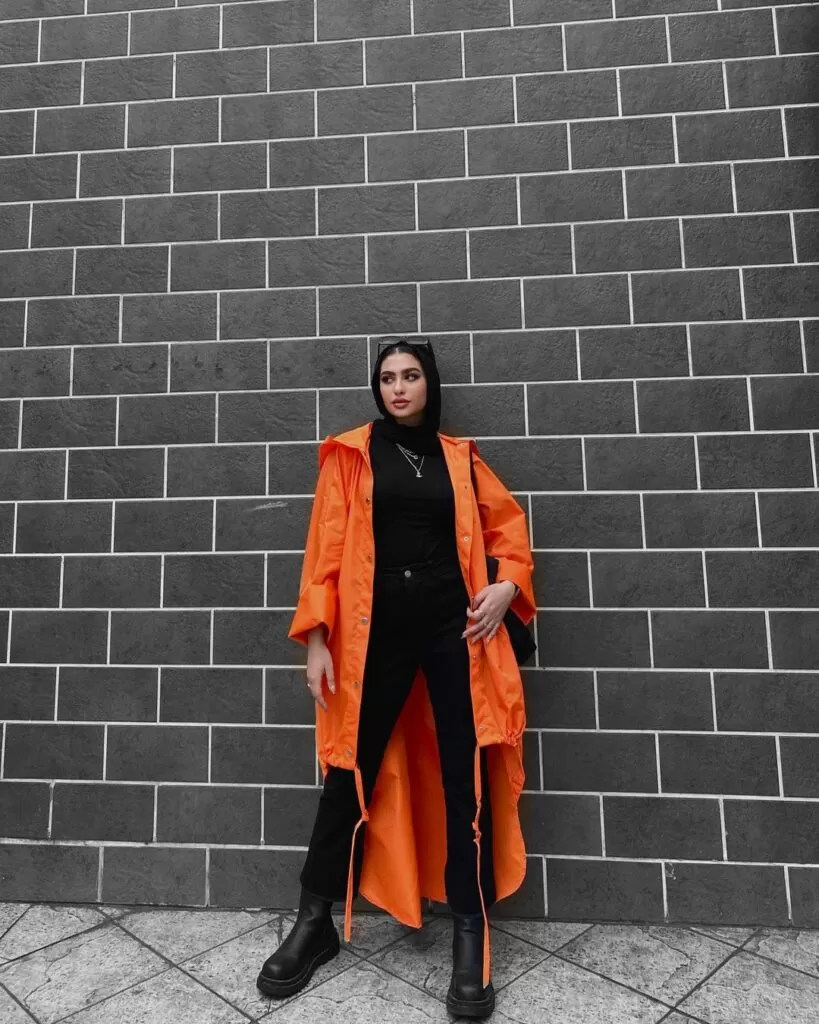
Bold Orange Long Raincoat
This bright orange raincoat makes a dramatic statement against an all-black base, proving that one pop of unexpected color can completely change how rain gear reads. The ankle-length cut elevates it beyond typical rainwear into something that feels more like a fashion choice. Works best for women who enjoy standing out and aren’t afraid of a little attention.
Quick tip
Layer thin knits under rain jackets rather than bulky sweaters that create unflattering silhouettes.
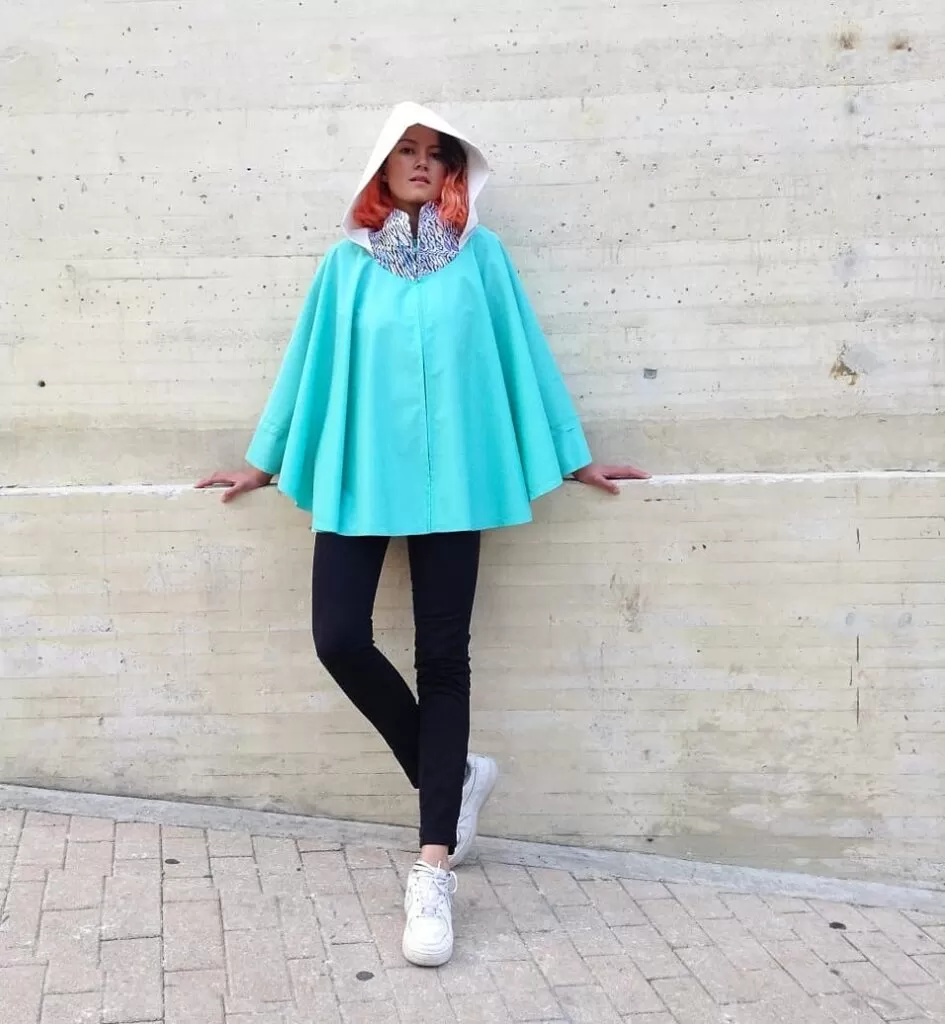
Mint Green Hooded Rain Poncho
A mint green poncho-style raincoat creates an interesting silhouette when the proportions are right — fitted bottoms balance the volume on top. The unexpected color choice makes practical rain protection feel fresh rather than purely functional. This style suits women who want maximum coverage without the bulk of traditional raincoats, though it requires confidence to pull off the dramatic proportions.
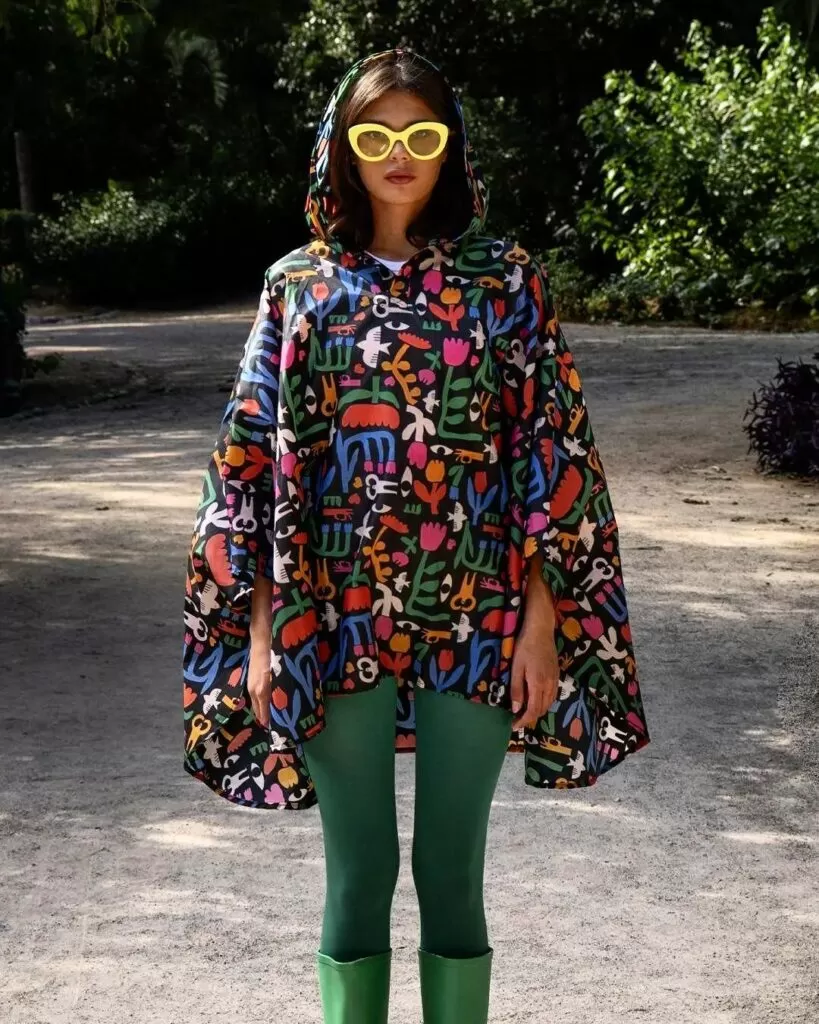
Patterned Hooded Rain Poncho
A bold printed raincoat in poncho form becomes wearable when you pick up one color from the print in your accessories — here, the green boots echo the green elements in the pattern. The key is not trying to match perfectly but creating a color connection that feels intentional. This works for women who love pattern but struggle to incorporate it into their regular wardrobe.
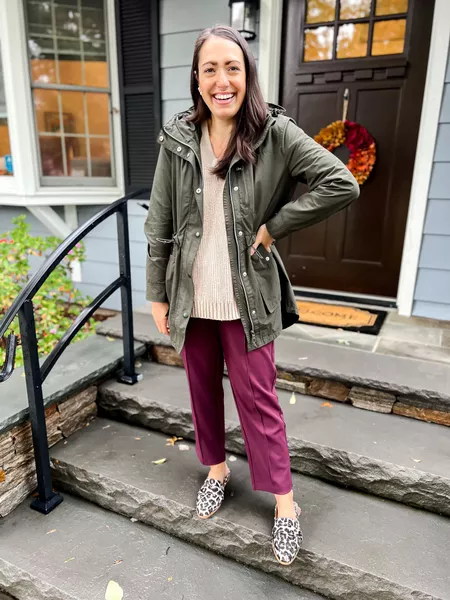
Classic Green Parka-Style Raincoat
An olive green parka-style raincoat layers perfectly over a neutral sweater, creating the kind of effortless layering that looks expensive regardless of actual price point. The wine-colored pants add unexpected richness without competing with the coat. This combination works for women who want their rainwear to feel like a natural extension of their regular style rather than a weather-driven compromise.
Quick tip
Roll raincoat sleeves to show you’re styling intentionally and prevent the drowned-in-fabric look.
Plaid Coat With Layered Casual Pieces
A black and white gingham coat becomes the statement piece over a grey knit sweater, red scarf, and rolled denim jeans. The mixed patterns and textures create visual interest without overwhelming the look, while the baseball cap adds an unexpected sporty touch. This layered approach works perfectly for unpredictable weather and busy days when you need to look put-together but comfortable.

Key takeaways
- Choose raincoats in classic patterns like plaid or solid colors that work with your existing wardrobe rather than trend-driven prints
- Layer strategically with fitted pieces underneath to avoid bulk while maintaining warmth and style
- Mix textures and patterns confidently — one patterned piece can anchor an outfit of varied materials
- Accessorize raincoats with casual elements like caps or scarves to make practical outerwear feel more personal
- Roll or cuff sleeves and hems to show intentional styling rather than drowning in oversized rain gear
- Build around one statement rain piece and keep everything else simple and well-fitted
Long Wool Coat Outfit Ideas – 22 Ways To Style Them
How To Wear Parka Jackets For Women 20 Outfit Ideas
20 Stylish Long Coat Outfit Ideas to Save for This Year
How To Wear Plaid Coats? 18 Outfit Ideas with Styling Tips
How To Style Rain Coats for Men: 40 Trendy Ways
How To Style A Denim Vest For Women? 20 Outfit Ideas
23 Beautiful Karwa Chauth Outfit Ideas For Women To Try
How to Style Pinstripes? 17 Outfit Ideas for Women