

The fashion industry is obsessed with labeling everything — and they’re getting it wrong. I’ve watched clients spend hundreds on “vintage” pieces that are barely twenty years old, while genuine antiques sit ignored in estate sales. The confusion between retro, vintage, and antique clothing isn’t just semantic — it’s costing you money and style opportunities.
After twelve years styling women and hunting through countless thrift stores, flea markets, and estate sales, I’ve learned that understanding these distinctions changes how you shop, what you pay, and most importantly, how you wear these pieces. A true 1950s circle skirt moves differently than a modern retro reproduction. An antique Victorian blouse requires different styling than a vintage 1970s peasant top. The age isn’t just a number — it determines the entire approach.
Most women think vintage means “old-looking” and retro means “trendy throwback,” but both assumptions will lead you to the wrong pieces at the wrong prices. Here’s what these terms actually mean and why it matters for your wardrobe.
Key Differences between the Terms
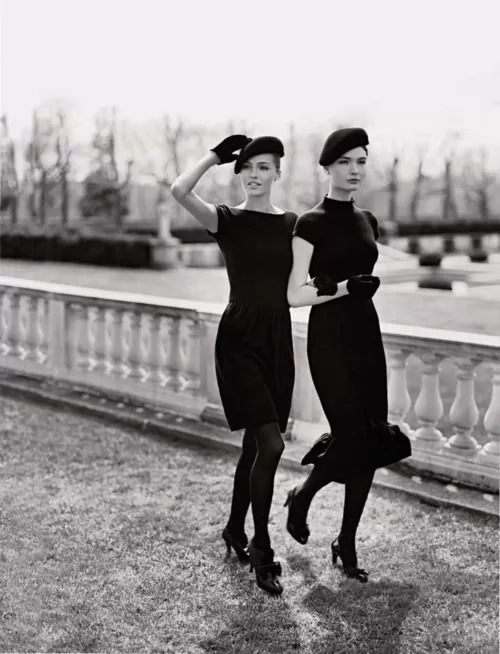
Antique Elegance Never Ages
These black dresses from what appears to be the 1920s show why antique pieces (100+ years old) have staying power. The clean lines, quality construction, and timeless silhouettes work because they were built to last through multiple fashion cycles. Antique pieces often feature hand-finished details and construction techniques that modern manufacturers can’t replicate at any price point.
Mid-Century Colors Tell the Story
This 1940s or 1950s photograph demonstrates how vintage pieces (20-100 years old) reflect the specific color palettes and styling of their era. Notice how the red and yellow combinations were considered harmonious then — vintage pieces teach you about period-appropriate color theory that can refresh your modern wardrobe when applied thoughtfully.

Victorian Details Require Special Handling
This elaborate Victorian dress shows why antique clothing demands different care and styling than newer pieces. The multiple tiers, intricate trims, and structured silhouette were designed for a completely different lifestyle and body shape. Antique pieces like this work best as statement pieces rather than everyday wear.
21 Ways To Make Modern Clothes Look Vintage
Vintage Outfit Ideas – 23 Tips to Get a Vintage Look
20 Best Outfits for Women With Taurus Zodiac Sign
90s Fashion for Women – 13 Top Picks That Are Still Relevant
How To Wear Cottagecore Outfits 23 Aesthetic Ideas
Y2k Outfit Ideas 24 Y2k Aesthetics and Fashion Ideas

20 Best Outfits for Libra Women to Have in Their Wardrobes
30 Ideas What to Wear to a Tea Party for Chic Look

Modern Retro Lacks Authentic Construction
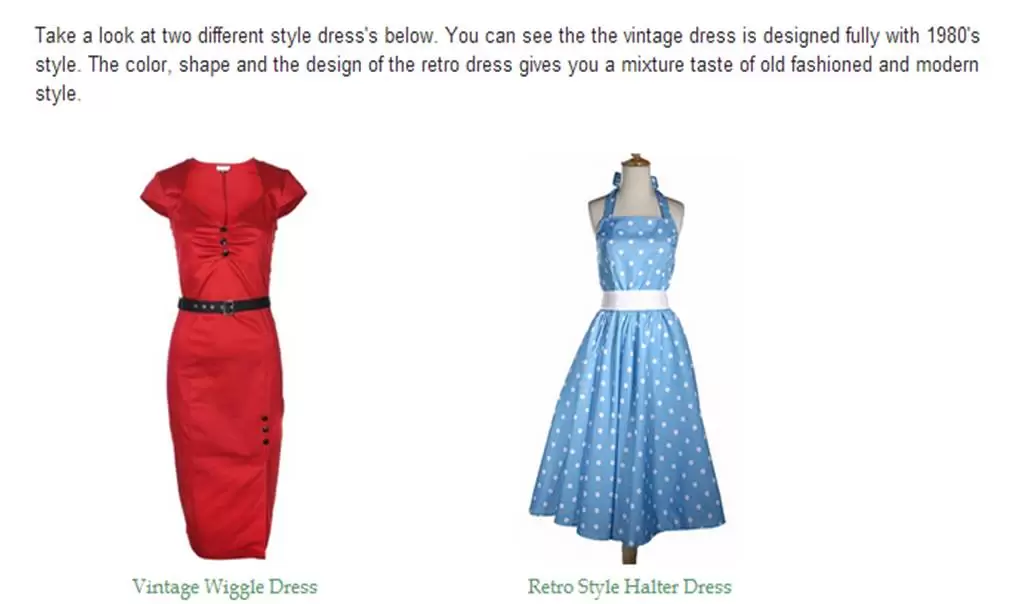
These contemporary dresses labeled as “retro” demonstrate the key difference — they’re new pieces designed to evoke past eras rather than originate from them. The red wiggle dress and blue polka dot piece use modern fabrics and construction methods to approximate 1950s silhouettes, making them more practical for regular wear than authentic vintage.
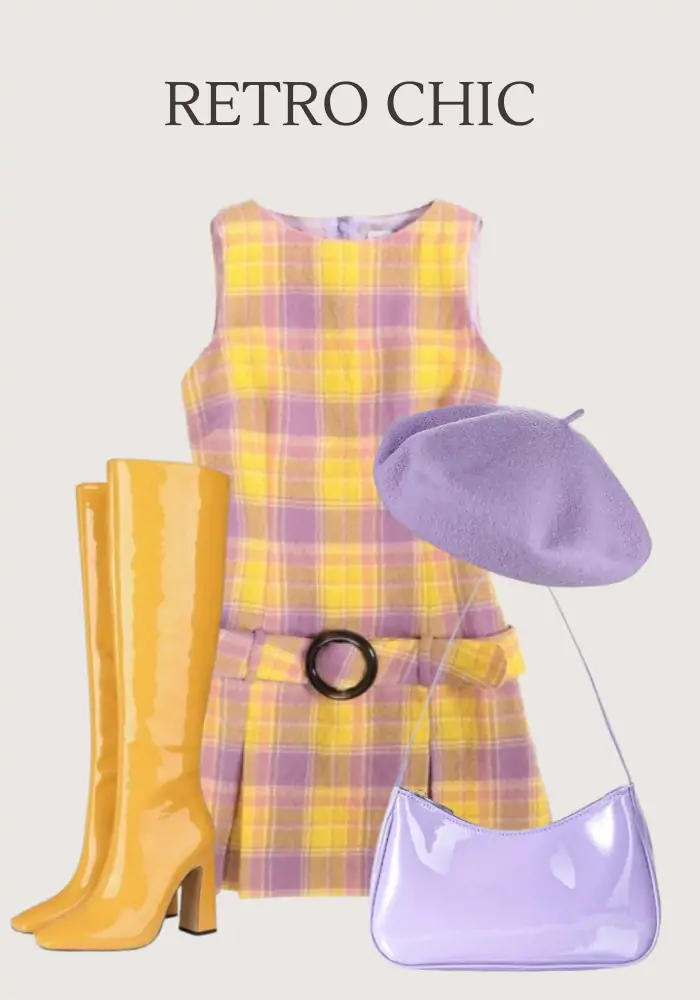
Pattern Mixing Shows Era Confidence
This retro-styled outfit mixing plaid patterns with bold accessories shows how modern retro pieces let you experiment more freely. You can combine elements from different decades without worrying about historical accuracy because these are interpretations, not museum pieces. The purple and yellow color scheme would never appear in authentic 1960s pieces but works perfectly in retro styling.
The term “vintage” only became widely used in fashion during the 1960s, when young people started raiding their parents’ wardrobes for 1940s pieces. Before then, old clothes were just called “secondhand” regardless of their age or style significance.
Historical Context Changes Everything
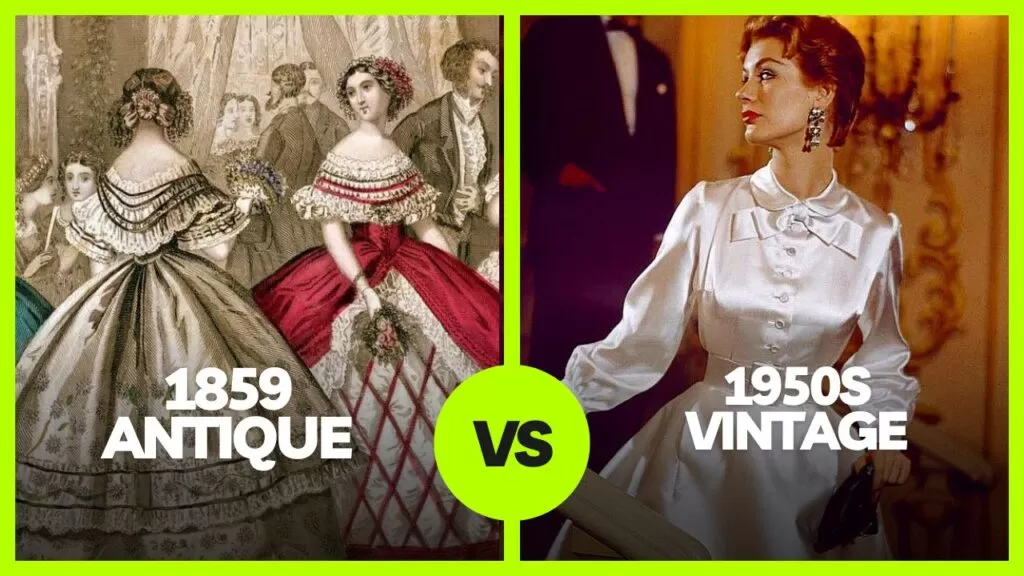
This comparison between 1859 antique fashion and 1950s vintage illustrates why age categories matter. The antique pieces required corsets, multiple petticoats, and servants to dress properly, while the vintage 1950s clothing was designed for women with more independence. Understanding this context helps you choose pieces that fit your actual lifestyle.
Authentic Vintage Has Unique Drape
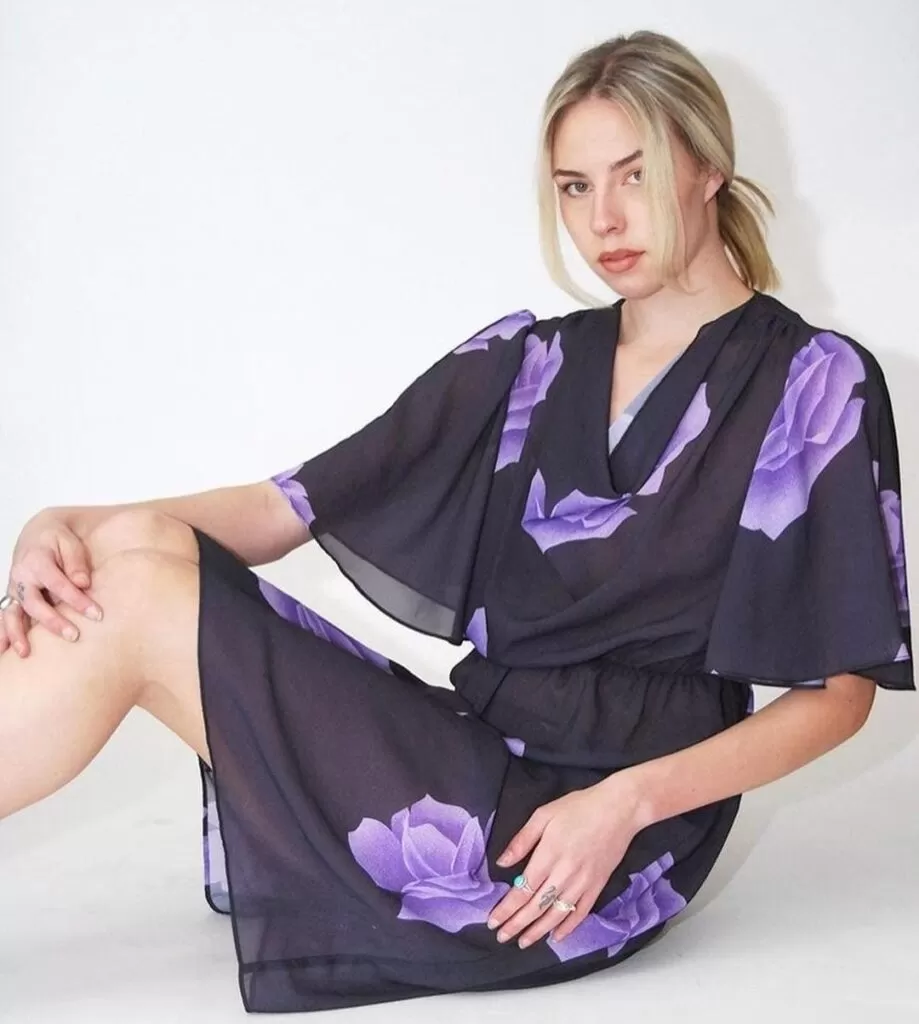
This 1970s-style dress demonstrates how genuine vintage fabrics move differently than modern reproductions. The way this floral print falls and the sleeve construction reflect the manufacturing techniques of the era. Vintage pieces often use fabric blends and cutting methods that create distinctive silhouettes you can’t replicate with contemporary clothing.
Modern Retro Embraces Impractical Elements
This contemporary outfit mixing Victorian-inspired sleeves with modern accessories shows retro styling at its best — taking impractical historical elements and making them wearable. The sheer sleeves and statement necklace create drama without the restrictions of authentic period dress. This is retro done right.

Pattern Recognition Reveals True Age
This 1970s-inspired outfit showcases how authentic vintage patterns differ from modern interpretations. The specific geometric shapes, color combinations, and print scale reflect the design sensibilities of their era. Modern retro pieces often exaggerate these elements or combine them in ways that would never have occurred in the original period.

Era Styling Requires Period Accessories
This 1980s-themed outfit demonstrates why complete era styling matters more than individual vintage pieces. The hair, makeup, and overall aesthetic work together to create authenticity. When wearing vintage or retro pieces, the supporting elements — from jewelry to shoes — determine whether the look feels genuine or costume-like.
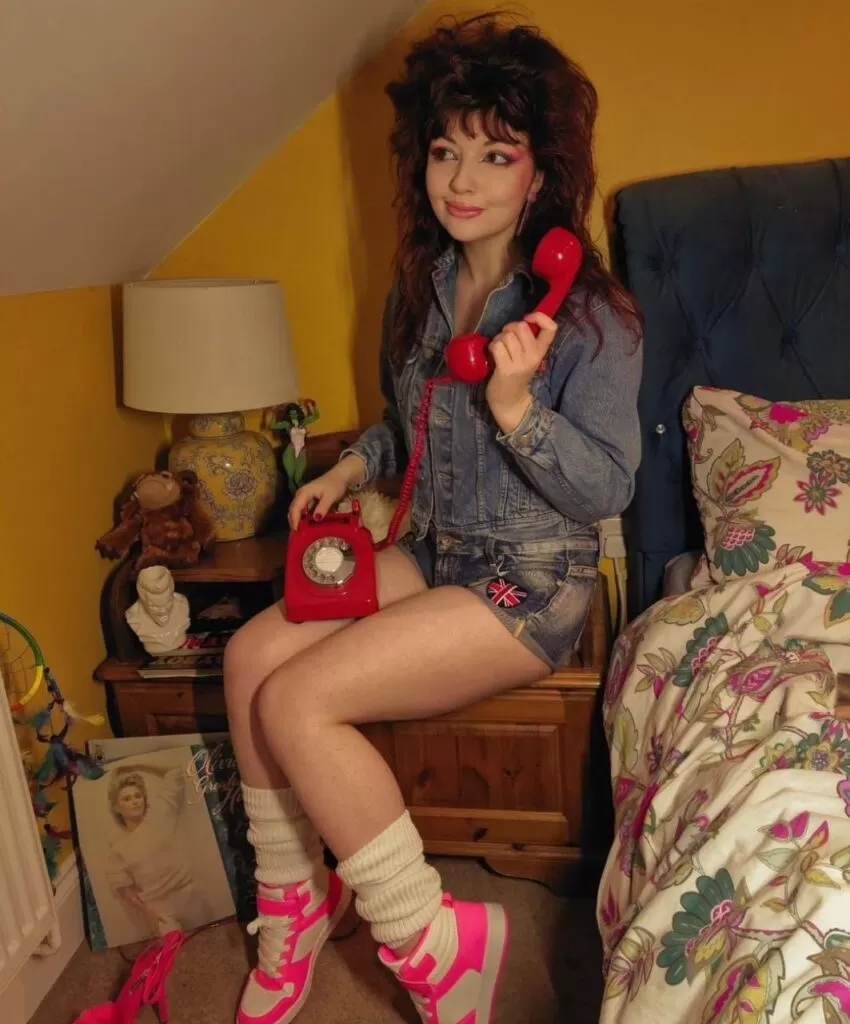
Dos & Don’ts
Vintage-Inspired Outfits That Define Each Era
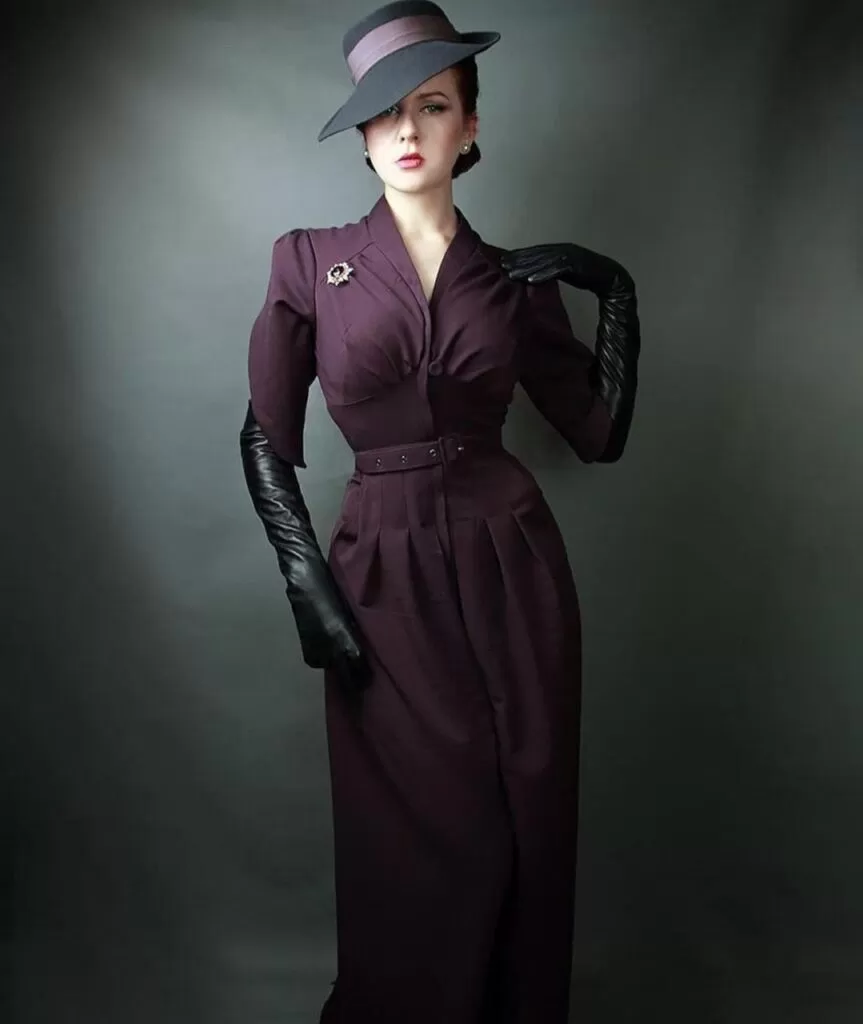
1940s Burgundy Suit with Statement Hat
This fitted burgundy suit captures authentic 1940s tailoring with its nipped waist, structured shoulders, and midi-length skirt. The wide-brimmed hat with pink ribbon and long black gloves complete the wartime glamour aesthetic perfectly. This look works best for women who want to make a dramatic statement at vintage events or theatrical occasions.
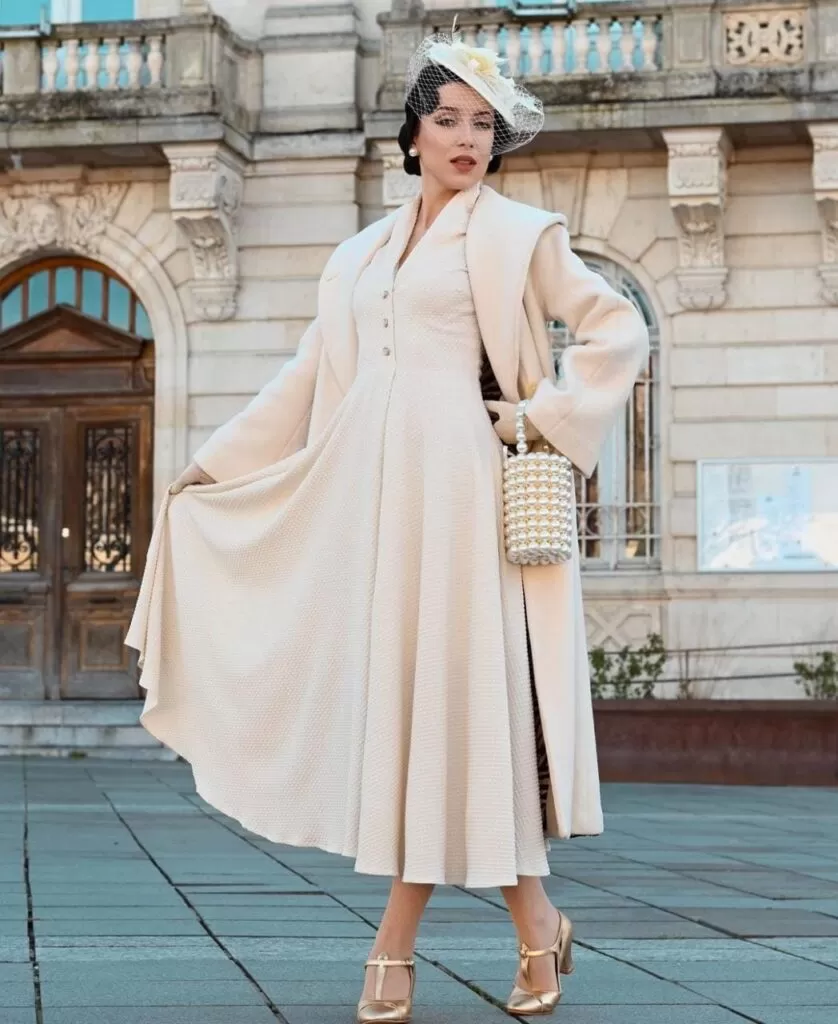
Cream Coat Dress with Pearl Details
A classic 1950s-style coat dress in cream with button-front closure and full circle skirt creates timeless feminine appeal. The matching fascinator, pearl handbag, and T-bar heels maintain period accuracy while feeling completely wearable today. This outfit suits women attending formal daytime events like garden parties or afternoon weddings.
Floral Midi Dress with Wide-Brim Hat
This printed midi dress with short sleeves and full skirt channels effortless 1950s summer style. The coordinating wide-brim straw hat and leather belt add authentic vintage touches without feeling costume-like. Perfect for women who want vintage charm that transitions easily from brunch to outdoor events.

Key takeaways
- True vintage pieces date from specific eras — look for authentic construction details like hand-finished seams and period-appropriate silhouettes
- Retro clothing reproduces vintage styles with modern fits — choose retro for everyday wearability without the fragility of original pieces
- Antique clothing predates 1920 — reserve these museum pieces for special collections rather than regular wear
- Accessories make or break vintage looks — invest in period-appropriate hats, gloves, and shoes to complete the authentic aesthetic
- Fit matters more than age — alter vintage pieces properly or choose retro reproductions that flatter your body type
- Mix eras carefully — stick to one decade per outfit to avoid looking like you raided a costume trunk
21 Ways To Make Modern Clothes Look Vintage
Vintage Outfit Ideas – 23 Tips to Get a Vintage Look
20 Best Outfits for Women With Taurus Zodiac Sign
90s Fashion for Women – 13 Top Picks That Are Still Relevant
How To Wear Cottagecore Outfits 23 Aesthetic Ideas
Y2k Outfit Ideas 24 Y2k Aesthetics and Fashion Ideas
20 Best Outfits for Libra Women to Have in Their Wardrobes
30 Ideas What to Wear to a Tea Party for Chic Look