

The biggest mistake I see women make with South Indian sarees is treating them like they’re museum pieces. I watch friends buy gorgeous Kanjeevarams and then let them sit in wardrobes for months because they’re “too special” for regular occasions. Growing up, my nani wore her silk sarees to the temple every Friday — not just weddings. She understood what many of us have forgotten: these sarees are meant to be lived in.
South Indian sarees demand a completely different approach than their northern counterparts. The silks are heavier, the borders are bolder, and the draping sits differently on your body. I’ve learned this through years of wearing them wrong — trying to style a Mysore silk like it’s a chiffon saree, or picking the wrong blouse cut for a heavy Kanjeevaram. The weight changes everything about how you move, sit, and even breathe in these sarees.
The real art isn’t just in wearing them — it’s in making them work for your lifestyle. Whether you’re navigating a Tamil wedding in Chennai or wearing one to Diwali celebrations in London, these sarees carry cultural weight that goes beyond fabric. They’re investments that should enhance your presence, not overwhelm it.
Styling Tips
Choose contrast borders over tone-on-tone
The green saree with the rich gold border demonstrates exactly why contrast works so powerfully with South Indian silks. The heavy zari border needs that colour separation to define your silhouette — when the border blends into the body of the saree, you lose the structure that makes these pieces so striking. This creates clean lines that photograph beautifully and hold their shape through long celebrations.
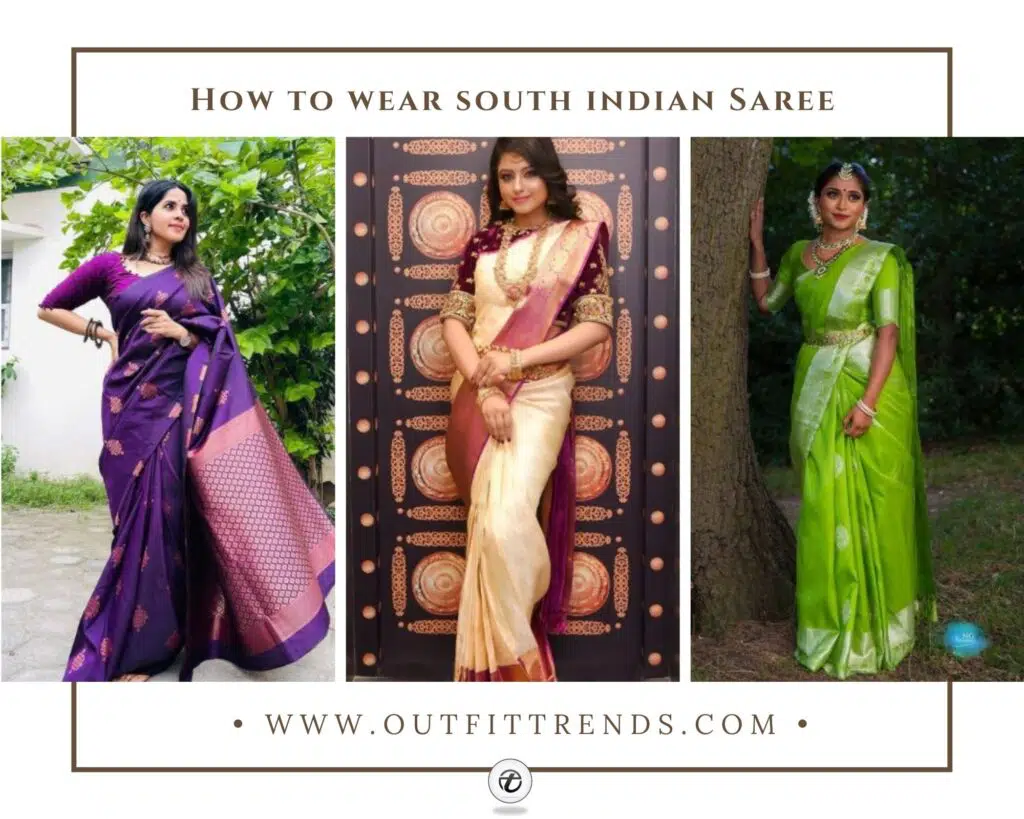
Opt for fitted blouses with heavy silks
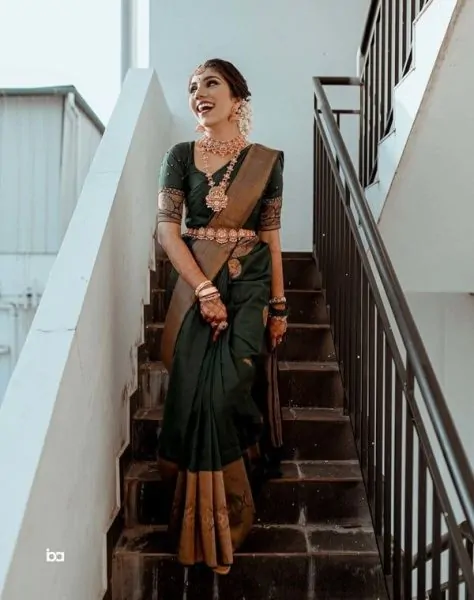
The deep green Kanjeevaram shows how a well-fitted blouse becomes crucial with heavier fabrics. Unlike lighter sarees where you can get away with looser fits, heavy silks need that tailored foundation to prevent bunching around the waist and shoulders. The structured blouse also provides the support your torso needs when carrying several yards of silk — comfort matters as much as appearance.
Master the half-saree drape for younger looks
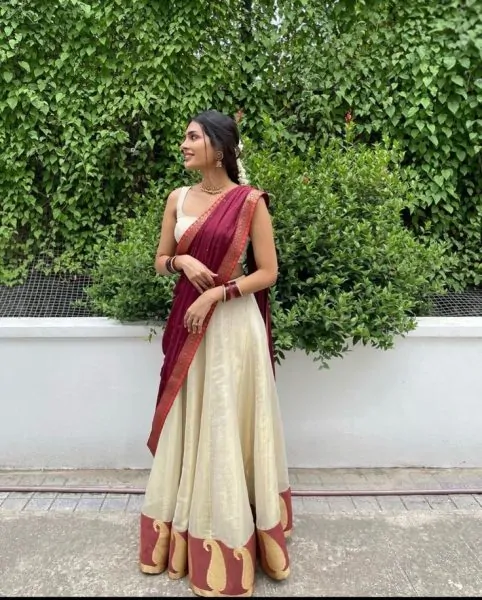
This burgundy and cream combination shows how the half-saree style keeps traditional fabrics feeling fresh. The lehenga-style bottom gives you more freedom of movement while still showcasing the beautiful silk, and the shorter pallu creates a more casual silhouette. This works particularly well for pre-wedding functions where you want tradition without the full formality.
How To Wear A Net Saree? 23 Best Styling Tips & Ideas
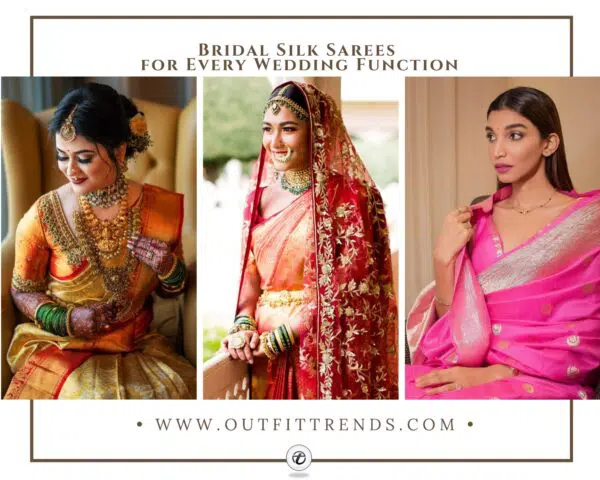
14 Latest Bridal Silk Saree Designs and Styling Tips
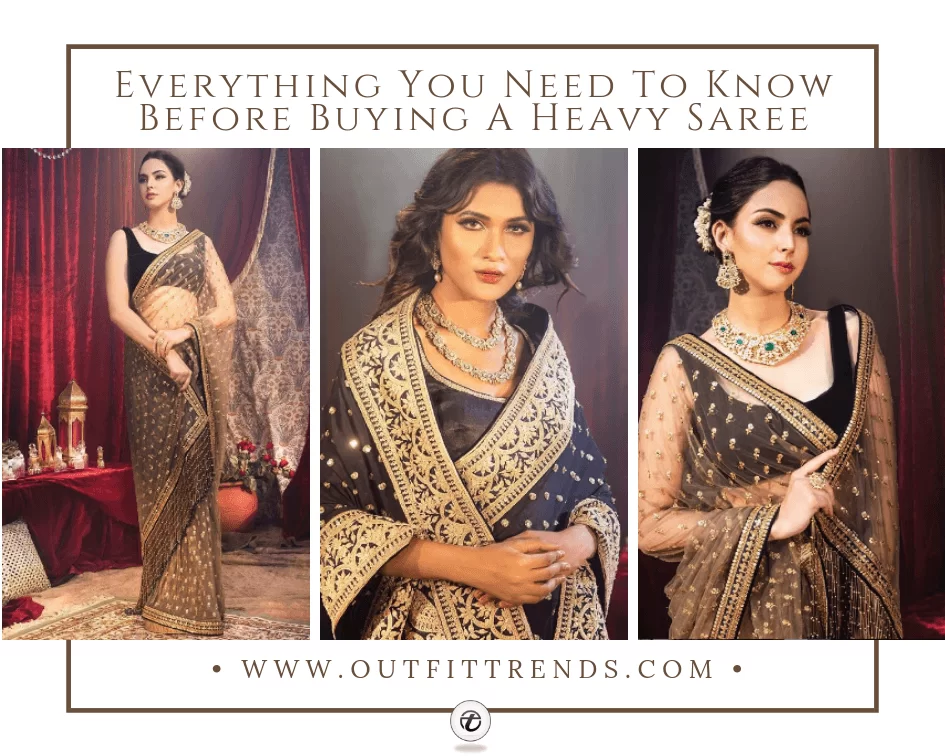
How To Wear A Heavy Saree – 10 Best Styling Tips & Ideas
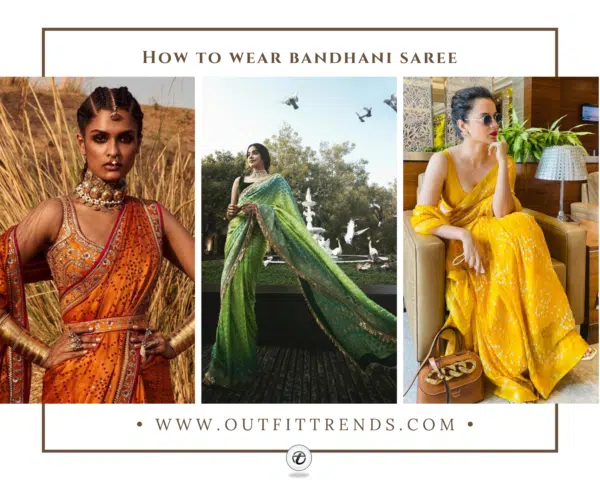
How To Wear a Bandhani Saree? 20 Best Styling Tips
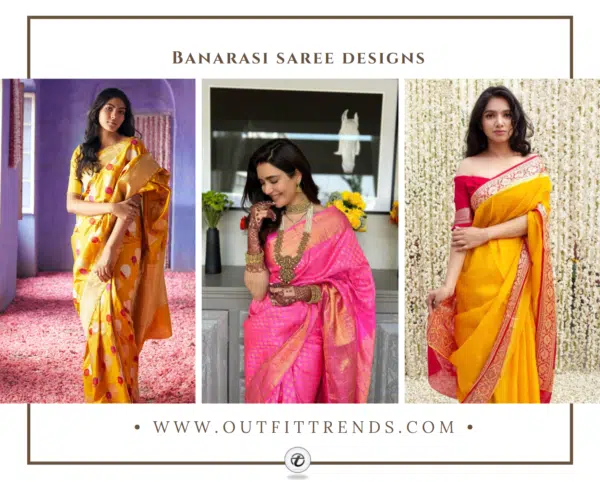
16 Best Banarasi Saree Designs and Styling Tips
20 Latest Silk Blouse Saree Designs and Styling Tips
How To Wear A Saree With A Corset Blouse? 20 Tips
21 Best Silk Saree Designs and Ideas How to Wear
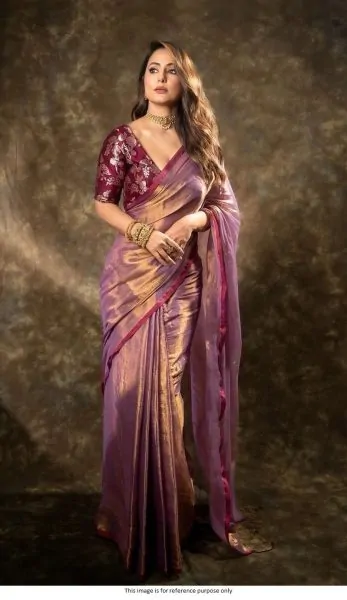
Layer gold jewellery with silk sarees
The purple silk paired with traditional gold demonstrates why this combination never fails. The warm undertones in most South Indian silks are designed to complement gold — silver often looks jarring against these rich colours. The key is choosing pieces that echo the saree’s weight: delicate gold with lighter silks, substantial temple jewellery with heavy Kanjeevarams.
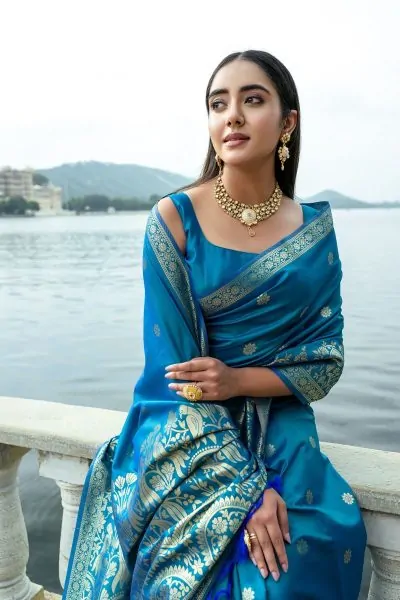
Pick jewel tones for daytime events
This bright blue saree proves that bold colours work beautifully for morning and afternoon functions. The rich, saturated tone photographs well in natural light and holds its vibrancy without looking overdone. Jewel tones also pair effortlessly with gold jewellery and create that regal presence that South Indian sarees are known for.
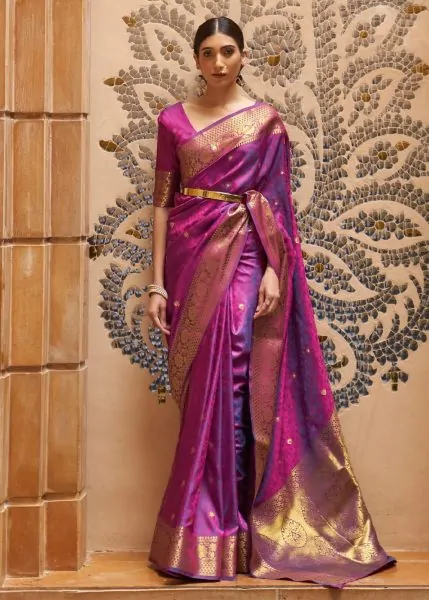
Balance heavy borders with simpler blouses
The purple saree with its elaborate gold border shows perfect proportion balance. When your saree has significant zari work or a wide border, your blouse should step back — intricate blouse embroidery would compete with the saree’s natural drama. This creates visual hierarchy and lets each element shine without overwhelming your frame.
Traditional Kanjeevaram sarees contain real gold thread woven into the zari work, which is why authentic pieces can cost thousands and actually appreciate in value over time.
Dos & Don’ts
Choosing the Right Fabric Weight
The weight of your South Indian saree determines everything else about your styling choices. I learned this the hard way at my cousin’s wedding in Bangalore, where I chose a heavy Kanjeevaram for the morning ceremony and could barely sit comfortably through the three-hour ritual. Lighter silk sarees work better for daytime events where you’ll be moving around frequently — think engagement parties or baby showers.
Heavy Kanjeevarams and Mysore silks are investment pieces that deserve special occasions. The weight gives them natural structure and drama, but requires more careful planning. Reserve the heaviest pieces for evening functions where you’ll spend more time standing and posing for photos than dancing or rushing between venues.
Temple sarees and cotton silk blends offer the perfect middle ground. They have enough body to photograph beautifully but won’t leave you exhausted after wearing them for hours. These work particularly well for religious functions or cultural events where comfort matters as much as appearance.
South Indian Saree Styling Ideas
Mint Green With Floral Print Blouse
This mint green saree paired with a bold floral print blouse shows how contrasting patterns create visual interest without overwhelming the look. The key is keeping one element solid — here the saree — while letting the blouse carry the pattern. This combination works beautifully for daytime functions where you want colour without the formality of heavy embellishment.
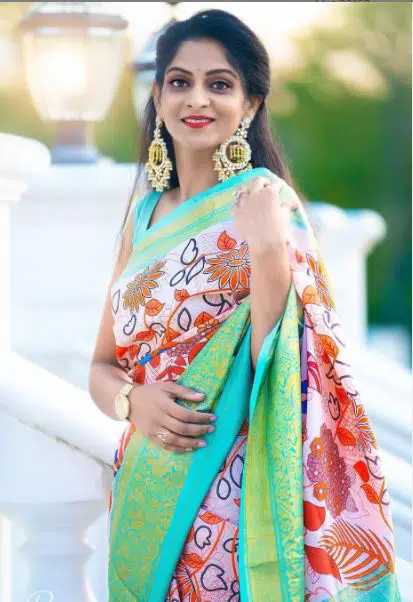
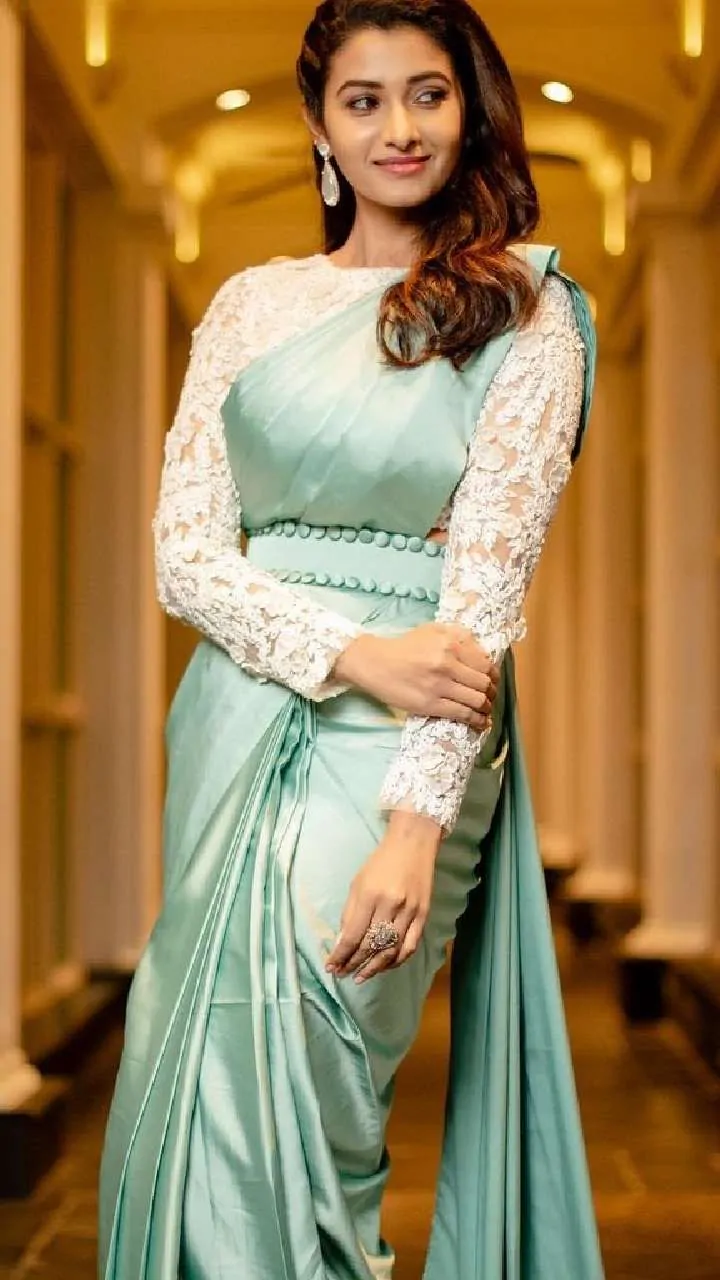
Sage Green With White Lace Sleeves
The full lace sleeves on this white blouse transform a simple sage green saree into something special for evening occasions. Sheer sleeves add coverage while maintaining elegance — perfect for events where you need modest dressing without sacrificing style. The scalloped trim detail at the waist creates a defined silhouette that works particularly well for petite frames.
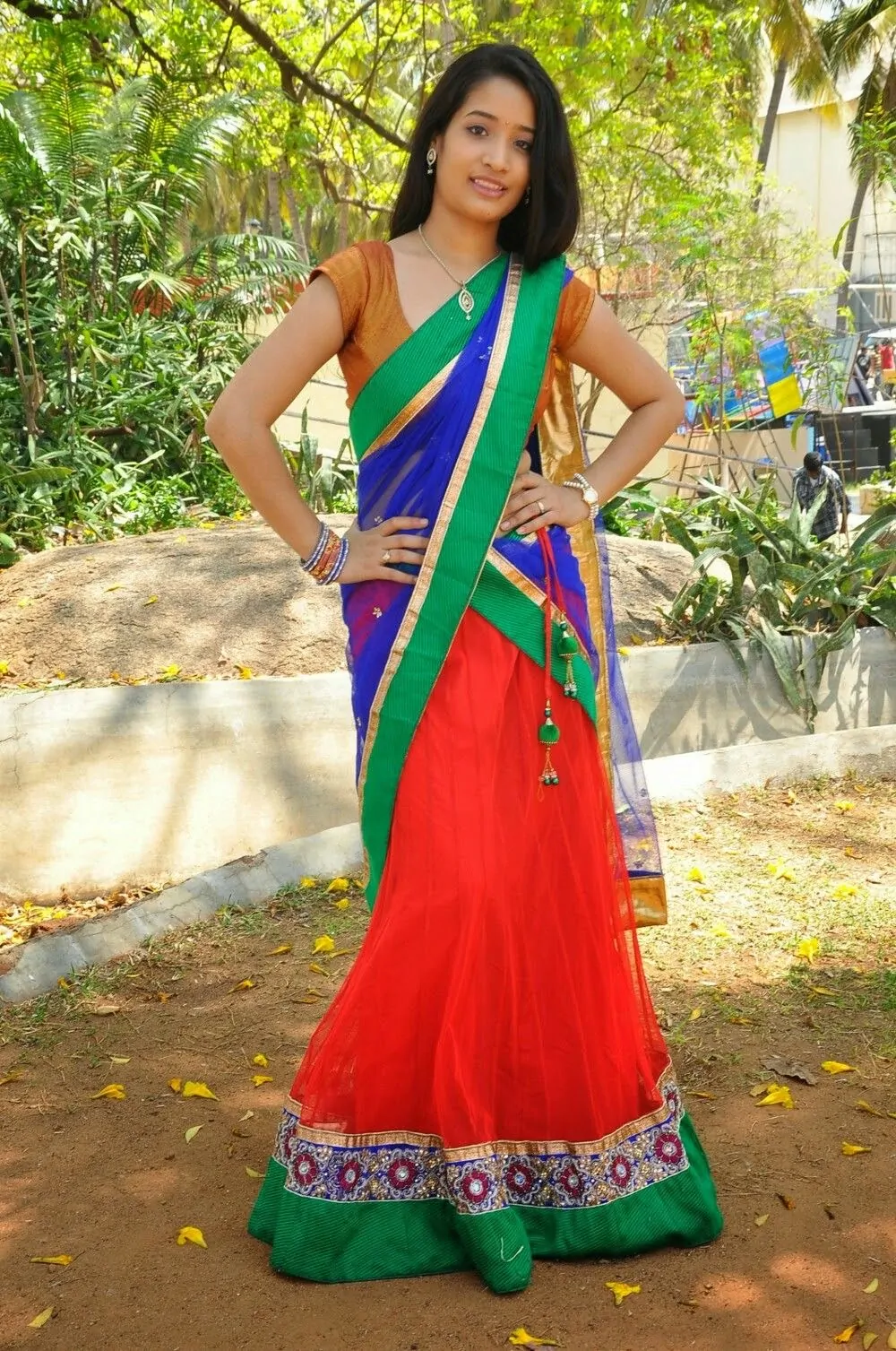
Bright Lehenga-Style Saree
This vibrant red and blue combination shows the lehenga-style draping that’s become popular in South Indian fashion. The contrasting border colours — green against red, blue against orange — create the rich, jewel-toned palette that South Indian silk sarees are known for. The fitted blouse with short sleeves keeps the focus on the dramatic colour blocking of the saree itself.
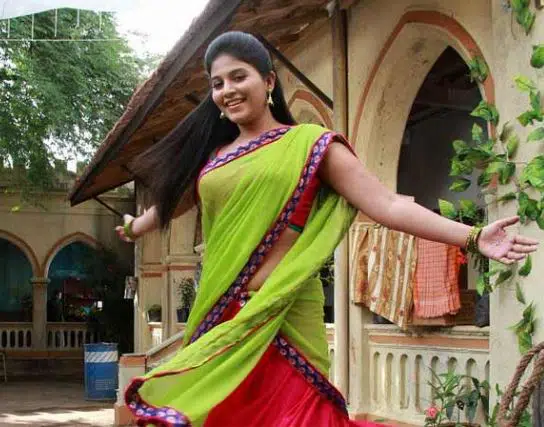
Lime Green With Traditional Drape
Simple lime green with minimal gold detailing proves that bright colours don’t need heavy embellishment to make an impact. The traditional South Indian drape with the pallu worn over the shoulder creates clean lines that let the colour be the star. This style works particularly well for morning functions or temple visits where understated elegance is preferred.
Quick tip
Choose contrasting borders in jewel tones to create that signature South Indian richness.
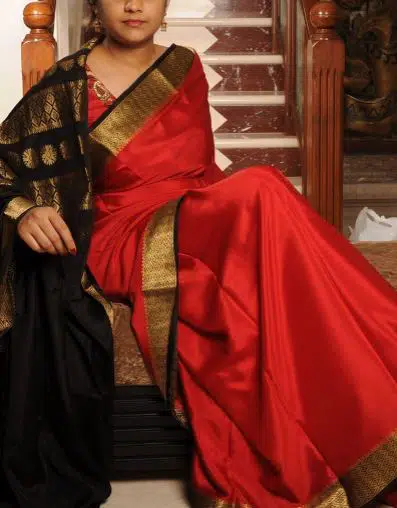
Classic Red and Black Combination
The timeless red saree with black and gold border demonstrates why this colour combination remains a staple in South Indian wardrobes. Gold borders against dark colours create that rich contrast that photographs beautifully and suits all skin tones. The simple blouse design ensures the focus stays on the saree’s traditional weave and border work.
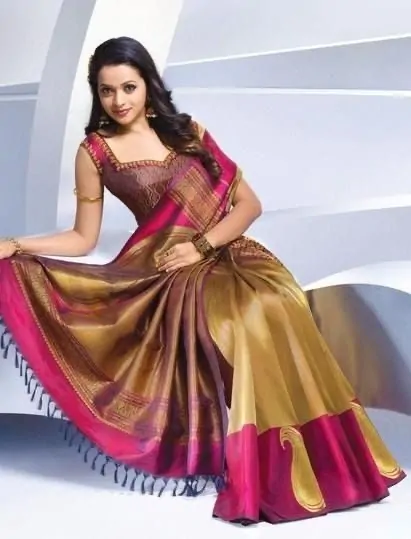
Bronze and Magenta Silk
This bronze silk saree with magenta borders shows how metallic tones work as neutrals in South Indian styling. The rich texture of silk combined with the deep jewel tone border creates depth without needing heavy embroidery. The fitted blouse in a coordinating bronze keeps the look cohesive while the contrasting border adds the necessary pop of colour.
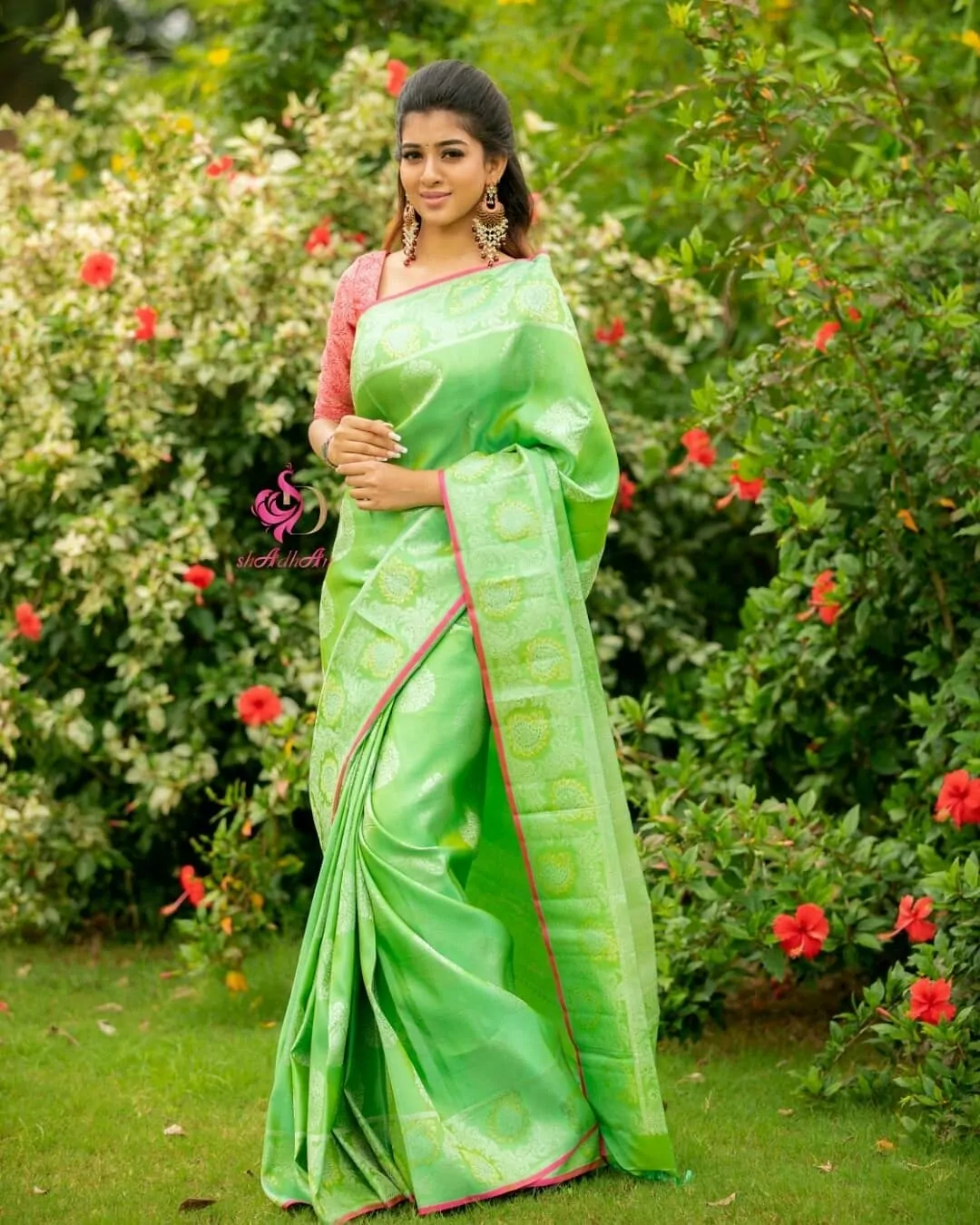
Fresh Green With Pink Contrast
Light green silk with a pink blouse and matching border detail creates a fresh, spring-like combination that’s perfect for daytime celebrations. Soft colour contrasts like green and pink feel modern while staying true to traditional South Indian colour palettes. The statement earrings complement the saree’s colours without competing with the overall look.
Quick tip
Keep blouse designs simple with fitted sleeves to let the saree’s colours and patterns take center stage.
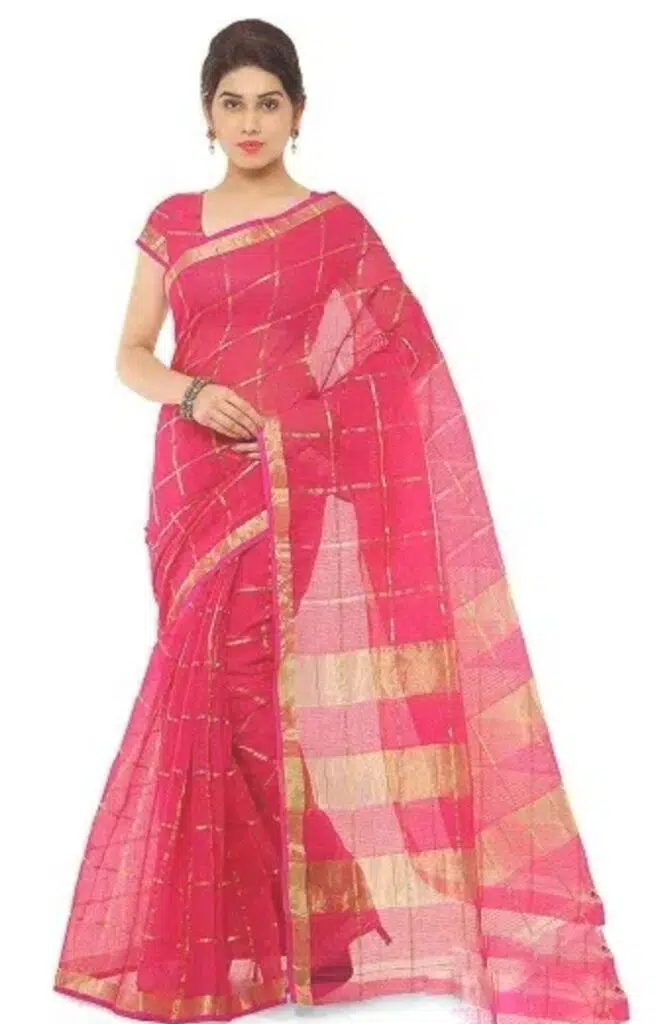
Hot Pink With Gold Checks
This vibrant pink saree with gold check pattern and matching border shows how geometric patterns add structure to bold colours. The all-over check design creates texture and visual interest while the solid pink blouse provides balance. This style works beautifully for festive occasions where you want to make a statement while keeping the look polished.
Key takeaways
- Choose contrasting border colours to create the rich, jewel-toned palette South Indian sarees are famous for
- Let one element stay simple when mixing patterns — if the blouse has prints, keep the saree solid
- Use metallic tones as neutrals — bronze, gold, and copper work as base colours with bright accent borders
- Add sheer sleeves for coverage without losing elegance at formal or religious functions
- Remember that bright colours don’t need heavy embellishment — the vibrancy speaks for itself
- Master the traditional shoulder drape to create clean lines that showcase the saree’s design and borders
How To Wear A Net Saree? 23 Best Styling Tips & Ideas
14 Latest Bridal Silk Saree Designs and Styling Tips
How To Wear A Heavy Saree – 10 Best Styling Tips & Ideas
How To Wear a Bandhani Saree? 20 Best Styling Tips
16 Best Banarasi Saree Designs and Styling Tips
20 Latest Silk Blouse Saree Designs and Styling Tips
How To Wear A Saree With A Corset Blouse? 20 Tips
21 Best Silk Saree Designs and Ideas How to Wear