The dhoti shalwar causes more styling confusion than any other piece in South Asian wardrobes. I’ve seen brilliant women turn up to family gatherings looking like they borrowed someone else’s clothes — simply because they didn’t understand the proportions.
Growing up, my nani wore dhoti with such confidence that I assumed it would be automatic for me too. Wrong. The first time I attempted it for my cousin’s walima, I looked like I was drowning in fabric. The issue wasn’t the outfit — it was that I treated it like regular shalwar when dhoti demands completely different styling rules.
Essential Dhoti Styling Rules
Keep your top fitted and structured — this is non-negotiable. The dhoti’s volume means your kurta or kameez needs to balance the proportions. A loose, flowing top with draped bottom creates a shapeless silhouette that flatters nobody.
Choose your footwear height strategically based on the dhoti’s drop. Traditional dhoti sits lower than regular shalwar, so flat sandals can make you look shorter. A modest heel — even two inches — lifts the entire look and prevents the fabric from pooling awkwardly.
Master the drape before you accessorize because poorly draped dhoti ruins everything else. The fabric should fall in clean lines without bunching at the crotch or creating unflattering bulges around the hips. Practice the wrap at home until it becomes second nature.
New Year’s Eve Outfits 2024: Party Wear, Casual Styles & Tips
15 Tips on How to Wear a Sharara Dress to Different Occasions
How to Wear Saree Tutorial with Step By Step Guide
20 Stylish Ways to Wear Dhoti Pants
15 Best Kurta Styles For Women & Ideas to Wear
25 Different Ways To Wear Short Shirts With Palazzo Pants
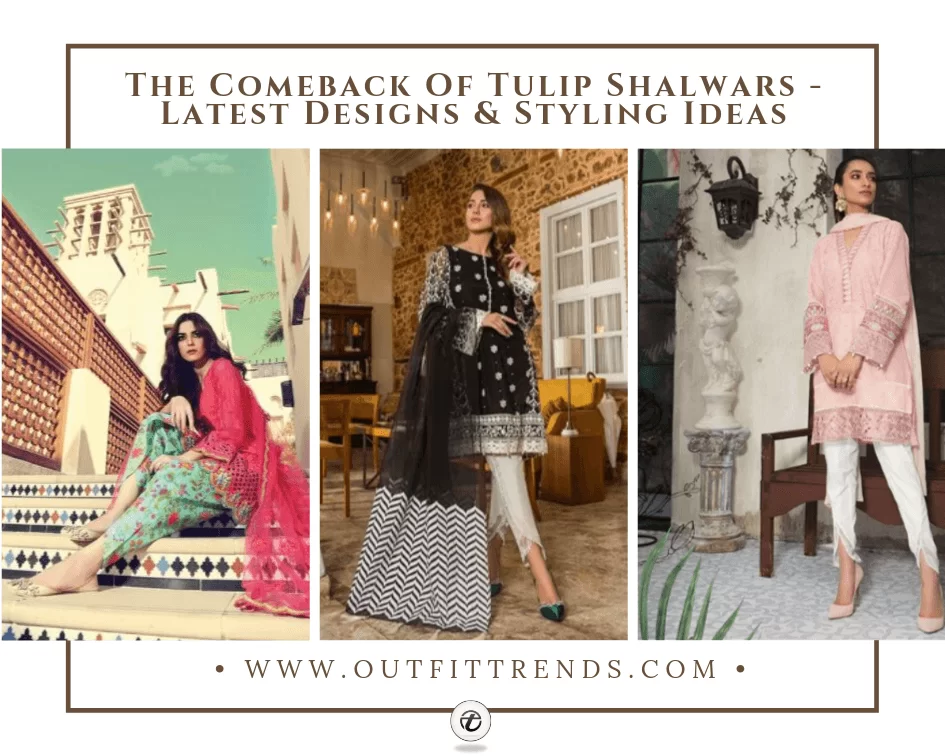
How to Wear Tulip Shalwars? 14 Outfit Ideas
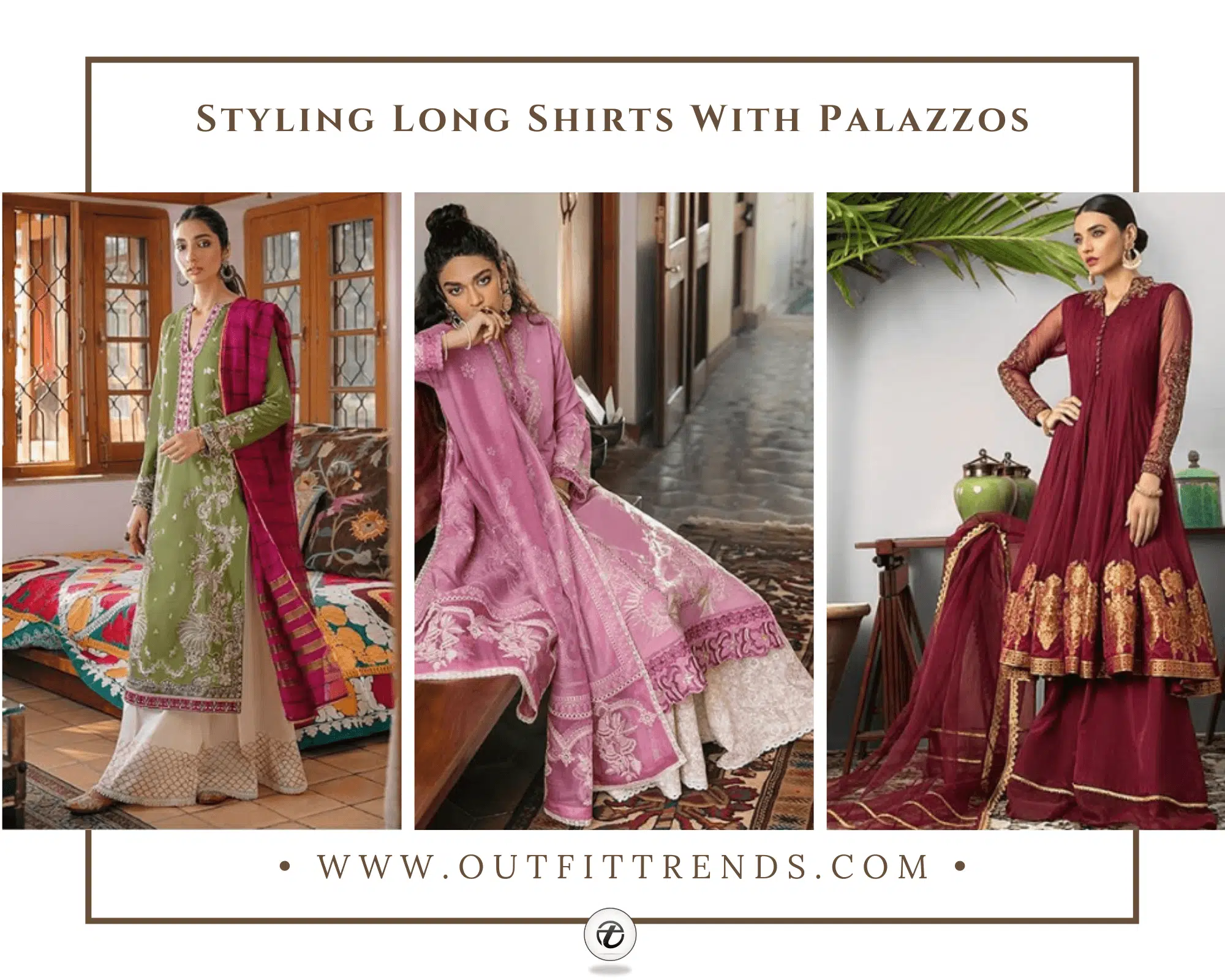
23 Different Ways To Wear Long Shirts With Palazzo Pants
Mind the fabric weight — cotton dhoti behaves differently from silk or chiffon. Heavy fabrics like silk hold their shape better but require more precise draping. Lighter fabrics move beautifully but can twist throughout the day, so factor in maintenance time.
Plan your sitting strategy especially for formal events. Dhoti looks graceful standing but can create awkward bunching when seated. Always test your outfit sitting down before leaving home, and choose chairs over low sofas when possible.
Consider the occasion’s photography requirements — dhoti photographs differently from regular shalwar. The draping creates interesting shadows and lines in photos, but it also means certain poses won’t work. Side angles are usually more flattering than straight-on shots.
Colour Combinations That Actually Work
The colour relationship between your kurta and dhoti determines whether you look intentional or like you grabbed random pieces. Contrasting colours work best — think deep purple dhoti with cream kurta, or bright mustard with white. This creates clear separation between your top and bottom halves.
Avoid tone-on-tone combinations unless there’s significant contrast in saturation. Pale pink kurta with dusty rose dhoti will wash you out. Instead, pair light pink with deep burgundy or bright fuchsia for definition.
The dhoti was originally a unisex garment worn across South Asia for over 5,000 years. Fashion designers only started creating fitted women’s versions in the 1980s, adapting the traditional wrap style into pre-stitched formats for easier wearing.
Metallic accents bridge colour gaps effectively — if your kurta and dhoti seem too disconnected, add gold or silver through jewelry or kurta detailing. This creates visual cohesion without matching exactly.
My personal favourite combination remains white kurta with deep jewel-toned dhoti. It’s classic enough for family events but striking enough for weddings. The white keeps focus on the dhoti’s drape while ensuring the colours don’t compete.
Footwear Rules for Dhoti
Choose shoes that complement the dhoti’s curved hemline rather than fighting it. Pointed stilettos look jarring against the soft draping, while rounded toes or strappy sandals echo the fabric’s natural movement.
Consider the dhoti’s length when selecting heel height — shorter dhoti can handle flat sandals, but longer styles need elevation to prevent dragging. A two to three inch heel usually hits the sweet spot for most dhoti lengths.
Avoid ankle boots entirely — they cut the leg line at the worst possible point and create bulk where dhoti is meant to flow. Traditional juttis or contemporary strappy heels work infinitely better.
8 Ways to Style Dhoti Shalwar
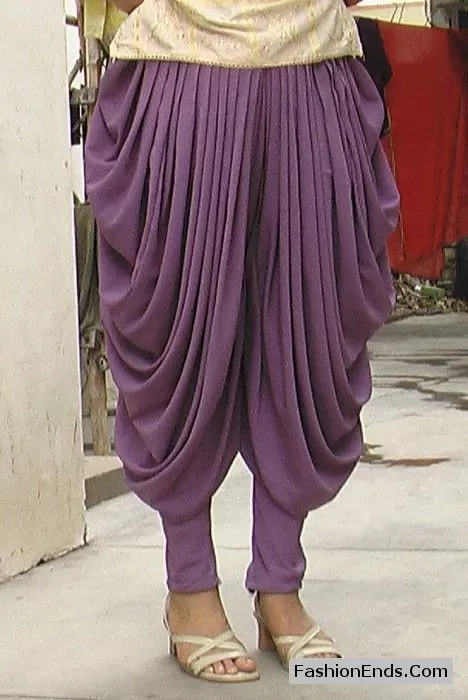
Classic Purple Dhoti with Embellished Kurta
This deep purple dhoti paired with a gold-detailed cream kurta demonstrates perfect contrast styling. The fitted kurta balances the dhoti’s volume while the neutral flat sandals keep focus on the dramatic colour combination.
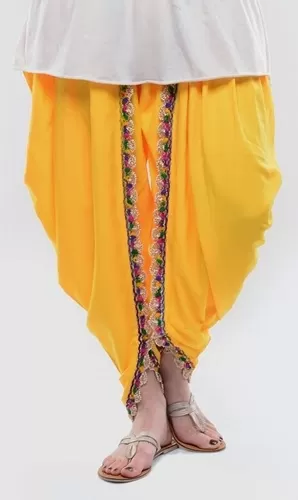
Bright Yellow Dhoti with Printed Border
The vibrant yellow creates instant impact while the contrasting border print adds visual interest without overwhelming. This style works brilliantly for daytime celebrations when you want colour without heaviness.
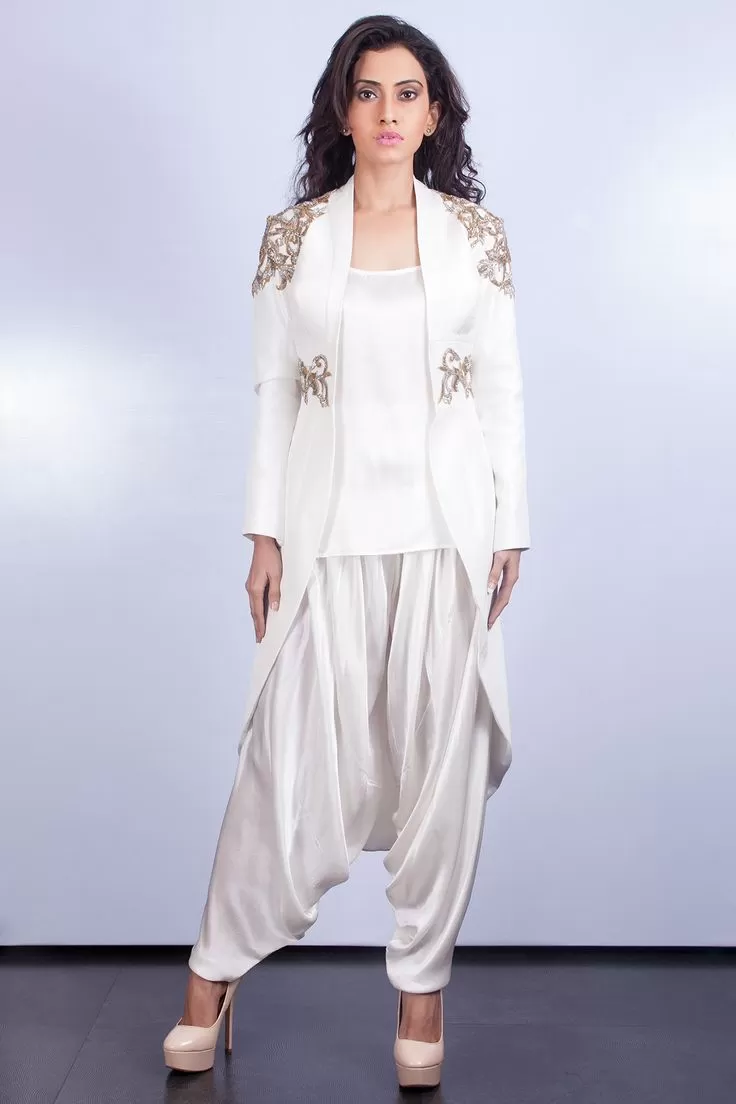
Minimalist White Dhoti with Embellished Blazer
A completely modern interpretation that bridges traditional and contemporary. The structured blazer with gold embellishment elevates the simple white dhoti into something suitable for formal events or office celebrations.
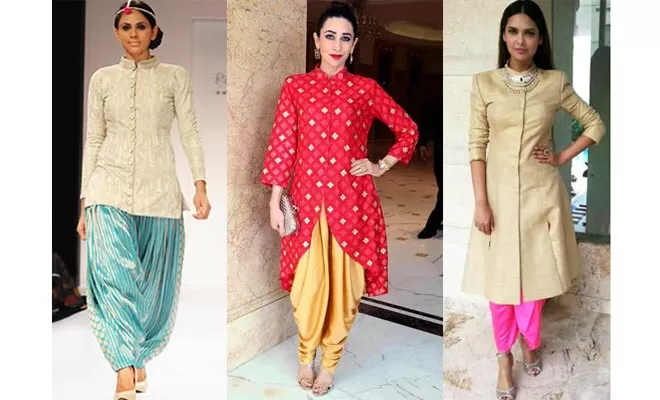
Mixed Colour Dhoti Collection
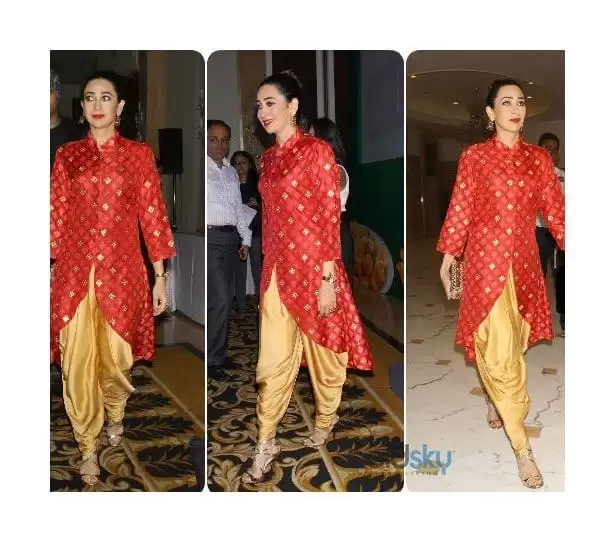
These three examples show how different kurta lengths work with dhoti — from short fitted styles to longer asymmetric cuts. Notice how each maintains the fitted-top-with-draped-bottom proportion rule regardless of specific styling.
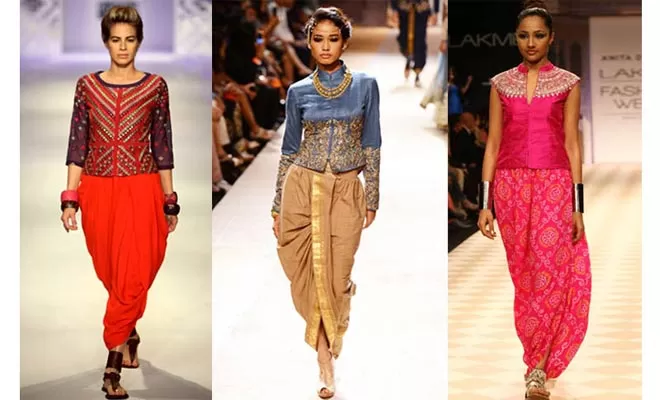
Designer Dhoti with Statement Tops
Fashion-forward interpretations that prove dhoti works beyond traditional settings. The structured tops and contemporary colour combinations make these suitable for fashion events or modern celebrations where you want cultural elements with current styling.
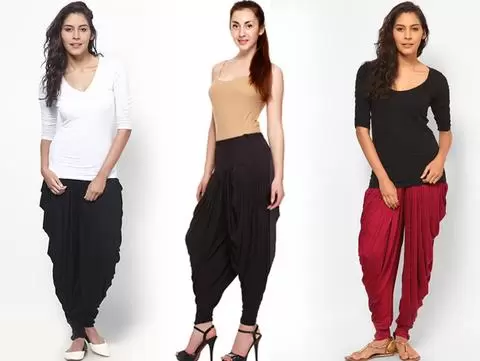
Casual Dhoti with Simple Tops
Perfect examples of dhoti for everyday wear — simple fitted tops in neutral colours with dhoti in black, burgundy, and navy. These combinations work for casual family gatherings or shopping trips where comfort matters as much as style.
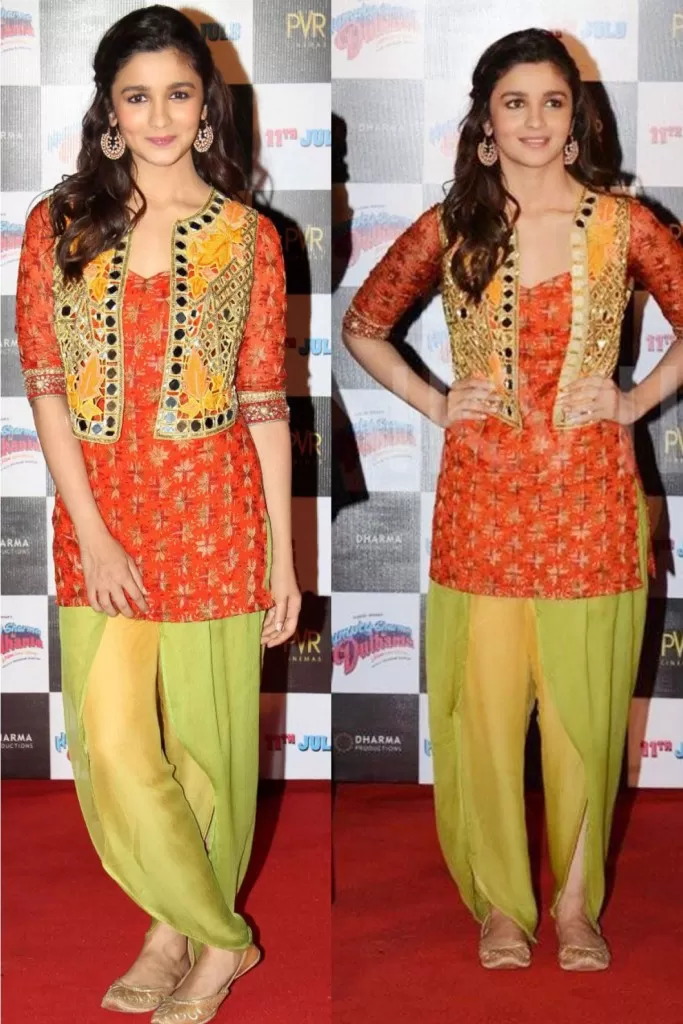
Bollywood-Inspired Dhoti Styling
This orange and gold combination with mirror work embellishment shows how to do glamorous dhoti for special occasions. The fitted kurta with detailed neckline balances the dhoti’s simplicity while maintaining elegant proportions.
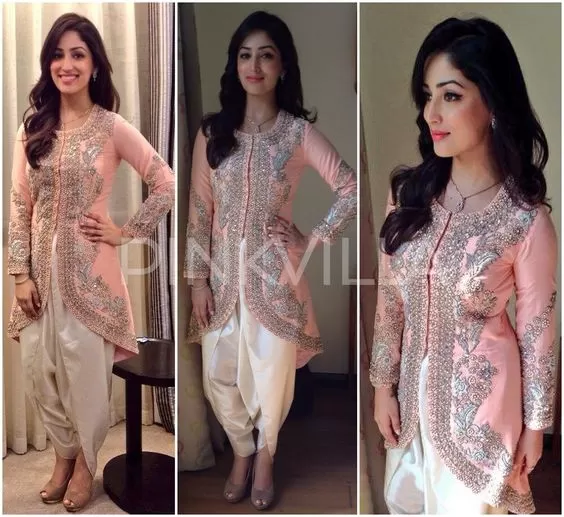
Elegant Pink Dhoti for Formal Events
A sophisticated take on dhoti styling with heavy embellishment concentrated on the kurta rather than the dhoti itself. This approach works when you want richness without overwhelming the dhoti’s natural drape and movement.
Key takeaways
- Always pair dhoti with fitted, structured tops to balance the draped bottom’s volume
- Choose contrasting colours between kurta and dhoti rather than matching tones for clear definition
- Select rounded or strappy footwear that complements the dhoti’s curved hemline
- Practice the drape at home before wearing dhoti to important events — muscle memory prevents mid-event adjustments
- Consider heel height based on dhoti length to prevent fabric dragging and ensure elegant proportions
- Add metallic accents through jewelry to bridge colour gaps between mismatched kurta and dhoti combinations
**QUICK STYLING TIPS:**
1. Pin your kurta at the side seam to prevent it from riding up and disrupting the dhoti’s clean lines.
2. Choose structured fabrics for your first dhoti — cotton or silk blends hold their shape better than flowing chiffons.
3. Test your outfit sitting down before leaving home since dhoti can bunch awkwardly when seated.
4. Keep jewelry minimal with heavily printed dhoti to avoid competing visual elements.
5. Select block heels over stilettos for better balance with the dhoti’s wider leg opening.
6. Practice the wrap technique until it becomes automatic — poorly draped dhoti ruins even expensive outfits.
New Year’s Eve Outfits 2024: Party Wear, Casual Styles & Tips
15 Tips on How to Wear a Sharara Dress to Different Occasions
How to Wear Saree Tutorial with Step By Step Guide
20 Stylish Ways to Wear Dhoti Pants
15 Best Kurta Styles For Women & Ideas to Wear
25 Different Ways To Wear Short Shirts With Palazzo Pants
How to Wear Tulip Shalwars? 14 Outfit Ideas
23 Different Ways To Wear Long Shirts With Palazzo Pants