
The biggest mistake I see women make for Dussehra? Treating it like a costume party instead of understanding what actually looks beautiful on their body. After years of styling clients for this festival, I’ve learned that the most stunning Dussehra outfits aren’t about wearing the heaviest lehenga or the brightest colours — they’re about choosing pieces that honour the celebration while making you feel completely yourself.
Dussehra celebrates the victory of good over evil, and your outfit should reflect that triumph. I’ve watched women struggle in ill-fitting blouses and trip over too-long dupattas because they thought “traditional” meant “uncomfortable.” The truth is, the most memorable Dussehra looks combine respect for tradition with smart styling choices that work for real bodies and real celebrations.
Styling Tips
Choose your silhouette based on your day’s activities. If you’re attending prayers in the morning and celebrations in the evening, a well-fitted salwar kameez will serve you better than a heavy lehenga. I learned this the hard way after spending an entire Dussehra celebration unable to sit comfortably in a gorgeous but impractical outfit.
Layer your jewellery strategically, not heavily. One statement piece — whether that’s chandelier earrings or a bold necklace — will look more intentional than wearing every piece you own. I always tell clients to choose either the ears or the neck as their focal point, never both simultaneously.
Consider your dupatta as a styling tool, not an afterthought. The way you drape it changes your entire silhouette. A dupatta worn over one shoulder creates an asymmetrical line that’s more flattering than the traditional both-shoulders drape for most body types.
The colours traditionally worn for Dussehra — red, yellow, and orange — were chosen because they represent fire, energy, and the sun’s power over darkness. These warm tones are also universally flattering on most skin tones.

20 Rehearsal Dinner Outfits For Brides to Wear & Enjoy
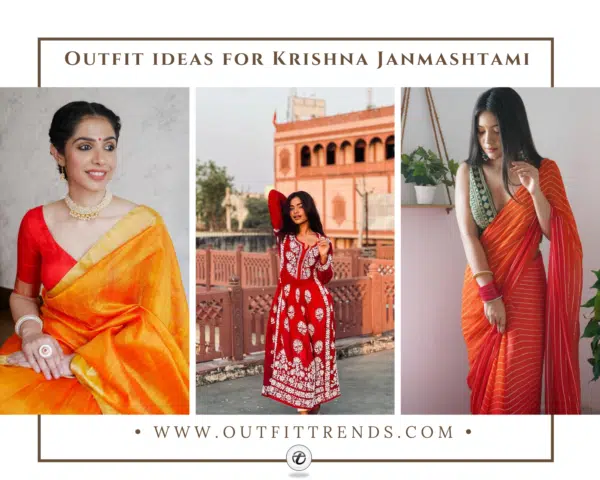
What to Wear to Krishna Janmashtami? 20 Outfit Ideas

42 Bachelorette Party Outfits For The Bride To Be to Wear

What to Wear to the Kentucky Derby? 50 Outfit Ideas
18 Best St Patrick’s Day Outfit Ideas For Girls
20 Best Prom Outfit Ideas for Teen Girls To Try This Year
15 Fab Stagecoach Outfit Ideas You Should Try
20 Best Durga Puja Outfits And Tips On How To Style Them
Pick your prints with your complexion in mind. Rich jewel tones in paisley or floral patterns will enhance deeper skin tones, while lighter, more delicate prints in the same traditional motifs work better on fairer complexions. The pattern size should also relate to your frame — larger prints on taller figures, smaller details on petite frames.
Plan your footwear before you finalize your outfit. Nothing ruins a beautiful Dussehra look like shoes that don’t work with your hem length or ground surface. If you’re walking on grass for outdoor celebrations, wedges will serve you better than stilettos, no matter how pretty they are.
Coordinate your makeup intensity with your outfit’s embellishment level. Heavily embroidered pieces need simpler makeup to avoid competing elements, while simpler outfits can handle a bolder eye or lip. I’ve seen stunning women look overdone because they didn’t balance these elements.
Dos & Don’ts
Beautiful Dussehra Outfits for Girls
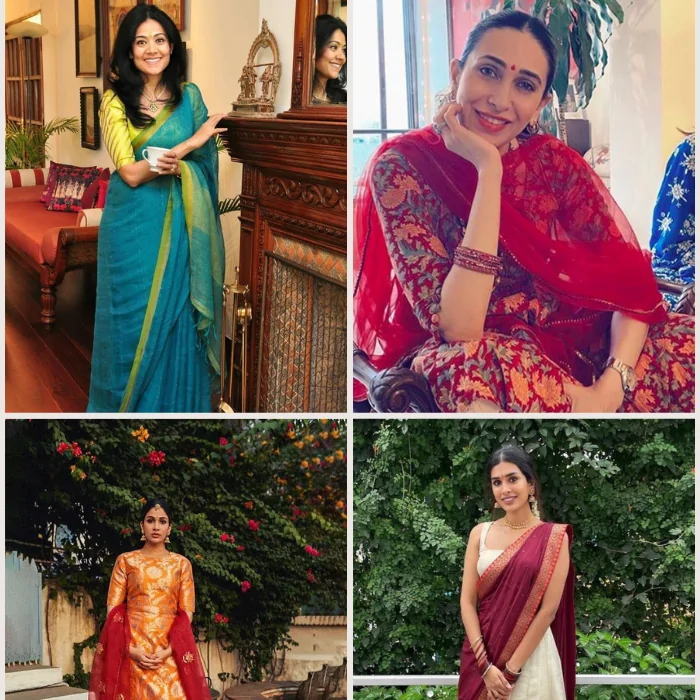
Teal Saree with Yellow Border
This classic silk saree in rich teal with a bright yellow border captures the traditional spirit of Dussehra perfectly. The contrasting colors create visual interest without overwhelming the wearer, while the simple draping keeps the focus on the beautiful fabric. This works especially well for petite frames because the single bold border doesn’t break up the silhouette.
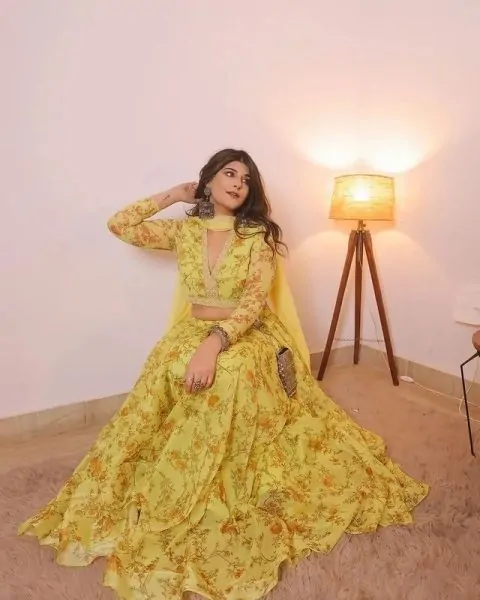
Floral Yellow Lehenga with Deep V-Neck
The plunging neckline on this yellow floral lehenga makes it more contemporary than traditional festival wear, but the full skirt keeps it appropriate for celebrations. Yellow is considered auspicious for Dussehra, and the all-over floral print adds texture without being too busy. Choose this style if you want to stand out from the typical solid-colored outfits most people wear.
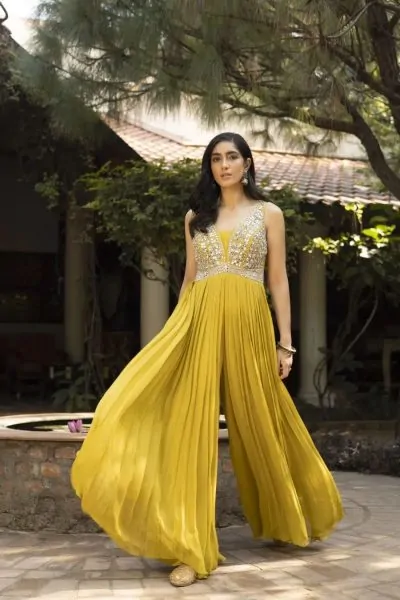
Mustard Anarkali with Sequined Bodice
The heavily embellished bodice transitions into a flowing plain skirt, creating perfect balance between glamour and comfort. This mustard shade photographs beautifully in both indoor and outdoor lighting, which matters more than people realize for festival photos. The empire waistline flatters most body types, especially if you want to minimize your midsection.
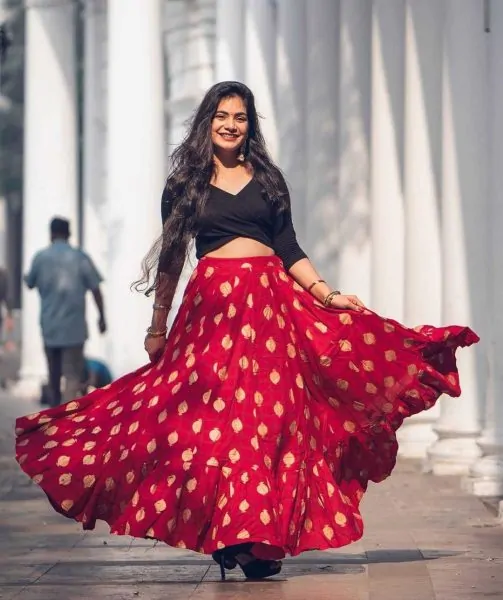
Black Top with Red Printed Skirt
This black fitted top and red printed maxi skirt combination breaks traditional rules in the best way possible. The contrast makes both pieces pop, while the high-low hemline adds movement and keeps you from looking too serious. I love this approach for women who find full traditional outfits overwhelming but still want to honor the festival.
Quick tip
Match your hair accessories to your outfit’s main colors for a coordinated look.
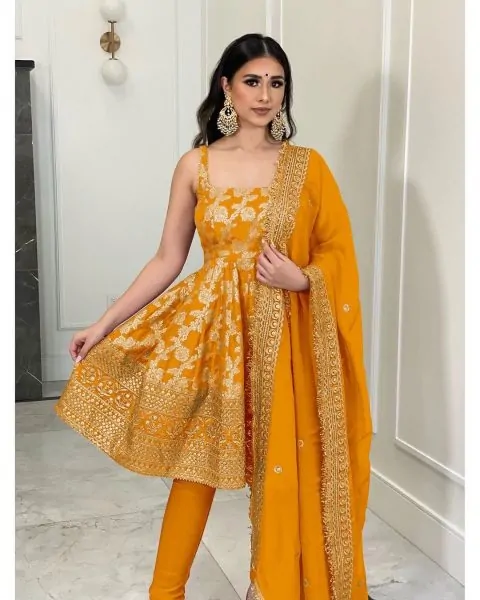
Orange Anarkali with Gold Embroidery
The tone-on-tone embroidery on this orange anarkali is sophisticated without being flashy, and the fitted sleeves balance the voluminous skirt perfectly. Orange is one of the most flattering colors for Indian skin tones, and this particular shade works across all seasons. The straight-cut neckline is more modest than deep V-necks but still shows your jewelry beautifully.
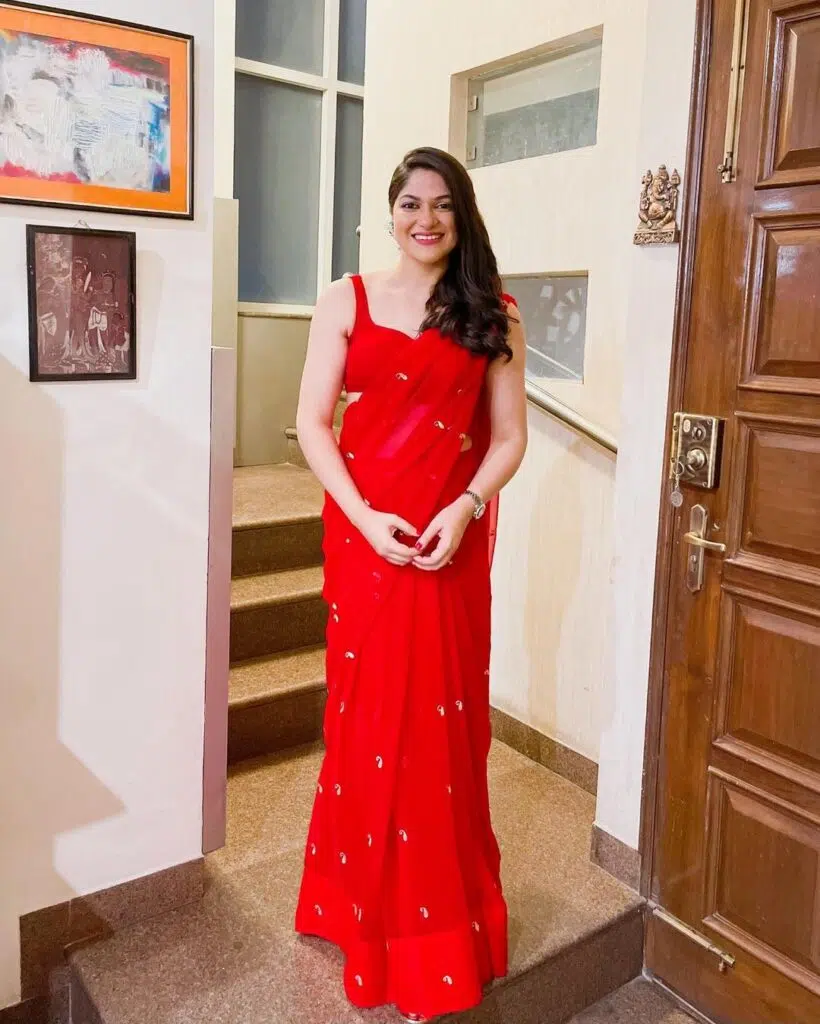
Red Saree with Scattered Motifs
This red saree with delicate scattered gold motifs proves that less can definitely be more. The simple blouse design keeps the look grounded, while the lightweight fabric drapes beautifully without adding bulk. Red is traditional for Dussehra, but this particular style works better for daytime celebrations than heavily embellished evening versions.
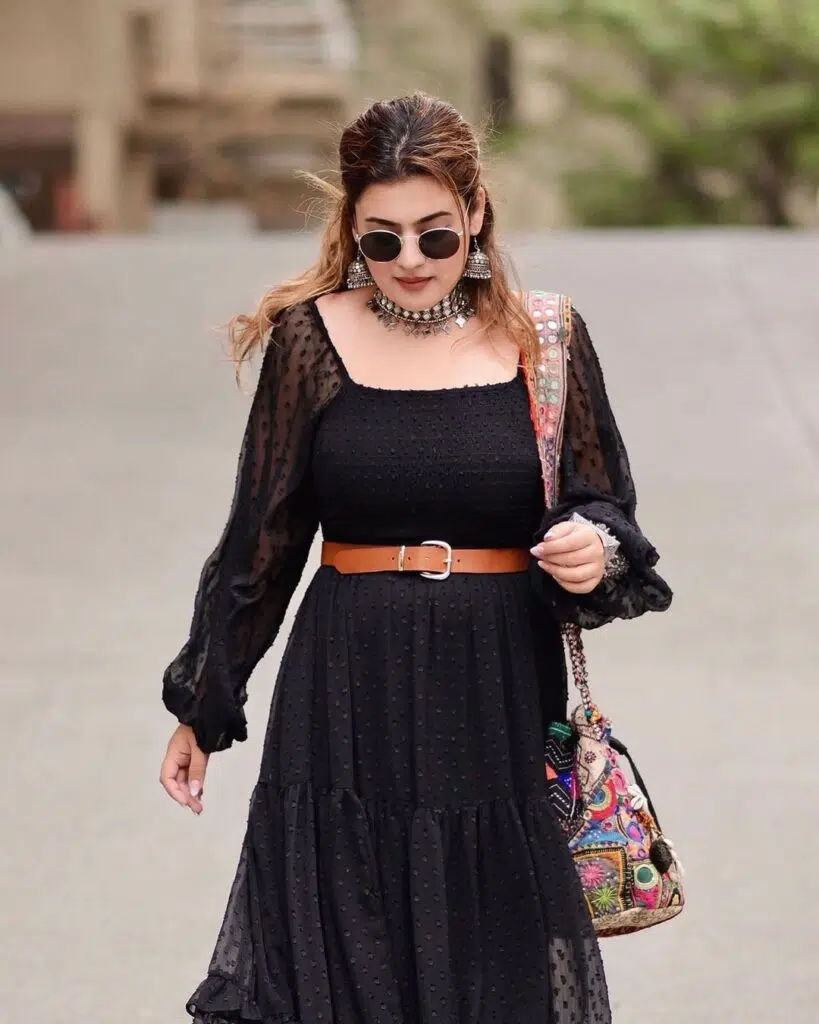
Black Dotted Dress with Colorful Accessories
The polka dot black dress gets a festival twist through the statement jewelry and colorful dupatta. This approach works brilliantly if you’re attending multiple events and need something that photographs differently each time. The brown leather belt adds structure and prevents the dress from looking too casual for a religious celebration.
Quick tip
Choose sleeveless designs for day events to stay comfortable during long celebrations.
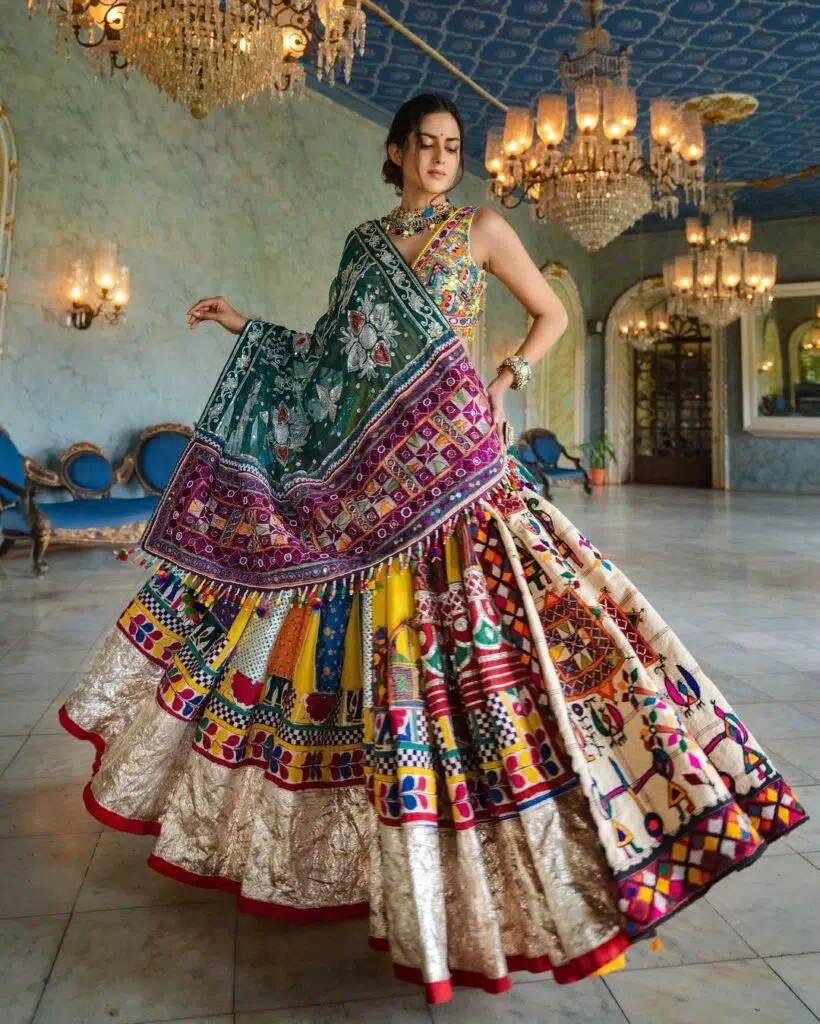
Multicolor Patchwork Lehenga
This heavily patterned lehenga mixes multiple traditional Indian textile techniques in one statement piece. While it’s definitely bold, the fitted blouse keeps it from looking costume-like. I’d recommend this only if you’re comfortable being the center of attention, because this outfit doesn’t let you blend into the background.
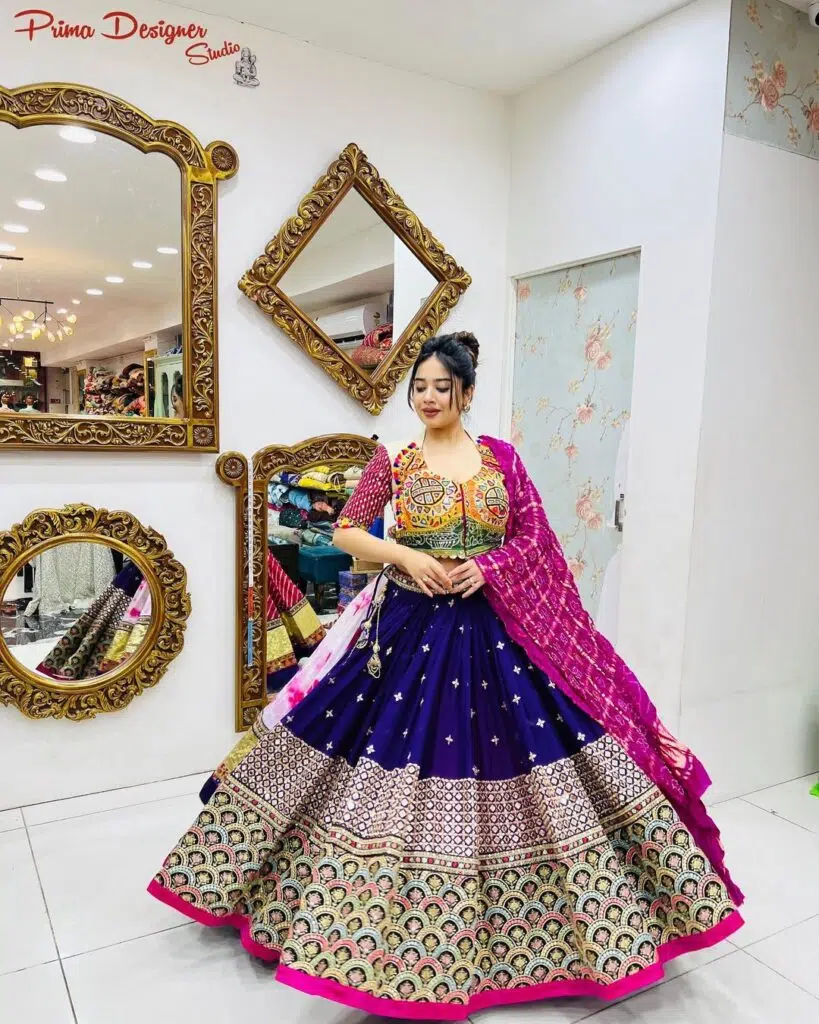
Purple and Pink Lehenga with Mixed Patterns
The jewel-toned purple base with pink dupatta creates a rich color combination that photographs beautifully. The mix of geometric and floral patterns could easily look chaotic, but the consistent color palette ties everything together. This style works best for evening celebrations where the rich colors won’t wash out in bright sunlight.
Pink Anarkali with Floral Embroidery
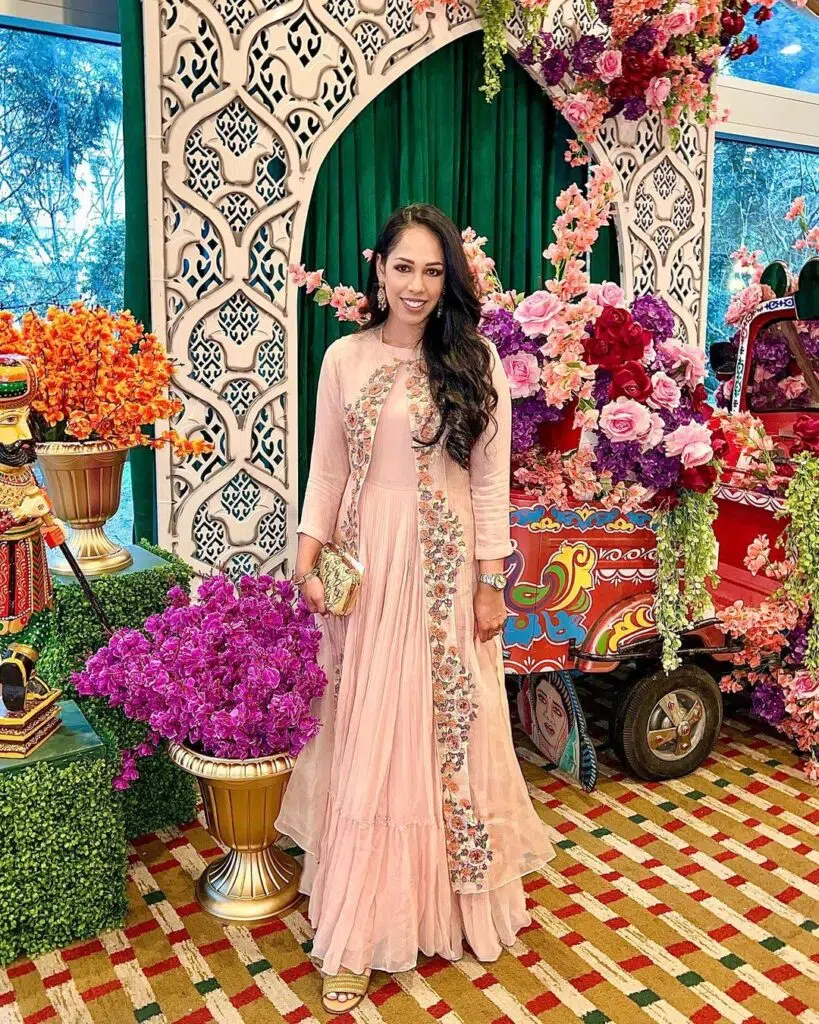
This soft pink anarkali with vertical floral embroidery is perfect for women who want something feminine without being overly traditional. The three-quarter sleeves are practical for day-long festivities, and the flowing silhouette is forgiving after a festival meal. The dusty pink shade works particularly well for morning and afternoon celebrations.
Quick tip
Pair rich fabrics like velvet with lighter dupatta colors to avoid looking too heavy.
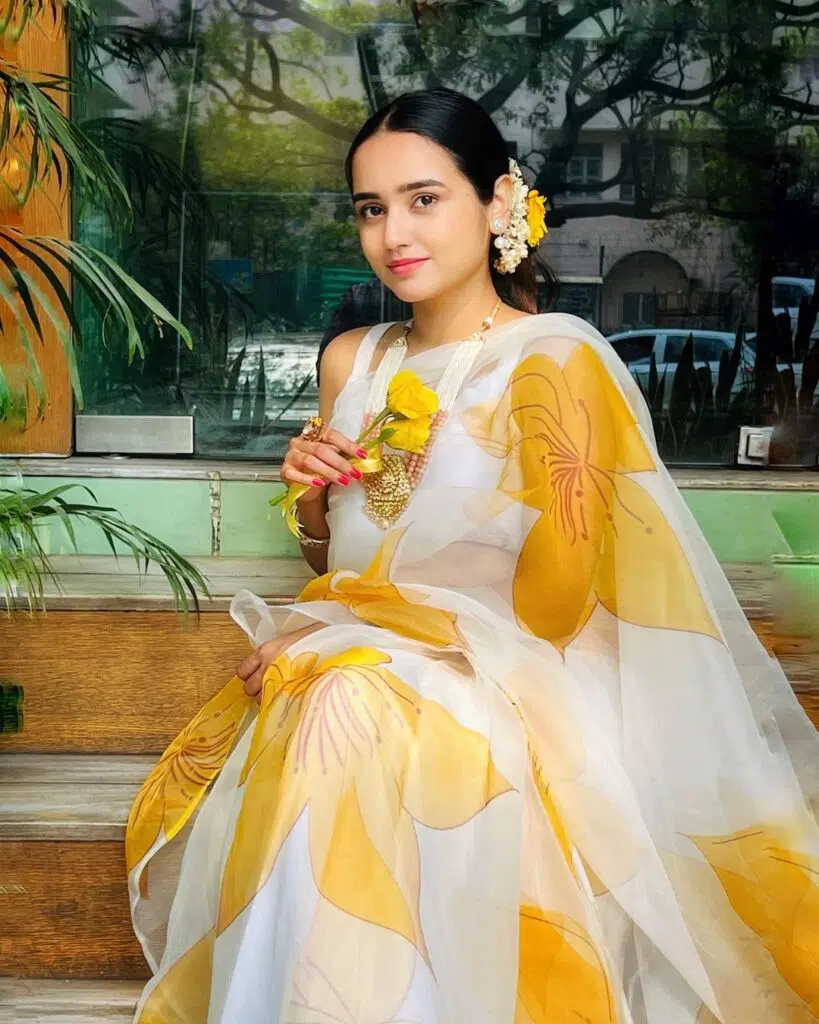
Yellow Floral Print Saree with Traditional Jewelry
This white saree with bold yellow floral motifs creates a perfect balance between traditional and contemporary for Dussehra celebrations. The coordinated yellow flower earrings and gajra echo the print beautifully, while the delicate gold jewelry adds just enough sparkle without competing with the busy pattern. This look works especially well for morning pujas or family gatherings where you want to look festive but not overdressed.
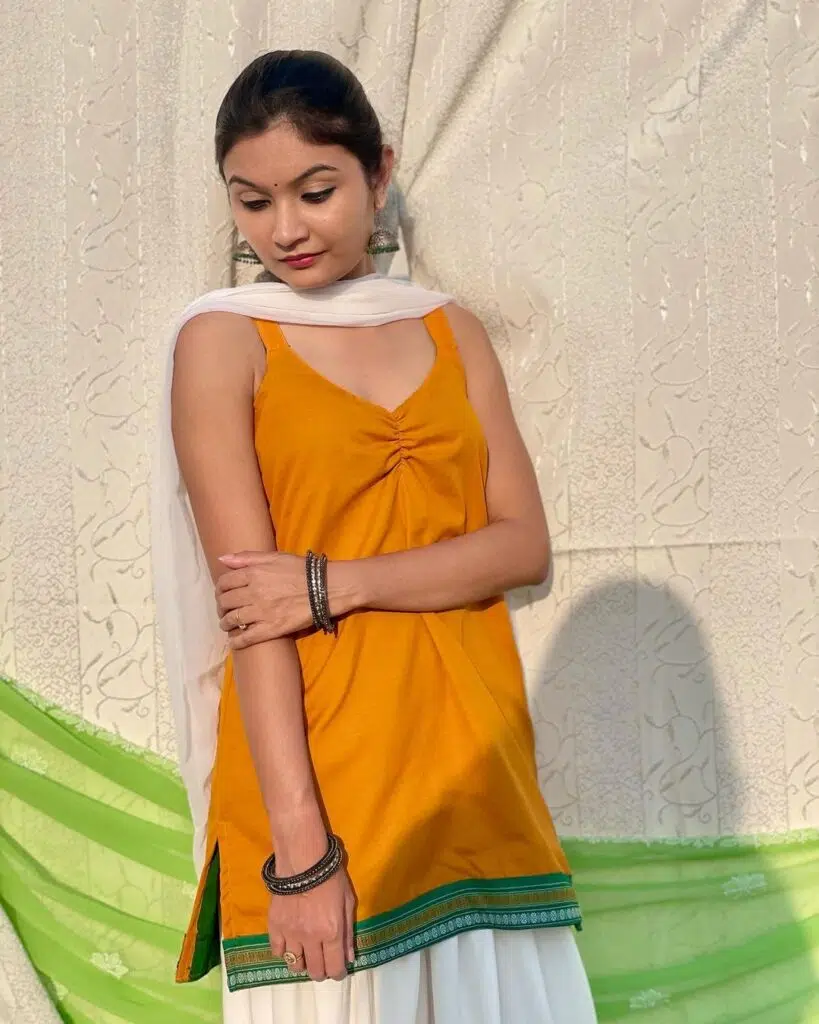
Orange Sleeveless Kurta with White Palazzo Set
The vibrant orange kurta paired with crisp white palazzos offers a modern take on traditional Dussehra dressing that’s both comfortable and celebration-ready. The sleeveless design keeps things fresh and contemporary, while the contrasting white dupatta adds elegance without overwhelming the look. This combination works perfectly for younger women who want to honor tradition while maintaining their personal style — plus it’s practical for long festival days.
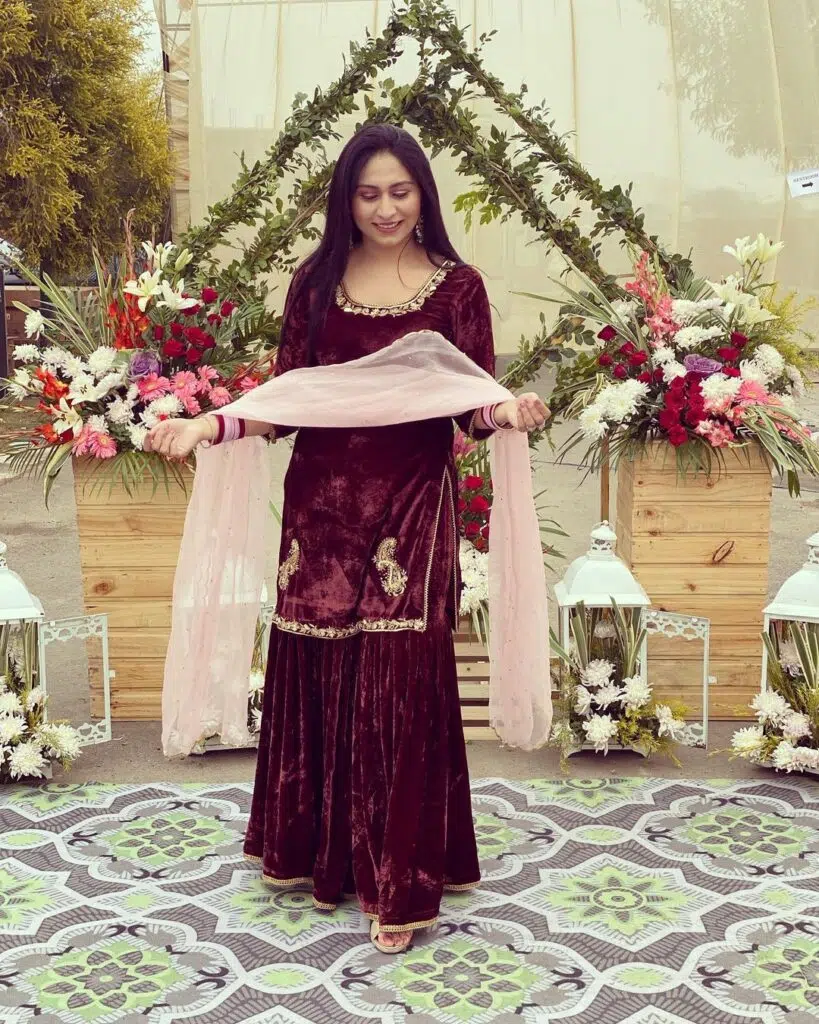
Deep Maroon Velvet Sharara with Rose Gold Dupatta
This rich maroon velvet sharara set embodies the luxury and grandeur that Dussehra celebrations deserve. The contrasting light pink dupatta softens the deep burgundy beautifully, creating visual interest while the gold embellishments catch the light perfectly for evening festivities. The velvet fabric choice elevates this from daywear to something special enough for the main celebration, making it ideal for women who want to make a statement.
Quick tip
Use contrasting palazzos to break up solid-colored kurtas and add visual interest.
Key takeaways
- Choose coordinated accessories that echo your outfit’s main colors rather than competing with them
- Balance busy prints with solid-colored accessories to avoid overwhelming your look
- Mix traditional silhouettes with contemporary cuts for a fresh festival approach
- Use contrasting colors like orange and white to create visual impact while staying appropriate
- Select fabric weights based on timing — lighter cottons for day, richer velvets for evening
- Keep jewelry proportional — delicate pieces with busy prints, statement pieces with solid colors
20 Rehearsal Dinner Outfits For Brides to Wear & Enjoy
What to Wear to Krishna Janmashtami? 20 Outfit Ideas
42 Bachelorette Party Outfits For The Bride To Be to Wear
What to Wear to the Kentucky Derby? 50 Outfit Ideas
18 Best St Patrick’s Day Outfit Ideas For Girls
20 Best Prom Outfit Ideas for Teen Girls To Try This Year
15 Fab Stagecoach Outfit Ideas You Should Try
20 Best Durga Puja Outfits And Tips On How To Style Them