The first time someone asked if I had “plugs,” I had no idea they were talking about the circular jewelry in my ears. Flesh tunnels — also called eyelets or plugs — create a hollow space through your earlobe that you can see straight through. Getting a flesh tunnel isn’t like getting a regular piercing — you start with a standard lobe piercing, then gradually stretch it over months.
Understanding Flesh Tunnels
Flesh tunnels are part of a broader world of ear modification. If you’re also interested in cartilage placement (helix, conch, tragus), our complete cartilage piercings guide shows how stretched lobes combine with upper ear piercings for a full ear stack. And if you’re curious about the specific small cartilage near your ear canal, the tragus piercing guide covers that location in depth.
The oldest evidence of ear stretching is over 5,000 years old — Ötzi the Iceman, a preserved prehistoric man found in the Alps, had stretched earlobes estimated at 7-11mm.
The Stretching Process
Start small and go slow — the golden rule is never skip more than one gauge size at a time, and always wait at least 4-6 weeks between stretches. Rushing is the single biggest cause of blowouts and permanent damage.
Use tapers, not shortcuts — insertion tapers make the stretching process gradual and controlled. Never use household items as improvised stretchers.
Oil massage daily — jojoba, vitamin E, or coconut oil massaged into the lobe keeps the tissue healthy, elastic, and supple throughout the process.
Jewelry Styles
Single Flare Plugs
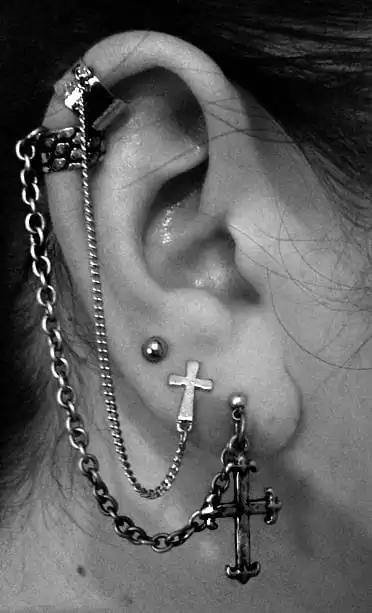
Cartilage Piercings Guide – Every Thing You Need to Know About it
Getting A Dermal Piercing – What You Should Know
Tragus Piercing Guide – Everything You need to Know
Surface Piercings – Everything You need to Know About It

Swag Accessories – 5 Accessories You Need For A Swag Look

30 Most Creative and Unique Shoes In the World

25 Best Earrings to Wear With Long Hair

20 Most Beautiful Gajra Hairstyles For All Hair Lengths
The most common starting style — a cylinder with one flared end. Combines beautifully with cartilage jewelry — plan your full look with our cartilage piercings guide.
Double Flare Tunnels
Hollow cylinder with flared ends on both sides — the classic tunnel look. For earring styling alongside your tunnels, see our earrings guide for long hair.
Organic Wood and Stone Plugs
Natural materials feel lighter and look distinctive. Only wear organic materials in fully healed, stable stretches — never during active stretching.
Key takeaways
- Never skip gauge sizes — patience is the only path to healthy, stable stretches
- Combine with cartilage for a full ear story — see the cartilage piercings guide
- For the tragus and other ear placements, see the tragus piercing guide
- Oil massage daily — jojoba or vitamin E keeps lobe tissue healthy throughout the process
Cartilage Piercings Guide – Every Thing You Need to Know About it
Getting A Dermal Piercing – What You Should Know
Tragus Piercing Guide – Everything You need to Know
Surface Piercings – Everything You need to Know About It
Swag Accessories – 5 Accessories You Need For A Swag Look
30 Most Creative and Unique Shoes In the World
25 Best Earrings to Wear With Long Hair
20 Most Beautiful Gajra Hairstyles For All Hair Lengths