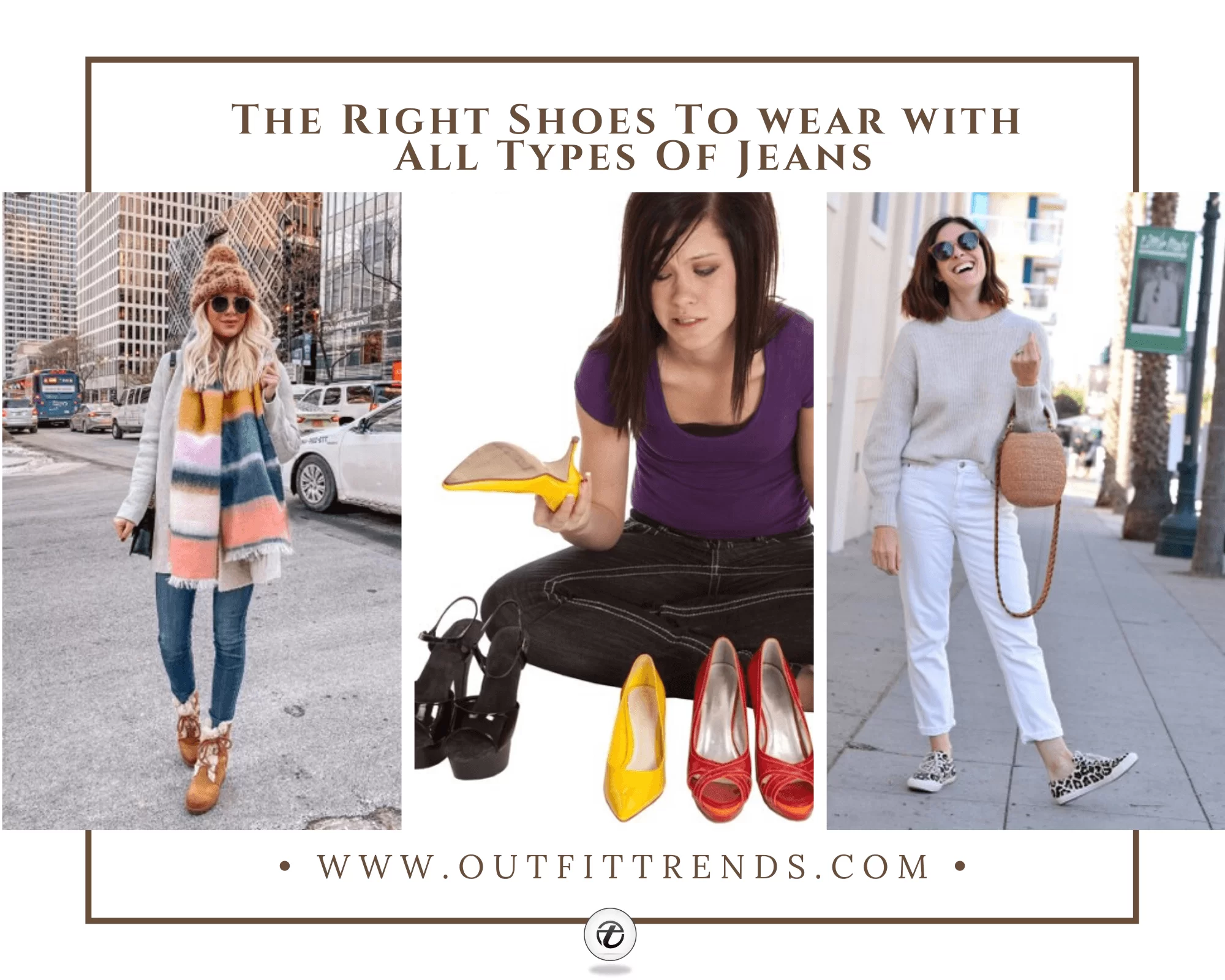
The fit of your jeans determines everything else about your look. I’ve seen too many men choose the right style but get the wrong size — and it ruins the entire outfit before they even leave the house. Proper fit at the waist and thigh creates the foundation that makes every other styling choice possible.
Twenty different jean styles sounds overwhelming until you understand the system. Most men think they need to memorize every cut and wash, but I’ve found that understanding five core categories — and how they interact with your body type and lifestyle — gives you everything you need to dress well consistently.
Essential Jean Fits Every Man Should Know
Straight-leg jeans are your foundation piece because they work with every body type and most shoe styles. The consistent width from knee to hem creates a clean line that doesn’t fight against your proportions. I recommend every man own at least one pair in a medium wash — it’s the most versatile base for building outfits.
Slim-fit jeans require the right body type to work properly. If you’re lean through the thighs and calves, they create a tailored silhouette that works well with fitted shirts and blazers. But if your thighs fill out the fabric completely, the taper from knee to ankle can look unbalanced.
Relaxed-fit jeans offer comfort without looking sloppy when you choose the right rise. A higher waistline prevents the baggy look around your middle, while the extra room through the thigh and seat provides practical comfort for active lifestyles.
Bootcut jeans balance wider shoulders and chest by adding visual weight to your lower half. The slight flare from the knee accommodates boots while creating a proportional silhouette — particularly effective if you have a muscular upper body.
Cropped jeans work only with the right shoes and body proportions. The exposed ankle draws attention to your footwear, so clean white sneakers or leather loafers become essential. Avoid if you’re shorter than average — the cropped hem can make your legs appear shorter.
Dark wash jeans transition between casual and smart-casual more effectively than lighter washes. The deeper color reads as more formal, allowing you to pair them with button-down shirts and blazers for office environments that allow jeans.
Dos & Don’ts
Understanding Jean Washes and Styling
Raw denim requires a commitment but rewards you with a personalized fit over time. The unwashed fabric molds to your body through wear, creating natural fading patterns. However, the initial stiffness and potential for color bleeding means you need to plan your first few wears carefully.
Light wash jeans work best in casual contexts because the faded appearance reads as relaxed and approachable. They pair naturally with white t-shirts and casual button-downs, but avoid pairing them with formal pieces like blazers or dress shirts.
Black jeans bridge the gap between denim and dress pants when they fit properly. The dark color allows them to work in smart-casual environments where blue jeans would be too informal. Choose a straight or slim fit without excessive fading or distressing.
Levi’s 501 jeans were originally designed in 1873 for gold miners and railroad workers. The copper rivets at stress points were added after a customer complained that his pockets kept tearing from the weight of ore samples. That same attention to fit and construction is still what separates a good pair of jeans from a bad one — a complete fit guide covers it in more detail.
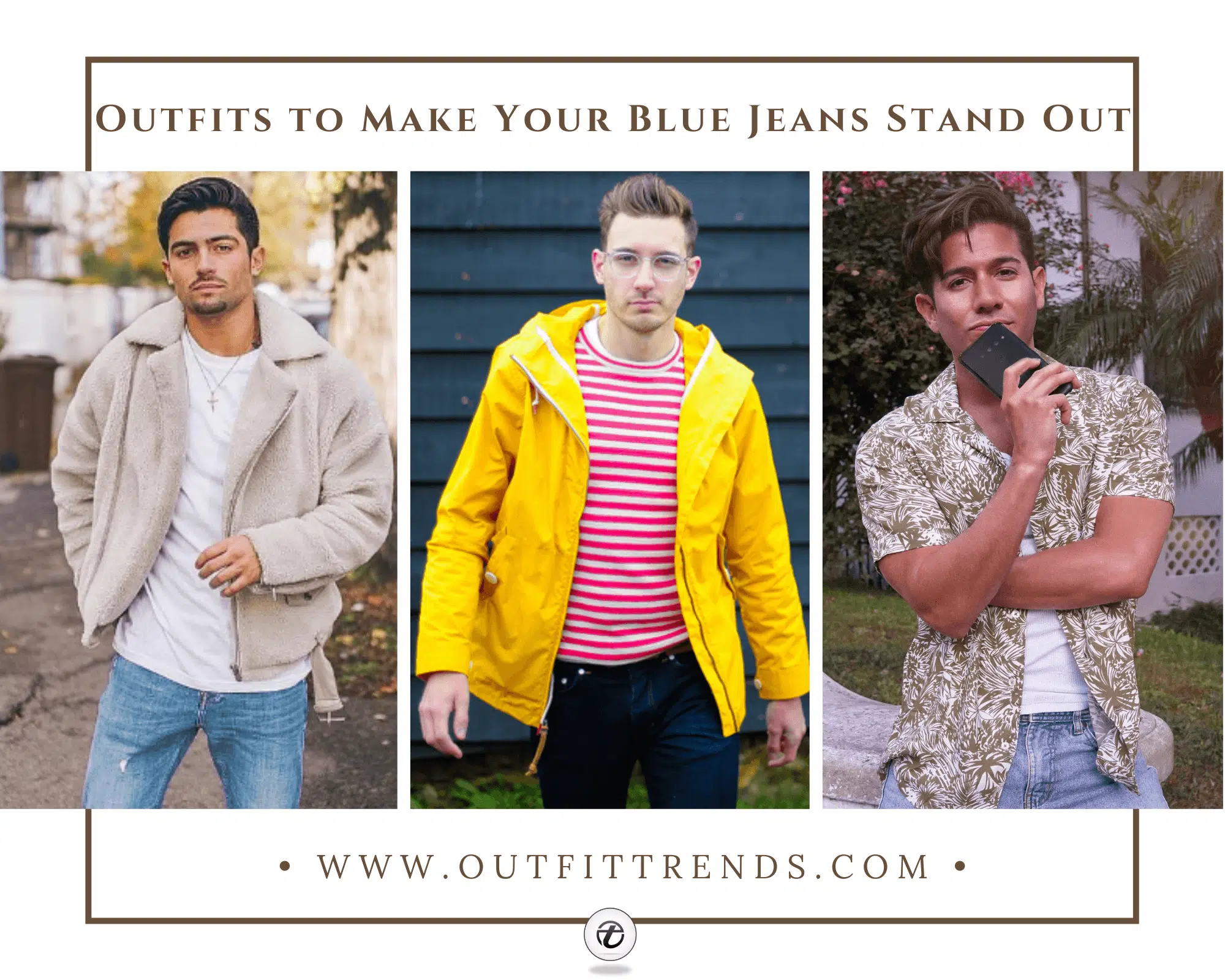
How to Wear Blue Jeans for Men ? 45 Outfit Ideas
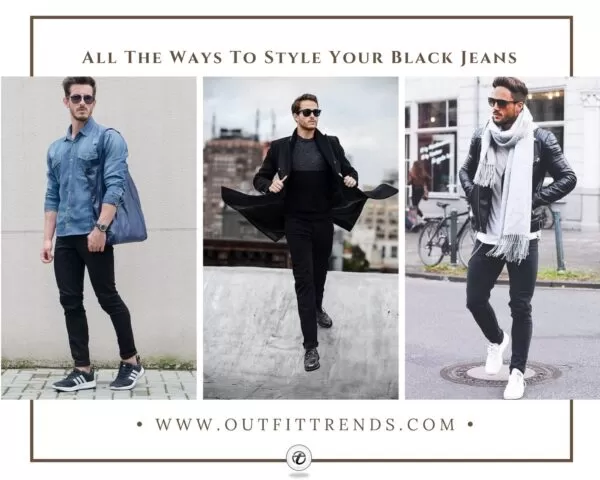
34 Black Jeans Outfits for Men & Styling Tips
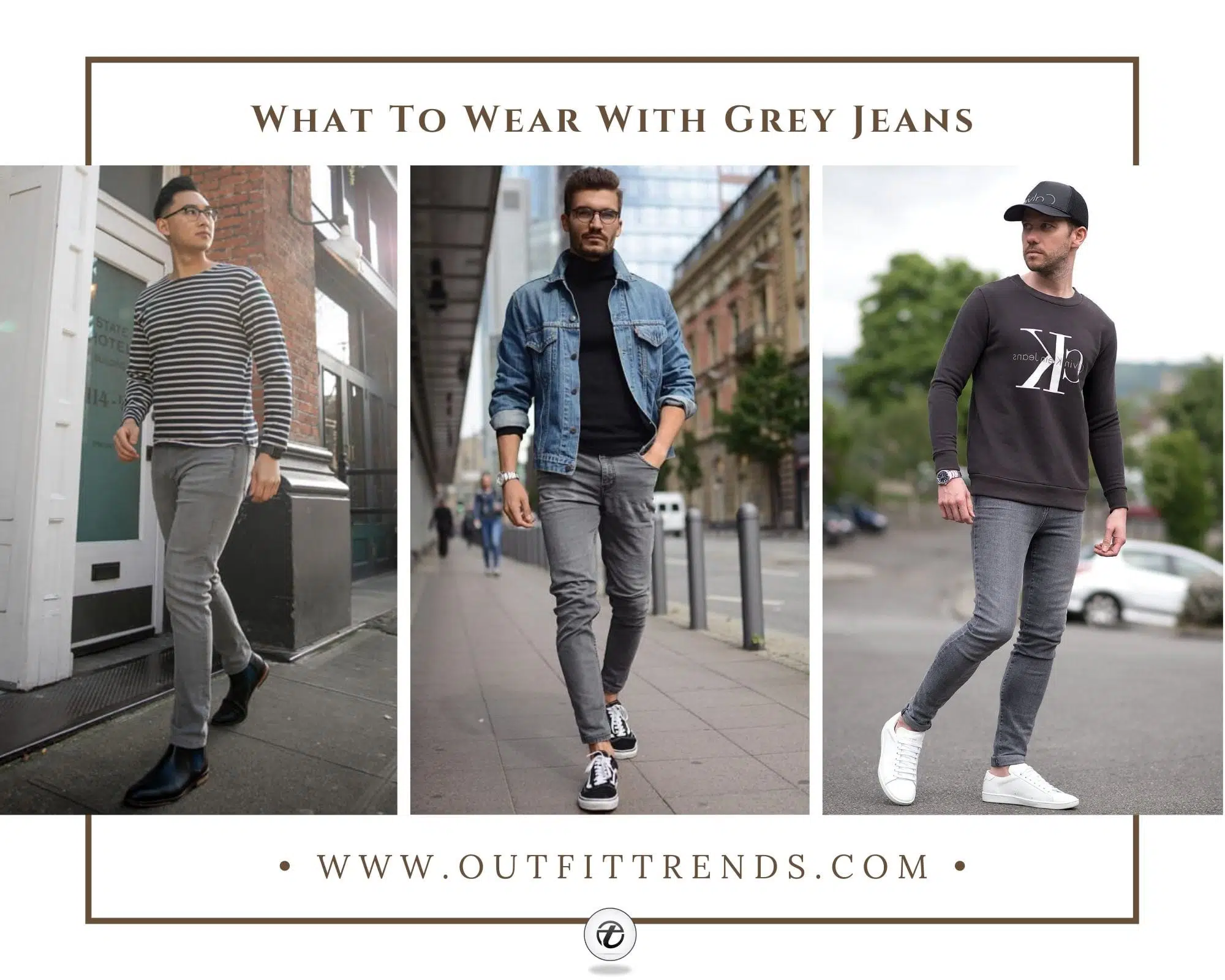
How To Wear Grey Jeans for Men ? 20 Outfit Ideas
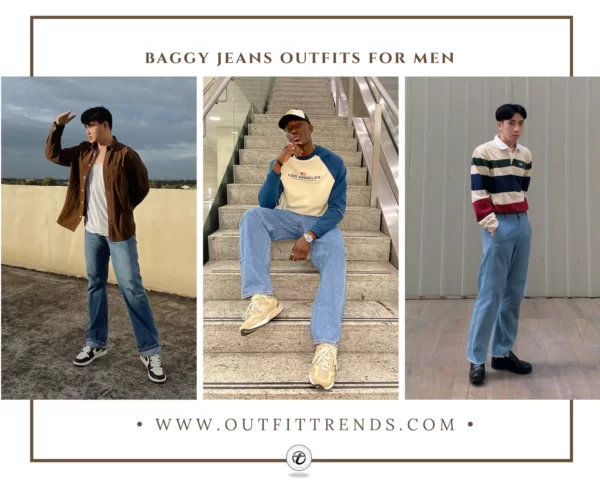
How To Wear Baggy Jeans for Men ? 25 Outfit Ideas
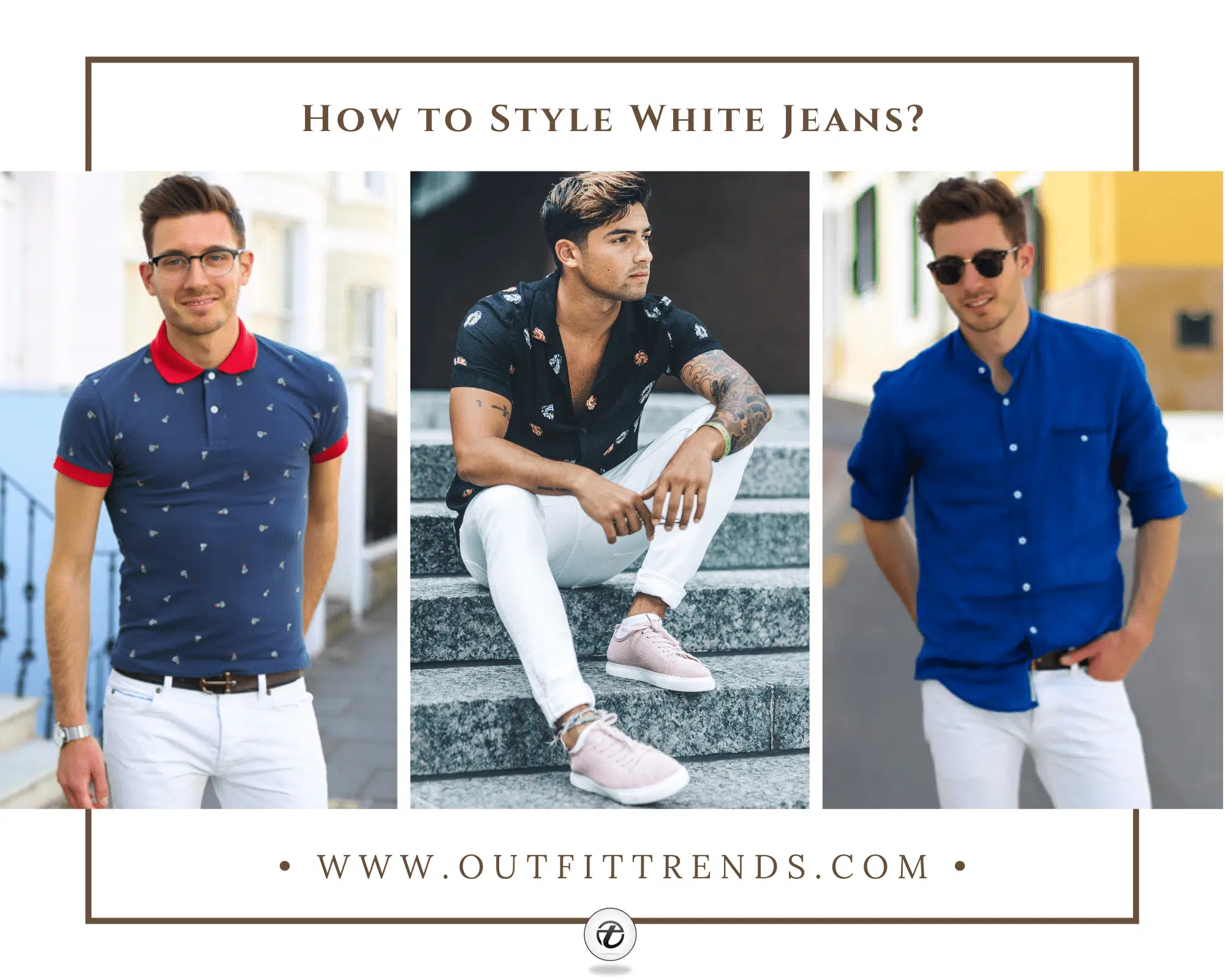
45 White Jeans Outfit Ideas for Men & Styling Tips
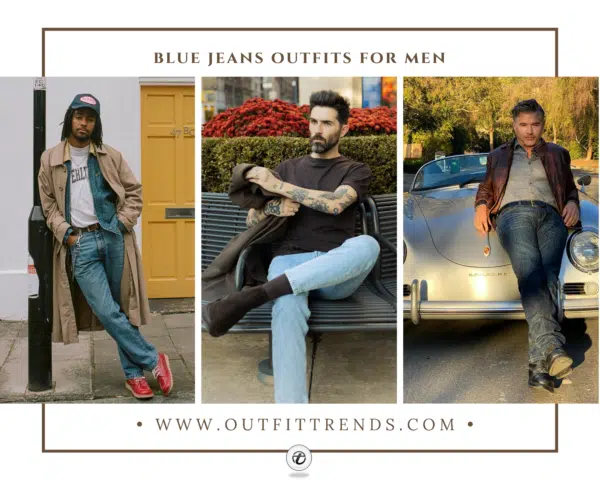
45 Mens Outfits with Blue Jeans & Styling Tips
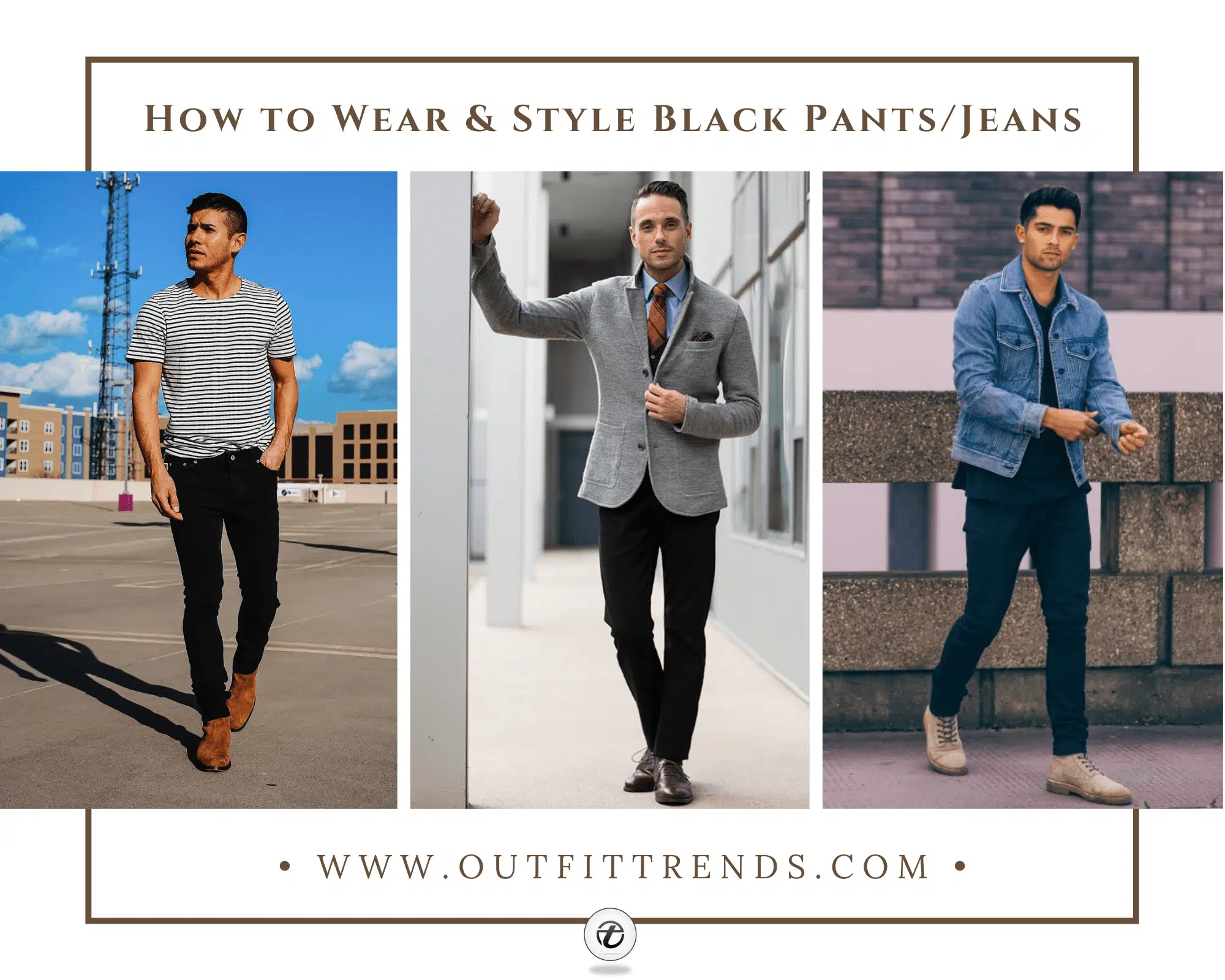
41 Best Outfit Ideas with Black Pants for Men
20 Latest Style Wedding Sherwani For Men and Styling Ideas
Colored jeans expand your options but require careful styling to avoid looking costume-like. Olive, burgundy, and charcoal work as neutral alternatives to blue, while brighter colors should be treated as statement pieces that anchor the entire outfit.
Distressed and ripped jeans have specific contexts where they work well and many where they don’t. The key is ensuring the distressing looks intentional rather than accidental — strategic rips at the knees work better than random tears throughout the leg.
Body Type Considerations
Athletic builds need room through the thigh without excess fabric everywhere else. Look for jeans labeled “athletic fit” or choose straight-leg styles with a bit more room in the top block. Avoid skinny fits that create an unbalanced silhouette.
Shorter men should choose mid-rise jeans because low-rise styles shorten your torso visually. The proper rise creates a longer leg line, while cropped styles can make you appear shorter unless paired with substantial footwear.
Taller men can handle wider leg openings and longer inseams without looking overwhelmed. Bootcut and relaxed fits that would swamp shorter frames create balanced proportions on taller builds.
Smart Casual Jean Outfits
Navy Blazer with Light Wash Jeans
This combination works because the structured blazer elevates the casual denim while the light wash prevents the outfit from looking too formal. The key is ensuring your blazer fits properly through the shoulders and your jeans have a clean, straight silhouette.
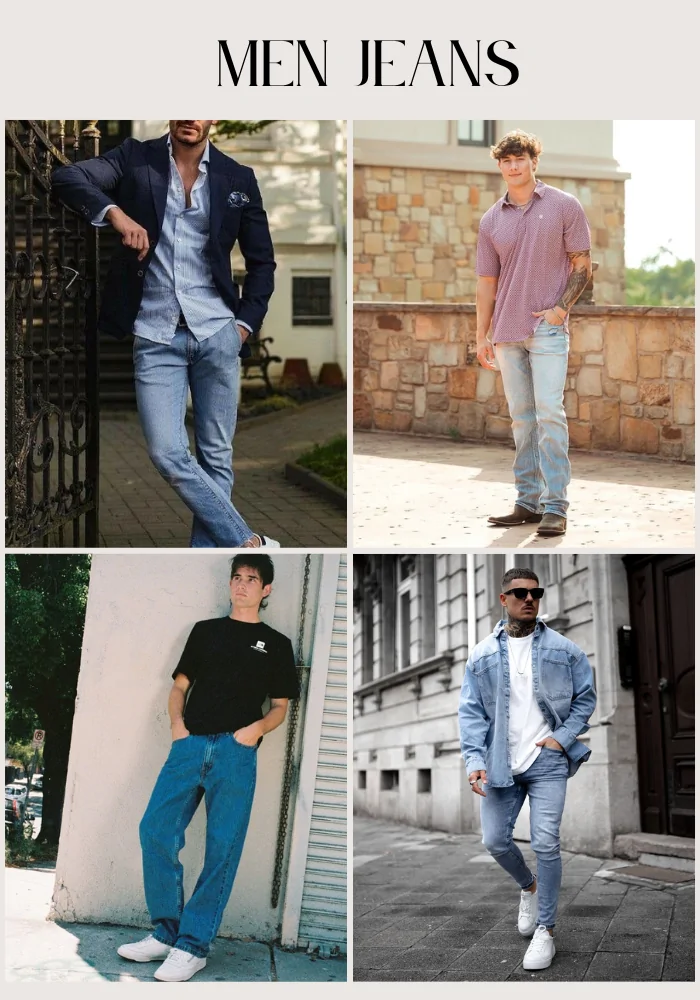
Relaxed Shirt with Distressed Jeans
The relaxed button-down shirt balances the edgy distressed denim by adding a polished element without being too formal. This approach works for casual Friday environments or weekend social events where you want to look put-together but approachable.

Oversized Tee with Straight-Leg Jeans
The contrast between the oversized top and fitted jeans creates visual interest while maintaining comfort. This silhouette works particularly well for younger men or casual creative environments where comfort and style intersect.
Layered Look with Dark Wash Jeans
The layered approach with a puffer jacket over a neutral sweater demonstrates how dark wash jeans can anchor more complex outfits. The monochromatic color scheme keeps the focus on texture and silhouette rather than competing patterns.

Key takeaways
- Proper fit at the waist and thigh determines whether any jean style will work on your body type
- Straight-leg jeans provide the most versatile foundation for building different looks across occasions
- Dark wash jeans transition between casual and smart-casual more effectively than light washes
- Athletic builds need room through the thigh without excess fabric in the lower leg
- Mid-rise jeans create better proportions for most men than low-rise alternatives
- Match your jean style to your shoes — bootcut needs substantial footwear while slim fits work with sleeker options
**Quick Styling Tips:**
1. Cuff your jeans precisely — one clean fold creates a finished look, multiple rolls appear sloppy.
2. Match your belt to your shoes when wearing jeans in smart-casual settings for a cohesive appearance.
3. Choose one statement element per outfit — if your jeans are distressed, keep your shirt simple and clean.
4. Tuck or untuck consistently — partially tucked shirts with jeans always look unintentional and messy.
5. Consider your ankle exposure — cropped jeans require intentional sock choices or clean bare ankles.
6. Layer proportionally — oversized outerwear works with fitted jeans, fitted jackets pair better with relaxed denim.
How to Wear Blue Jeans for Men ? 45 Outfit Ideas
34 Black Jeans Outfits for Men & Styling Tips
How To Wear Grey Jeans for Men ? 20 Outfit Ideas
How To Wear Baggy Jeans for Men ? 25 Outfit Ideas
45 White Jeans Outfit Ideas for Men & Styling Tips
45 Mens Outfits with Blue Jeans & Styling Tips
41 Best Outfit Ideas with Black Pants for Men
20 Latest Style Wedding Sherwani For Men and Styling Ideas