Finding the right lingerie at 63 isn’t just about what looks pretty in the drawer — it’s about what actually works with a body that’s done some living. I’ve spent the last decade learning that the bras I wore in my forties are actively working against me now, creating bulges where I want smoothness and gaps where I need support.
The lingerie industry loves to pretend that one size fits all life stages, but that’s nonsense. What worked when I was perky and firm now creates problems I didn’t even know existed. The good news is that once you understand what your body needs now — not what it needed twenty years ago — getting dressed becomes infinitely easier.
Tips on How to Choose the Right Bra:
Coverage Matters More Than Style
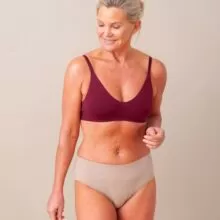
This burgundy bra demonstrates exactly what I mean about coverage. The wider straps distribute weight properly across your shoulders, and the full coverage prevents the spillage that creates that unflattering bulge above the cup. At our age, pretty comes second to functional — and functional actually looks better anyway.
Seamless Construction Eliminates Lines
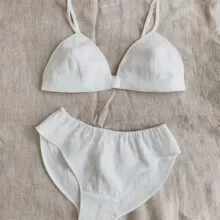
This white set shows why seamless bras are non-negotiable under fitted clothing. The smooth cups create an uninterrupted line under knits and blouses, which is essential when you’re wearing the structured pieces that work best on mature figures. Seams and lace show through everything now that our skin is thinner.
Proper Band Fit Prevents Back Bulge
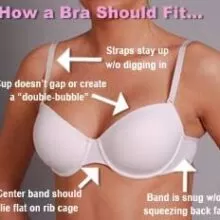
The diagram here illustrates the most common fitting mistake I see — wearing a band that’s too loose. When the band rides up your back, it pushes flesh upward and creates that dreaded back bulge. The band should sit horizontally across your ribcage, doing most of the support work rather than relying on the straps.
Side Support Shapes Your Silhouette
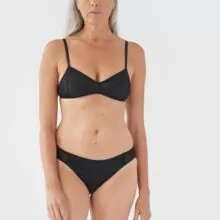
This black set demonstrates the importance of side panels and underwire that extends fully around the ribcage. The structure here prevents the sideways migration that happens when breast tissue isn’t properly contained. This creates a cleaner line under jackets and prevents that lumpy look under arms.
14 Pro Makeup Tips for Older Women from Professionals

A Guide to Wear Shoes without Socks For Women
20 Best Tattoos Designs For Older Women
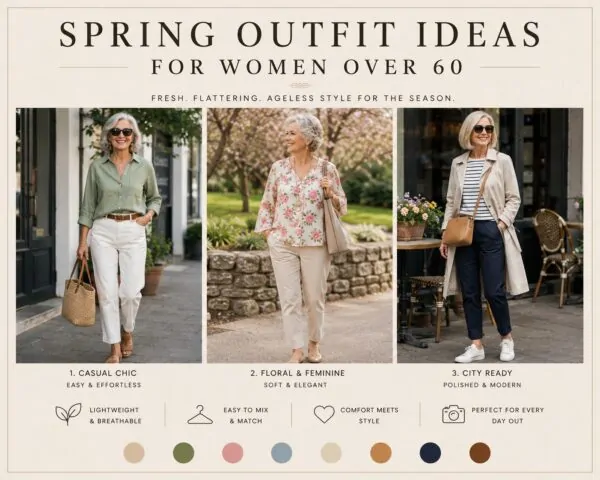
19 Perfect Spring Outfit Ideas for Women Over 60
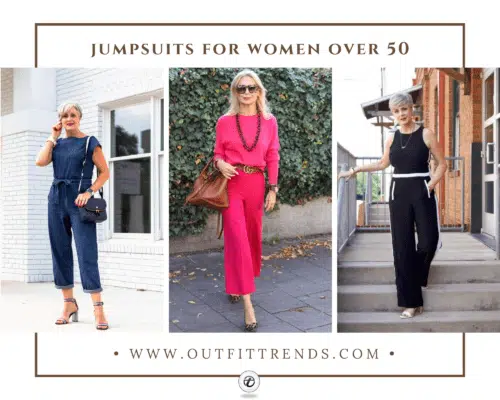
12 Stylish Jumpsuit Outfit Ideas for Women Over 50
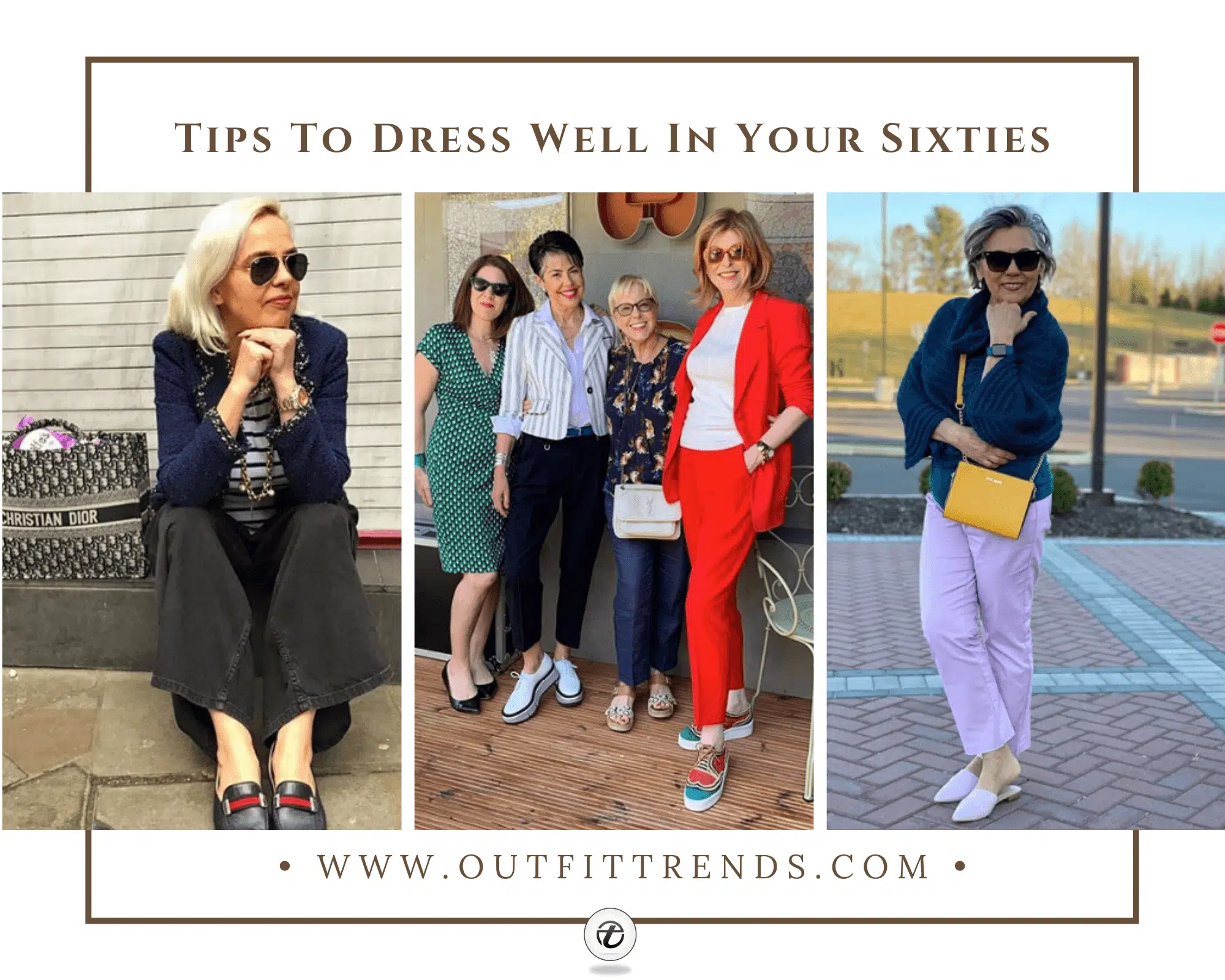
30 Best Outfits for Women Over 60 with Styling Tips
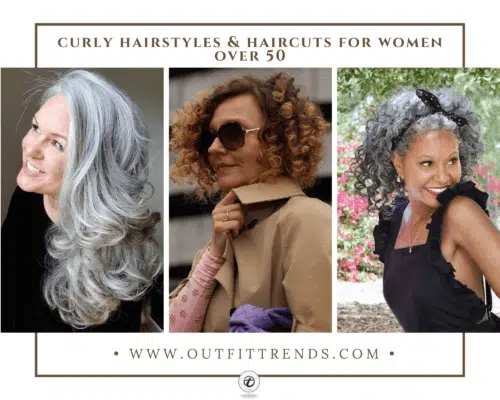
21 Best Curly Hairstyles For Women Over 50
23 Practical Short Hairstyles for Women Over 50
Minimizer Bras Create Better Proportions
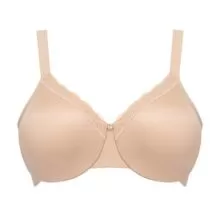
For larger busts, this nude minimizer shows how the right construction can redistribute tissue to create a more balanced silhouette. The key is the way it spreads the breast tissue across a wider area rather than pushing it up and forward, which can look matronly on mature figures.
The average woman’s bra size changes six times throughout her lifetime, with the most dramatic shifts occurring after 50 due to hormonal changes, weight redistribution, and loss of skin elasticity.
Dos & Don’ts
What Type Of Bra Is Best For Older Women?
The honest answer is that full-coverage, seamed bras with underwire work best for most women over 60. I know wireless bras feel more comfortable, but comfort without support just creates more problems under clothing. The structure of a proper underwire bra lifts and separates in a way that creates the most flattering silhouette under the fitted pieces that work best at our age.
For daily wear, I reach for t-shirt bras with molded cups about 80% of the time. The smooth surface eliminates show-through, and the consistent shape means my clothes fit the same way every time I put them on. This consistency becomes more important as your natural shape becomes less predictable.
Minimizer bras deserve special mention here because they solve a problem many women face after menopause — when weight redistributes to your middle, a large bust can overwhelm your frame. A good minimizer doesn’t actually make you smaller, but it redistributes tissue to create better proportion with your overall silhouette.
The colours that work best are nude, black, and white. Skip the pretty pastels and bright colours — they serve no functional purpose and often show through clothing. Your drawer should be about 60% nude bras, 30% black, and 10% white for those times when you need them under light colours.
Fabric Considerations for Hot Flashes
Let’s address what nobody wants to talk about but everyone experiences — temperature regulation becomes crucial in your lingerie choices after 60. Cotton blends with moisture-wicking properties work better than pure cotton, which holds dampness against your skin. Bamboo fiber is excellent but expensive.
Avoid synthetic fabrics that don’t breathe, especially in the band area where you need airflow most. The exception is microfiber in the cups, which provides smooth shaping without the bulk of foam padding. I’ve learned that breathable fabric in the band is more important than breathable cups for managing temperature swings.
The Reality of Fit After 60
Your ribcage expands as you age, and your breast tissue becomes less dense. This means you might need a larger band size and a different cup shape than you wore even five years ago. The three-finger rule for band fit is obsolete — if you can fit three fingers under your band, it’s too loose to provide proper support.
Most women need to go up one band size and down one cup size from what they wore in their forties. The band should feel snug but not restrictive, and the underwire should sit flat against your ribcage without digging in or gapping. If you’re constantly adjusting your bra throughout the day, it doesn’t fit.
Key takeaways
- Choose full-coverage bras with wider straps for proper weight distribution and support
- Prioritize seamless construction over decorative details to eliminate show-through under fitted clothing
- Get fitted annually as your band size increases while cup shape changes with age
- Invest in breathable fabrics and moisture-wicking blends for temperature regulation during hot flashes
- Stock your drawer with 60% nude, 30% black, 10% white bras for maximum versatility
- Replace bras every six months as elastic loses support faster when doing more work
**Quick Tips:**
1. **Test the mirror check** — put on a fitted white t-shirt over your bra; if you can see any lines, seams, or texture, choose a different style.
2. **Use the pencil test** — a properly fitted bra band should hold a pencil placed underneath it without the pencil falling out.
3. **Choose molded over padded** — molded cups give shape without bulk, while padding adds unnecessary volume to mature figures.
4. **Adjust straps weekly** — elastic stretches with wear and washing, requiring frequent micro-adjustments for optimal fit.
5. **Buy three of what works** — when you find the perfect bra, purchase multiples immediately as styles get discontinued frequently.
6. **Wash in cold water only** — hot water breaks down elastic faster, reducing the supportive lifespan of your bras significantly.
14 Pro Makeup Tips for Older Women from Professionals
A Guide to Wear Shoes without Socks For Women
20 Best Tattoos Designs For Older Women
19 Perfect Spring Outfit Ideas for Women Over 60
12 Stylish Jumpsuit Outfit Ideas for Women Over 50
30 Best Outfits for Women Over 60 with Styling Tips
21 Best Curly Hairstyles For Women Over 50
23 Practical Short Hairstyles for Women Over 50