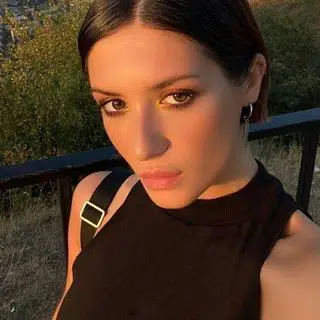
Most women think they need a photographer to get great outfit photos — but the truth is simpler and more liberating than that. I’ve spent the last three years mastering the art of solo outfit photography, and what I discovered changed everything about how I document my style.
The breakthrough came when I realised that composition beats expensive equipment every single time. I started getting better photos with my phone propped against books than I ever did asking friends to snap quick shots. The secret isn’t having someone behind the camera — it’s understanding how light, angles, and timing work together to showcase what you’re actually wearing.
After countless mirror selfies that cut off my shoes and awkward timer shots where I’m mid-blink, I’ve cracked the code on capturing outfits that look intentional, not accidental. These techniques work whether you’re documenting your daily looks or building a style archive you’ll actually want to look back on.
How to Take Outfit Photos on Your Own?
Use Natural Light as Your Best Friend
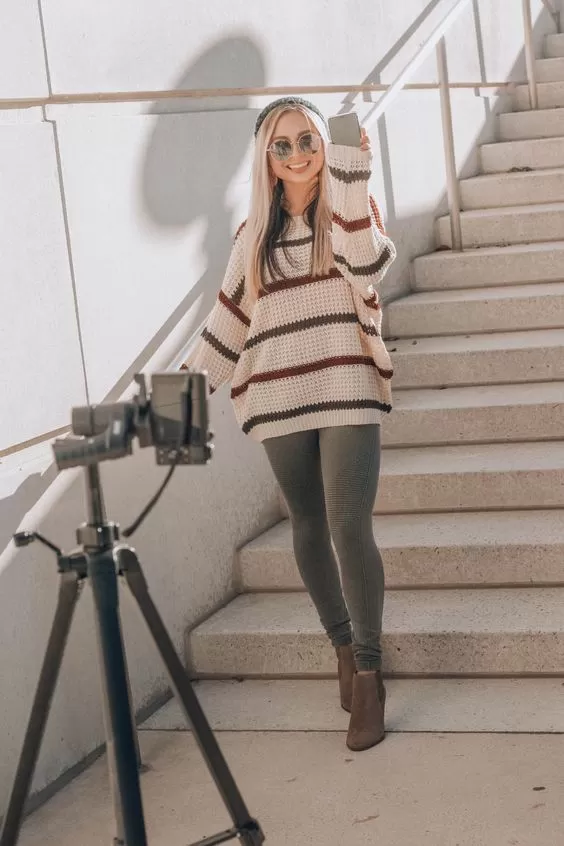
This striped sweater look demonstrates exactly why I always shoot near windows or outdoors. Natural light eliminates the harsh shadows that indoor lighting creates, and it shows your outfit’s true colours. The soft, even illumination here lets you see every detail of the knit texture and the way the stripes interact with the fitted leggings underneath. I’ve learned that the hour after sunrise and before sunset gives you that golden glow, but even overcast days provide beautifully diffused light that flatters everything.
Master the Art of Layering for Visual Interest
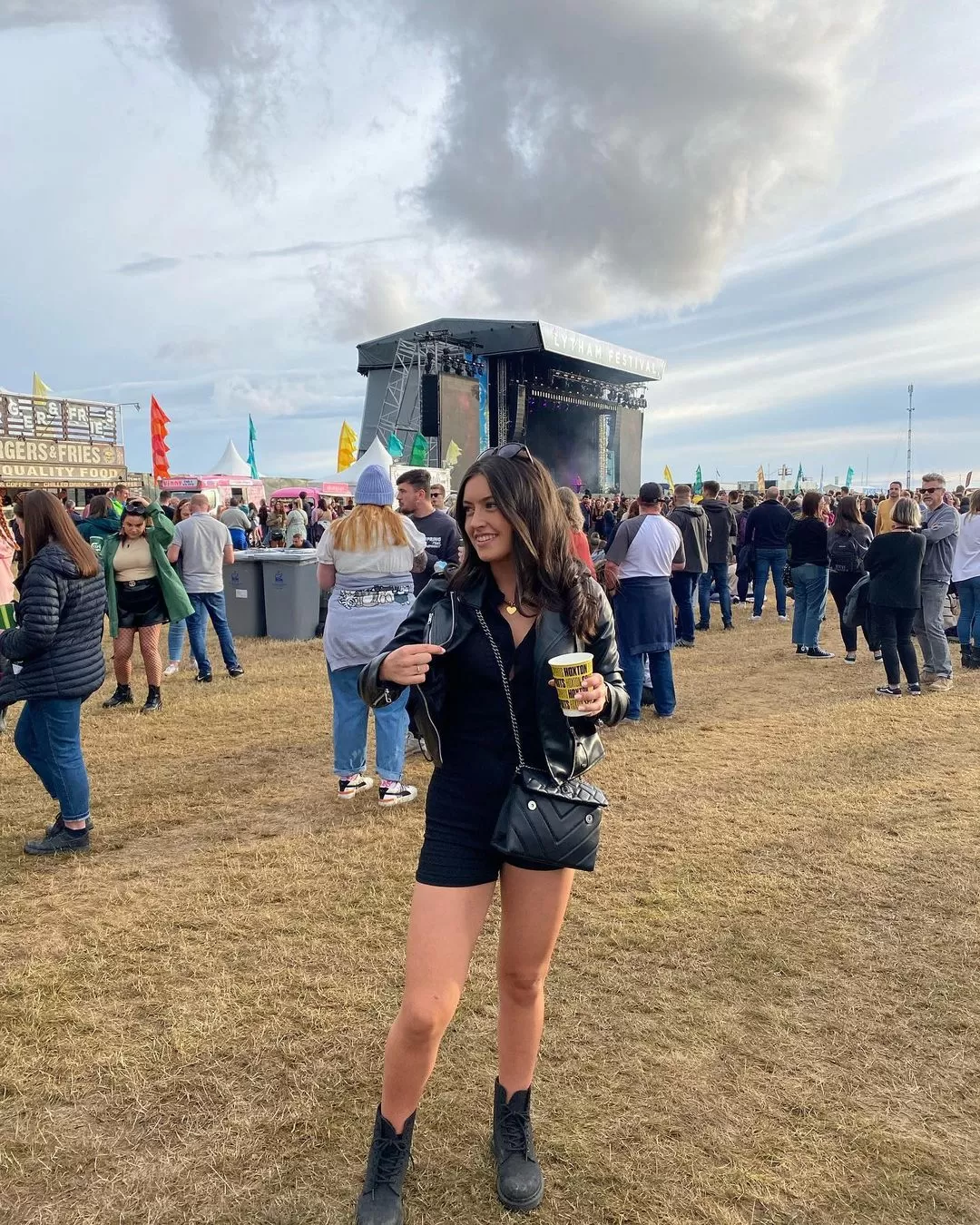
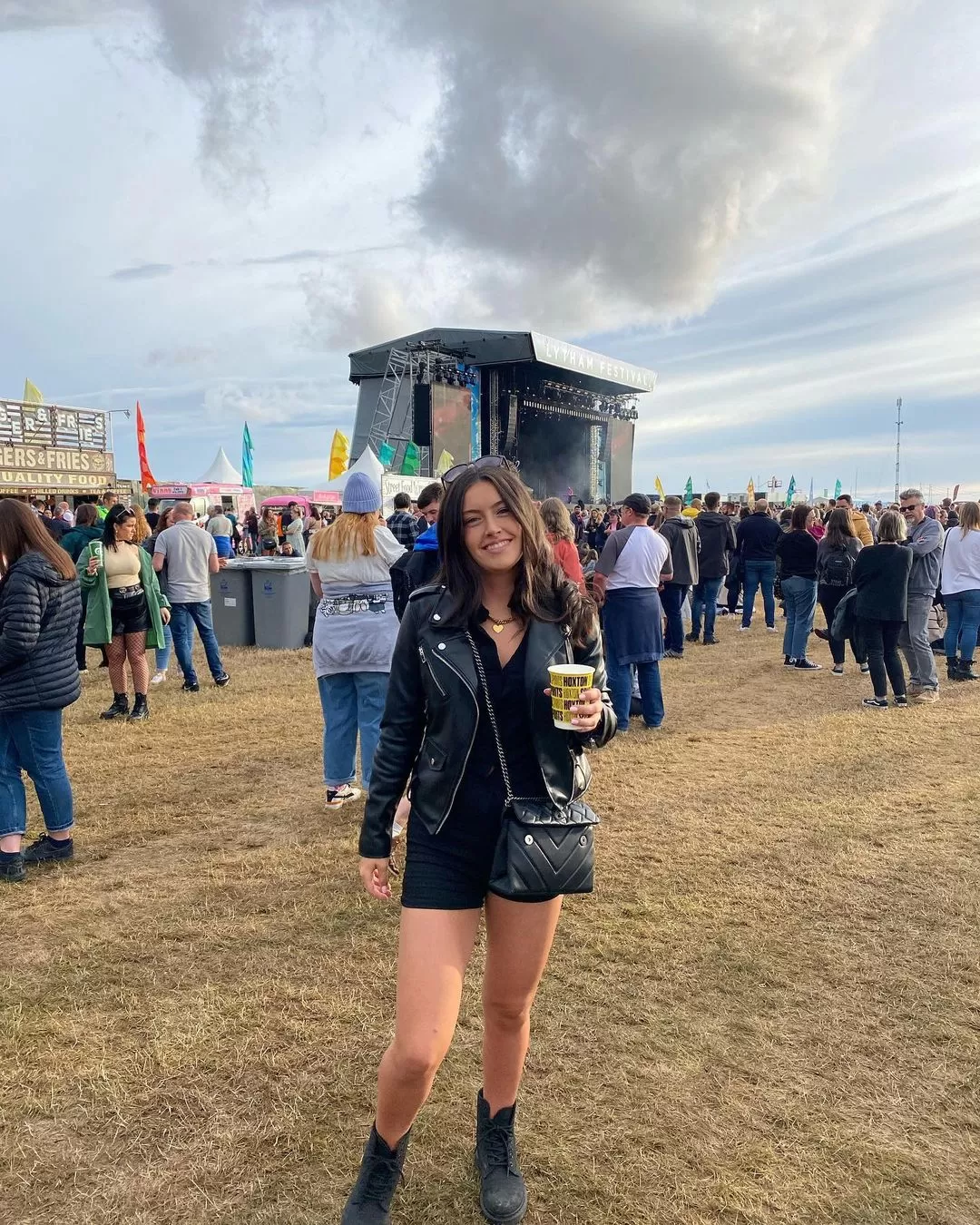
The leather jacket over a black dress creates depth that translates beautifully in photos. This festival outfit shows how one statement layer can transform a simple base — and more importantly, how that transformation reads clearly on camera. When you’re shooting solo, layered pieces give your eye somewhere to travel, making static poses feel more dynamic. I always include at least one contrasting texture or silhouette because it prevents that flat, one-dimensional look that plagues most self-taken photos.
Choose Props That Feel Natural in Your Hands
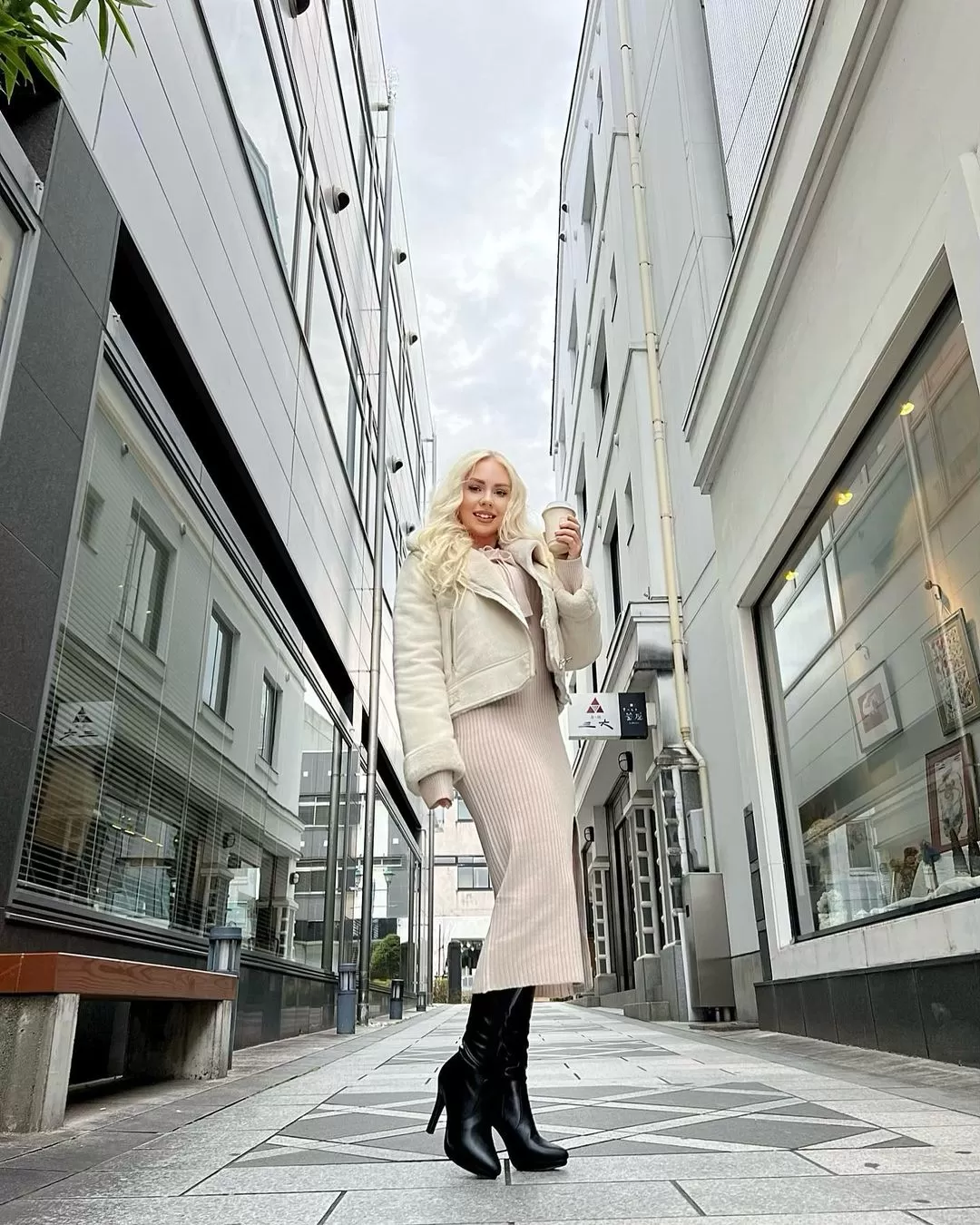
The coffee cup in this shot isn’t random — it gives my hands something to do and creates a lifestyle context that makes the photo feel lived-in rather than posed. I’ve discovered that holding something relevant to where I am or what I’m doing eliminates that awkward “where do I put my hands” problem that ruins so many outfit photos. A book, sunglasses, or even your phone can serve this purpose, but the key is making it look intentional, not like you grabbed the nearest object.
19 Perfect Spring Outfit Ideas for Women Over 60
30 Best Outfits for Women Over 60 with Styling Tips
How to wear Plaid Pants? 20 Outfit Ideas & Styling Tips
30 Best Outfit Ideas for Women Over 40 with Styling Tips
30 Winter Office Outfits For Men & Styling Tips
What To Wear In Florence? 29 Outfit Ideas & Packing Tips
50th Birthday Outfit Ideas: 20 Styling Tips for Big Day
50+ Velvet Outfit Ideas with Styling Tips
The most successful Instagram fashion influencers take an average of 267 photos to get one perfect shot — and 89% of them shoot alone using tripods and timers, not professional photographers.
Find Backgrounds That Complement, Don’t Compete
This urban alley setting works because the neutral tones don’t fight with the cream jacket and ribbed dress. The architectural lines actually enhance the outfit’s silhouette rather than distracting from it. I’ve learned that busy backgrounds kill outfit photos faster than bad lighting — your clothes should be the star, not the scenery. Look for walls, doorways, or spaces with clean lines and colours that harmonise with what you’re wearing.
Dos & Don’ts
Outfits That Photograph Beautifully
Green Striped Cardigan Over White Shirt
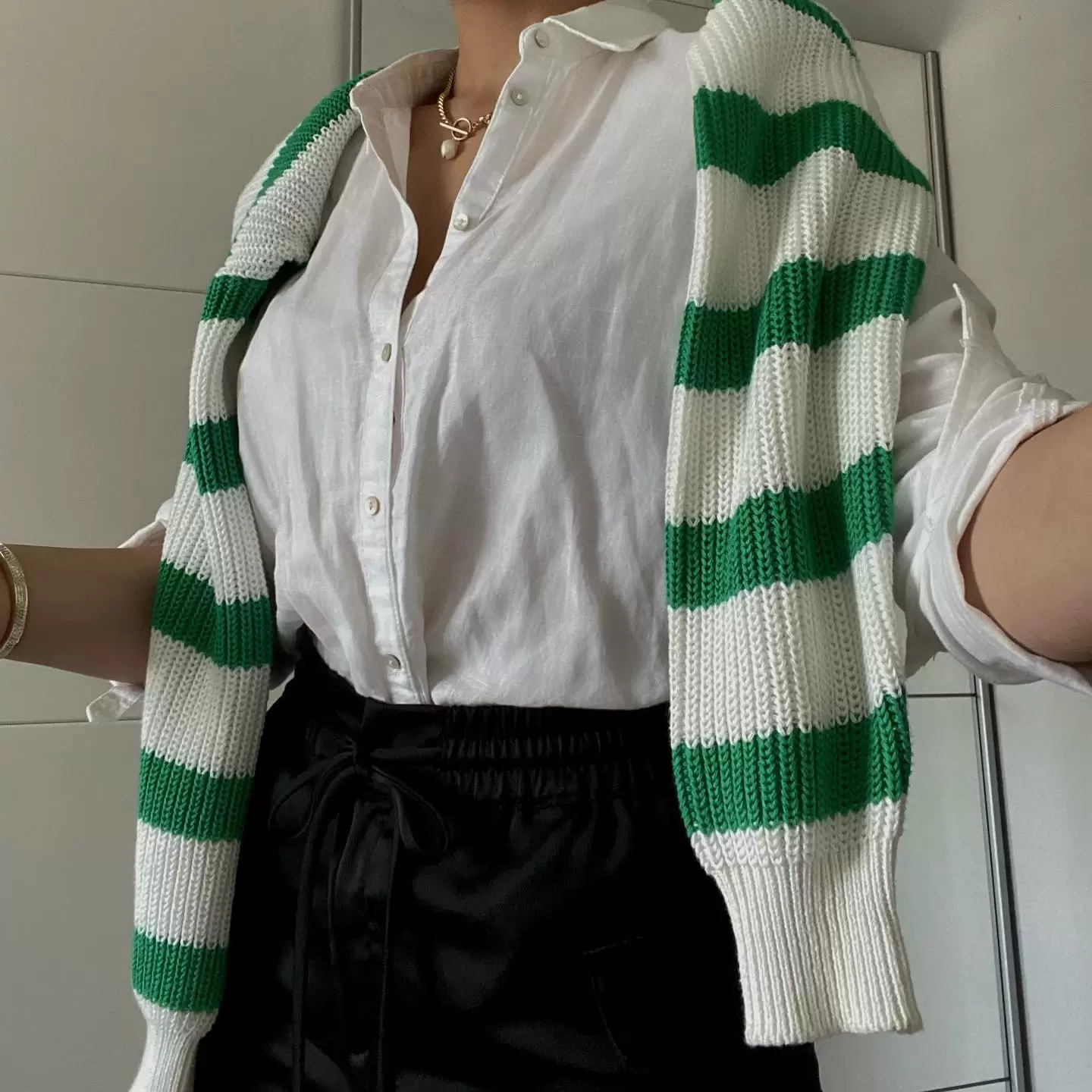
The sharp contrast between the bright green stripes and crisp white creates visual interest that translates perfectly on camera. This layered approach gives you texture and depth — two elements that make photos look intentional rather than thrown together. The relaxed fit means you won’t be constantly adjusting or feeling self-conscious while shooting.
Neutral Tones at a Coffee Shop
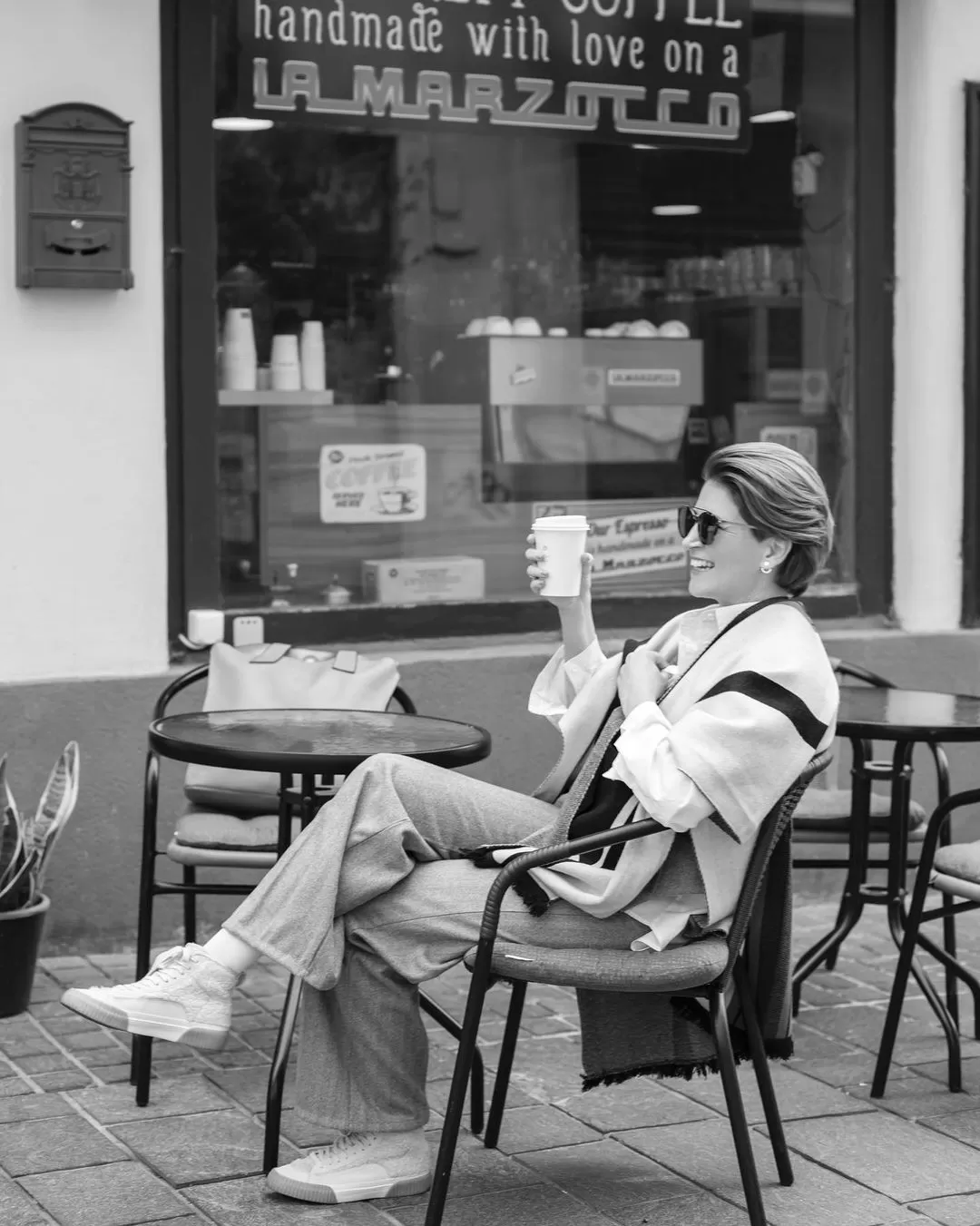
This monochromatic beige palette photographs like butter — soft, cohesive, and effortlessly put-together. The tonal layering creates subtle visual interest without competing patterns or colours that can look busy in photos. The relaxed silhouettes mean you can move naturally, which always translates to better candid shots.
Checked Trousers with White Top and Hat
The wide-brimmed hat instantly elevates what could be a basic outfit and creates a strong focal point for photos. High-waisted trousers photograph incredibly well because they define your proportions and create a flattering silhouette from any angle. The neutral colour palette keeps the focus on the interesting textures and shapes.

Navy Vest Over White Shirt
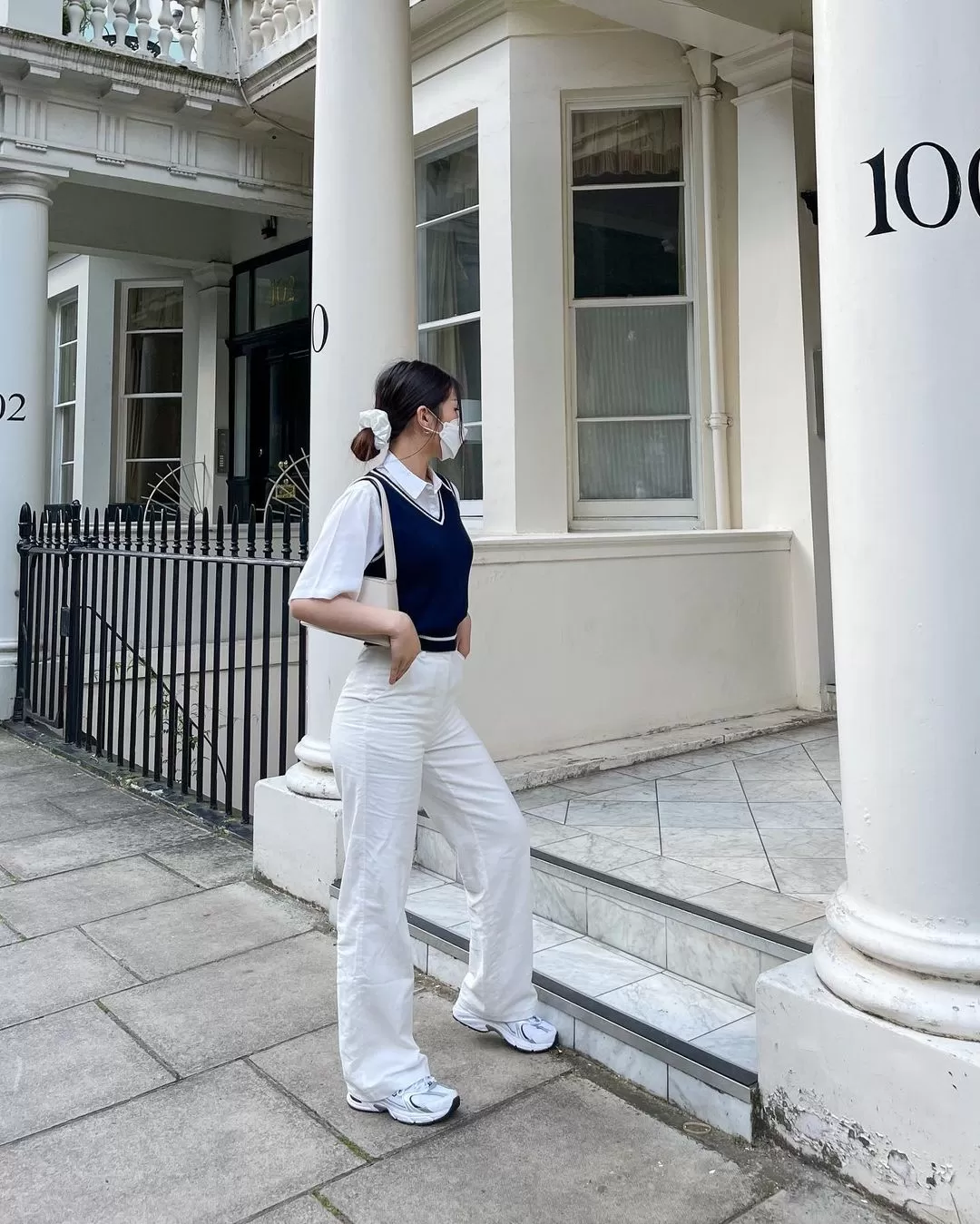
This preppy layering combination works because of the strong contrast between the navy and white — colours that photograph clearly and don’t get muddy in different lighting. The structured vest creates a defined waistline that looks intentional and polished. It’s the kind of outfit that looks effortless but reads as very deliberate on camera.
Quick tip
Choose high-contrast colour combinations like navy and white that photograph clearly in any lighting.
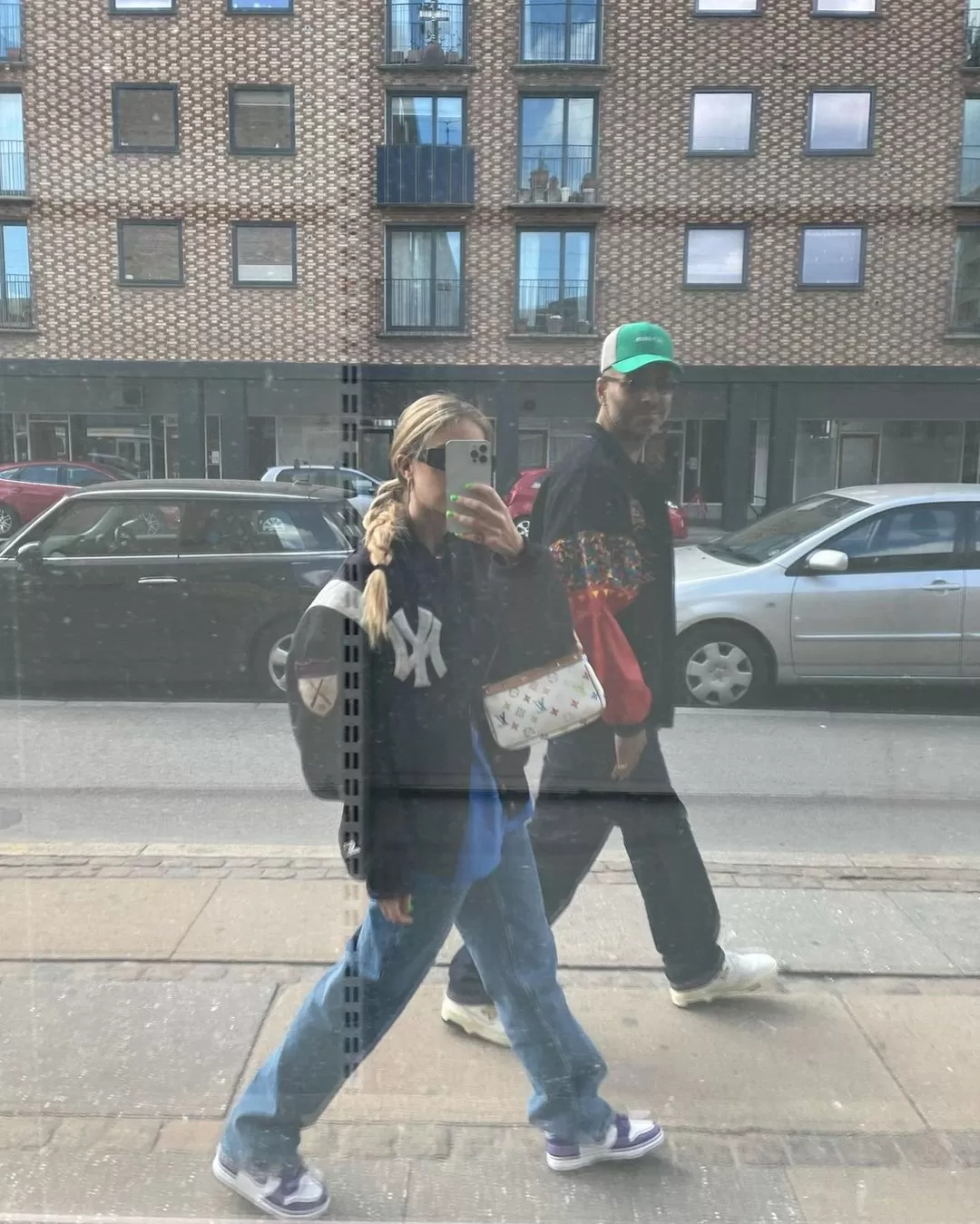
Oversized Blazer with Baggy Jeans
The proportional play between the structured blazer and relaxed jeans creates visual interest that translates well in street-style photos. This kind of high-low mixing — formal on top, casual on bottom — always photographs as intentional rather than accidental. The baseball cap adds a sporty element that makes the whole look feel current and unstudied.
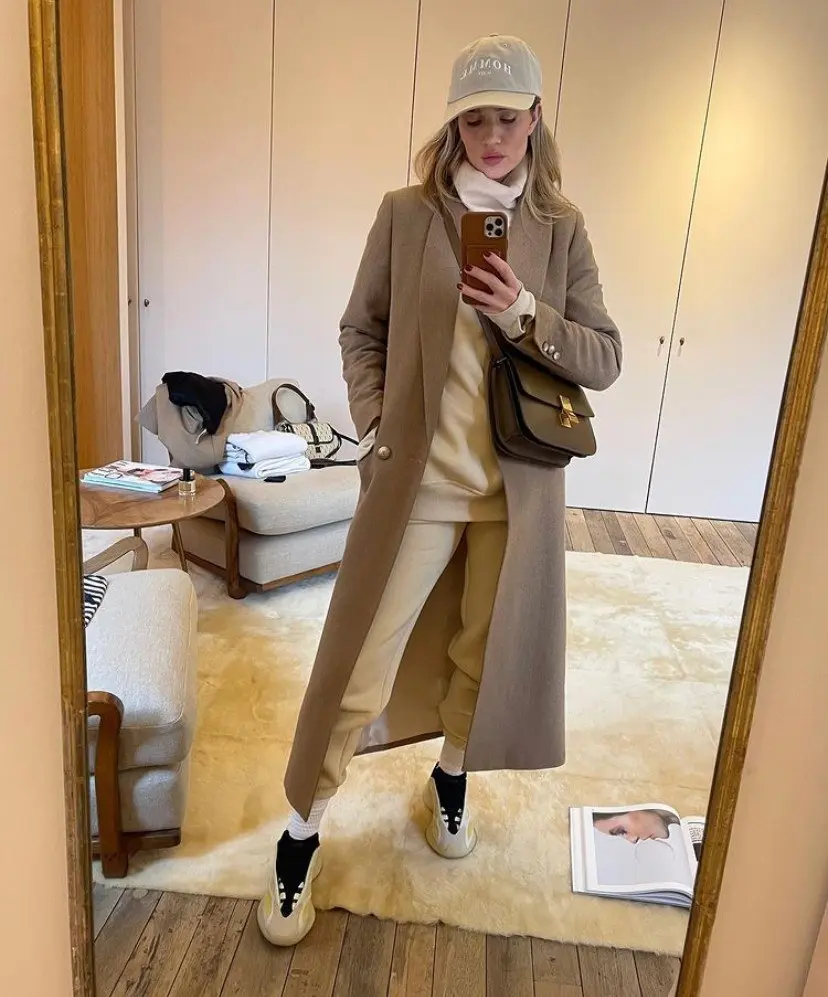
Long Coat in Neutral Tones
A floor-length coat in a neutral tone creates a strong silhouette that photographs beautifully from a distance. The monochromatic palette means the focus stays on the shape and texture rather than competing colours. This type of minimalist approach always looks expensive and considered in photos, even when the pieces themselves are affordable.
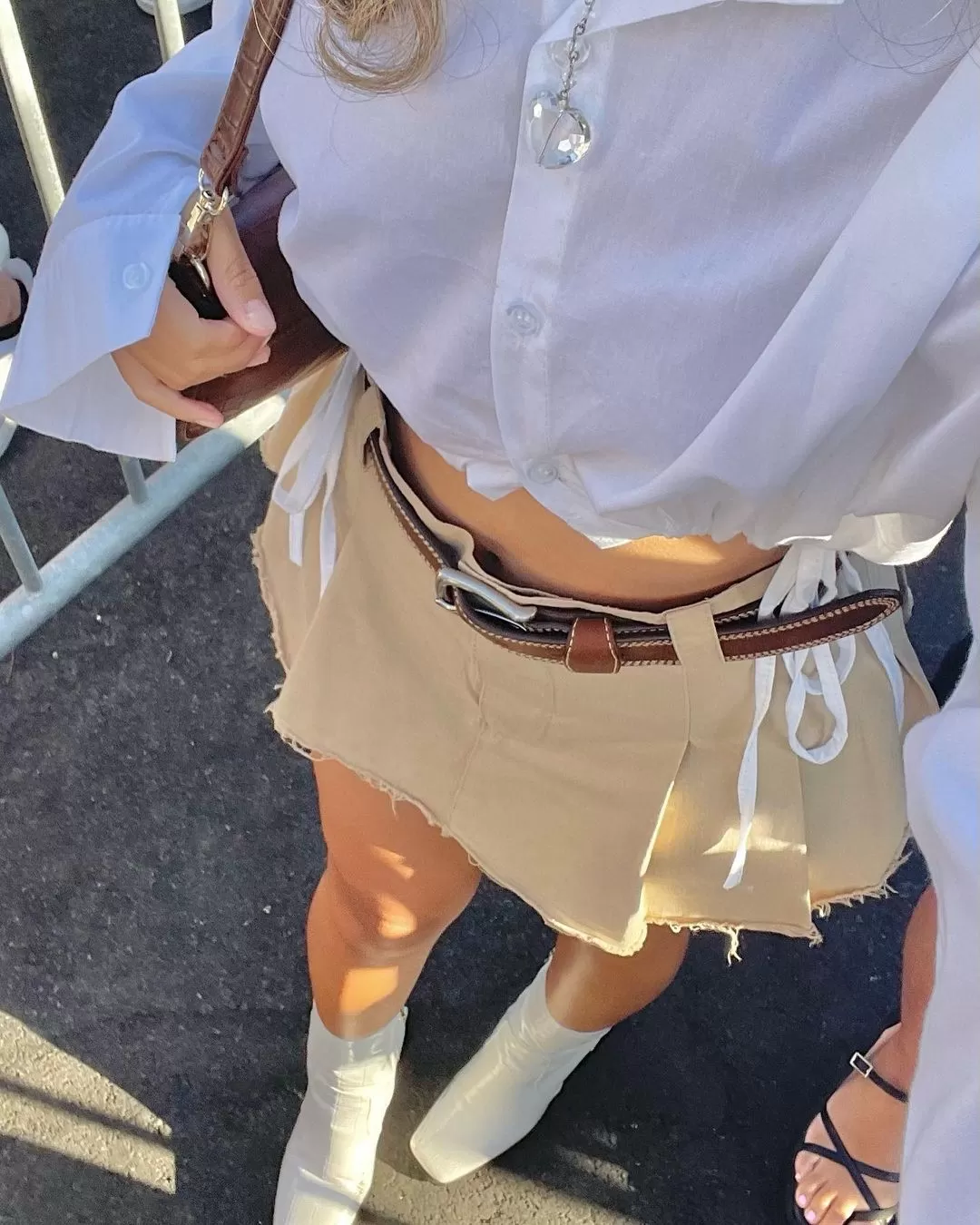
White Shirt with Denim Mini and Belt
The waist-defining belt over a loose white shirt creates shape and prevents the outfit from looking shapeless in photos. The contrast between the structured shirt and casual denim reads clearly on camera. This combination of classics means the outfit won’t look dated when you look back at these photos in five years.
Quick tip
Layer different textures to create visual depth that translates well in flat photos.
Key takeaways
- Choose high contrast combinations — they photograph more clearly than similar tones
- Layer different textures and weights to create visual depth in flat photos
- Define your waist with structured pieces or belts to create flattering proportions
- Stick to neutral or monochromatic palettes that won’t compete with busy backgrounds
- Add one statement accessory like a hat or bold bag to create a focal point
- Choose relaxed fits that let you move naturally — stiff clothing always looks awkward
19 Perfect Spring Outfit Ideas for Women Over 60
30 Best Outfits for Women Over 60 with Styling Tips
How to wear Plaid Pants? 20 Outfit Ideas & Styling Tips
30 Best Outfit Ideas for Women Over 40 with Styling Tips
30 Winter Office Outfits For Men & Styling Tips
What To Wear In Florence? 29 Outfit Ideas & Packing Tips
50th Birthday Outfit Ideas: 20 Styling Tips for Big Day
50+ Velvet Outfit Ideas with Styling Tips