
Flesh tunnels sit somewhere between jewellery and body modification, and that’s exactly why people argue about them. In alternative fashion they’re everywhere, but plenty of people still read them as “extreme”, depending on the size and where they’re worn.
If you’re thinking about getting one, the real question isn’t how they look. It’s how slowly you’re willing to go. Most of the damage I’ve seen came from people rushing the stretch, not from the jewellery itself.
Here’s how flesh tunnels work, what the gauge numbers mean, what they cost, and what to know before you start. Also have a look at our guides to thigh tattoo ideas, permanent cosmetic tattoos and the tragus piercing if you’re planning more than one body modification.
What Is a Flesh Tunnel?
A flesh tunnel is a hollow, ring-shaped piece of jewellery worn in a stretched piercing, so you can see straight through the hole. You’ll also hear them called eyelets, plugs, stretchers or expanders. Strictly speaking, a tunnel is hollow and a plug is solid, but most people use the words interchangeably.
They come in every size but are always round. Materials range from implant-grade titanium, surgical steel and glass to wood, bone, stone and silicone. Most are worn in the earlobe, and some people wear them in the cheeks, nose or lips. They’re rarely seen elsewhere because they need plenty of loose skin to sit comfortably.
Tragus Piercing Guide – Everything You need to Know
Getting A Dermal Piercing – What You Should Know
Surface Piercings – Everything You need to Know About It
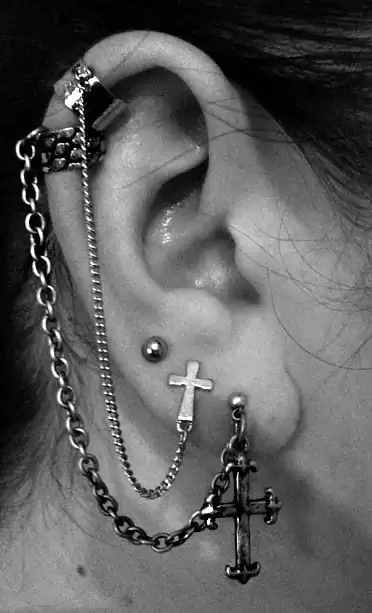
Cartilage Piercings Guide – Every Thing You Need to Know About it

Swag Accessories – 5 Accessories You Need For A Swag Look

30 Most Creative and Unique Shoes In the World

25 Best Earrings to Wear With Long Hair

20 Most Beautiful Gajra Hairstyles For All Hair Lengths
Stretched earlobes are thousands of years old. Ötzi the Iceman, who lived around 3300 BCE, had earlobe holes stretched to roughly 7 to 11 mm. Many cultures in Africa, Asia and the Americas have worn large ear jewellery for centuries.
Gauge Sizes Explained
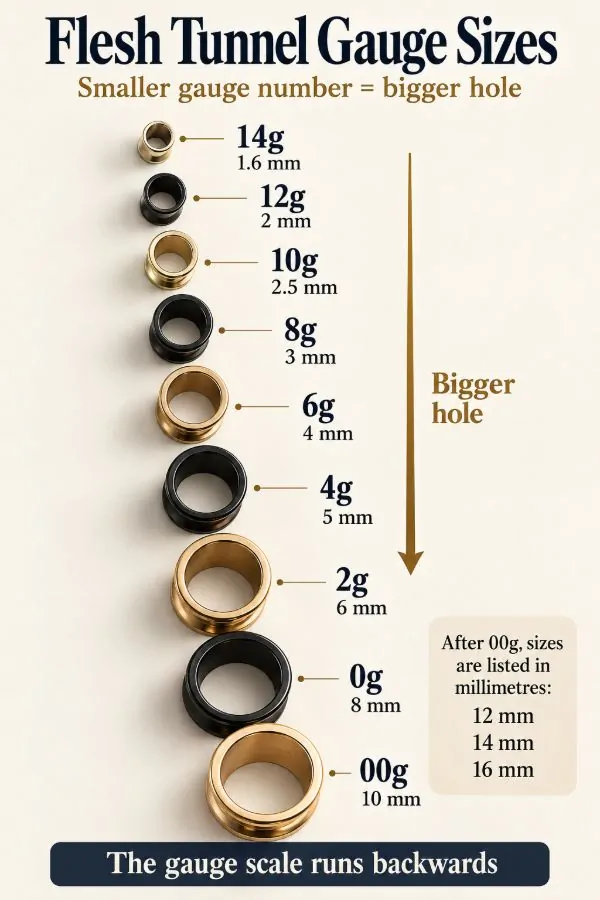
Tunnel sizes are measured in gauge (g) or millimetres, and the gauge scale runs backwards: the smaller the number, the bigger the hole. Once you pass 0g, sizes are usually given in millimetres. Common sizes:
- 14g is about 1.6 mm
- 12g is 2 mm
- 10g is about 2.5 mm
- 8g is about 3 mm
- 6g is 4 mm
- 4g is 5 mm
- 2g is 6 mm
- 0g is 8 mm
- 00g is 10 mm
Beyond that you move up in whole millimetres: 12 mm, 14 mm, 16 mm and so on. If you see “100” somewhere, it’s usually a typo for 10 mm or 00g.
How to Stretch Your Ears Safely
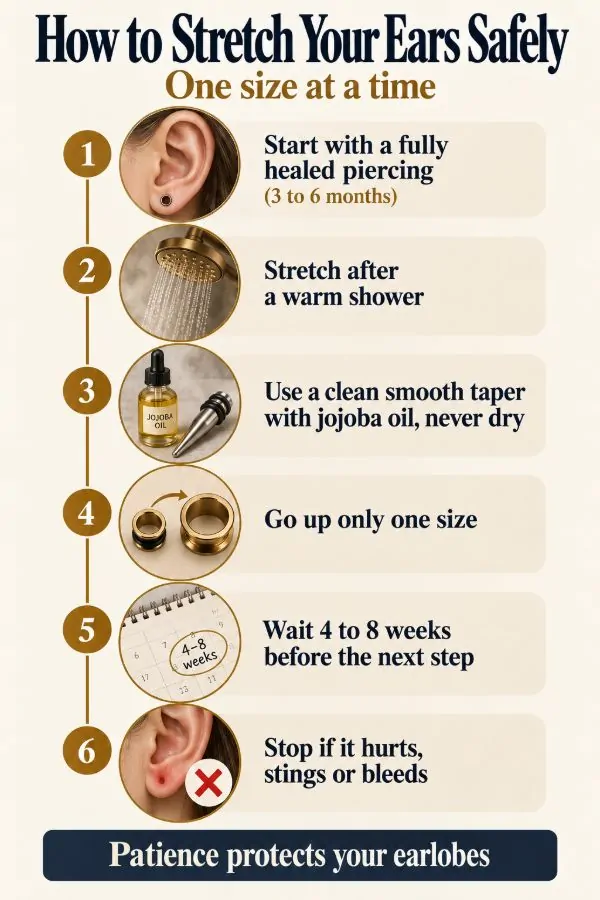
Flesh tunnels are almost always created by stretching a healed lobe piercing, step by step. You can have a piercer do it, or do it yourself with tapers, which are tapered spikes in metal, glass or other smooth material. A taper is pushed through slowly and the jewellery is inserted behind it.
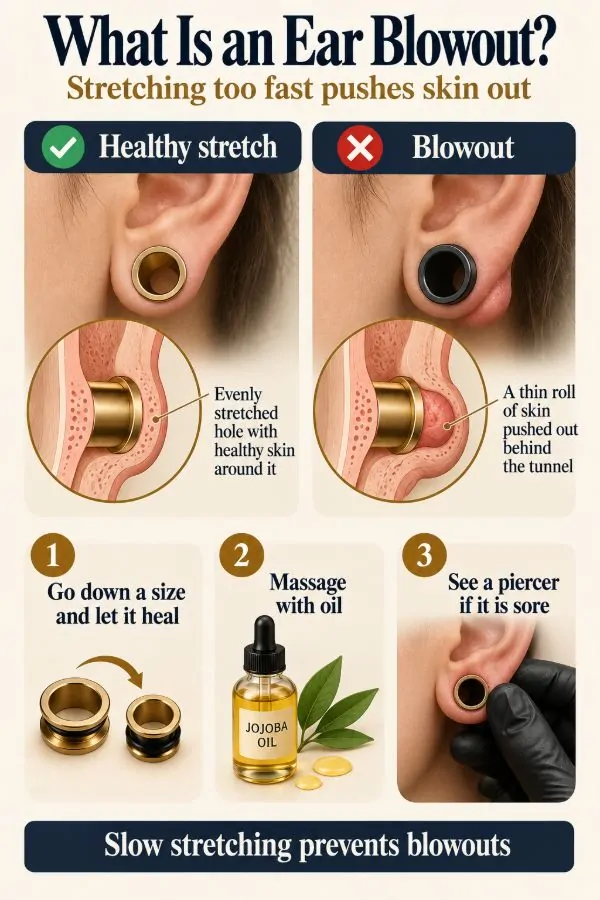
The one rule that matters is go up one size at a time and let the ear fully recover in between. Many piercers suggest waiting about 4 to 8 weeks per step, and longer as the holes get bigger. Stretching too far in one go can tear the skin, cause pain and bleeding, and lead to a blowout, which is a roll of thin skin pushed out the back of the hole. You can read more about it in this Healthline guide to ear blowouts.
A few habits help:
- Start from a fully healed piercing, usually 3 to 6 months old.
- Stretch after a warm shower, when the skin is soft.
- Use a clean, smooth taper with a little lubricant such as jojoba oil. Never stretch dry.
- If it hurts, stings or bleeds, stop and wait. Don’t push through.
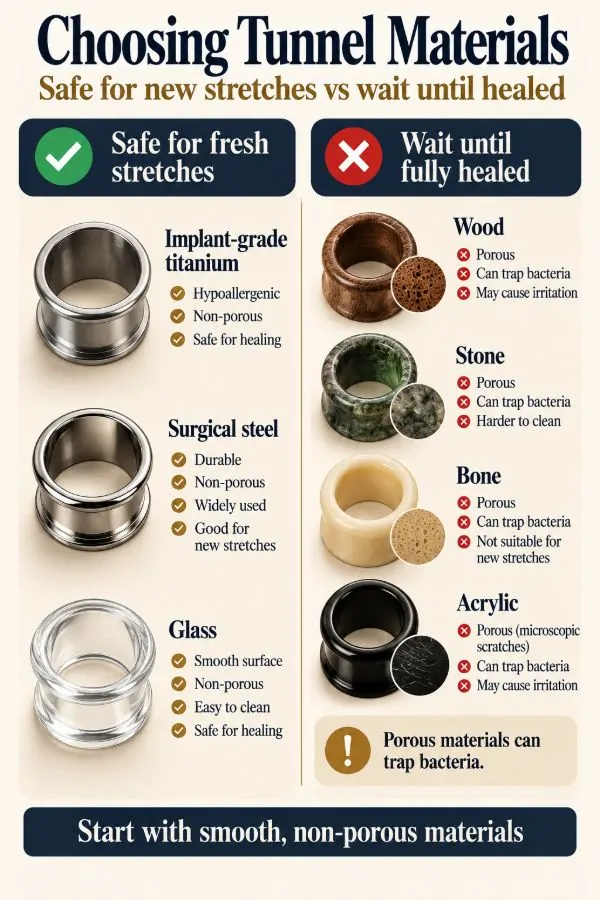
- Start with implant-grade titanium, surgical steel or glass. Save wood, stone and acrylic for when the hole is fully healed.
What Do Flesh Tunnels Cost?
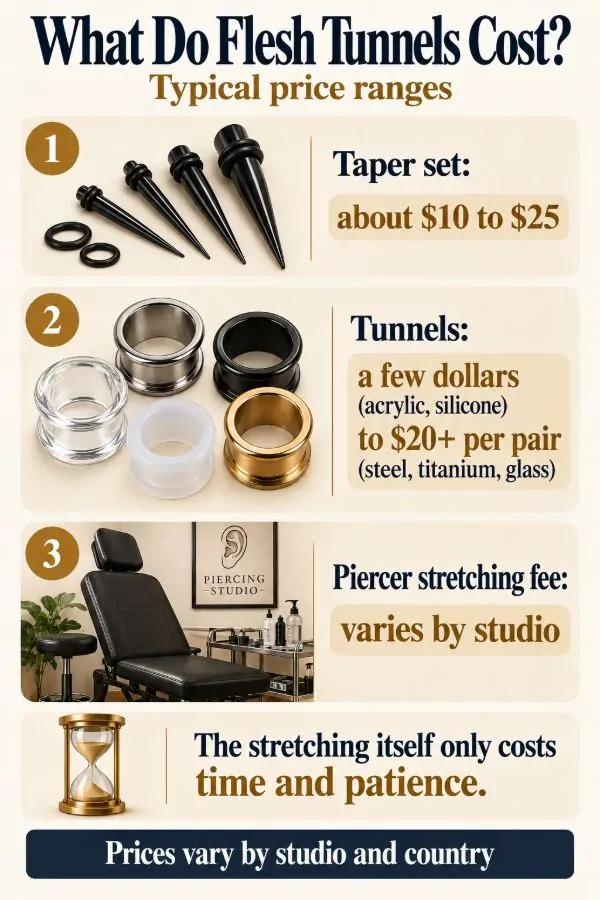
There are two costs: the original piercing and the jewellery. Stretching itself only costs time and patience. A basic taper set typically runs about $10 to $25, and tunnels range from a few dollars for acrylic or silicone to $20 or more per pair for quality steel, titanium or glass. A professional piercer may charge a small fee to stretch your ears for you. Prices vary by studio and country.
Pros and Cons
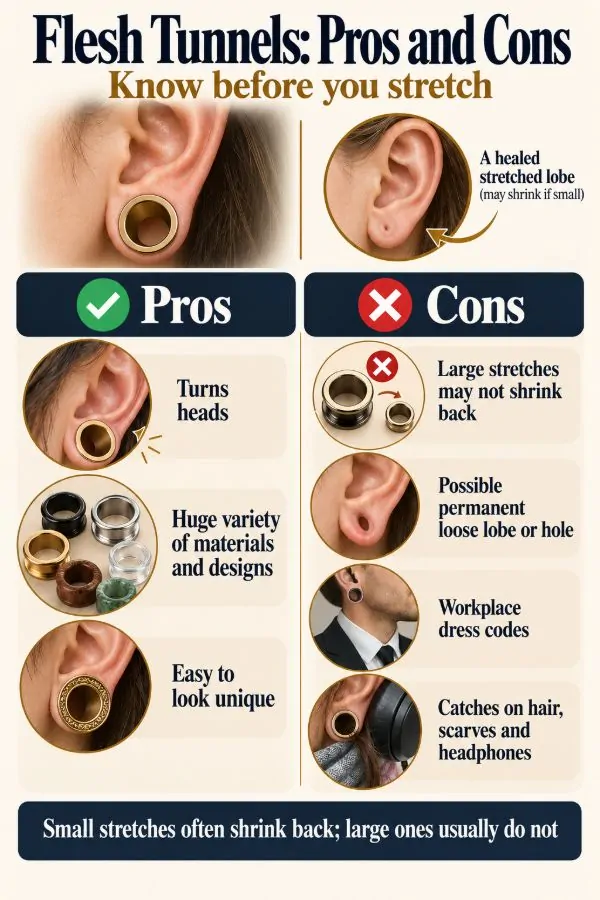
The pros: tunnels turn heads, and the range of materials and designs makes it easy to look unique. The same size can feel subtle in matte black and bold in carved wood or stone.
The cons: the bigger you go, the less likely the skin is to return to its original size if you take them out. Small stretches often shrink back almost completely. Very large ones usually don’t, and a permanent loose lobe or visible hole may remain. Large tunnels also affect how some workplaces see you, and they catch on hair, scarves and headphones more easily than regular earrings.
Dos & Don’ts
Flesh Tunnel Piercings: Real Examples
Here are some real examples, from small black plugs to carved bone and stone.
Dave Navarro from Jane’s Addiction with metal pentagram flesh tunnels in his earlobes.

Chester Bennington of Linkin Park wore black plugs in his earlobes, a good example of a simple, small-gauge look.

Multiple tunnels around the ear, conch and lobe, in a range of gauge sizes.

Tunnels aren’t limited to the ears. This extreme example shows tunnels in the cheeks, lips and nose, which is very rare.

Cute triple clear tunnels in the earlobes, a subtle option that blends with the skin.

A heart-shaped tunnel for the earlobes, great for a more girly look.

An elephant carved in bone and wood. Natural materials like these look beautiful, but save them for a fully healed stretch.

For the gamers: PlayStation controller metal plugs, a fun pick for guys.

Amethyst single-flare stone plugs. They have a mystical feel and are popular with girls.

Frequently Asked Questions
How long does it take to stretch ears to 00g?
Going from a standard lobe piercing (usually 18g to 16g) to 00g (10 mm) typically takes 8 to 12 months or longer, because each step needs several weeks to settle. Rushing it is the main cause of tears and blowouts.
Will my ears shrink back after I take tunnels out?
Small stretches, up to about 6 to 8 mm, often shrink back almost completely, though a small hole may remain. The larger and longer the stretch, the less likely it is to close, and very large sizes often need cosmetic surgery to fully repair.
What is an ear blowout and how do I fix it?
A blowout is a roll of skin that pushes out behind the jewellery when you stretch too fast. Go down a size, let it heal, and massage with oil. A small blowout can settle with time, and a bad one should be checked by a professional piercer.
Can I stretch my ears if my piercing is brand new?
No. Wait until the piercing is fully healed, which is usually 3 to 6 months for lobes. Stretching early tears the fresh tissue and raises your risk of infection.
Why does my stretched ear smell?
The smell comes from dead skin and oil building up behind the jewellery. Clean the ear and the tunnel with mild soap and water daily, dry them well, and avoid wearing porous materials like wood or acrylic constantly.
Can you wear flesh tunnels at work?
It depends on your workplace. Small, plain tunnels in black or steel are usually accepted, while larger or very bright ones may not be. Check your dress code before you go big, and keep a pair of regular earrings or small solid plugs as a backup.
Key Takeaways
- Go slowly. Stretch one size at a time and wait several weeks between steps.
- Know the gauge scale. Smaller numbers mean bigger holes, and 00g is 10 mm.
- Heal first. Only stretch a fully healed piercing, and stop if it hurts or bleeds.
- Choose safe materials. Titanium, steel and glass first, natural materials later.
- Think long term. Large stretches often don’t shrink back after removal.
- Keep them clean. Wash daily and massage with oil to keep the skin healthy.
Tragus Piercing Guide – Everything You need to Know
Getting A Dermal Piercing – What You Should Know
Surface Piercings – Everything You need to Know About It
Cartilage Piercings Guide – Every Thing You Need to Know About it
Swag Accessories – 5 Accessories You Need For A Swag Look
30 Most Creative and Unique Shoes In the World
25 Best Earrings to Wear With Long Hair
20 Most Beautiful Gajra Hairstyles For All Hair Lengths
Which look is your favourite?
Tap the outfit you would wear. Results show right after you vote.