The hardest part of getting ready for a Pakistani mehndi isn’t finding the perfect dress — it’s knowing when to stop adding things. I’ve watched too many women layer on every piece of gold jewellery they own, pile on the gota work, and end up looking like they’re carrying the entire celebration on their shoulders instead of enjoying it.
Your mehndi outfit should make you feel like dancing, not like you’re wearing a costume. After years of attending family weddings and helping friends navigate the delicate balance between festive and overwhelming, I’ve learned that the most memorable mehndi looks are built on one simple principle: choose your statement and let everything else support it. Whether you’re the bride glowing in her mayun yellow or a guest celebrating in jewel tones, the magic happens when each element works together instead of competing for attention.
Styling Tips
Layer textures, not colours
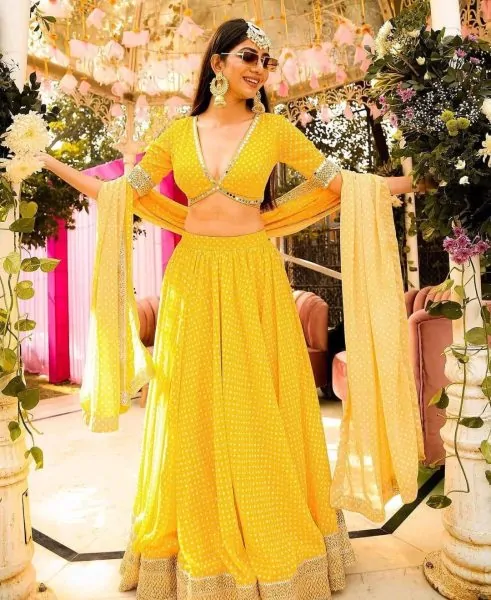
This yellow georgette lehenga proves that monochromatic dressing doesn’t mean boring. The sequin work on the choli contrasts beautifully with the flowing dupatta, while the gota border adds just enough weight to ground the silhouette. When you stick to one colour family, you can play with different fabrics and embellishments without looking overdone.
Master the art of colour blocking
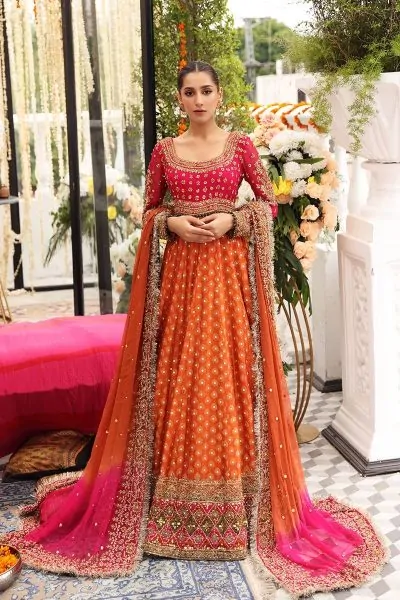
Red and orange should clash, but here they create the perfect mehndi harmony. The key is using the dupatta as a bridge colour — that pink-red ombré connects the deep red choli to the bright orange lehenga. This technique works because each colour gets its own space to shine while the gradient creates visual flow.
Let prints be your statement
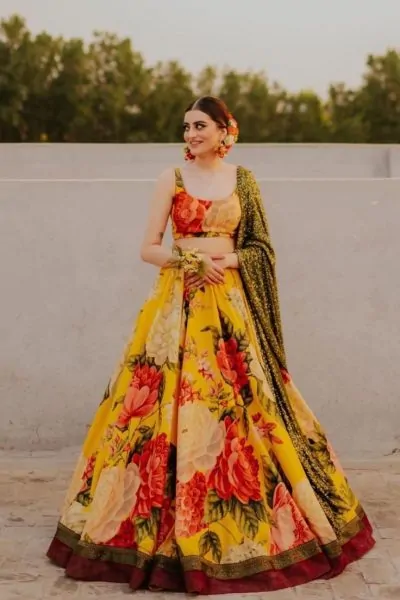
When your lehenga has this much personality — those bold florals against sunshine yellow — everything else needs to step back. Notice how the choli stays solid and the dupatta adds texture without competing patterns. The secret with printed lehengas is treating them like the main character and styling everything else as supporting cast.
Balance heavy and light elements
This look works because it pairs a heavily embellished yellow kurta with a simple straight pant and delicate dupatta. The gota work and embroidery provide the festive weight you need for mehndi, while the clean lines keep it from feeling costume-like. When your top is doing all the talking, let your bottom half listen quietly.
20 Fall Wedding Guest Dress Ideas For This Wedding Season
30 Beautiful Kitenge Dresses for Wedding
35 Latest Engagement Dresses For Women In India
22 Chic Leg Warmer Outfit Ideas & Styling Tips
How To Style Fit And Flare Dresses 20 Outfit Ideas To Try
How to Style Knee Length Dresses: 18 Outfit Ideas
25 Amazing Paper Dresses Collection and Designs

Cocktail Attire for Men – 30 Outfit Ideas & Styling Tips
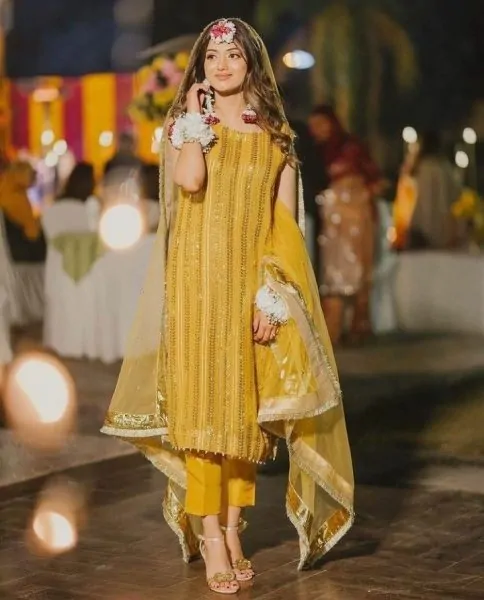
The tradition of wearing yellow and orange at mehndi ceremonies comes from turmeric and henna — the natural ingredients used in pre-wedding beauty rituals. These warm colours were believed to bring prosperity and ward off evil, making them the original “something borrowed” for Pakistani brides.
Fabric Guide for Mehndi Season
Mehndi season demands fabrics that can handle henna stains, enthusiastic dancing, and long celebration hours. Georgette and chiffon are your best friends here — they’re forgiving with movement, hide minor stains well, and photograph beautifully under both natural and artificial lighting. The slight texture in georgette also means sequins and embroidery sit more securely than on slick fabrics.
Cotton silk blends work perfectly for daytime mehndi events, especially if you’re dealing with heat and humidity. They breathe better than pure silk but still have enough structure to support heavier embellishments. For evening celebrations, raw silk and tissue create that luxurious drape you want in photos, though they require more careful handling.
Avoid pure cotton for heavily embellished pieces — it doesn’t have the body to support gota work and can look limp by the end of the night. Similarly, skip anything too delicate like organza if you’re planning to be in the thick of the celebration rather than observing from the sidelines.
Mehndi Dress Inspiration for Pakistani Brides & Guests
Olive Green Anarkali with Floral Motifs
This olive green anarkali strikes the perfect balance between traditional and contemporary with its fitted bodice and flowing silhouette. The delicate floral embroidery scattered across the skirt adds a romantic touch without overwhelming the design. The soft, muted green works beautifully for brides who want something different from the usual bright yellow or orange.
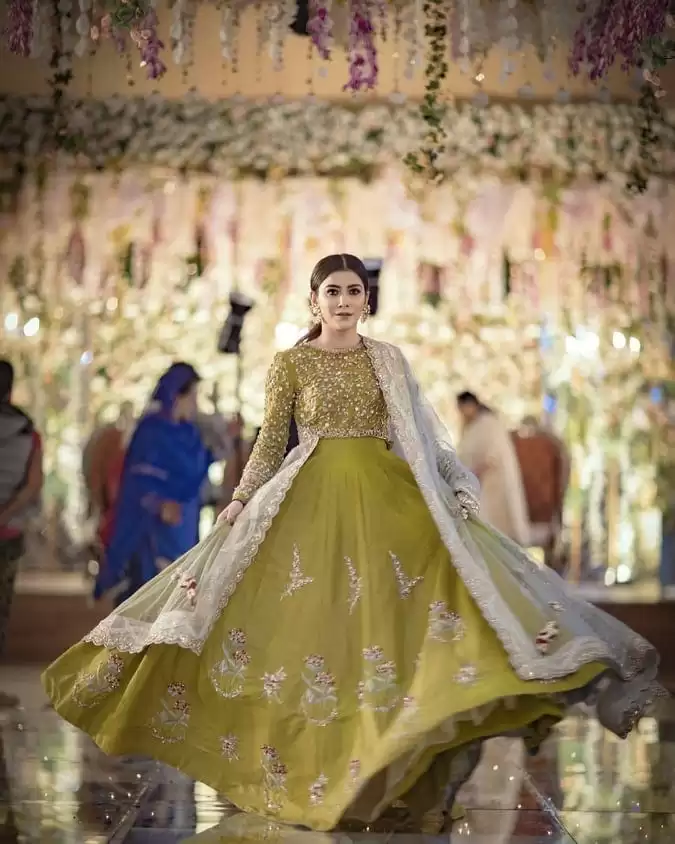
Tip: Choose muted greens over bright lime — they photograph better and won’t clash with traditional mehndi decor.
Golden Yellow Saree with Pink Accents
This golden yellow saree combines traditional mehndi colours with intricate pink floral work that creates visual interest without being too busy. The heavy blouse provides the perfect canvas for statement jewellery, while the saree’s flowing drape is ideal for dancing. This works particularly well for mothers of the bride or close family members.
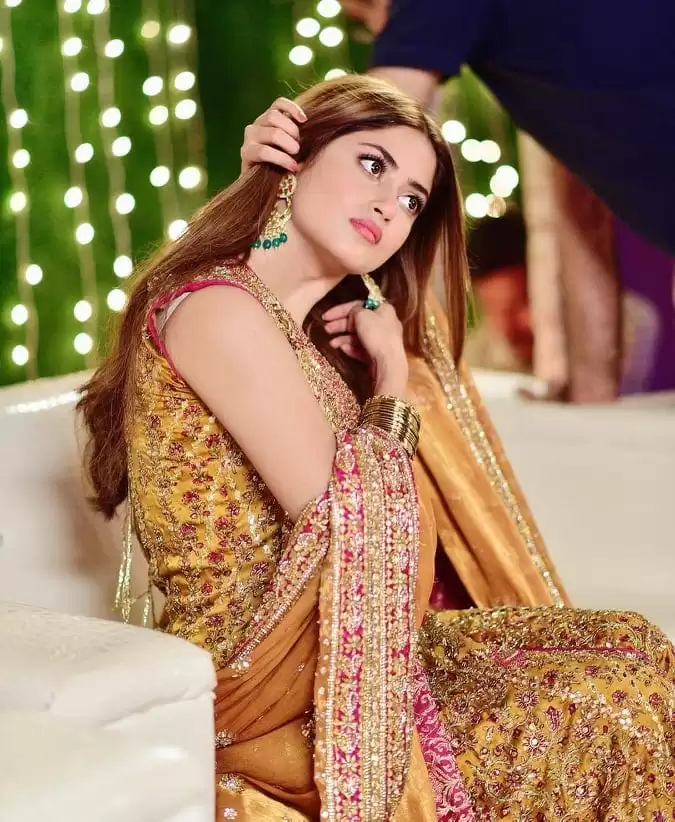
Tip: When wearing heavy gold jewellery with yellow, choose pieces with pink or red stones to tie into the outfit’s colour palette.
Lime Green Lehenga with Mirror Work
This vibrant lime green lehenga makes a bold statement with its mirror work and sequin embellishments that catch the light beautifully. The fitted blouse with sheer sleeves provides coverage while maintaining the outfit’s festive feel. The bright colour and heavy embellishment make this perfect for young guests who want to stand out.
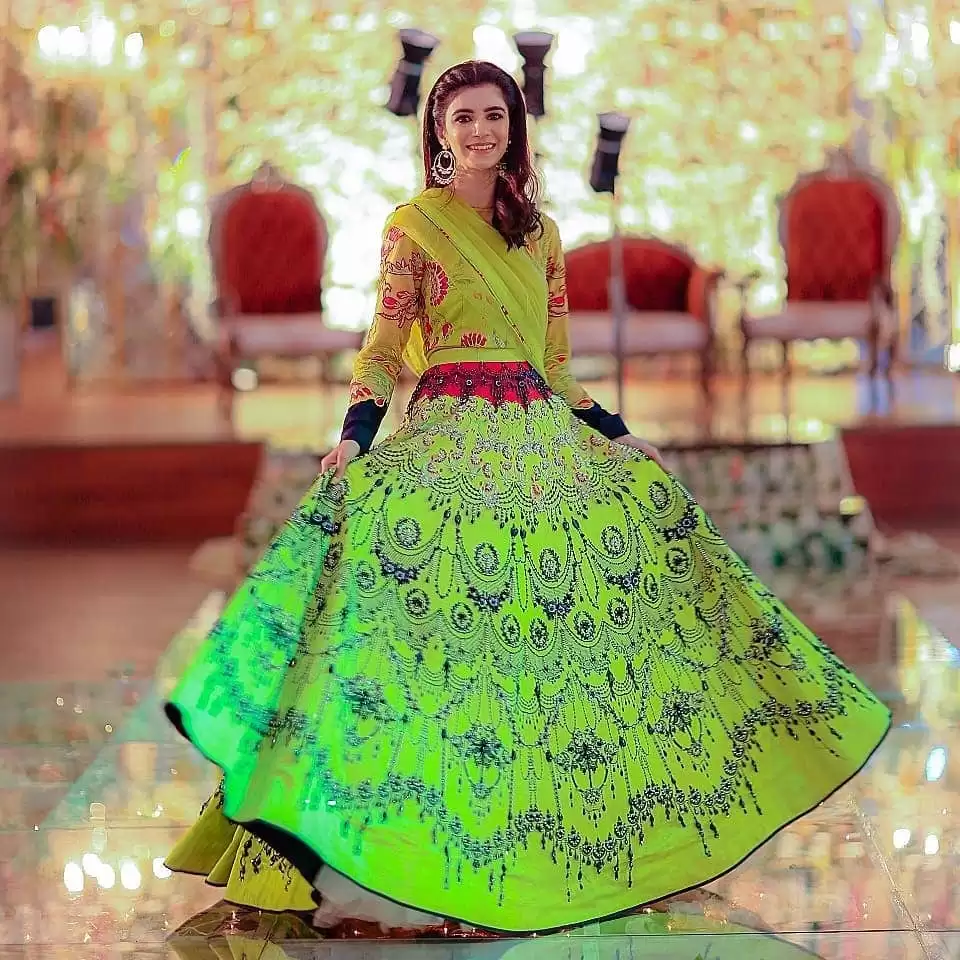
Tip: With mirror work outfits, keep your makeup slightly toned down — the dress will do all the sparkling for you.
Multi-Coloured Block Print Lehenga
This stunning lehenga combines orange, blue, and red in a way that feels both vibrant and balanced. The colour-blocking technique creates visual interest while the traditional embellishments keep it appropriate for mehndi celebrations. This style works especially well for guests who want to wear something unique without upstaging the bride.
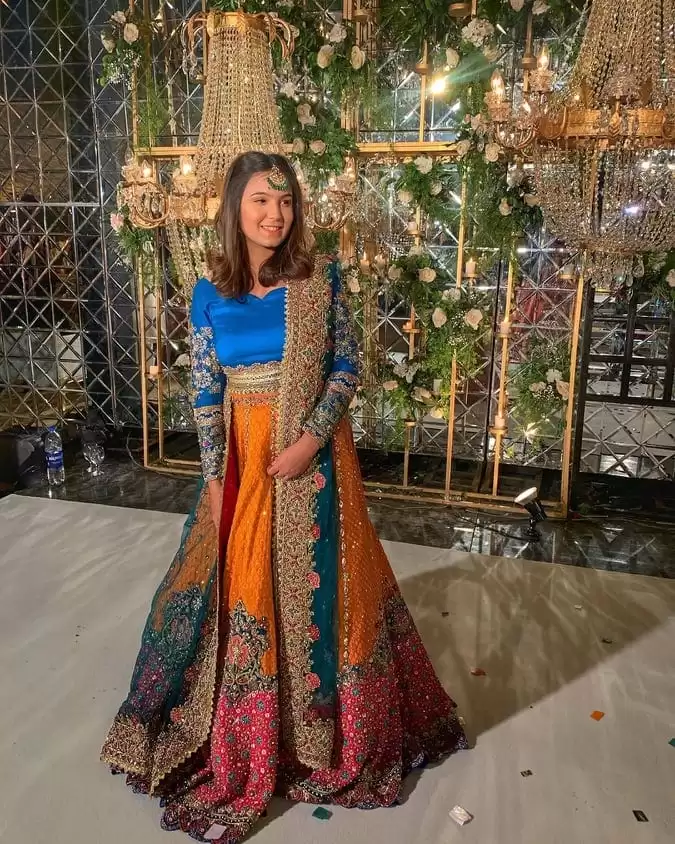
Tip: When mixing multiple bright colours, ensure one dominates — here, the orange base keeps the look cohesive.
Beige Anarkali with Geometric Print
This sophisticated beige anarkali features a subtle geometric print that adds texture without being overwhelming. The neutral base makes it perfect for older family members or those who prefer understated elegance. The full skirt and three-quarter sleeves provide comfortable coverage for all-day celebrations.
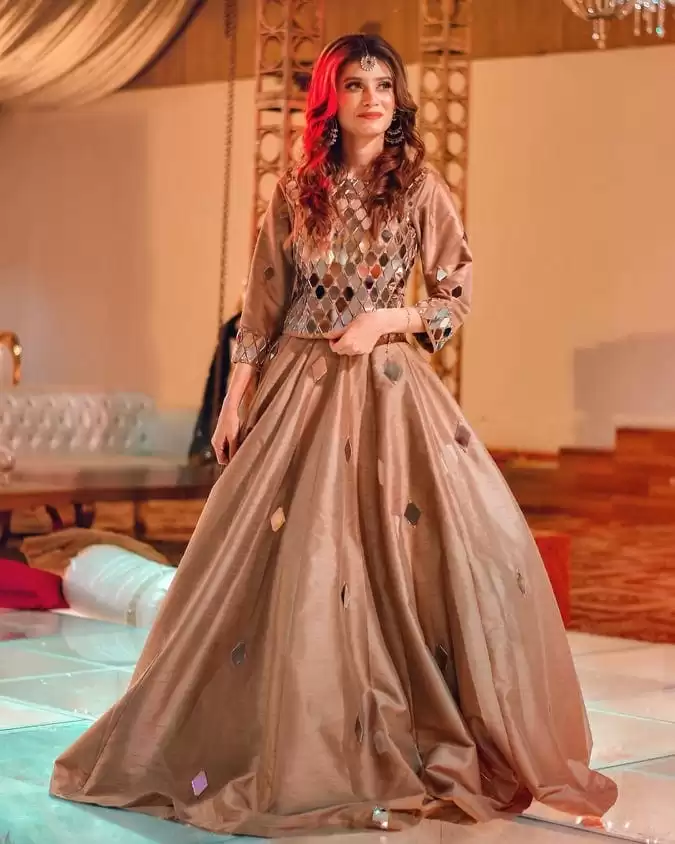
Tip: Neutral base colours like beige work beautifully with both gold and silver jewellery, giving you more accessory options.
Bright Yellow Lehenga with Paisley Motifs
This classic yellow lehenga embodies traditional mehndi styling with its rich colour and intricate paisley embroidery. The heavy border work and matching dupatta create a cohesive look that’s perfect for brides who want to honor tradition. The bright yellow symbolizes prosperity and new beginnings.
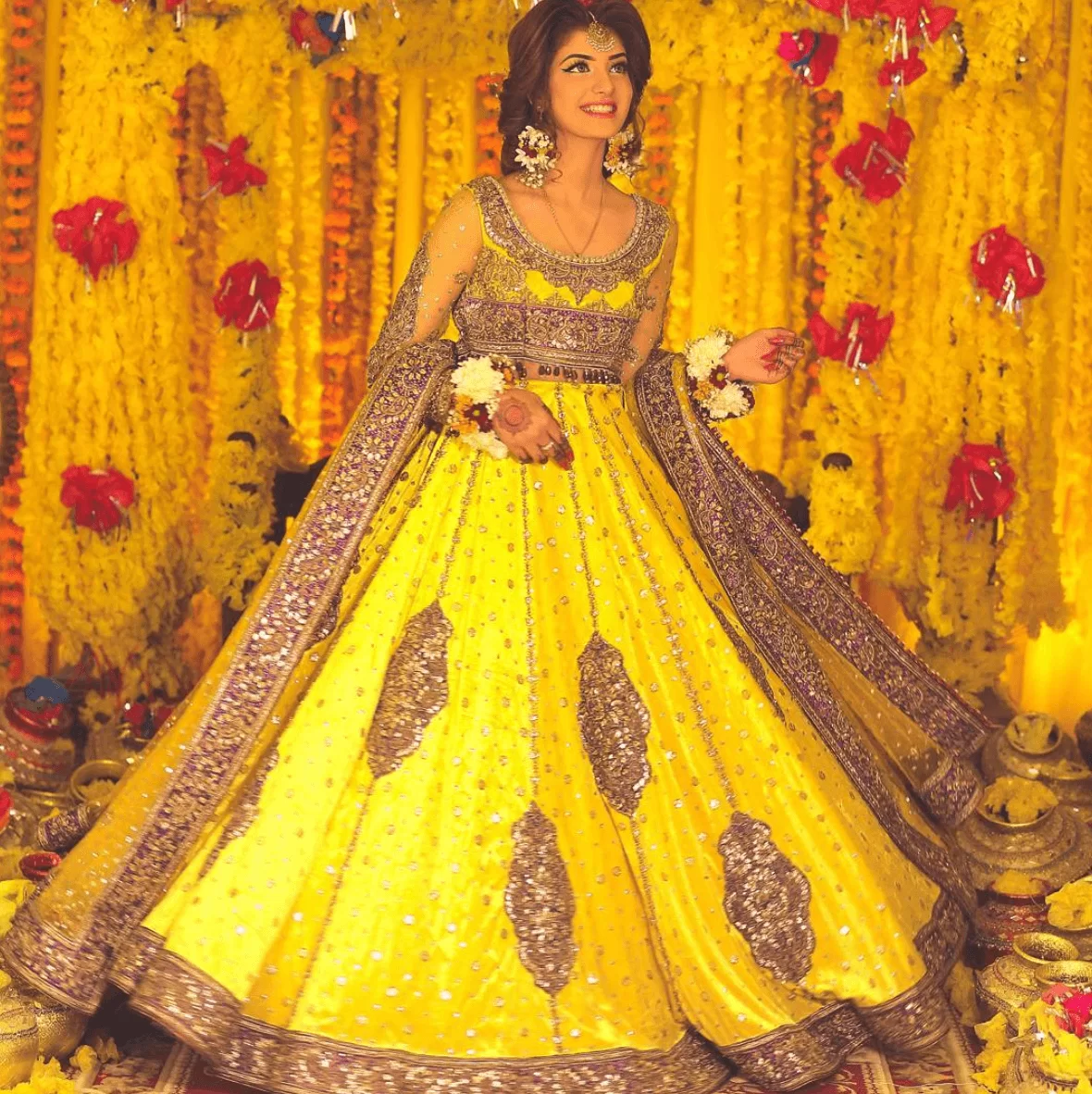
Tip: With heavily embellished yellow outfits, choose antique gold jewellery over bright gold to avoid looking too matchy.
Mustard and Teal Colour-Block Lehenga
This unique colour combination of mustard yellow and teal creates a sophisticated palette that’s both festive and refined. The contrast between the warm mustard and cool teal is visually striking, while the traditional embellishments keep it rooted in Pakistani bridal tradition. Perfect for brides wanting something distinctive.
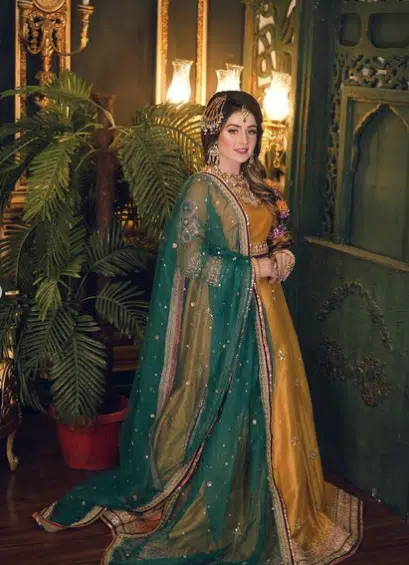
Tip: When pairing warm and cool colours, use gold accessories as a bridge to tie the look together harmoniously.
Traditional Bridal Lehenga in Deep Red
This classic bridal lehenga in deep red represents the epitome of Pakistani wedding tradition. The intricate gold embroidery, traditional silhouette, and rich colour make it perfect for brides who want a timeless look. The heavy dupatta and detailed work require confidence to carry off successfully.
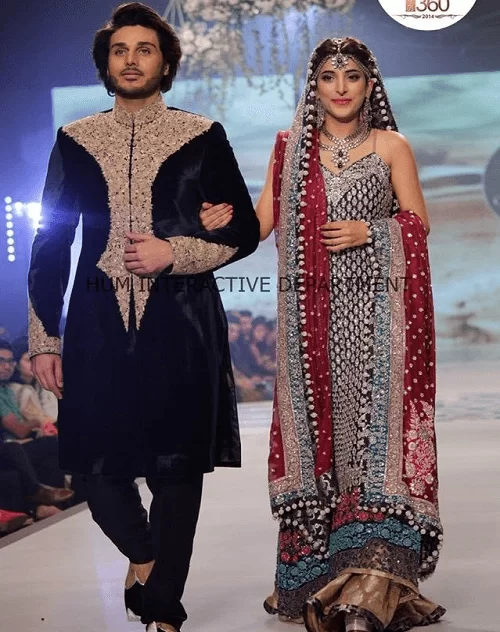
Tip: Deep red lehengas look most flattering when paired with warm-toned makeup and gold jewellery rather than silver.
Yellow Lehenga with Green Contrast Border
This yellow lehenga features a beautiful green contrast border that creates visual interest and follows traditional colour combinations. The intricate embroidery work and classic silhouette make it suitable for both brides and close family members. The colour combination is particularly auspicious for mehndi ceremonies.
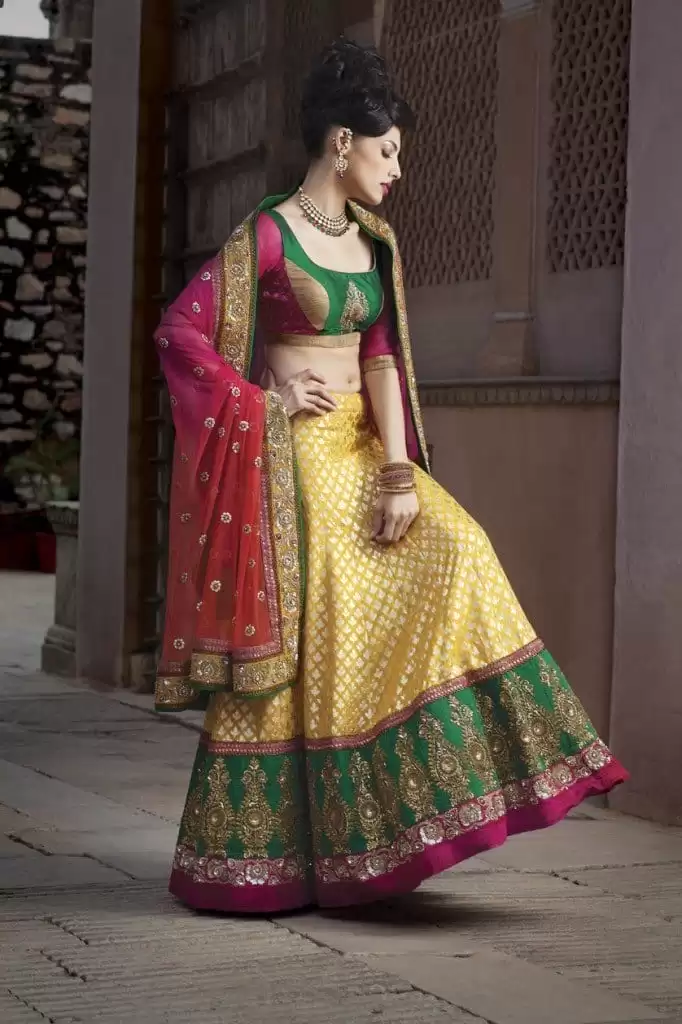
Tip: Contrast borders help define your silhouette and add structure to flowing lehenga skirts, especially important for petite frames.
Ombre Orange and Gold Anarkali
This gorgeous ombre anarkali transitions from soft gold to vibrant orange, creating a sunset effect that’s perfect for evening mehndi celebrations. The gradient effect is modern while maintaining traditional silhouettes, and the flowing fabric moves beautifully when dancing. Ideal for guests who want something contemporary yet appropriate.
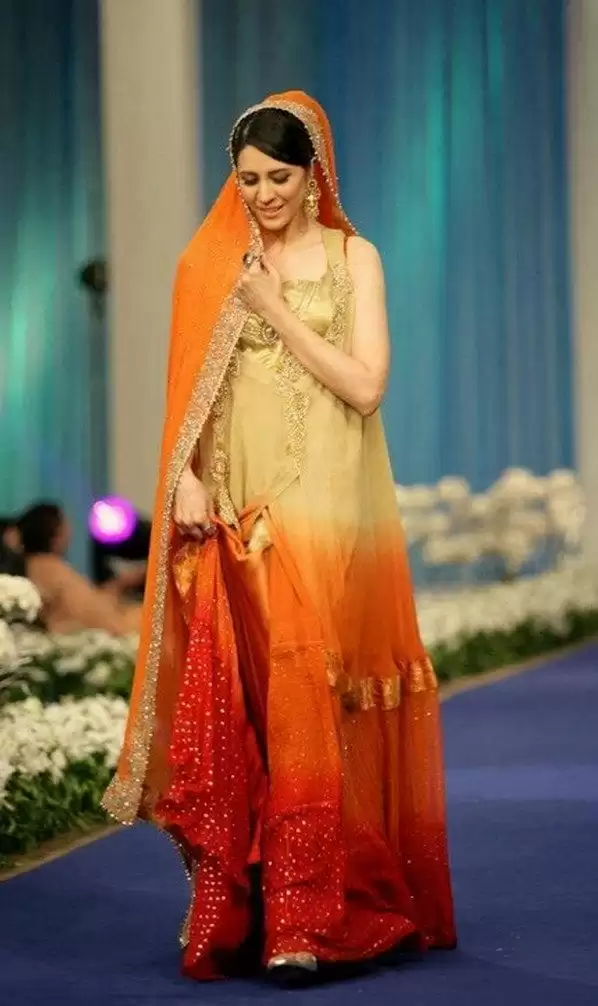
Tip: Ombre effects work best when the colours are from the same family — here, the gold-to-orange transition feels natural and flattering.
Yellow Sharara with Mint Green Embroidery
This bright yellow sharara paired with a mint green embroidered dupatta creates the perfect balance of traditional and fresh. The contrasting colours work because they’re both saturated — pale yellow with mint would look washed out. The short kameez length shows off the sharara’s full flare, making this ideal for brides who want to dance freely during their mehndi.
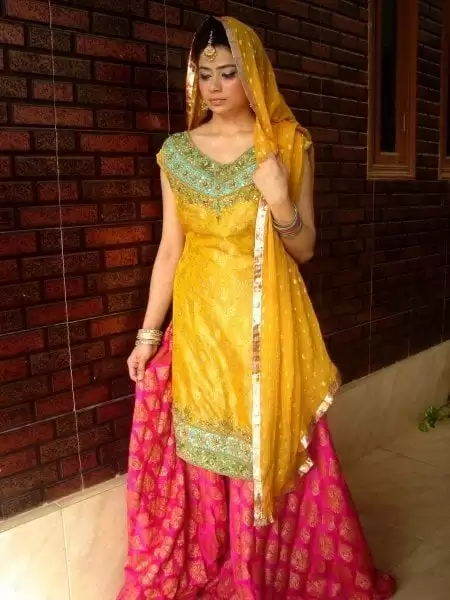
Tip: When mixing bright colours like this, keep your jewellery in one metal tone to avoid looking cluttered.
Beige and Black Heavily Embroidered Lehenga
Heavy embroidery in neutral tones gives you all the glamour without competing with mehndi’s earthy hues. The beige base ensures your henna designs will photograph beautifully, while the black detailing adds sophistication. This works perfectly for evening mehndi ceremonies or for guests who prefer understated luxury over bright colours.
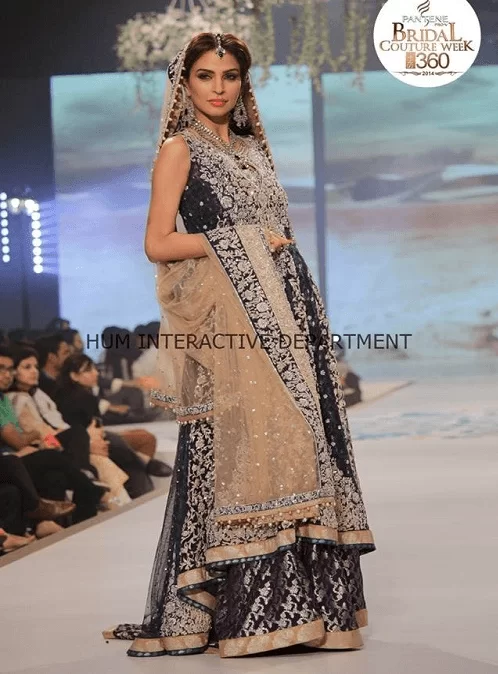
Tip: Neutral heavily embroidered outfits photograph better in artificial lighting than bright colours do.
Purple and Yellow Anarkali with Gold Work
The deep purple and bright yellow combination is bold but traditional — these colours have been paired in South Asian clothing for centuries. The gold embroidery creates a bridge between the two strong colours, while the Anarkali silhouette is forgiving and comfortable for long mehndi ceremonies. Perfect for brides who want drama without sacrificing comfort.
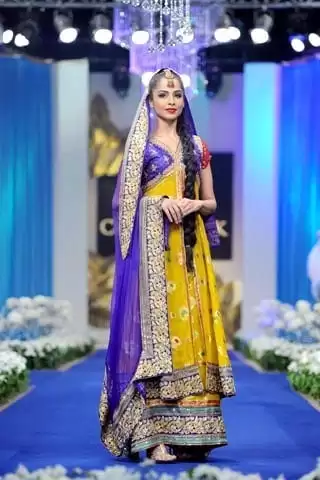
Tip: Purple and yellow work best when one colour dominates — here the yellow base keeps it balanced.
Multi-Coloured Embroidered Suit with Net Dupatta
This outfit combines multiple colours — yellow, pink, blue, and gold — but works because they’re all in similar saturation levels. The net dupatta adds texture without weight, making it practical for mehendi application. The rainbow embroidery reflects the celebratory nature of mehndi while ensuring you’ll coordinate with any colour scheme.
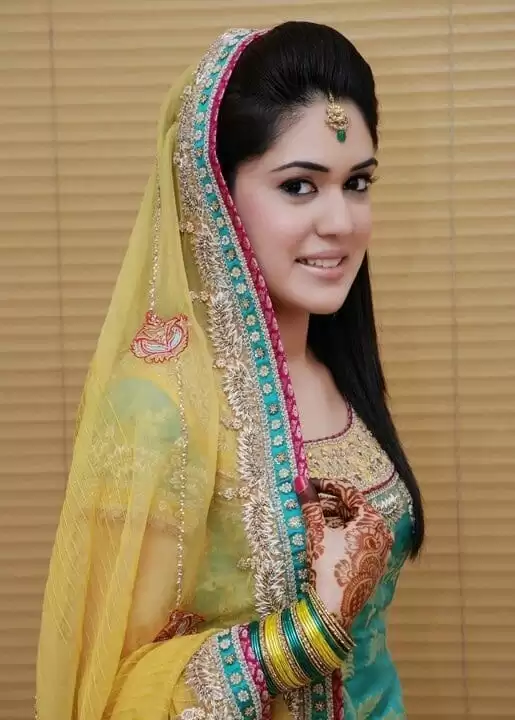
Tip: When wearing multiple colours, keep your makeup simple — let the outfit be the statement.
Lime Green Floor-Length Anarkali
This lime green Anarkali with gold embroidery proves that green doesn’t have to be subtle for mehndi. The floor-length style with a fitted bodice and flowing skirt is perfect for formal mehndi ceremonies. The colour photographs beautifully against henna and works especially well for brides with deeper skin tones where the green really pops.
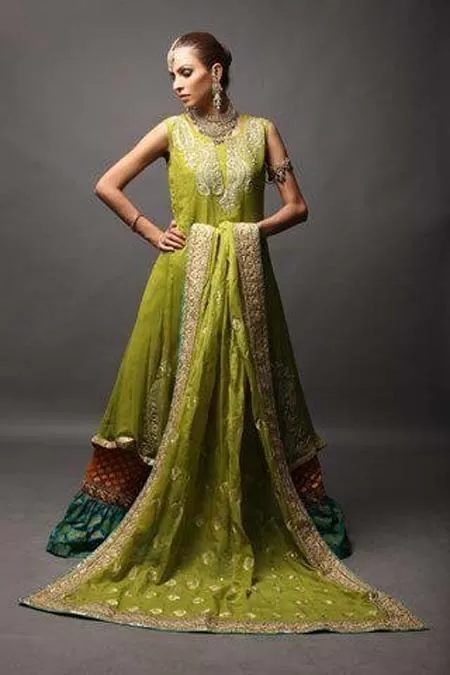
Tip: Lime green looks best with gold jewellery rather than silver — the warm undertones complement each other.
Orange Anarkali with Contrasting Dupatta
Orange is the most traditional mehndi colour, and this outfit shows why it never goes out of style. The knee-length Anarkali is practical for sitting during henna application, while the contrasting dupatta in pink and gold adds visual interest. The colour combination is warm and celebratory without being overwhelming.
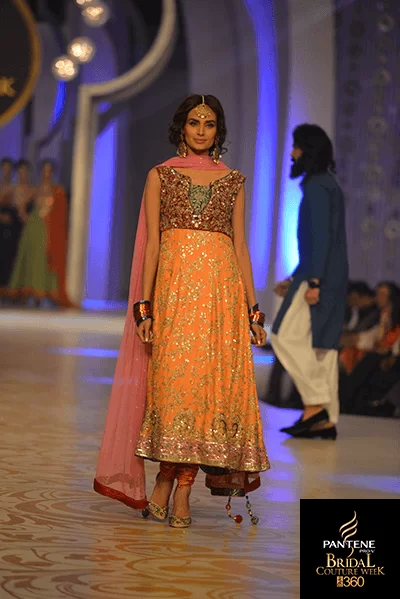
Tip: Orange works for all skin tones, but choose the right shade — peachy orange for fair skin, burnt orange for deeper tones.
Teal and Gold Heavy Embroidered Ensemble
Teal with gold embroidery creates a rich, jewel-toned look that’s perfect for winter mehndi ceremonies. The heavy embroidery and flowing silhouette make this suitable for both brides and close family members who want to look formal. The colour is unique enough to stand out in photos but traditional enough to feel appropriate.
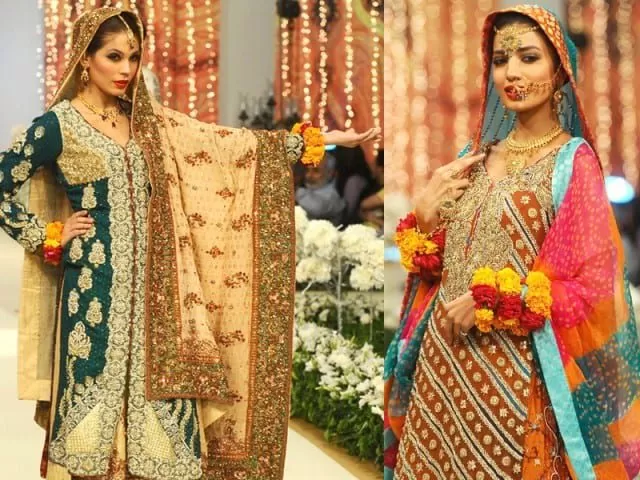
Tip: Jewel tones like teal work beautifully in indoor lighting and won’t wash out in flash photography.
Orange and Red Ombre Anarkali
The ombre effect from orange to red creates visual interest without needing heavy embroidery. This style works well for daytime mehndi ceremonies and is comfortable enough for long wear. The gradient effect is modern while the colours remain traditional, making it perfect for brides who want contemporary styling with classic appeal.
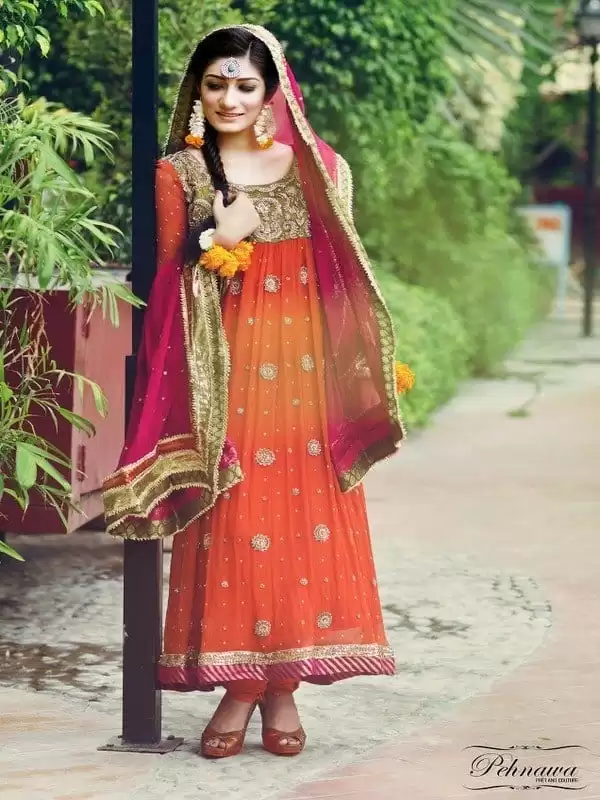
Tip: Ombre outfits look best with minimal jewellery — let the colour transition be the focal point.
Bright Yellow and Magenta Sharara Set
This vibrant combination of yellow and magenta is pure celebration in clothing form. The short kameez with wide sharara creates a flattering silhouette that’s comfortable for sitting during mehndi application. The colour blocking is bold but works because both colours are equally bright — perfect for brides who love making a statement.
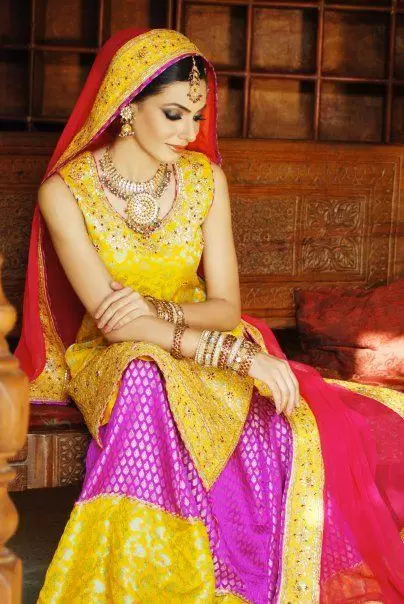
Tip: When wearing such bright colours, choose one colour for your accessories rather than trying to match both.
Multi-Coloured Banarasi Lehenga
This Banarasi lehenga incorporates orange, green, and gold in a traditional weave pattern that feels both festive and sophisticated. The rich fabric gives weight and structure to the outfit, making it suitable for formal mehndi ceremonies. The multiple colours mean it will coordinate with most mehndi decoration themes while maintaining traditional elegance.
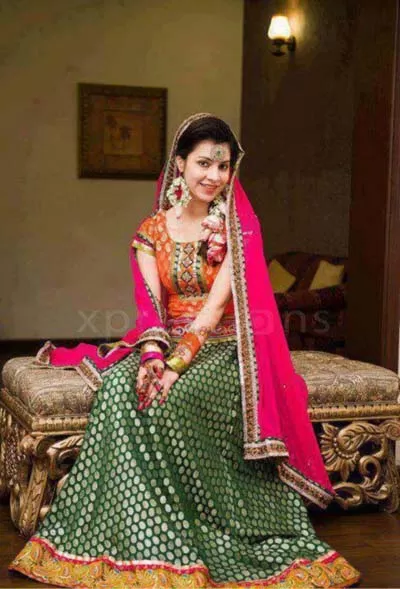
Tip: Banarasi fabrics are heavy, so choose lightweight jewellery to avoid looking overdone.
White Anarkali with Vibrant Lehenga
This cream anarkali paired with a bright multicolored lehenga creates the perfect balance for mehndi functions. The neutral top keeps you comfortable during henna application while the bold pink and yellow panels add the festive spirit everyone expects. This combination works brilliantly for brides who want to stand out without going over the top.
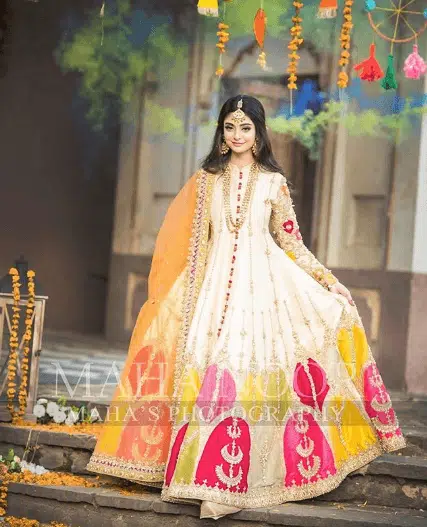
Tip: Choose an anarkali with button-front opening so you can easily remove the top layer after mehndi without disturbing your fresh henna.
Black Sharara with Gold Detailing
Deep black chiffon with scattered gold motifs proves that dark colors absolutely belong at mehndi celebrations. The wide sharara pants give you room to sit cross-legged comfortably, while the rich embroidery catches every bit of light during evening functions. This works perfectly for guests who prefer understated glamour over bright yellows and oranges.
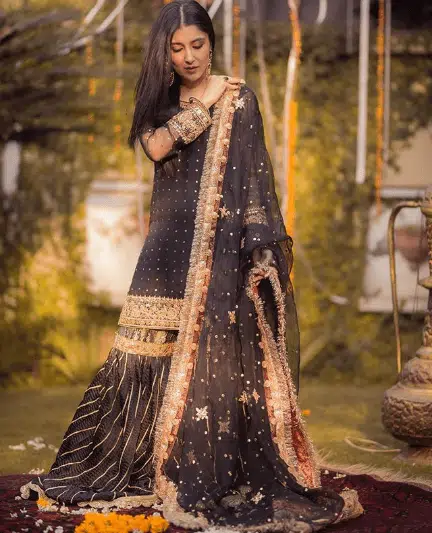
Tip: Opt for chiffon or georgette fabric in darker shades — they photograph beautifully under string lights and won’t show turmeric stains like lighter fabrics do.
Black Gharara with Intricate Embroidery
This heavily embroidered black gharara shows how traditional silhouettes work with contemporary color choices. The fitted kurta with deep back neckline adds modern appeal, while the wide gharara pants maintain the authentic Pakistani aesthetic. Perfect for mehndi guests who want to honor tradition while making a sophisticated statement.
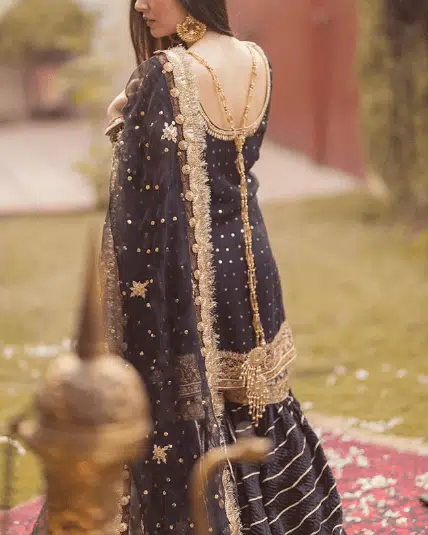
Tip: When wearing dark colors to mehndi, add statement gold jewelry — it creates the festive contrast that bright fabric colors would normally provide.
Key takeaways
- Choose comfortable silhouettes like anarkalis and shararas that let you sit on the floor easily during henna ceremonies
- Prioritize sleeve coverage to protect your arms during mehndi application — three-quarter sleeves are the minimum
- Mix neutral tops with bright bottoms for the perfect balance of festive color and practical comfort
- Select fabrics that hide stains easily — dark colors, busy prints, or textured materials work best around turmeric and henna
- Invest in proper undergarments for backless blouses since you’ll be photographed from every angle during the celebrations
- Keep jewelry lightweight and secure — heavy pieces will get in the way during dancing and henna application
20 Fall Wedding Guest Dress Ideas For This Wedding Season
30 Beautiful Kitenge Dresses for Wedding
35 Latest Engagement Dresses For Women In India
22 Chic Leg Warmer Outfit Ideas & Styling Tips
How To Style Fit And Flare Dresses 20 Outfit Ideas To Try
How to Style Knee Length Dresses: 18 Outfit Ideas
25 Amazing Paper Dresses Collection and Designs
Cocktail Attire for Men – 30 Outfit Ideas & Styling Tips