

The biggest mistake I see brides make with their nikah dress is choosing it based on Pinterest photos instead of understanding what actually works for their body and the ceremony itself. After twelve years styling real women for their wedding celebrations, I’ve learned that the most beautiful nikah looks aren’t always the most elaborate ones — they’re the ones that make the bride feel genuinely confident while honoring the traditions that matter to her family.
Your nikah ceremony is intimate and sacred, which means your outfit needs to strike a completely different balance than your reception look. I’ve watched brides struggle through their ceremony in dresses that photograph beautifully but restrict movement, or choose colors that wash them out under mosque lighting. The dress that makes you look radiant while you’re saying your vows is rarely the same one that works for dancing later.
What works for nikah styling is understanding the ceremony’s requirements first, then building your look around those parameters. The result is always more elegant than trying to force a reception dress to work for both occasions.
Styling Tips
Consider the venue lighting when choosing your color palette. Mosque interiors typically have warm, soft lighting that can make certain shades appear completely different than they do in natural light. I always recommend testing your dress color in similar lighting conditions before the ceremony. Cool-toned fabrics can look washed out, while warm golds and deep jewel tones appear richer and more vibrant.
Choose fabrics that photograph well and move gracefully during the ceremony rituals. Heavy brocades and stiff silks can create unflattering creases when you’re seated or kneeling. Flowing fabrics like silk chiffon, georgette, or well-draped crepe maintain their shape throughout the ceremony and create beautiful movement in photographs without overwhelming your frame.
Traditional Pakistani and Indian nikah ceremonies often incorporate specific color symbolism — red represents prosperity and fertility, while gold symbolizes purity and new beginnings. Many modern brides are choosing blush pink or soft coral as a contemporary interpretation of traditional red.

23 New Year Eve Wedding Guest Dress Ideas for Women

21 Best Cutout Dresses Outfit Ideas & Styling Tips
How to Dress Goth? 12 Outfit Ideas & Styling Tips
22 Modern Chikankari Kurti Designs & Styling Tips

20 Best Baby Blue Dresses & Tips on How to Style Them

How To Wear a Strapless Dress? 24 Styling Ideas & Tips

How to Pair Jackets with Dresses – 26 Outfit Ideas & Tips

How To Dress In Your Twenties? 20 Outfit Ideas & Styling Tips
Plan your silhouette around the ceremony seating arrangements. Most nikah ceremonies involve significant sitting time, which means fitted bodices and full skirts need to accommodate this without creating uncomfortable bunching or revealing more than intended. A-line cuts with moderate volume work better than mermaid silhouettes or extremely full ballgowns that can become unwieldy during the ceremony.
Coordinate your jewelry weight with your dress embellishment. Heavily embroidered or beaded dresses need lighter jewelry to avoid competing elements, while simpler fabrics can carry more substantial pieces. I’ve seen too many brides disappear under layers of both textile and metal embellishment. Choose one element to be the star and let the other support it.
Test your outfit’s comfort level during a full dress rehearsal. Sit, stand, walk, and practice the movements you’ll make during the ceremony while wearing your complete outfit including shoes and jewelry. Discomfort that seems minor during a five-minute fitting becomes unbearable during a ceremony that can last several hours.
Dos & Don’ts
Latest Nikah Dress Styles for Modern Brides
Golden Yellow Lehenga with Heavy Embroidery
This mustard yellow lehenga combines traditional craftsmanship with modern silhouettes. The intricate gold threadwork creates texture without overwhelming the base color, while the fitted blouse balances the voluminous skirt. This works particularly well for brides with deeper skin tones who want to stand out from the typical red palette.
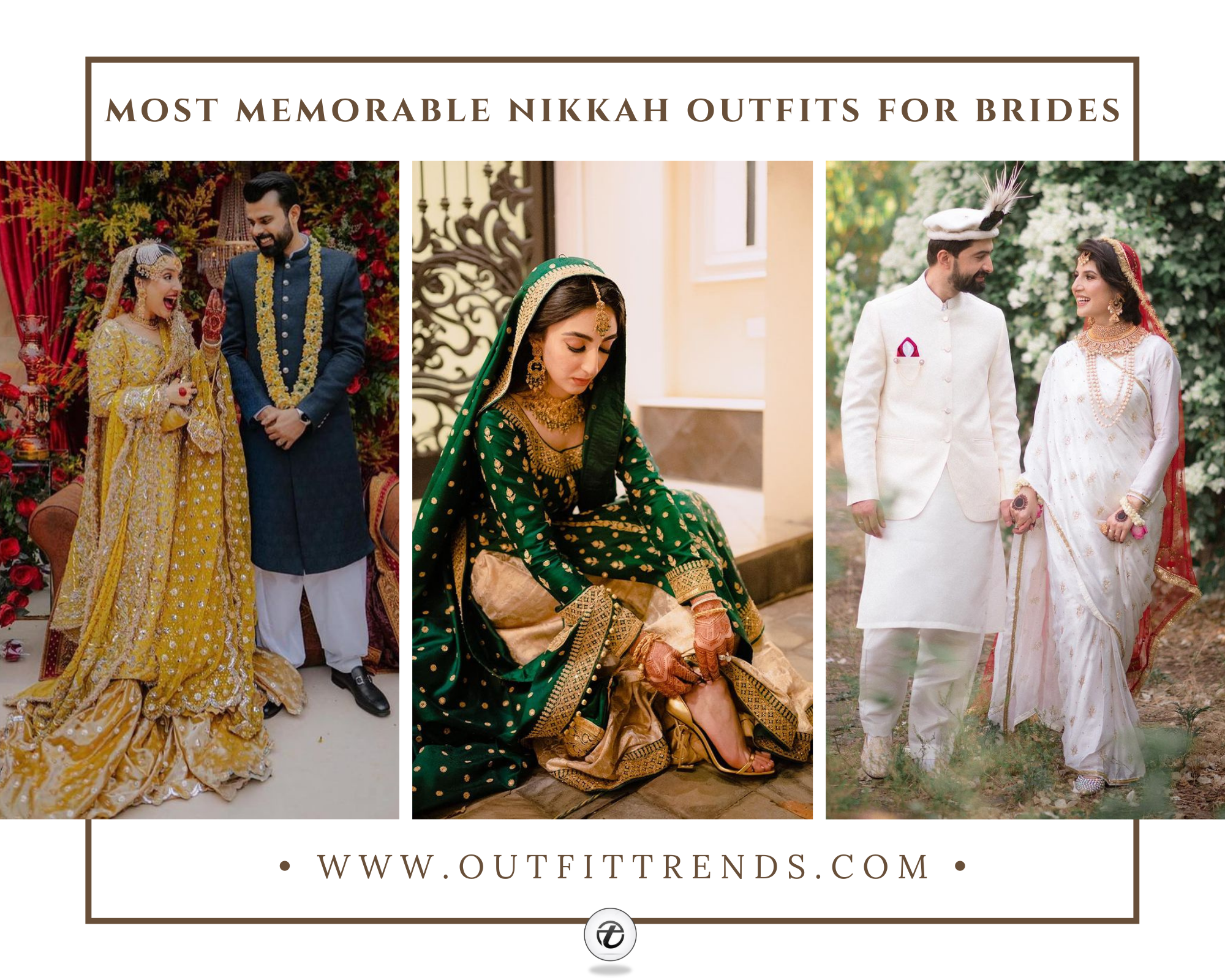
Tip: Choose mustard yellow over bright yellow — it photographs beautifully and complements gold jewelry without competing.
Turquoise Sharara with Floral Motifs
The sea-green sharara offers a refreshing alternative to heavy lehengas, with its flowing palazzo-style pants providing comfort during long ceremonies. The floral embroidery adds femininity while the dupatta’s coral border creates visual interest. This style suits brides who prioritize movement and comfort without sacrificing traditional appeal.
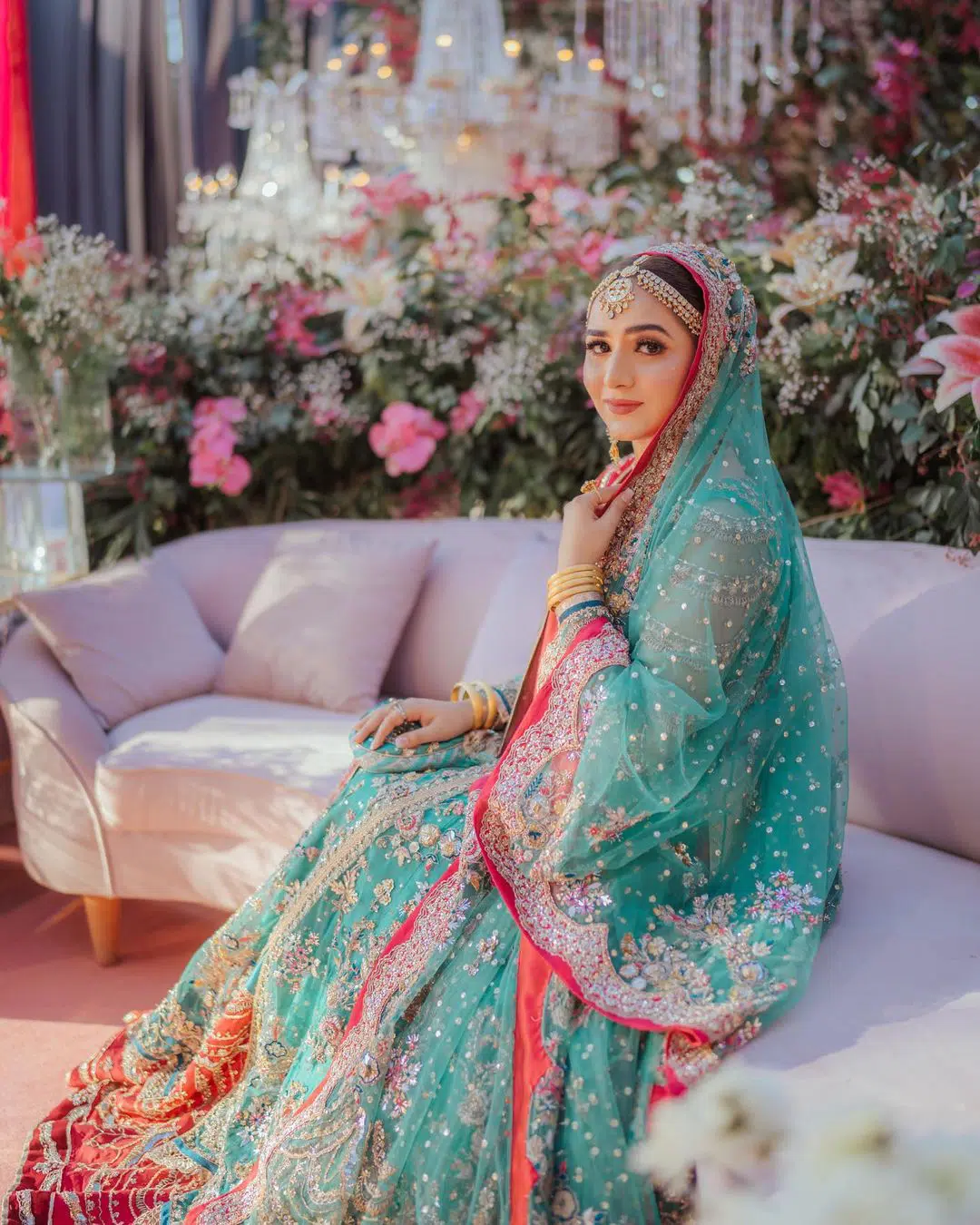
Tip: Position the dupatta over one shoulder only for photos — it creates better lines and won’t hide your embroidered neckline.
Deep Red Lehenga with Mirror Work
Classic red remains unbeatable for nikah ceremonies, and this version elevates the traditional choice with strategic mirror work that catches light beautifully. The deep crimson shade works universally, while the heavy border grounds the outfit’s drama. The full coverage and rich color make this ideal for evening ceremonies or formal family gatherings.
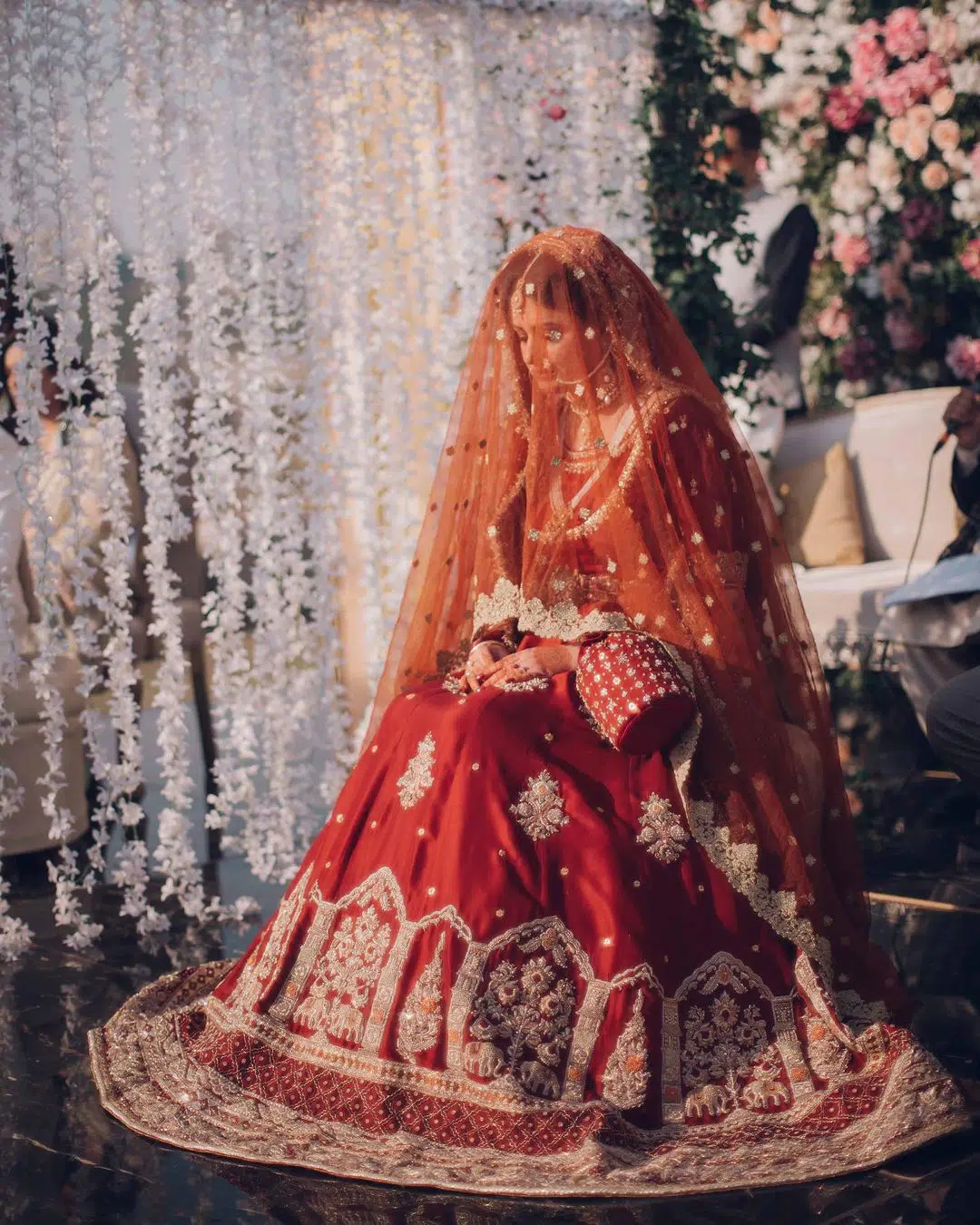
Tip: Keep jewelry minimal with mirror work — the reflective elements provide enough sparkle without competing accessories.
Sage Green Palazzo Set with Rose Gold Details
This muted green proves pastels can have impact when executed with precision. The palazzo pants offer modern comfort while maintaining traditional proportions, and the rose gold embroidery creates warmth against the cool base. Perfect for brides wanting something different that still feels appropriately formal.
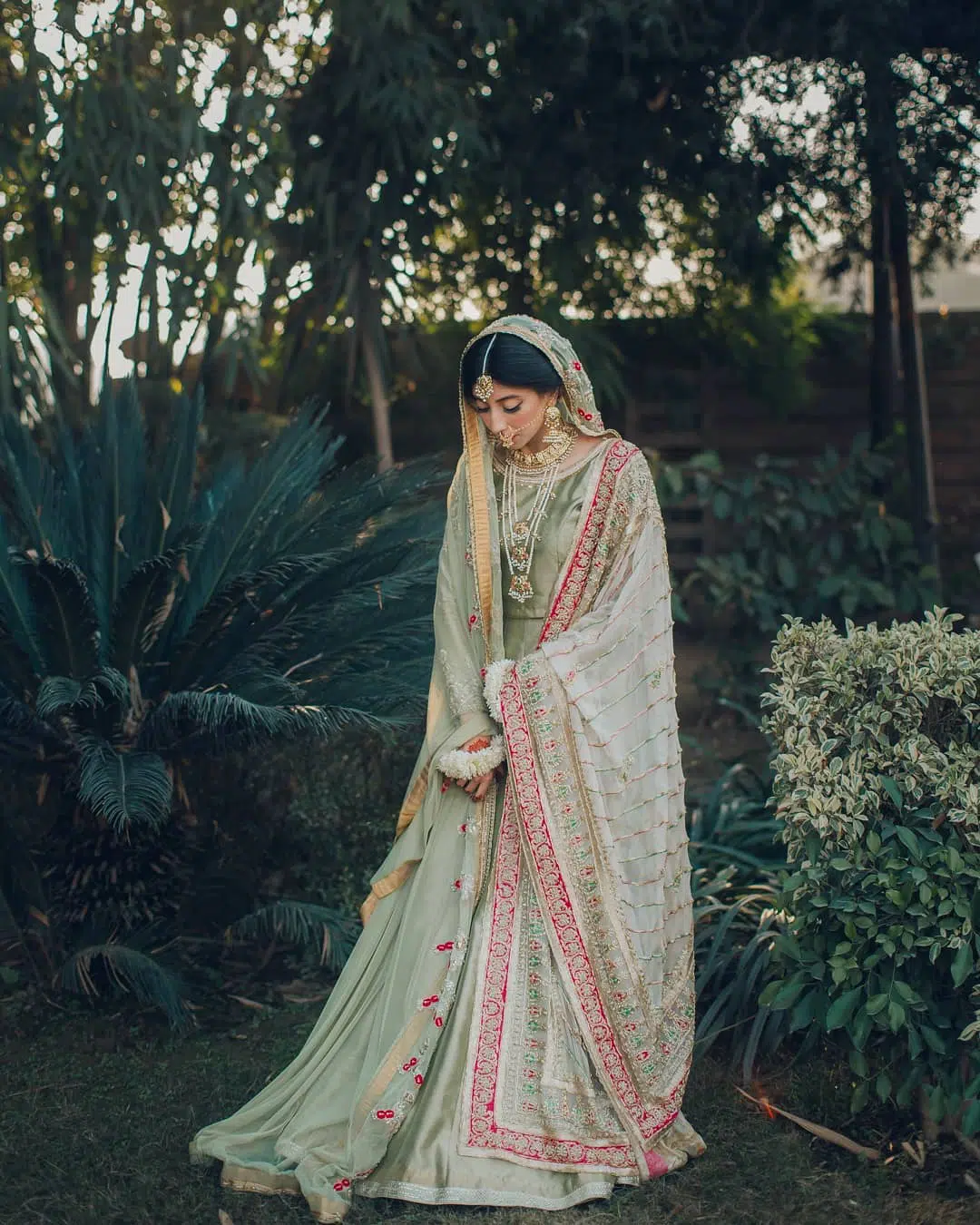
Tip: Pair sage green with rose gold jewelry instead of yellow gold — it enhances the outfit’s contemporary feel.
Emerald Green Sharara with Gold Polka Dots
The rich emerald creates instant drama while the gold polka dot pattern adds playfulness to an otherwise serious color. The sharara style provides ease of movement, and the color combination photographs strikingly against traditional wedding backdrops. This works especially well for brides with fair to medium complexions.
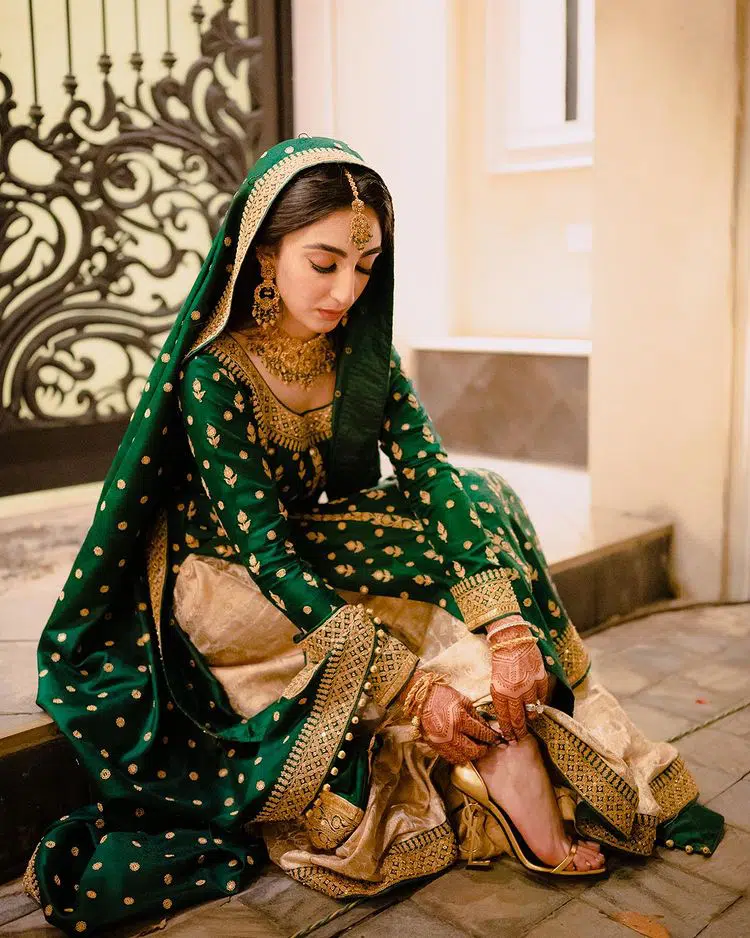
Tip: Choose fitted sleeves over loose ones with heavy shararas — it balances proportions and prevents looking overwhelmed by fabric.
Ivory Palazzo Set with Subtle Embellishment
This cream ensemble proves minimalism can be impactful for religious ceremonies. The tonal embroidery creates texture without distraction, while the palazzo silhouette maintains traditional modesty with modern comfort. Ideal for brides who prefer understated elegance or morning ceremonies where heavy embellishment feels excessive.
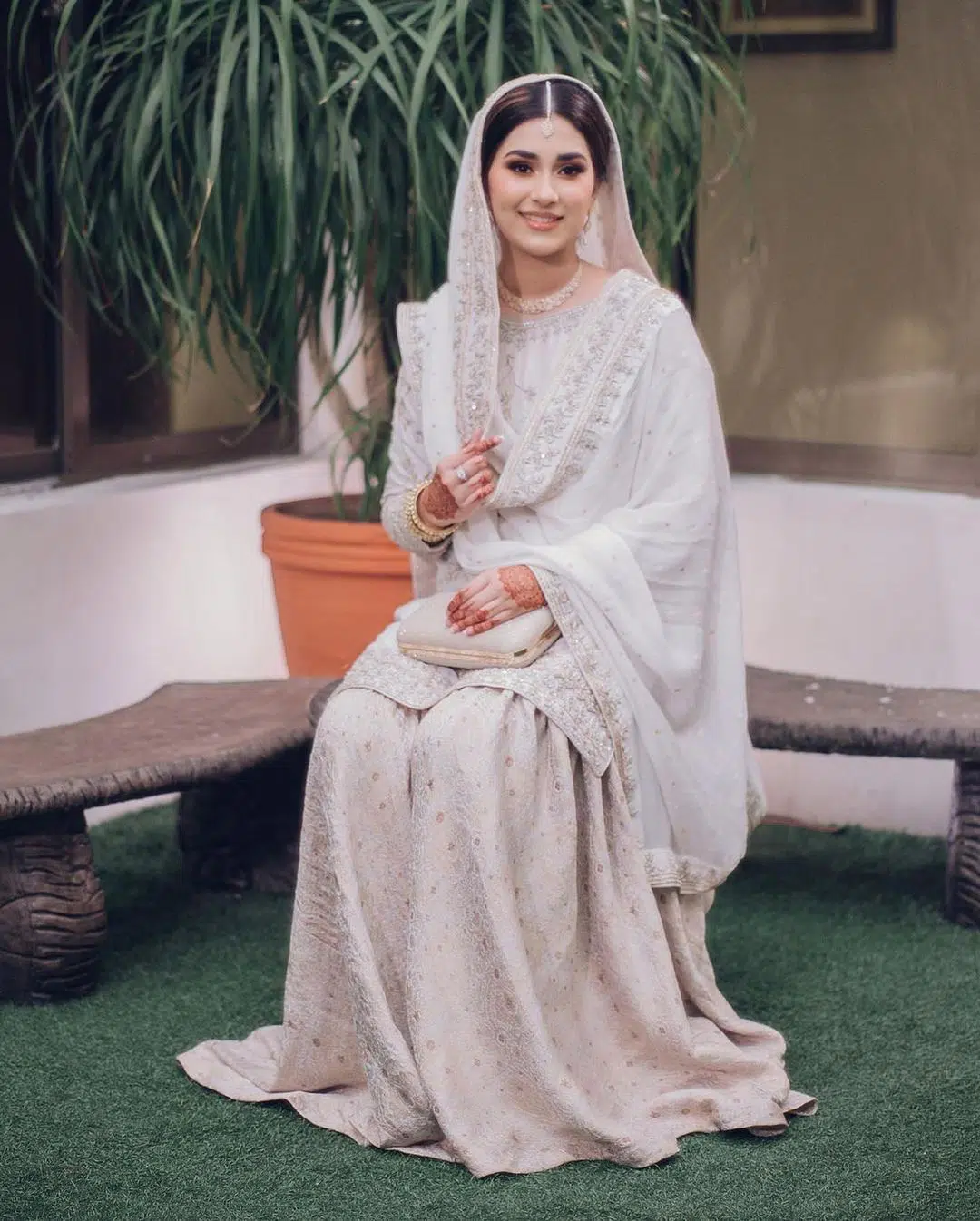
Tip: Add one bold jewelry piece with neutral outfits — a statement necklace or dramatic earrings prevents the look from appearing washed out.
Mustard Anarkali with Intricate Neckline
The flowing anarkali silhouette flatters most body types while maintaining traditional appeal. This particular shade of golden yellow works beautifully with the ornate neckline embroidery, creating focus around the face. The style suits brides who want classic elegance without the complexity of coordinating separate pieces.
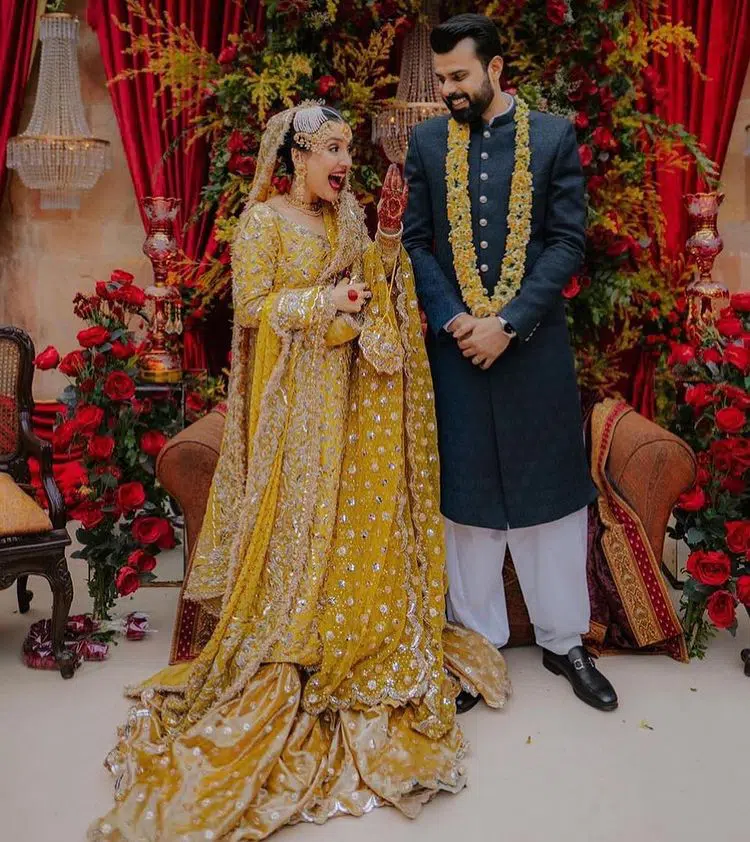
Tip: Keep the dupatta draped loosely around the arms with anarkalis — tight draping around the torso destroys the dress’s flowing silhouette.
Champagne Sharara with Gold Threading
This neutral tone offers versatility while the gold threadwork provides necessary richness for ceremonial wear. The champagne base works as a sophisticated alternative to white while remaining appropriate for religious occasions. The sharara cut ensures comfort during extended ceremonies without compromising on traditional expectations.
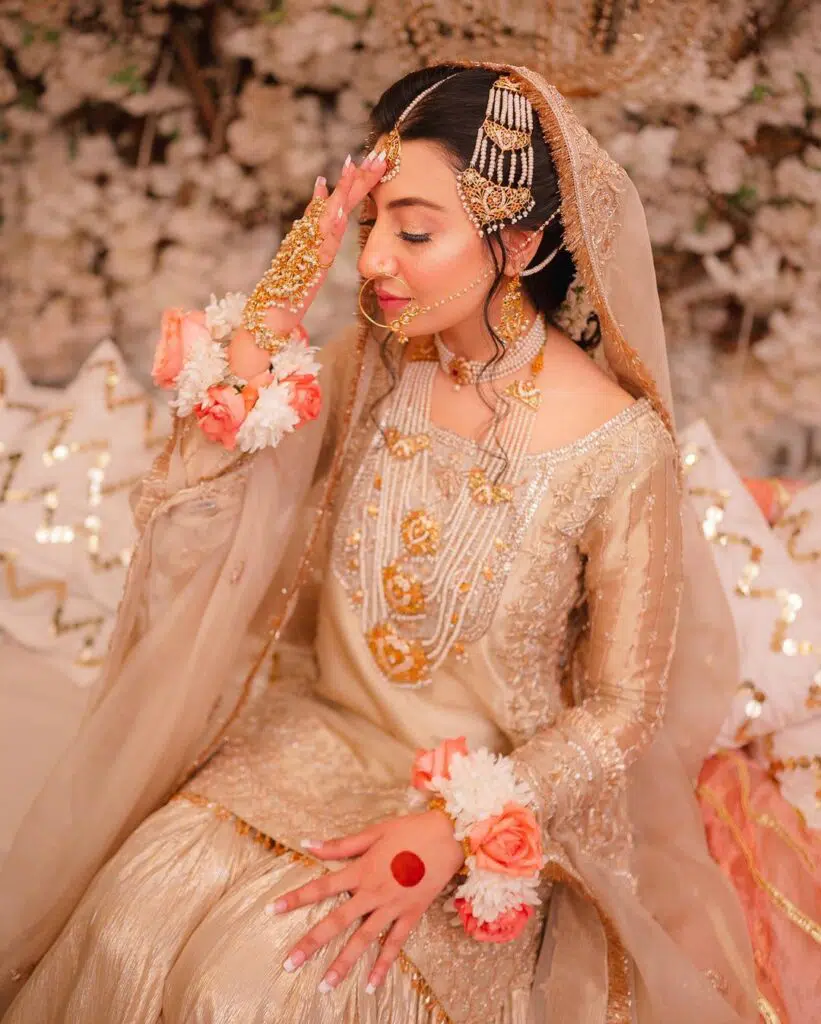
Tip: Wear statement earrings instead of heavy necklaces with high-neck embroidered tops — it draws attention upward without overwhelming the neckline detail.
Blush Pink Lehenga with Traditional Embroidery
Soft pink strikes the perfect balance between feminine and formal, while the traditional embroidery patterns honor ceremonial significance. The color photographs beautifully and complements most skin tones, making it a safe choice for brides uncertain about bolder colors. The classic lehenga cut ensures timeless appeal in wedding photos.
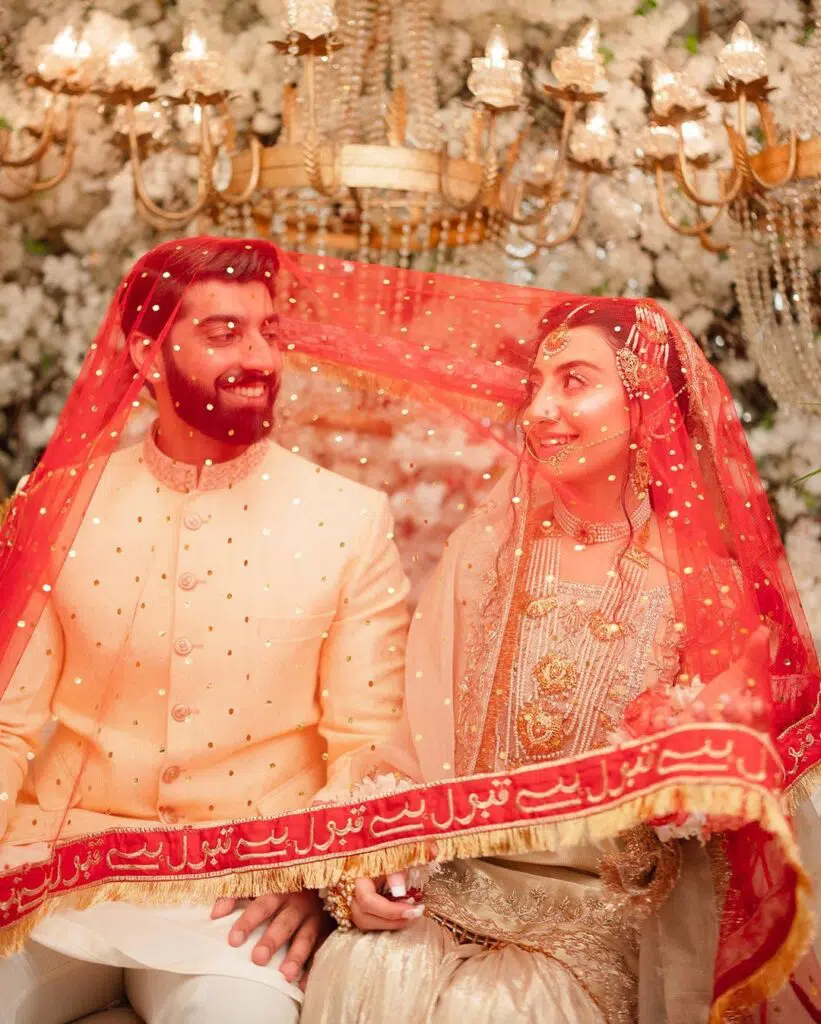
Tip: Choose dusty pink over bright pink for nikah ceremonies — it feels more sophisticated and won’t clash with traditional gold jewelry.
Contemporary Coordination in Neutral Tones
This modern approach shows how couples can coordinate without matching exactly. The bride’s forest green saree paired with the groom’s beige suit creates visual harmony while allowing individual expression. This style works well for couples who want to honor tradition while incorporating contemporary elements into their ceremony attire.
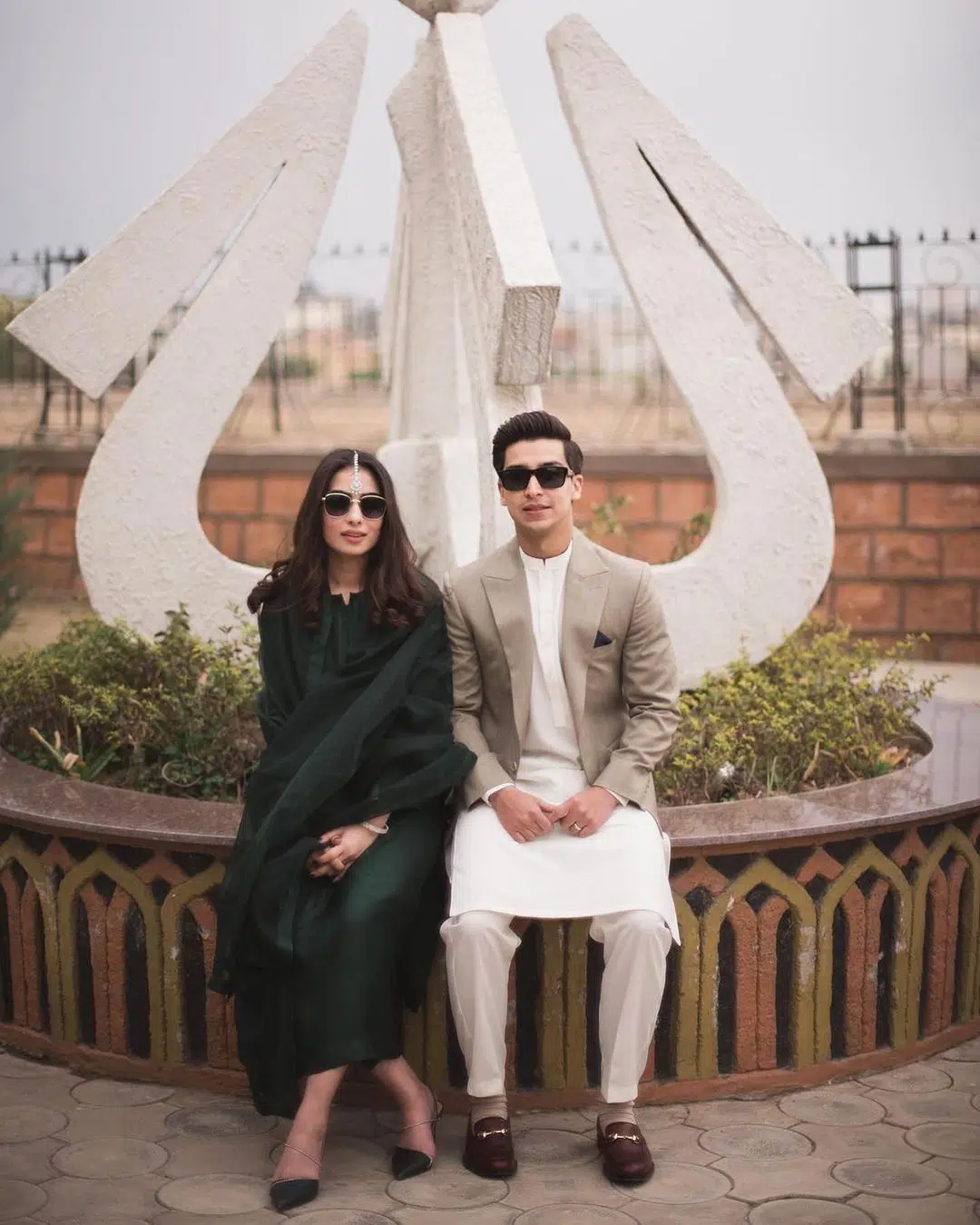
Tip: When coordinating as a couple, choose colors from the same temperature family — both warm or both cool tones create better visual cohesion.
Blush Pink Bridal Lehenga with Pearl Details
This soft blush pink lehenga creates an ethereal bridal look with its delicate embroidery and flowing dupatta. The pearl jewelry complements the gentle color palette perfectly, while the intricate beadwork on the sleeves adds just enough sparkle without overwhelming the romantic aesthetic. This works beautifully for brides who prefer understated elegance over heavy traditional reds.
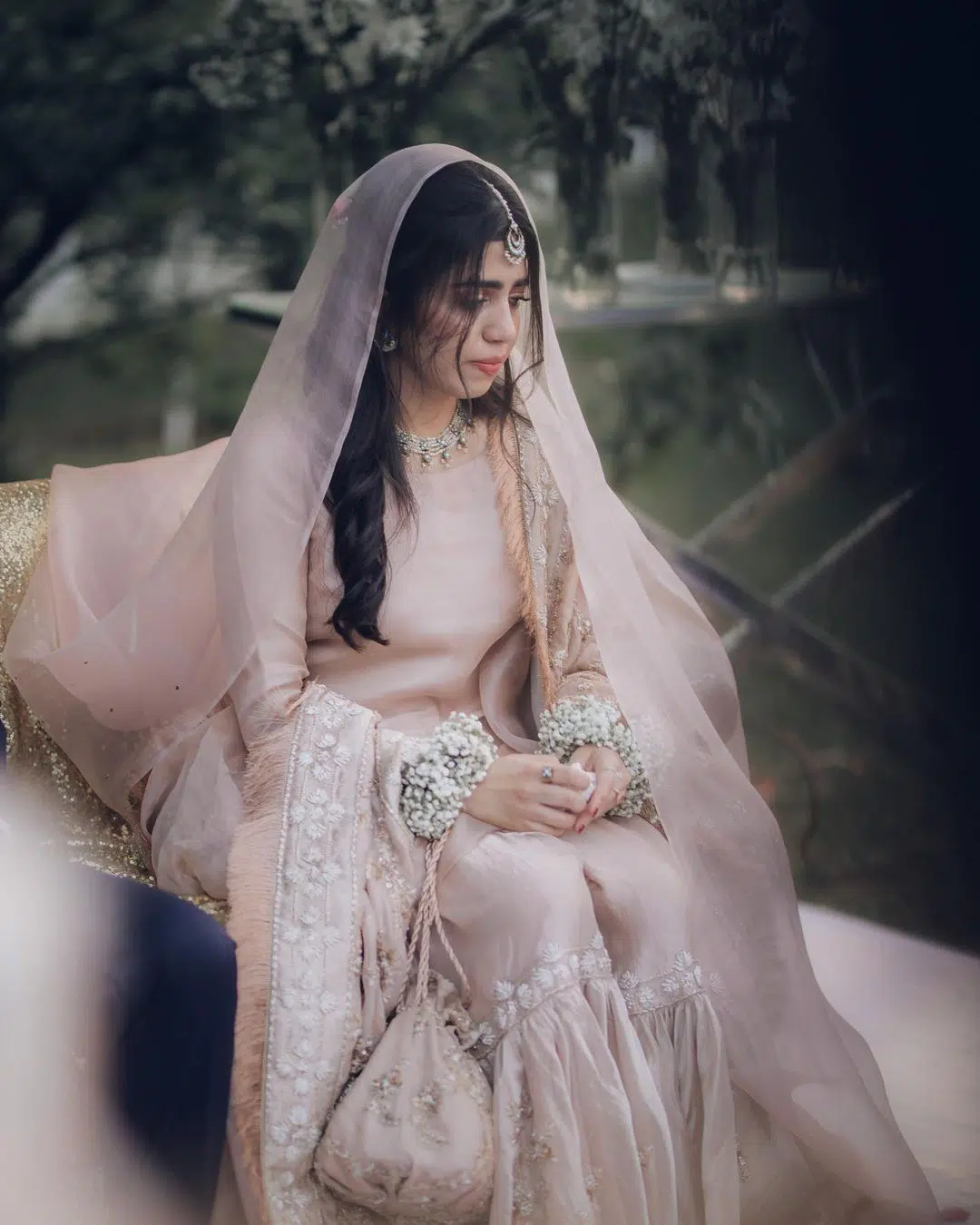
Tip: Choose pearl jewelry over gold when wearing pastel lehengas — it enhances the soft, dreamy quality instead of competing with it.
Vibrant Printed Dupatta with Cream Base
A cream kurta paired with a boldly printed dupatta in blues, pinks, and reds creates visual interest without being overwhelming. The neutral base allows the colorful dupatta to be the star, while traditional gold jewelry ties the whole look together. This approach works particularly well for pre-wedding ceremonies where you want color but not full bridal drama.
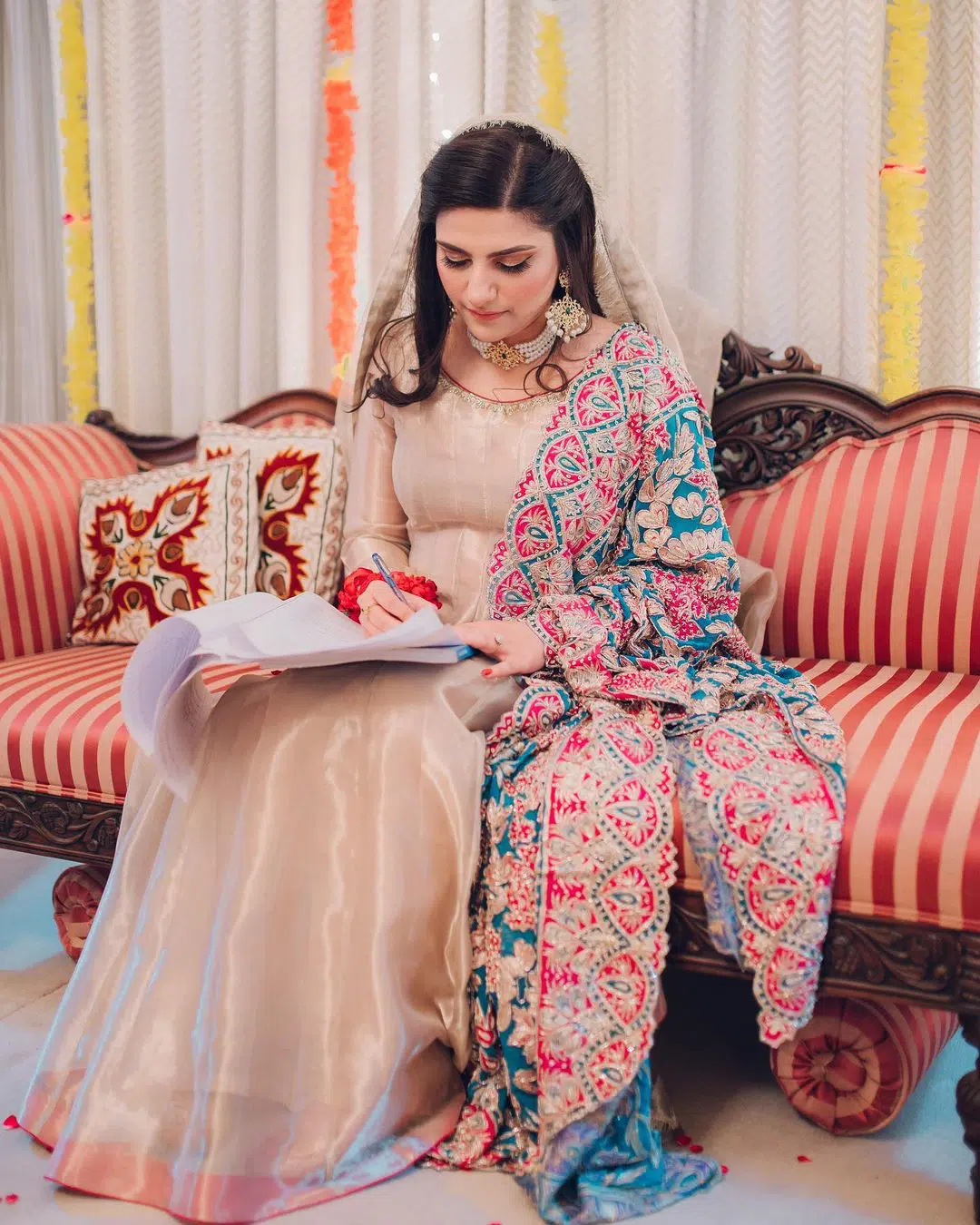
Tip: When wearing a heavily printed dupatta, keep your kurta in a solid neutral — it prevents the look from becoming too busy.
Classic White Nikah Ensemble
This white saree with gold embroidery represents the perfect nikah outfit — modest, traditional, yet special enough for the occasion. The coordinated white kurta for the groom creates a cohesive couple look that photographs beautifully. The layered pearl jewelry adds the right amount of formality without being excessive.
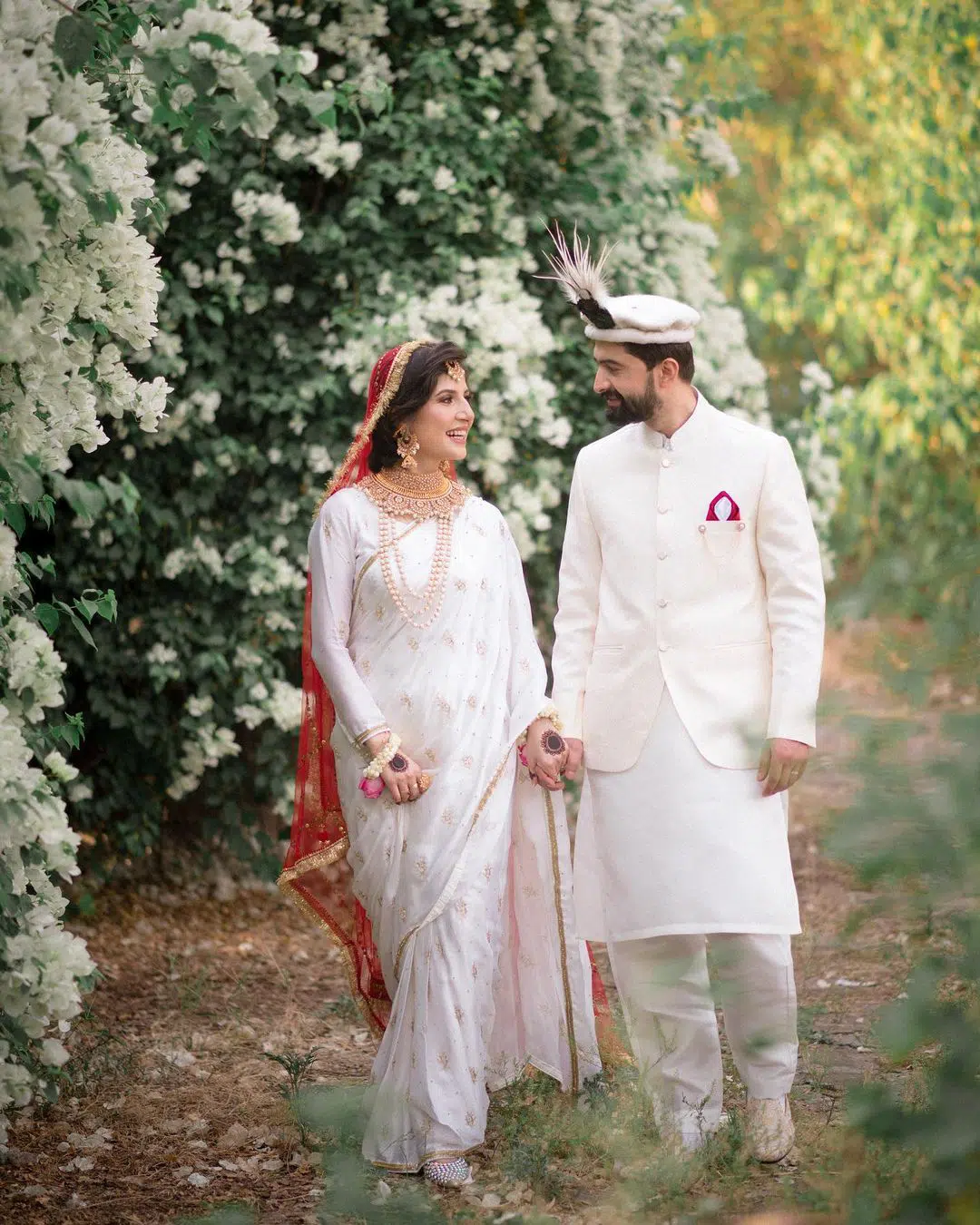
Tip: White and gold is the most universally flattering nikah color combination — it works on every skin tone and looks timeless in photos.
Statement Red Bridal Lehenga
This deep red lehenga with extensive gold embroidery makes a dramatic bridal statement. The long train and matching dupatta create impressive photos, while the rich color satisfies traditional expectations. The heavy embellishment means this is definitely a once-in-a-lifetime outfit that commands attention.
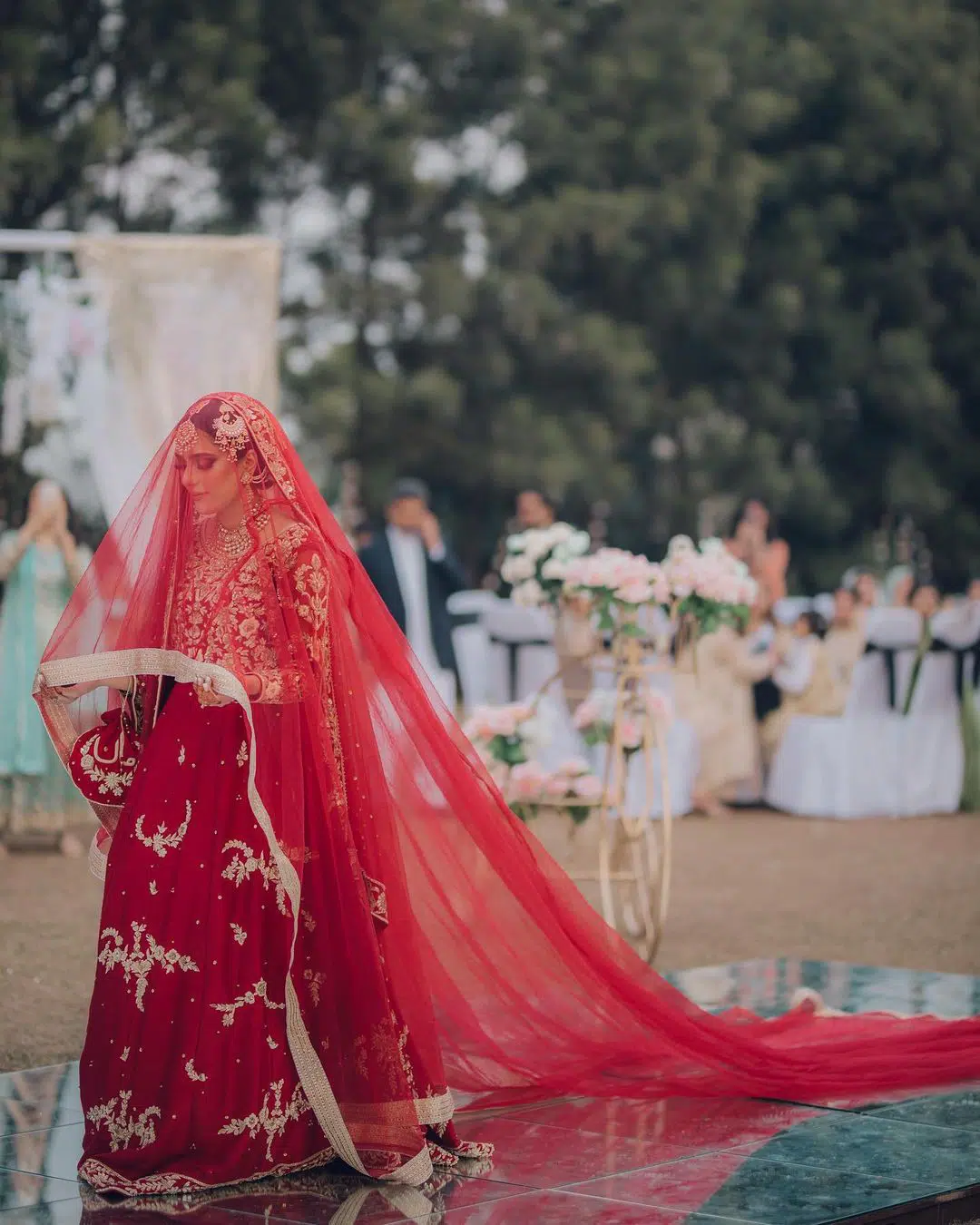
Tip: If you’re wearing a heavily embroidered red lehenga, keep your makeup slightly softer than usual — the outfit provides all the drama you need.
Multiple Nikah Look Options
These four different nikah outfits show the range of possibilities — from heavily embellished lehengas to simpler sharara sets. Each maintains the essential modesty required while offering different levels of formality and embellishment. The variety proves there’s no single “right” way to dress for your nikah.
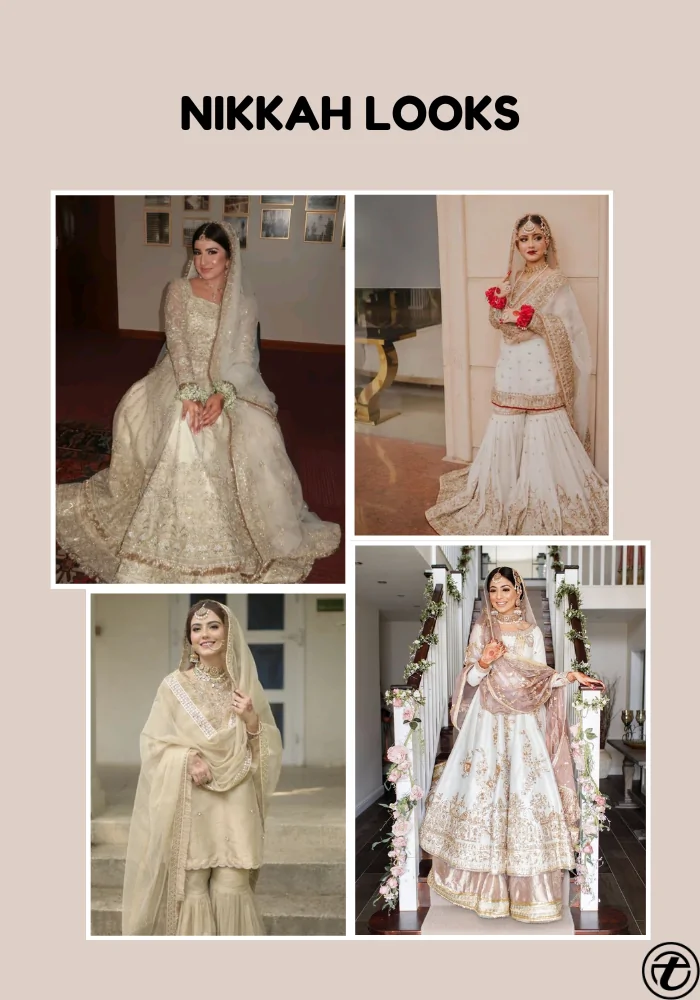
Tip: Consider having multiple outfit options ready — you might feel differently about heavy vs. light embellishment on your actual wedding day.
Detailed Gold Embroidered Sharara
This champagne-colored sharara set demonstrates how intricate embroidery can create bridal-worthy impact without using traditional red. The detailed beadwork across the kurta and sharara pants creates texture and richness, while the neutral color palette feels fresh and modern. The matching dupatta completes the coordinated look perfectly.

Tip: Champagne and gold embroidery photographs exceptionally well in both indoor and outdoor lighting — a practical consideration for your wedding day.
Key takeaways
- Choose pearl jewelry with pastel outfits and gold with deeper colors for the most flattering combinations
- Balance printed dupattas with solid neutral kurtas to avoid overwhelming your look
- White and gold combinations are universally flattering and photograph beautifully for nikah ceremonies
- When wearing heavily embellished outfits, keep your makeup softer to let the clothing be the statement
- Consider champagne and neutral tones as alternatives to traditional red — they’re modern yet appropriate
- Have multiple outfit options ready since your preferences might change on your wedding day
23 New Year Eve Wedding Guest Dress Ideas for Women
21 Best Cutout Dresses Outfit Ideas & Styling Tips
How to Dress Goth? 12 Outfit Ideas & Styling Tips
22 Modern Chikankari Kurti Designs & Styling Tips
20 Best Baby Blue Dresses & Tips on How to Style Them
How To Wear a Strapless Dress? 24 Styling Ideas & Tips
How to Pair Jackets with Dresses – 26 Outfit Ideas & Tips
How To Dress In Your Twenties? 20 Outfit Ideas & Styling Tips