Every sharara I’ve ever worn has taught me something new about proportion, and the biggest lesson came at my cousin’s mehendi last year. I watched women struggle with their gorgeous outfits all evening — dupatta slipping, sharara hem dragging, uncomfortable shoes — and I realised most of us are missing the fundamentals of how to actually wear these pieces.
The sharara isn’t just about looking traditional. It’s about understanding how all three components — the kurta, sharara bottom, and dupatta — work together to create a silhouette that flatters rather than overwhelms. After years of wearing them to everything from intimate family dinners to grand wedding receptions, I’ve learned that the difference between looking polished and looking like you’re drowning in fabric comes down to a few crucial styling decisions.
How to Wear a Sharara Dress
Choose a fitted kurta for balance
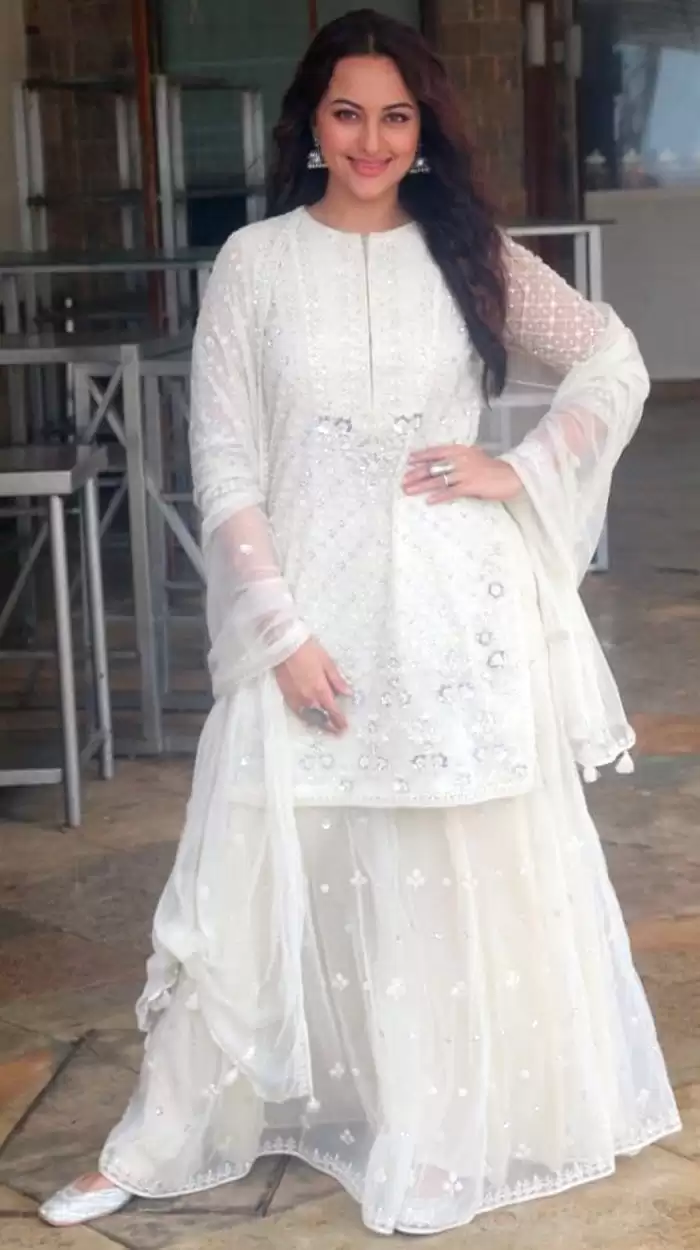
The white sharara in this image demonstrates exactly why proportion matters. The kurta fits close to the body through the waist, creating definition before the sharara flares out at the hips. This creates an hourglass silhouette rather than a tent effect. The embellished belt detail emphasises the waistline even further, proving that structure in the top half prevents the outfit from looking overwhelming. Without this fitted element, you’d disappear into the volume of the sharara.

Drape your dupatta for movement
This red sharara shows the power of dupatta styling done right. Notice how it’s draped over one shoulder and allowed to flow freely rather than being pinned in place or wrapped tightly around the body. This creates natural movement and prevents the dupatta from competing with the sharara’s volume. The key is letting one element dominate — here, it’s the sharara bottom, so the dupatta becomes an accent rather than fighting for attention. Pin it at the shoulder and let gravity do the rest.

Master the wrap-style kurta
The blue sharara demonstrates how a wrap-style kurta solves the proportion problem beautifully. The fitted, crossover design creates a defined waistline while the V-neck elongates the torso. The gold embellishments add just enough detail without competing with the sharara’s print. This style works because the wrap naturally cinches at the narrowest part of your waist, creating that essential contrast with the wide-leg bottom. It’s particularly flattering if you’re petite, as it doesn’t cut your torso in half like a straight-cut kurta can.

The sharara originated in the Mughal courts and was specifically designed to allow women to sit cross-legged gracefully during long ceremonies. The wide-leg design that looks so modern today was actually centuries ahead of its time in terms of comfort and functionality.
Dos & Don’ts
Sharara Dress Styling Tips for Every Occasion
Powder Blue Embroidered Sharara with Gold Accents
This soft blue sharara set features delicate white embroidery on the kurta and gold motifs scattered across the flowing pants. The sheer sleeves add femininity while the contrasting maroon sharara bottom creates visual interest. Perfect for daytime mehendi functions or casual family gatherings where you want to look put-together without being overdressed.

Forest Green Velvet Sharara for Winter Weddings
Rich emerald velvet makes this sharara set ideal for cooler weather celebrations. The intricate gold embroidery on both the kurta and wide-leg pants creates a cohesive look, while the bronze dupatta adds warmth to the palette. This works beautifully for evening wedding receptions or formal dinner parties during the winter months.

Sea Green Heavy Embellished Sharara
This heavily worked sharara showcases traditional craftsmanship with its dense gold embroidery and rich sea green base. The long kurta length balances the voluminous sharara pants, while the matching dupatta completes the formal ensemble. Choose this for main wedding ceremonies or high-profile family functions where traditional glamour is expected.

Navy and White Block Print Sharara with Contrast Dupatta
A refreshing take on the sharara with its crisp white base and navy blue block print detailing. The solid navy dupatta grounds the outfit while the minimal jewelry keeps it contemporary. This style works perfectly for daytime events, casual weddings, or when you want to embrace traditional prints with a modern sensibility.
Quick tip
Match your embellishment level to occasion formality — heavy work for main wedding events, minimal details for casual gatherings.

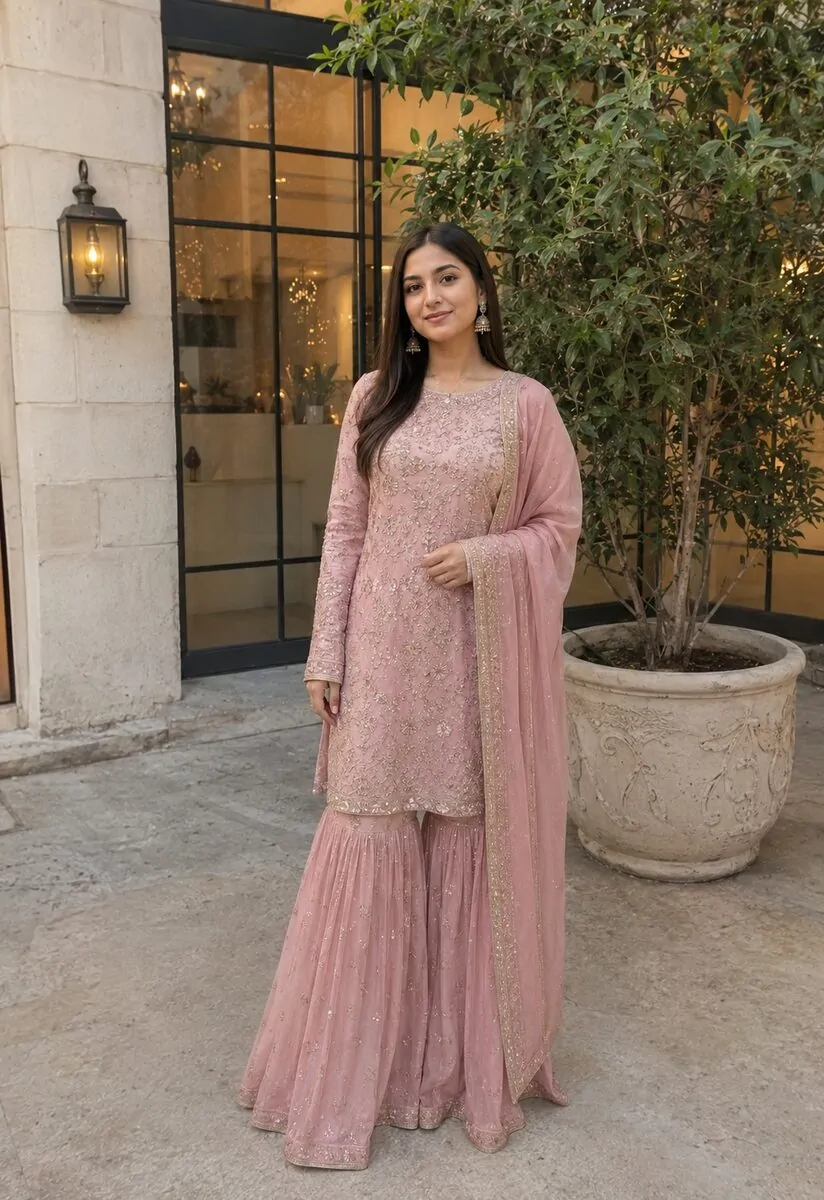
Blush Pink Georgette Sharara Set
Soft pink georgette creates an ethereal look in this delicately embellished sharara. The subtle gold work and flowing fabric make it ideal for daytime celebrations or when you prefer understated elegance. The matching dupatta with minimal border work keeps the overall look cohesive and romantic, perfect for engagement parties or intimate family functions.

Sage Green Brocade Sharara with Metallic Details
This muted green sharara features beautiful brocade work that catches light subtly throughout the fabric. The metallic threading adds richness without overwhelming the soft color palette. Ideal for afternoon wedding ceremonies or formal lunch events where you want to look polished yet not too heavy with embellishment.

Rust Orange Crop Top Sharara for Fusion Style
A modern interpretation featuring a geometric embroidered crop top paired with cream sharara pants. The contrasting colors and contemporary cut make this perfect for younger women attending sangeet nights or cocktail parties. The fusion approach lets you honor tradition while embracing current trends in South Asian formal wear.
Quick tip
Choose deeper colors for evening ceremonies and lighter shades for daytime celebrations to complement natural lighting.

Sunshine Yellow Sharara with Gota Work
Vibrant yellow georgette comes alive with traditional gota patti work scattered across the kurta and sharara. The voluminous silhouette and bright color make this a standout choice for haldi ceremonies or festive celebrations. The matching dupatta with heavy border work completes this joyful, celebration-ready ensemble.

Magenta and Gold Heavy Bridal Sharara
This opulent sharara showcases the grandeur expected for bridal wear with its rich magenta base and extensive gold embroidery. The intricate work covers both the fitted kurta and flowing sharara pants, while the heavily embellished dupatta adds drama. Reserve this level of embellishment for main wedding ceremonies or when you’re the bride or close family member.

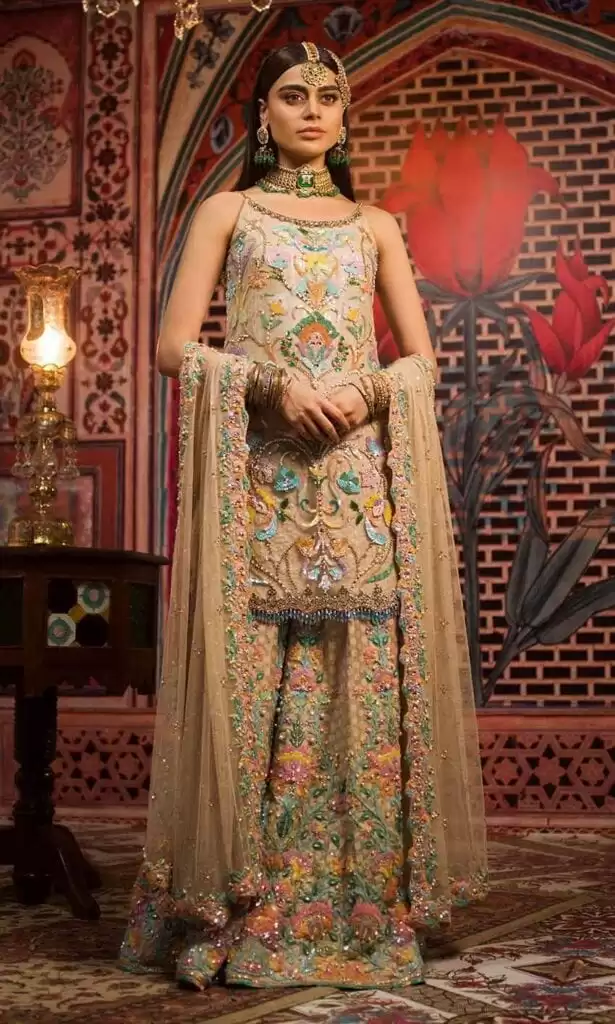
Heavily Embellished Gold Sharara for Grand Occasions
This opulent gold sharara features intricate floral embroidery and mirror work across every surface, paired with statement kundan jewelry. The heavily worked dupatta and matching kaleeras create a complete bridal or formal look that commands attention. Perfect for main wedding events where maximum glamour is expected.
Quick tip
Balance sharara volume with a well-fitted kameez to create flattering proportions that don’t overwhelm your silhouette.

Rust Orange Sharara with Minimal Embellishment
A burnt orange sharara keeps the embellishment subtle with scattered floral motifs, letting the rich fabric color take center stage. The relaxed fit and simple styling make this ideal for daytime celebrations like mehendi or casual family gatherings. The earthy tone works beautifully for autumn weddings and outdoor events.

Burgundy and Gold Traditional Sharara Set
This deep burgundy sharara combines rich gold embroidery with traditional geometric patterns, creating a regal look that’s perfect for winter weddings. The heavy dupatta with matching border work adds formal weight to the ensemble. The color combination works especially well for evening ceremonies and religious occasions.

Powder Pink Sharara for Soft Romance
A delicate powder pink sharara features gold detailing and subtle embellishment that creates an ethereal, romantic look. The soft color palette makes this perfect for morning ceremonies, engagement parties, or as a guest outfit for spring weddings. The light fabric and minimal weight ensure comfort during long celebrations.
Quick tip
Layer your dupatta based on tradition level — full head coverage for religious ceremonies, draped styling for modern events.

Key takeaways
- Match embellishment level to occasion formality — heavy work for main events, subtle details for casual gatherings
- Consider timing when choosing colors — deeper shades for evening, lighter tones for daytime celebrations
- Balance your sharara’s volume with fitted kameez proportions to avoid overwhelming your frame
- Layer dupatta styling based on the event — full draping for traditional ceremonies, lighter placement for modern occasions
- Choose jewelry weight to complement your outfit — statement pieces with simple shararas, delicate jewelry with heavy embellishment
- Select fabric based on season and comfort — lighter materials for summer, richer fabrics for winter celebrations

Avid reader and Fashionista. London Based freelance lifestyle editor